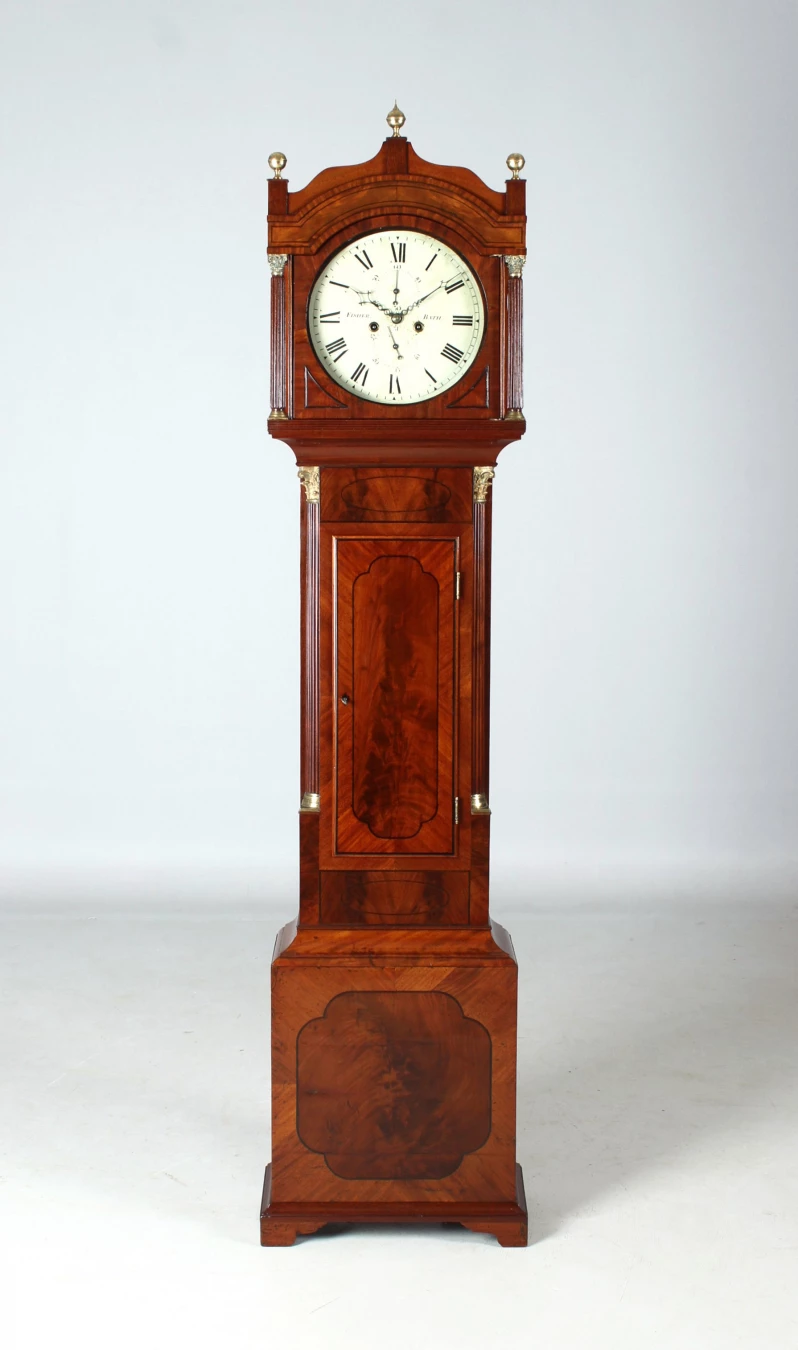
Video antique grandfather clock
Antique English Grandfather Clock
England
Mahogany
Victorian circa 1832
Dimensions: H x W x D: 216 x 50 x 24 cm
Description:
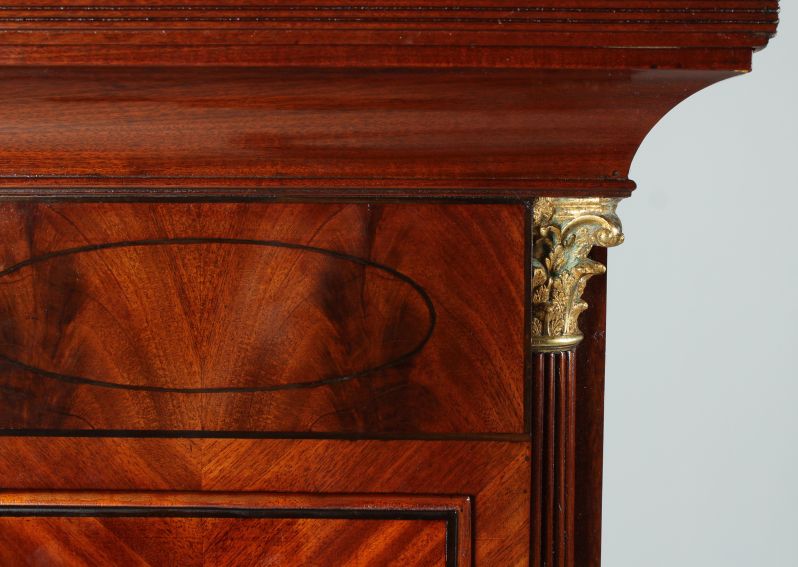
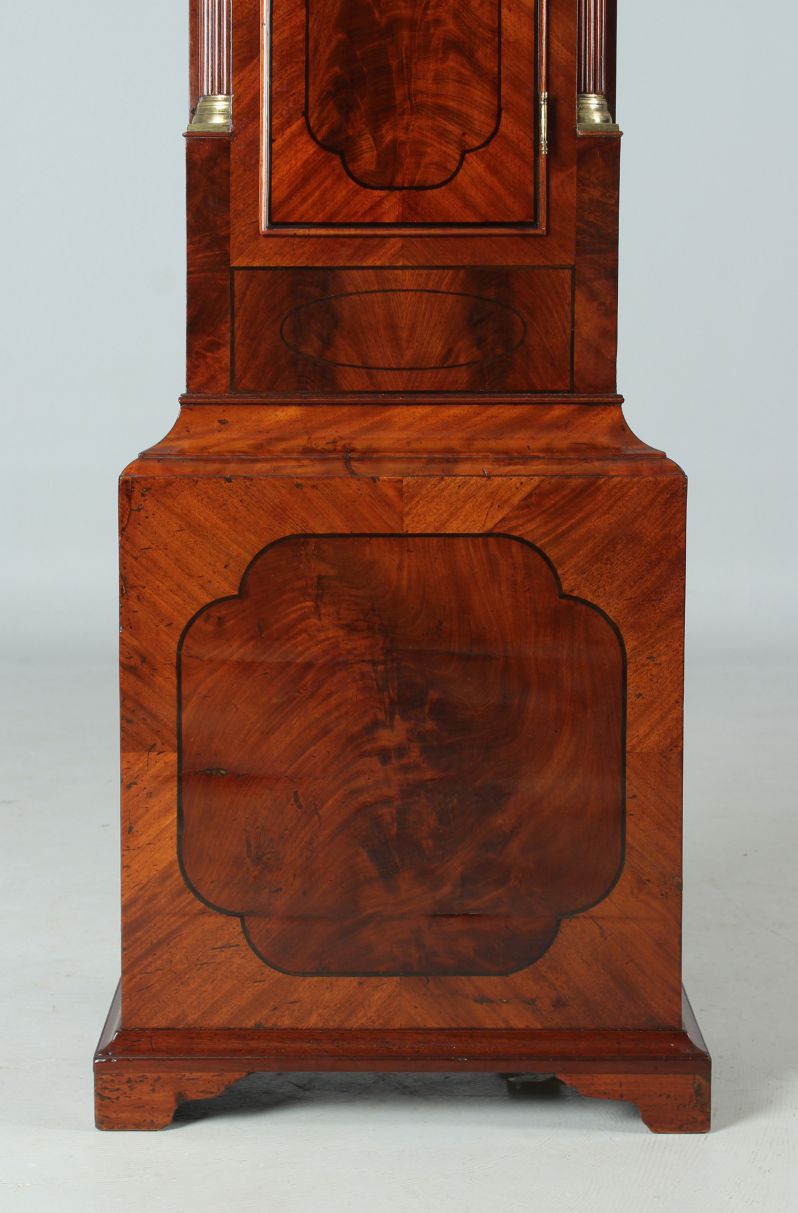
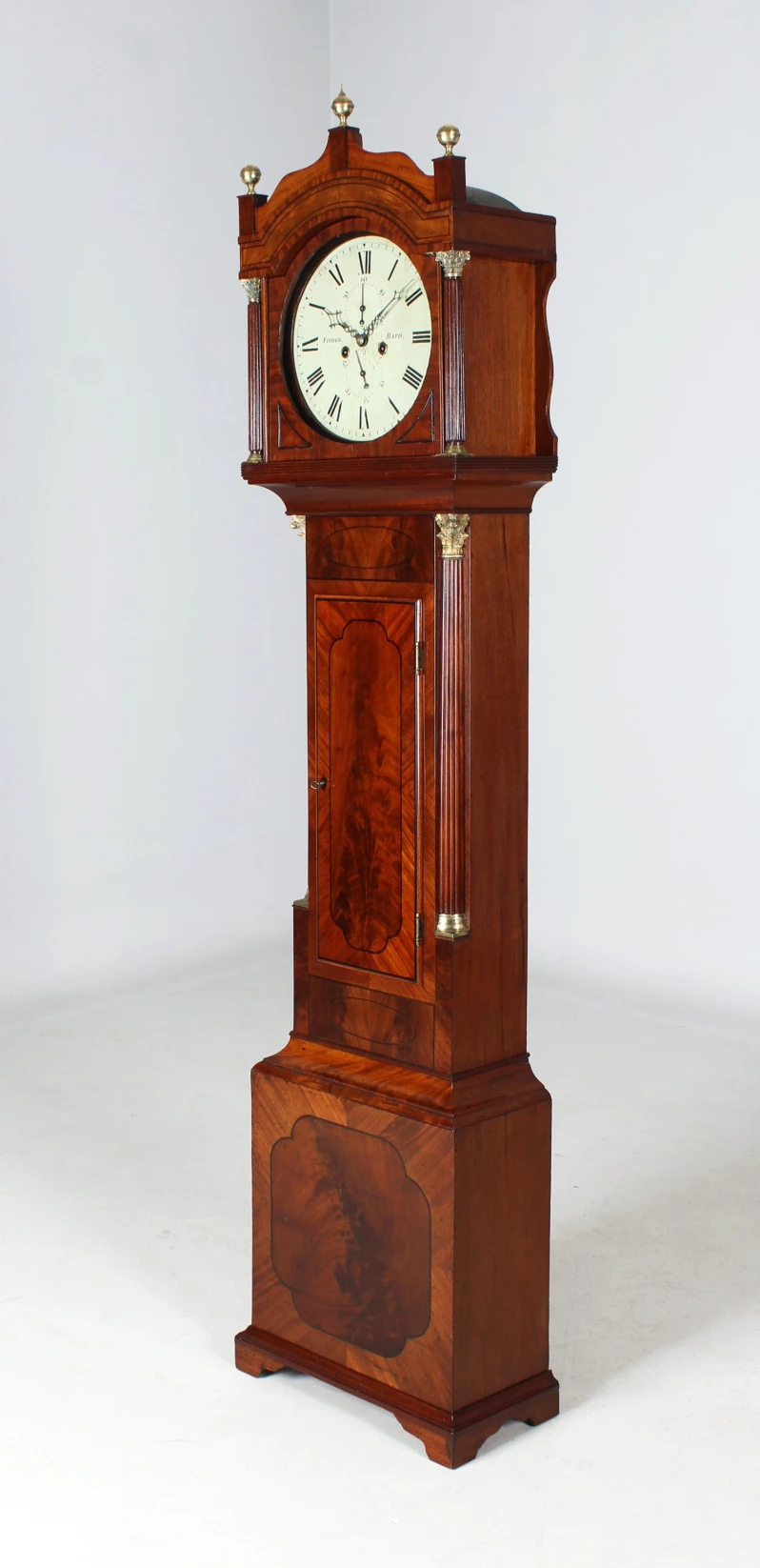
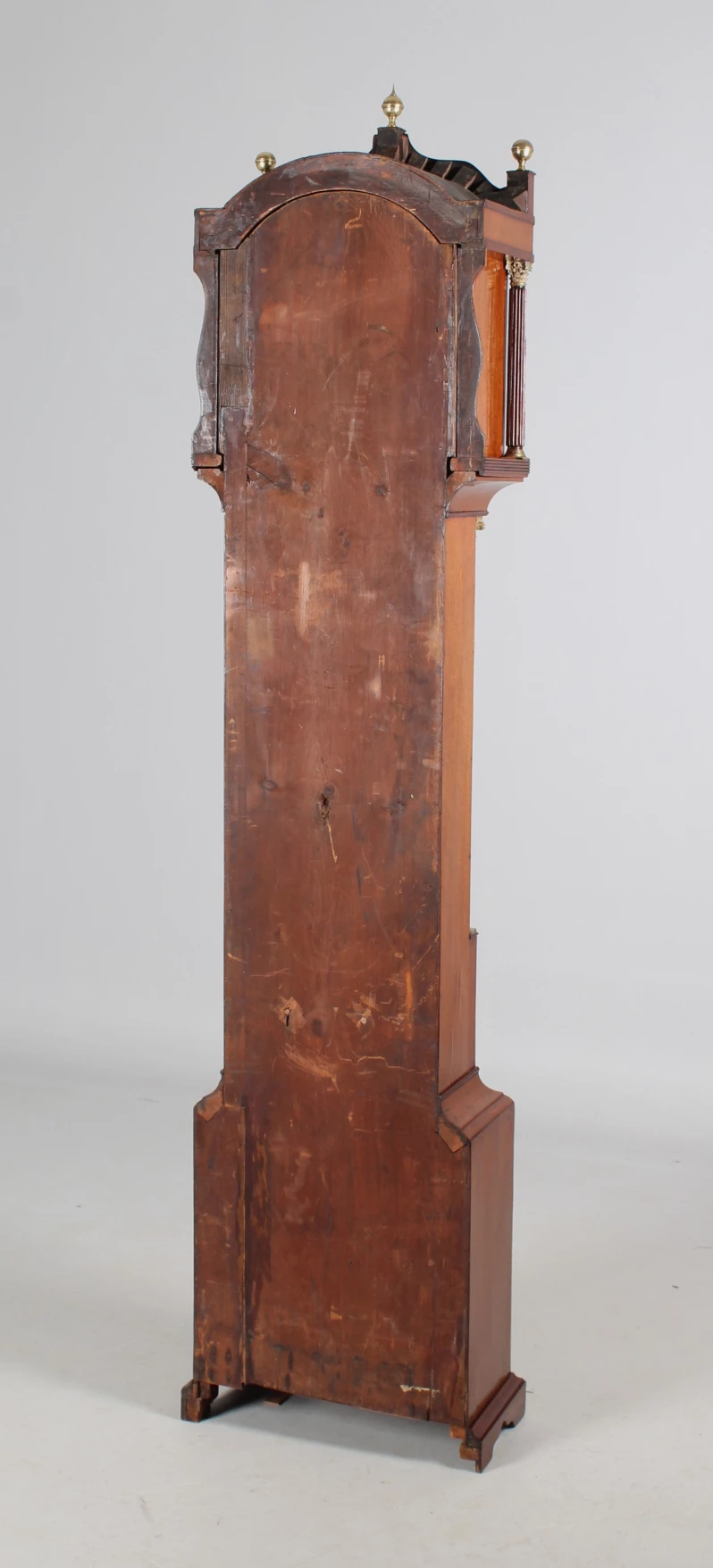
Antique English grandfather clock in a mahogany veneered case with ebony band inlays.
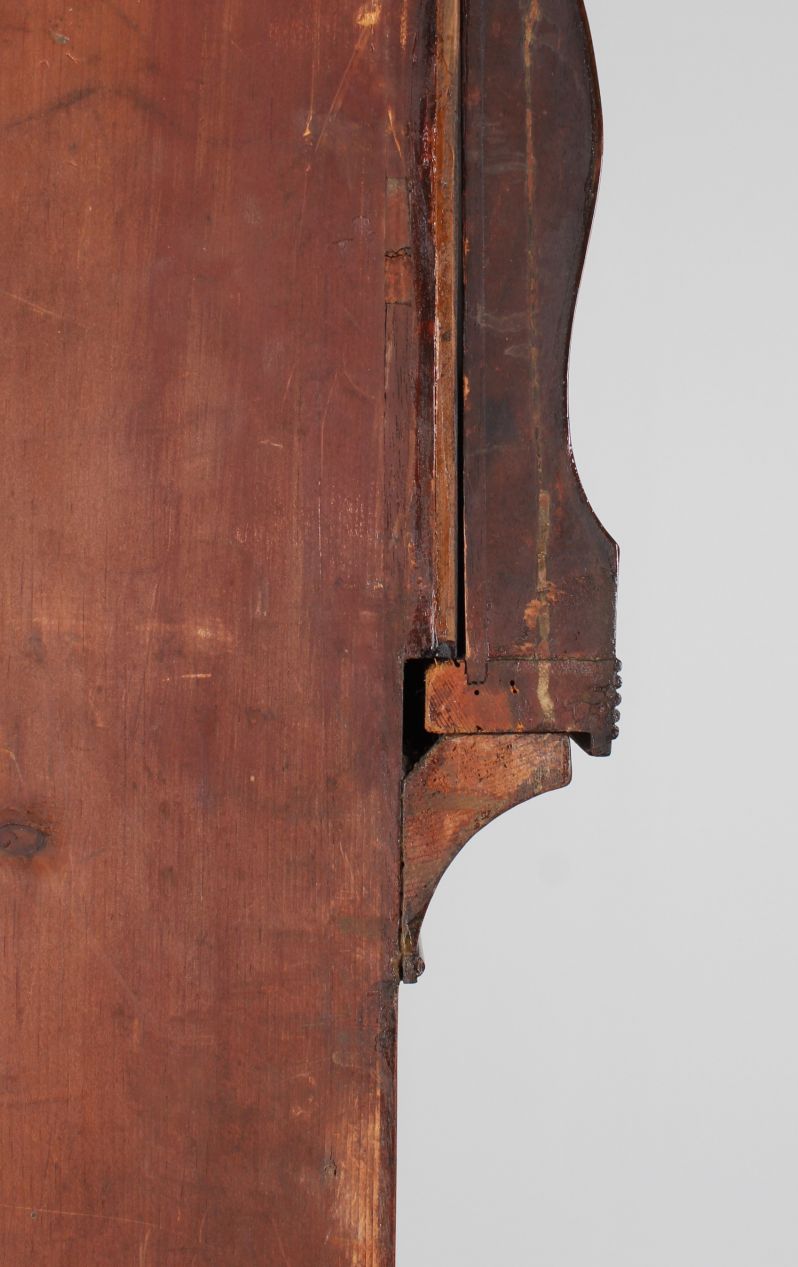
Clock case standing on a cut-out plinth frame with a wide base, slender middle section and a head corresponding to the width of the plinth.
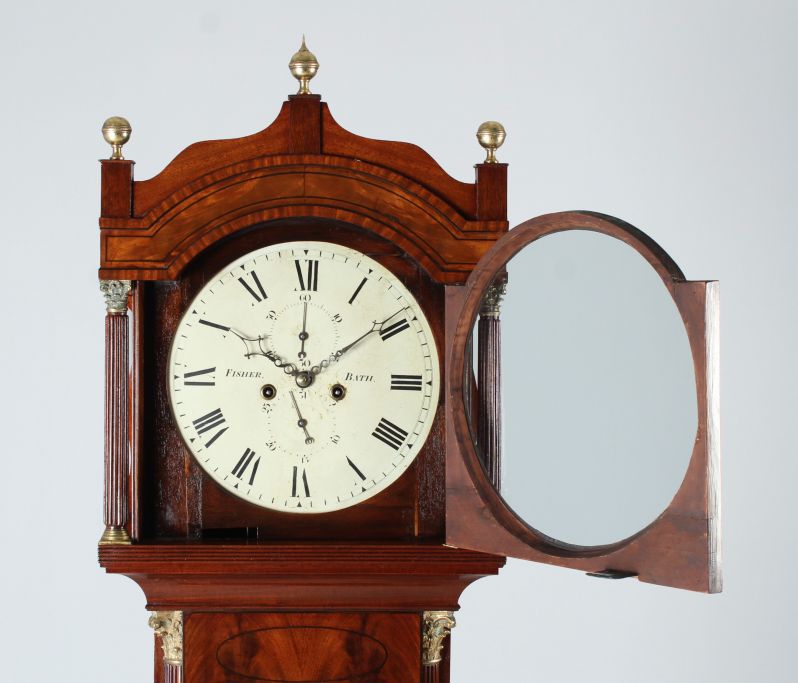
The round dial is flanked by two fluted solid columns with Corinthian capitals. The glazed door can be unlocked by means of a lever operated from the clock case.
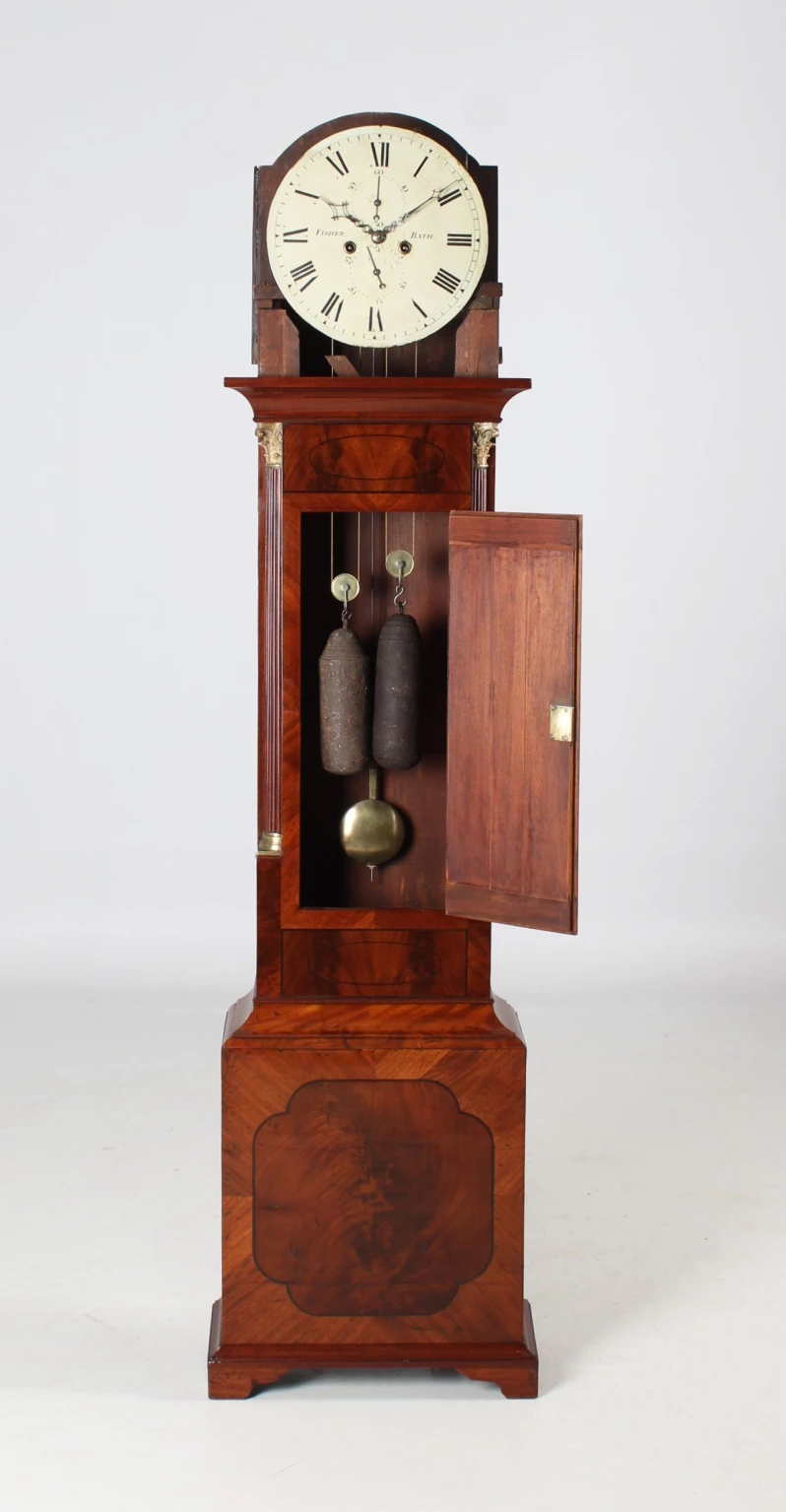
The dial is painted white with black Roman numerals for the time and Arabic numerals for the seconds and date. The hand-sawn and filed steel hands are typical of the era.
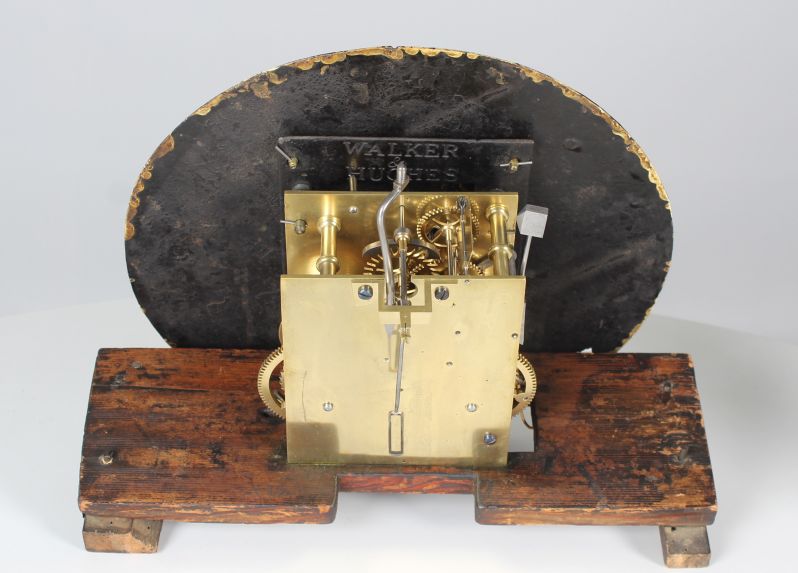
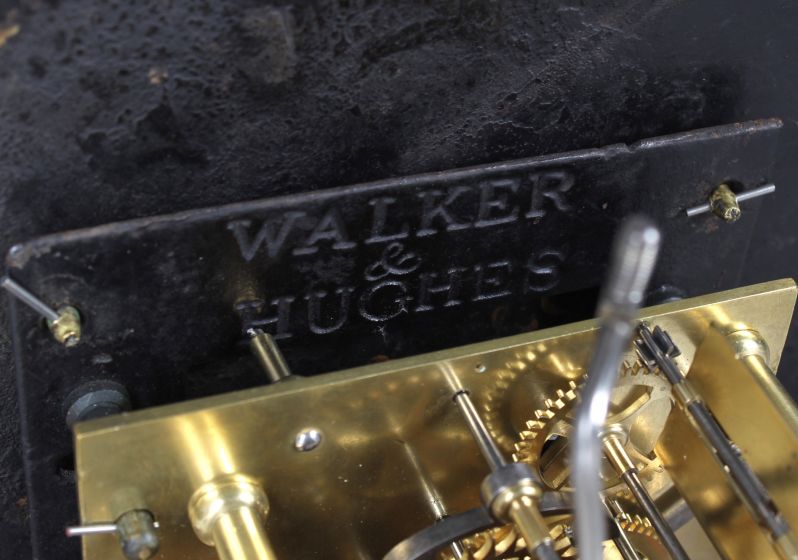
The signature Fisher, Bath. stands for Edwin Fisher, who according to Brian Loomes Watchmakers and Clockmakers of the World p. 268 is documented with his workshop from 1819-1865. The dial itself was made by Walker & Hughes in Birmingham and is marked on the reverse of the casting. Walker & Hughes were dial producers from 1811-1835.
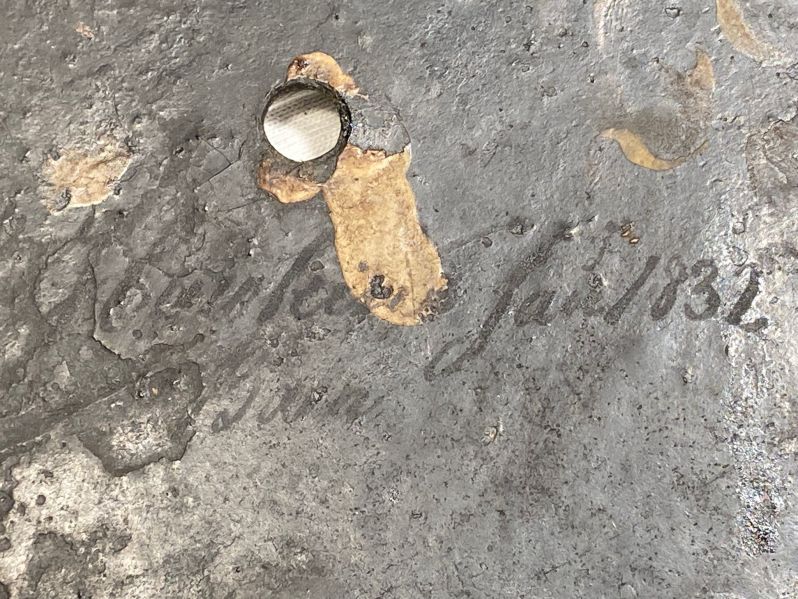
Also on the reverse of the dial is a date: January 1832.
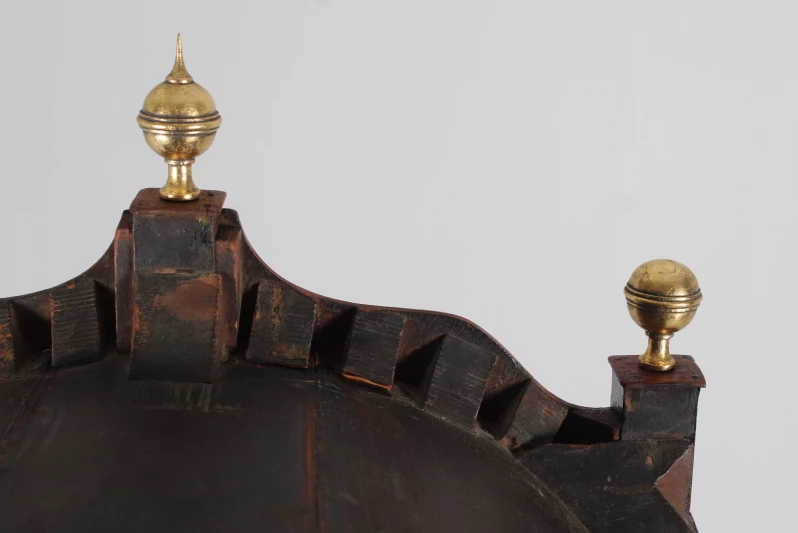
The corner spandrels to the left and right below the dial and the head with ornate arch finial and triple ball finial are also typical of the period and region.
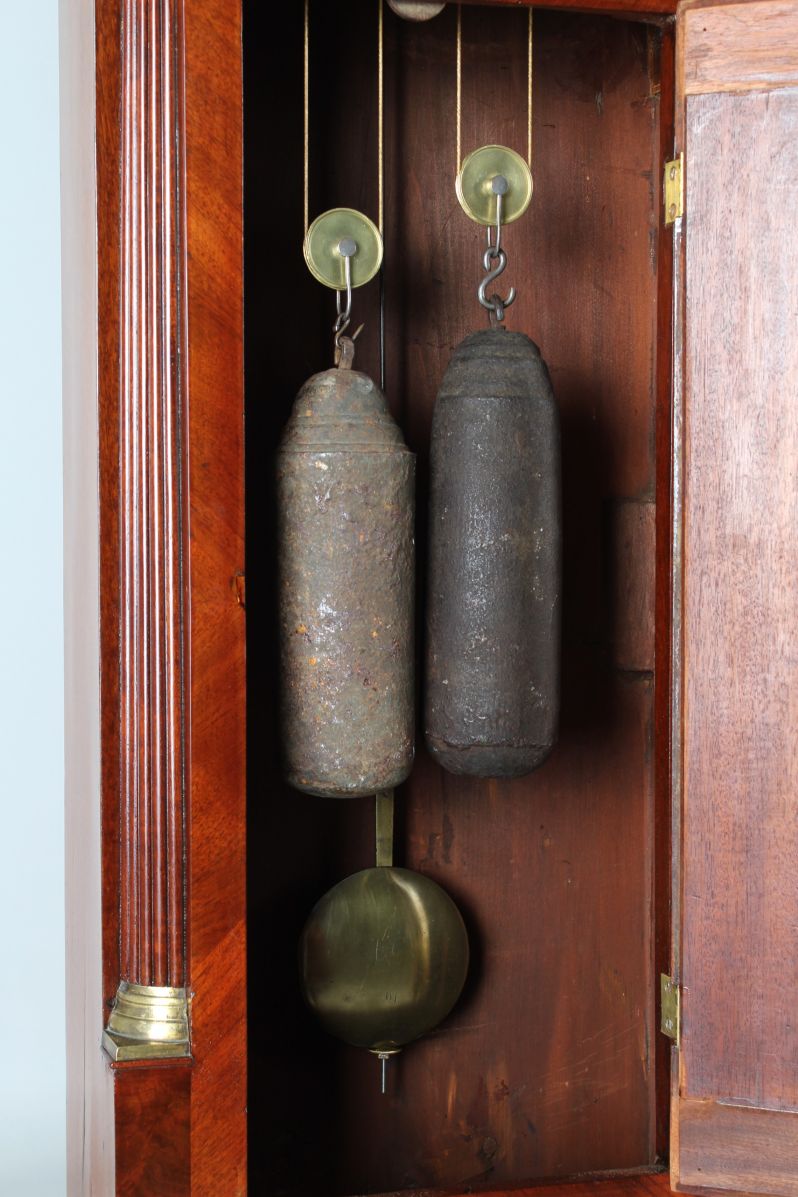
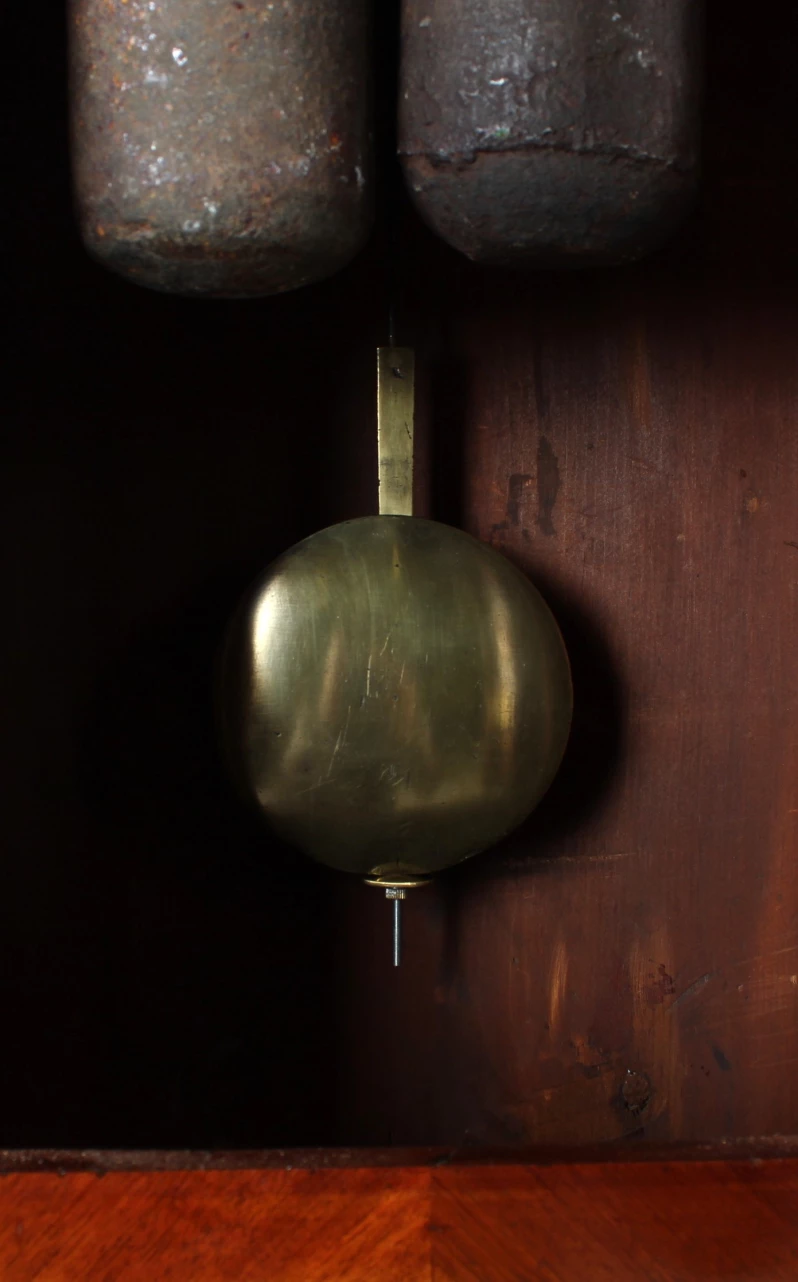
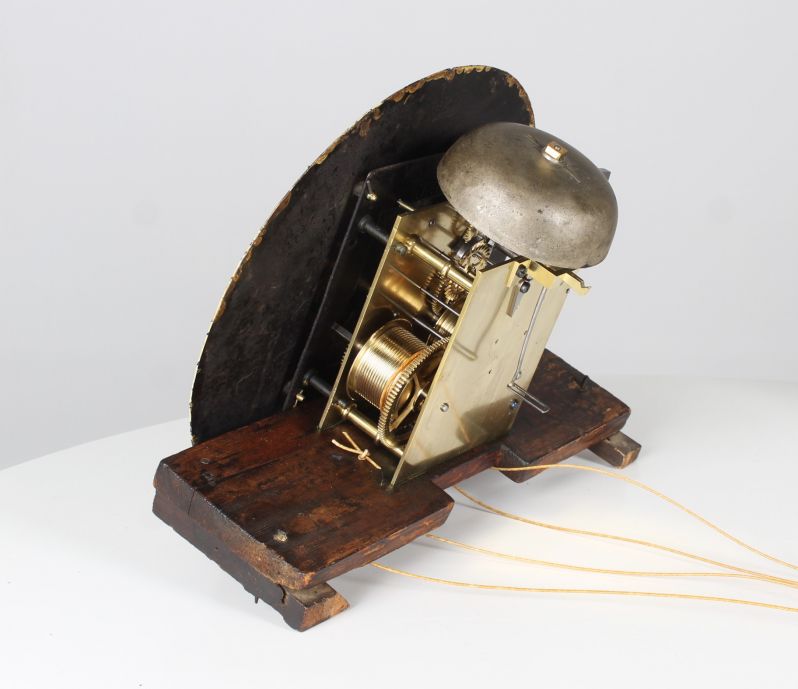
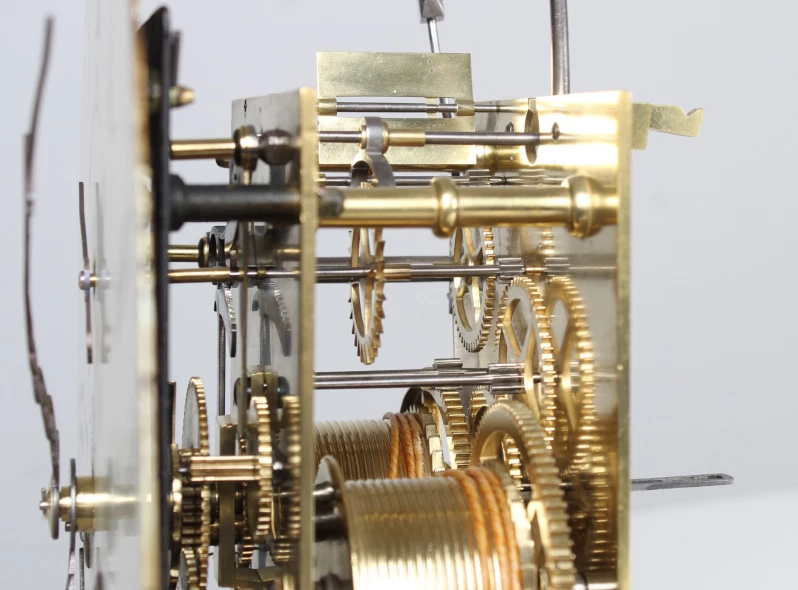
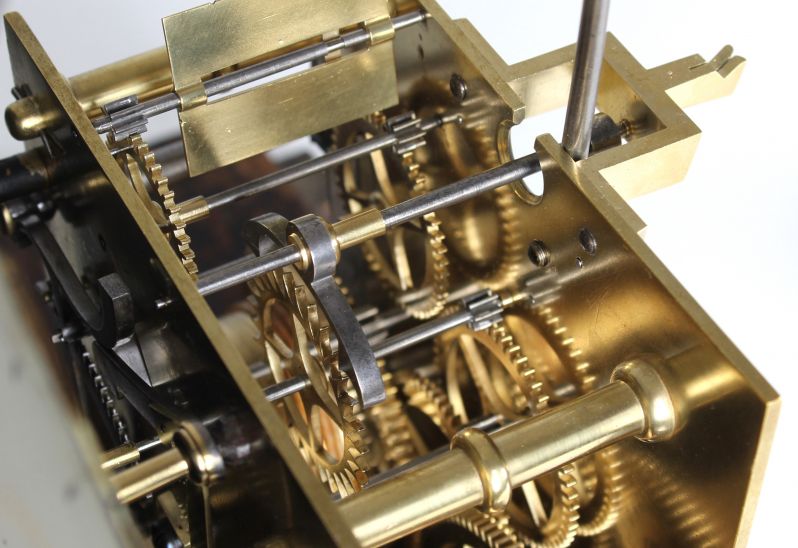
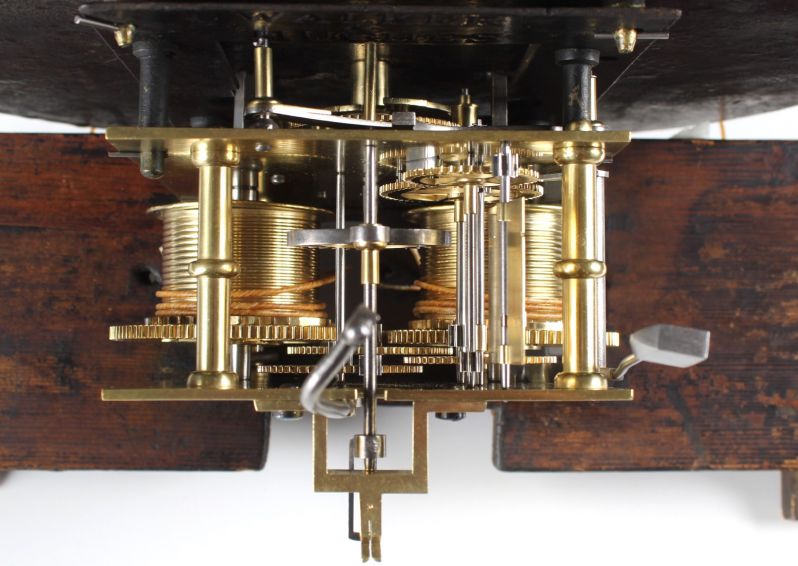
The movement is a weight-driven 8-day movement with lever escapement and strike on the bell on the hour.
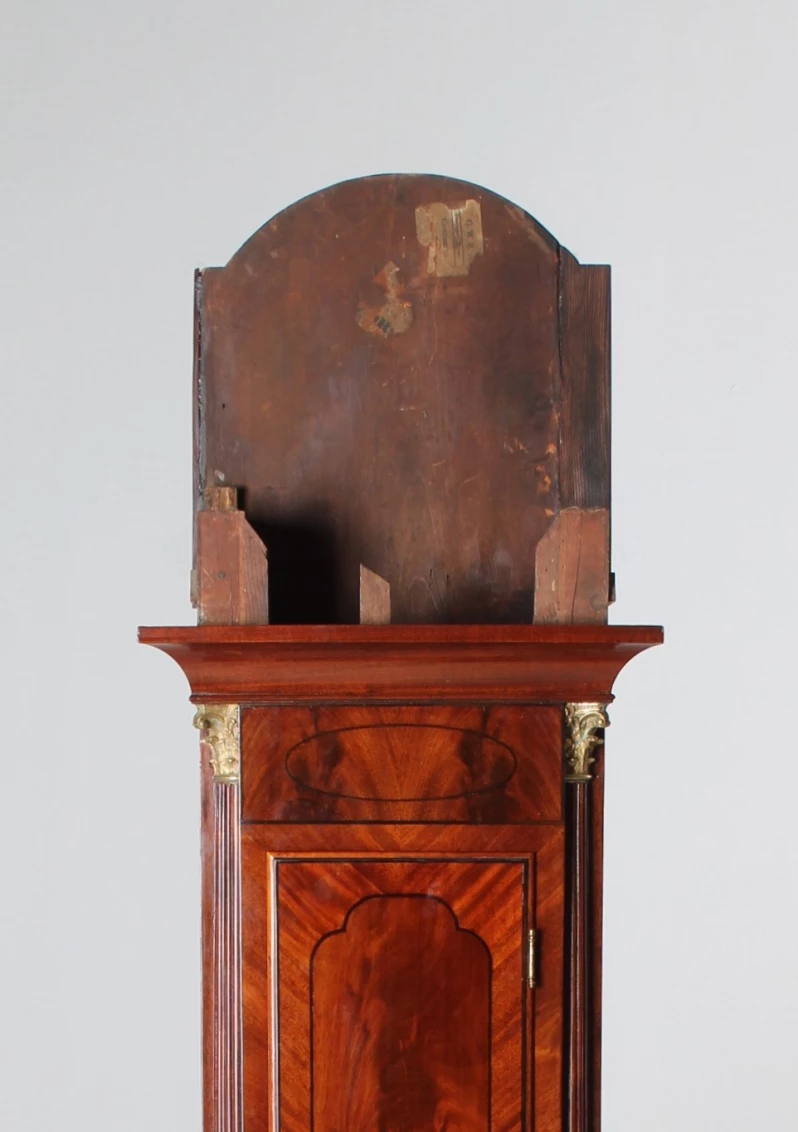
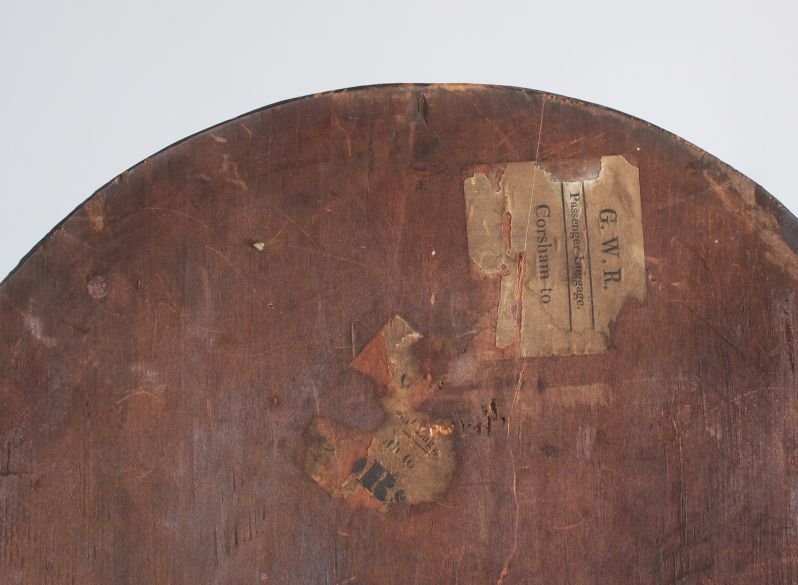
There are two old shipping labels on the inside of the back cover. One probably carried the clock from Bath to Corsham, the other was then used for onward transport from Corsham.
Interesting facts:
When people think of grandfather clocks with painted dials, they usually think of the late clocks from northern England built from the mid-19th century onwards with clunky and unattractive cases. Yet painted dials are by no means unique to the 19th century. An advertisement in the Birmingham Gazette of 1772 advertises painted dials in imitation enamel.
The problem with painted dials was that the dial feet had to be fixed before they were painted, as they damaged the painting when they were applied later. To solve this problem, an additional plate was supplied with the painted dial which could be mounted between the movement and the dial. Such intermediate plates often bore the name of the dial maker, as in this case by Walker & Hughes.
[Source: Derek Roberts - The English Longcase Clock p. 192-193]
Condition:
Case restored under patina and polished with shellac.
The movement was completely disassembled and overhauled. It runs reliably and accurately. A detailed restoration report can be found here.
You can find similar clocks in the literature:
Derek Roberts - Die englische Standuhr 300 Jahre klassische Uhrmacherkunst p. 136, 137, 191
Article found under: Clocks
Video antique grandfather clock
Also interesting
Small portal clock with bas-relief
France
Bronze, enamel
early 19th century
La Bibliotheque - In the study room
Paris
fire-gilt bronze, enamel
Empire around 1820
Antique writing cabinet with leather fittings and thread inlays
Austria
Cherry and others
Biedermeier around 1830