
Maitzner - Moreau - La Comtoise – La Morbier – La Morez - Histoire – Technique
The book "La Comtoise - La Morbier - La Morez: Histoire - Technique" by Francis Maitzner and Jean Moreau is indeed one of the standard works on the Comtoise clock.
The work offers a comprehensive historical account of the Comtoise clock from the 17th century to the 20th century. It describes the stylistic development with a clear chronological classification and contains numerous photographic illustrations as well as detailed photographs of cases, dials, movements and pendulums. Technical aspects of construction, mechanics and decorative design are also explained. In addition, there are references to regional variants from Morbier and Morez.
Stylistic epochs of the Comtoise clock
(according to Francis Maitzner / Jean Moreau)
1. Early period (ca. 1680-1720)
-
Heavy, wrought-iron movements
-
Dials initially made of brass, engraved and partly silver-plated
-
Simple case shapes, often without elaborate decoration
-
Early forms of the lyre pendulum
2. Baroque and Régence period (ca. 1720-1750)
-
Introduction of enamelled dials
-
Lavish crowns made of cast brass (eagles, sun symbols, religious motifs)
-
Cases with decorative veneers and inlays
-
Often still with side-mounted striking mechanism bells
3. Louis XV/Louis XVI period (approx. 1750-1790)
-
Finer cases with carved and painted fronts
-
Pendulums often with decorative discs or lyre shapes, decorated with foliage or flowers
-
Dials with the name of the clockmaker and place of origin
4. Empire and Restoration period (ca. 1790-1830)
-
Plainer, symmetrical crowns, often laurel wreaths, eagles, Napoleon symbols
-
Pendulum with classicist motifs
-
Multi-part enamelled dials with Roman and Arabic numerals
5. Historicism and mass production (ca. 1830-1900)
-
Industrial production in Morbier and Morez
-
Richly decorated crowns (flowers, agricultural scenes, garlands)
-
Pendulum often extensively engraved or embossed
-
Case made of walnut, oak or painted softwood
6. Late phase / 20th century
-
Simplified production, often without elaborate cases
-
Increasingly unadorned pendulums
-
Often made for export
Auch interessant
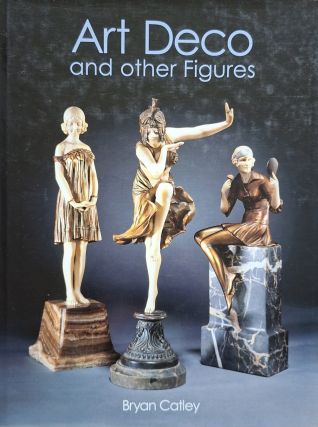
Bryan Catley - Art Deco and other Figures
Standard work on Art Deco figurines with extensive image documentation and an overview of artists, materials and [...]weiter lesen
Fritz Arens - Meisterrisse und Möbel der Mainzer Schreiner
This publication is the first to comprehensively document the furniture inventory and the surviving master carpenters [...]weiter lesen

Pierre and Françoise Rouge - Le génie des Hache
This comprehensive monograph honours the life's work of the famous Hache family of furniture makers from Grenoble, [...]weiter lesen