Antique Retour d'Egypte mantel clock
France
Mahogany
first half of 19th century
Dimensions: H x W x D: 29 x 20 x 12 cm
Description:
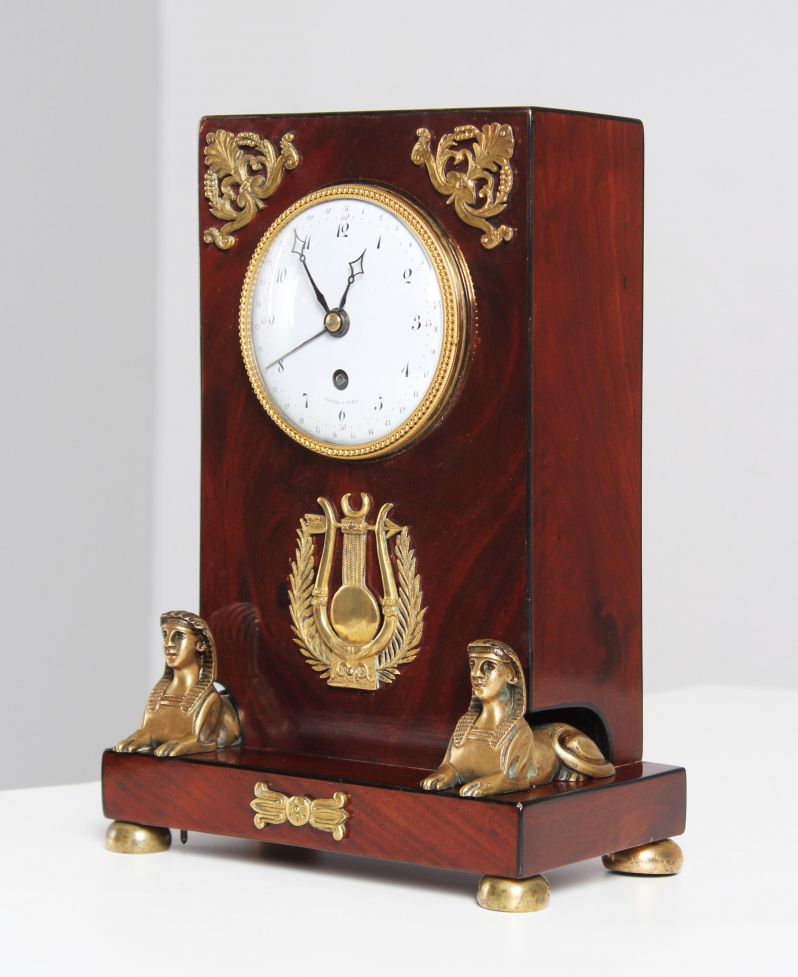
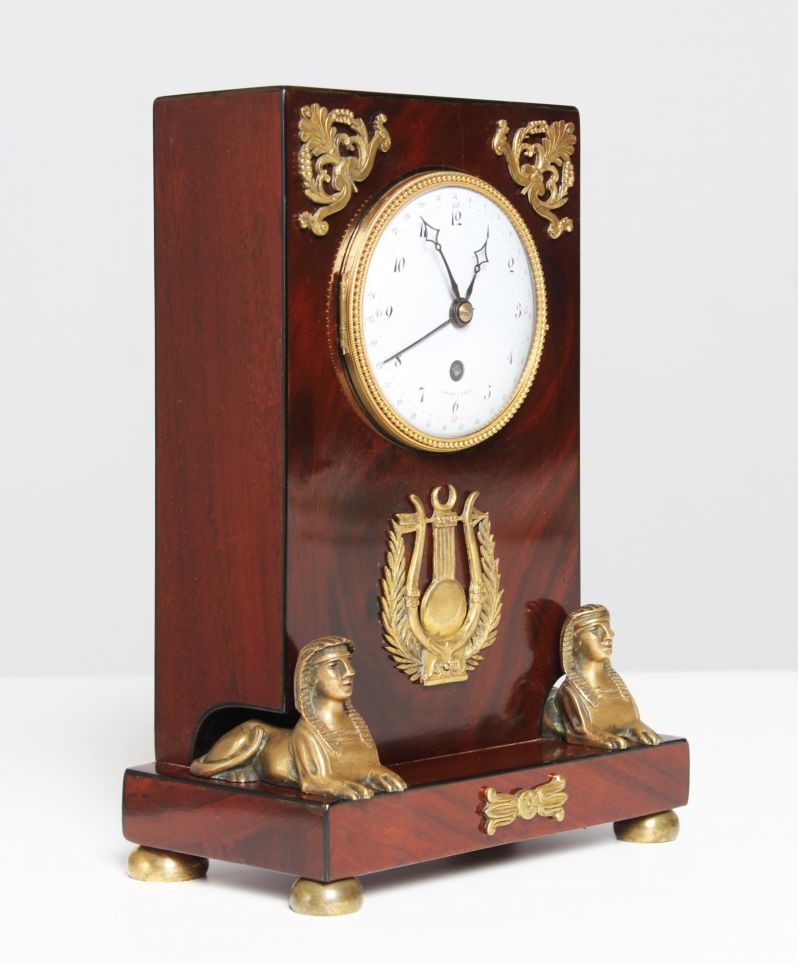
Extraordinarily small Empire mantel clock in a mahogany case. So-called Pendule d'Audience.
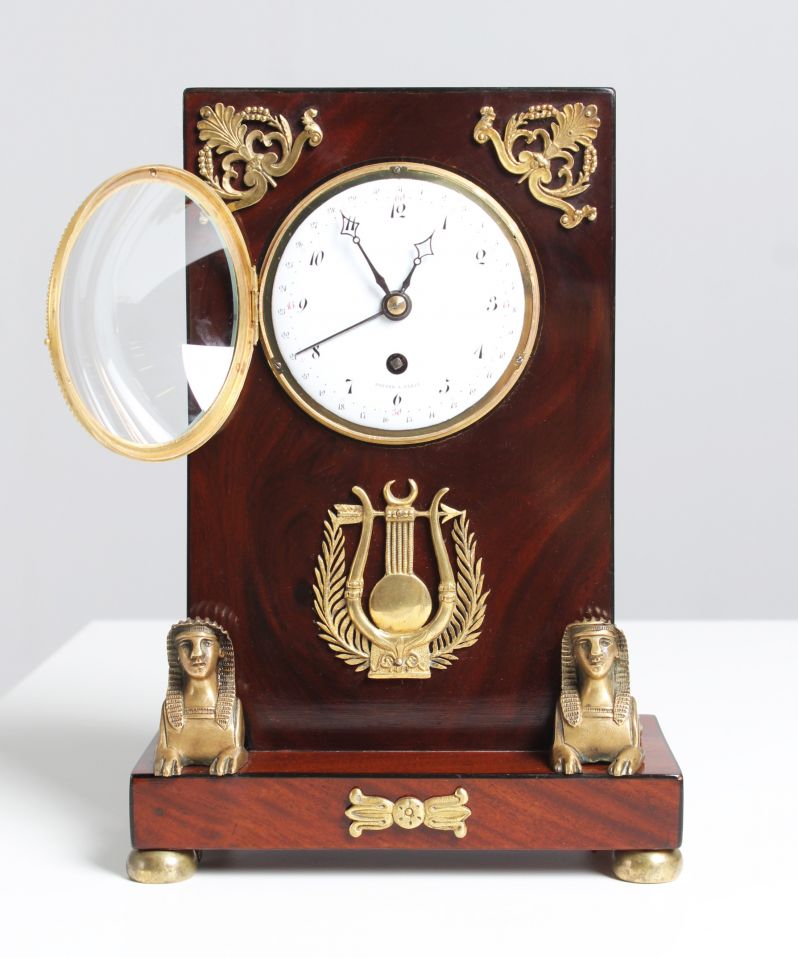
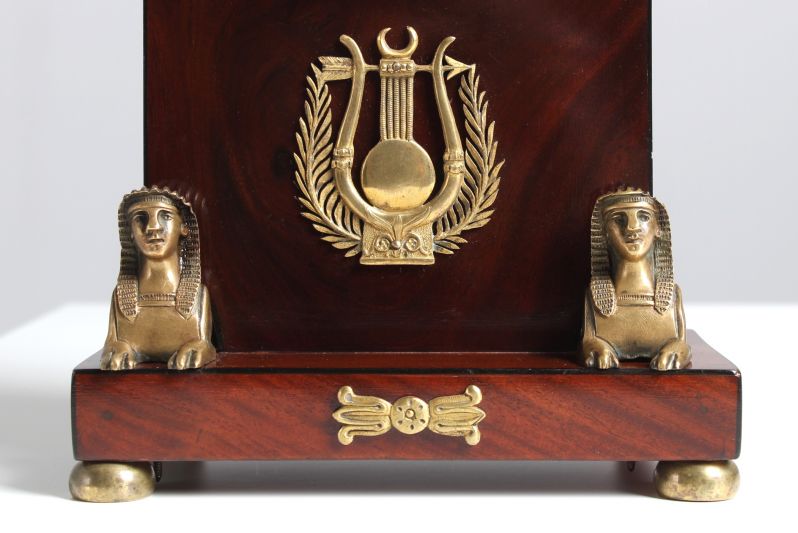
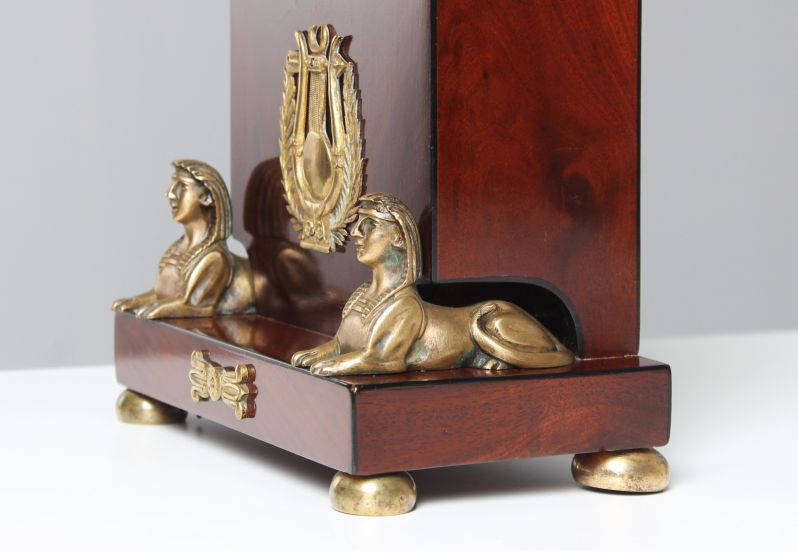
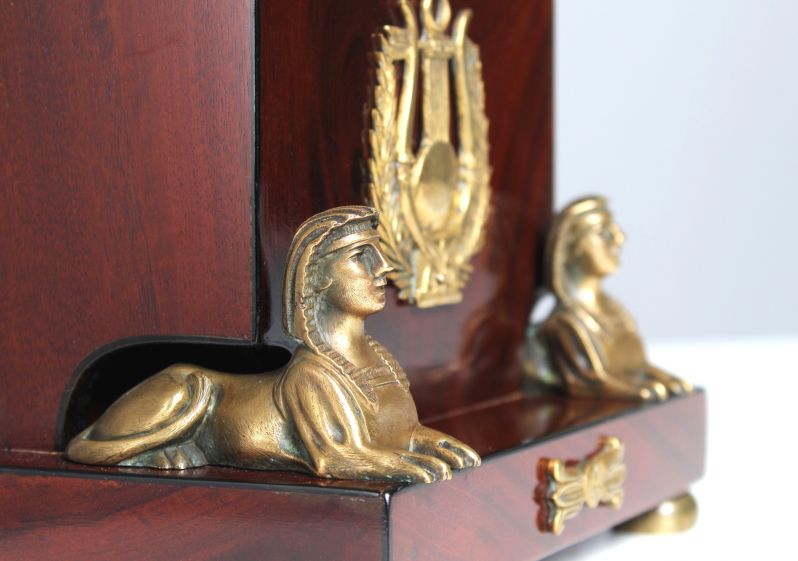
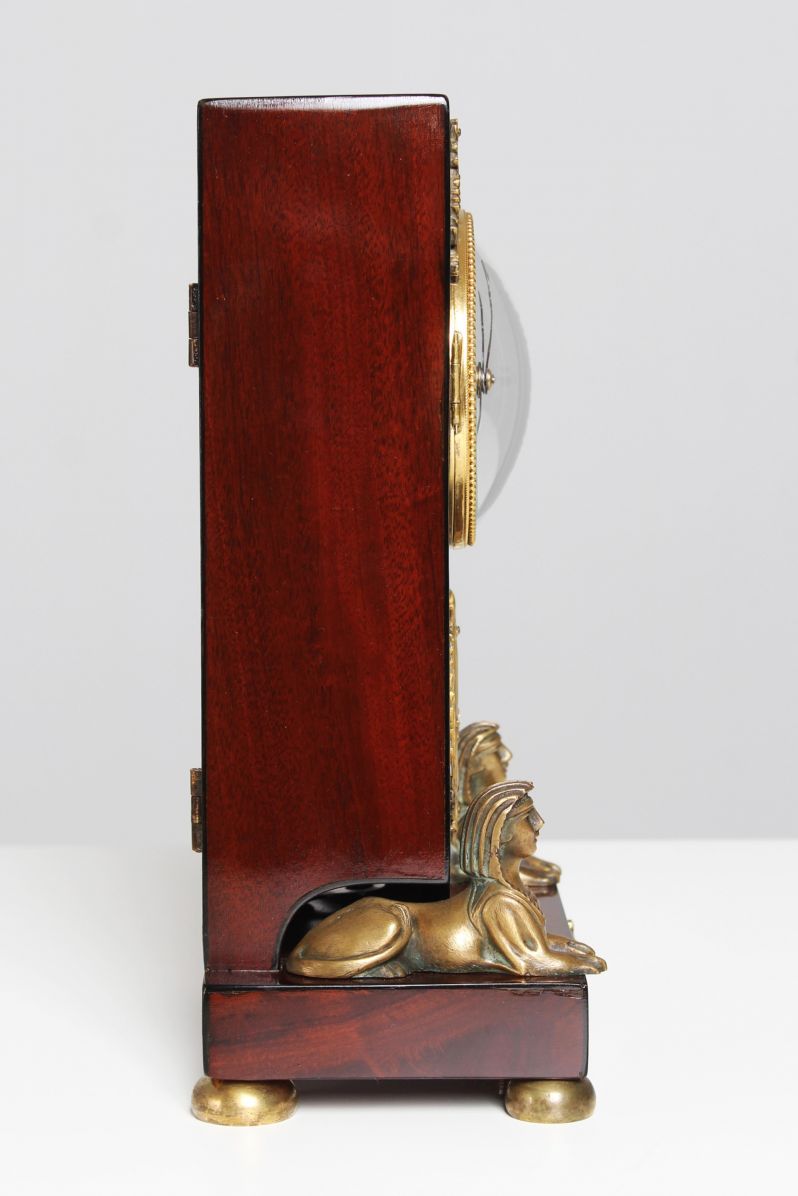
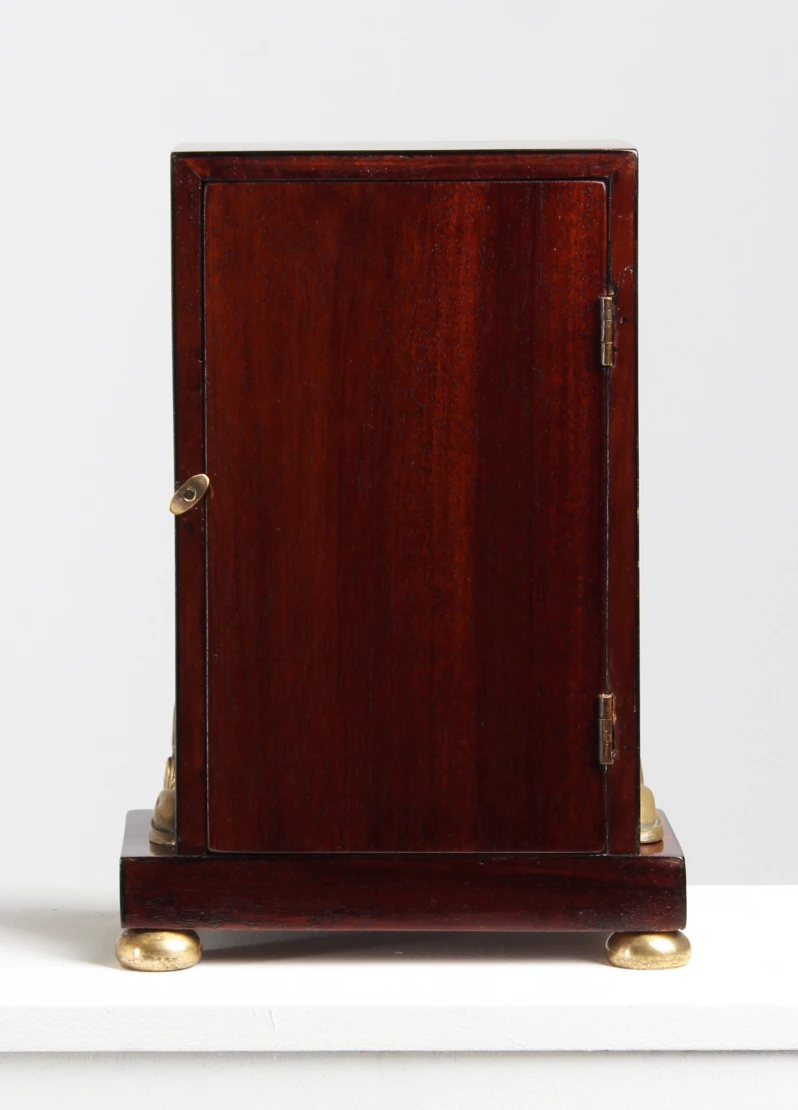
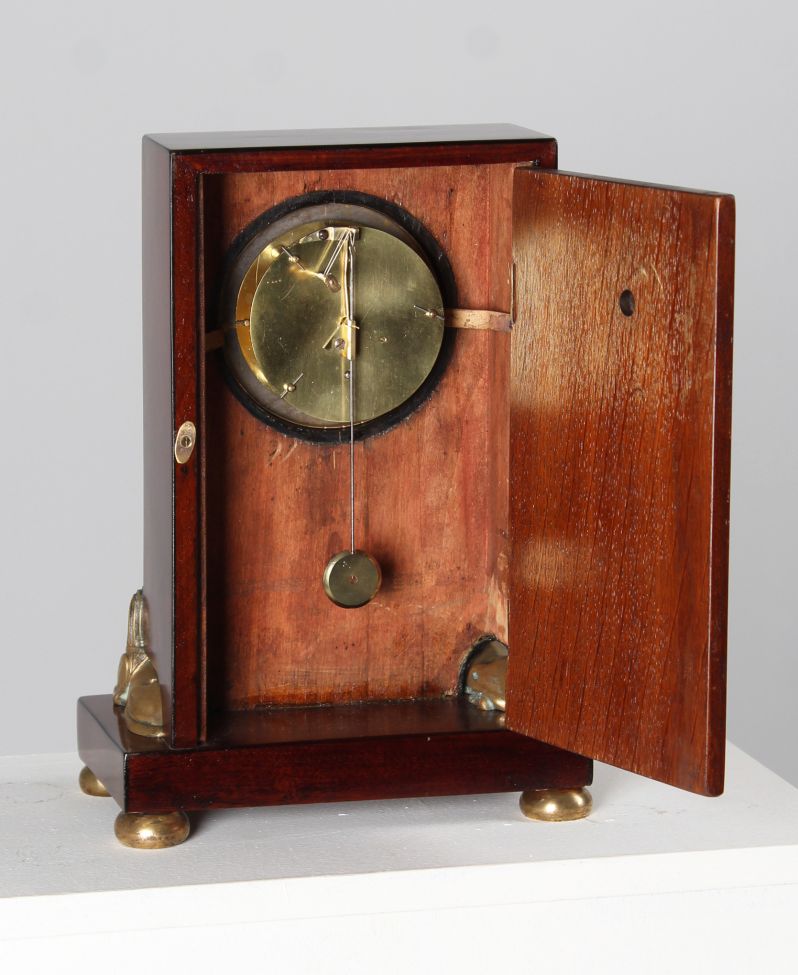
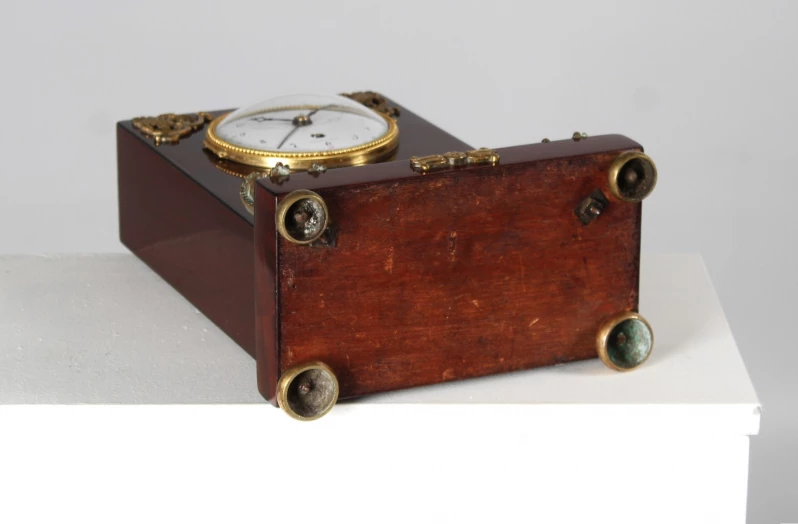
Base plate standing on four round squeeze feet. Two sphinxes rest on the plinth, supporting the mahogany veneered clock case with an ebony band on the edges.
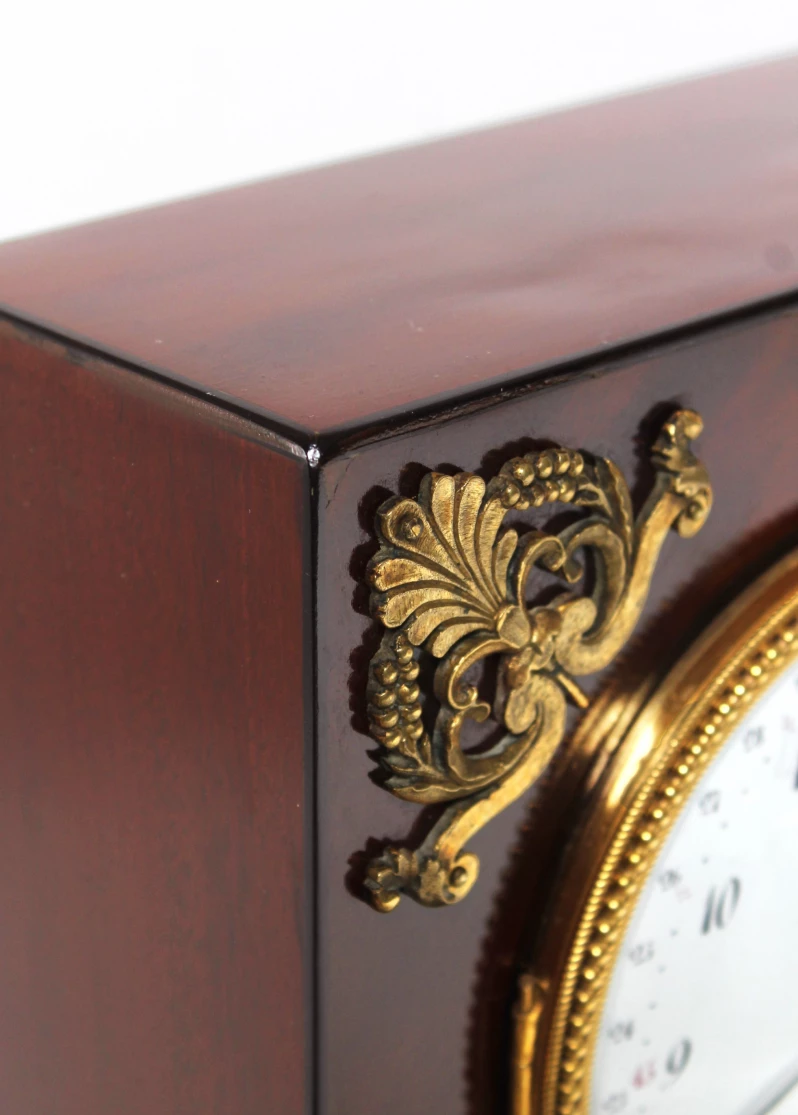
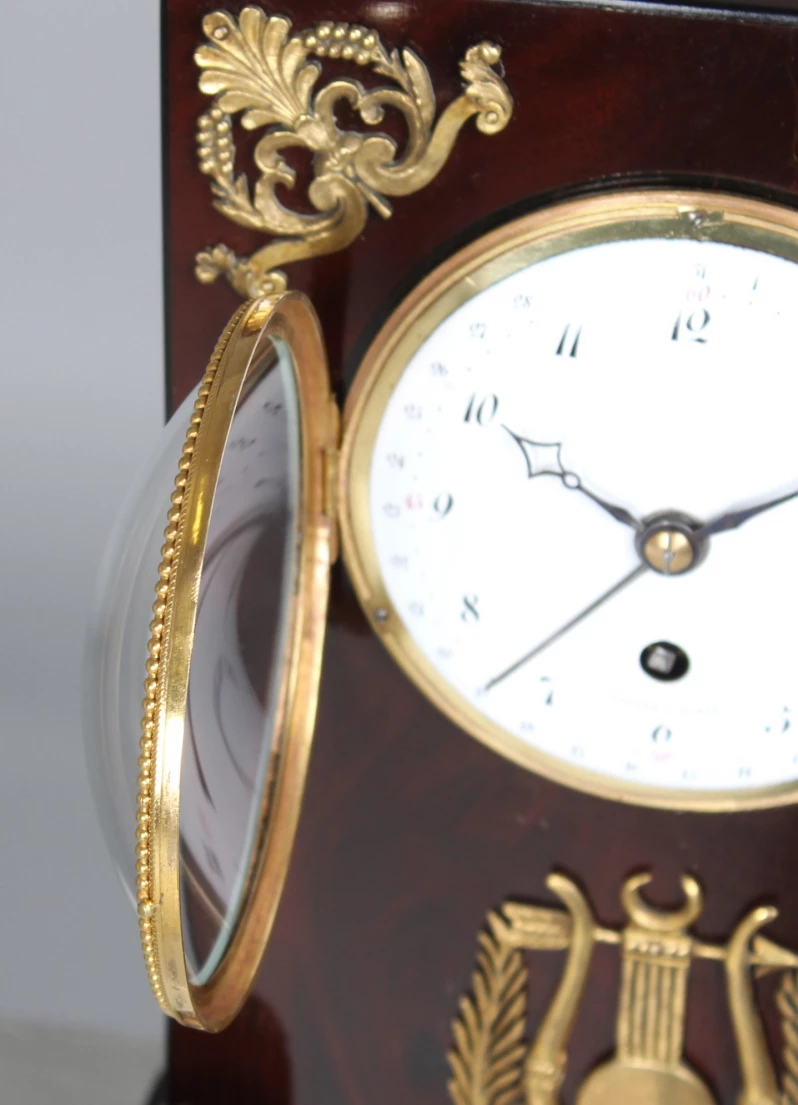
Between the sphinxes we see a decorative element with a lyre, arrow and laurel branches. Together with the sphinxes and the corner spandrels above the dial, they are reminiscent of Napoleon's Egyptian campaigns.
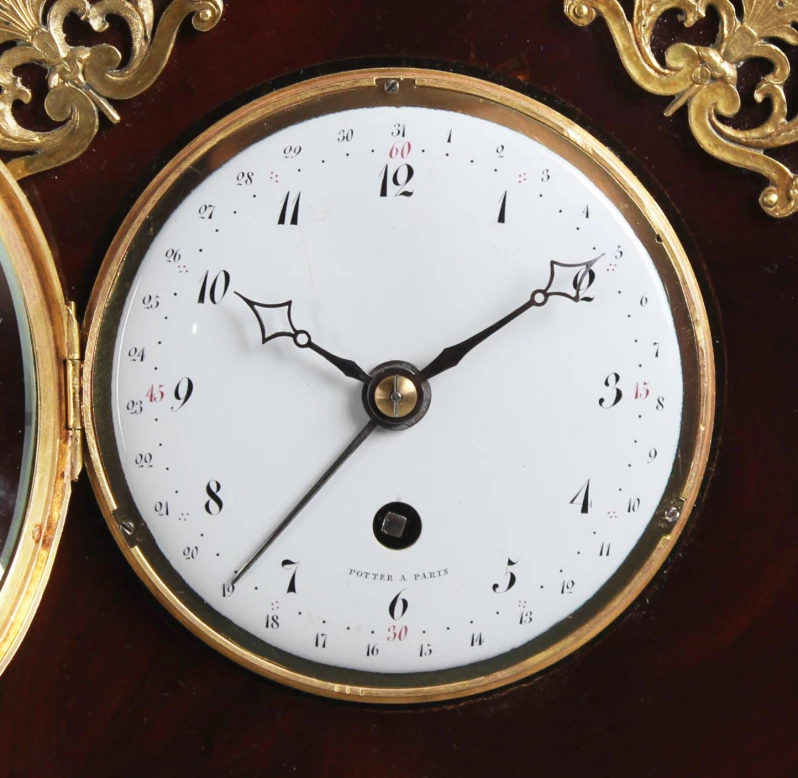
Behind a domed glass pane is the unusual and beautiful dial, which shows the date as well as the time. We see Arabic numerals - black for the hours and the date, red for the quarter hours.
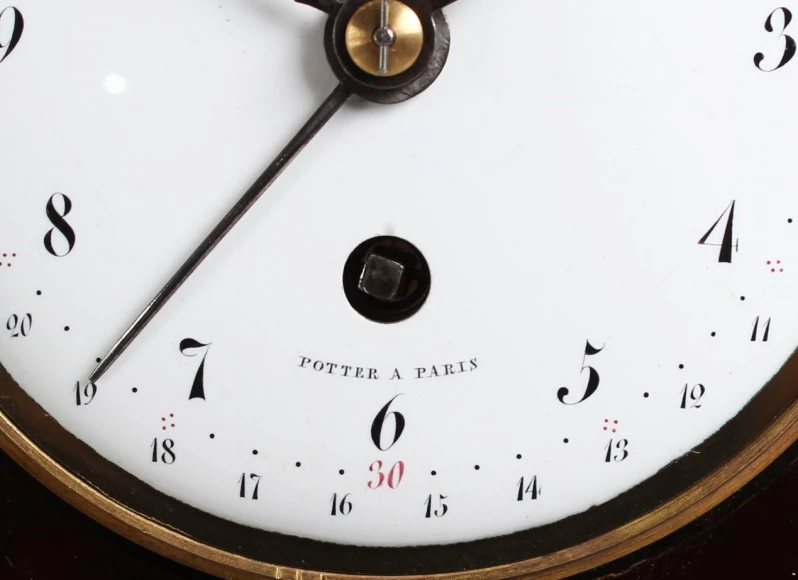
Above the 6 is the signature of the clockmaker: Potter a Paris.
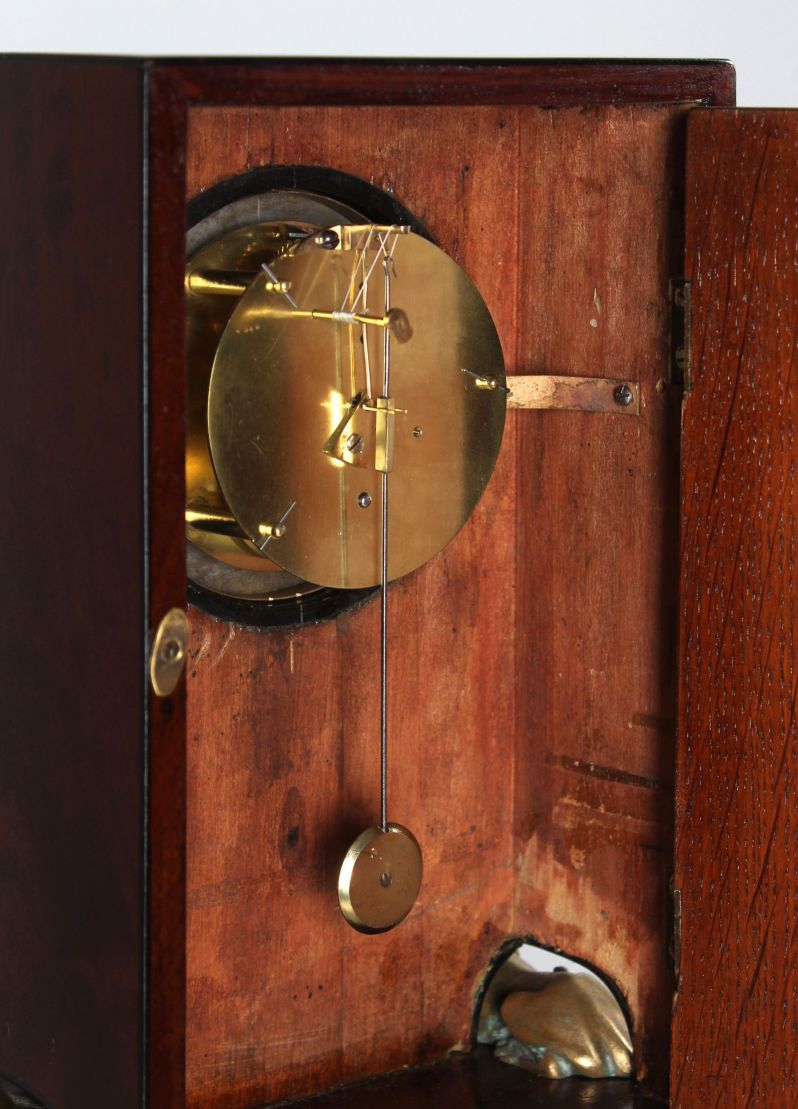
The movement is a French 8-day movement with anchor escapement and thread suspension of the pendulum.
There is no striking mechanism. This is why we only see one winding hole on the dial, where there would be two on clocks with a striking mechanism.
Interesting facts:
When Napoleon Bonaparte returned from his Egyptian campaigns in 1801, a veritable Egyptomania broke out in France.
The furnishing style, now also known as Retour d'Egypte, began around 1800 and its influence was felt until the end of the reign of Charles X, i.e. it encompassed the Consulate (1799-1804), the reigns of Napoleon I (1804-1815), Louis XVIII (1815-1824) and Charles X (1824-1830). Gilded caryatids and sphinxes in combination with exotic mahogany were the style-defining decorative elements of the early 19th century.
Condition: Both movement and case are in perfect, cleaned and restored condition.
Price: 2500,- €
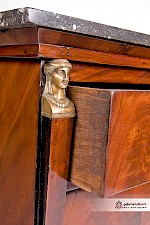
You will find a clock of the same type in the reference book:
Tardy - La Pendule Francaise 2eme Partie p. 399
Article found under: Clocks
Also interesting
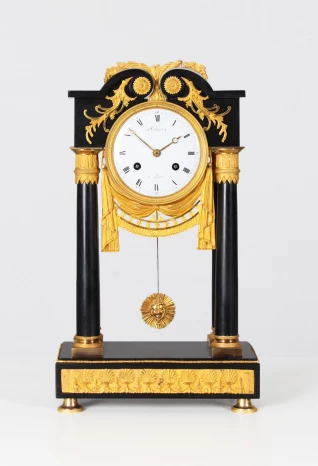
Antique Portal Clock
France
Marble, bronze, enamel
Directoire around 1800
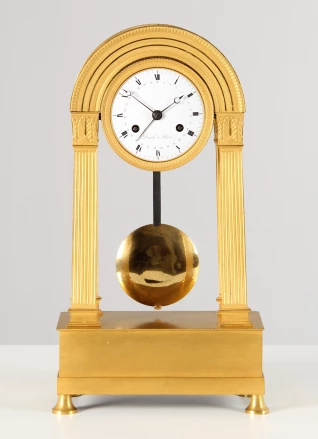
Antique Portal Clock with Cutting Edge Suspension
France (Paris)
Bronze, enamel
Empire circa 1820
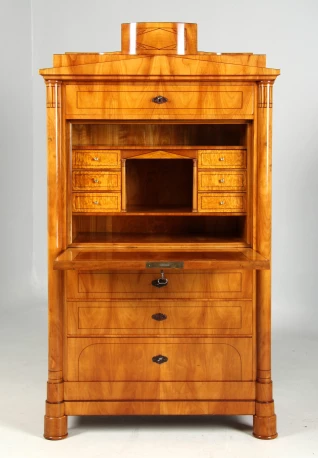
Antique writing cabinet with leather fittings and thread inlays
Austria
Cherry and others
Biedermeier around 1830