
Antique demilune sideboard
Southern Germany
Cherry
early 19th century
Dimensions: H x W x D: 90 x 85 x 42 cm
Description:
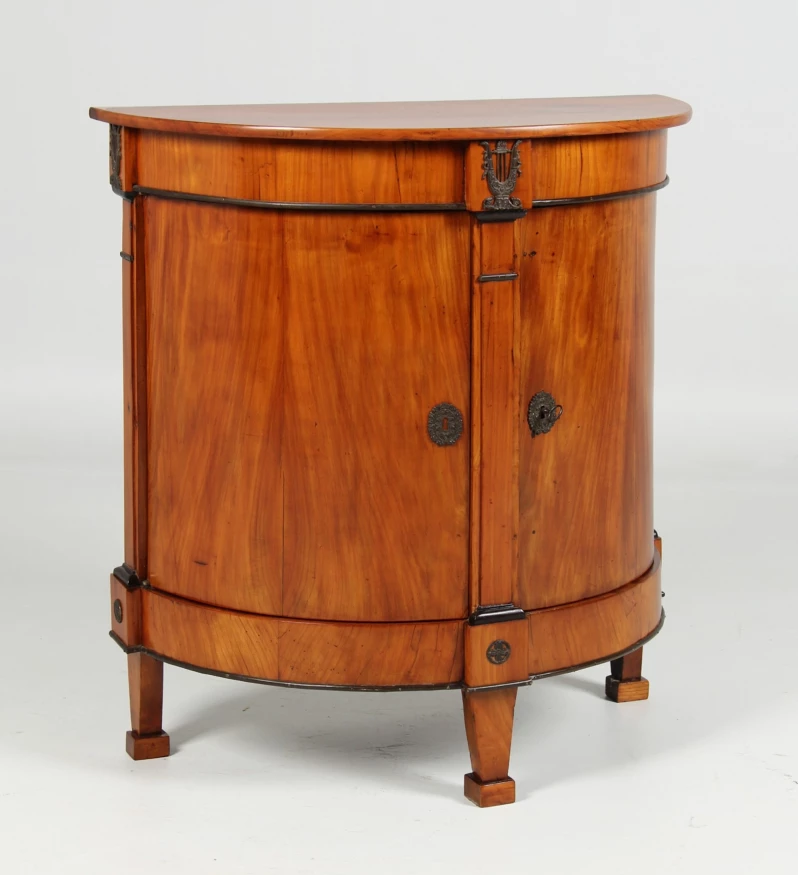
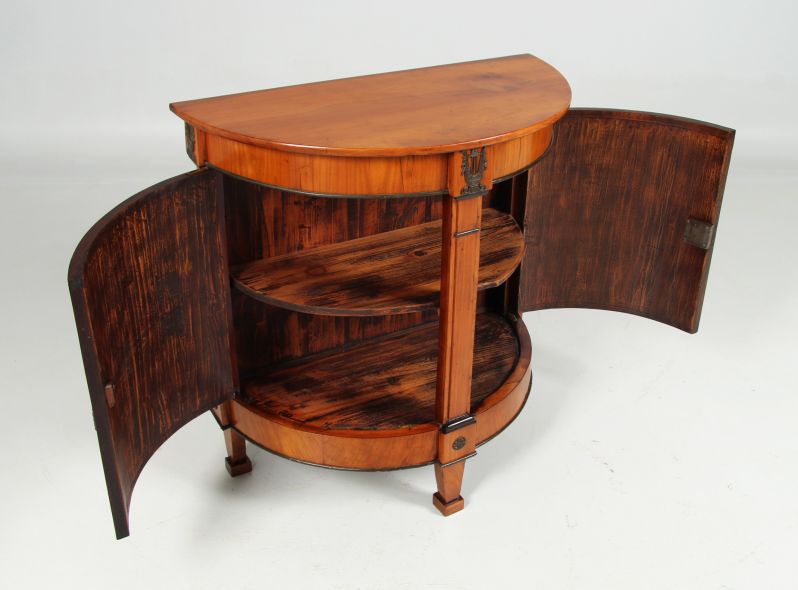
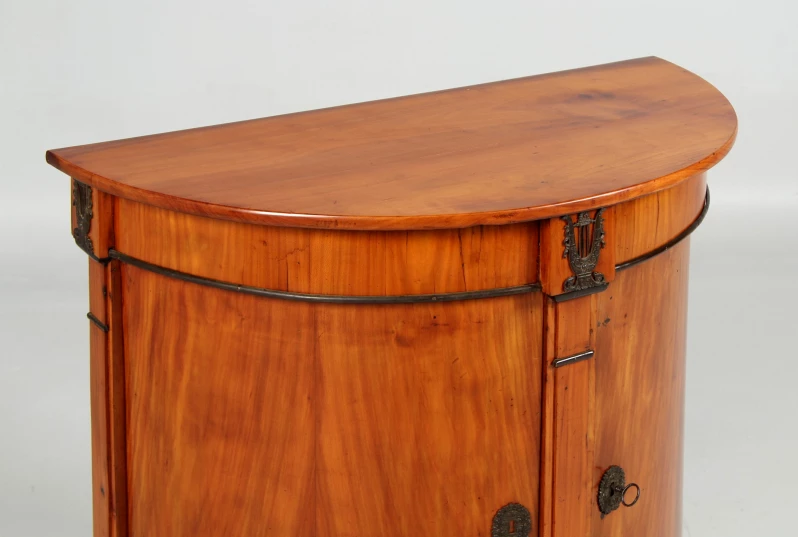
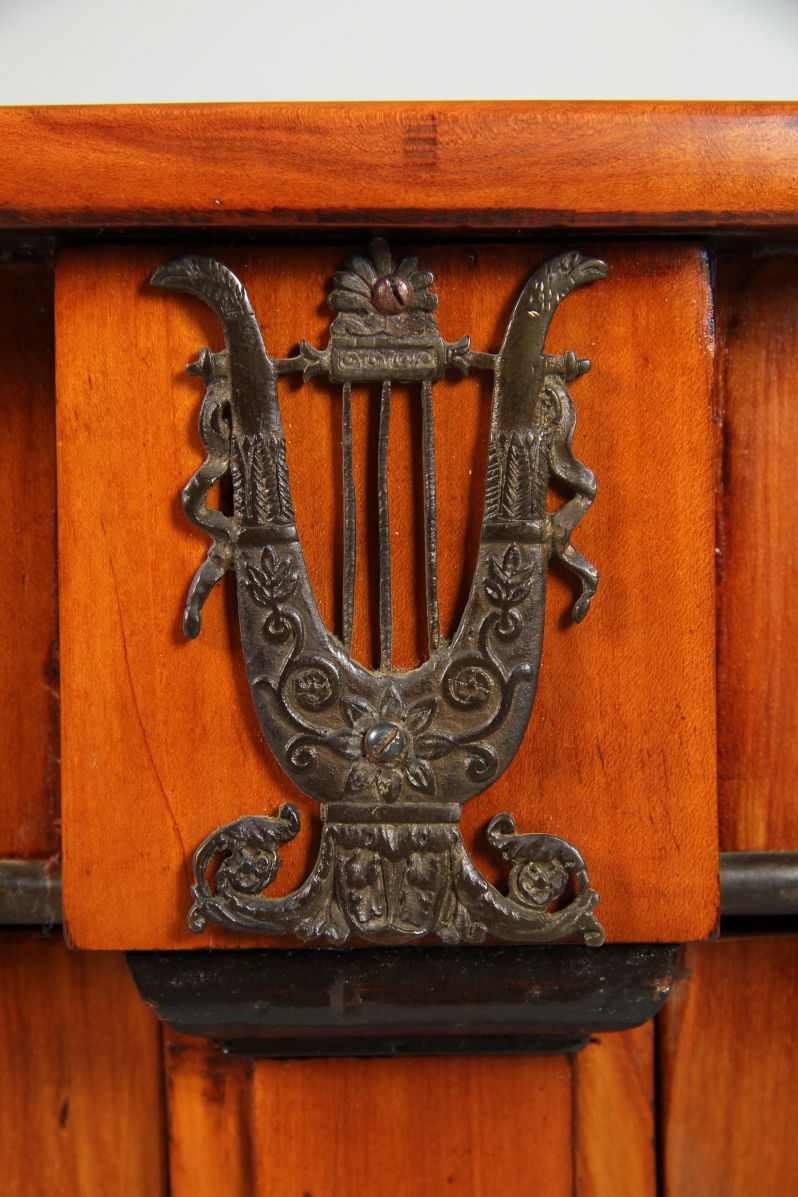
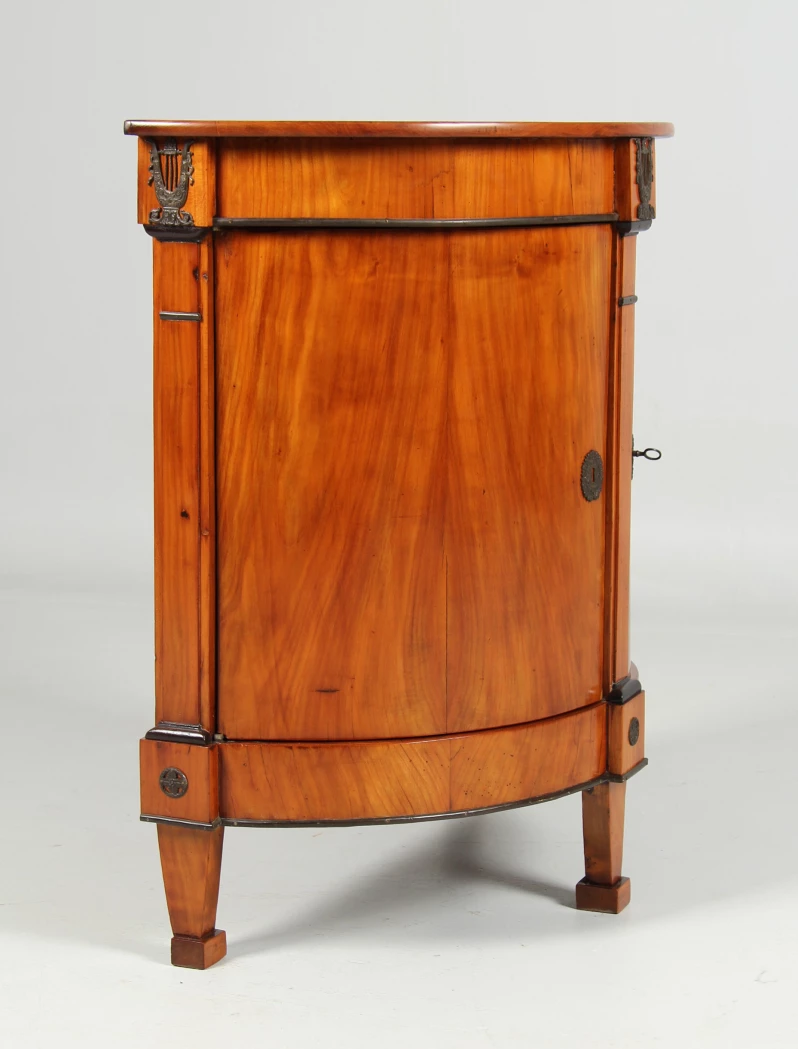
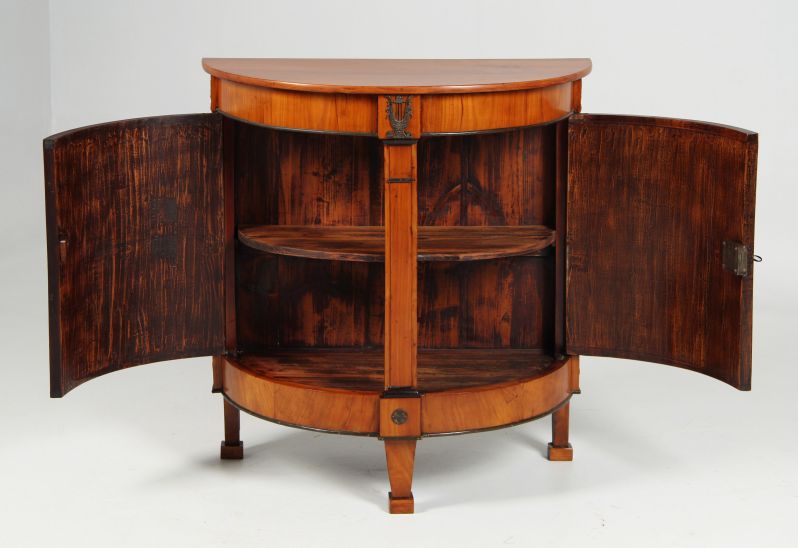
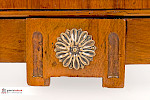
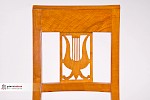
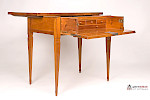
Two-door cabinet standing on pedestal-like pointed legs. The height of the plinth corresponds to that of the cornice. Risalit-like projections above the legs form the basis for the flat pilasters that build on them, which are marked at the bottom by a small rosette and crowned at the top by a lyre.
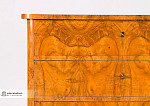
The front of the cabinet is veneered in restrained grained cherry. The grain patterns are arranged in mirror image and ensure symmetry in the furniture and thus a harmonious overall appearance.
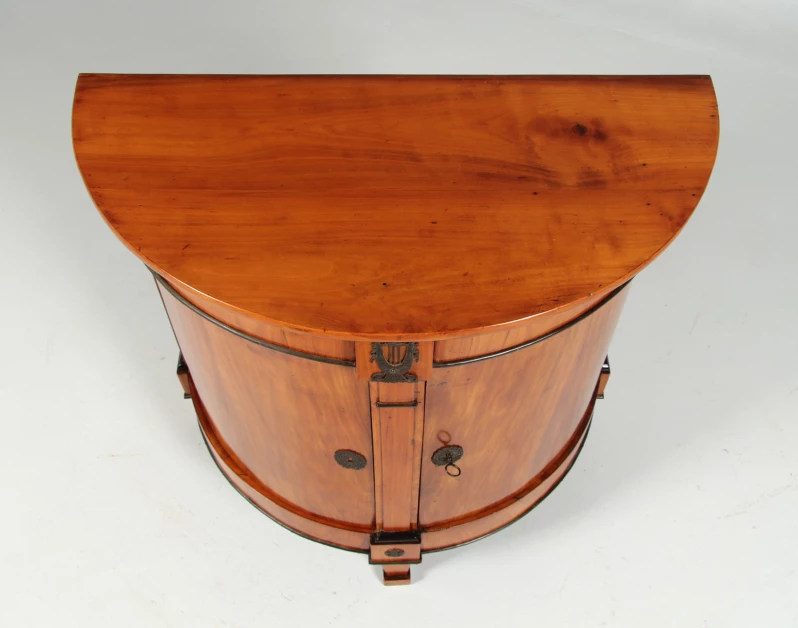
The top panel is made of solid cherry.
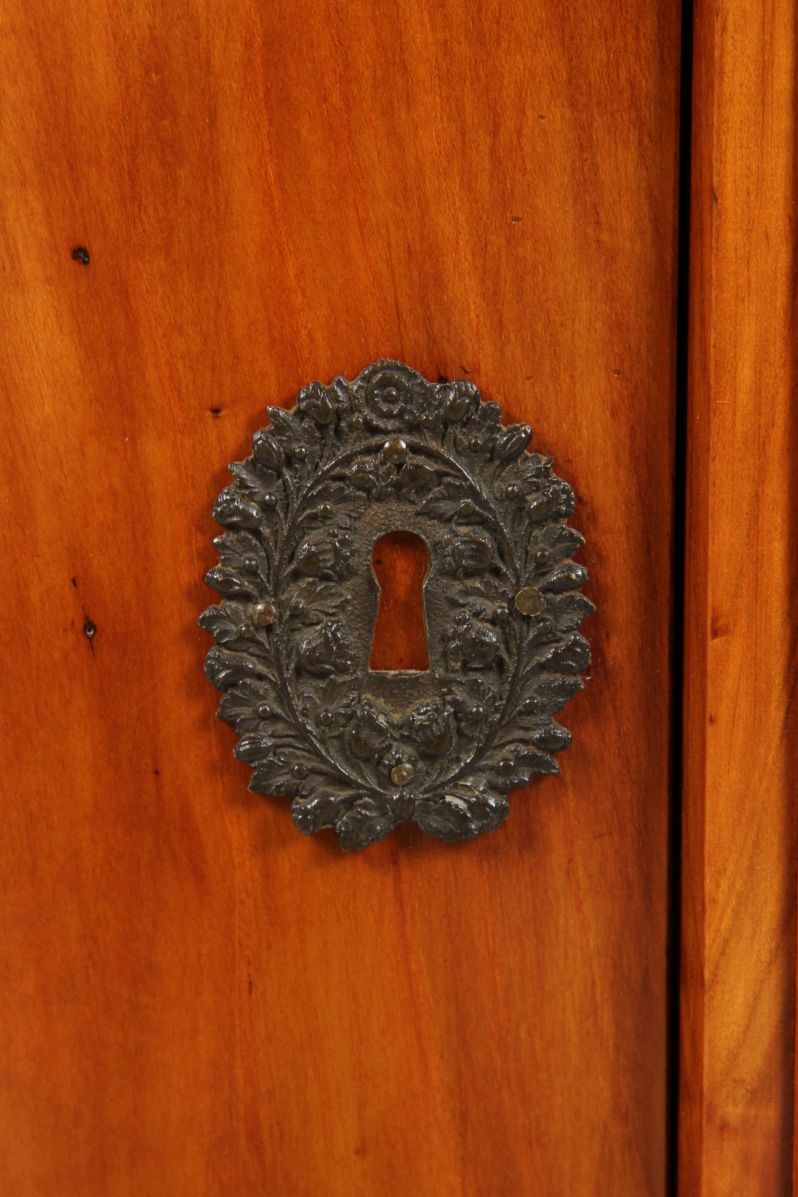
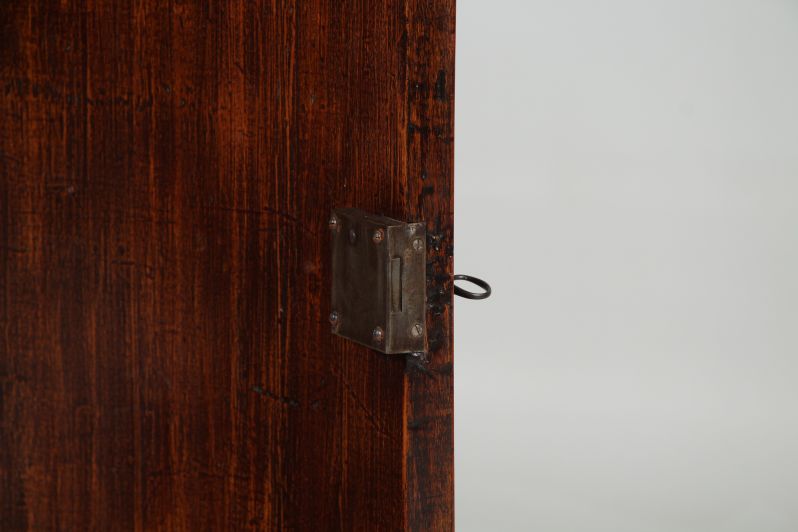
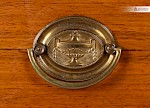
The furniture's fittings bear witness to the international influence on Biedermeier furniture making in Germany. The lyres, for example, can be traced back to models from Vienna [cf: Hoyer/Ottomeyer - Die Möbel der Residenz München III - Möbel des Empire, Biedermeier und Spätklassizismus p.87], while the keyhole fittings are designed in the French manner.
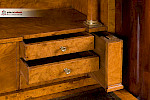
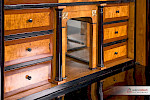
The fittings were not gilded, but are made of brass and may have been subjected to ageing processes before assembly, which caused the dark colouring of the metal. The result is a bourgeois Biedermeier appearance with the typical dark contrasts on warm wood. Even the dark mouldings below the plinth and cornice are not ebonised, but are covered in brass.
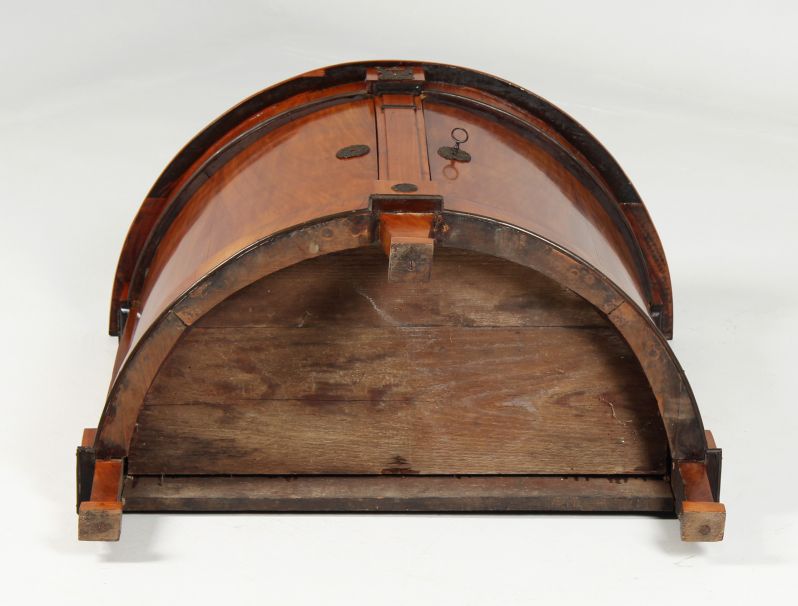
Due to its semi-circular or crescent-shaped cross-section, this type of furniture is also known as "demilune". Demilune cabinets were placed, for example, on the wall surface between two doors, i.e. where more expansive pieces of furniture would have obstructed the walkways.
The fact that curved doors are much more complex to manufacture than straight fronts means that only a few pieces of furniture of this type were built and demilune cabinets are therefore less common today than the "classic" semi-cabinet.
Condition:
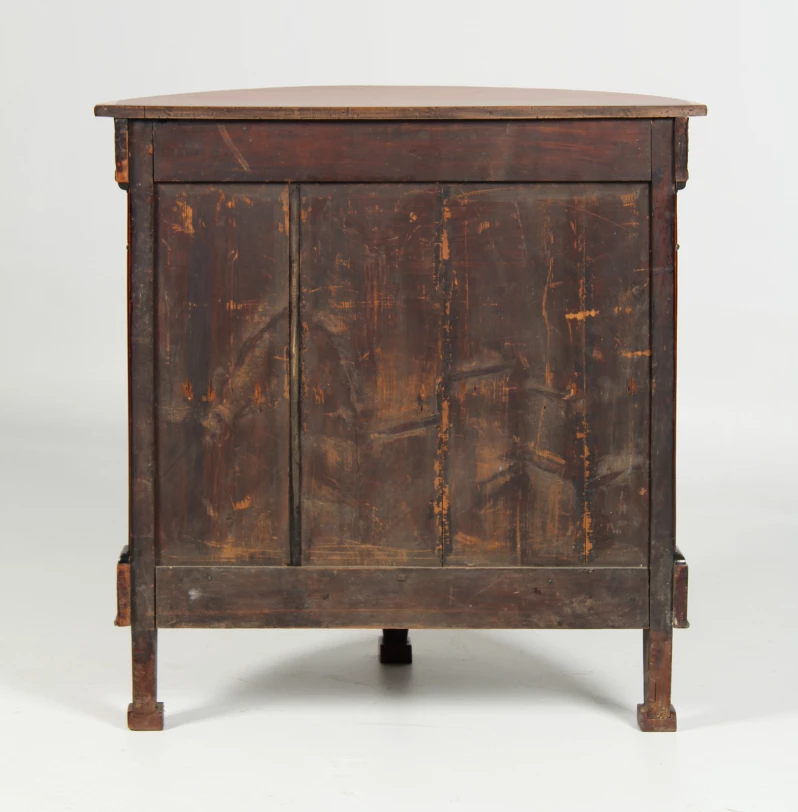
Restored condition suitable for everyday use with a shellac hand polish. Authentic patina with preserved signs of age and use.
Price: This piece of furniture is already sold.
Article found under: Chests of drawers
Also interesting
Antique dressing table - stamped Chapuis
Brussels
Mahogany
Empire around 1810
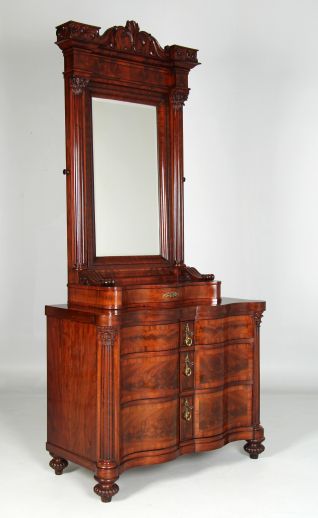
Chest of drawers with mirror
Northern Germany
Mahogany
Mid 19th century
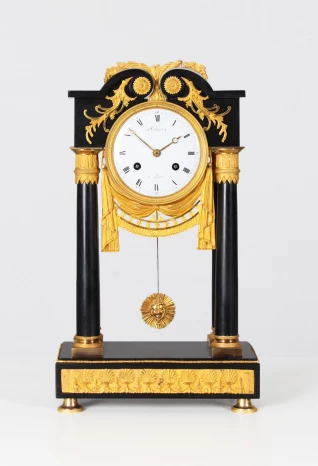
Antique Portal Clock
France
Marble, bronze, enamel
Directoire around 1800