Video Viennese desk
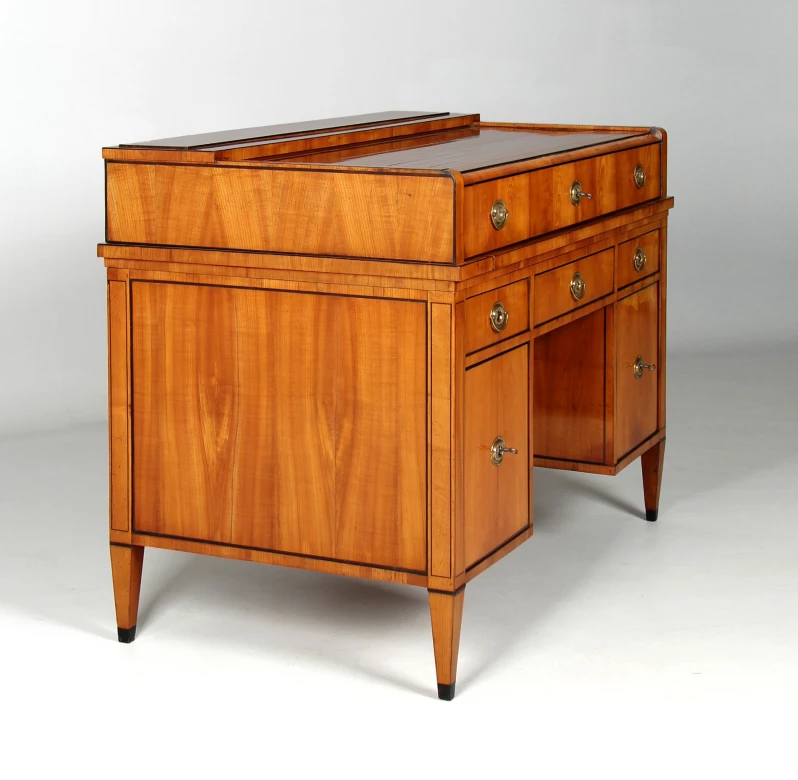
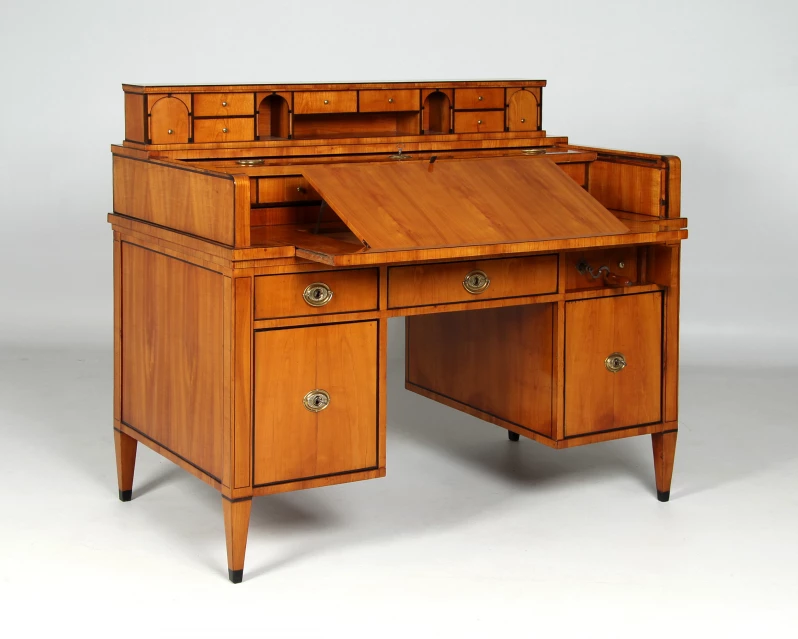


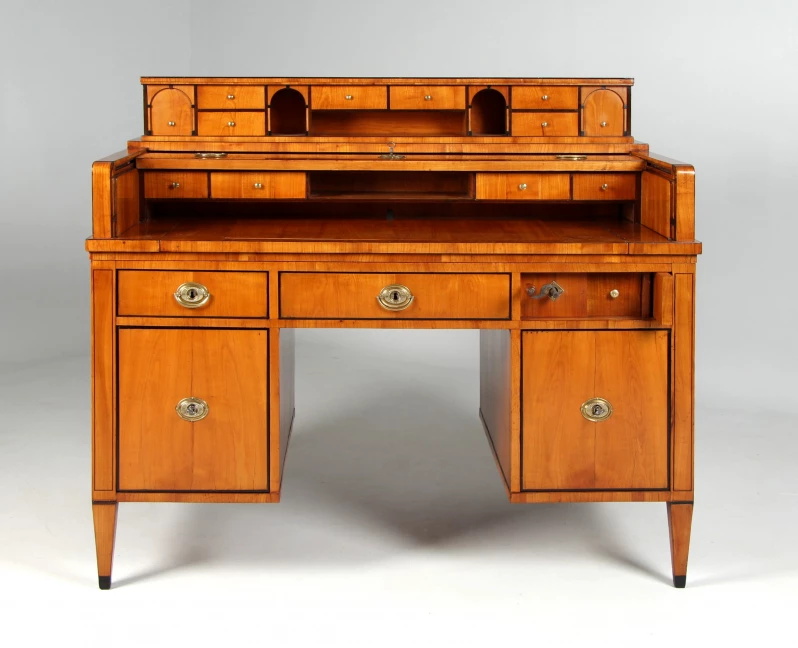
Antique Biedermeier desk in cherry
Austria
Cherry
early 19th century
Dimensions: H x W x D: 99 x 133 x 79 cm, writing height: 80 cm
Description:
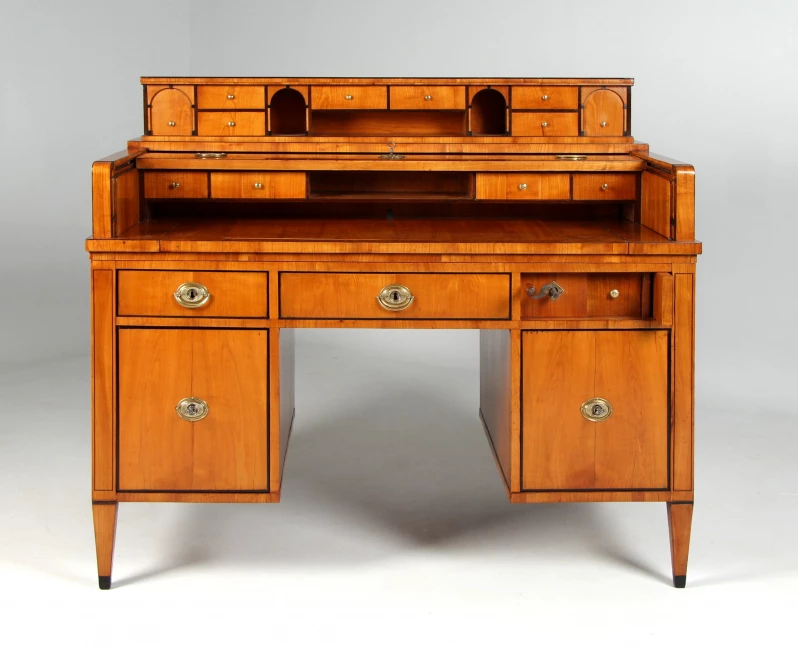
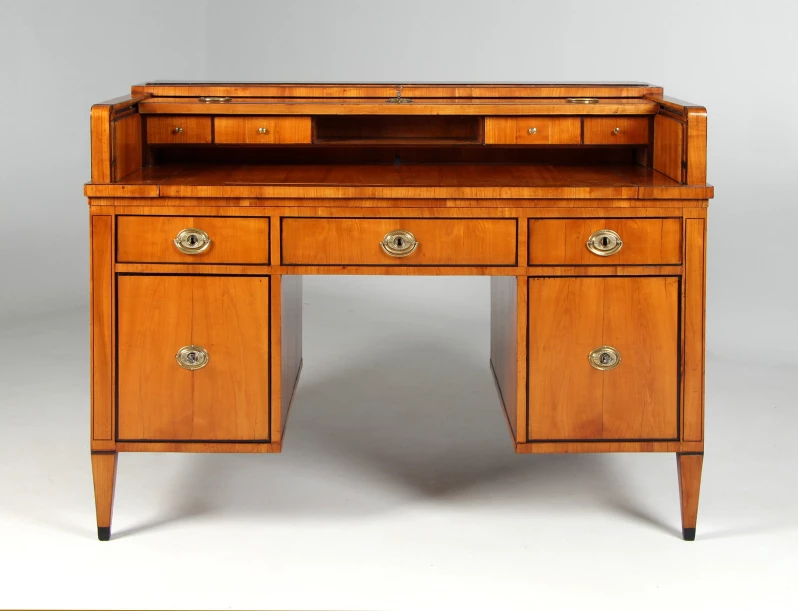
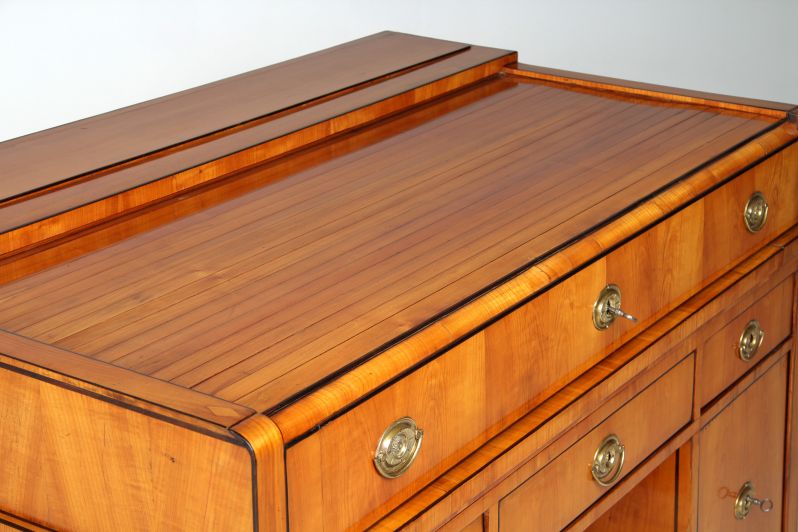
Body standing on slender pointed legs with a clearly structured front. The base is formed by two doors with a row of drawers above. The upper end is formed by a writing top with a roller shutter.
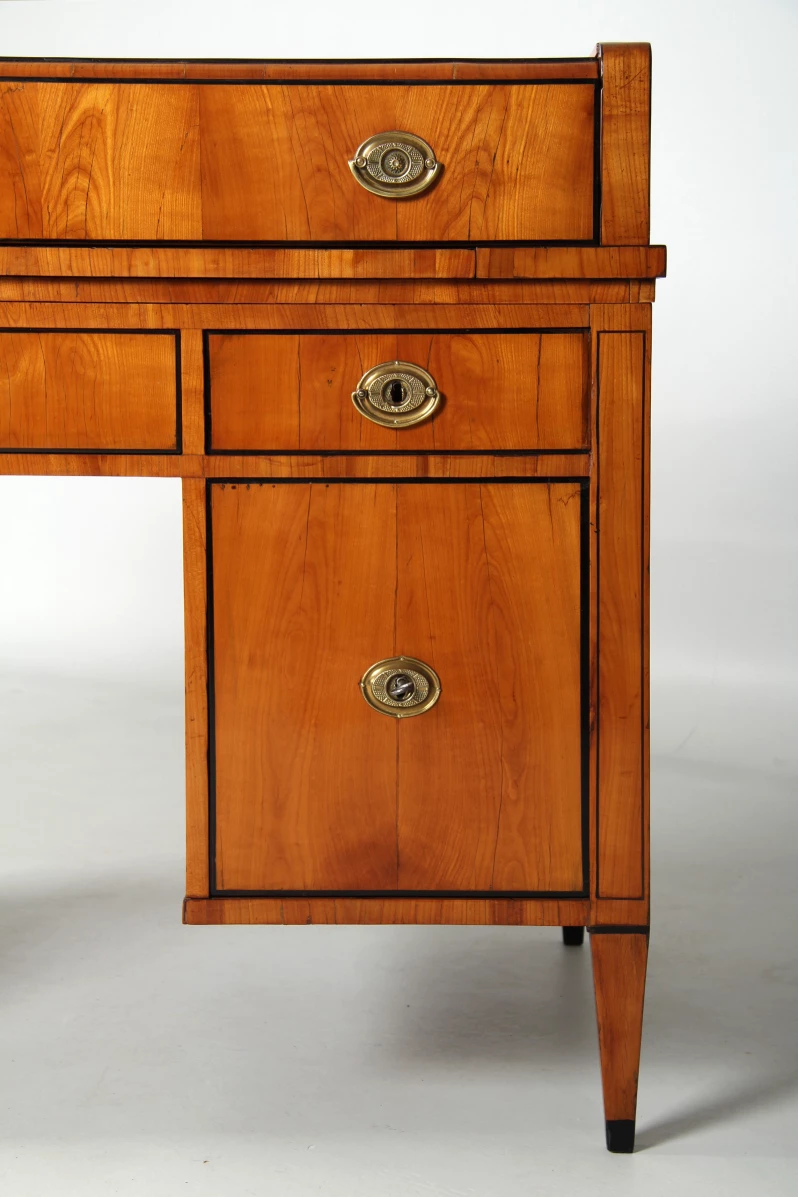
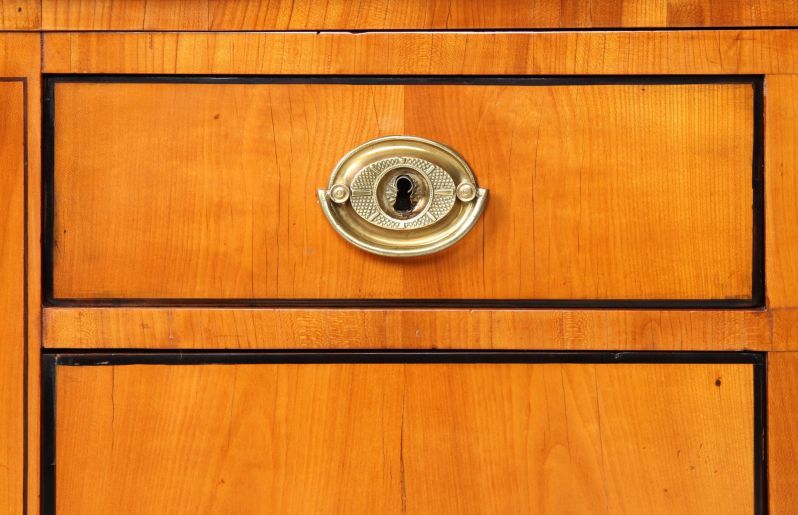
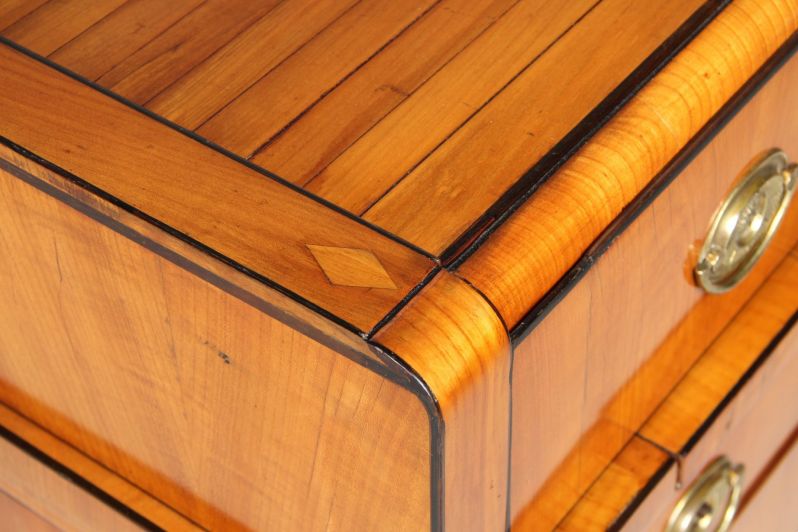
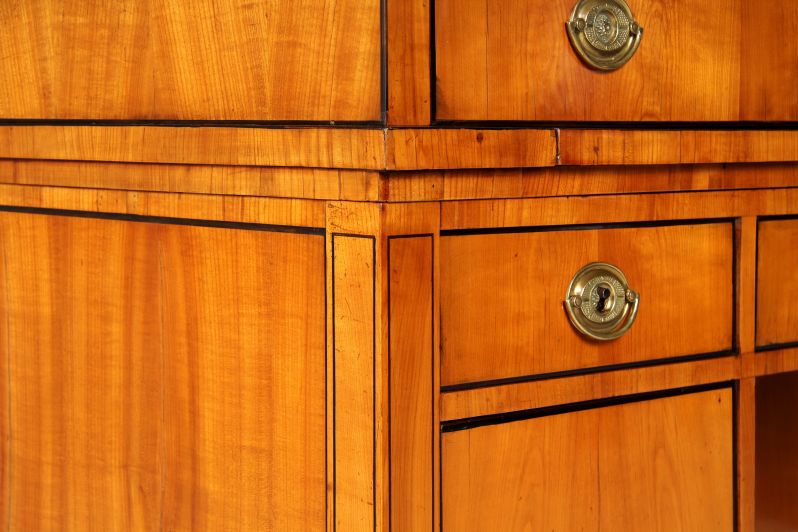
The furniture is completely veneered in cherry wood. The pilaster strips are divided by fine ebony inlays. Dark edging on the door and drawer fronts emphasises the precise lines of the furniture design.
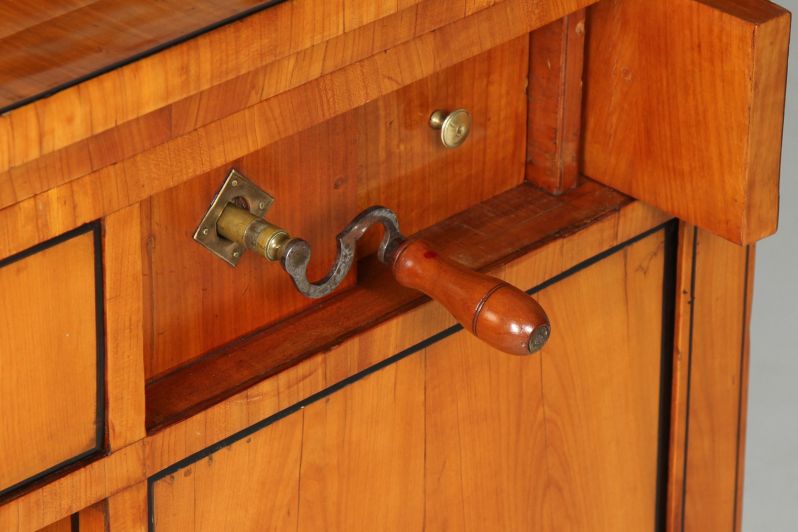
The roller shutter has a bar lock that locks into the sides of the piece of furniture. When closed, a lever at the bottom right also secures the writing tablet against being pulled out.
Made up of numerous narrow slats, the bolt lock can overcome a tight radius when opened and is thus recessed in the rear area of the furniture.
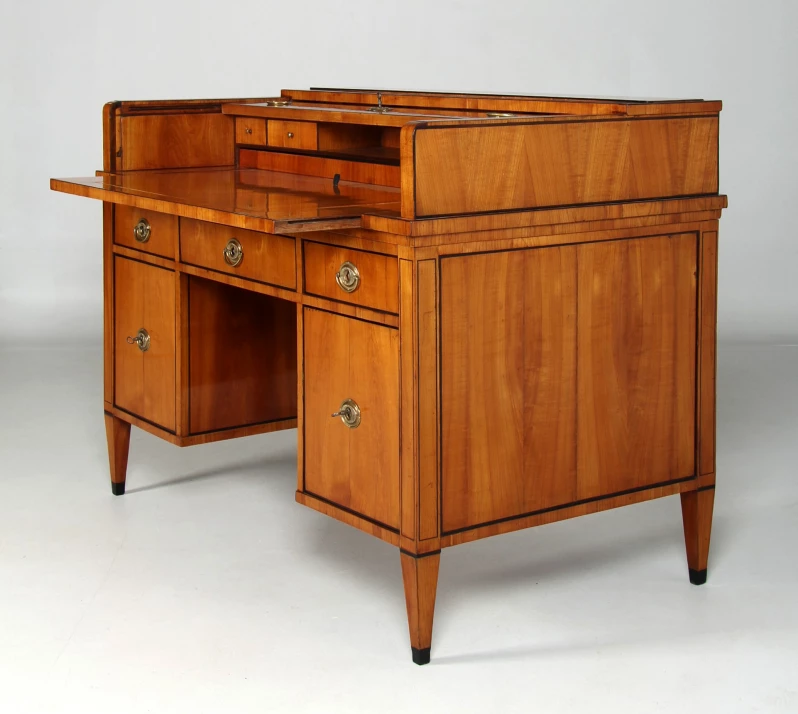
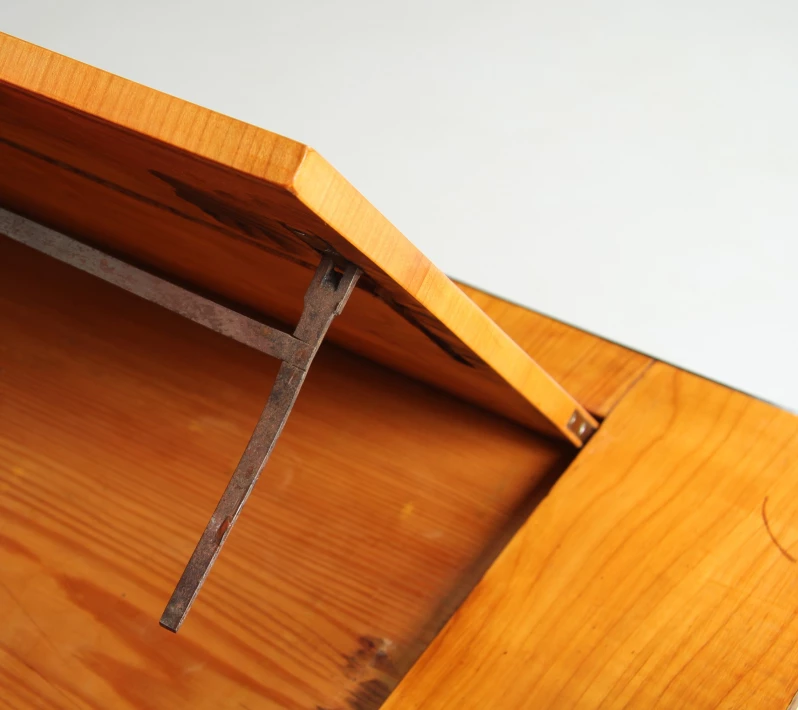
When open, it reveals a clearly organised, tidy work area with a pull-out writing surface that creates additional legroom. The top has an infinitely adjustable centre section.
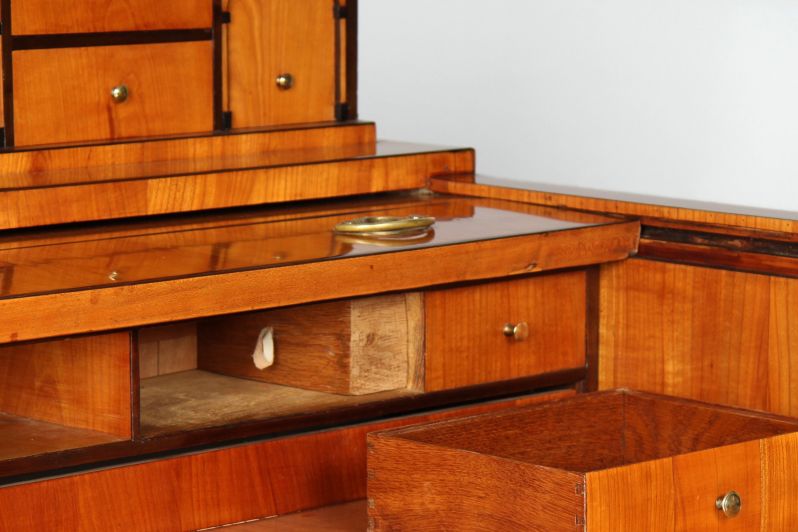
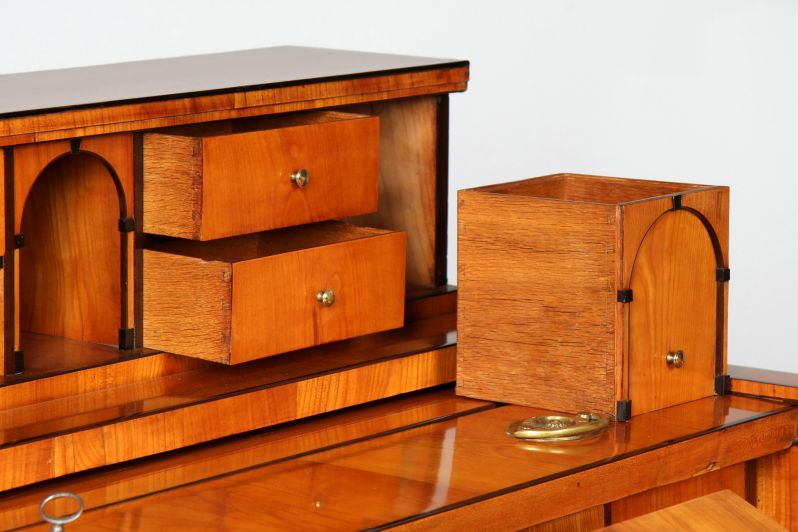
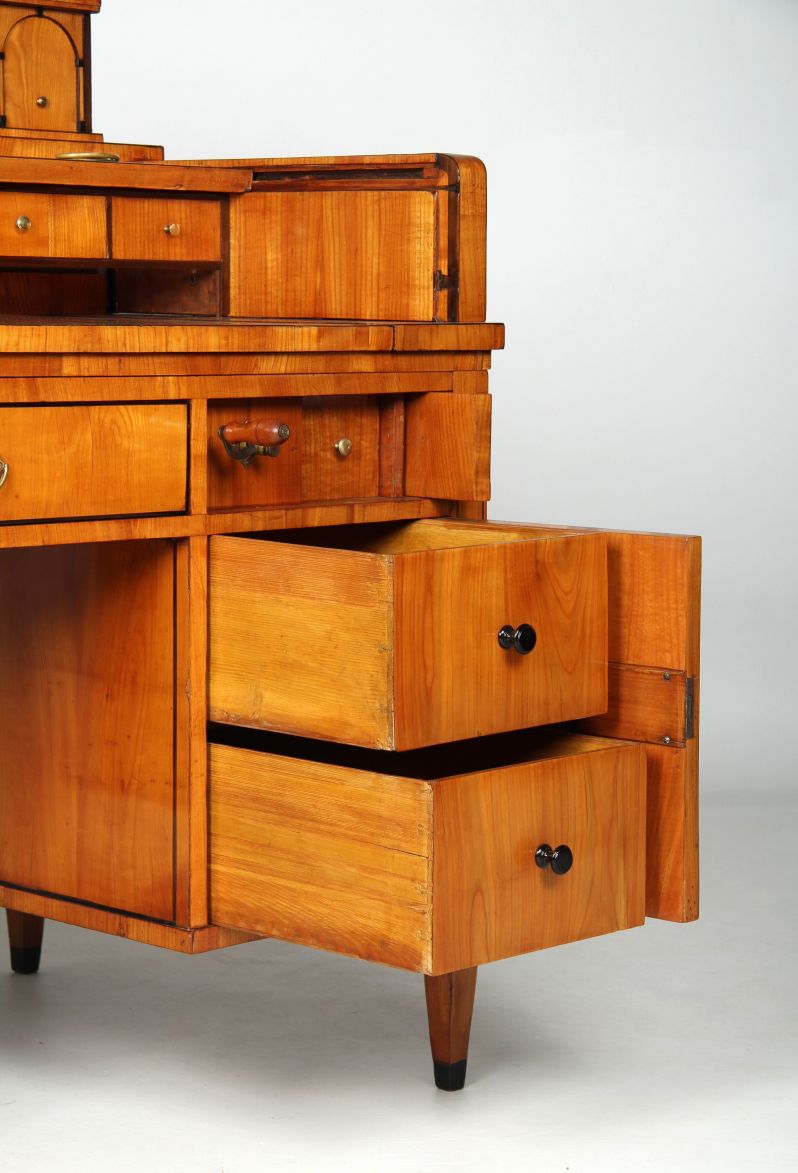
Behind it is a row of what appears to be four drawers and a free compartment in the centre. On closer inspection, however, the two outer drawers turn out to be panels - the hidden drawers behind them are revealed by folding back the centre panel. The drawers can then be pulled out inwards.
The special highlight of this piece of furniture is a built-in shelf that runs across the entire width and is concealed in the upper rear section of the unit. It is therefore located in the space that at first glance appears to be merely a necessary cavity for the roller shutter.
The concealed compartment is raised with the aid of an ingenious crank mechanism with a worm drive. It consists of eight small drawers and three open compartments.
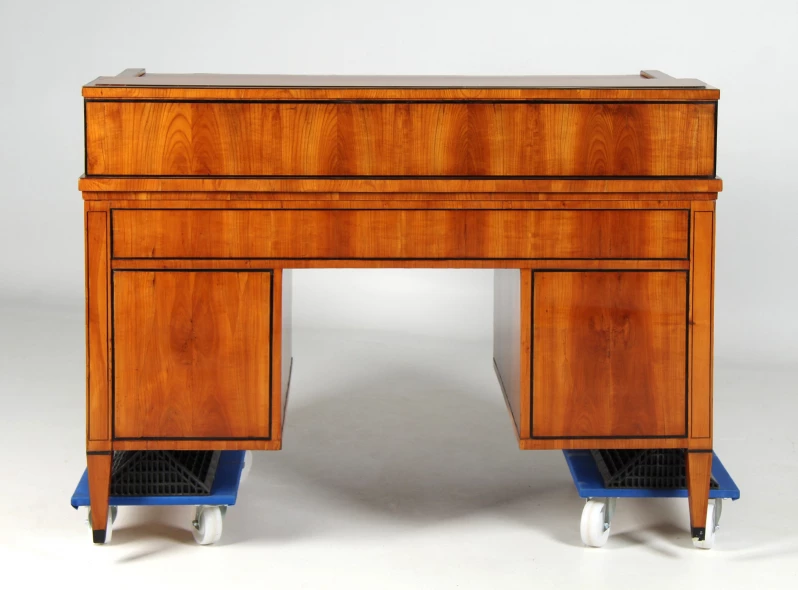
The back of the desk is also carefully and neatly finished. It could therefore have served as a representative piece of free-standing furniture in a larger office or bureau.
Worth knowing:
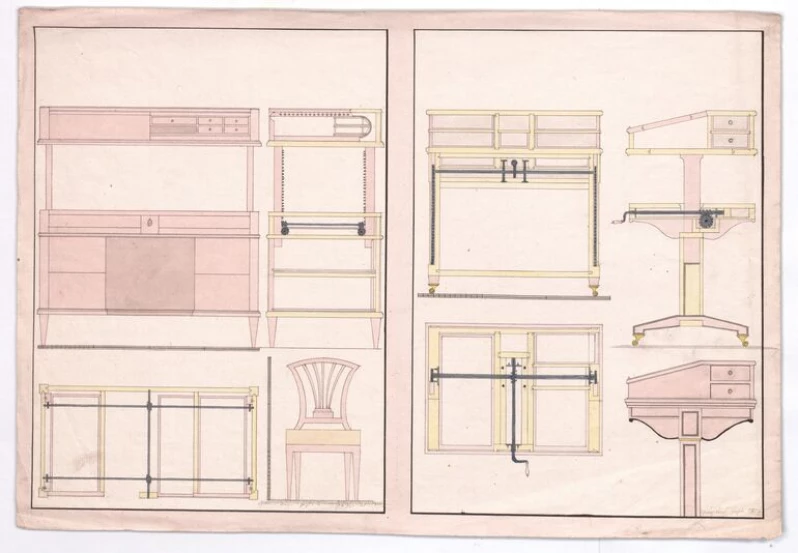
The overall appearance of this desk is typical of early 19th century Viennese furniture making. Mechanics such as this one are documented by Karl Schmidt and Gottlieb August Pohle, among others. Corresponding technical drawings, which are kept in the MAK Vienna, confirm this (see enclosed photos).
Both the worm drive in the crank mechanism and the louvre lock with hinged front are characteristic of Karl Schmidt's furniture designs. Production in his workshop therefore seems obvious.
The fact that this desk is a model that was produced in small series - in slightly varying versions - also suggests that it was made in this highly specialised workshop.
Condition:
Excellent condition with a shellac hand polish. The mechanism and all moving parts work perfectly.
Price: 12800,-€
Please compare the following specialised literature:
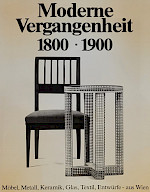
Asenbaum - Witt-Dörring - Moderne Vergangenheit 1800–1900 - Entwürfe aus Wien p. 214
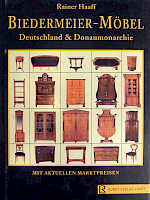
Rainer Haaff - Biedermeier-Möbel - Deutschland und Donaumonarchie p. 230
Article found under: Tables
Add to shopping cartVideo Viennese desk
Also interesting
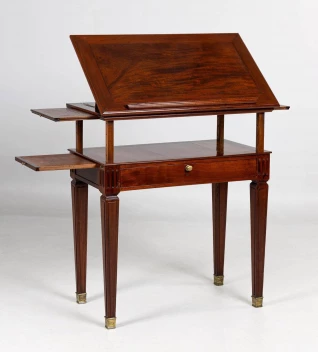
Height-adjustable desk
France
Mahogany
around 1800
Finely inlayed ladies' desk
Paris
Rosewood a.o.
around 1880
Small Antique Slanted Flap Secretary
Switzerland (Bern)
Walnut
Baroque around 1760