Antique Biedermeier secretary with standing desk function
Bavaria
Cherry tree
dated: 1822
Dimensions: H x W x D: 154 x 99 x 51 cm
Description:
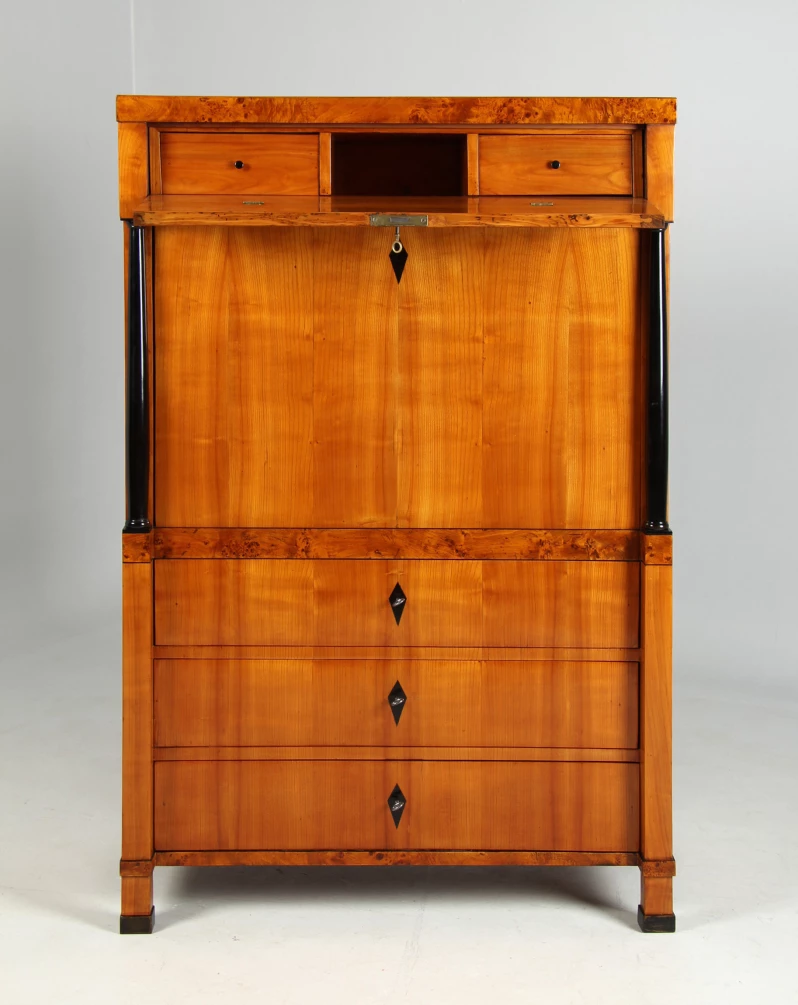
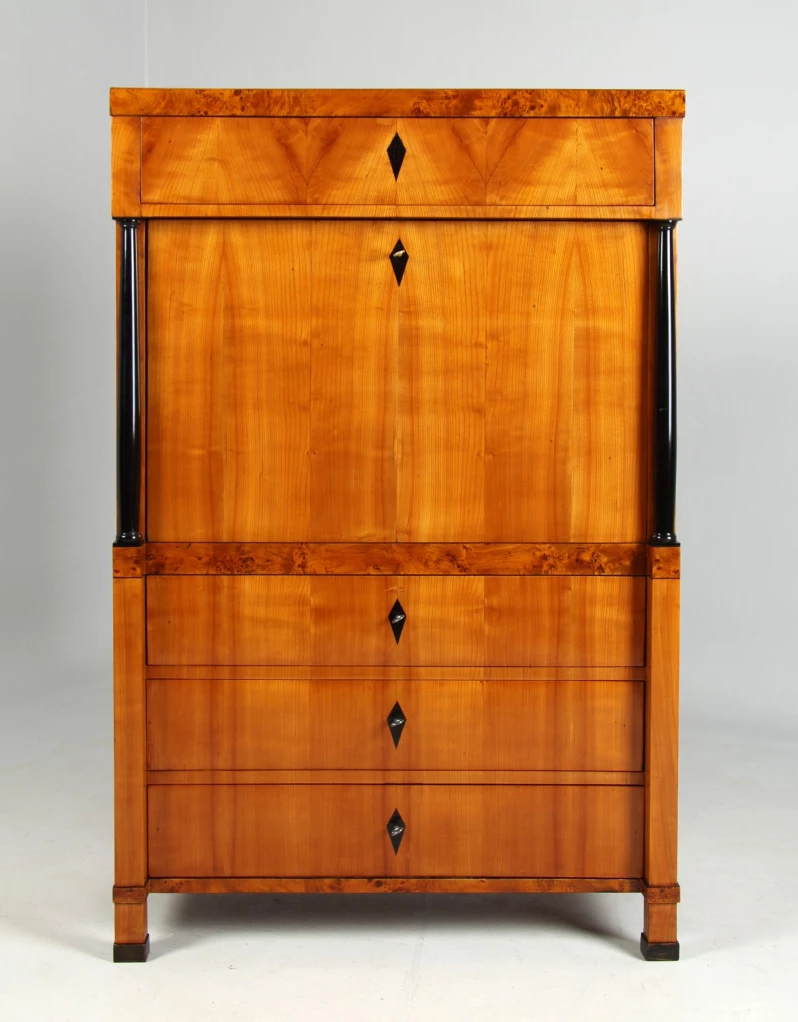
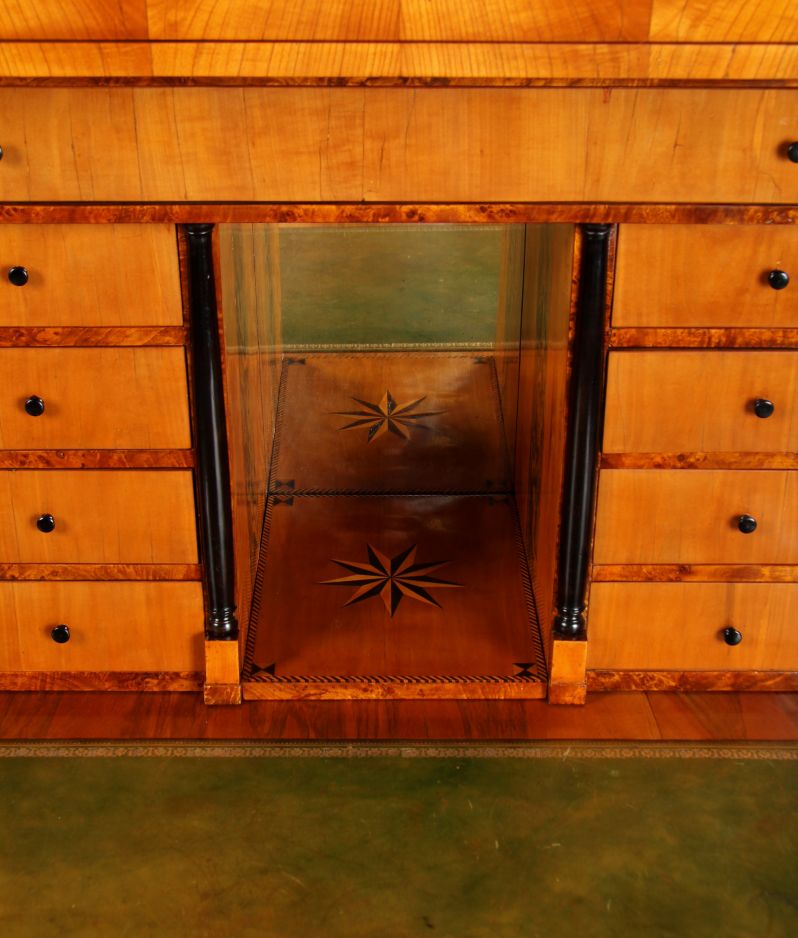
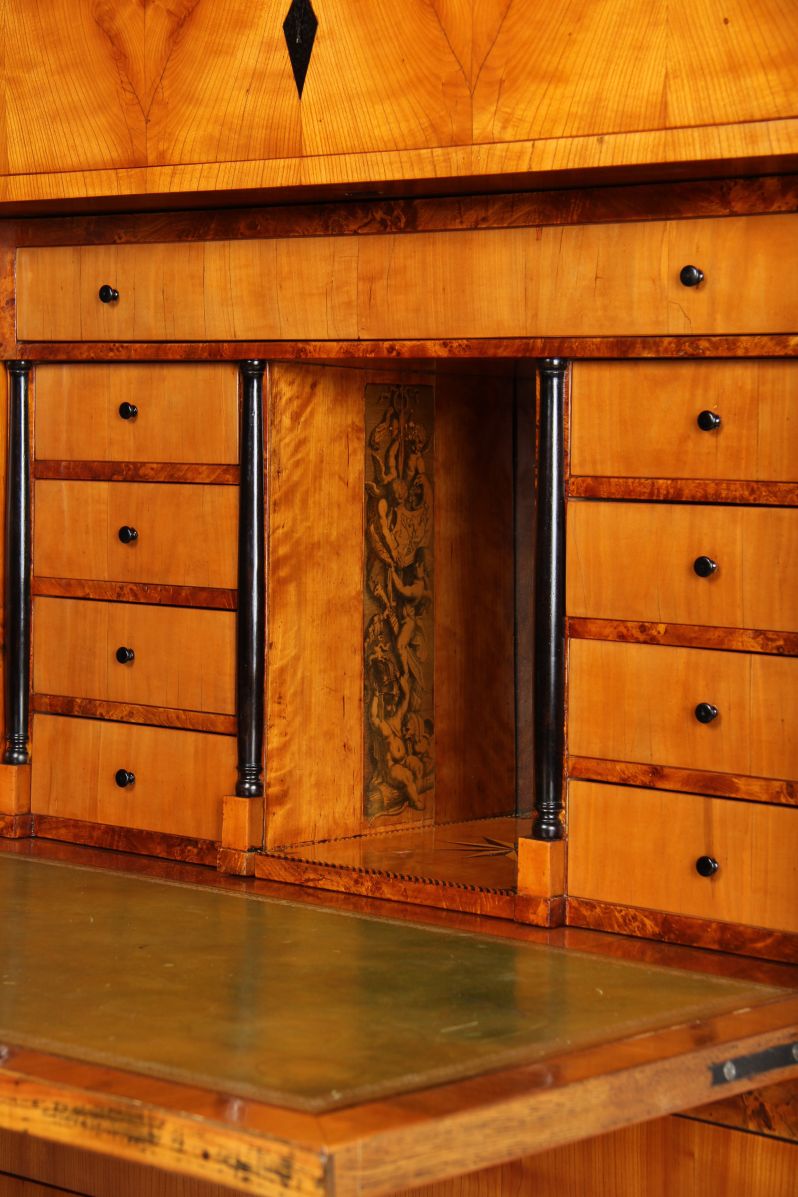
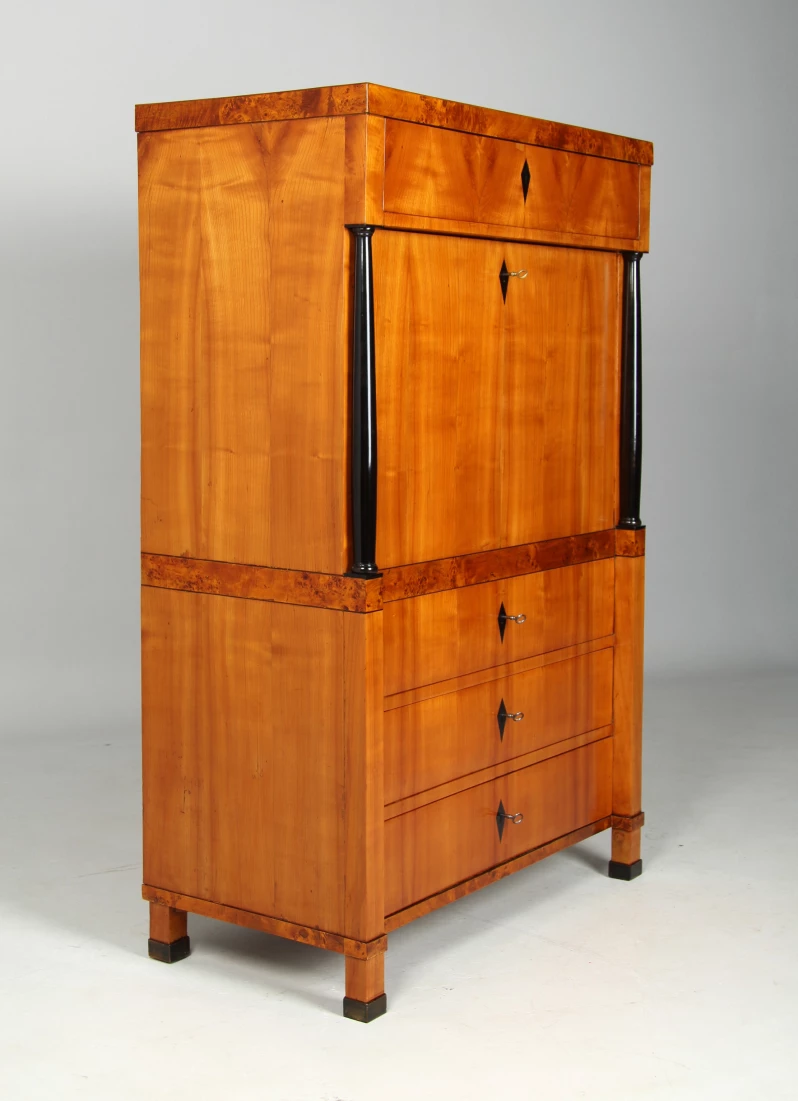
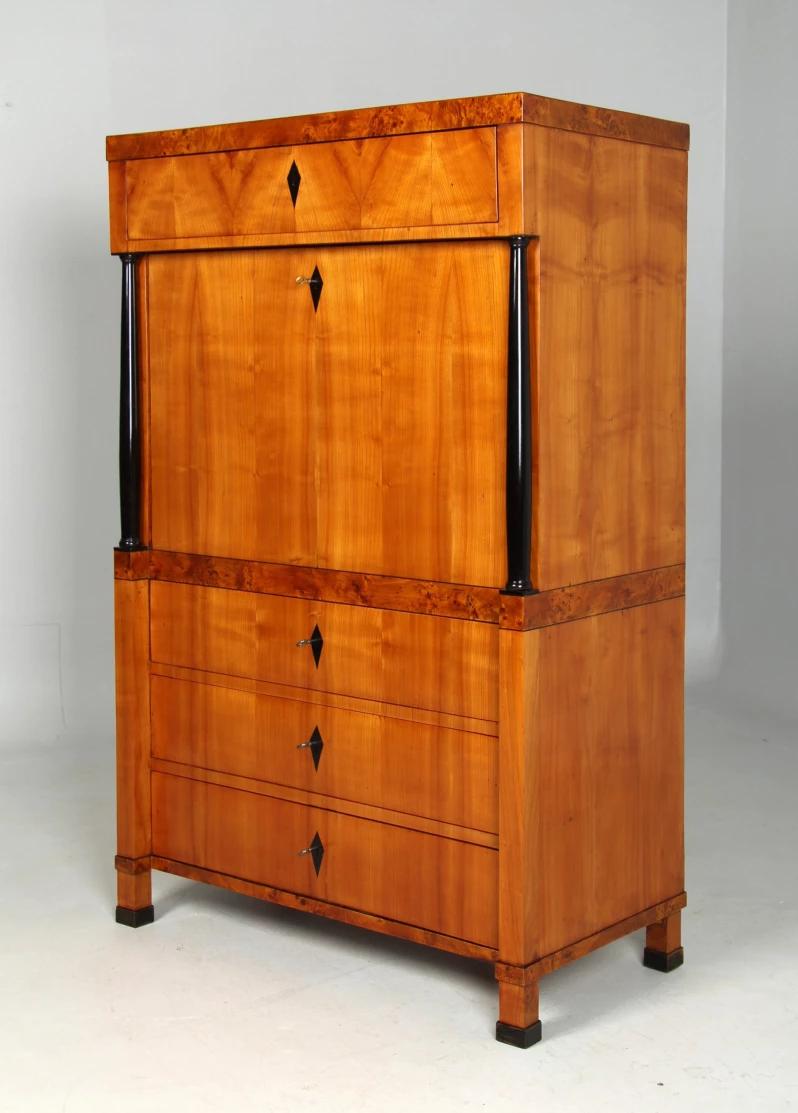
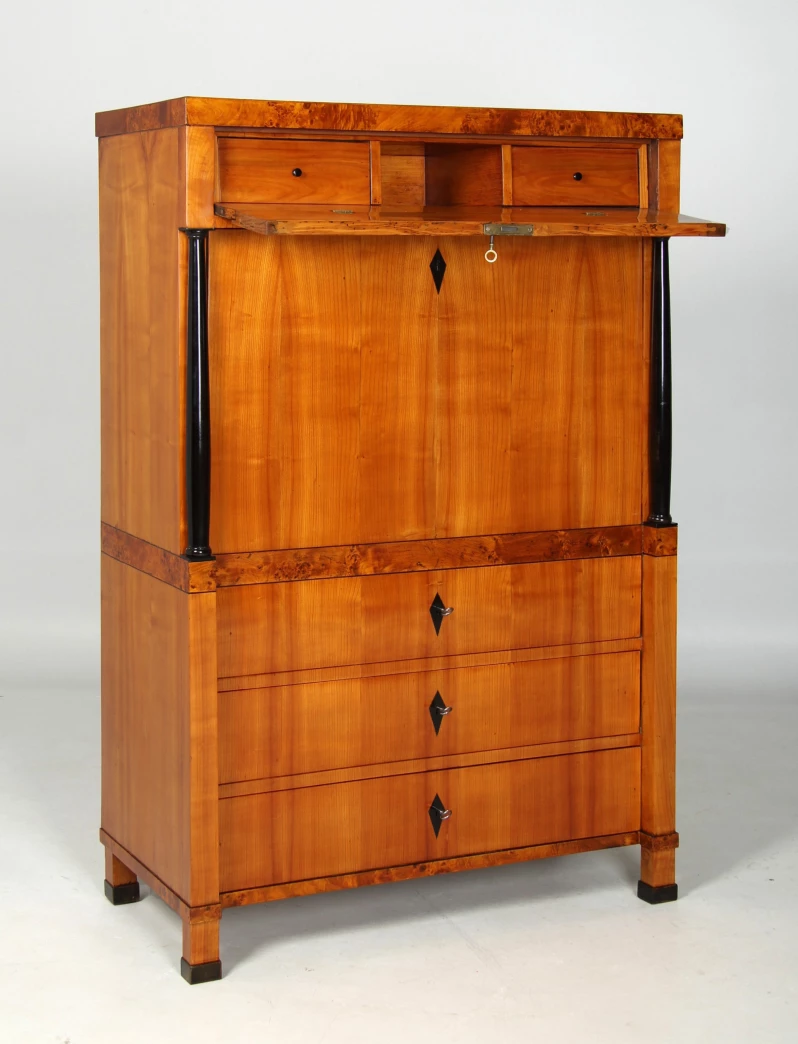
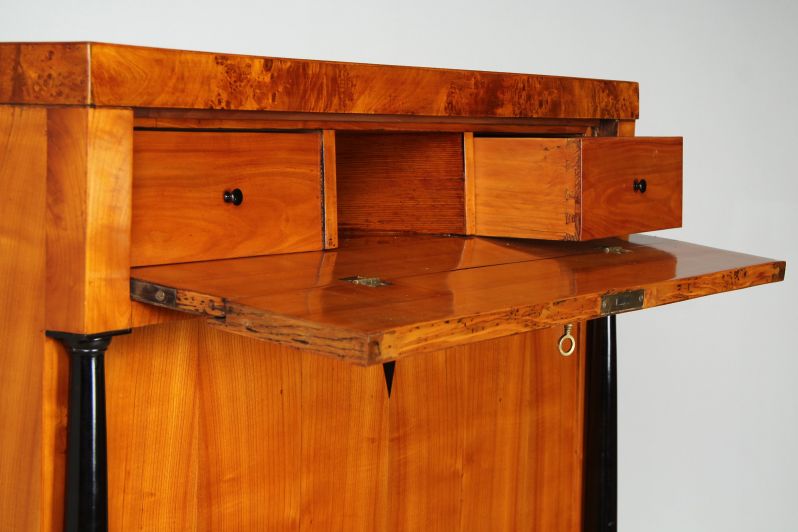
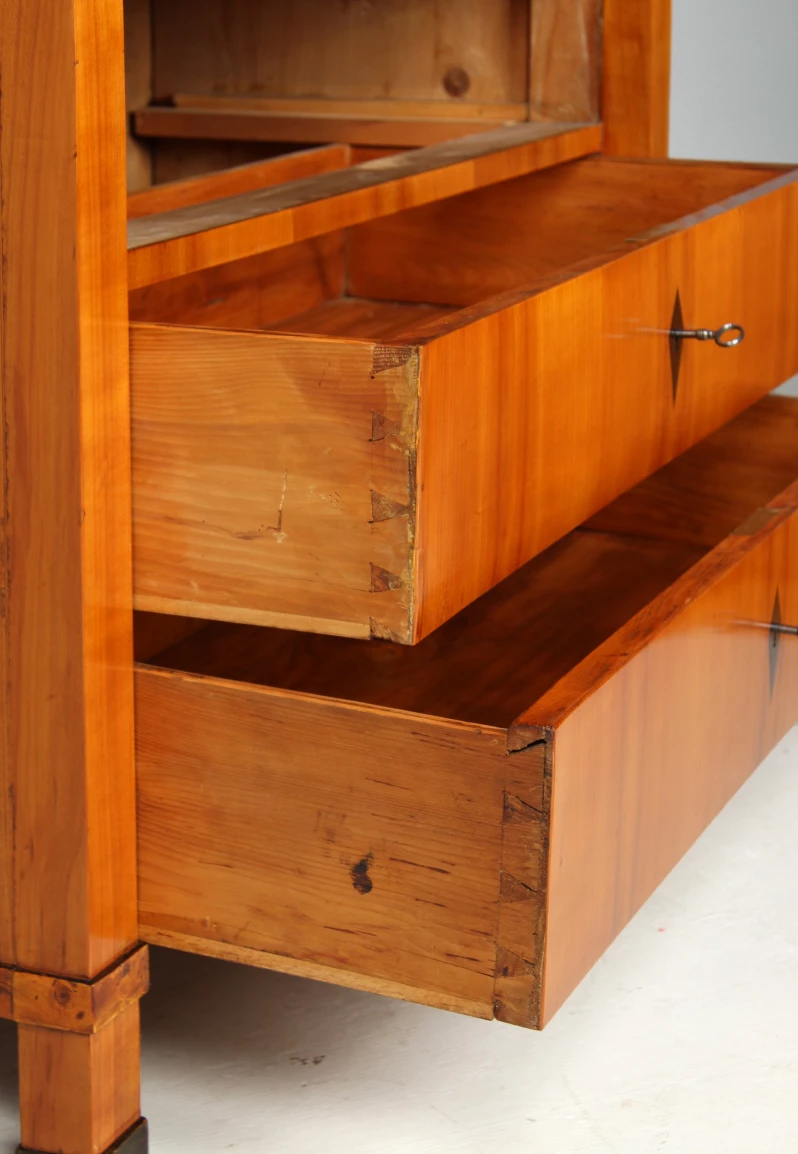
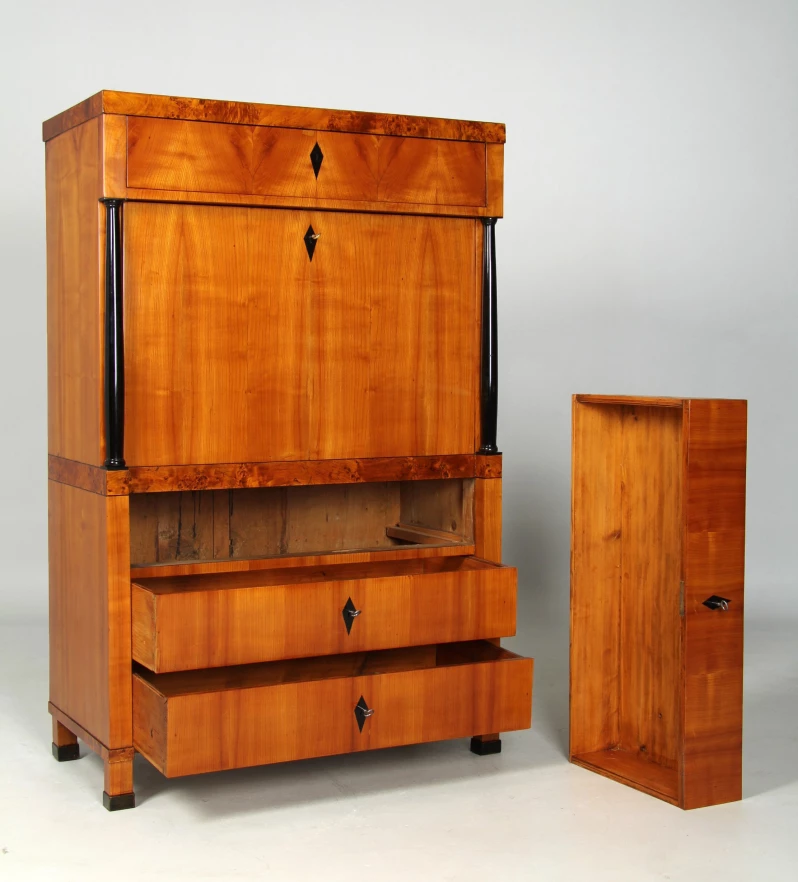
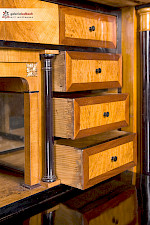
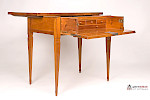
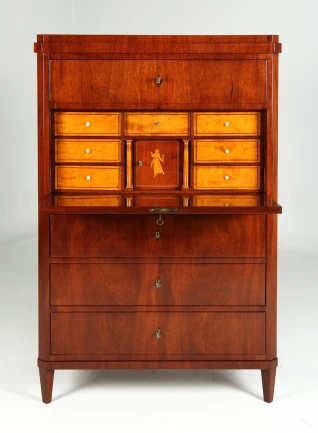
Writing desk standing on square legs with three drawers at the bottom, above which is the writing surface flanked by ebonised solid columns and a top drawer at the very top.
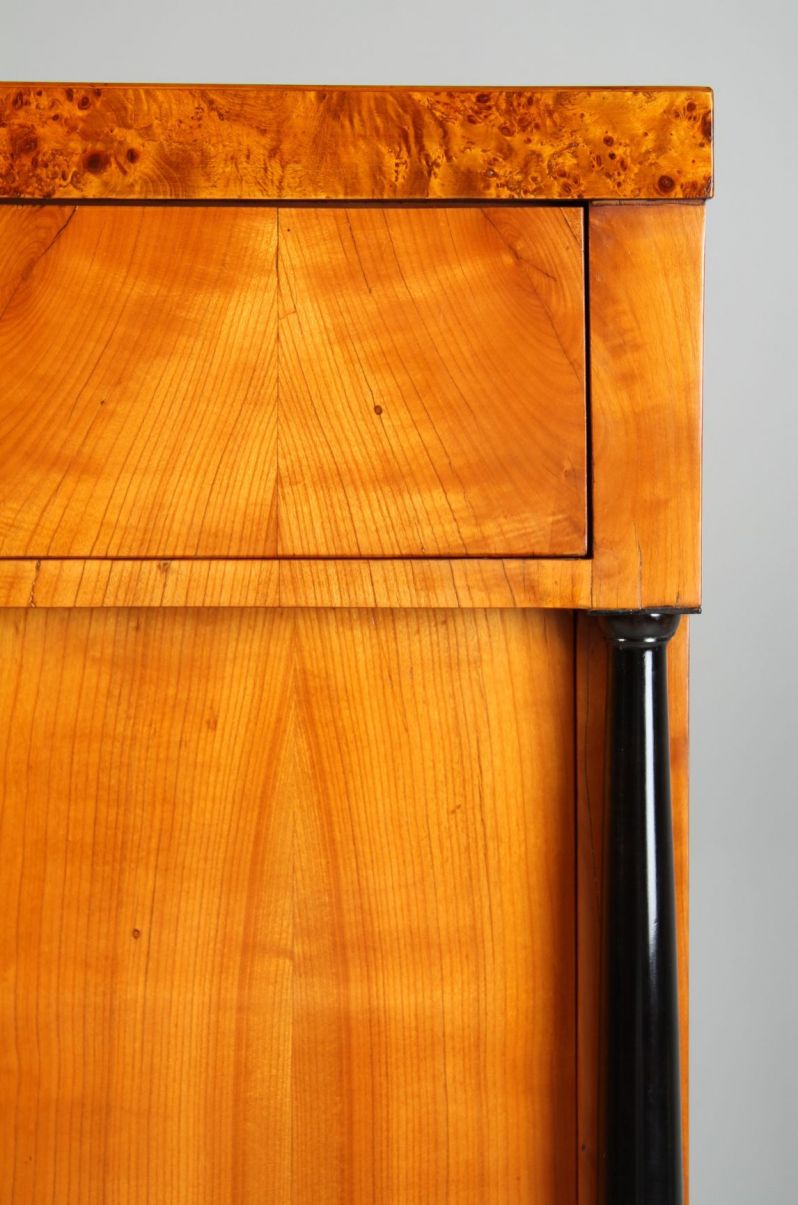
The carefully mirrored cherry veneer is contrasted by diamond-shaped, blackened key plates and horizontal burl wood bands on the plinth, top panel and below the writing surface.
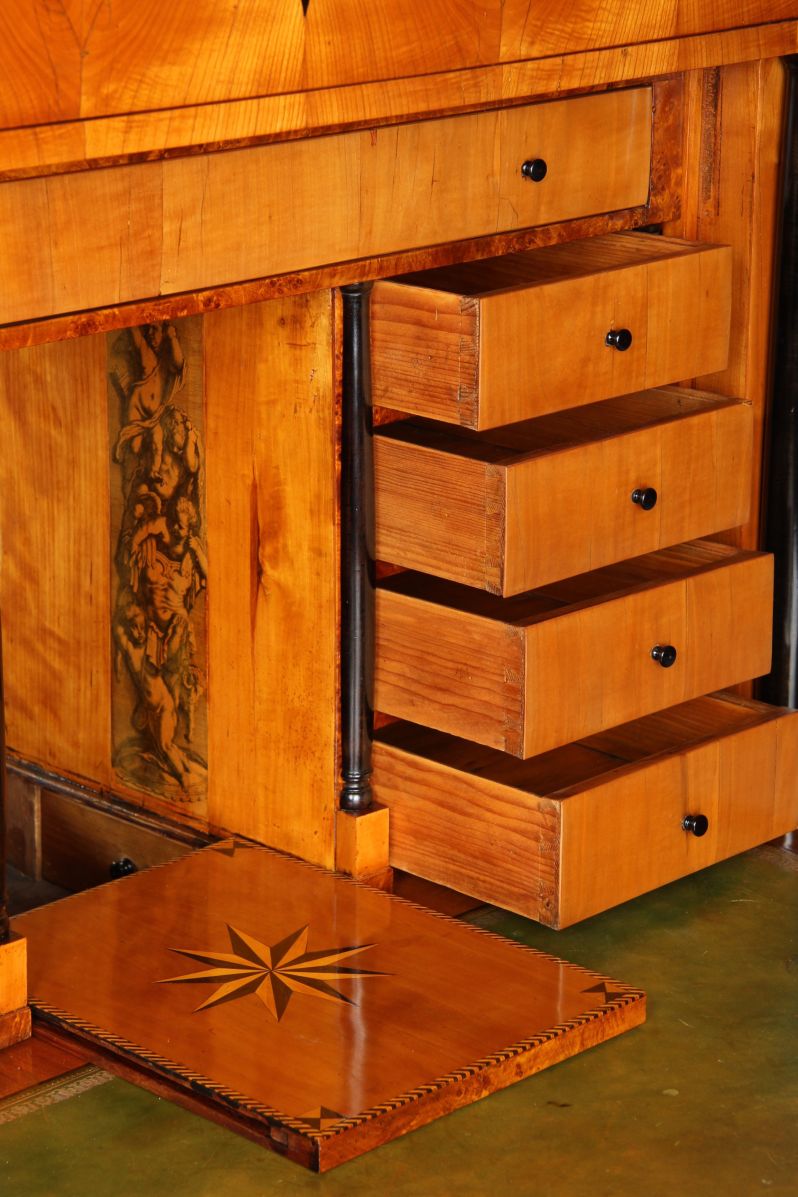
The front of the top drawer can be folded down and can therefore be used as a writing surface when standing. Inside there are two small drawers and a central open compartment.
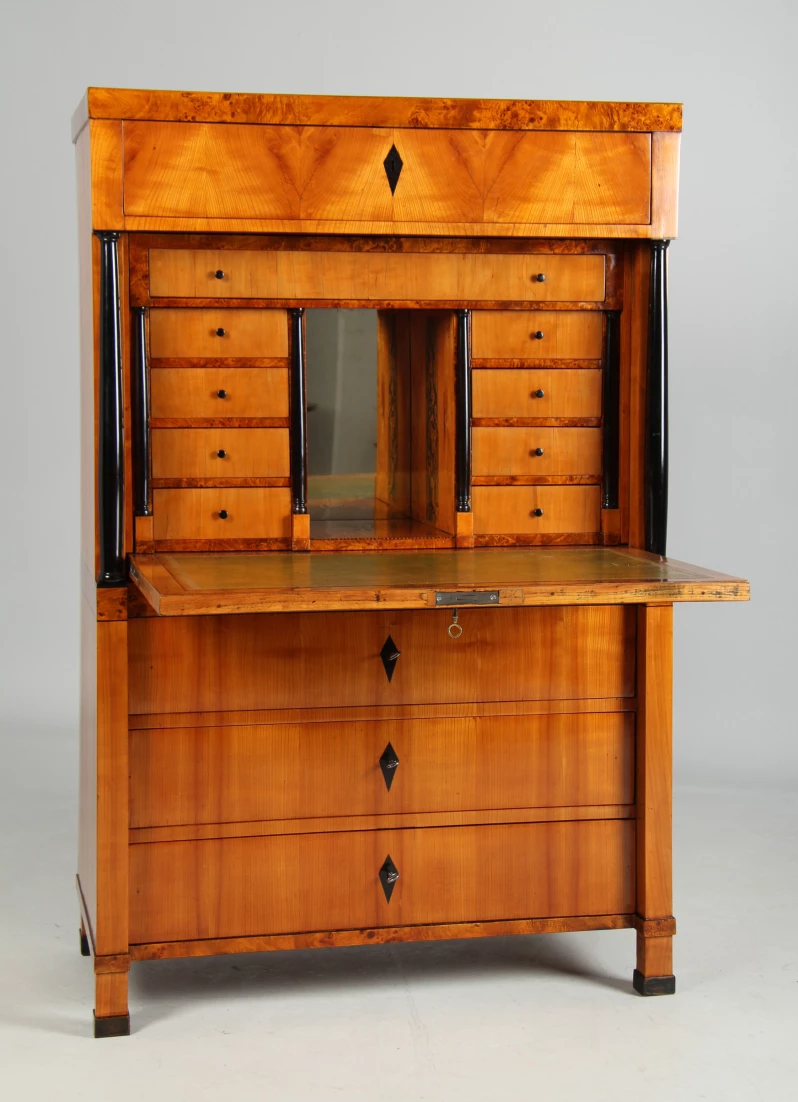
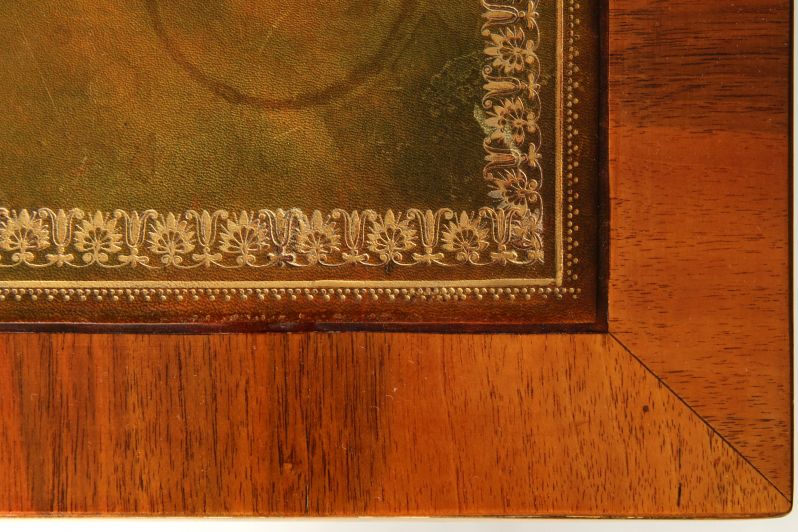
If we open the secretary flap, we see an interior divided by four ebonised half-columns with nine drawers behind the leather-covered work surface.
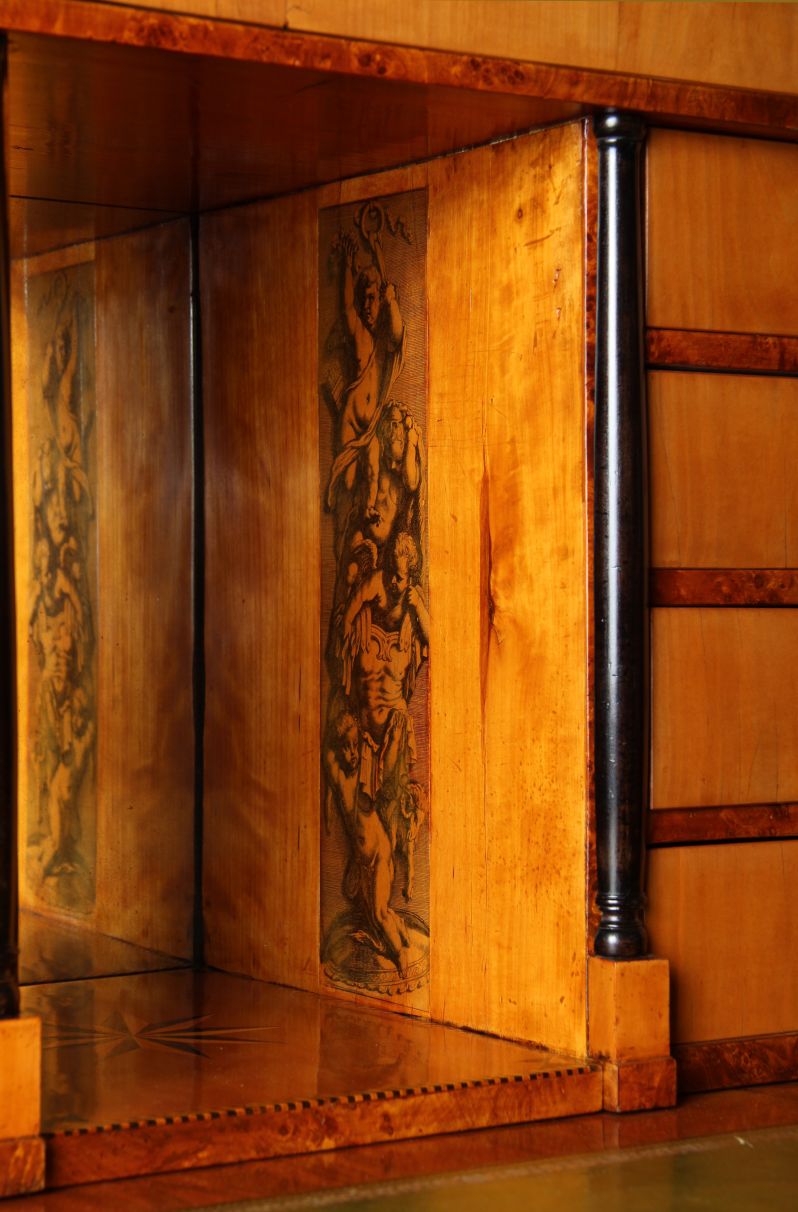
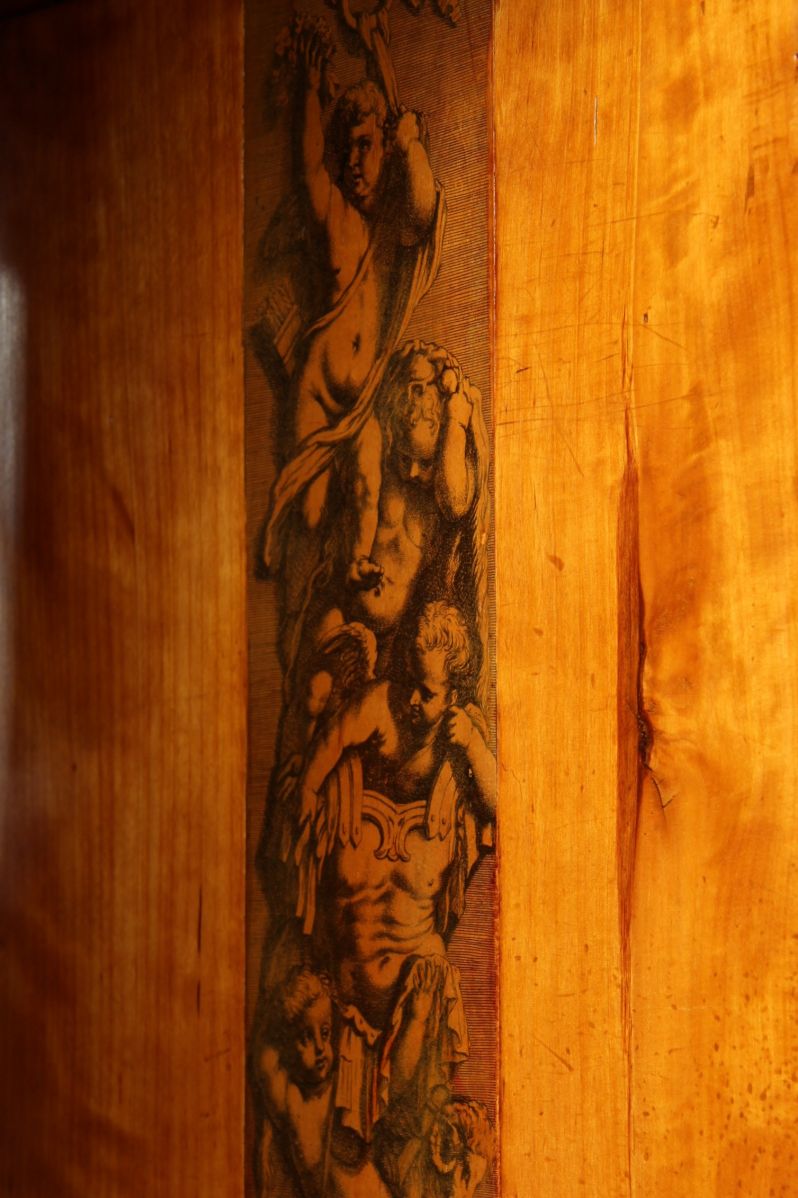
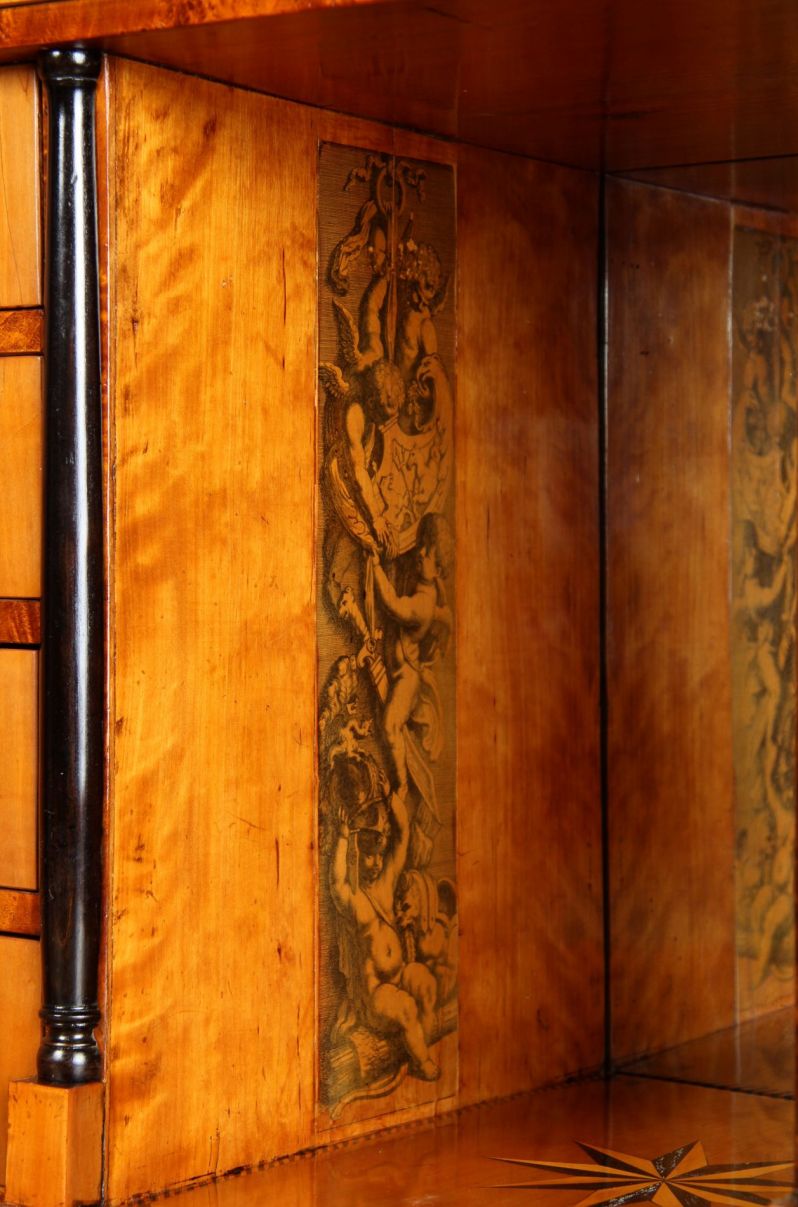
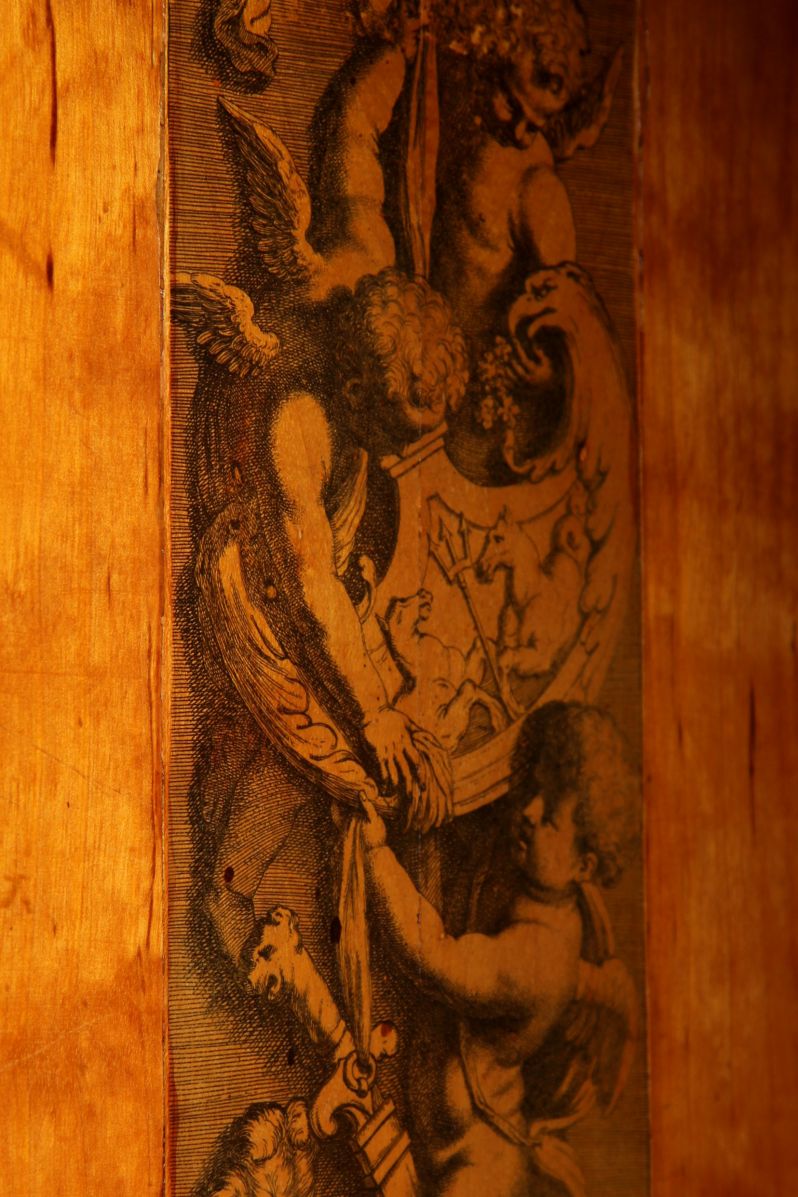
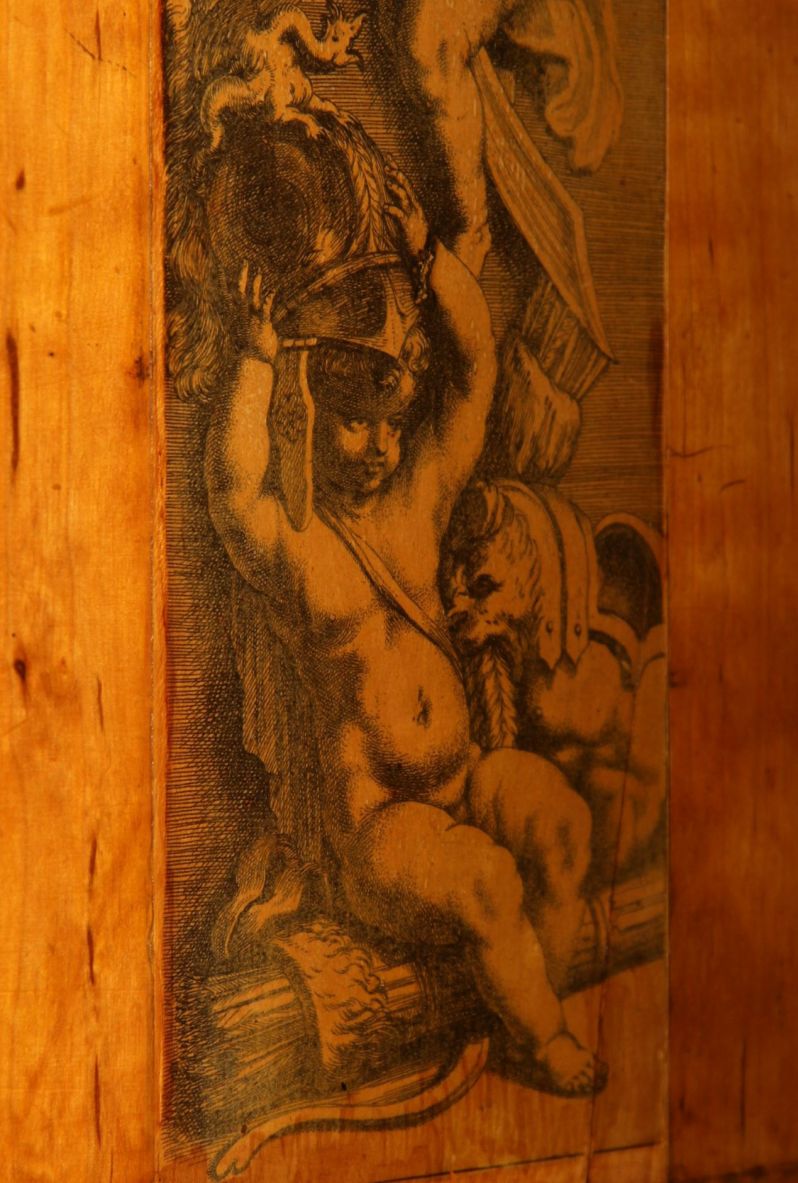
The sides of the large compartment, which is mirrored on the back, are decorated with bands applied using a transfer printing technique. The copper engraving motifs, which date back to antiquity, show winged putti climbing the sky with attributes of war such as swords, arrows and armour. The coat of arms on the left with hippocampi and the trident of Poseidon is also interesting.
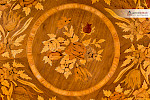
The base of the compartment, which is decorated with a star-shaped marquetry, can be moved and conceals two secret drawers underneath.
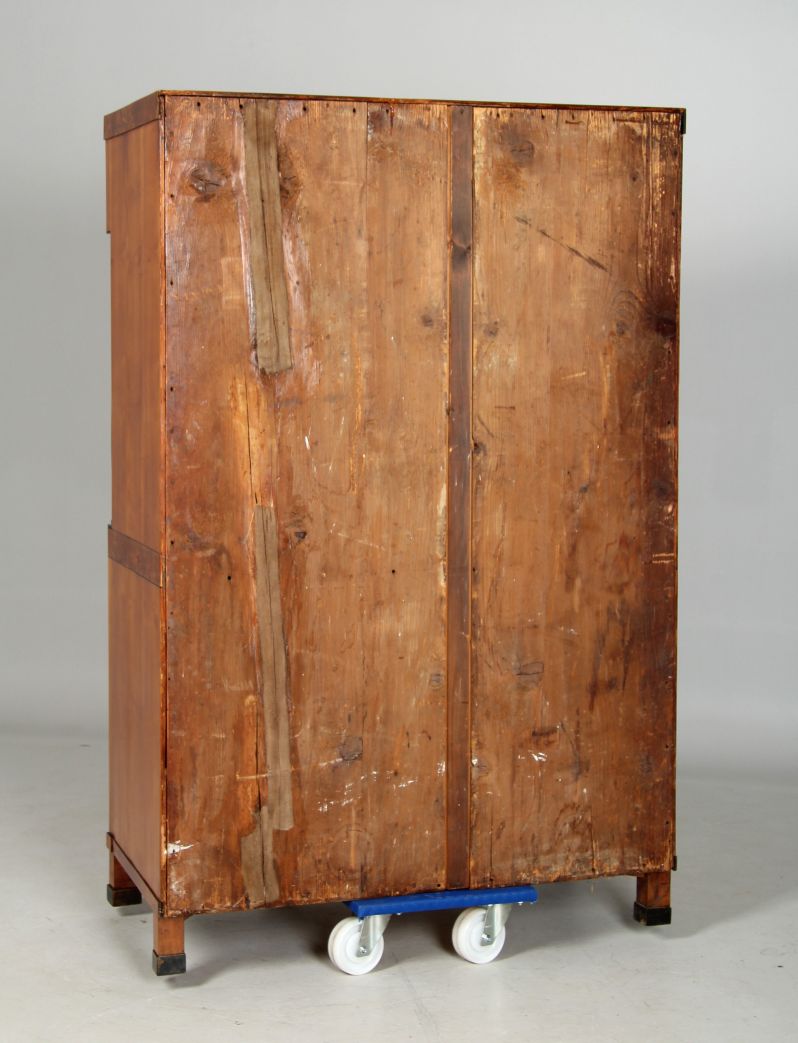
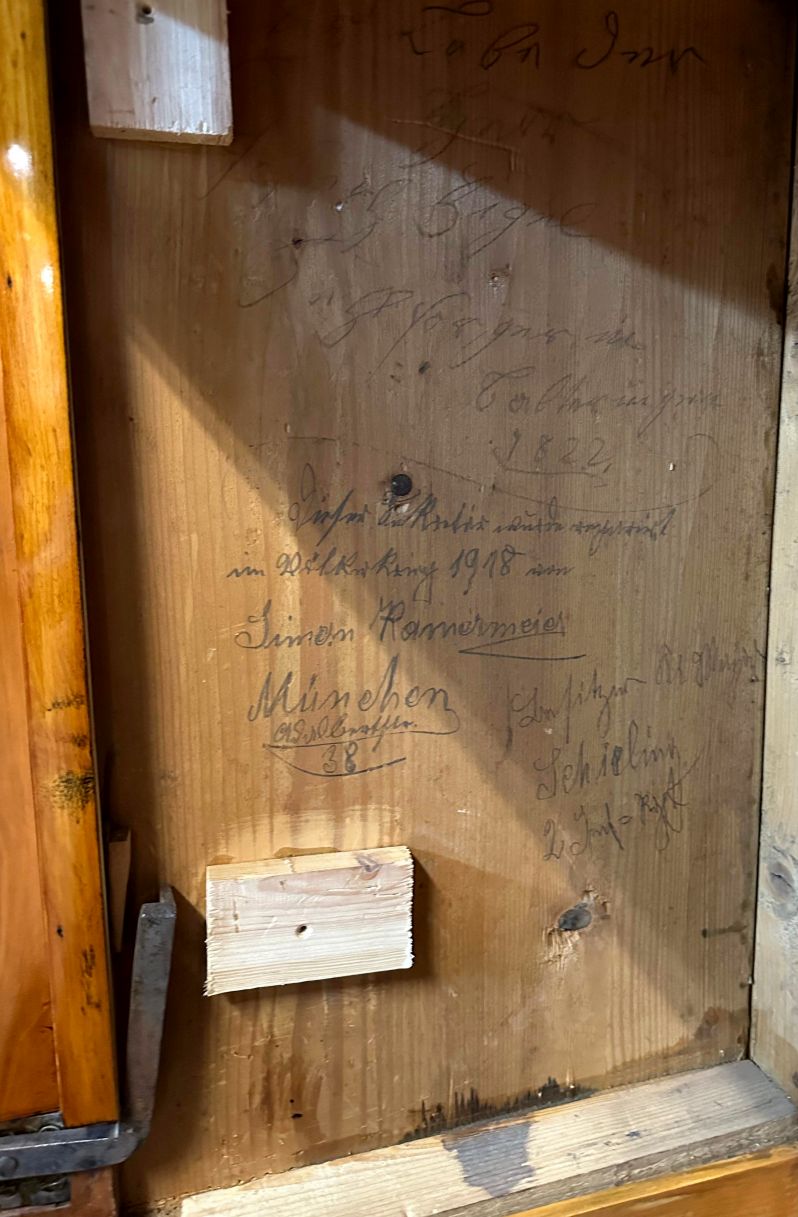
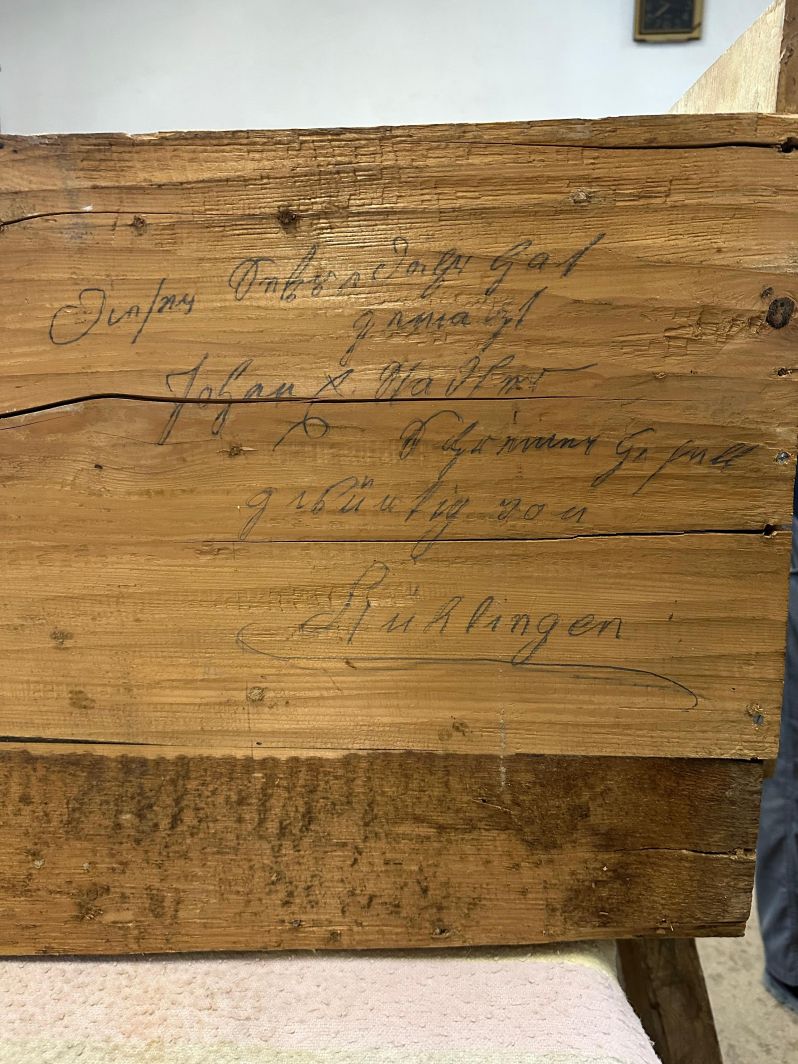
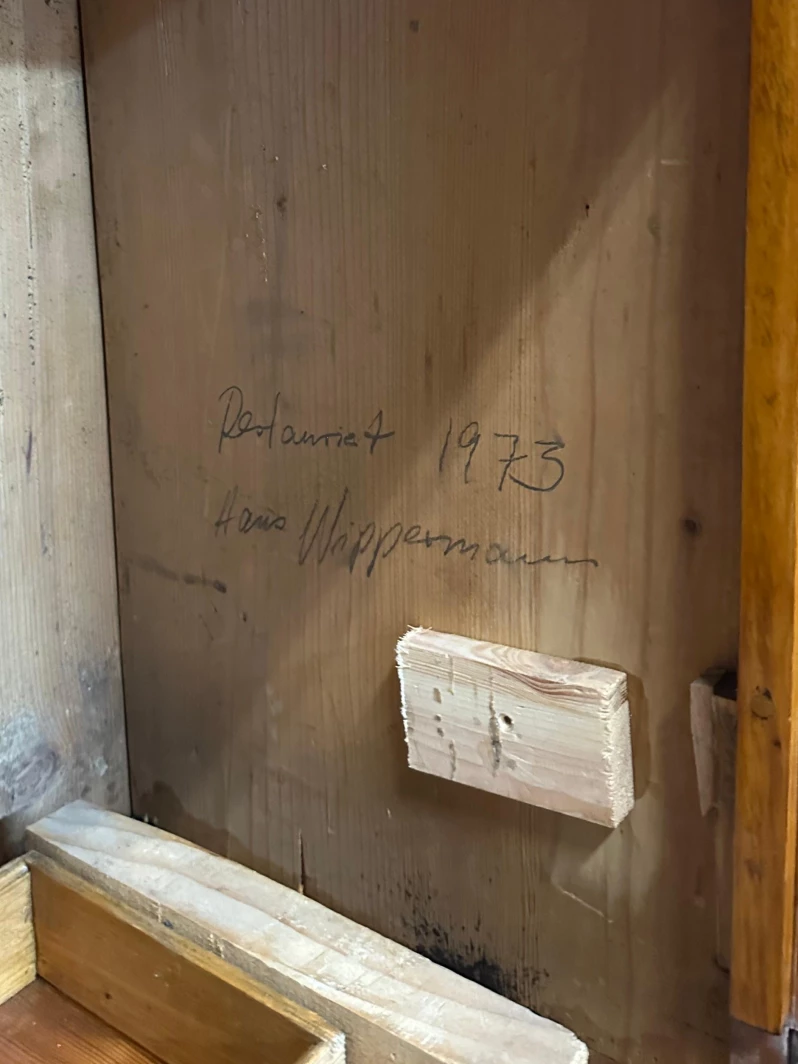
When the interior was dismantled, we found numerous inscriptions (see photos). The oldest is dated 1822 and is presumably attributed to the builder of the piece of furniture.
Interesting facts:
According to Stephan Ritter von Keeß in the Wiener Gewerbeblatt from 1829, the first evidence of copperplate engravings applied to wood can be found in Vienna as early as around 1810. In 1818, the Munich cabinetmaker and purveyor to the court Georg Hiltl exhibited a piece of furniture with copper engravings applied using the transfer printing process at the exhibition of art and industrial products of the entire state of Bavaria, causing a sensation and achieving great success. Towards the end of the 1820s, the technique was also taken up in other German regions, e.g. by Wilhelm Kimbel in Mainz.
Condition:
Restored condition with a shellac hand polish.
Price: 6850,-€
You can find out more about the technique of transfer printing on wood in the specialist literature:
Heidrun Zinnkann - Mainzer Möbelschreiner der ersten Hälfte des 19. Jahrhunderts from p. 49

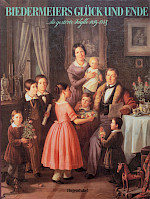
Biedermeiers Glück und Ende - Die gestörte Idylle 1815–1848 from p. 57
Article found under: Secretaries
Add to shopping cartAlso interesting
Small Flensburg secretary
Schleswig-Holstein
Mahogany and others
Biedermeier around 1815

Plain Biedermeier Secretary
South-West Germany
Cherry
Biedermeier circa 1830
Antique Mantel Clock with Calendar
France
Wood, brass
Mid 19th century