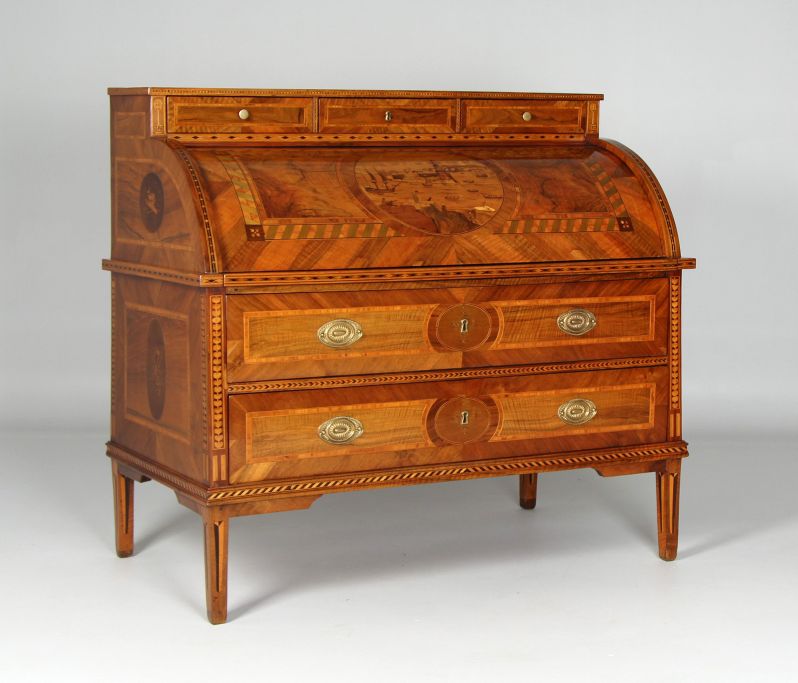
Video Cylinder secretary desk with marquetry
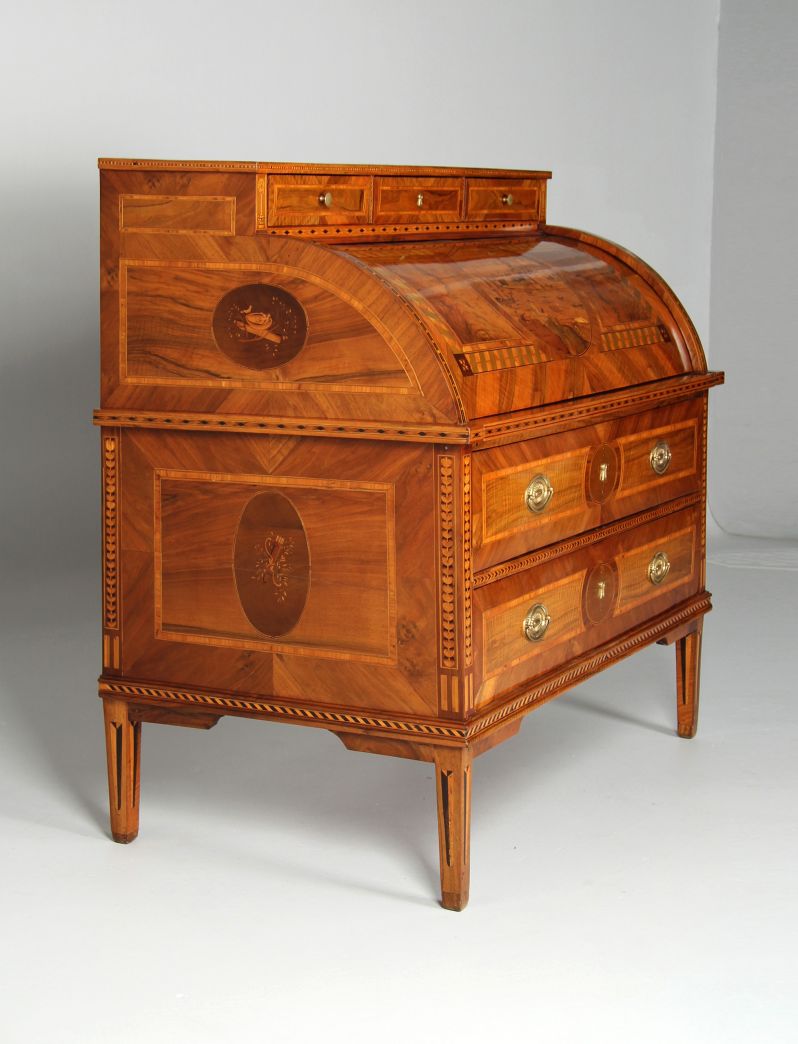

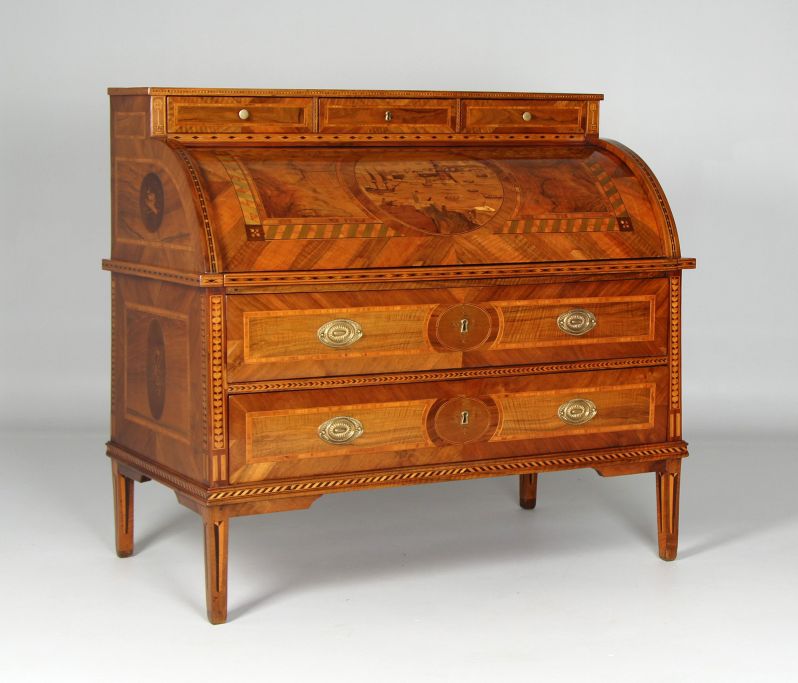

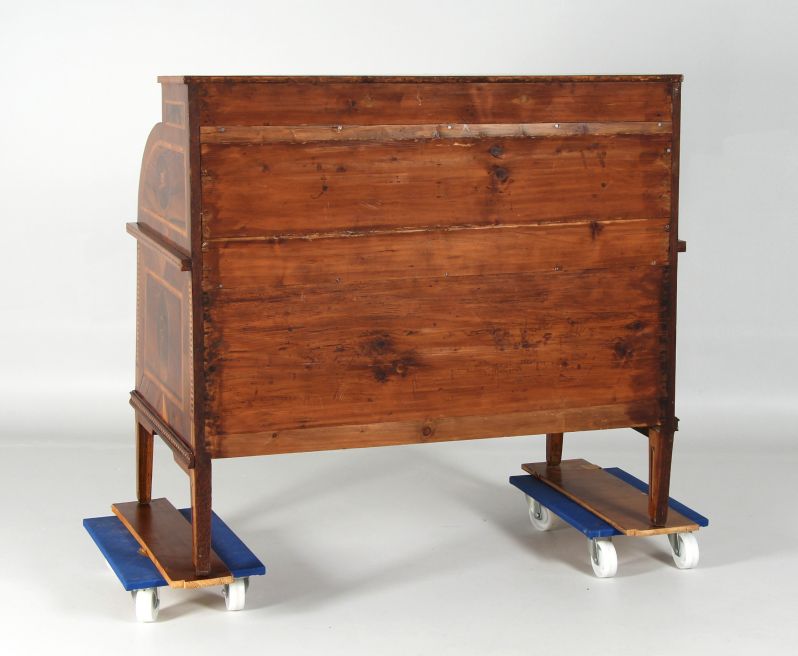
Cylinder desk with elaborate marquetry
Alsace / Upper Rhine
walnut, maple, etc.
around 1780
Dimensions: H × W × D: 120 × 132 × 75 cm
Description:
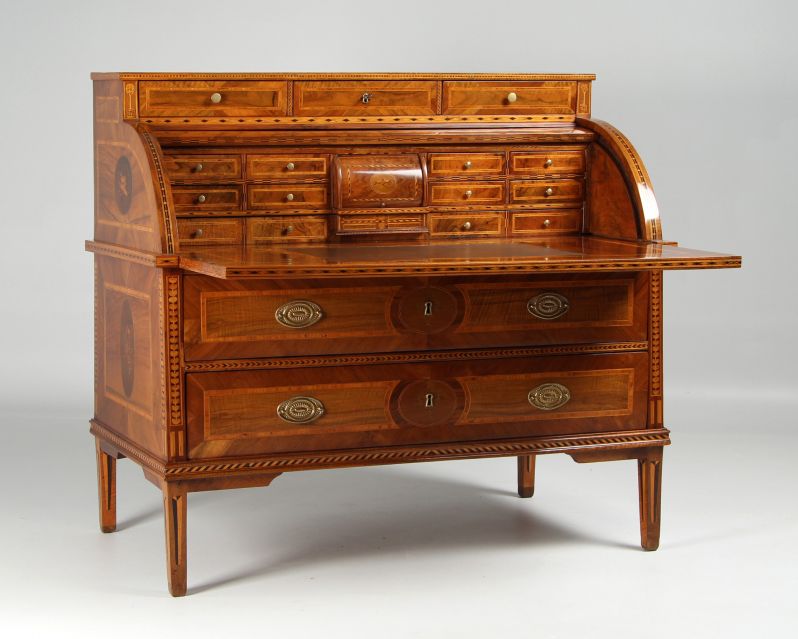
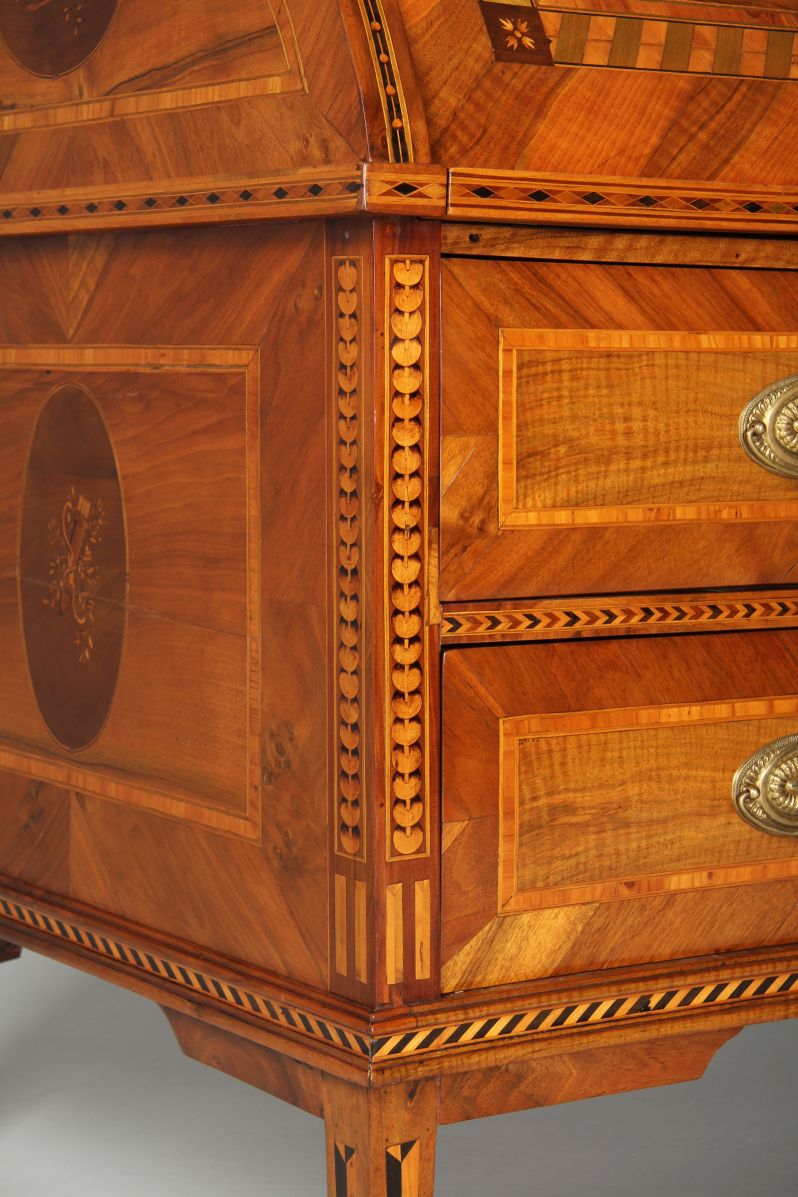
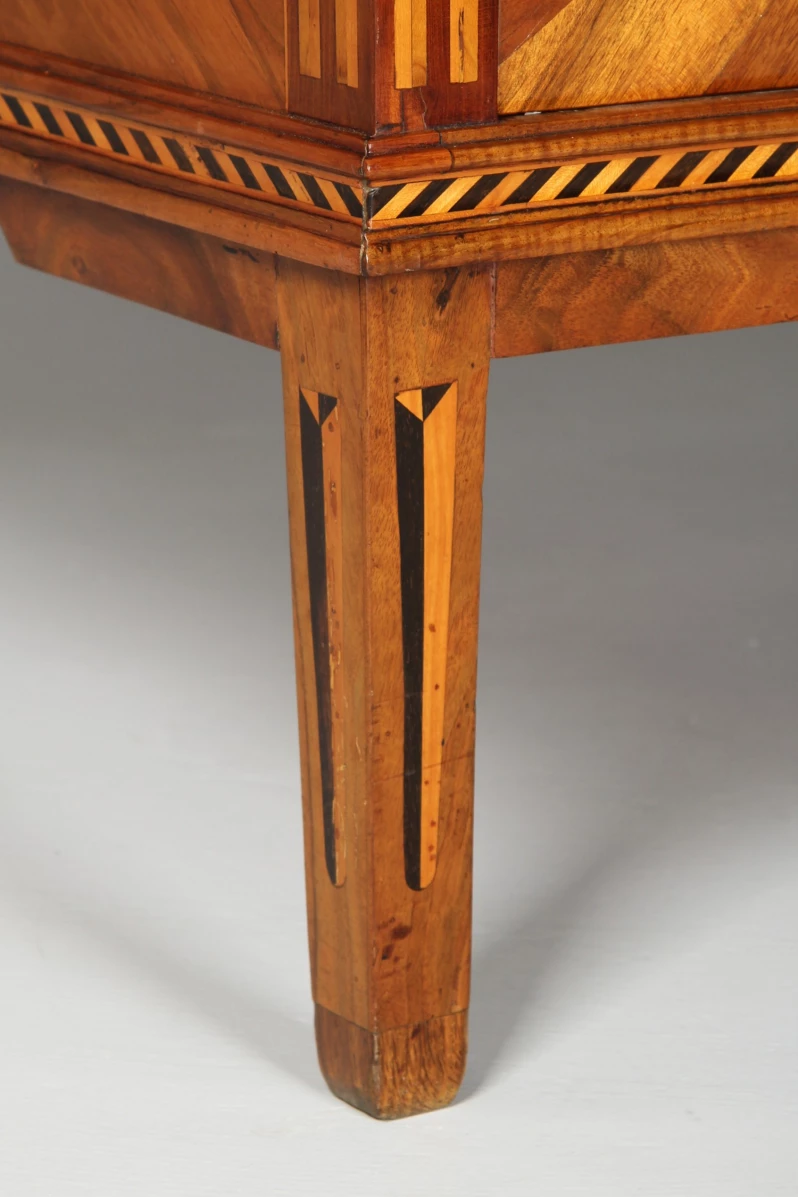
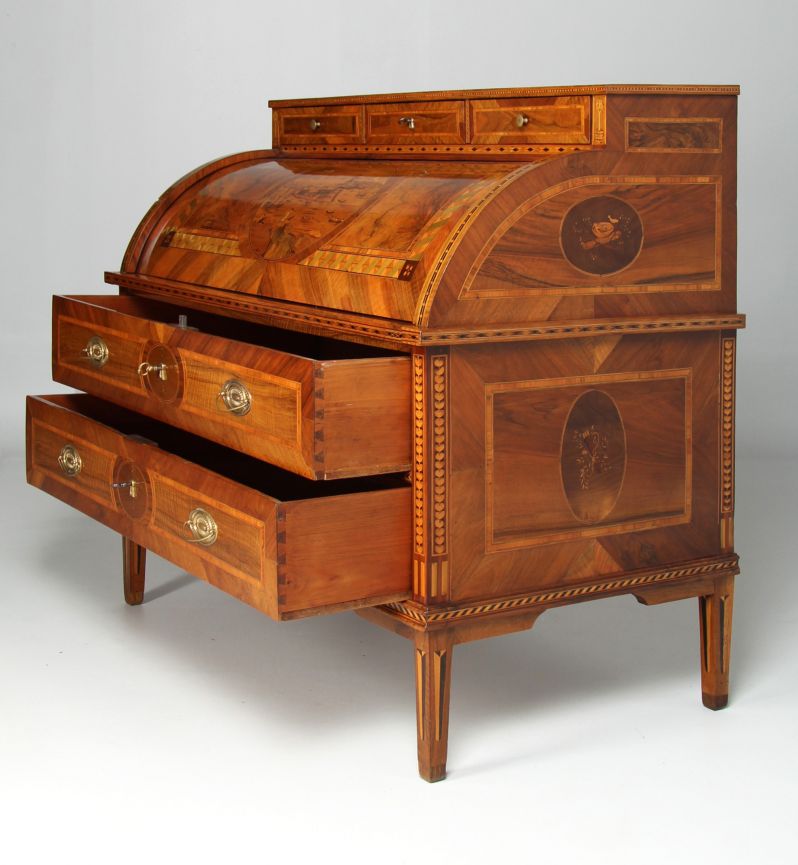
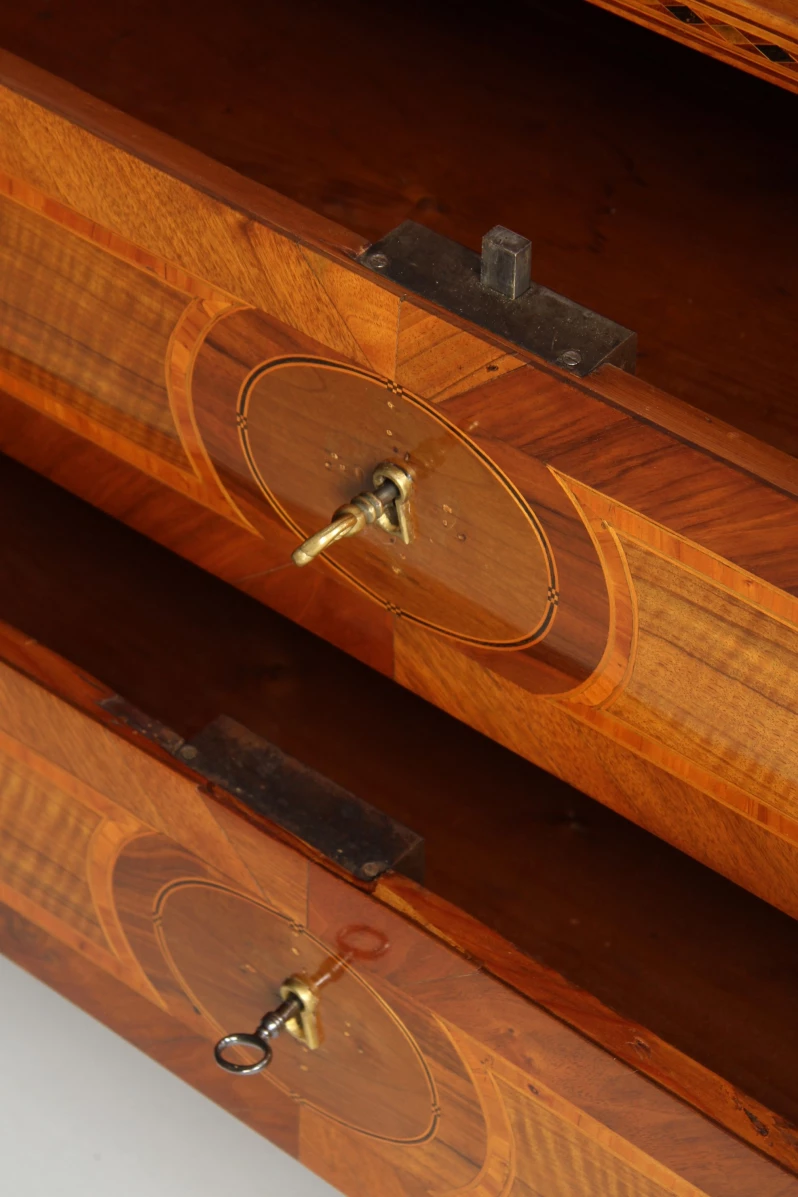
Writing cabinet on tapering legs with trompe-l'œil fluting, comprising two large drawers at the bottom, the writing compartment above, and three small drawers in a row at the very top.
The piece is dominated by extravagant marquetry. The stiles are inlaid with shaded coin bands, while friezes and fillets run across the crossbars, the base moulding and the edge of the top.
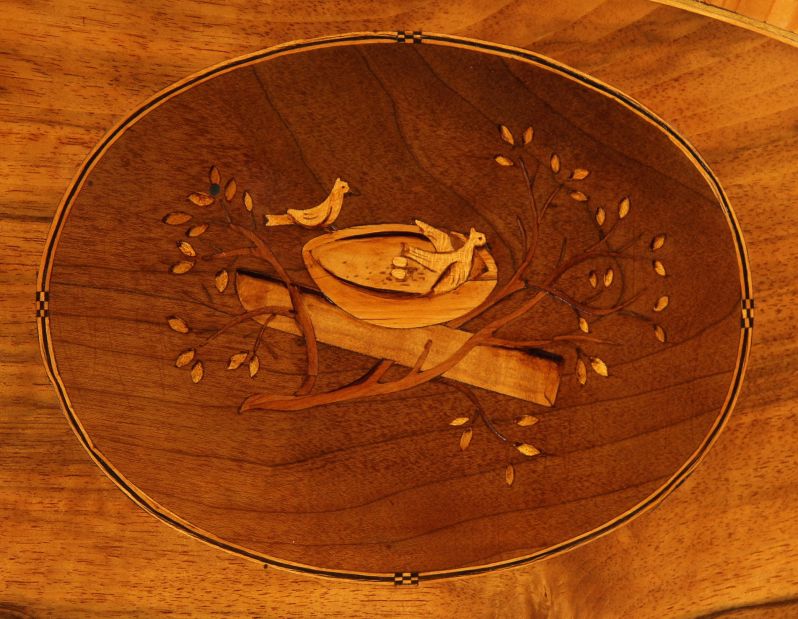
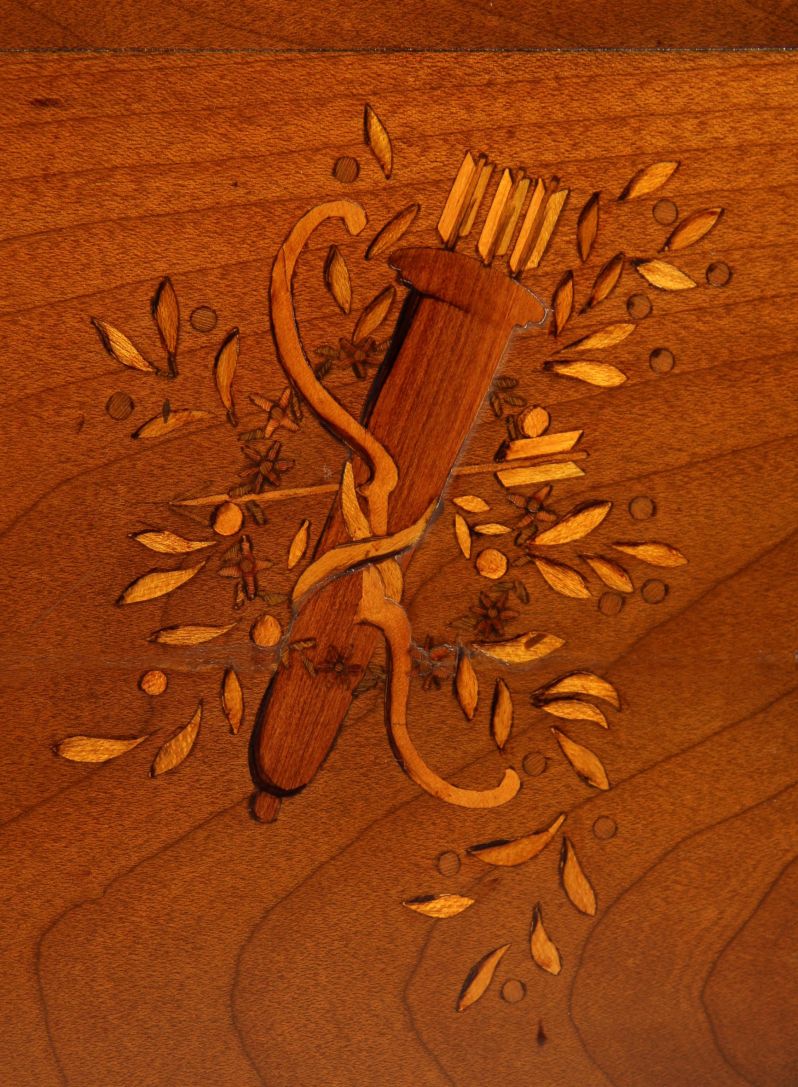
The sides are structured by frames whose centres hold medallions: nesting birds as symbols of fertility, and bow with arrows as symbols of love.
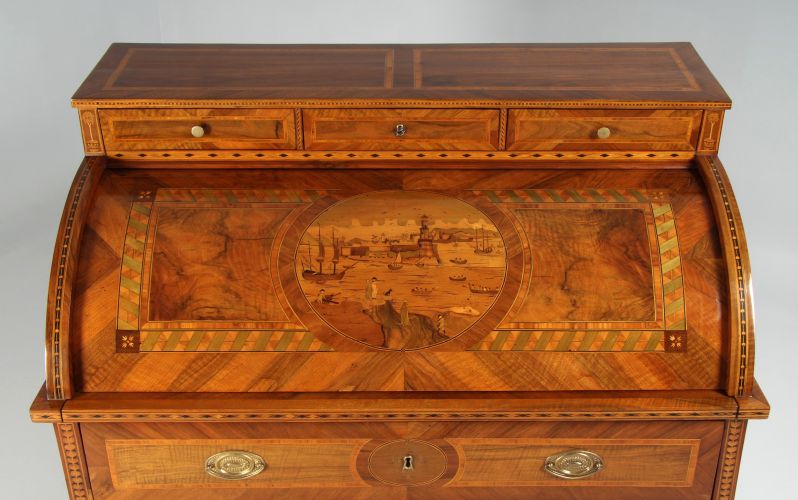
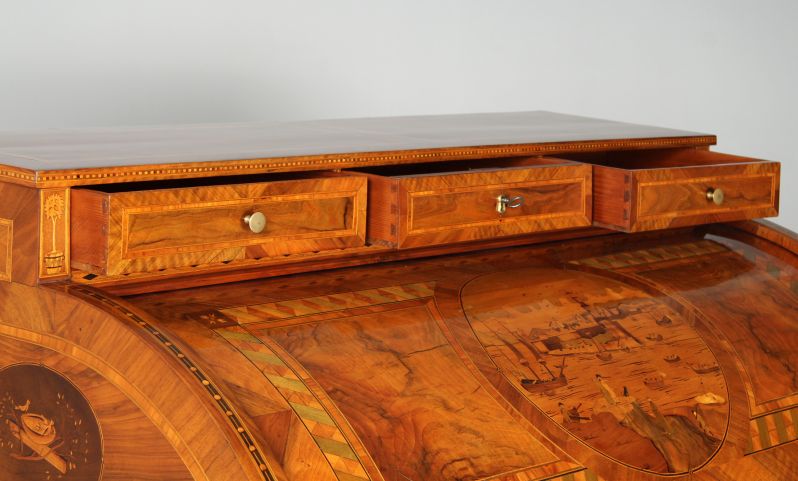
The main focus lies on the quarter-cylinder roll-top. Its inlay work is impressive not only for the fineness and the multitude of fitted wooden pieces, but also because this form and richness are extremely rare.
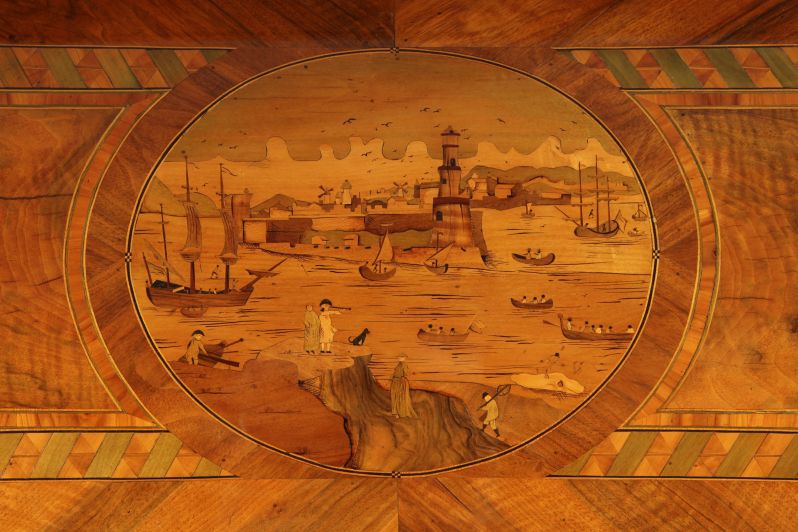
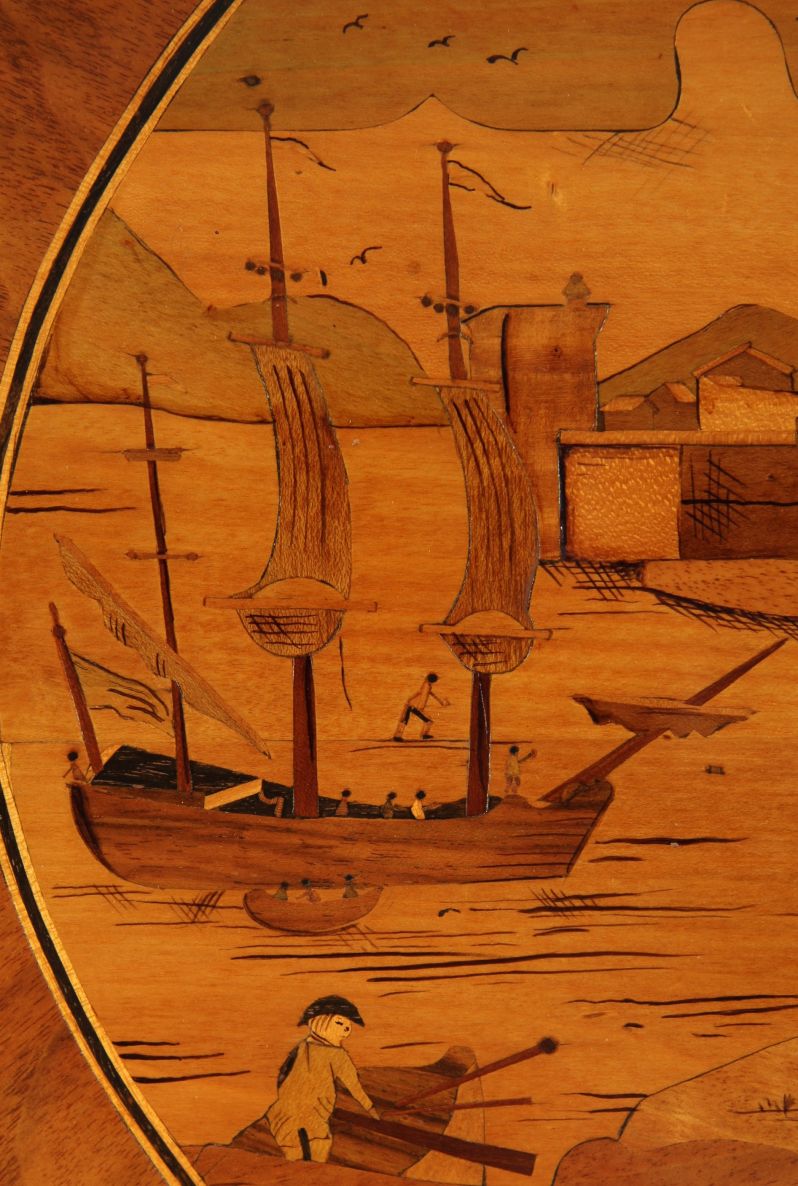
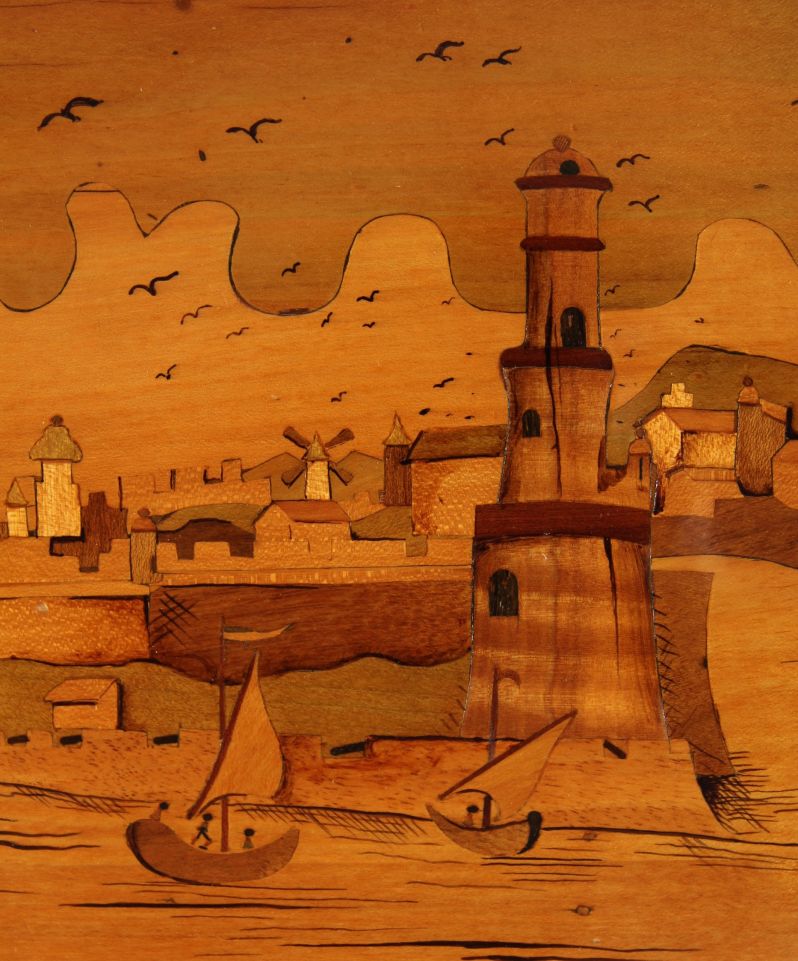
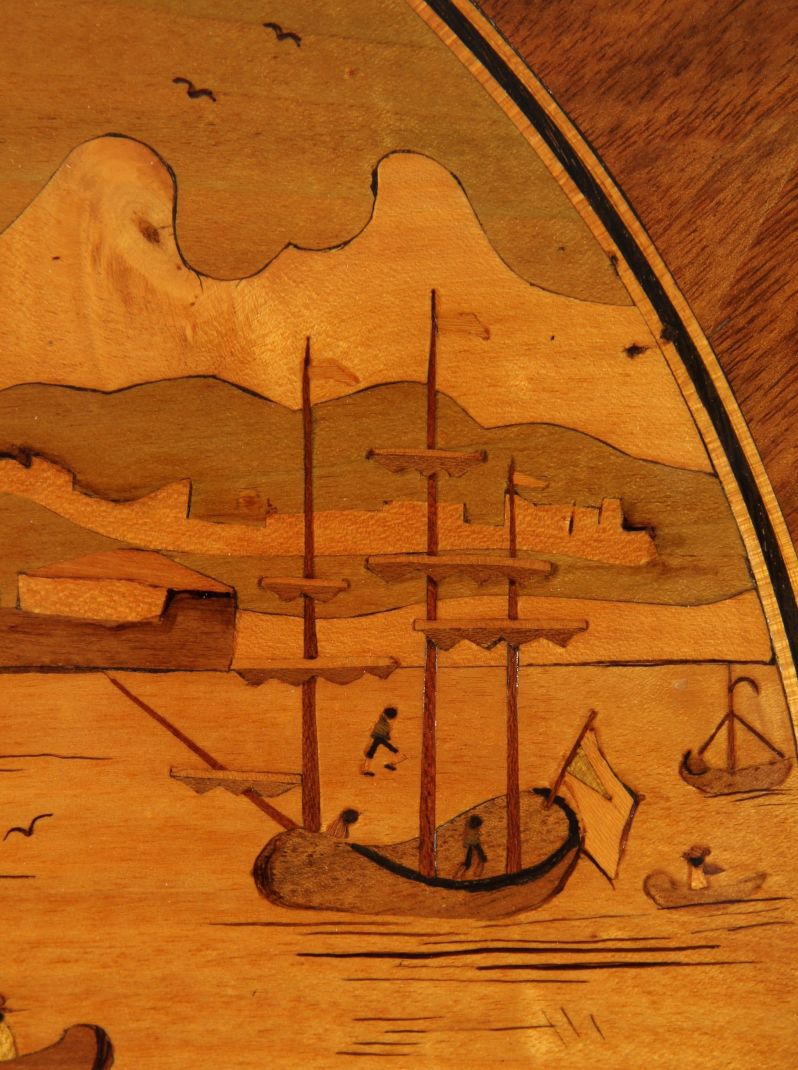
Natural and partly green-stained woods – arranged into geometric bands – form the frame for the central roundel, which opens onto a maritime world.
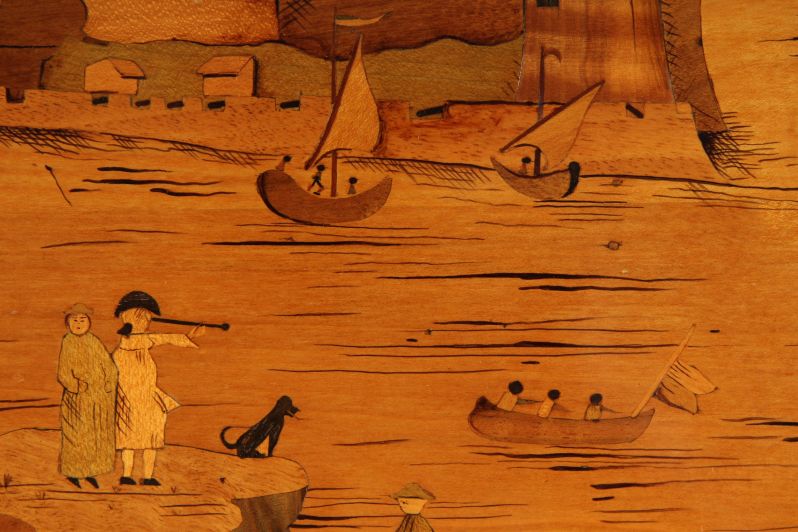
We see a romanticised fantasy landscape with lighthouse and quay wall before a small harbour town. A staffage of figures in the foreground observes the bustling manoeuvres of larger and smaller sailing ships in the narrow bay or river mouth. Fine engravings make the gentle waves visible and render the textures of sailcloth and clothing tangible. Appropriately chosen wood structures give a three-dimensional effect to the promontory in the foreground.
Originally, all woods were vividly coloured. The green hues have been preserved relatively well; traces of red can be discerned at the quay wall. The blue of the water has completely faded, as has that of the horizon, which now resembles a mountain range in outline, but originally, in varied shades of blue, may have represented gathering clouds.
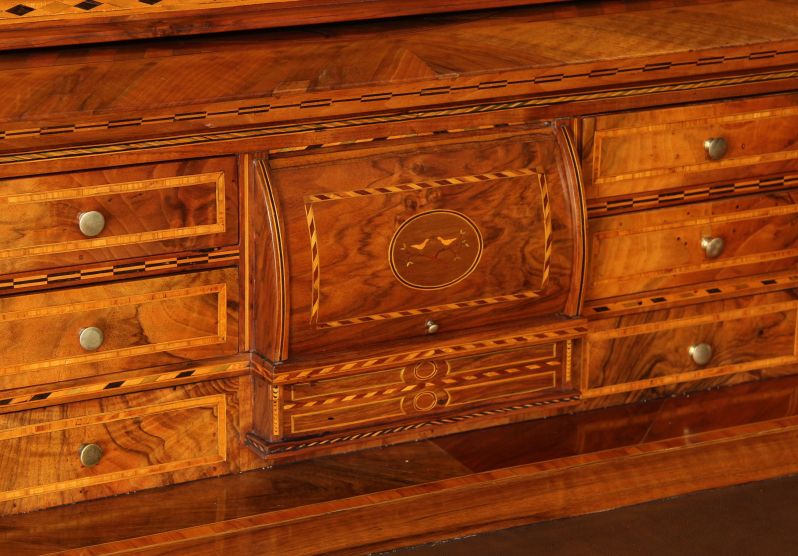
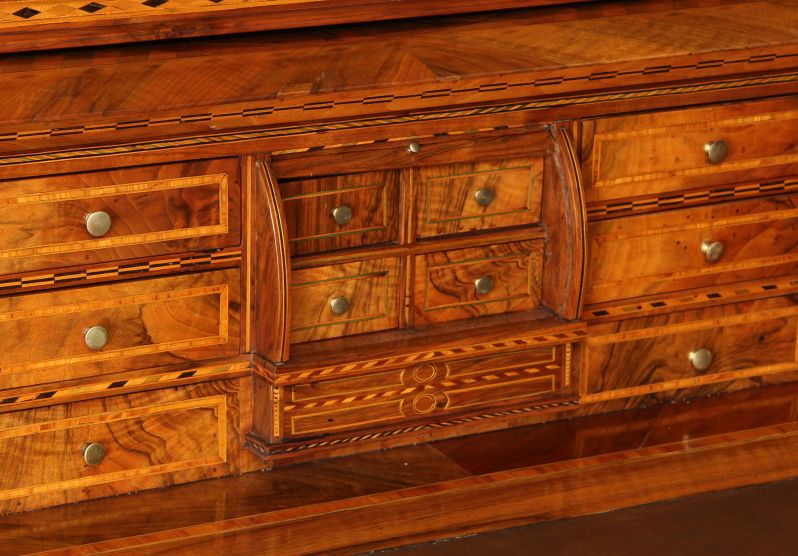
Opening the roll-top reveals a spacious writing compartment with eight drawers, four drawer fronts, and a central roll-front compartment concealing four additional small drawers. Here, protected as best as possible from sunlight, the original and remarkably well-preserved green stain conveys an impression of the rich colours the entire piece once displayed. Abundant geometric inlays dominate the writing compartment as well. Even the lower edge of the roll-top is inlaid with a light-dark contrasting frieze – a testimony to the exceptional love of detail.
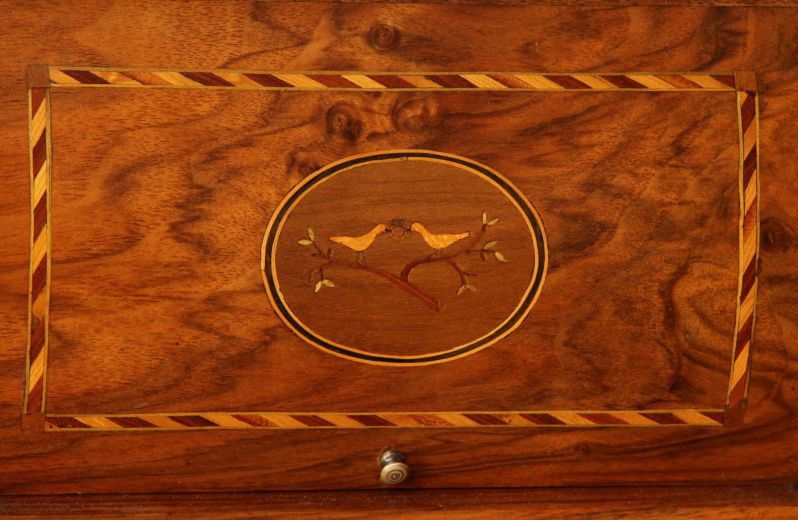
Two doves joined by a ring form the central marquetry motif inside, suggesting that the secrétaire was originally made as a wedding gift. The symbolic inlays on the sides of the piece support this assumption.
Background:
Marquetry of this kind is known from eastern France. The absence of elaborate bronzes also points to the more rural region of Alsace.
A comparable roll-top secrétaire was made in 1789 by Nikolaus Camus in Wissembourg (Alsace) and is today in the collection of the Historisches Museum der Pfalz in Speyer (see catalogue Die Neuzeit, 1995, p. 94).
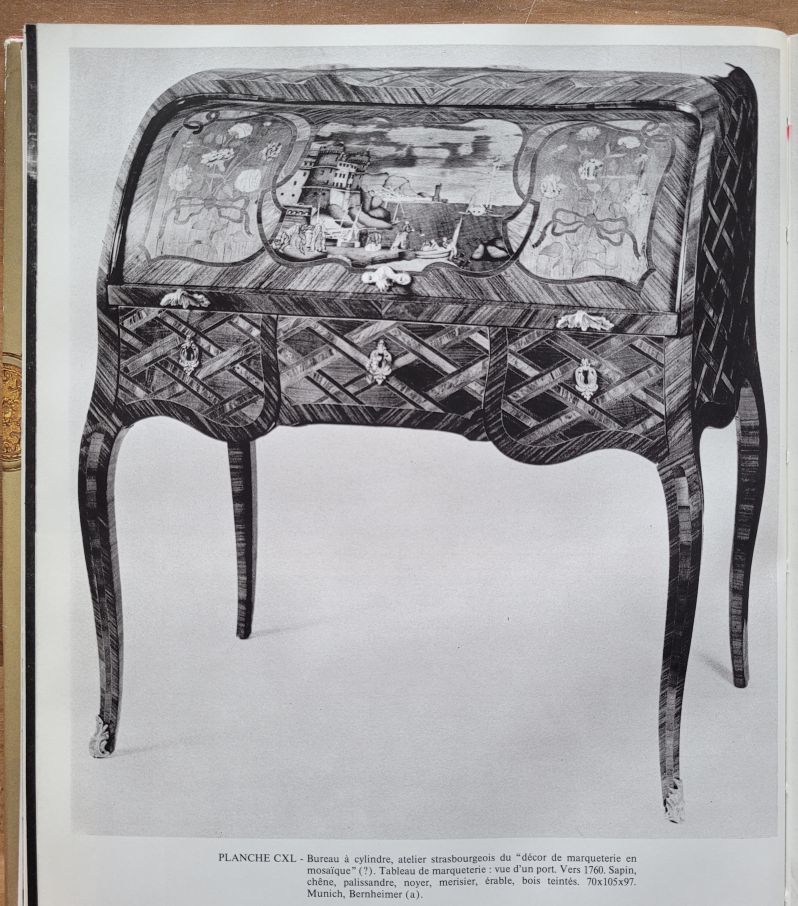
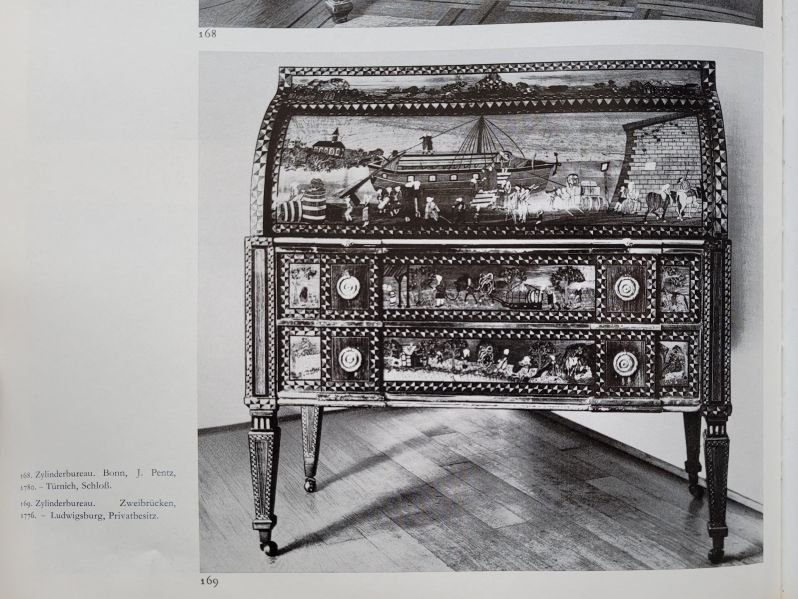
The Dutch-looking harbour scene of the present piece may relate to the wedding of the recipients; moreover, other maritime scenes are known from the region, such as a 1776 roll-top secrétaire from Zweibrücken (see Kreisel/Himmelheber, Die Kunst des deutschen Möbels III, fig. 169), or a roll-top bureau made in Strasbourg around 1760 (see Françoise Léwy-Coblentz, L’Art du Meuble en Alsace, pl. CXL, p. 330).
Condition:
Restored and suitable for everyday use, with a shellac hand-polish.

Françoise Lévy-Coblentz - L’art du meuble en Alsace au siècle des Lumières p. 330


Article found under: Secretaries
Video Cylinder secretary desk with marquetry
Also interesting
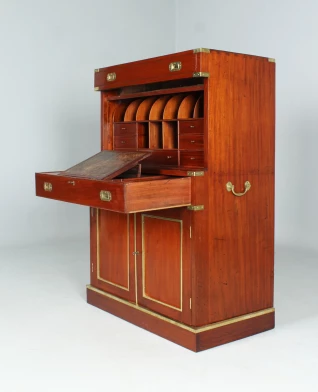
Military Campaign Chest of Drawers Secretary
England
Mahogany, brass
Victorian around 1890
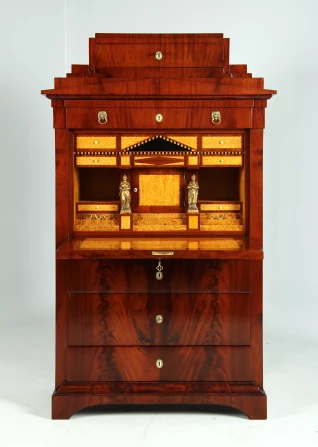
Very elaborate Berlin secretary
Berlin
Mahogany a.o.
around 1825
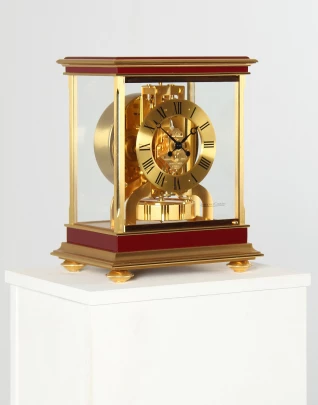
Jaeger LeCoultre - Atmos Royale Ref. 5855
Switzerland
Gold-plated and lacquered brass
Year of manufacture 1980