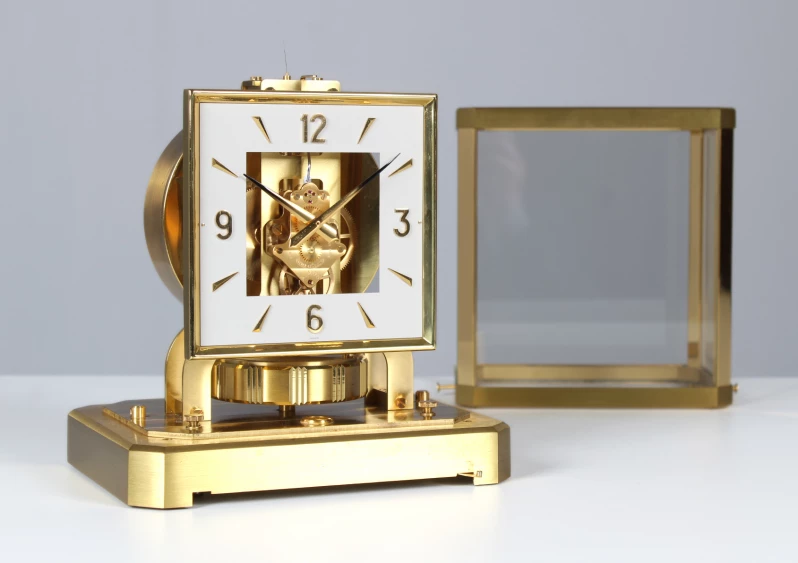
Video Atmos VI
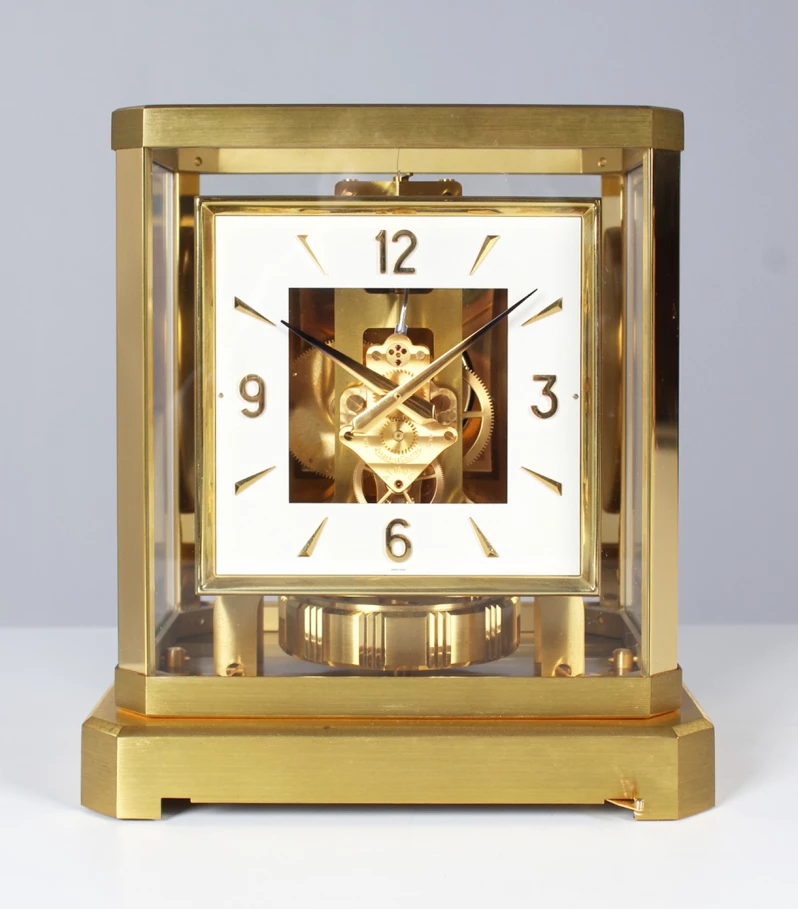
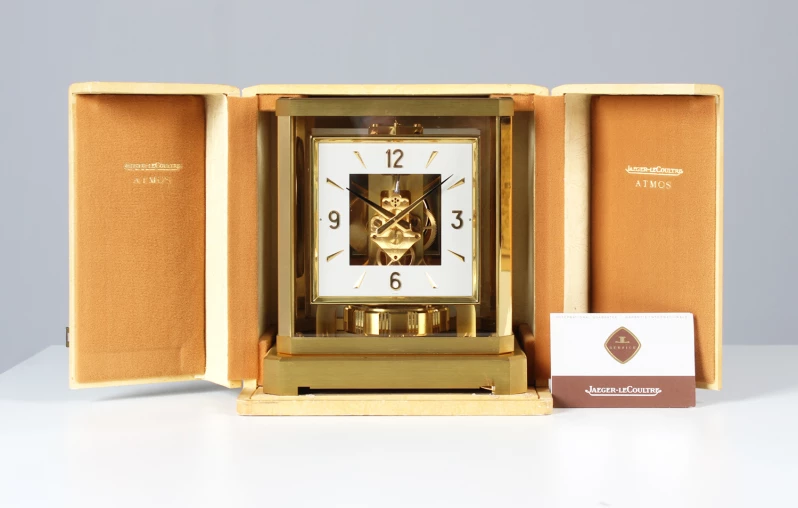
Jaeger LeCoultre Atmos Watch Year of Manufacture 1962 with Square Dial
Switzerland
Brass gold plated
Year of manufacture 1962
Dimensions: H x W x D: 23 x 21 x 16 cm
Description:
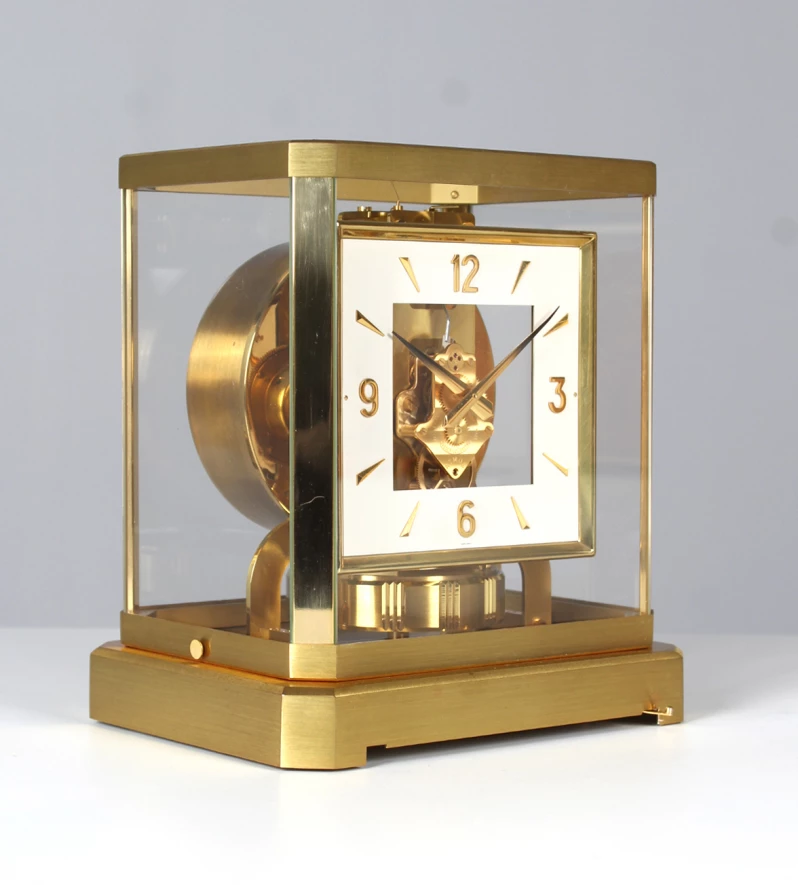
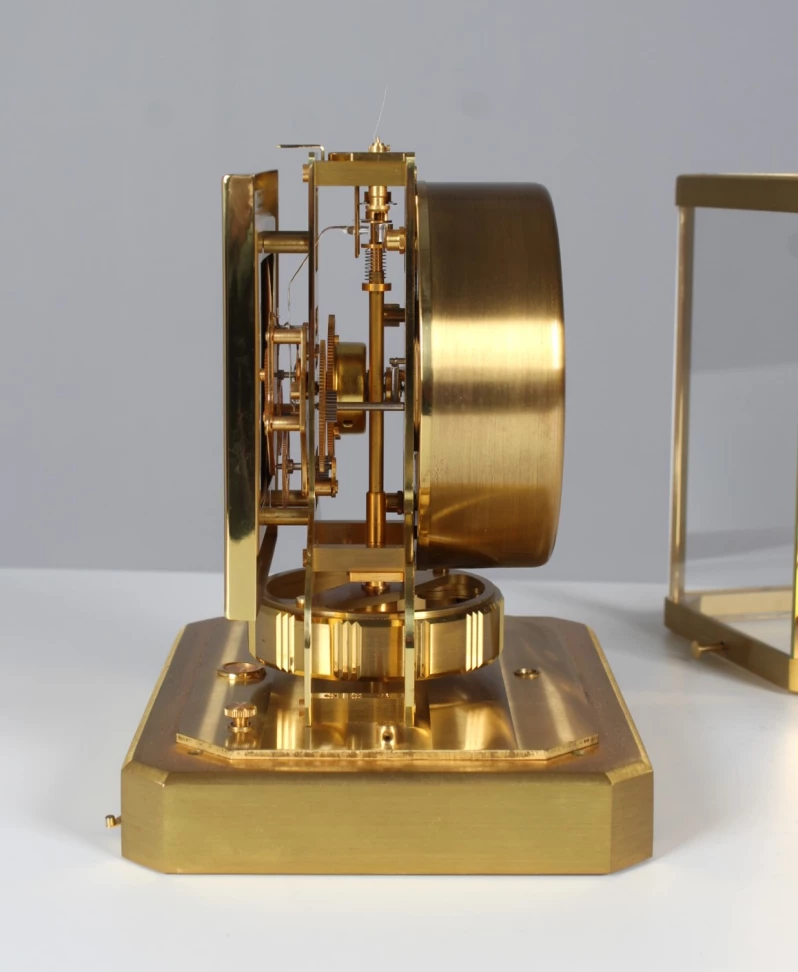
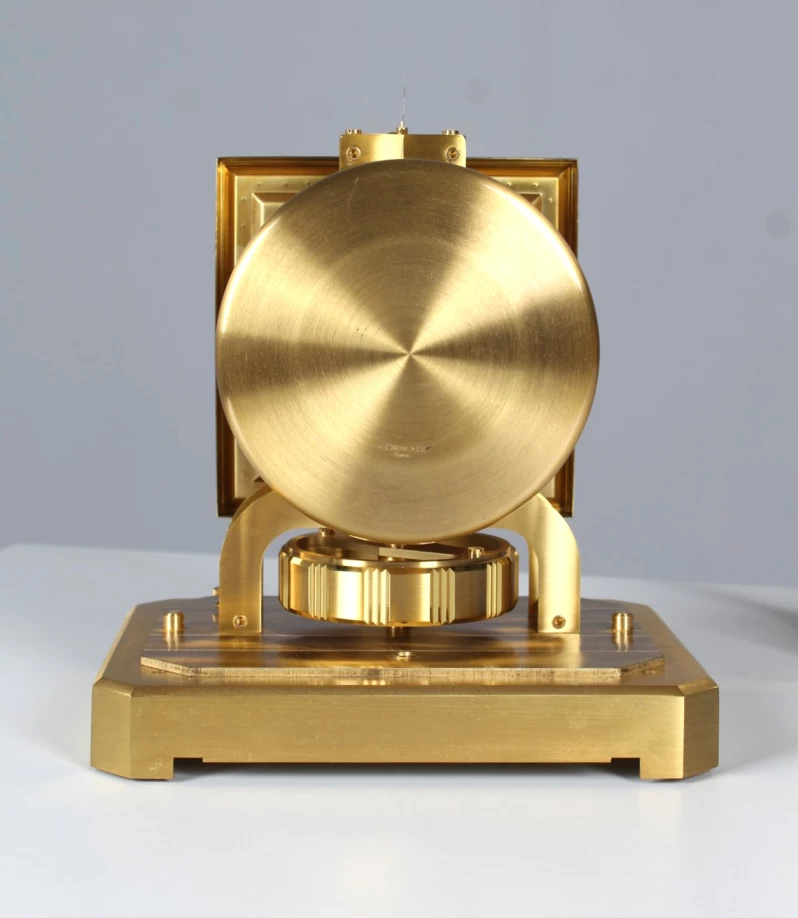
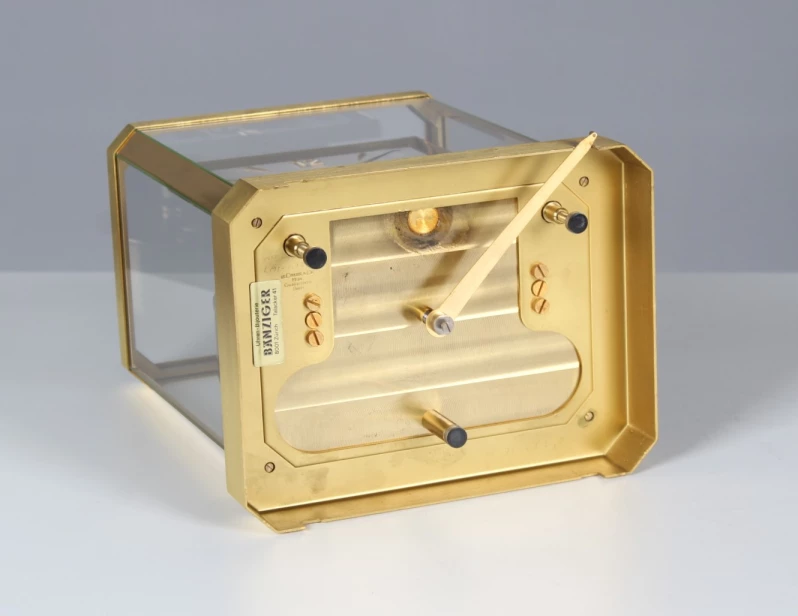
Atmos VI in matt brushed gold-plated case with polished stands. Rotating pendulum with vertical milled stripes.
White square dial with golden numerals 3, 6, 9, 12 and indexes for the remaining hours.
The golden hands are blackened in a soft colour gradient towards the front for better readability of the time.
This version was built under the model number Atmos VI in the same size as the Atmos II and the Atmos III.
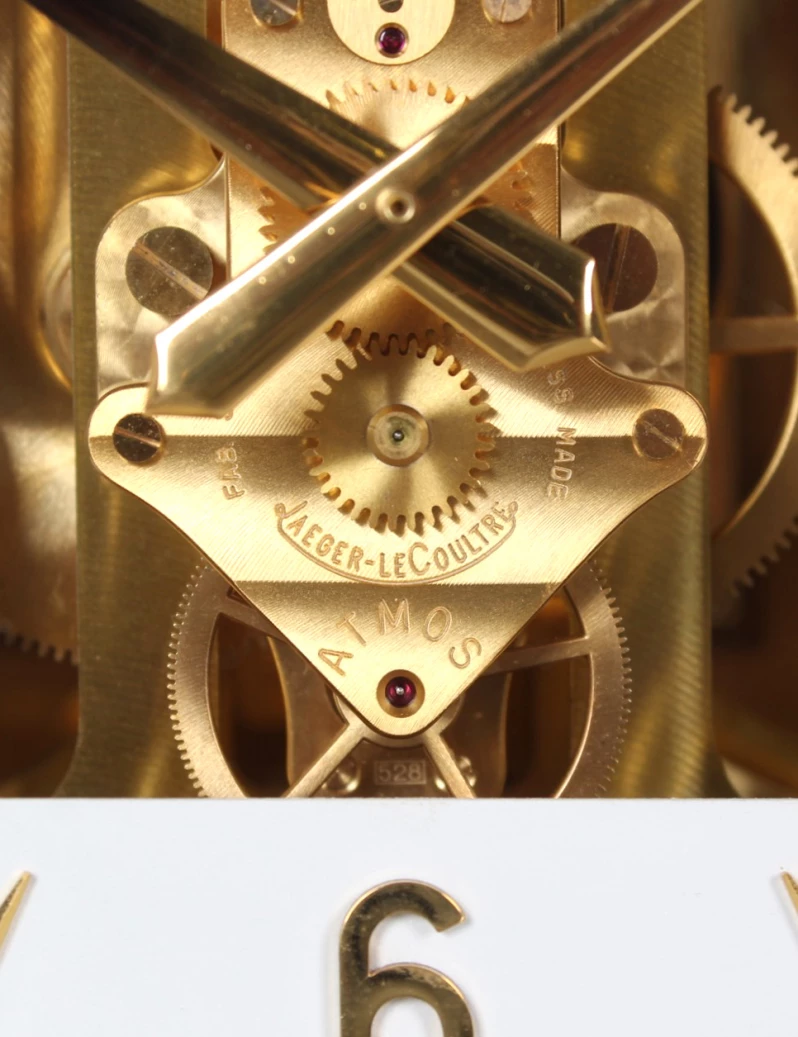
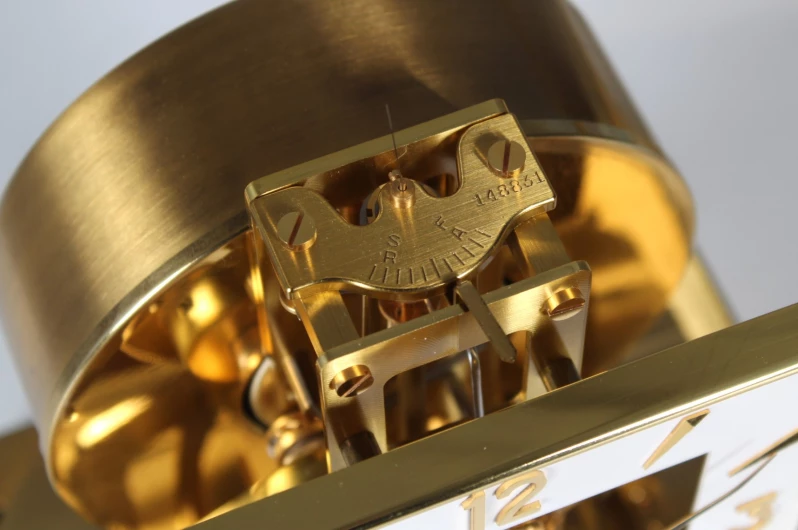
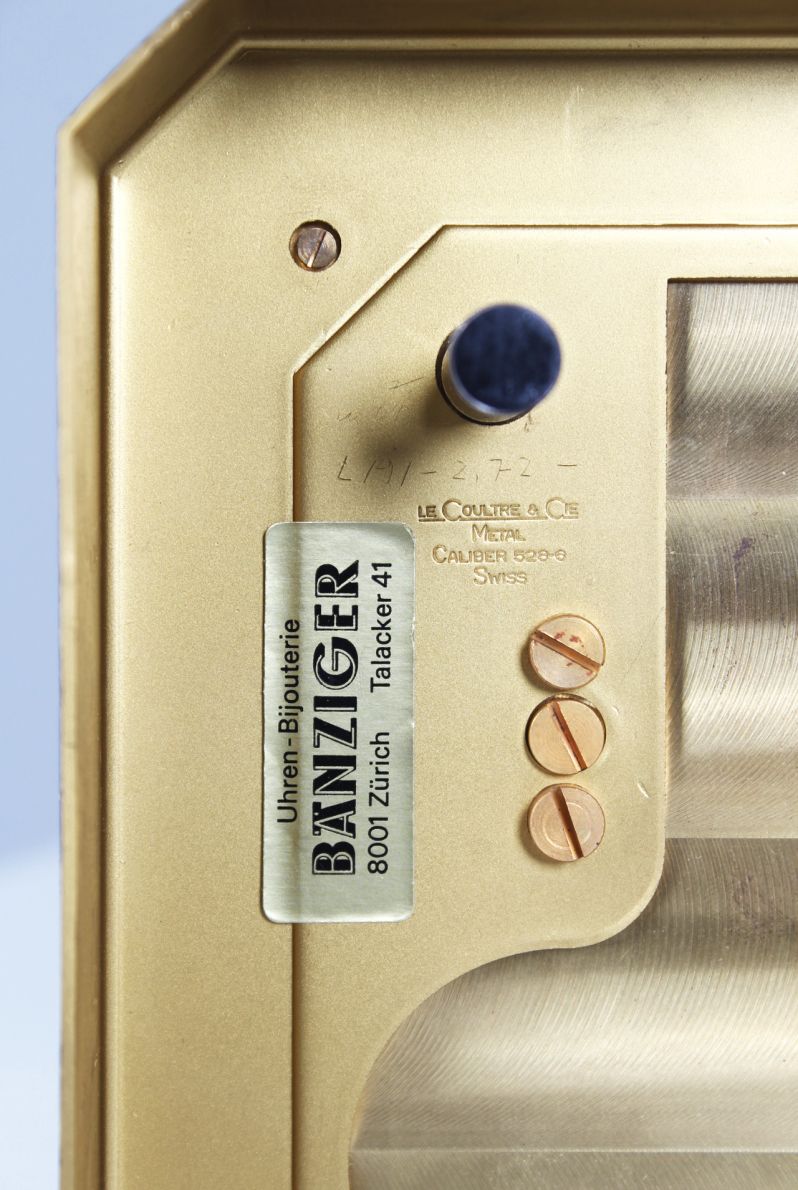
The watch is equipped with a calibre 528 movement. On the detail photo, which shows the engraving below the hands, the calibre number is clearly visible below the ruby bearing.
Serial number: 148831
Year of manufacture: 1962
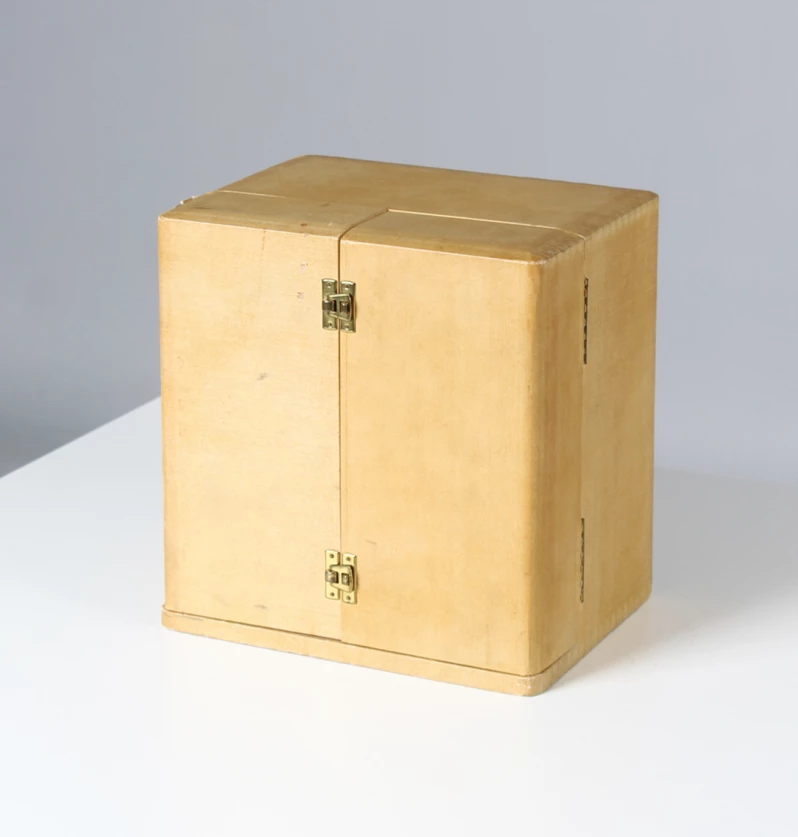
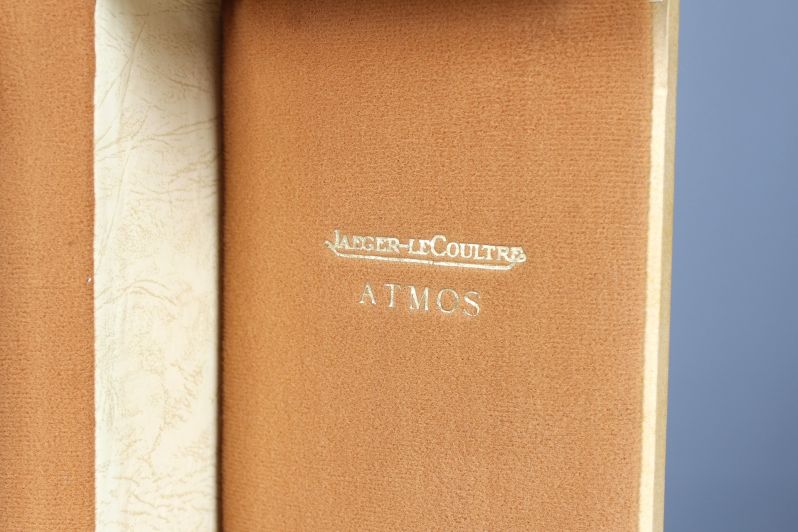
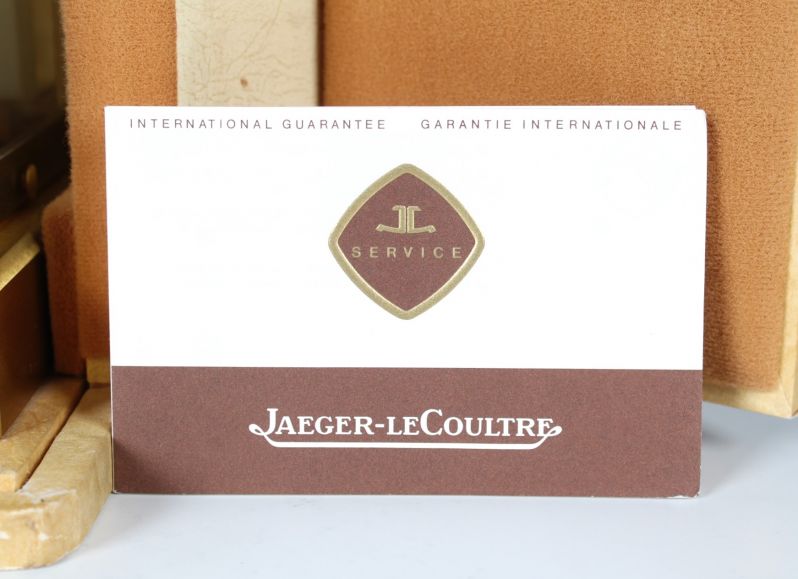
The original shipping box, the so-called tabernacle, is present and included.
Condition:
The clock runs absolutely reliable and accurate.
Authentic and for its age very nice condition. The photos are not "embellished", the case condition is as shown in the photos.
I give a one year warranty on the movement when professionally set up and handled.
Fun Facts:
The "clock that lives on air" uses the "breathing movements" of a gas-filled bellows created by temperature fluctuations to wind the movement.
The movement of the clock is conspicuous by its cylindrical box on the back. Inside, a bellows-shaped expansion chamber contains chloroethyl, a gas that expands particularly strongly between 10 °C and 27 °C. The movement's accuracy is dependent on the "breathing movement" of the bellows.
The condition for the clock's accuracy is a stable and vibration-free installation.
[Source: Jean Lebet - Living on Air / Jürgen Abeler - Ullstein Uhrenbuch]
Price: 2600,-€
Worldwide shipping possible.
You will find interesting facts about the ATMOS from Jaeger LeCoultre in the specialist literature:
Jürgen Abeler - Ullstein watch book p. 173
Negretti / De Vecchi - Fascination Watch p. 195
Article found under: Clocks
Video Atmos VI
Also interesting
Mantel Clock "Atala and Chactas"
Paris
Bronze (fire-gilt and patinated), enamel
Empire around 1810
Art Deco mantel clock
France
Marble, metal
Art Deco around 1930
Early classicist chest of drawers with trompe-l'œil marquetry
Southwest Germany
Walnut and others
around 1770