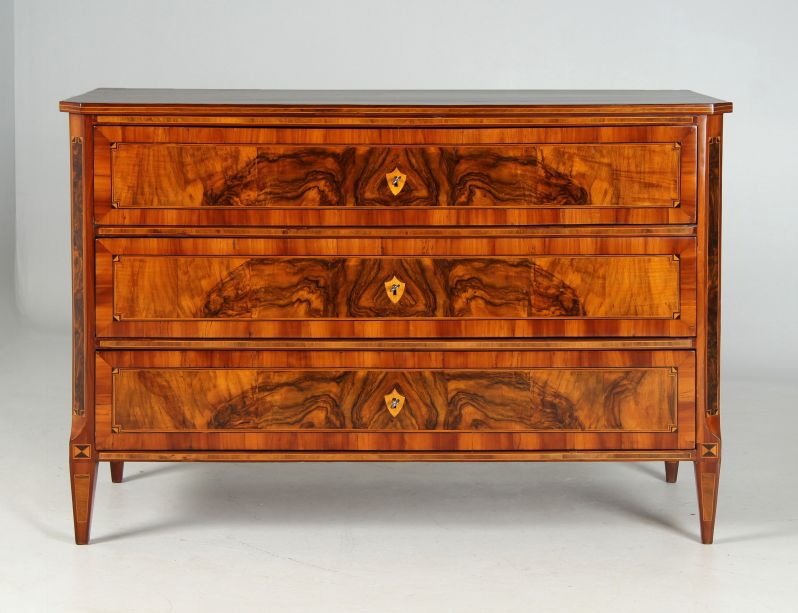
Video Saxon Louis XVI chest of drawers
Classicist chest of drawers
Germany (Saxony)
Plum, walnut and others
circa 1780
Dimensions: H x W x D: 84 x 126 x 57 cm
Description:
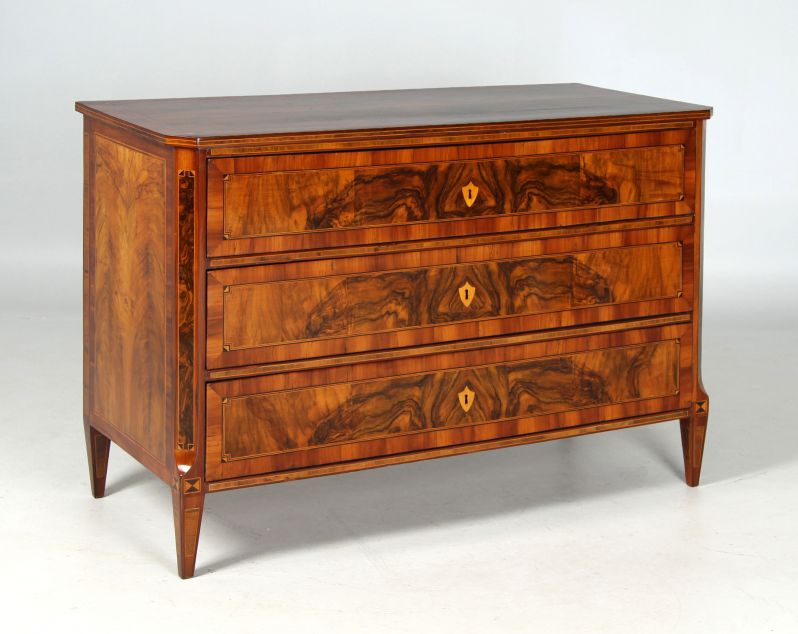
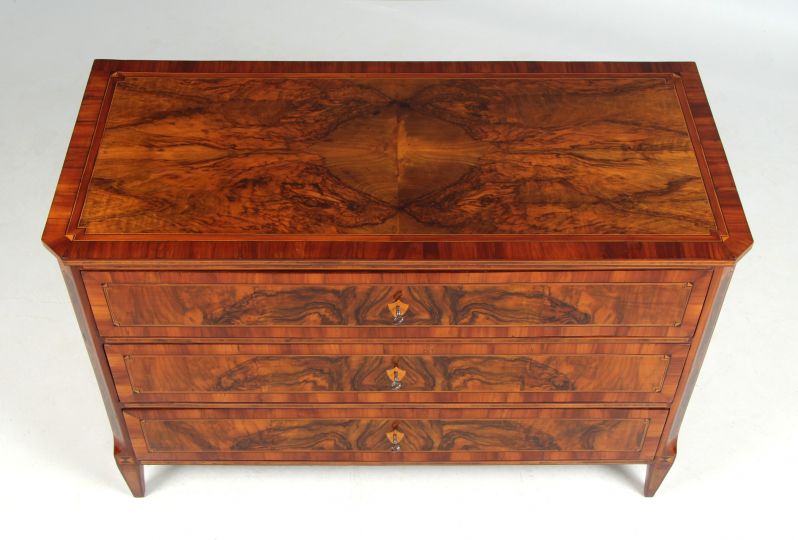
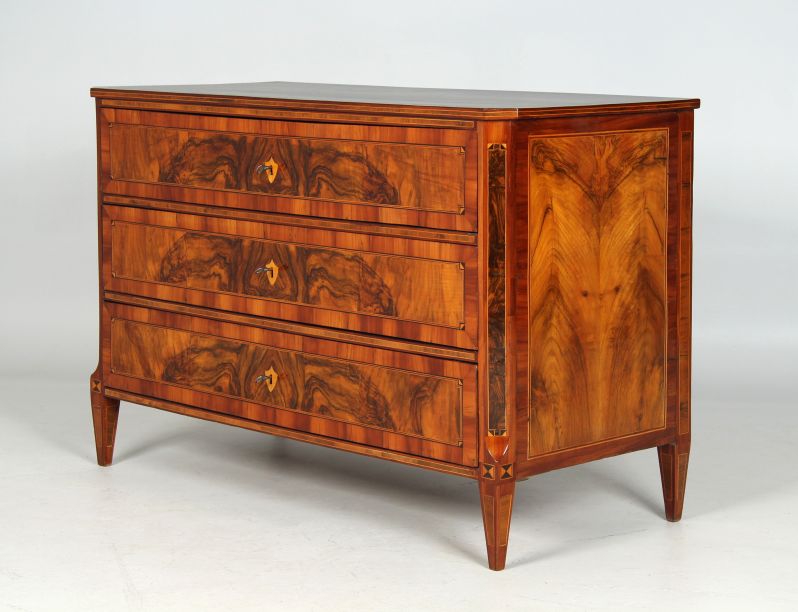
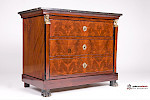
Antique classicism chest of drawers in typical Dresden design of the late 18th century.
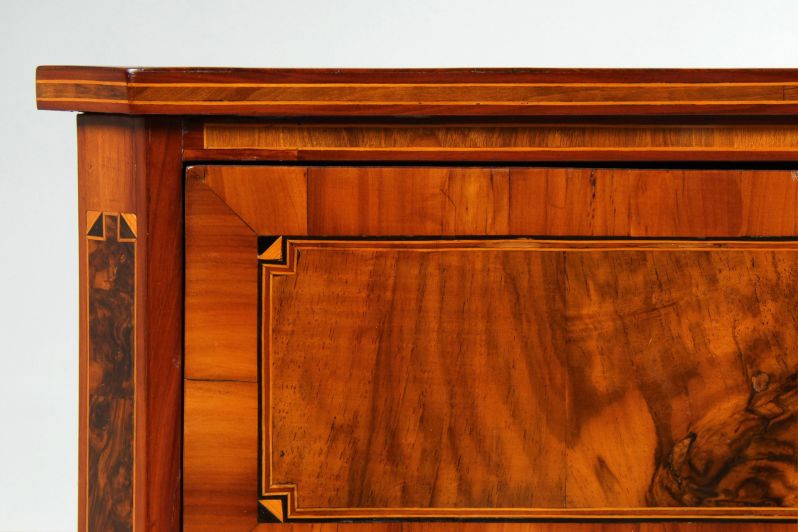
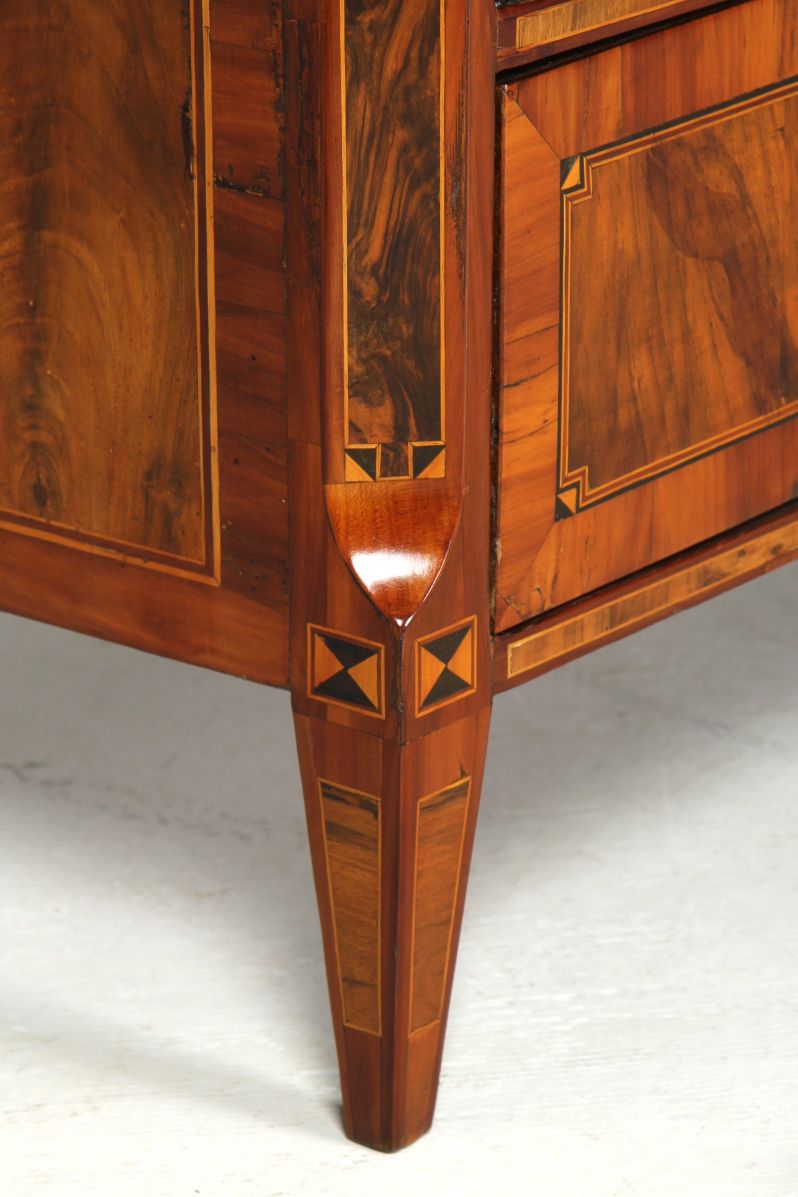
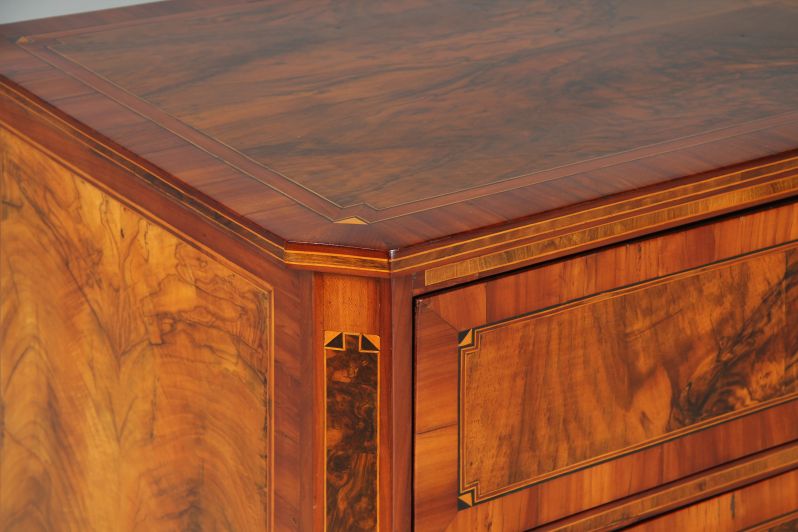
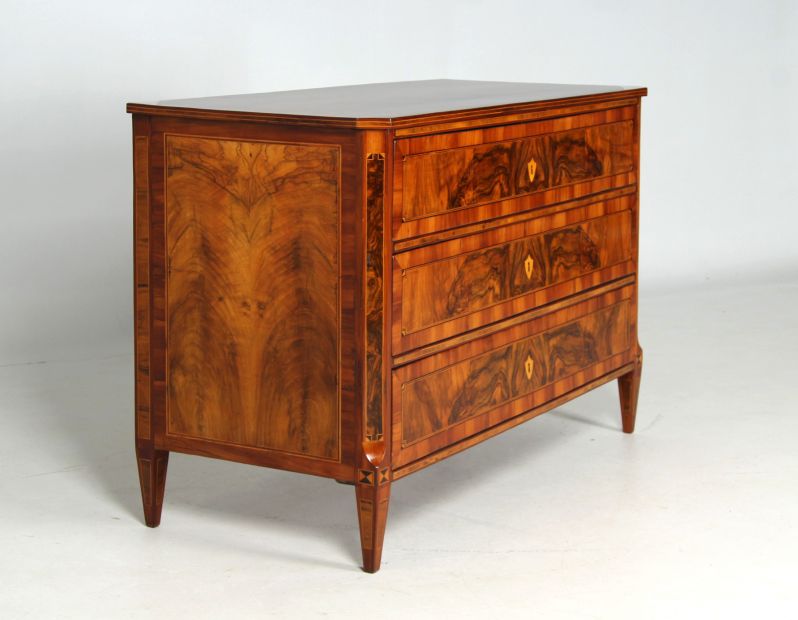
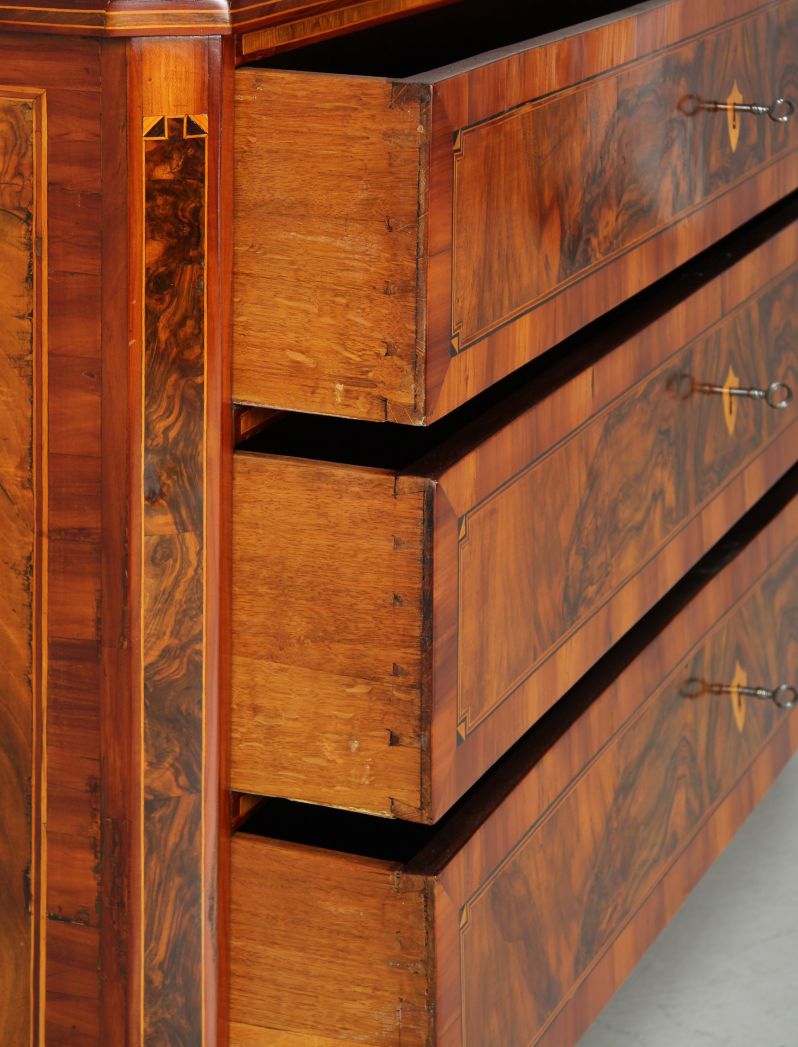
The sloping pilaster strips are built on square legs that taper downwards. The transition from leg to body is marked by contrasting inlaid triangular decorations in a square, which we will also encounter in a similar form in other parts of the piece of furniture.
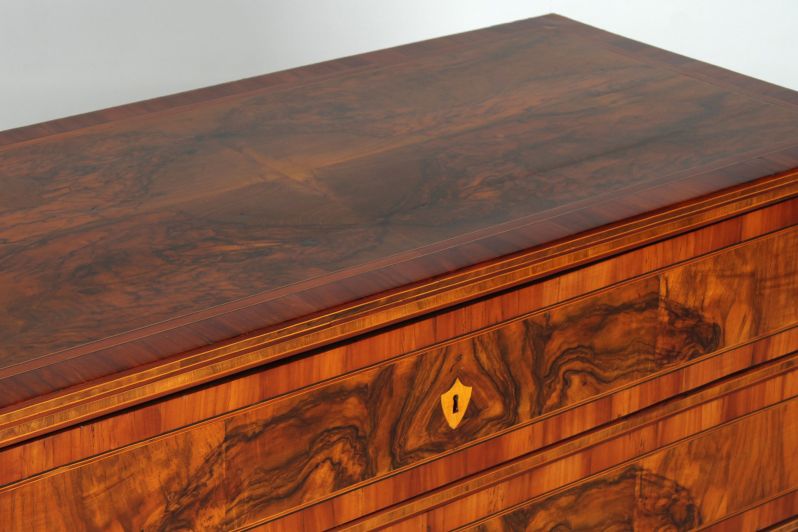
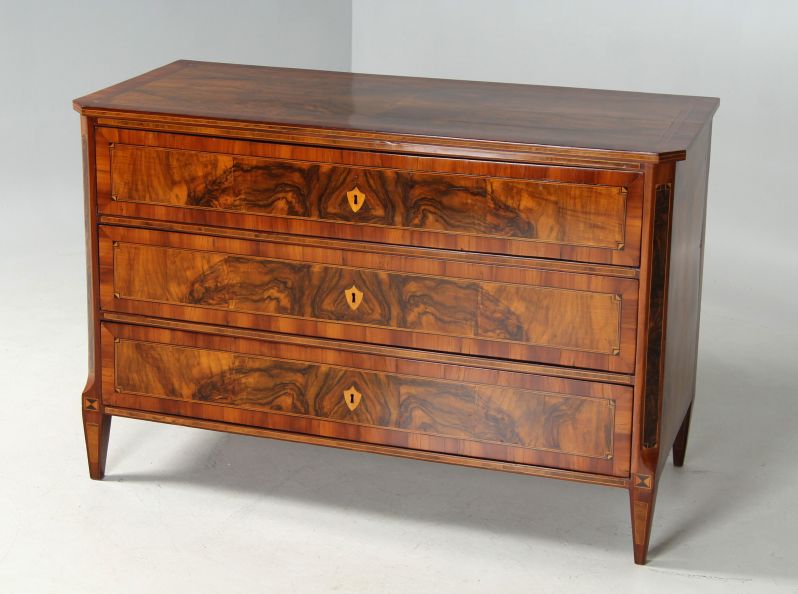
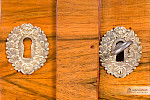
The front of the unit is divided by the three drawers. Plum wood forms the outer frame of the drawer fronts, followed by four narrow bands of bog oak, maple, mahogany and maple again. The walnut veneer in the panel framed in this way is laid symmetrically and contrasts with the light-coloured key plates in the shape of coats of arms, which replaced the former bronze ornamentation in an earlier restoration.
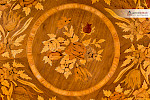
The skirting board, the crosspieces and the edge of the panel with their fine marquetry make a decisive contribution to the design of the piece of furniture.
The sides of the chest of drawers are simply fielded and veneered in a perfectly bookmatching grain pattern.
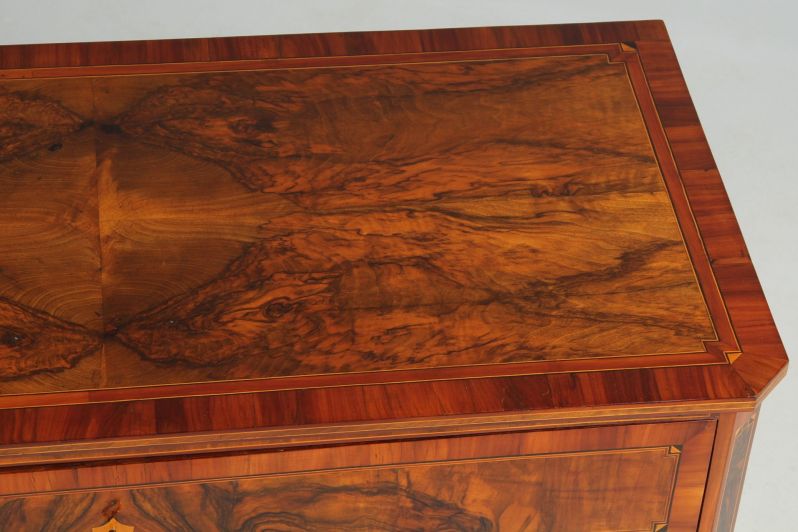
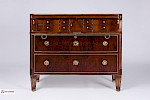
The top panel is also absolutely remarkable, whose exciting veneer pattern, fuelled by the shellac polish typical of the period, develops an incredible "depth".
The top panel corresponds exactly to the colouring and warmth of the furniture colour and sides - if it looks different in the photos, this is due to the white reflective walls, floor and ceiling in the photo studio.
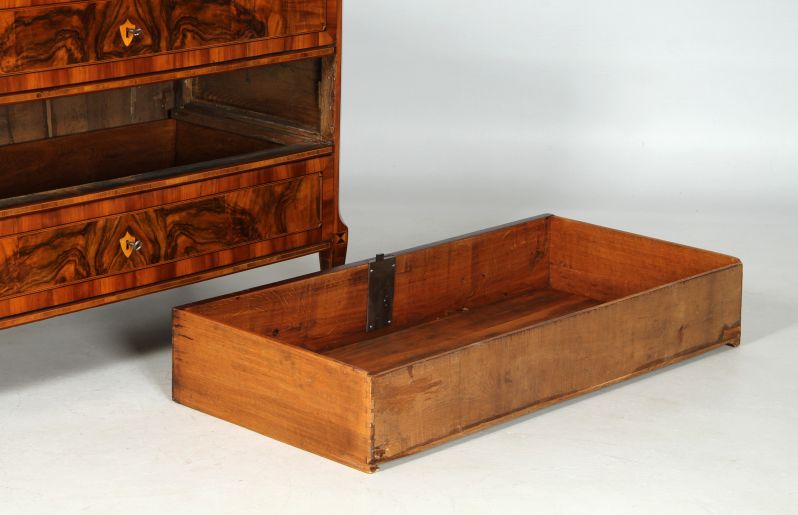
The base wood of the furniture is oak, very solidly processed and corresponding to the high quality of the furniture.
Worth knowing:
The classicist era, known internationally as Époque Louis XVI, is known in German-speaking countries as the Zopfstil. The furniture of this period is characterised by a cubic-edged basic shape and the clear contrast between individual components.
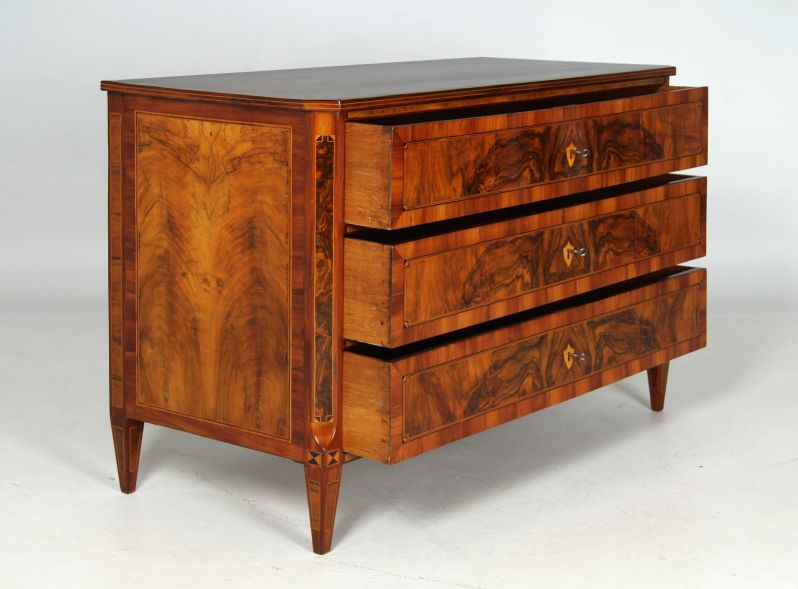
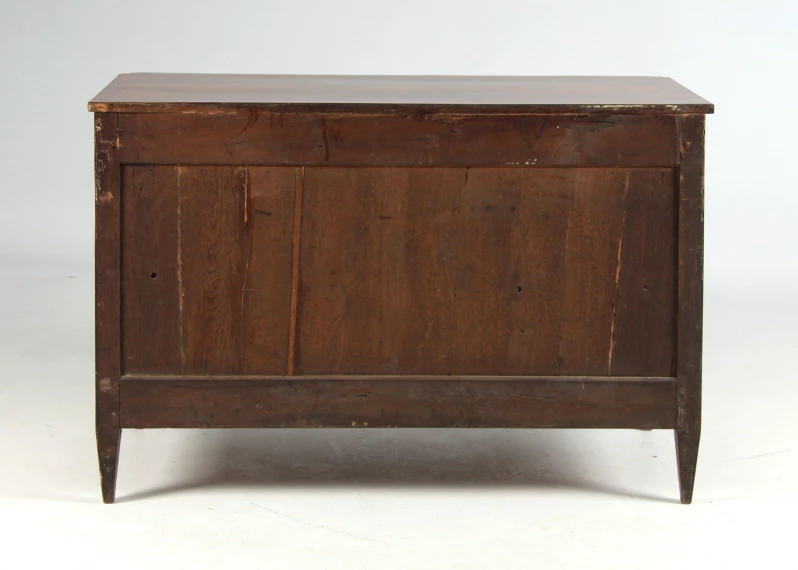
Another common feature, which is also typical of Dresden furniture, is the slender, tapered square legs, which extend under the top panel in a cleated design and are veneered in such a way that they appear to be independent components, although they are structurally connected to the body of the furniture. This can be clearly seen in the photo, which shows the back of the chest of drawers: The rear cleat runs all the way to the top.
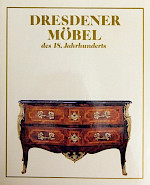
Thanks to brand marks from Pillnitz Palace and Moritzburg Palace (see Gisela Haase, Dresdner Möbel des 18. Jahrhunderts, p. 213), several pieces of marquetry furniture with similar design features can be summarised into a stylistic group whose provenances can all be traced back to Saxon palace collections.
The chest of drawers offered here also fits well into this series, both formally and technically. The individual components are divided into geometric surfaces and separated from each other by fine fillet bands. Mirrored veneer surfaces, especially on the top panel, are also typical of the period and region. All these features make the Dresden plaited furniture an independent variant within German furniture making.
Condition:
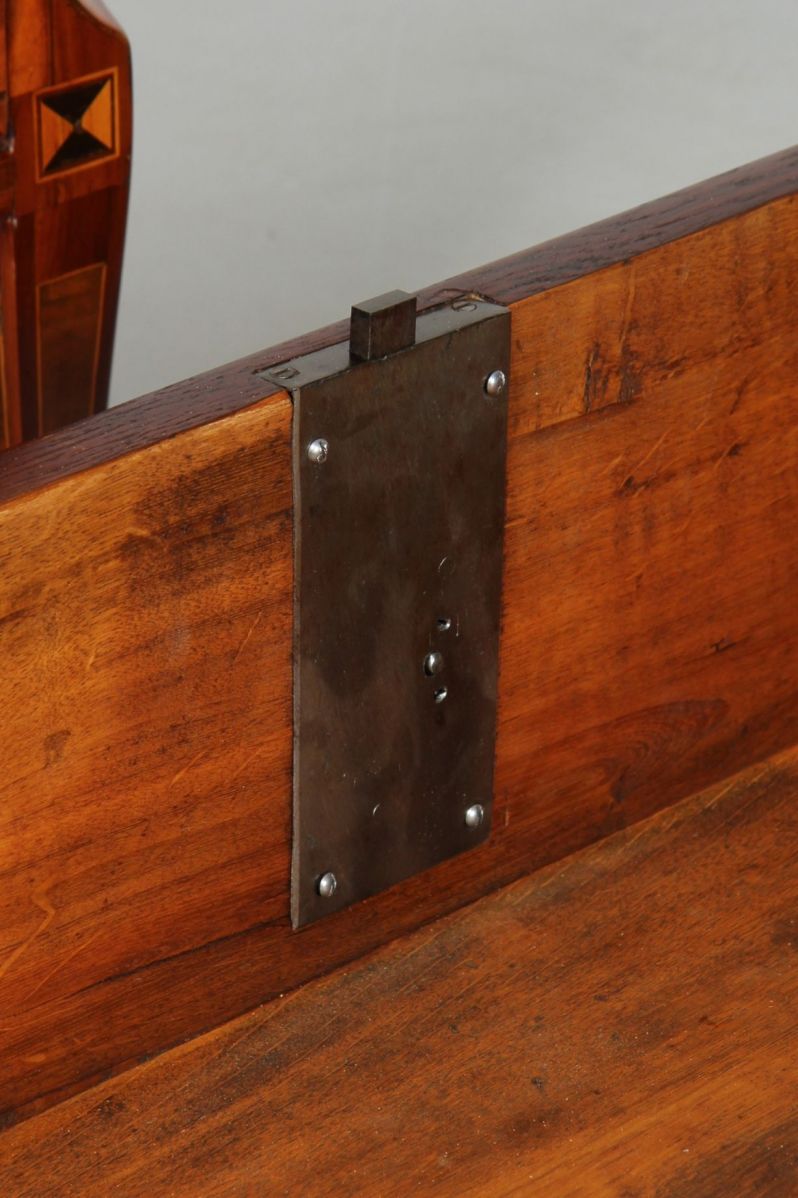
Refurbished condition suitable for everyday use with a shellac hand polish. The drawers run cleanly and smoothly, the locks work perfectly.
Price: 3700,- €
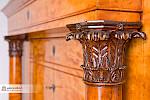
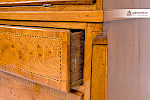
Gisela Haase - Dresdener Möbel des 18. Jahrhunderts P. 213 and cat. No. 60 and following
Article found under: Chests of drawers
Add to shopping cartVideo Saxon Louis XVI chest of drawers
Also interesting
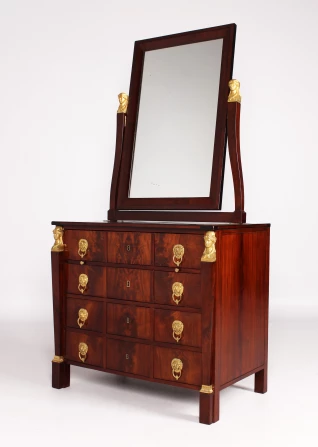
Antique dressing table - stamped Chapuis
Brussels
Mahogany
Empire around 1810
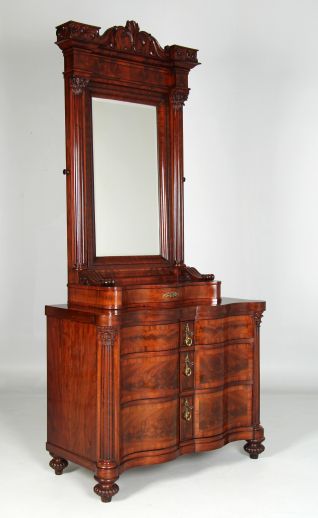
Chest of drawers with mirror
Northern Germany
Mahogany
Mid 19th century
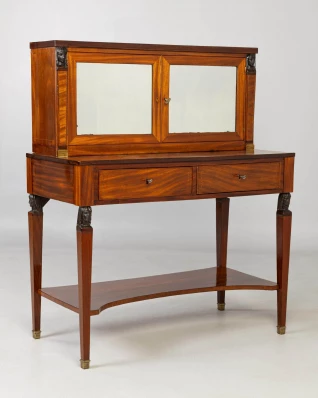
Retour d'Egypte console table with mirror top
England
Mahogany, marble, etc.
early 19th century