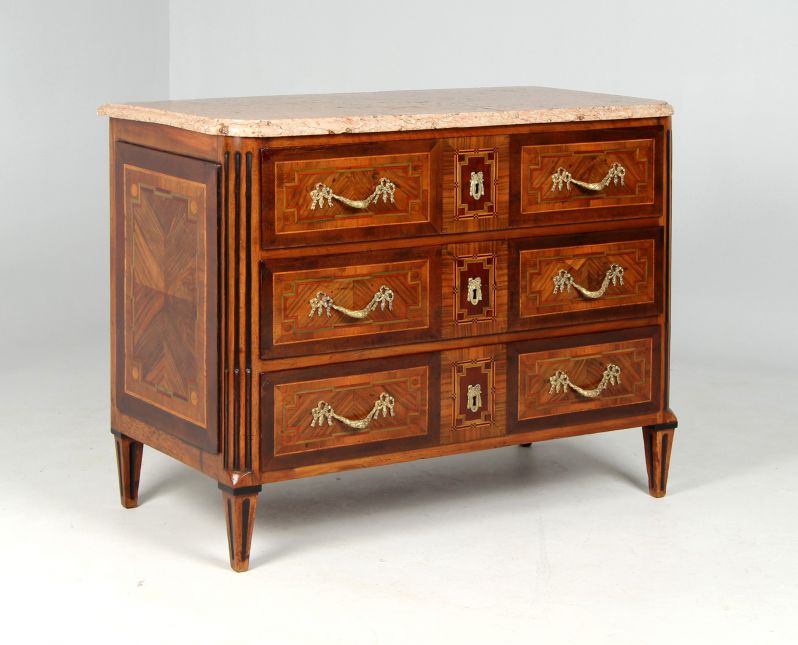

Antique Louis XVI chest of drawers with marquetry and marble top
France (Dauphine)
Walnut and others
late 18th century
Dimensions: H x W x D: 89 x 114 x 59 cm
Description:
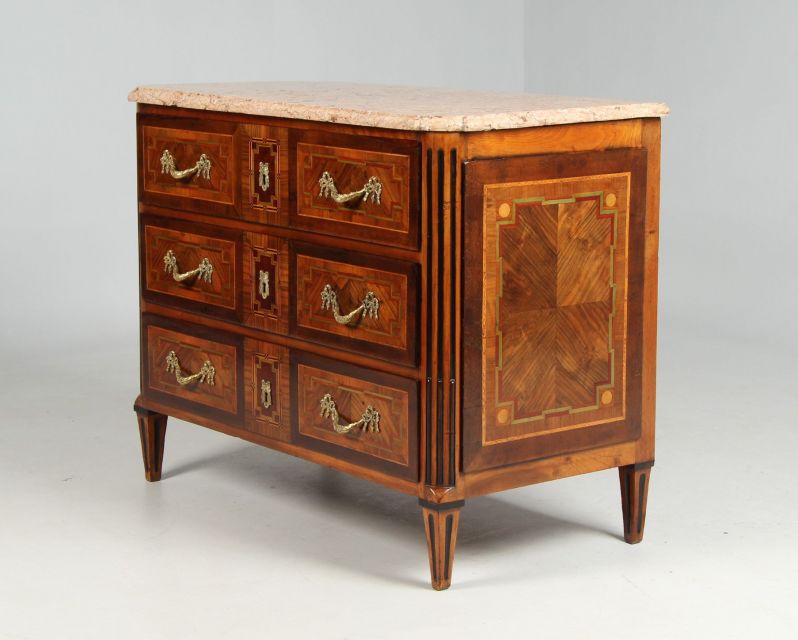
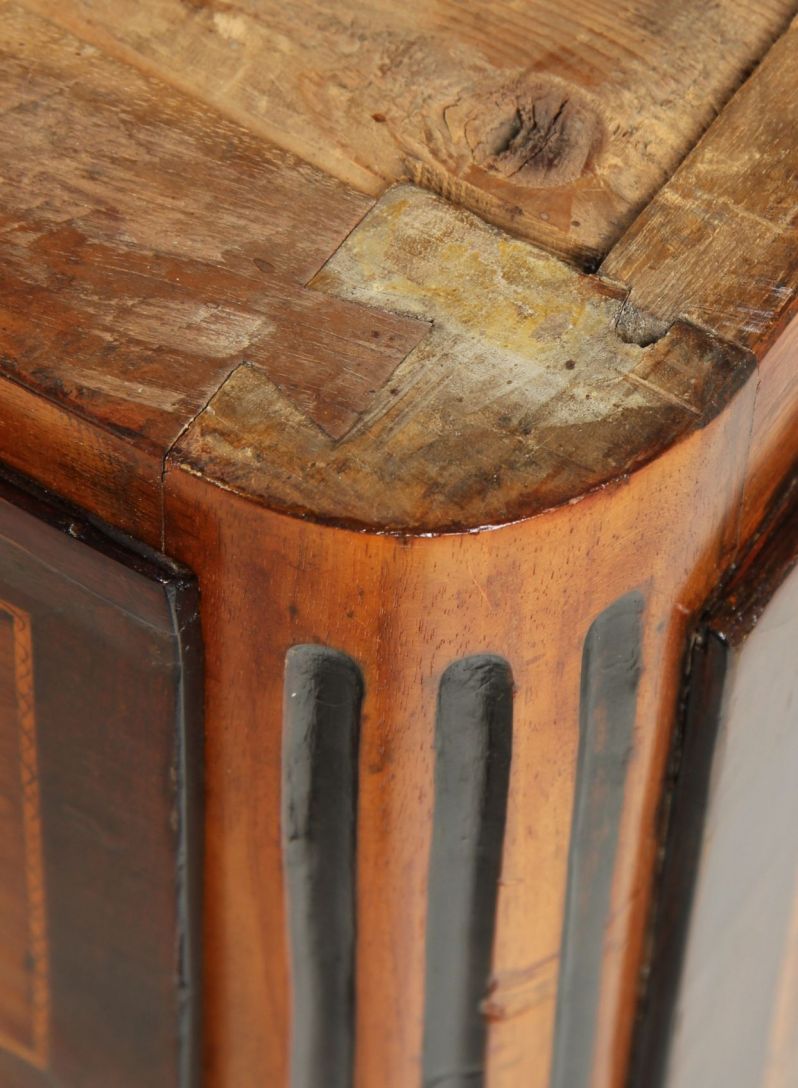
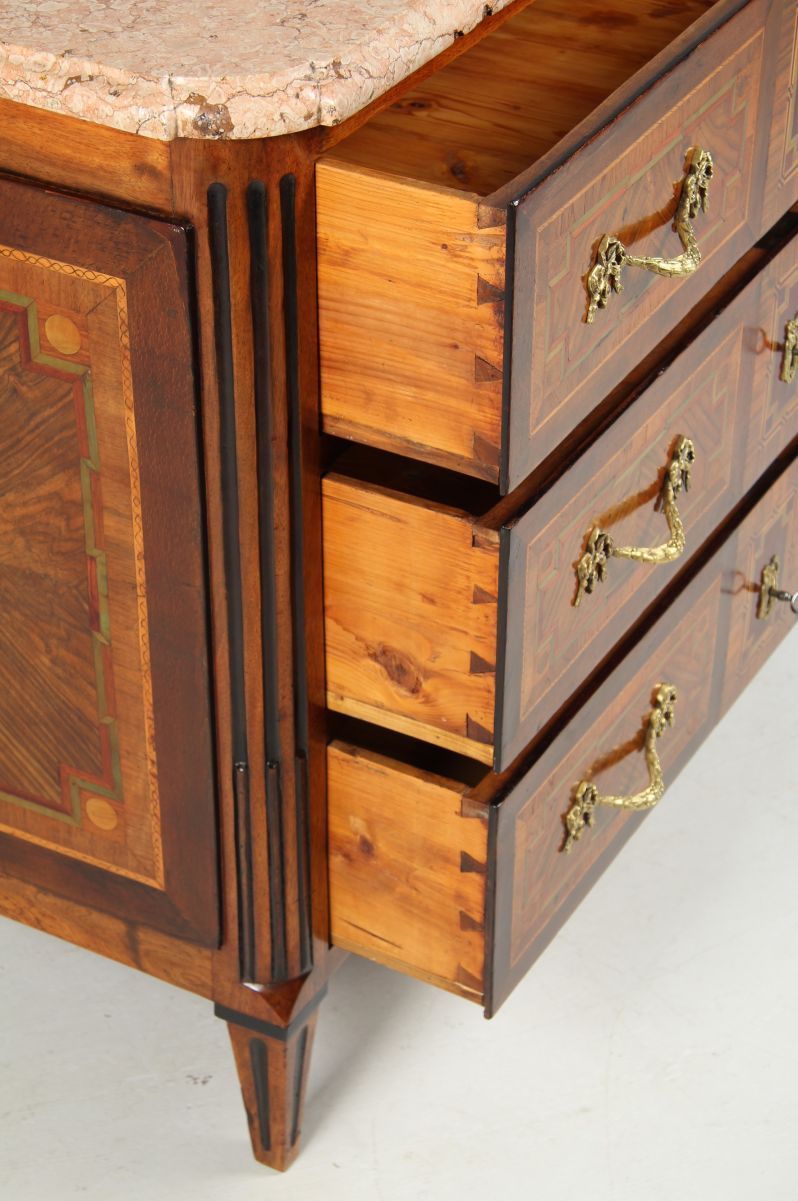
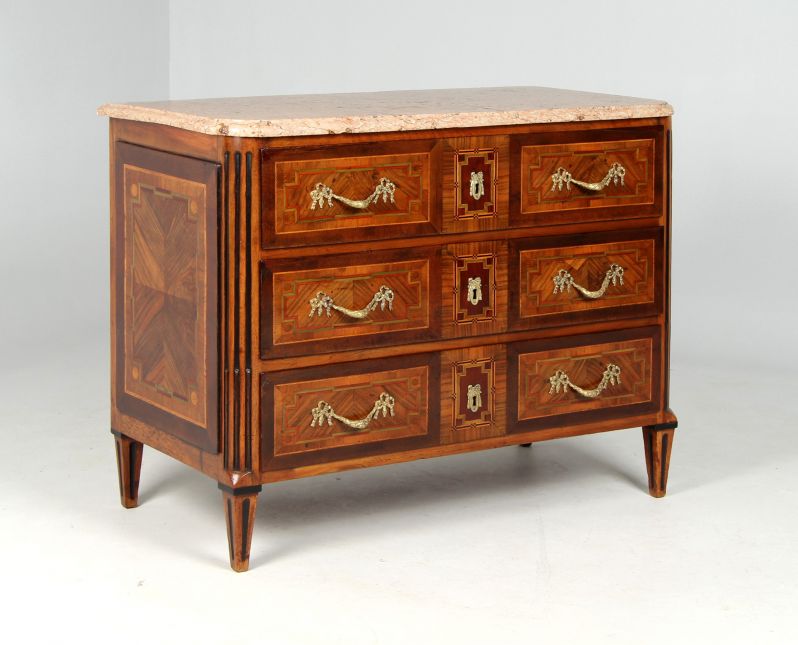
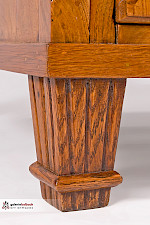
A three-tiered piece of furniture with rounded pilaster strips and black inlaid fluting, standing on tapered square legs.
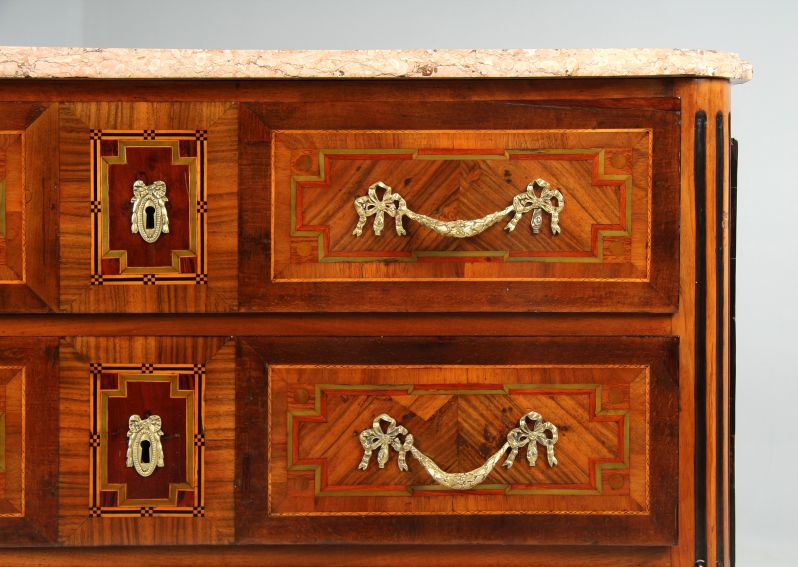
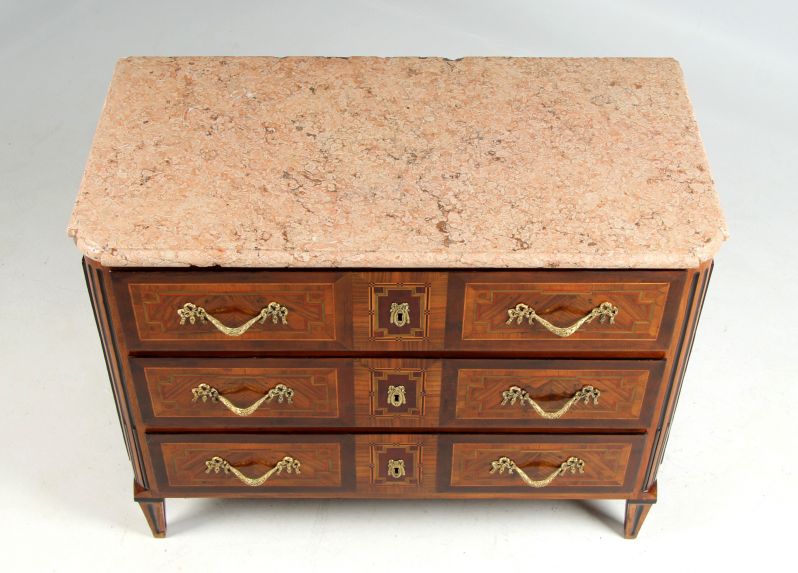
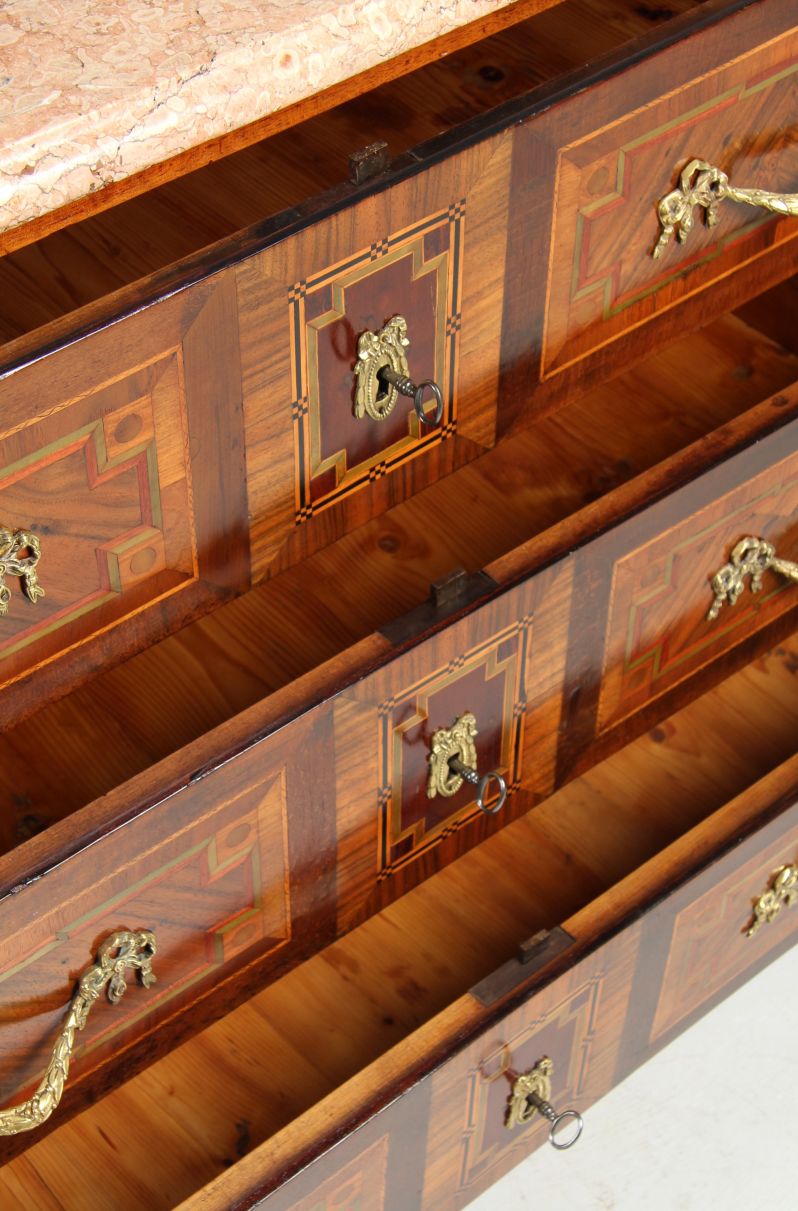
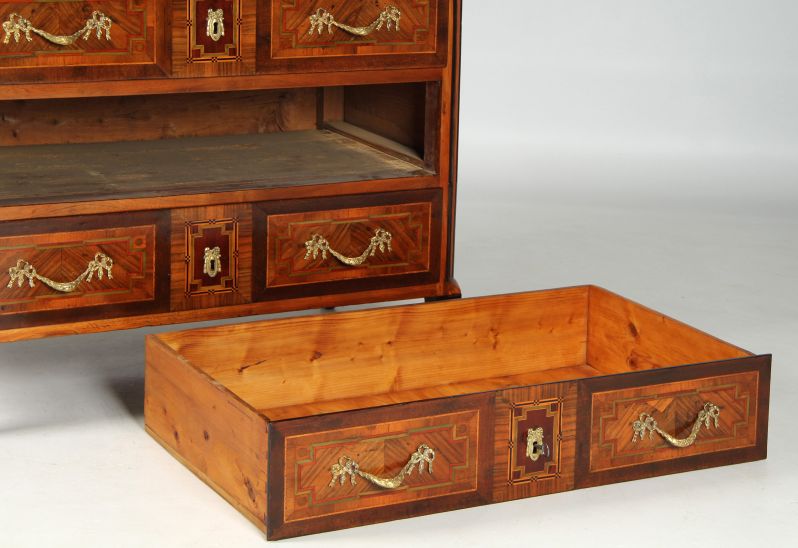
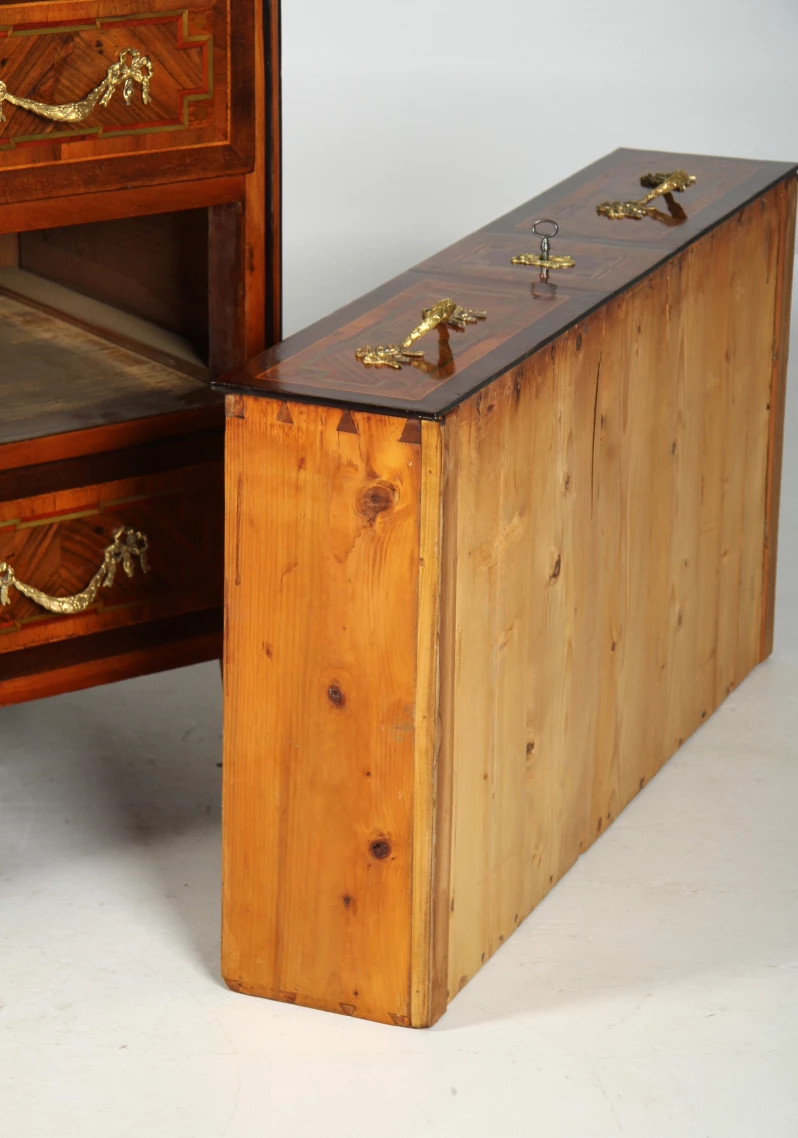
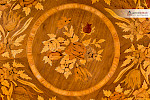
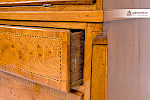
The drawer fronts are each divided into three panels using an elaborate marquetry technique.
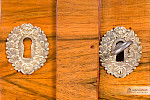
The centre panels feature bronze key plates in typical Louis XVI style. These are framed by green-coloured bands and fillets of light and dark contrasting woods.
The outer panels are used to hold the dominant handles, which also correspond to the characteristic design language of the late 18th century with bows and hangings. They are mounted on panels of diagonally set walnut and framed by alternating green and red coloured woods.
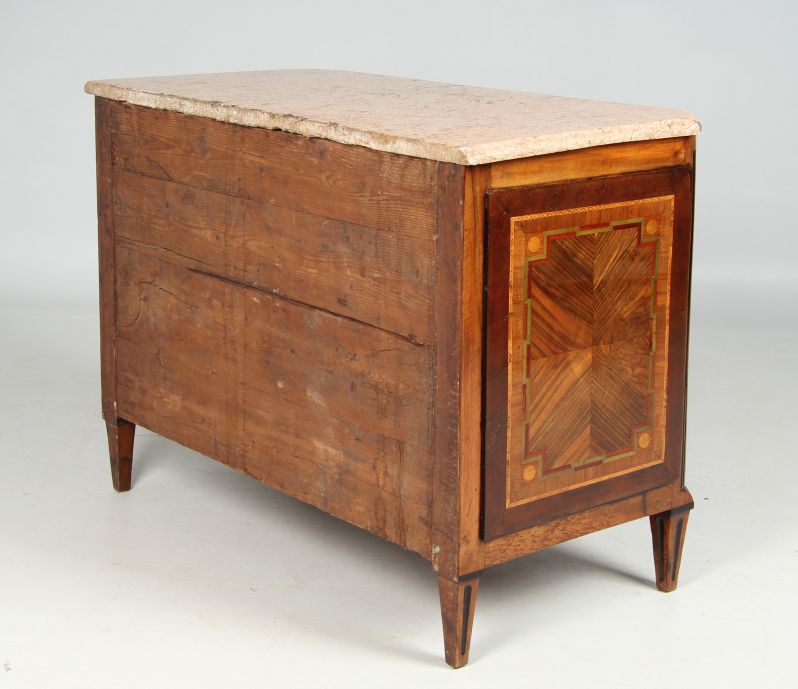
The sides of the piece of furniture echo the design of the front panels.
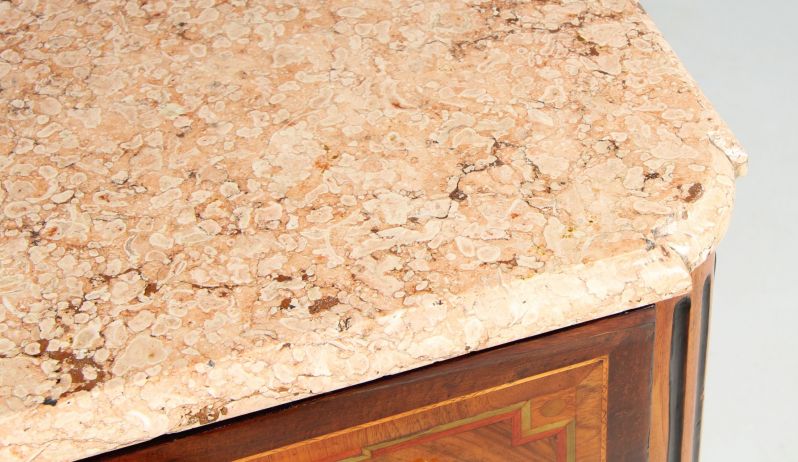
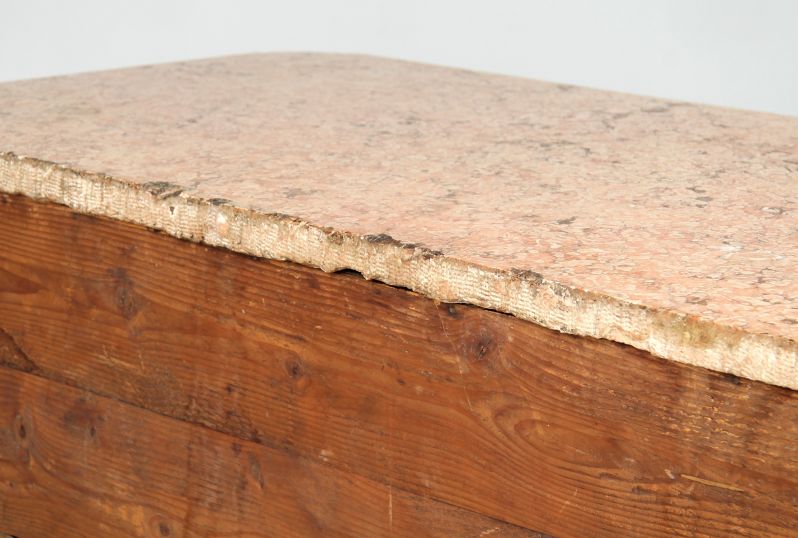
A heavy, light rose-coloured marble top with fine veining forms the upper end.
Worth knowing:
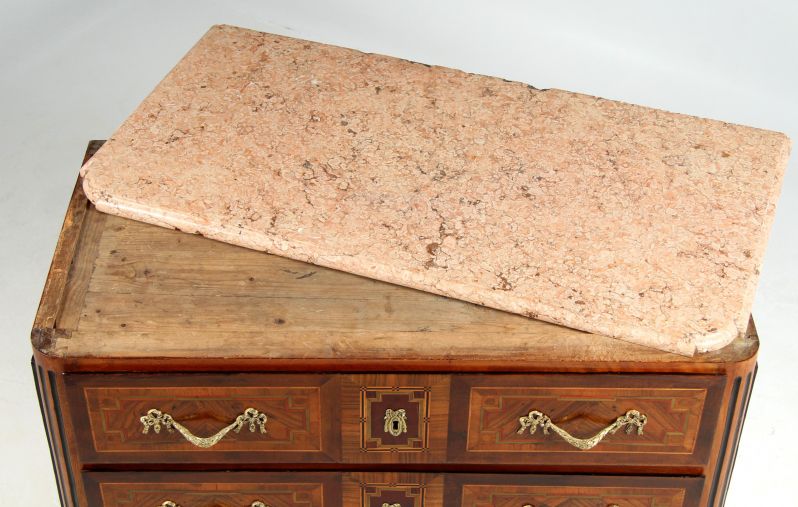
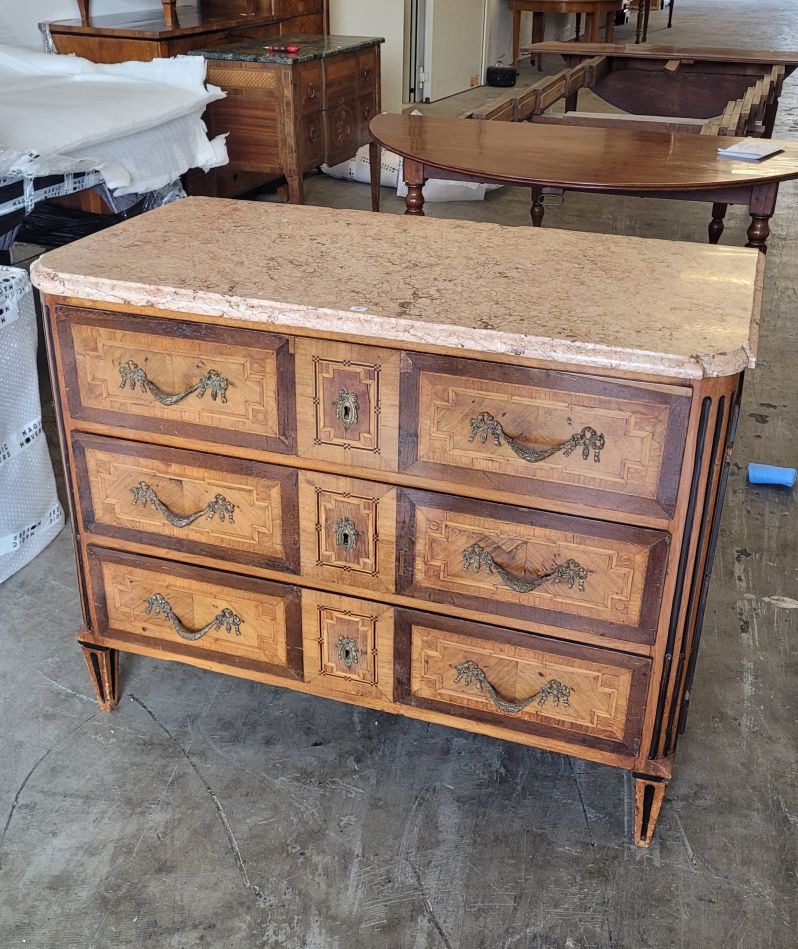
The wood colouring techniques used on this chest of drawers are particularly noteworthy. Enclosed you will find a photo of the piece of furniture in its unrestored found condition with clear bleaching of the wood. As can be seen, no red or green colouring was visible at this time. In the course of the restoration, the colouring was not supplemented, but the original colouring was revealed again by removing the old varnish and carefully cleaning the surfaces with fine, alcohol-soaked steel wool.
This restorability of the colours shows that the wood was not only stained on the surface, but was completely dyed through.
Both the design of the piece of furniture with the striking black fluting and the technique of intensive wood colouring are associated with the work of the Hache family of ebenists from Grenoble. A central element of their work was the systematic research into wood colours and staining techniques.
Thomas Hache was already experimenting with local Alpine woods and developing new colour tones at the beginning of the 18th century. He mastered both thermal processes for colouring wood and chemical processes using acids. Traditional recipes, for example from a publication from 1770, also describe vegetable stains, including a "beautiful green" obtained by soaking parsley and chervil in water.
Thomas Hache's recipes were then adopted and further developed by his son Pierre and later by his son Jean-François Hache.
The geometric marquetry and fillet ribbons on the piece of furniture on offer here fit stylistically into Jean-François Hache's creative period in the late 18th century. The circular elements in the corner spandrels of the framing are also typical of his design style.
Condition:
Refurbished condition with a shellac hand polish. Absolutely robust furniture suitable for everyday use.
Price: 6500,-€
Comparable pieces of furniture can be found in the specialised literature:
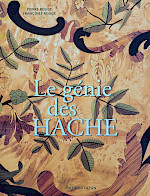
Pierre and Françoise Rouge - Le génie des Hache e.g. p. 303, 432 and 448
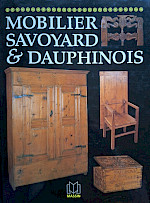
Edith Mannoni - Mobilier Savoyard & Dauphinois from p. 77
 "/>
"/>Article found under: Chests of drawers
Add to shopping cartAlso interesting
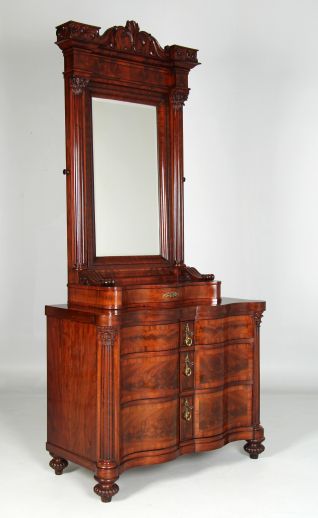
Chest of drawers with mirror
Northern Germany
Mahogany
Mid 19th century
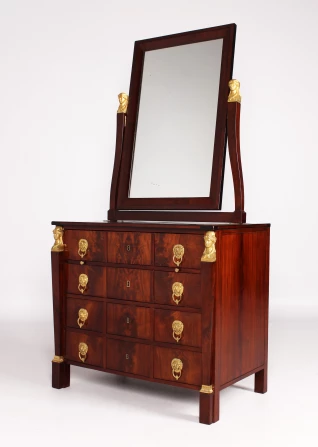
Antique dressing table - stamped Chapuis
Brussels
Mahogany
Empire around 1810
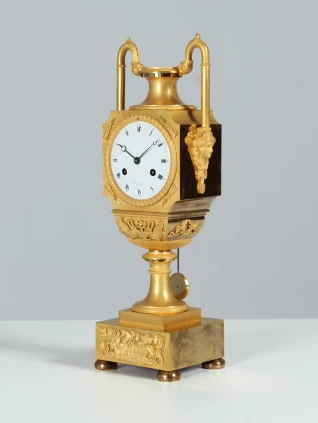
Antique Vase Clock
France
fire-gilt bronze
Empire around 1820