Video Multifunctional play table

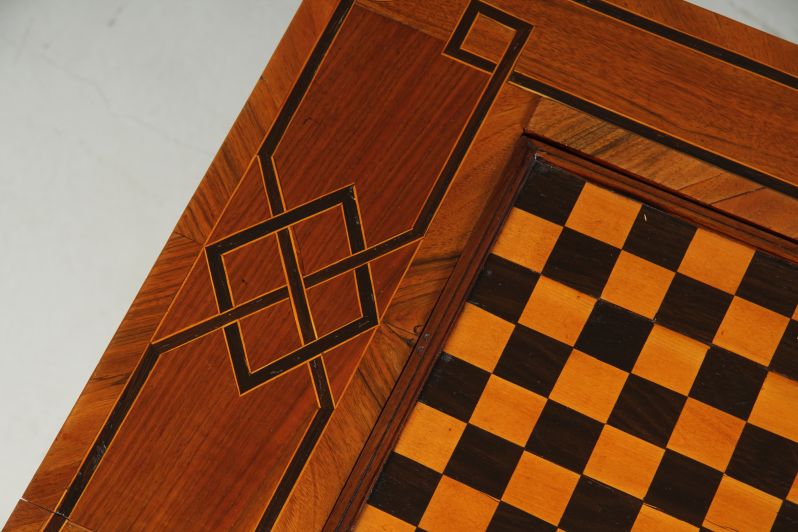
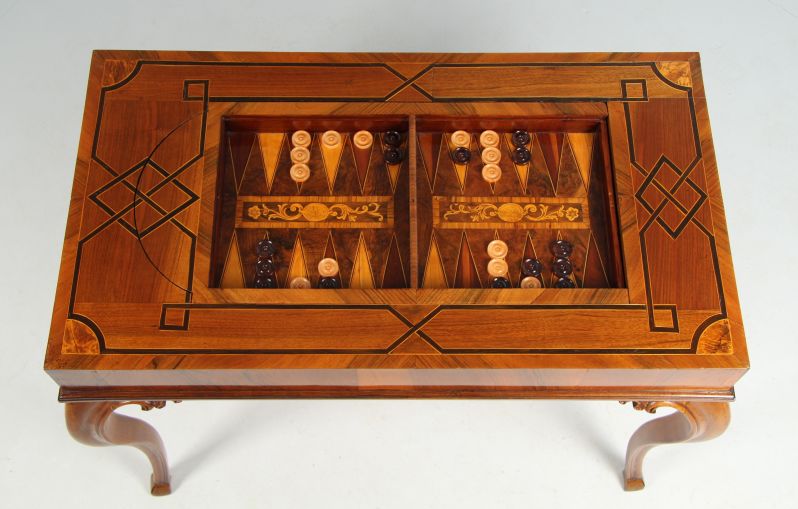
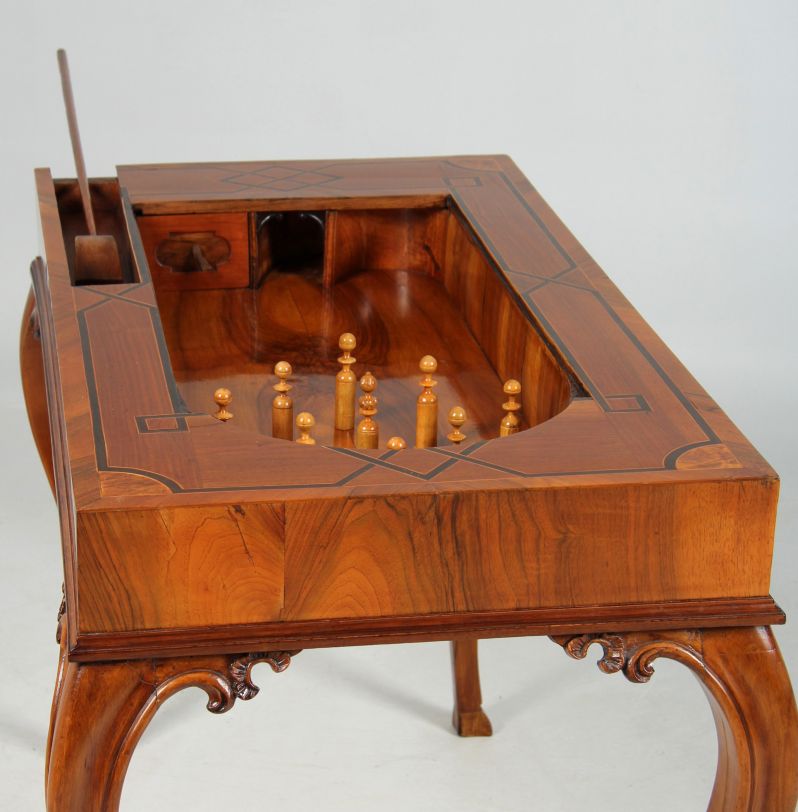

Antique game table with mill, chess, backgammon and skittles
Central German
Walnut, maple, plum
Baroque around 1760
Dimensions: H x W x D: 80 x 114 x 73 cm
Description:
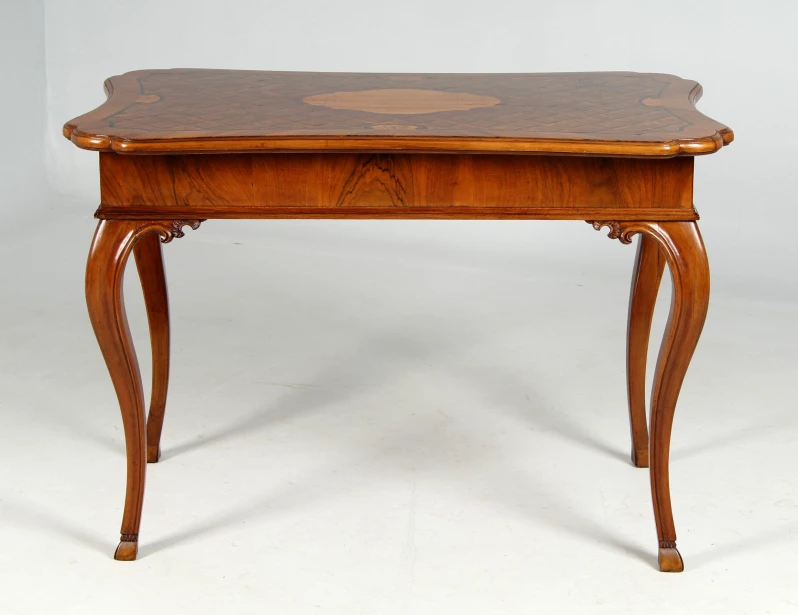
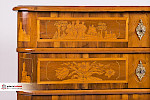
Extremely rare multifunctional music table from the second half of the 18th century.
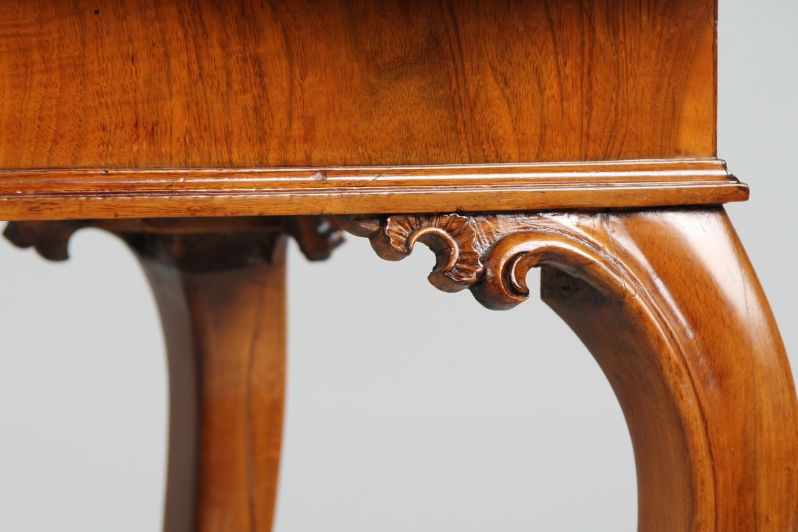
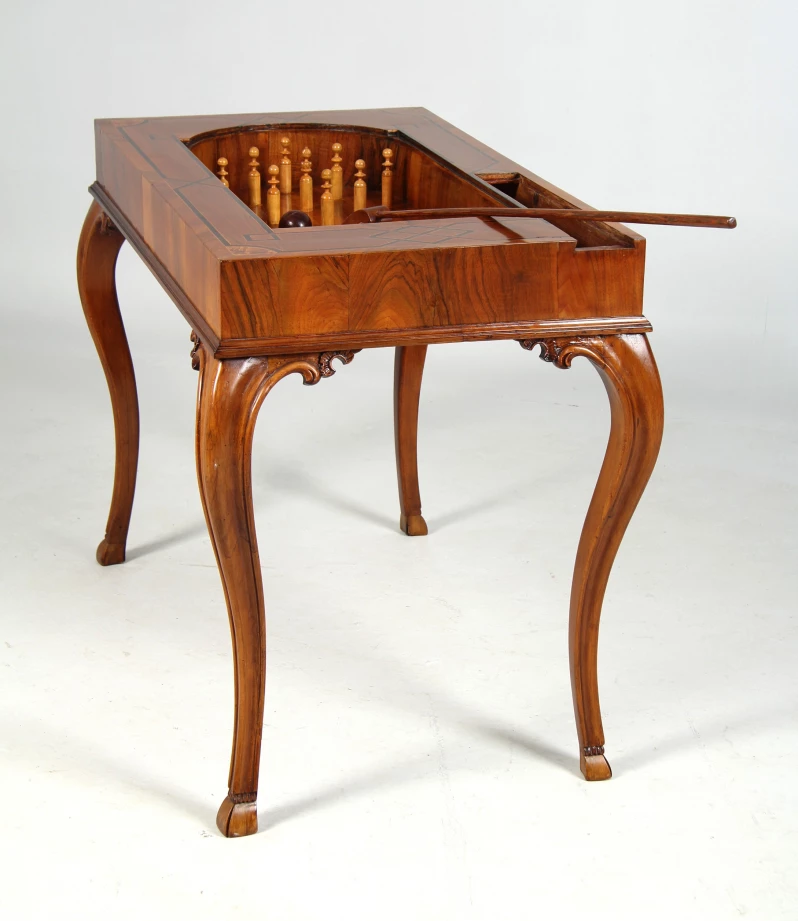
A piece of furniture standing on trestle feet with curved legs, the silhouette of which is emphasised by carved mouldings. The upper end is formed by C-curves and rocailles - typical Baroque design elements.
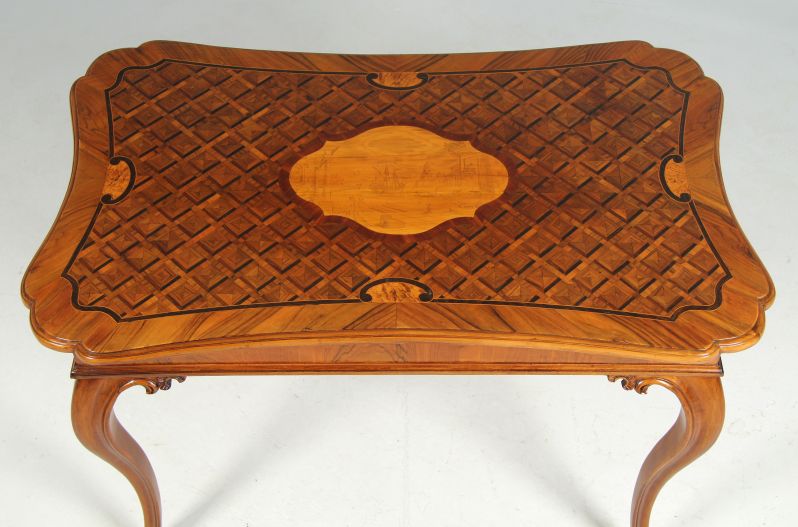
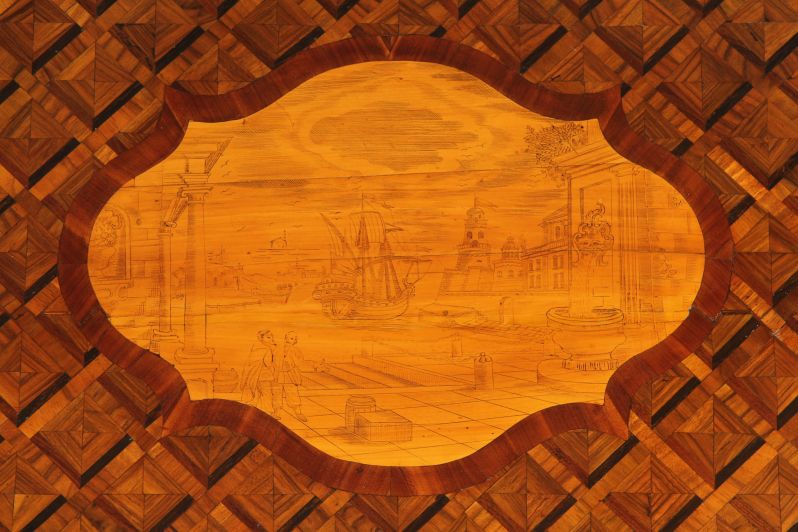
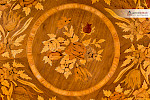
The curved shape is echoed in the loose table top. The C-sweeps can also be found there as dark inlaid marquetry. Wood laid in a sophisticated trompe-l'œil technique gives the flat top the appearance of a sculpted surface.
In the centre of the table top is a maple field framed like a cartouche, which shows a maritime scene in an antique harbour using the finest engraving technique.
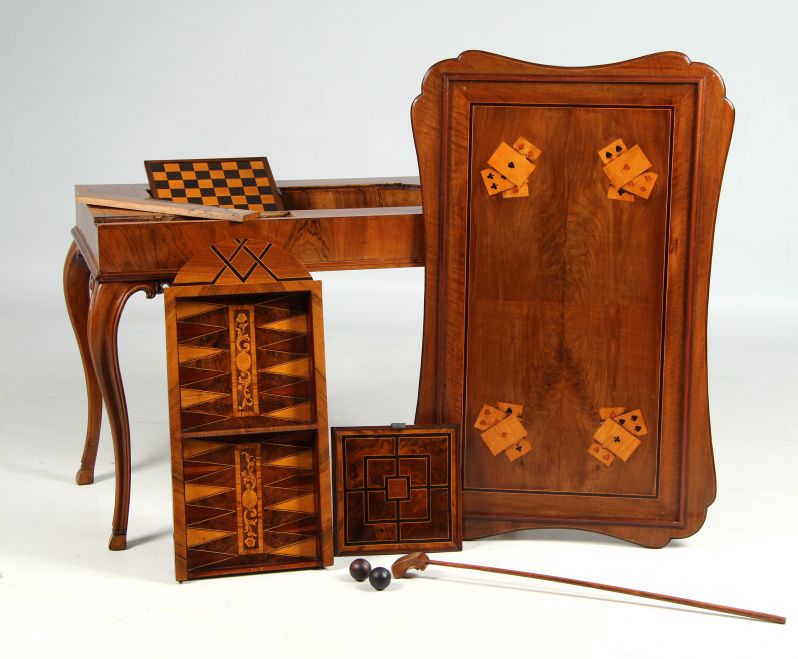
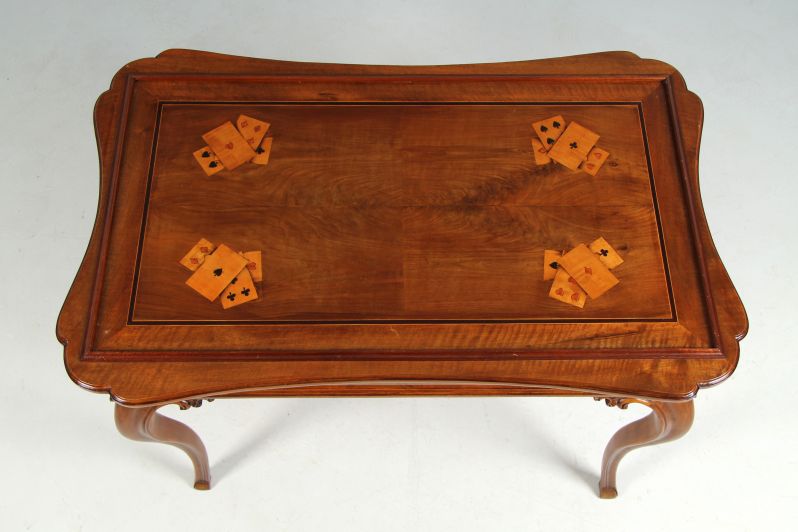
The swivelling top can be used as a playing surface for card games on the back. Illusionistic playing cards are inlaid in a symmetrically laid walnut field framed by bog oak and maple. Here, too, the cabinetmaker has achieved an impressive depth effect - in this case by means of so-called fire shading, in which the wood is heated to create soft colour gradients that look like shadows.
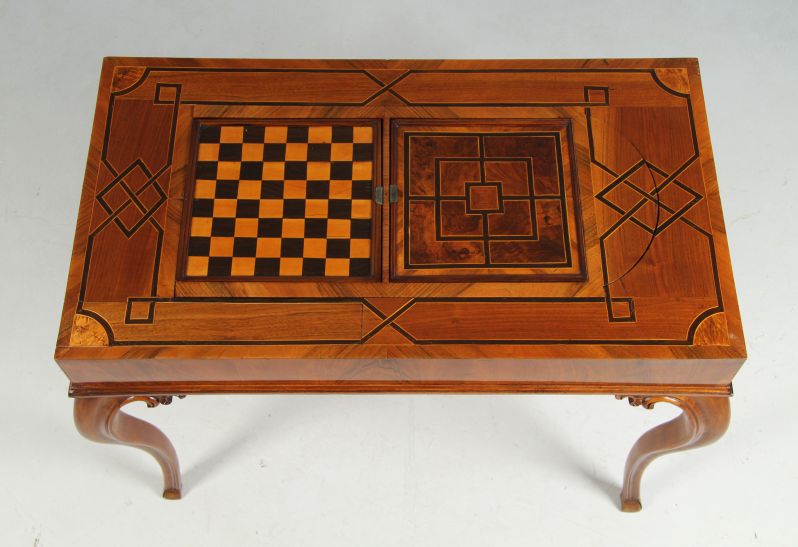
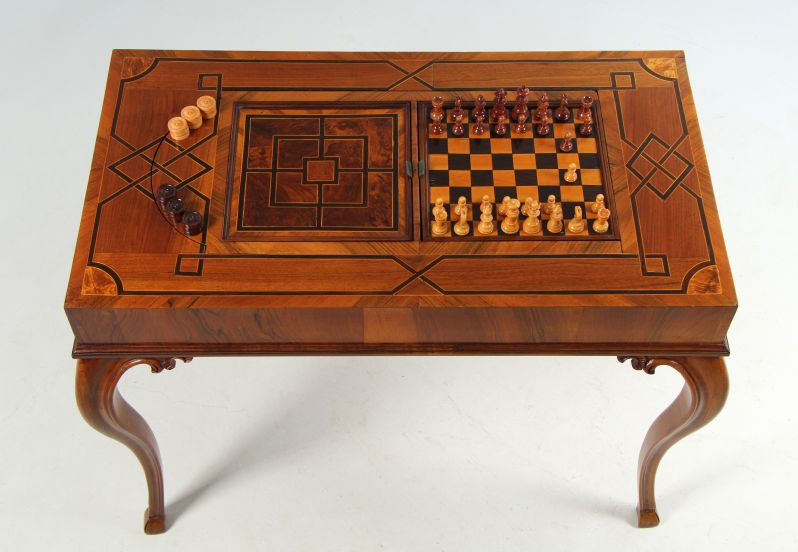
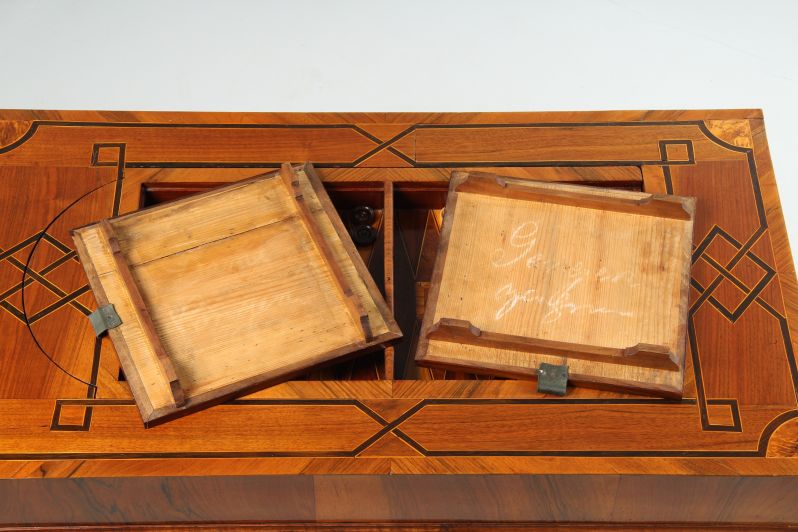
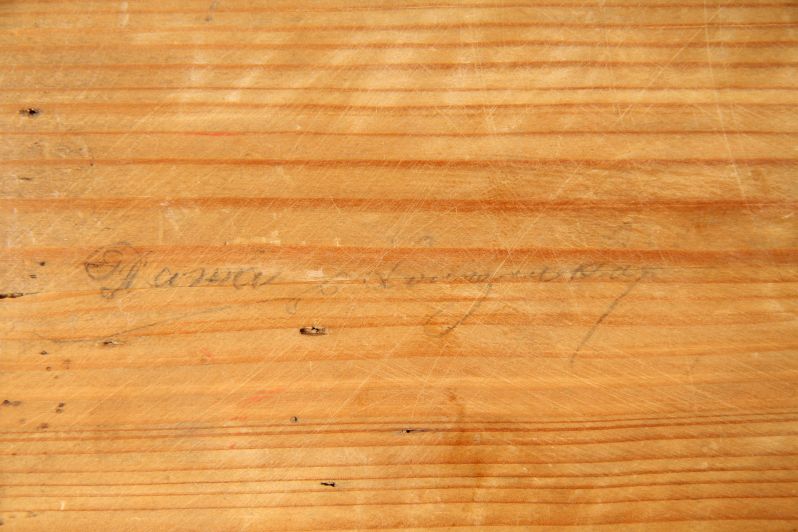
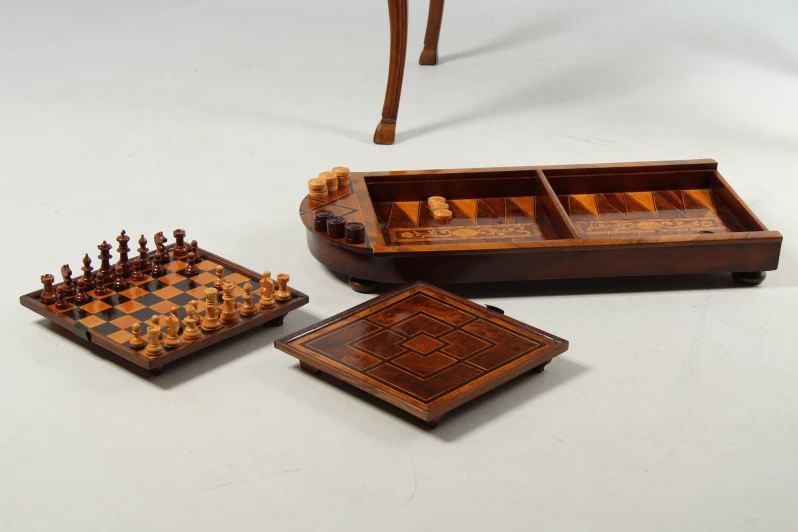
If we take the table top aside, the table presents itself with a chess and mill game board framed by elaborate banding. Both playing fields can be removed and are labelled or signed on the back in a way that is difficult to read.
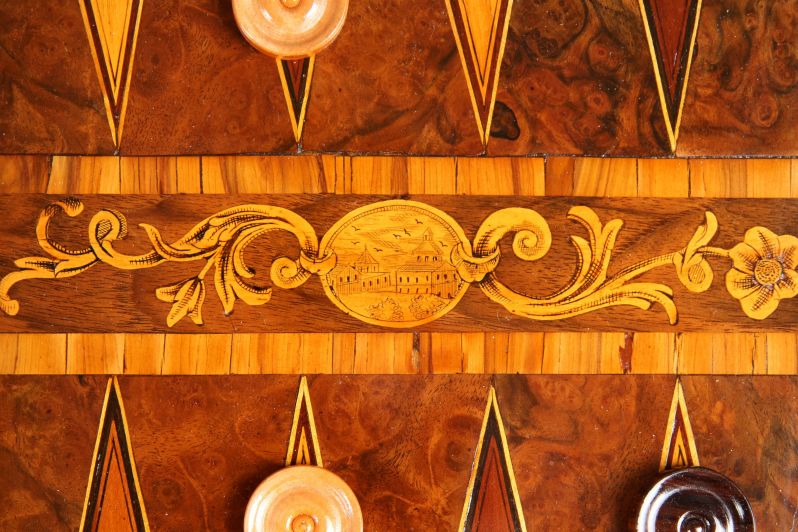
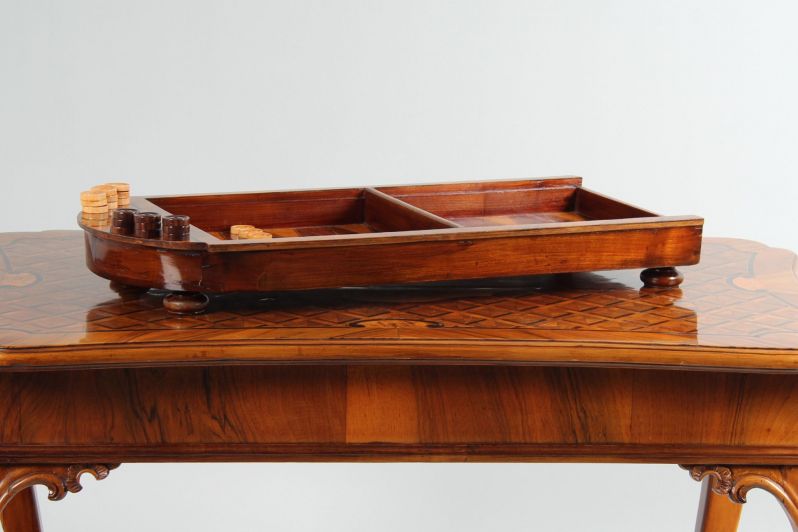
A backgammon or tric-trac board can be found in the same place underneath. This board is also finely marked: On a walnut root base, the triangular playing fields are alternately finished in maple and plum wood. They are emphasised by fine thread inlays of light and dark contrasting ebony, mahogany and maple threads.
The fine engraving technique of the top plate can also be found here: architectural scenes, flower motifs and acanthus tendrils are depicted on light-coloured wood.
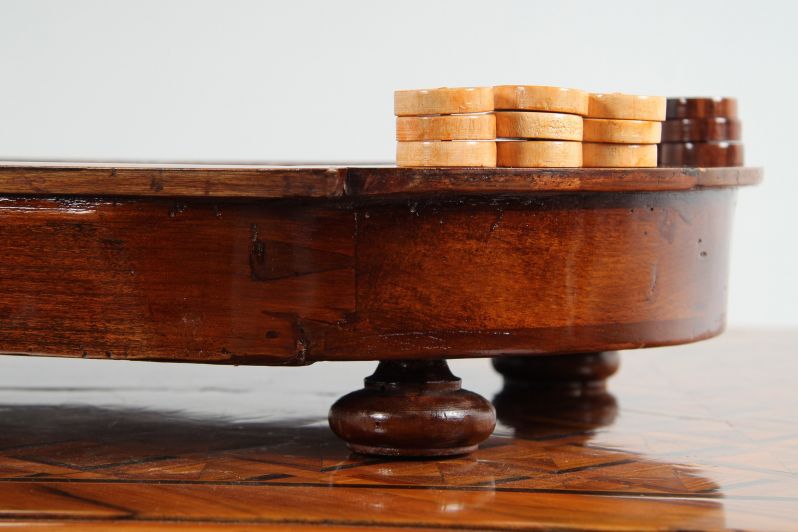
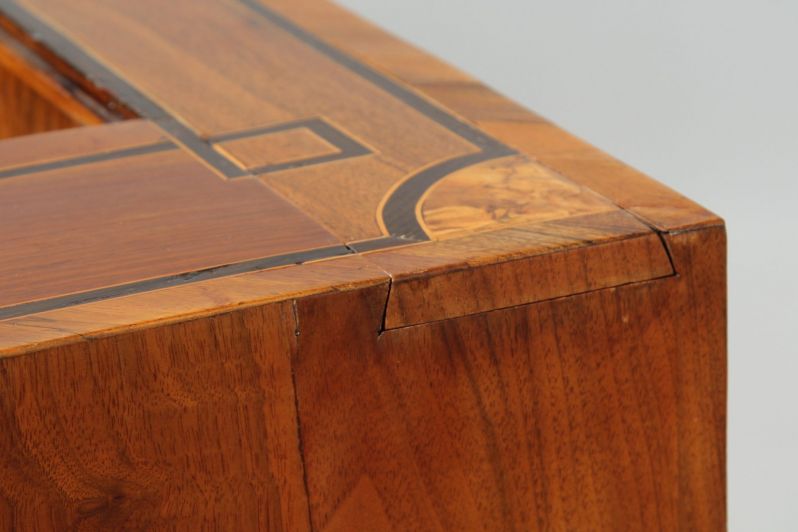
The backgammon board is also removable. Thanks to the feet mounted on the underside, it can also be used separately on any other table. At the corners - clearly visible in one of the attached photos - the typical handcrafted dovetail joint is visible.
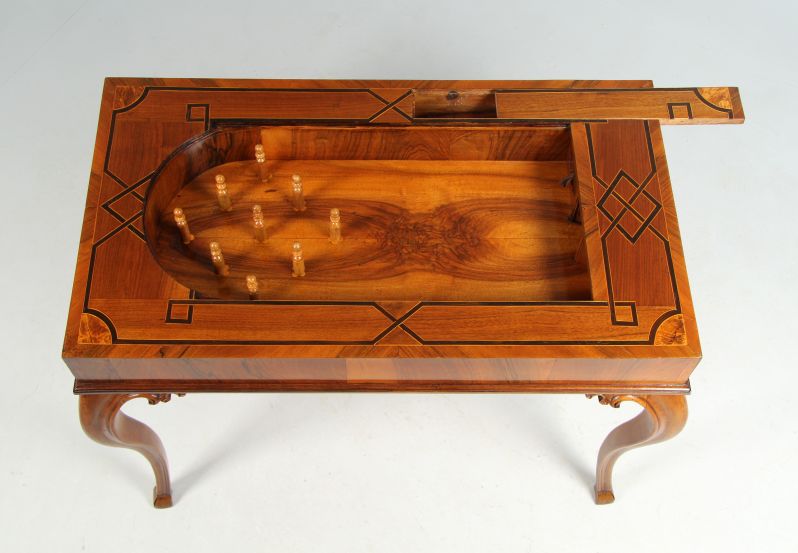
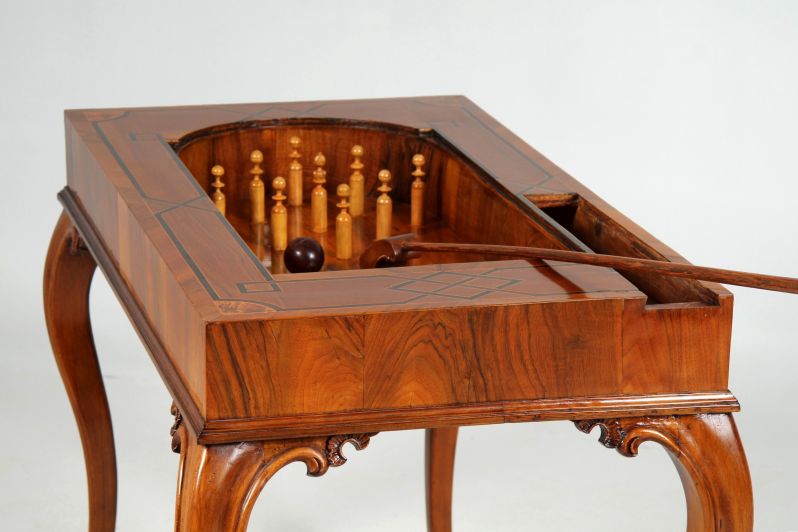
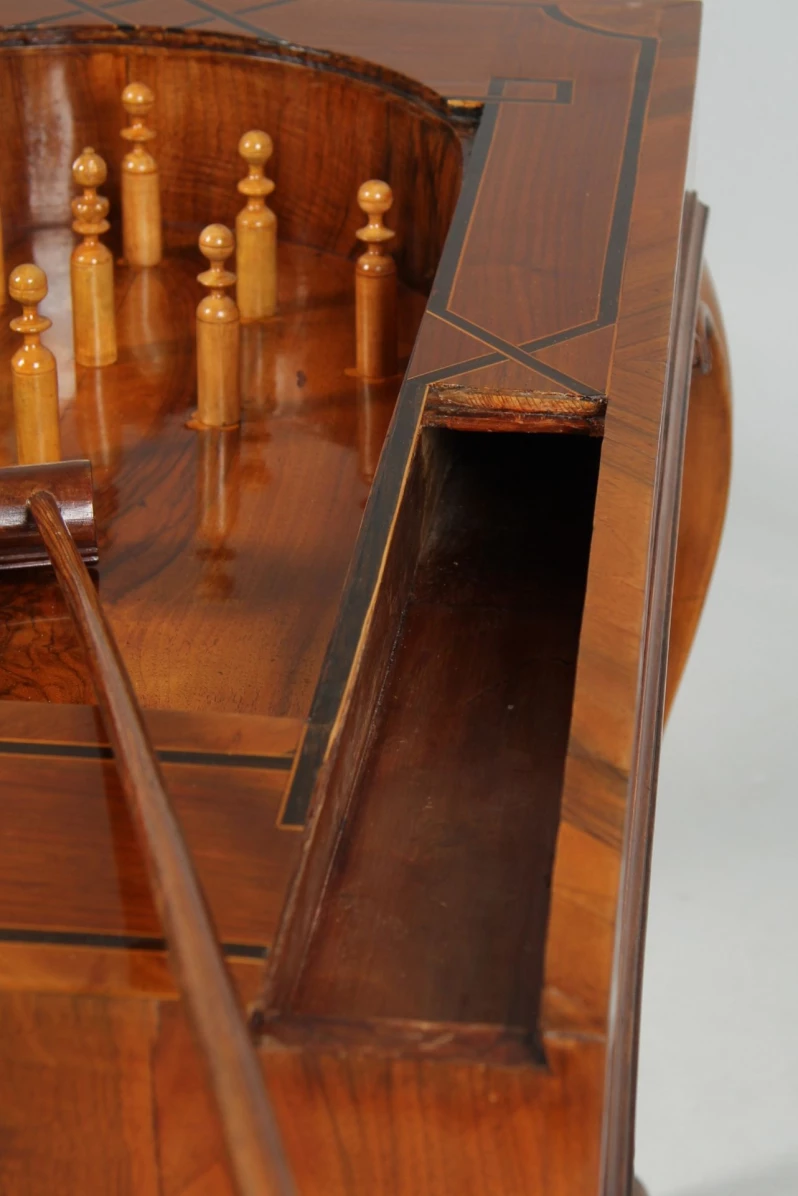
When the backgammon field is removed, the absolute speciality of this table can be seen in the form of a skittles game.
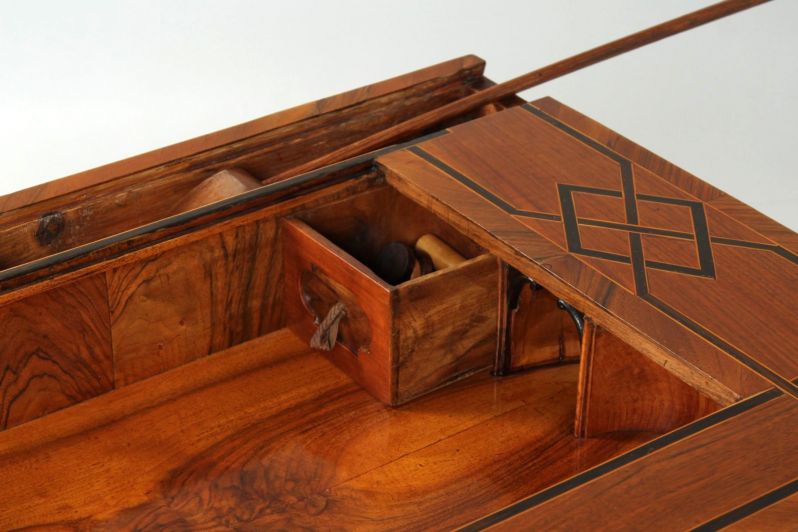
The playing field is made of mirror-image walnut veneer, on which nine skittles can be placed. These skittles are located in a specially designed drawer, concealed in the frame of the table.
Part of the surrounding edge of the top is designed as a tapered ridge moulding. This can be removed and underneath is an inclined plane as a starting point for the ball run, which leads through a hollow tunnel within the edge of the table top.
The ball is pushed into the tunnel with a cue and leaves it on the opposite side to knock over the skittles.
Condition:
Very nice, refurbished condition. The set includes 11 skittles, 3 balls, 14 light and 14 dark pieces and a more recent set of chess pieces.
An absolutely unique piece of furniture in museum quality.
You can find similarly elaborate game tables in the specialised literature:
Heinrich Kreisel - Die Kunst des deutschen Möbels - Spätbarock und Rokoko Fig. 669 and Fig. 890
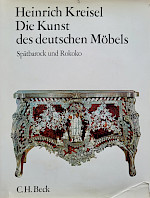
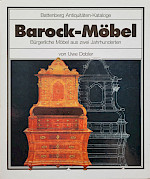
Uwe Dobler - Barock-Möbel from p. 230
Article found under: Tables
Video Multifunctional play table
Also interesting
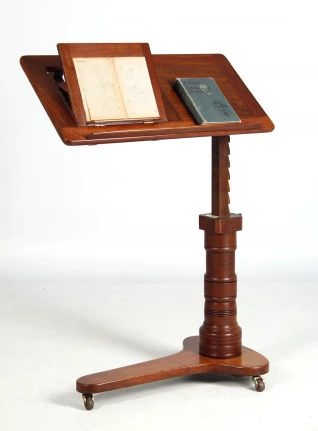
Height-adjustable drawing and reading table
London
Walnut
around 1900
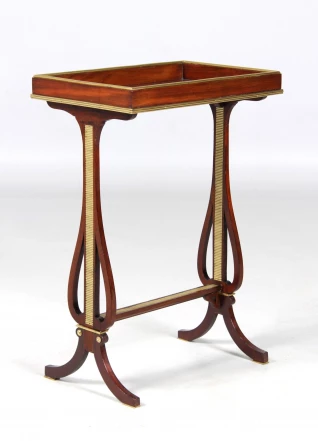
Louis XVI side table - so-called Vide-Poche
Paris
Mahogany, brass, gilded bronze
around 1785
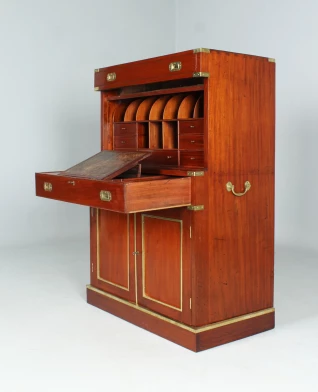
Military Campaign Chest of Drawers Secretary
England
Mahogany, brass
Victorian around 1890