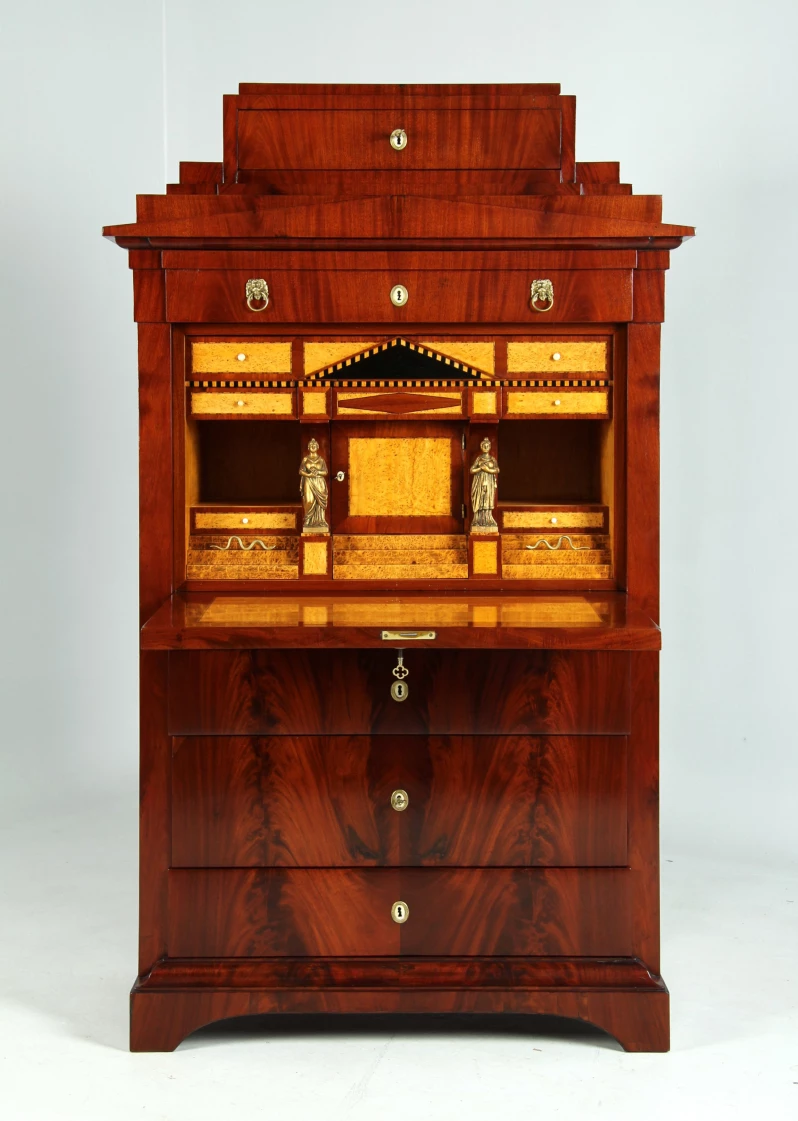
Video Berlin secretary with figures
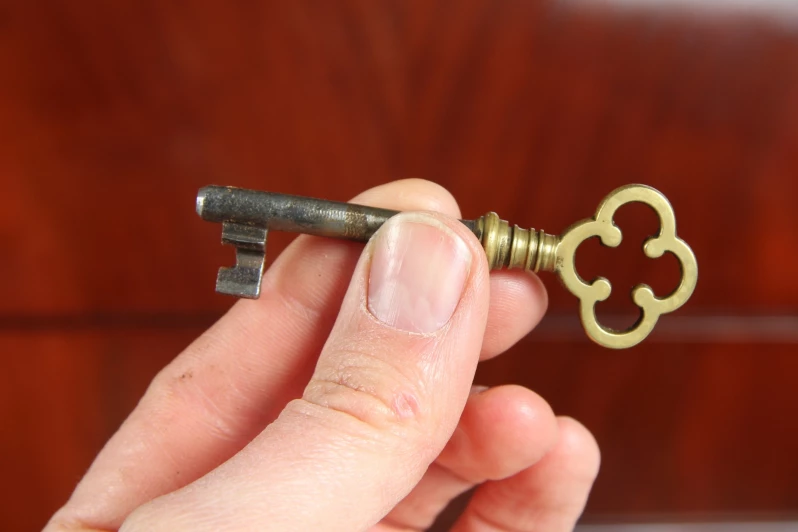
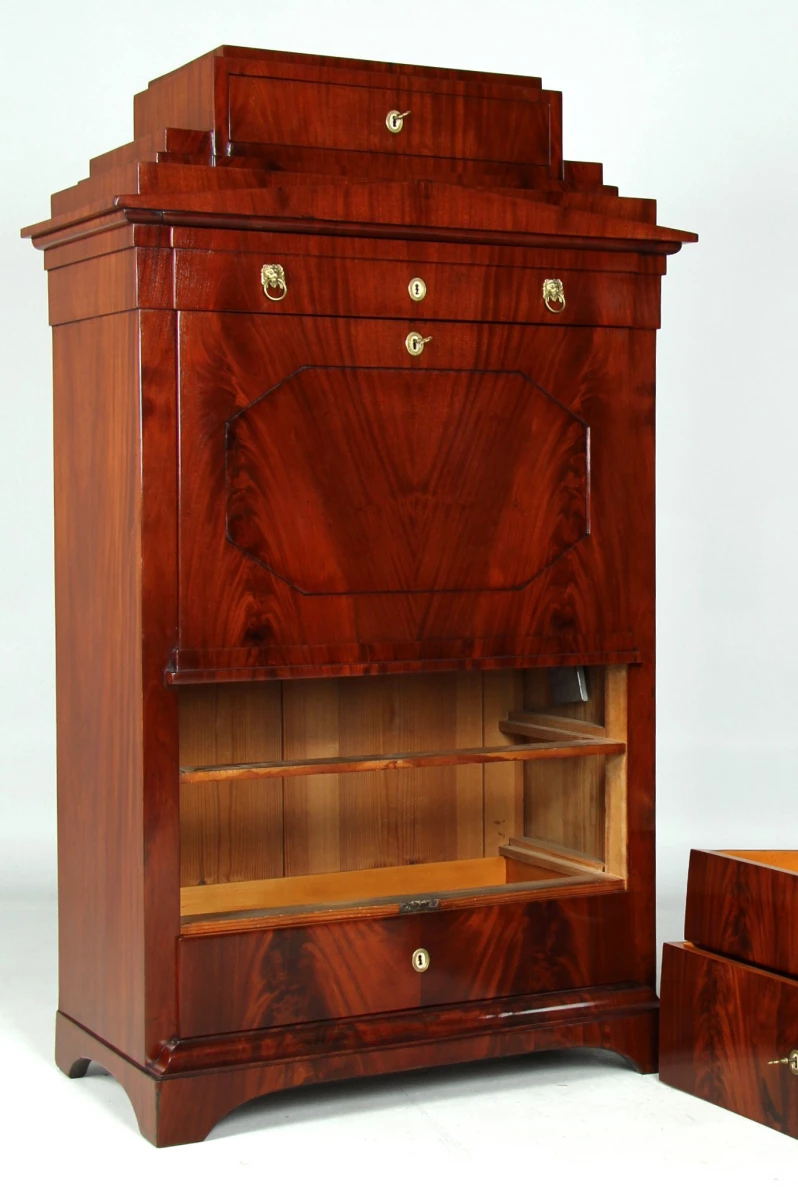
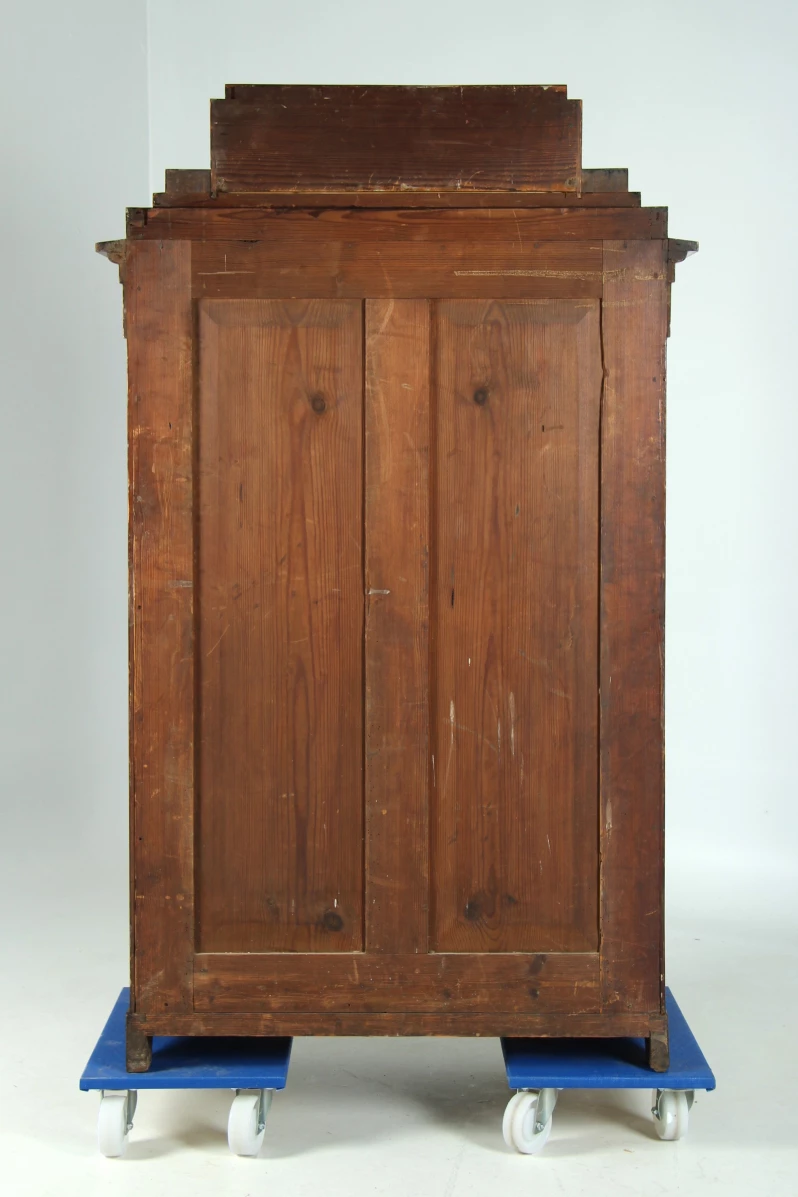
Antique Berlin Biedermeier secretary in mahogany
Berlin
Mahogany a.o.
around 1825
Dimensions: H x W x D: 169 x 101 x 53 cm
Description:
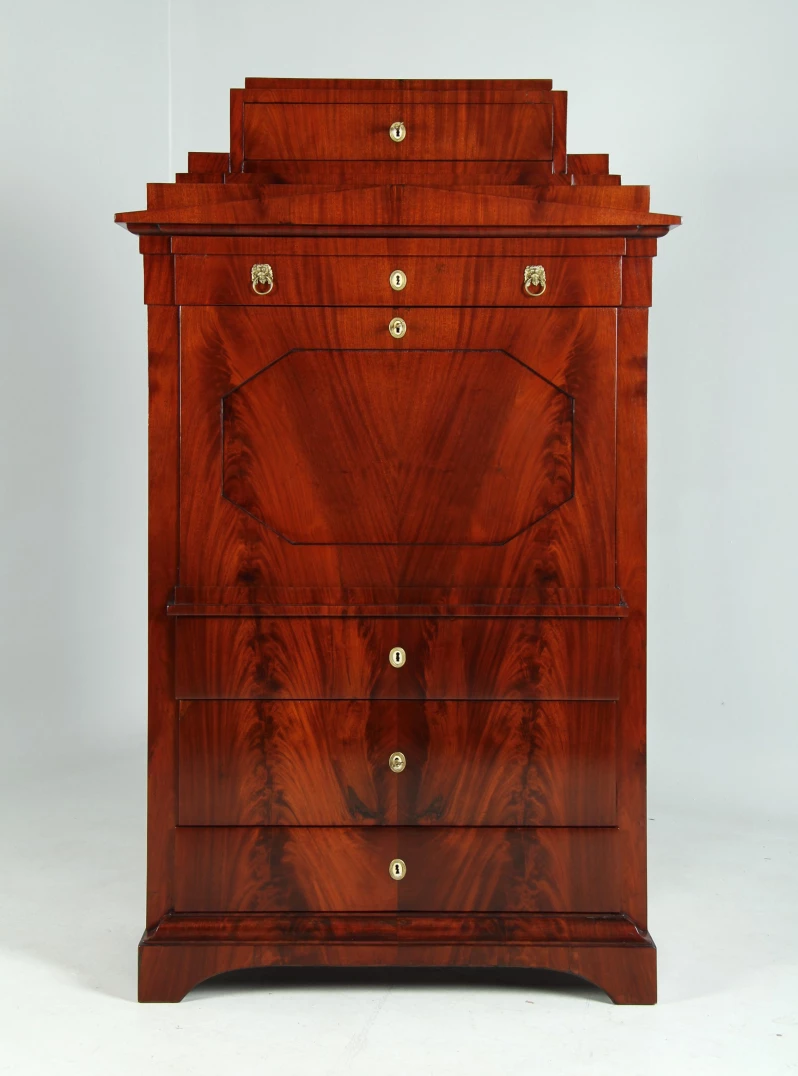
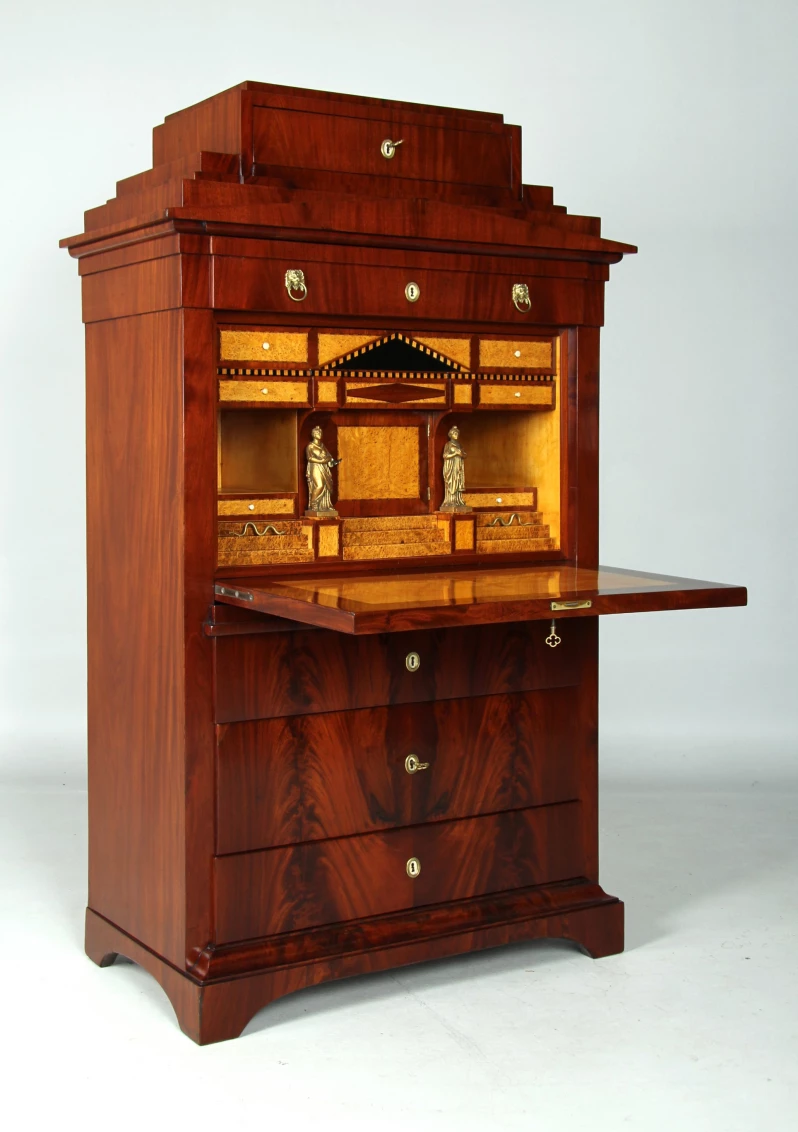
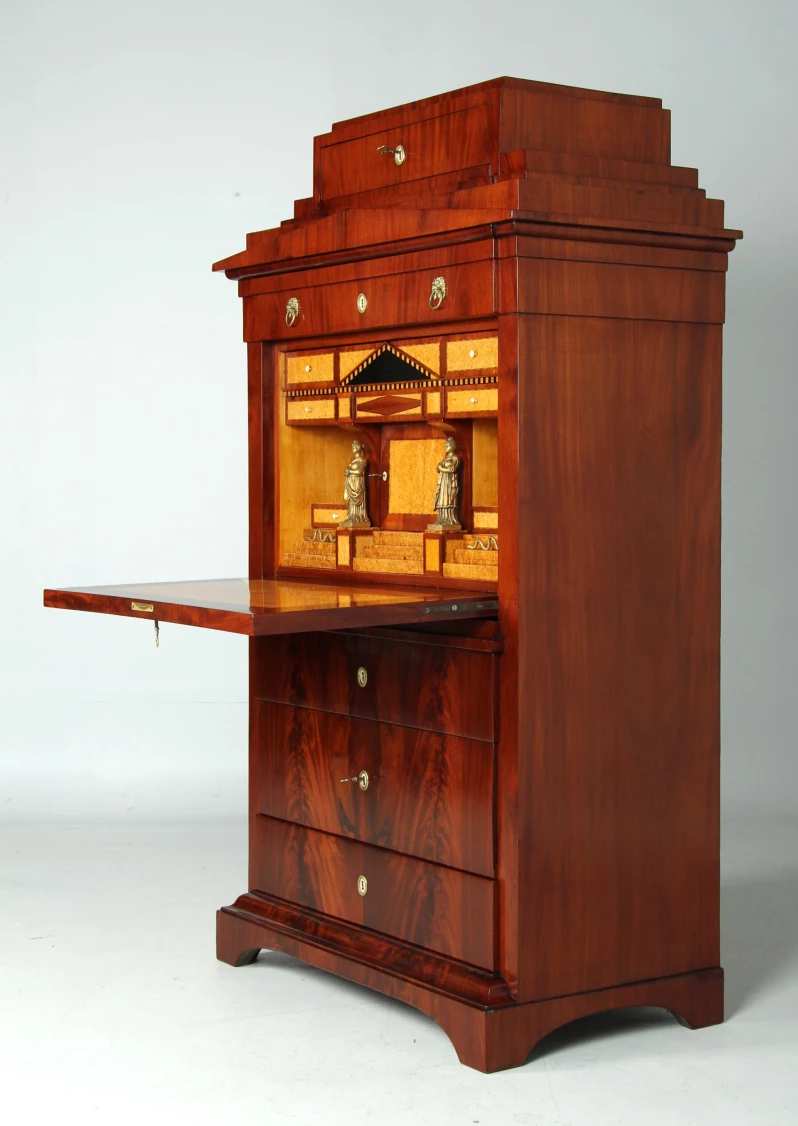
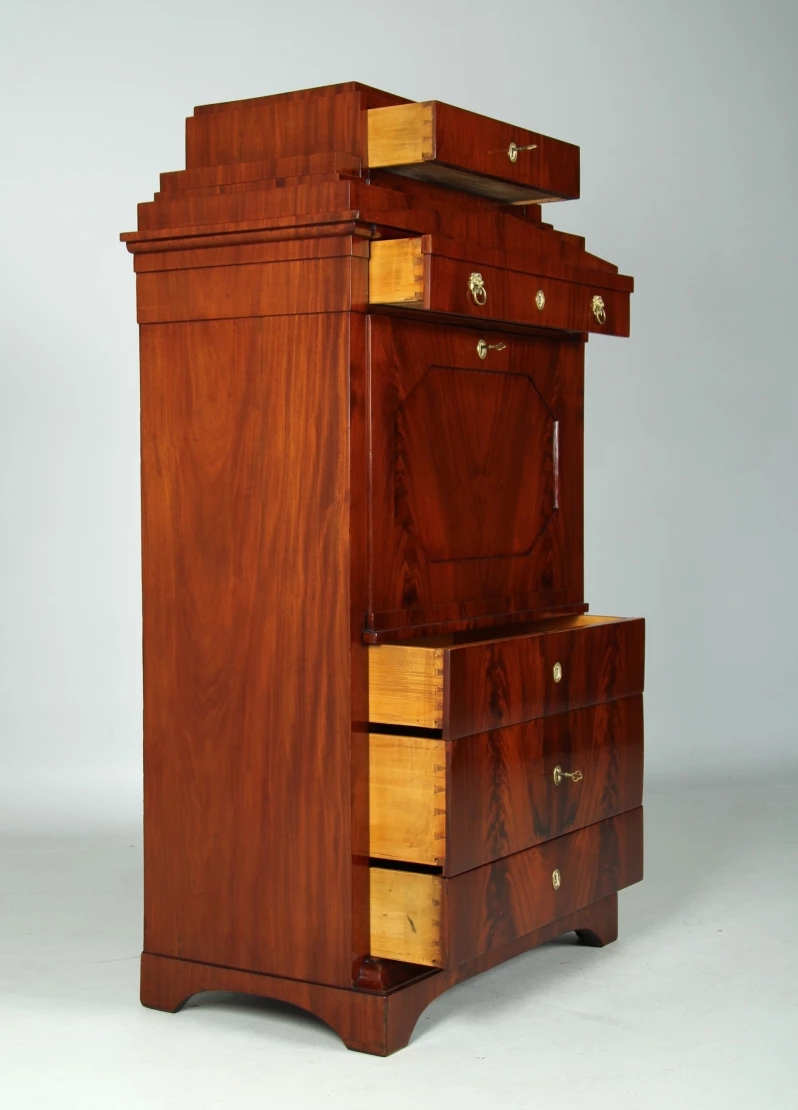
When closed, this piece of furniture presents itself as a classically structured and well-proportioned writing cabinet. Built on a cut-out plinth frame, there are three wide drawers at the bottom, the writing flap above, a further drawer under the angled top and a top drawer at the very top.
The neatly mirrored mahogany veneer consists of just two wide leaves that run in perfect symmetry from the plinth zone to the top drawer - an impressive example of the veneer perfection of the Berlin workshops of the time.
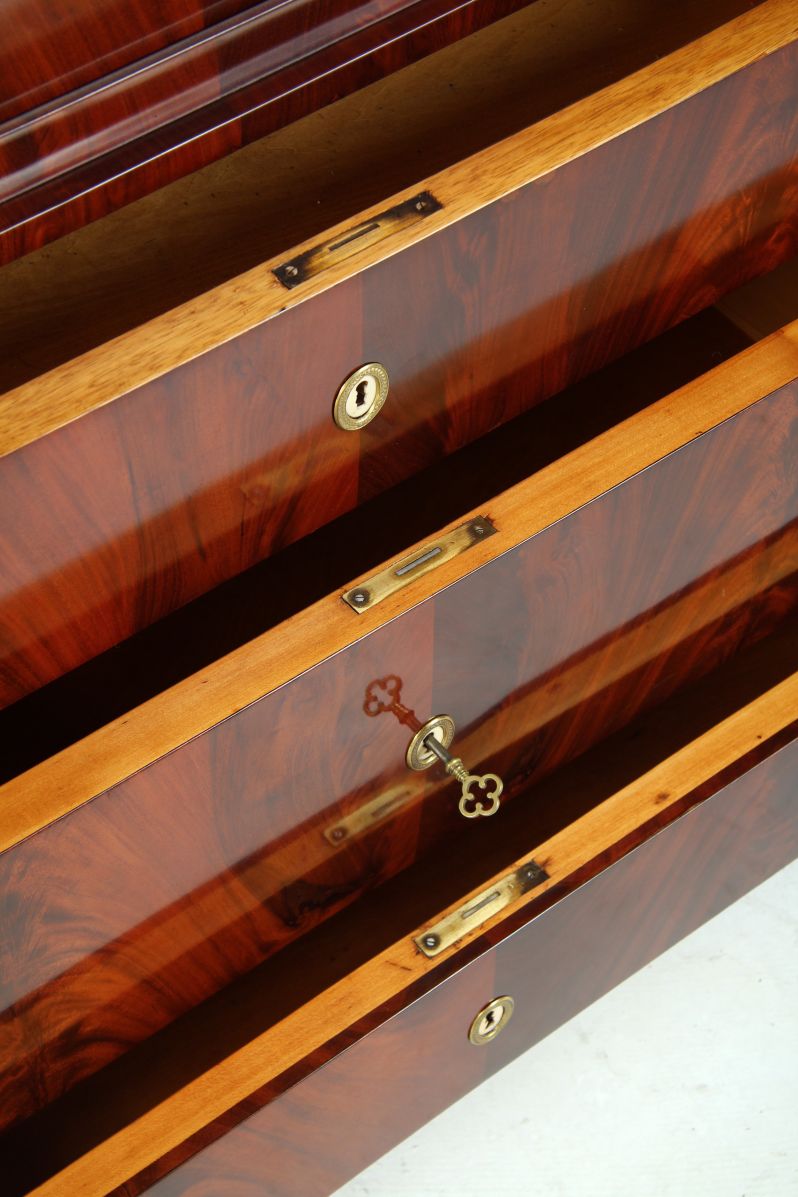
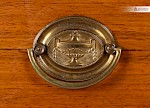
Embossed brass key plates on a white background accentuate the furniture front on the vertical centre line. The lion's head rings, typical of Berlin, serve as handles for the top drawer.
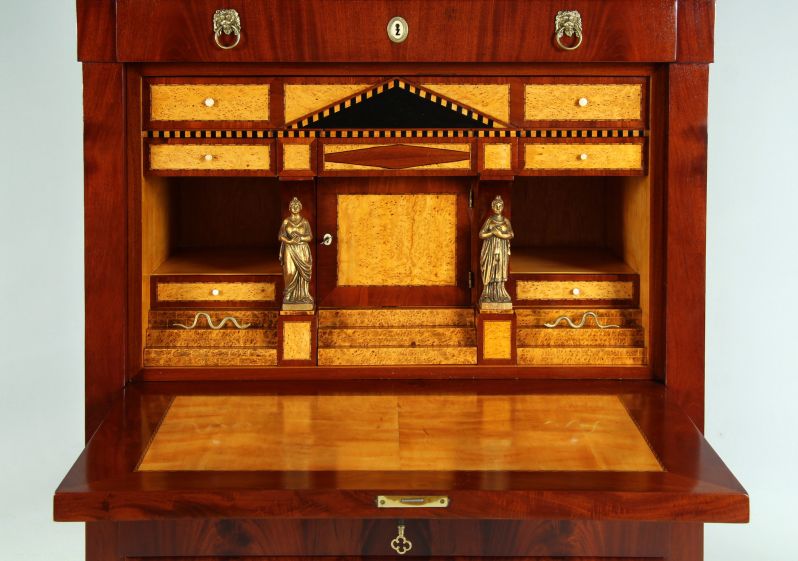
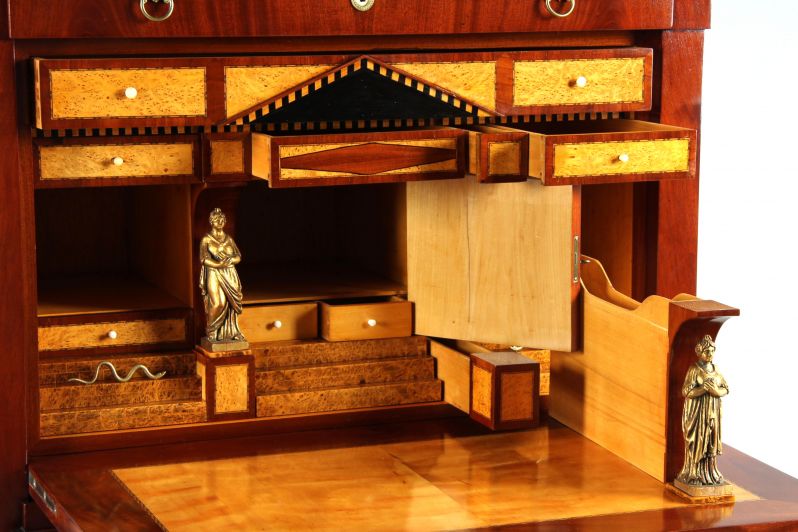
If we open the writing flap, which is secured with counterweights to prevent it from falling accidentally, a spectacularly designed interior is revealed.
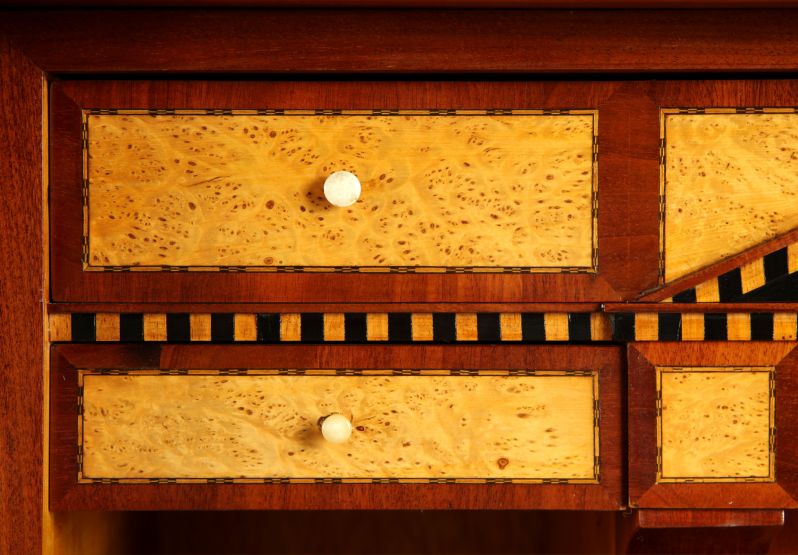
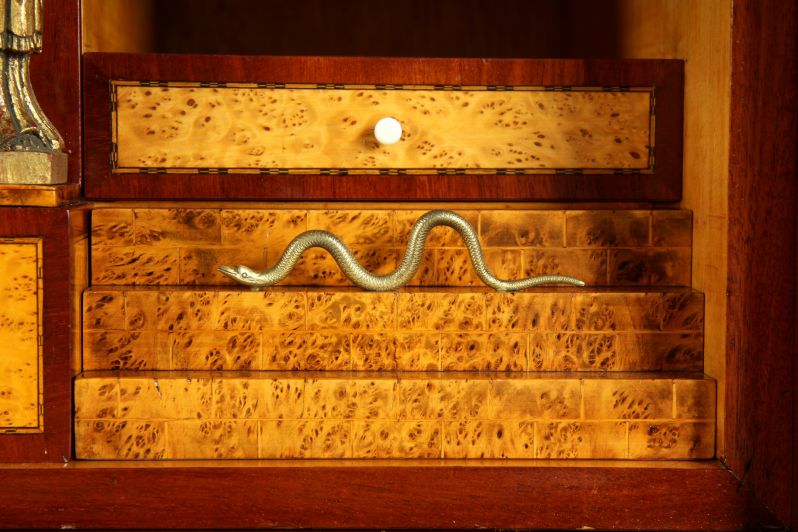
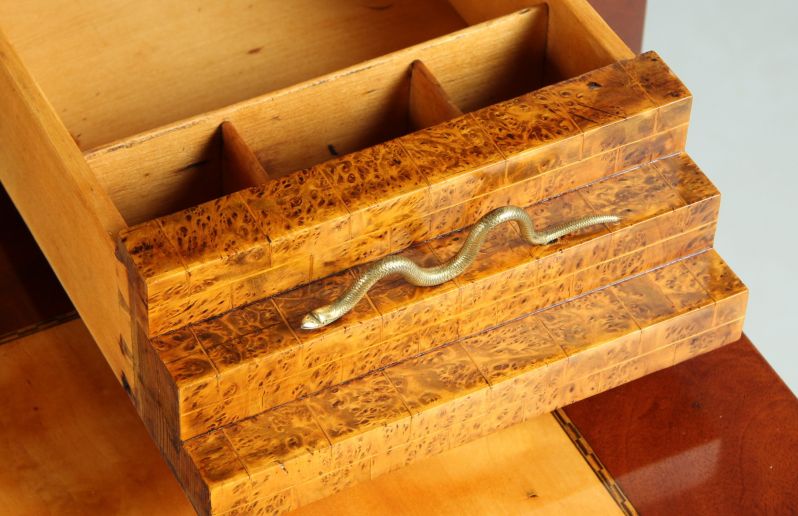
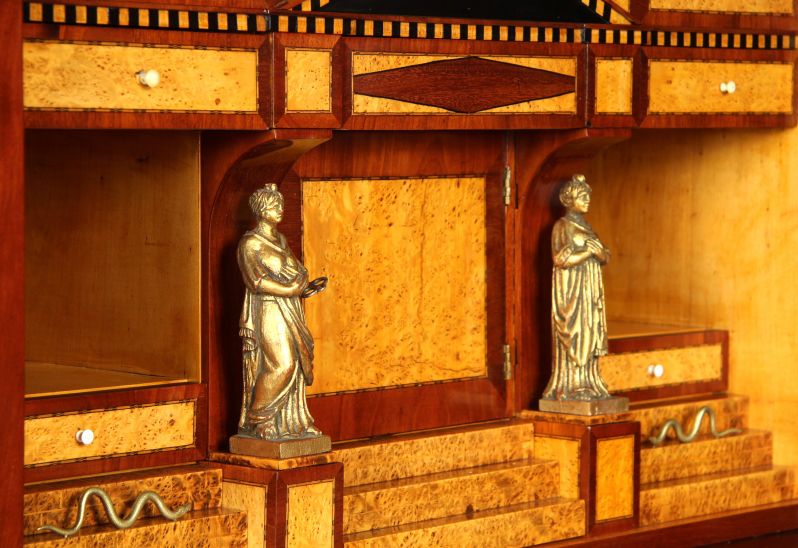
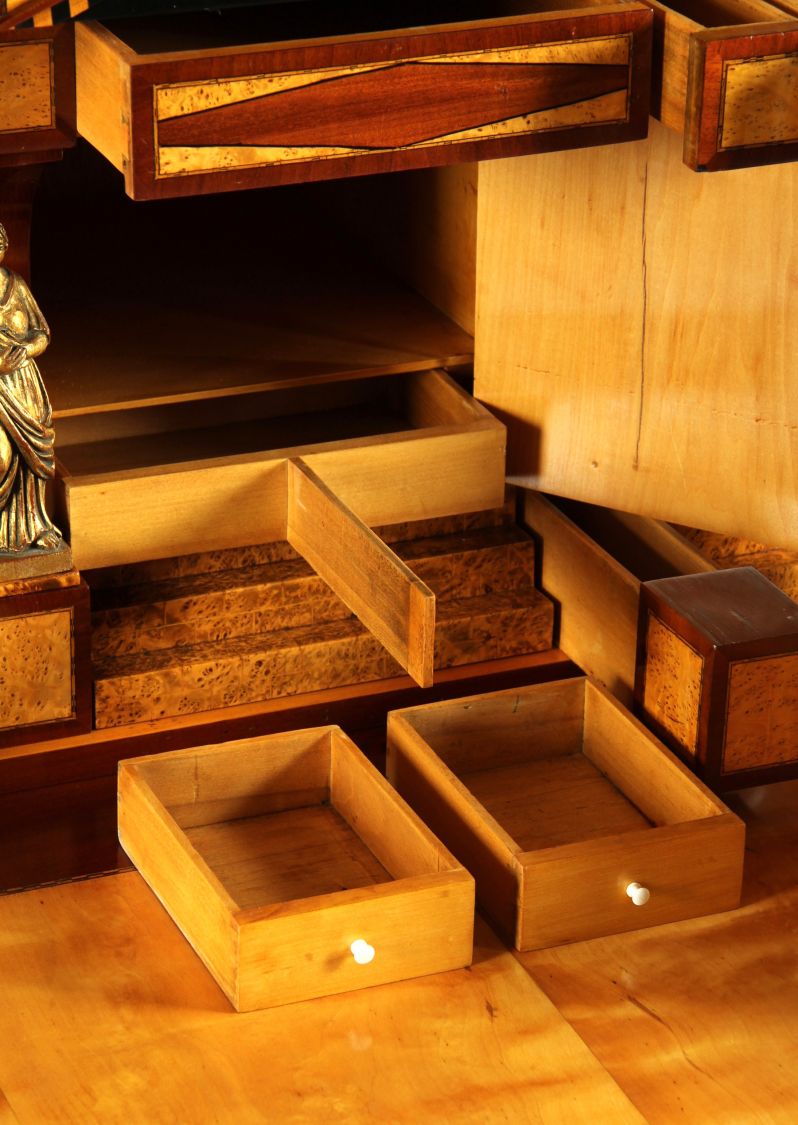
The architecturally organised structure consists of three staircase-like drawers at the bottom, the fronts of which are designed in a discreet brickwork marquetry. The two outer drawers have the characteristic Berlin snake fittings as handles.
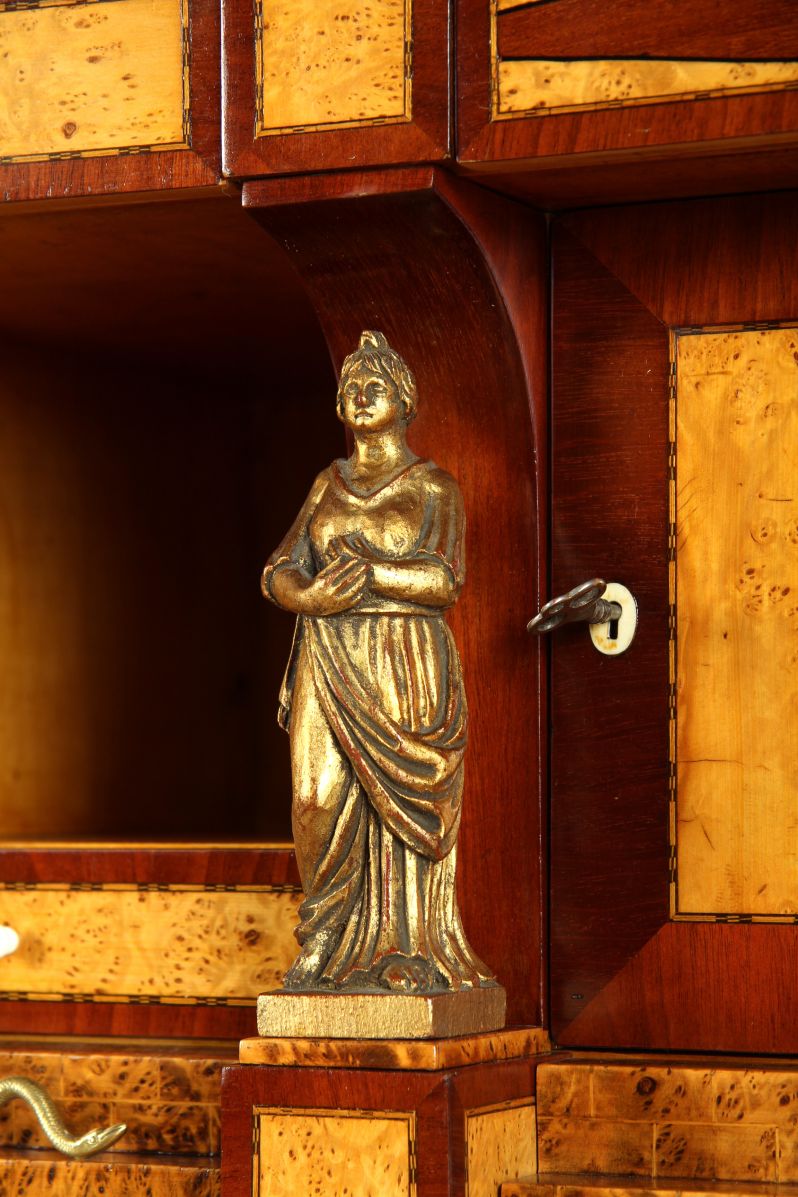
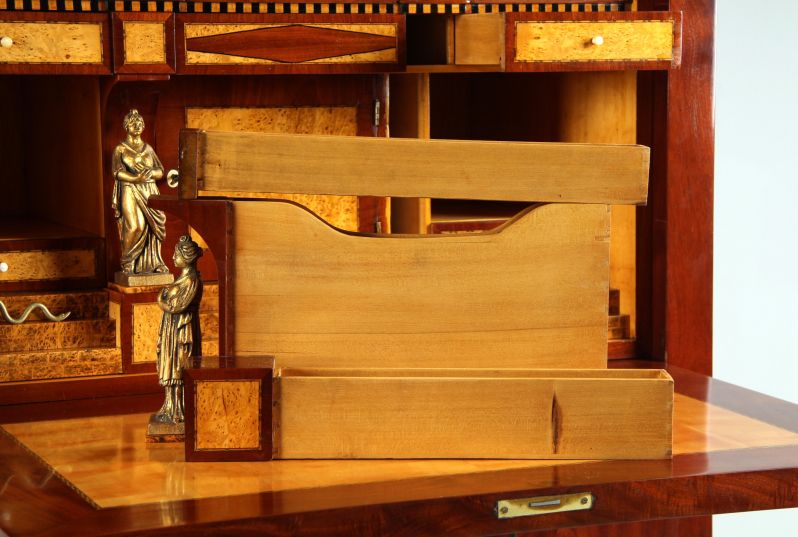
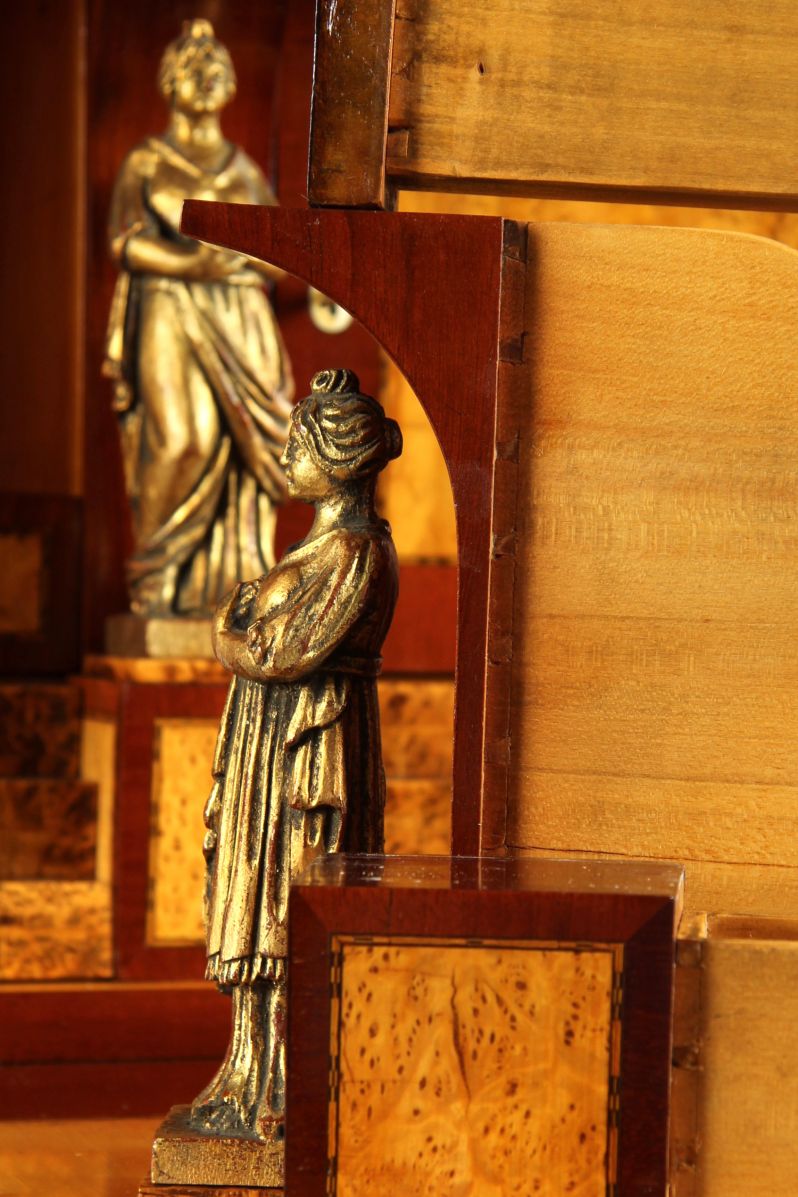
Above this are two open compartments, each with a drawer underneath, and a central door flanked by two carved and gilded figures. Behind the door are two further small drawers and a well-hidden secret compartment.
The figures can also be pulled out as drawers, allowing access to four further drawers above and below.
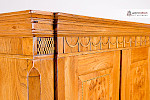
A Schinkel pediment surrounded by a toothed frieze forms the upper end of the single-door cabinet.
The writing surface and the fronts of the small drawers are covered with wood in contrasting colours and separated from each other by fine fillet bands.
Worth knowing:
The use of burl wood in interior design is a direct consequence of the ban on the import of tropical woods during the Napoleonic Wars. Between around 1806 and 1815, when mahogany was hardly available, furniture throughout Prussia was completely veneered with domestic burl wood.
After the end of the trade blockades and the resumption of tropical wood imports, mahogany wood enjoyed a new heyday. At the same time, the practice of no longer using burl wood across the board, but rather specifically as vividly coloured contrasting surfaces in the interior of high-quality writing furniture, became established.
The bureau shown here is an impressive example of this development: the exterior is finished in the finest mahogany, while the interior features a richly nuanced decor of local burl wood.
The use of cheaper substitute materials for fire-gilt bronzes was also widespread in Berlin in the first half of the 19th century.
Furniture feet and fittings made of green patinated iron as well as figural applications made of so-called gold bronze - a gilded mass of fine wood and clay chips - often replaced the elaborately produced bronzes.
The figures used on this piece of furniture, which were carved from wood and then gilded, are not yet documented in the specialist literature known to me. An original affiliation can therefore not be confirmed with absolute certainty.
Condition:
Restored condition with a shellac hand polish.
Price: 9800,-€
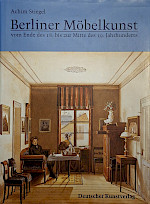
Achim Stiegel - Berliner Möbelkunst vom Ende des 18. bis zur Mitte des 19. Jahrhunderts
Article found under: Secretaries
Add to shopping cartVideo Berlin secretary with figures
Also interesting
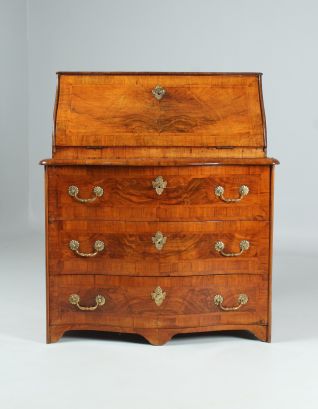
Small Antique Slanted Flap Secretary
Switzerland (Bern)
Walnut
Baroque around 1760
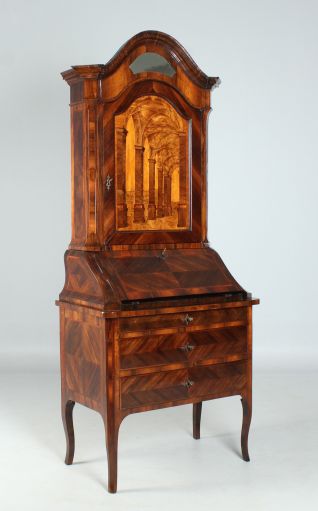
Secretary with Architectural Marquetry
Italy
Rosewood a.o.
second half 18th century
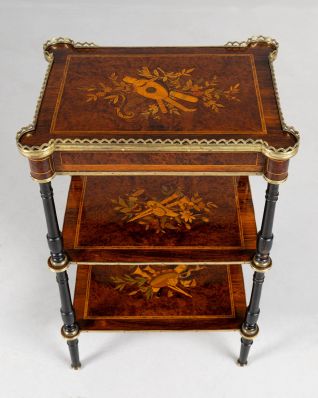
Antique etagere with fine inlay work
Paris
Wood, brass
around 1870