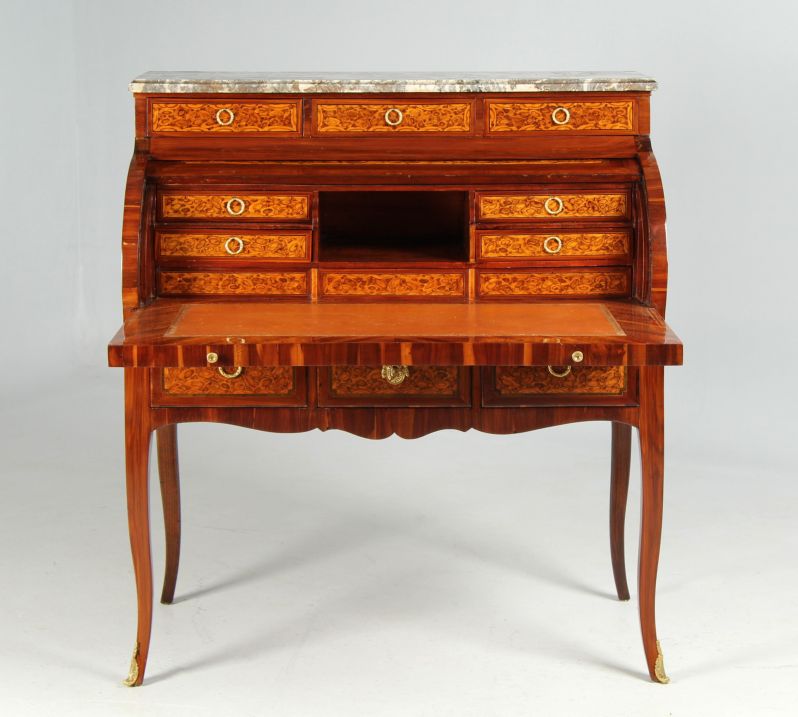
Video secretary oyster veneer
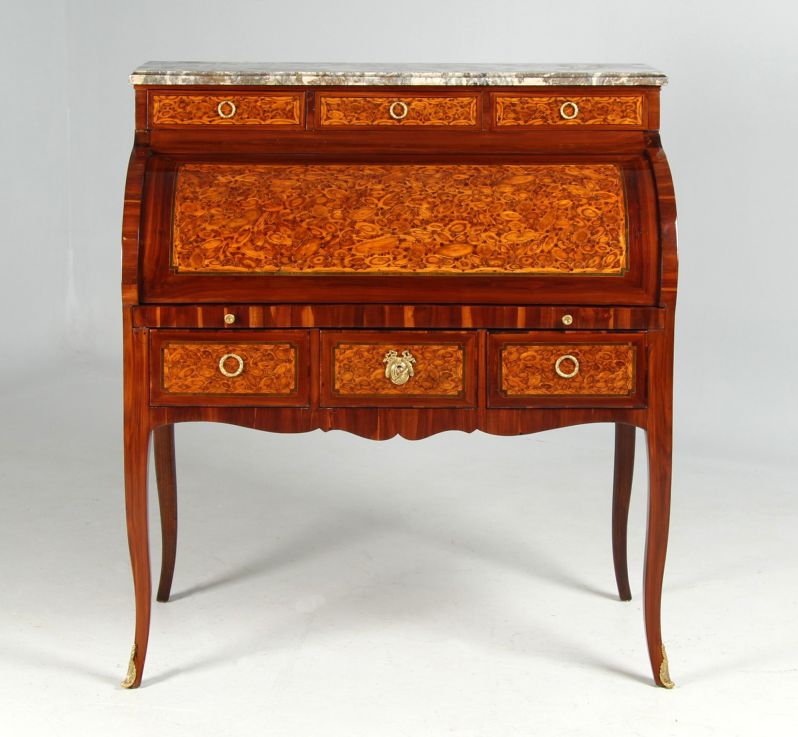
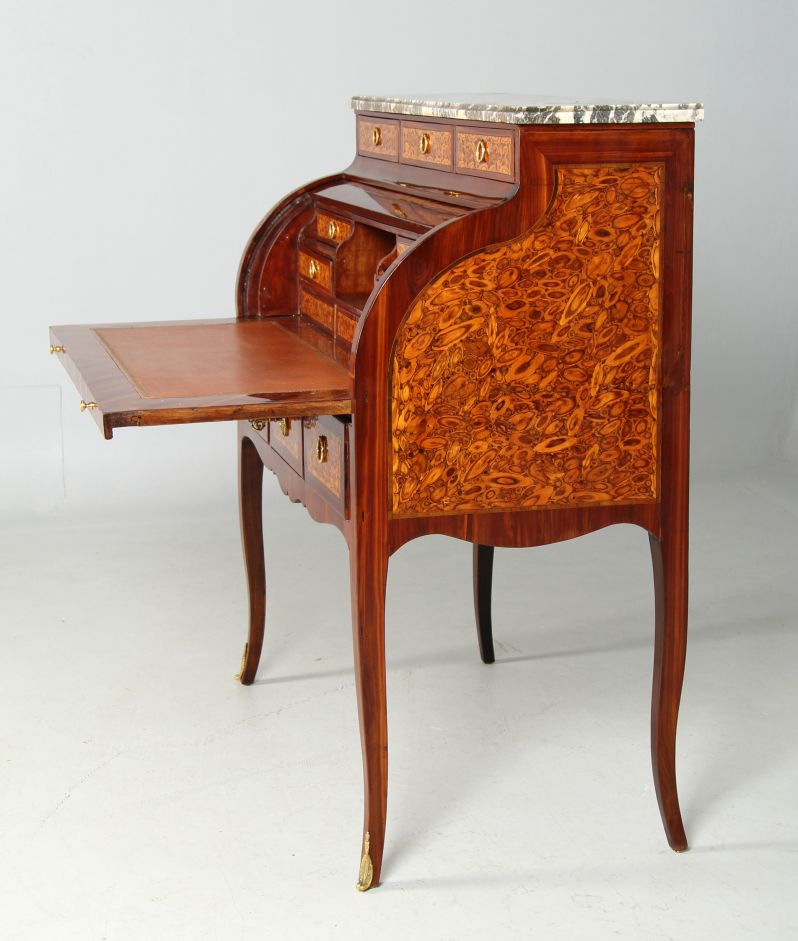
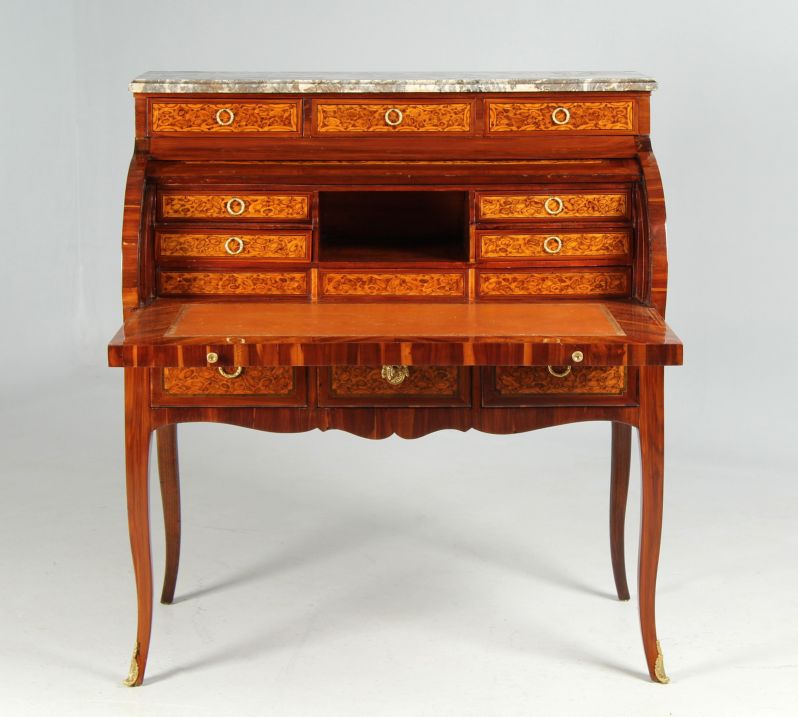
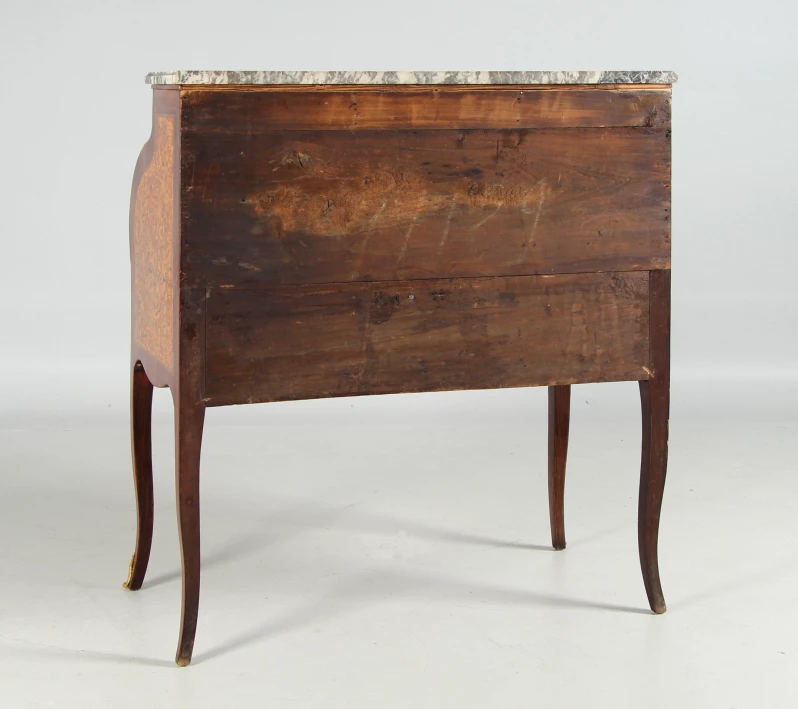
Very rare cylinder bureau with oyster veneer
France
Plum wood, buckthorn
around 1770
Dimensions: H x W x D: 111 x 100 x 51 cm, writing height: 70 cm
Description:
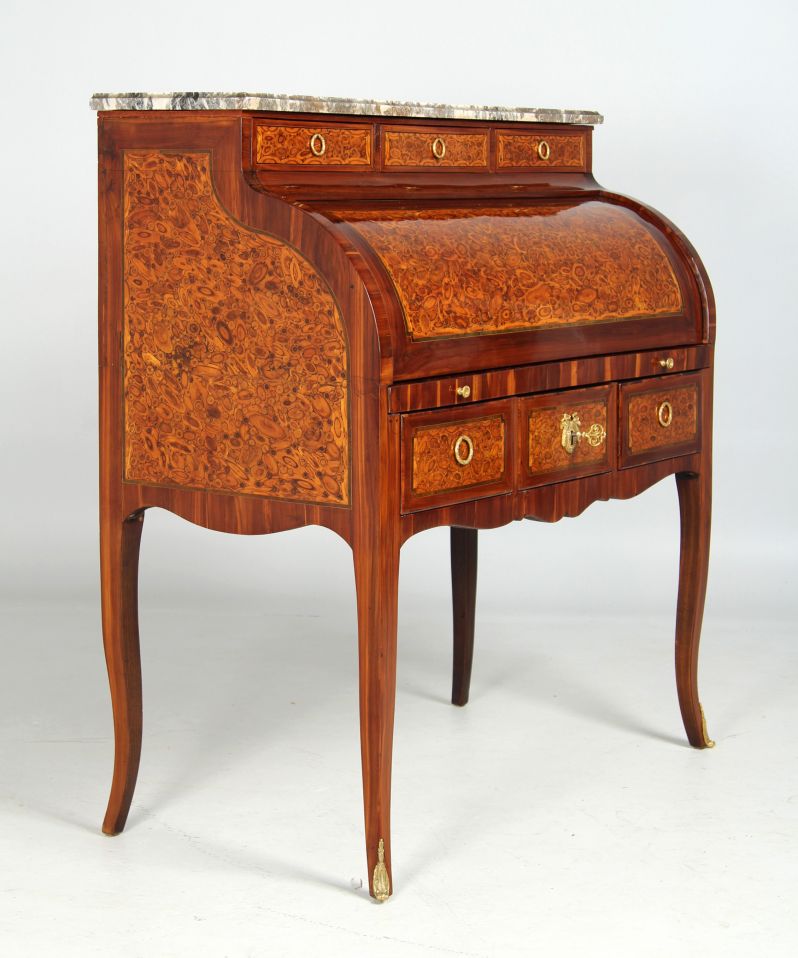
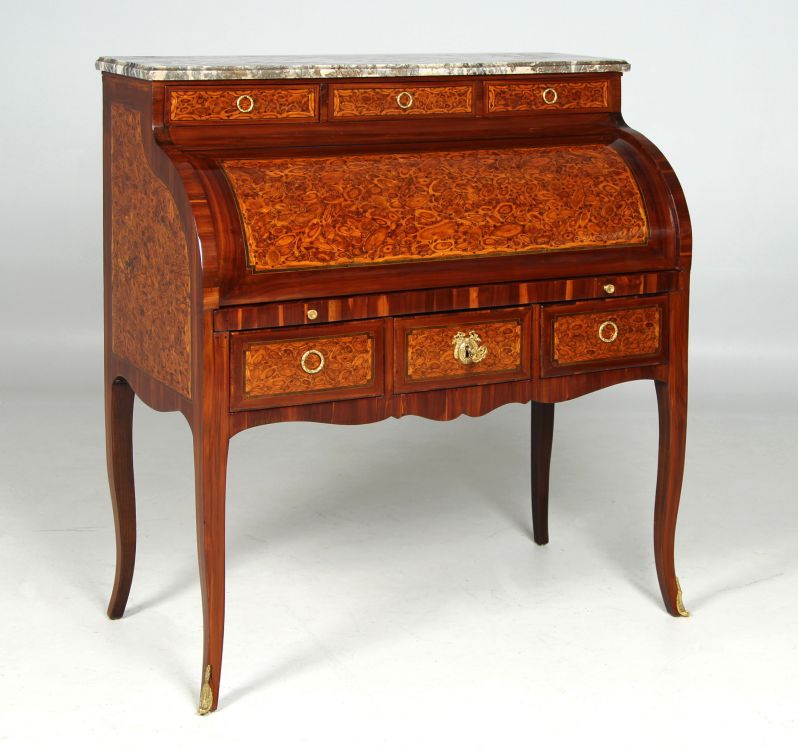
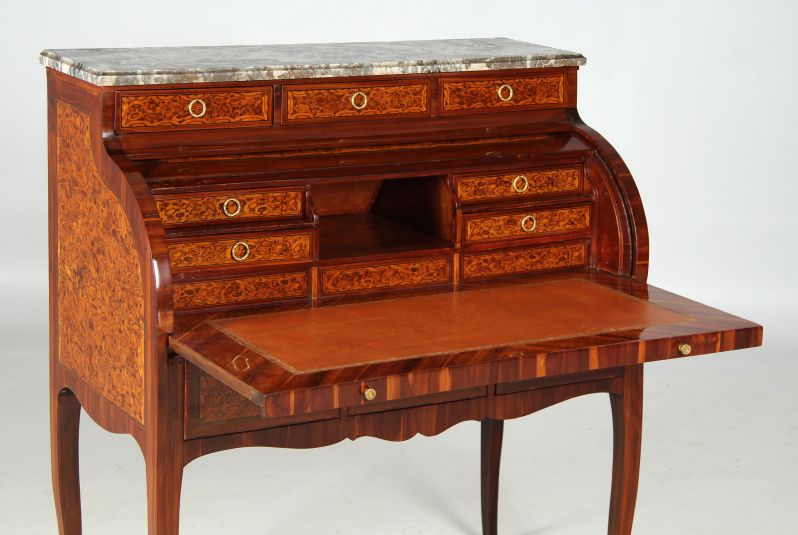
Extremely interesting French lady's desk, featuring both a remarkable veneer technique and an ingenious central locking system.
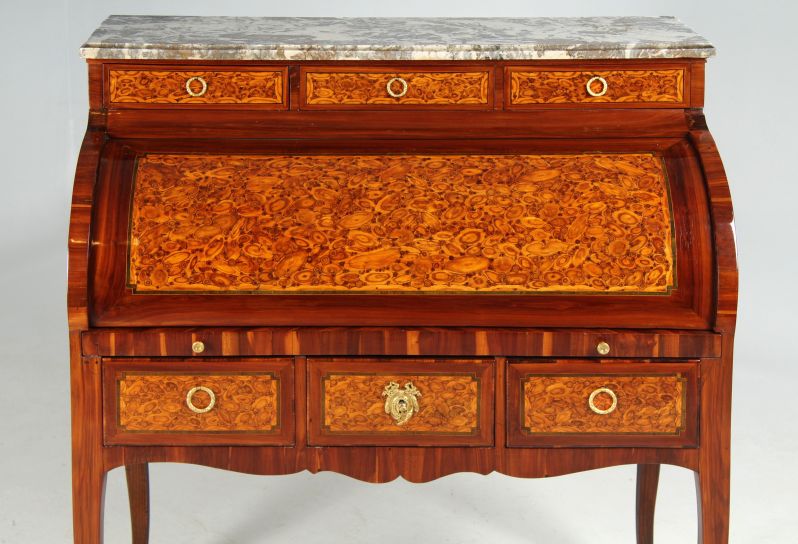
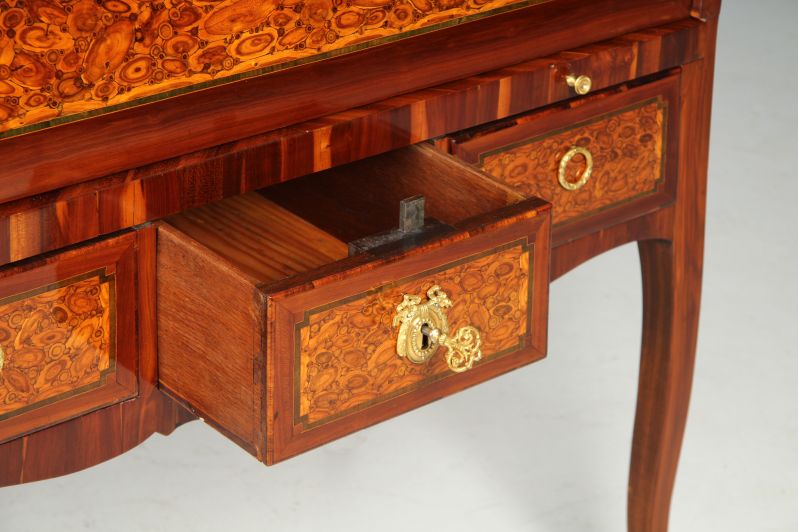
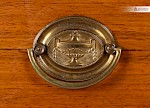
Standing on slightly flared legs with brass finials at the front, the writing desk has a cylinder lock, curved frame and loose marble top. Three side-by-side drawers are located both above and below the writing compartment.
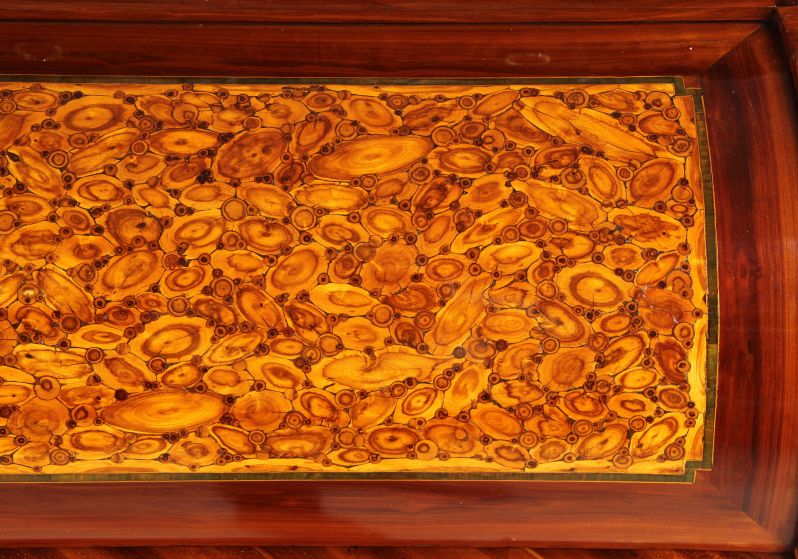
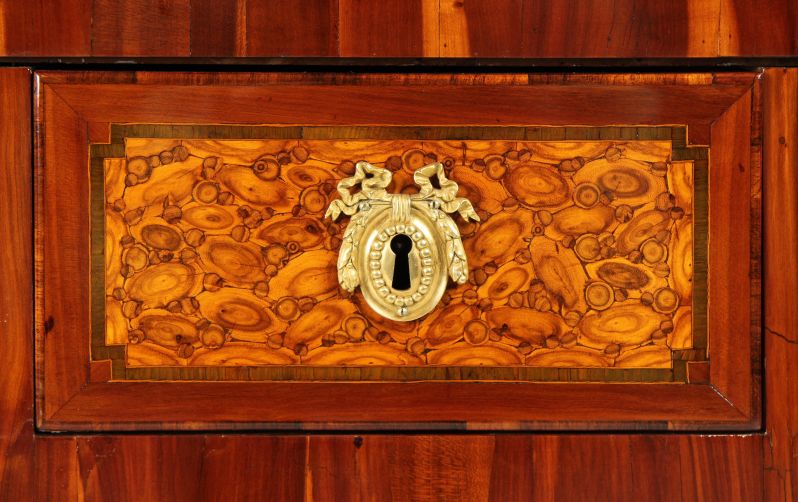
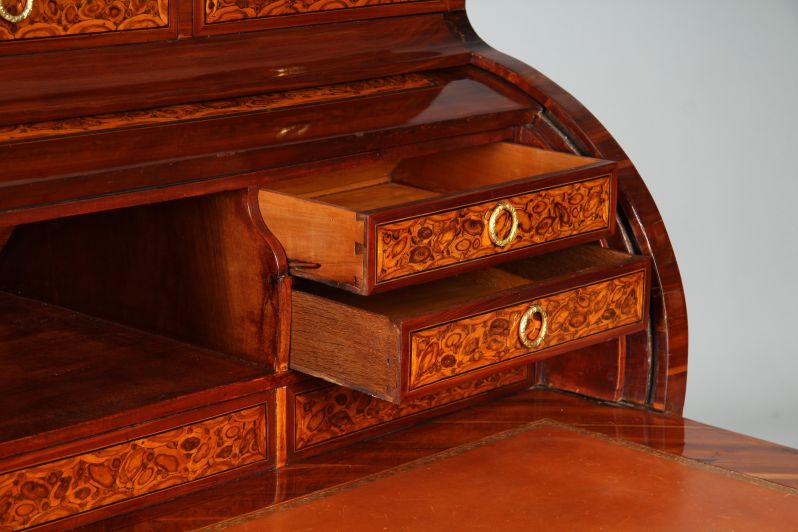
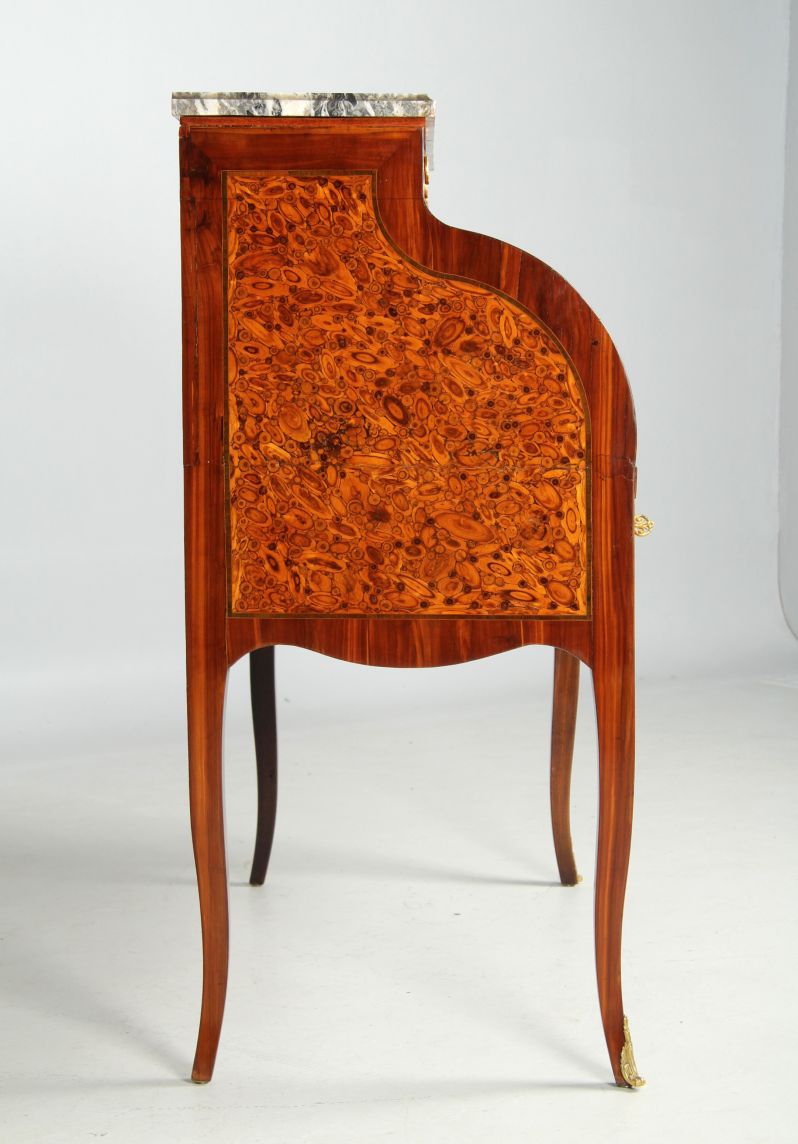
The edges and peripheral surfaces of the furniture are veneered in plum wood - the main focus, however, is on the surfaces made of so-called oyster veneer, which are framed by fine thread inlays. The cross-cut knots, i.e. those laid in the end grain, are joined together here in a wild and disorganised pattern.
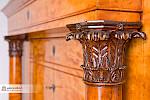
While the formal language of the furniture can still be attributed to the mid-18th century, the fittings clearly reflect the taste of the Louis XVI period.
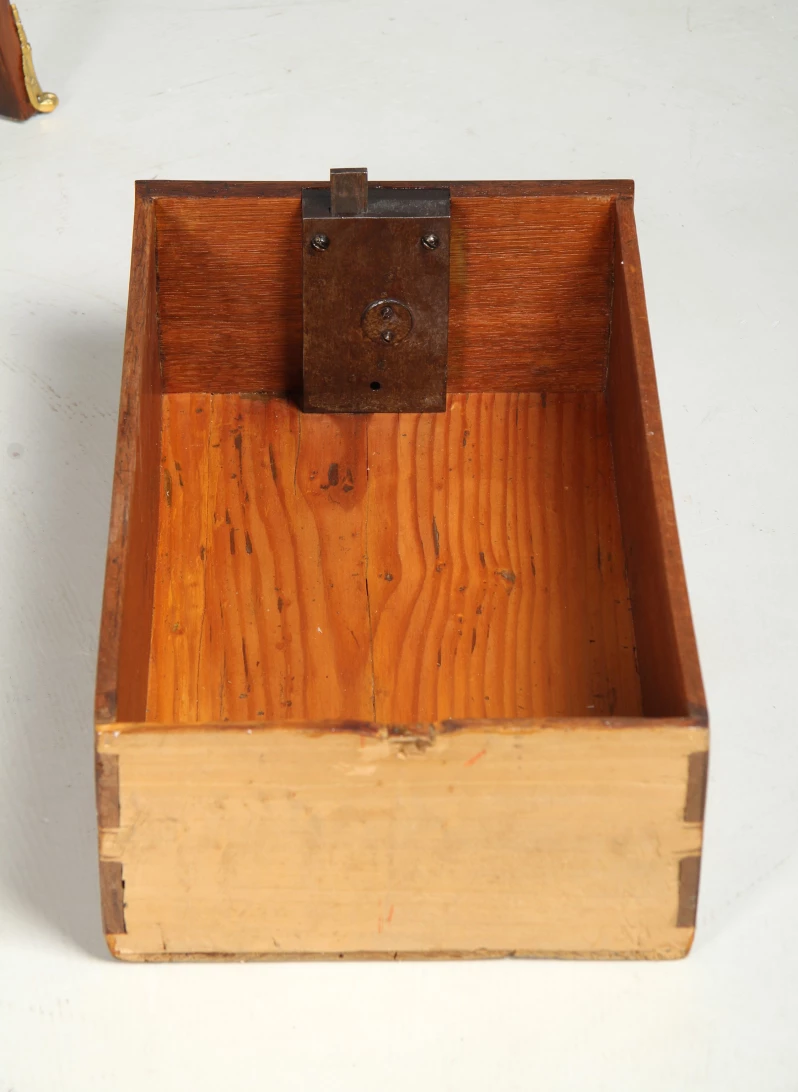
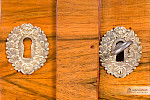
It is striking that there is only one lock, but all drawers and the cylinder lock are locked. The latch of the lock also closes the writing surface, and an ingenious system locks all the other drawers. (see attached video)
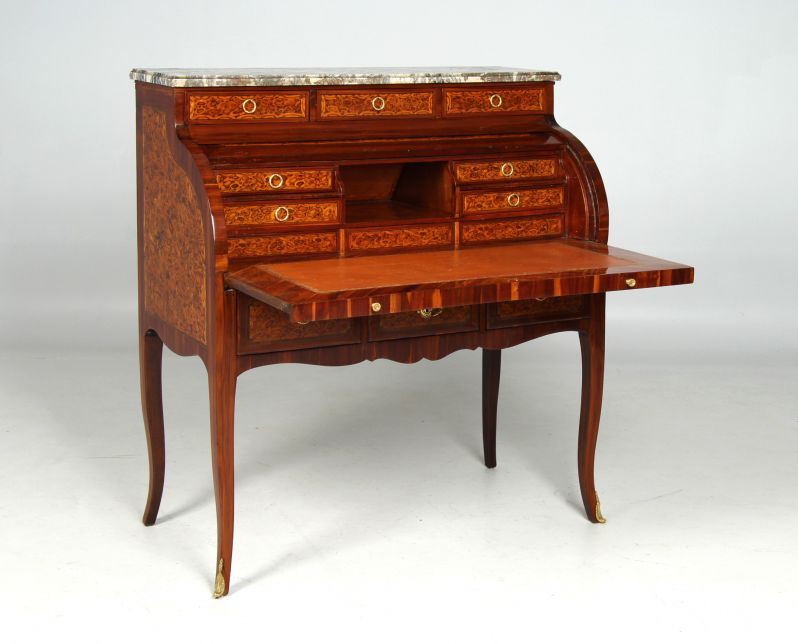
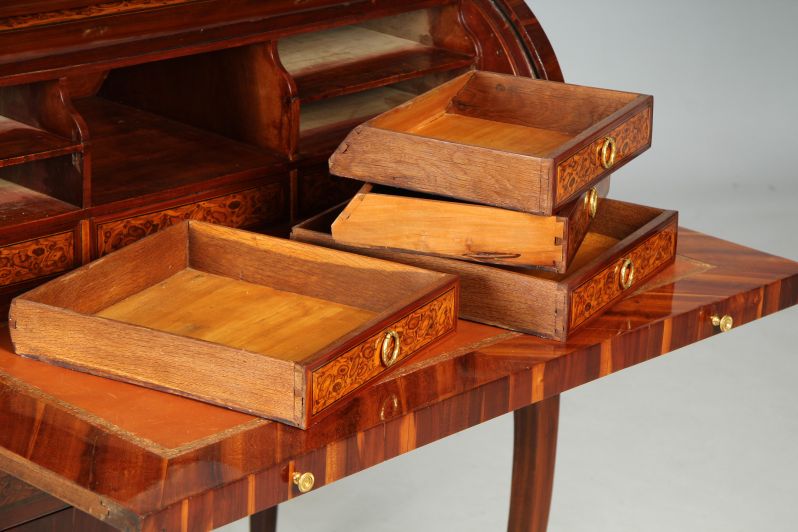
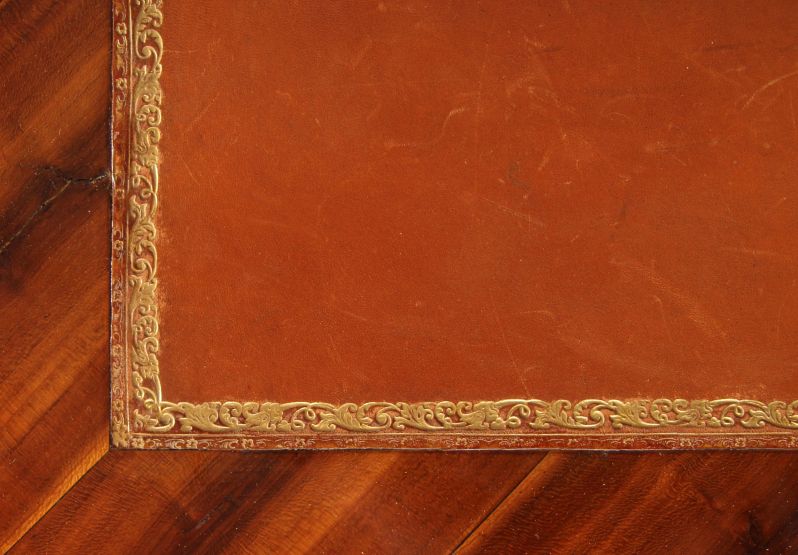
The writing surface is covered with punched leather. The interior consists of an open compartment and four drawers arranged like a staircase.
It is the many remarkable and unusual details that make this piece of furniture so special. One of them is the backs of these small drawers, which are round or slanted and thus follow the shape of the body. This is a detail that could have been omitted if one had spared oneself the labour and simply wanted a quick production.
Worth knowing:
The term "oyster veneer" is primarily known from English furniture, in which larger knots of walnut or olive wood were also cut crosswise and often laid on furniture surfaces in a mirror-image arrangement. The French style here, also known as "Rondelles de Saucisson", has been little researched to date. There is hardly any reliable information in the literature even on the type of wood used.
A material analysis commissioned by us at the Thünen Institute in Hamburg revealed that the wood used was buckthorn (genus Rhamnus) - a shrub-like wood with small knots and an interesting colouring of the wood.
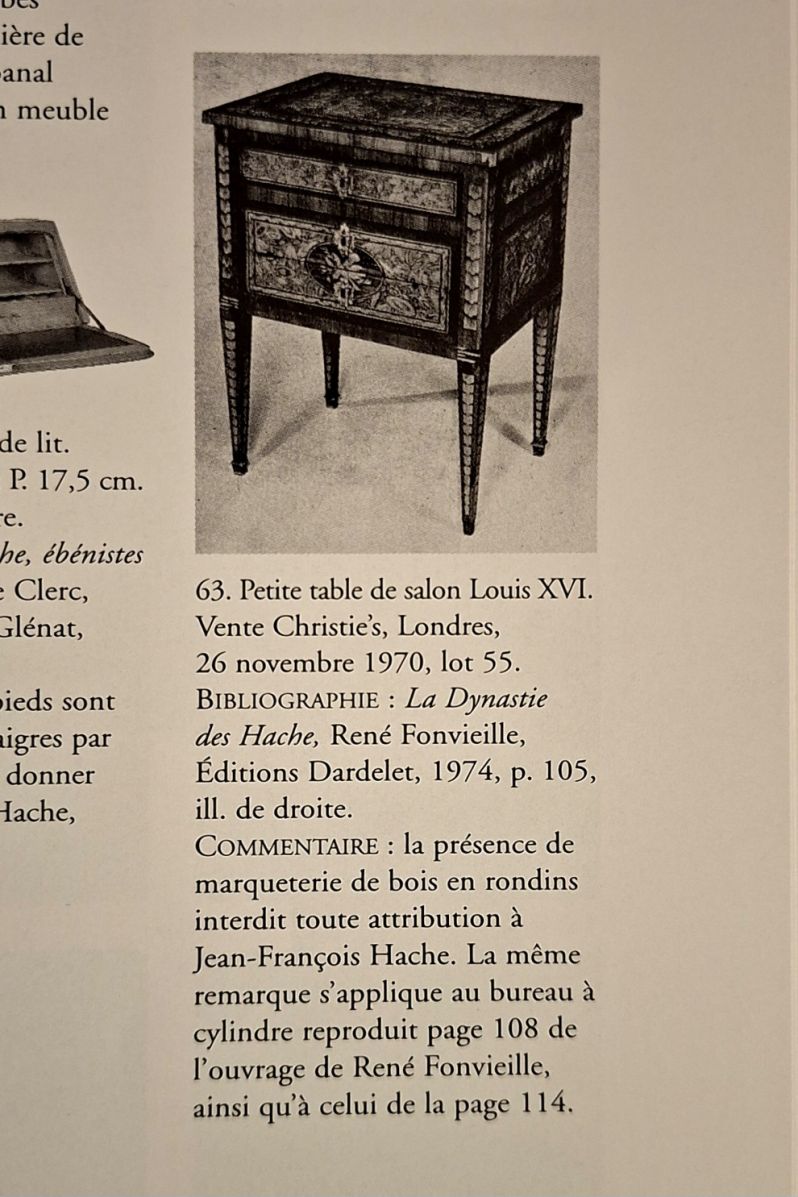
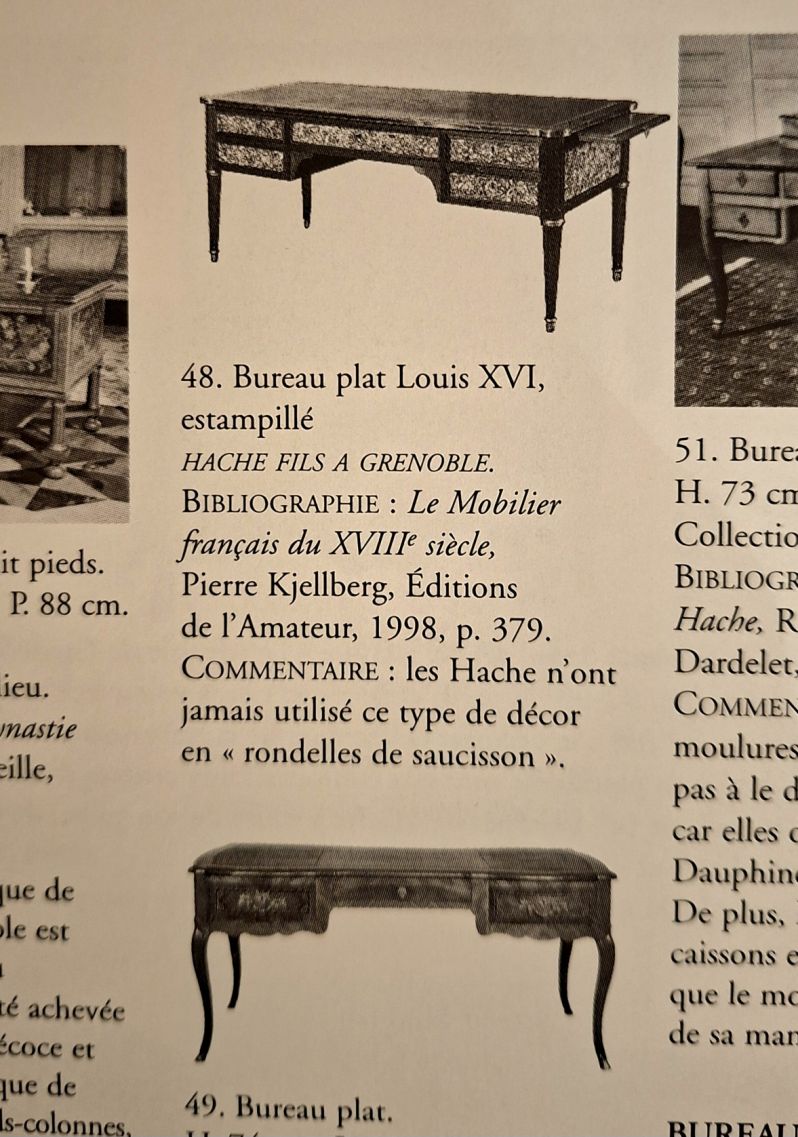
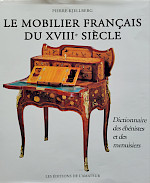
In the past, furniture with this special veneering technique was repeatedly attributed to the Hache workshop in Grenoble. René Fonvieille, for example, attributed several pieces of this type to the workshop in his 1974 work "La Dynastie des Hache"; Pierre Kjellberg's standard work "Le Mobilier français du XVIIIe siècle", which is still frequently consulted today, also lists a desk veneered in this style and stamped with Hache.
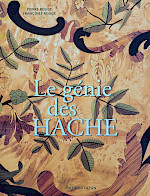
However, in the reference book "Le Génie des Hache" by Pierre and François Rouge, published in 2005, the attribution of any oyster veneer or "Rondelles de Saucisson" furniture is expressly rejected. However, there is no detailed justification for this rejection. (see enclosed photos)
Nevertheless, from my point of view and that of many others, a connection to the Hache workshop still seems worthy of discussion. Several points speak in favour of Hache:
- the stylistic classification: furniture with this veneering technique appears predominantly in the design of the Louis XVI period, but, albeit somewhat more rarely, as in the case of the piece of furniture offered here in the Louis XV style. The Hache workshop, which was active for several generations, was active precisely during this period. ( Thomas Hache 1664-1747, Pierre Hache 1703-1776, Jean-Francois Hache 1730-1796)
-The frequency: Comparable pieces of furniture appear on the art market from time to time and always have a strikingly constant combination of materials, namely the combination of plum wood with oyster veneer. This recurring combination at least suggests that they could originate from a single workshop context. The Hache workshop was large enough to produce furniture of this type with a certain regularity.
-The veneer and staining technique: It is certain that the Hache workshop was known for its willingness to experiment with unusual veneers. Unusual root and burl woods were used to create interesting surface patterns. The Hache workshop also mastered the technique of wood colouring, which is particularly evident in the fine band inlays on this piece of furniture. A central element of the Haches was the systematic research of wood colours and staining techniques.
Based on the current state of research, however, it is not possible to make a definite attribution. In my opinion, there could also have been a subcontracting company that specialised in the production of veneer surfaces of this type and supplied workshops in the region.
If you, who are reading this text, have any information on this subject, I would be very pleased to hear from you.
Condition: Refurbished and suitable for everyday use.
Price: 7500,- €
Please refer to the specialised literature already mentioned in the text:
René Fonvieille - La Dynastie des Hache
Pierre and Françoise Rouge - Le génie des Hache
Article found under: Secretaries
Add to shopping cartVideo secretary oyster veneer
Also interesting
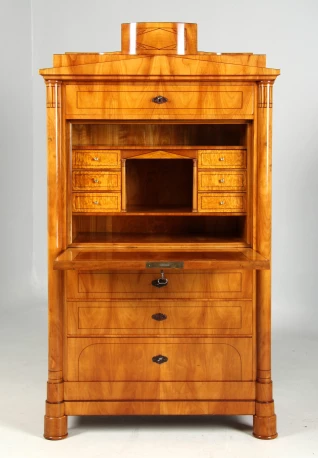
Antique writing cabinet with leather fittings and thread inlays
Austria
Cherry and others
Biedermeier around 1830
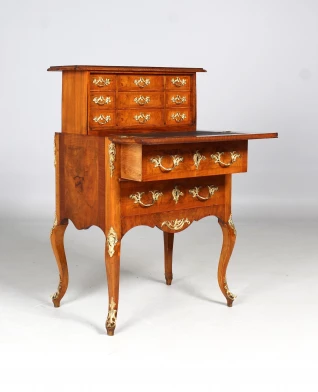
Antique transformable furniture so-called Secretaire à la Bougogne
France
Walnut
second half 19th century
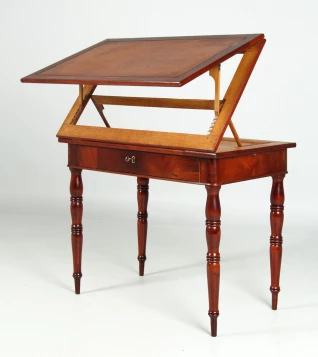
Antique architect's table
France
Mahogany
Mid 19th century