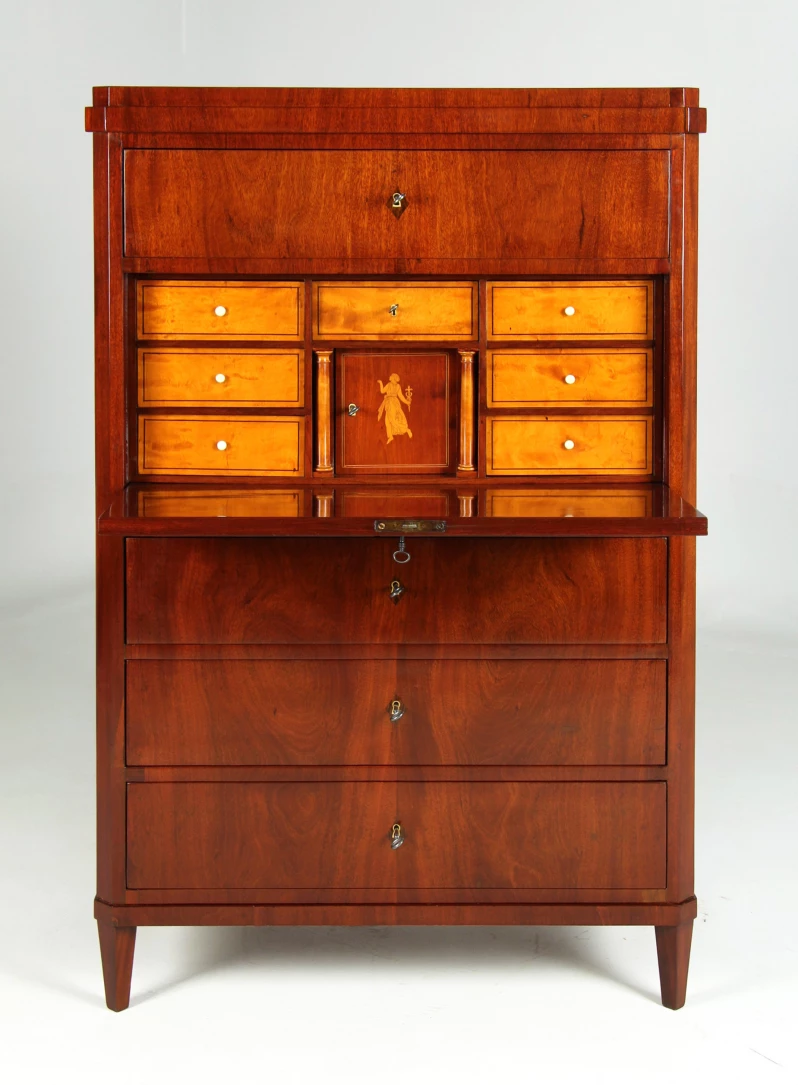
Video Flensburg Secretary
Small antique Biedermeier secretary
Schleswig-Holstein
Mahogany and others
Biedermeier around 1815
Dimensions: H x W x D: 137 x 88 x 45 cm
Description:
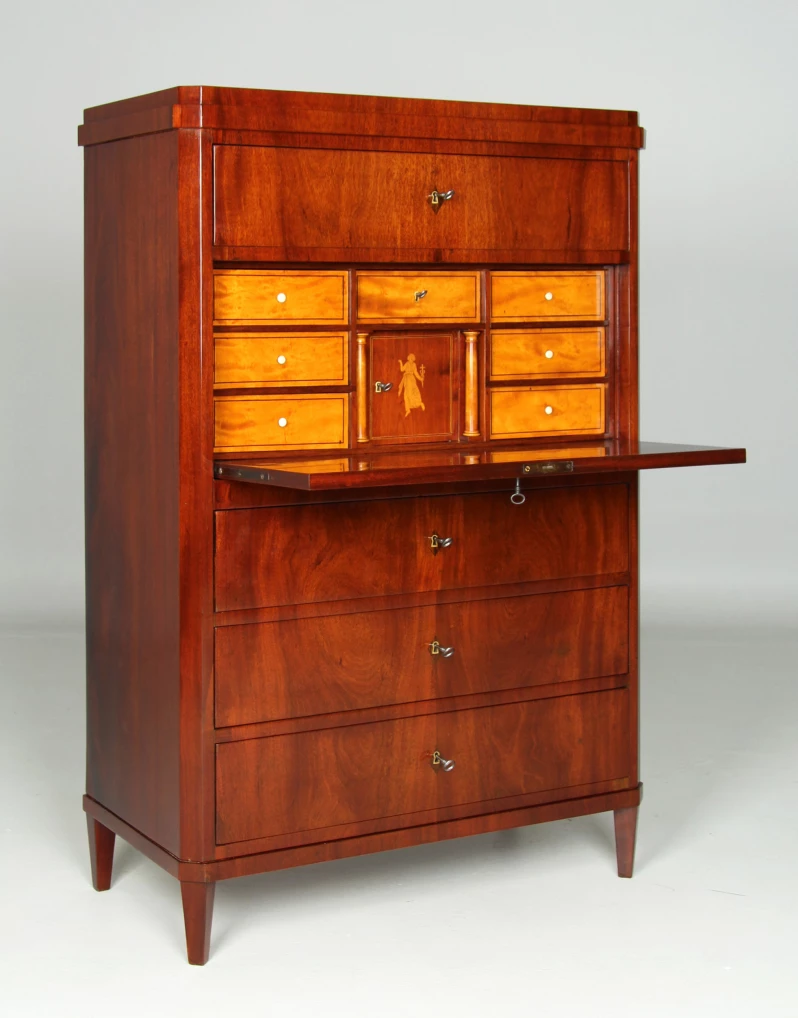
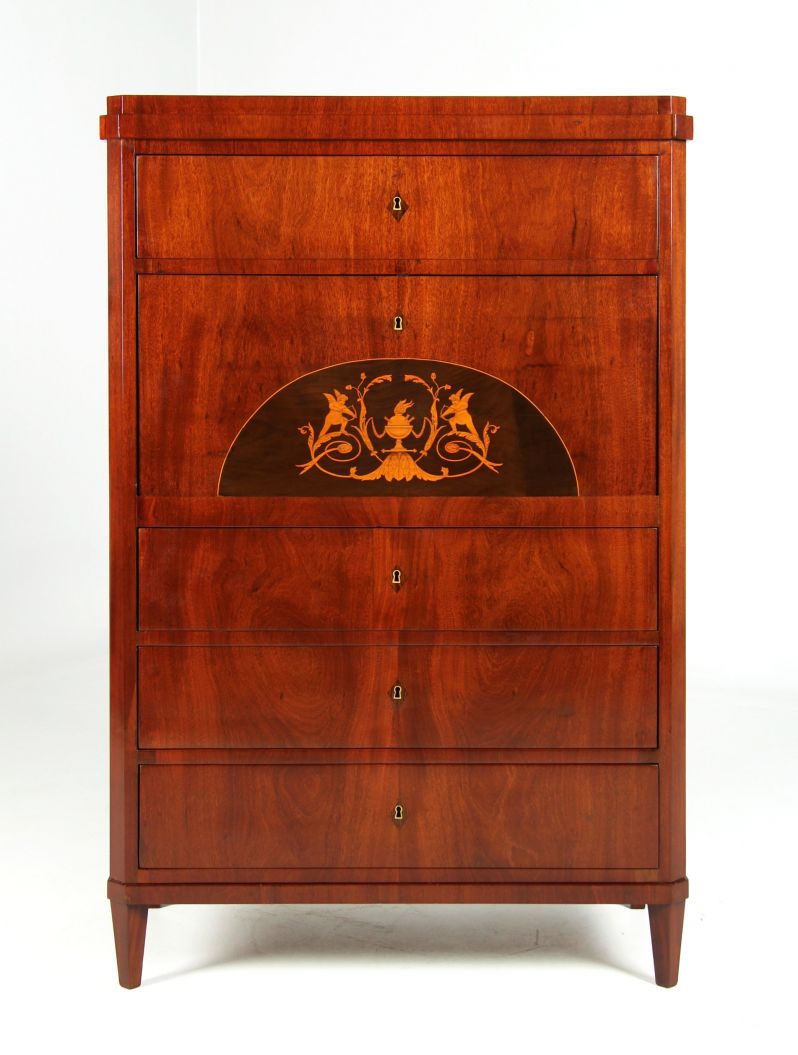
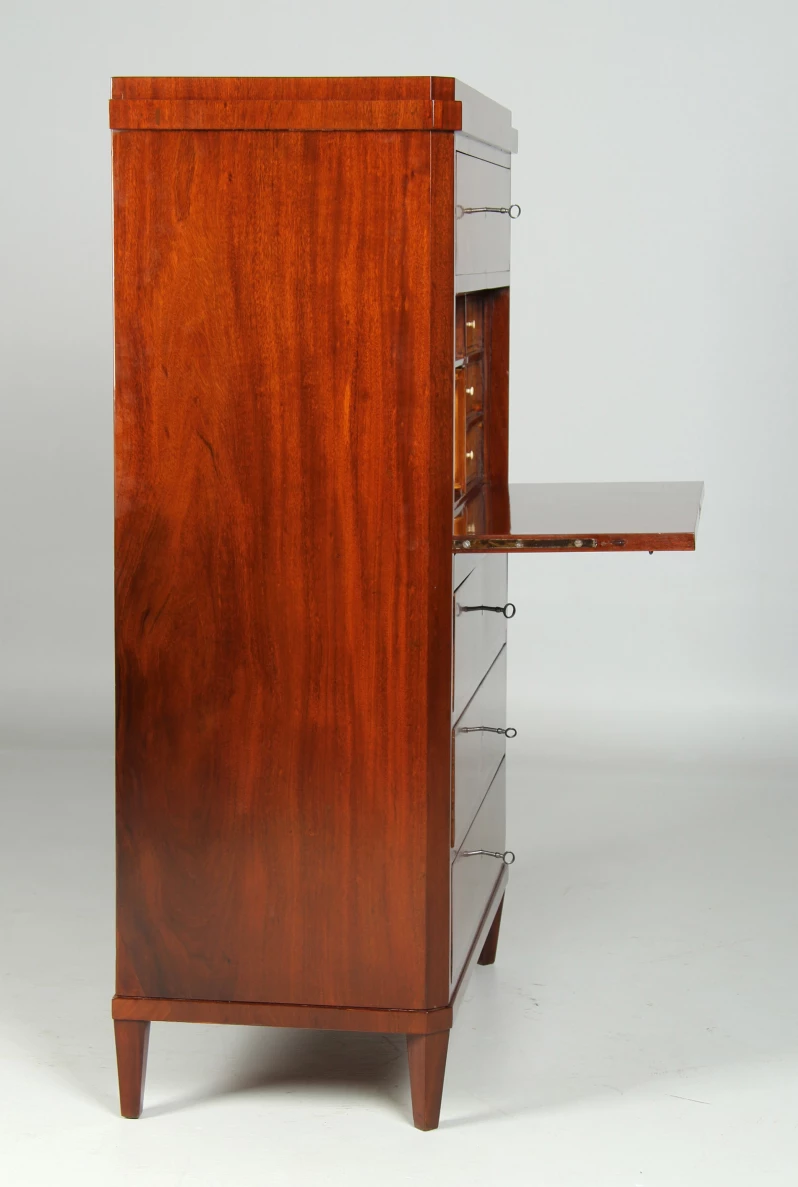
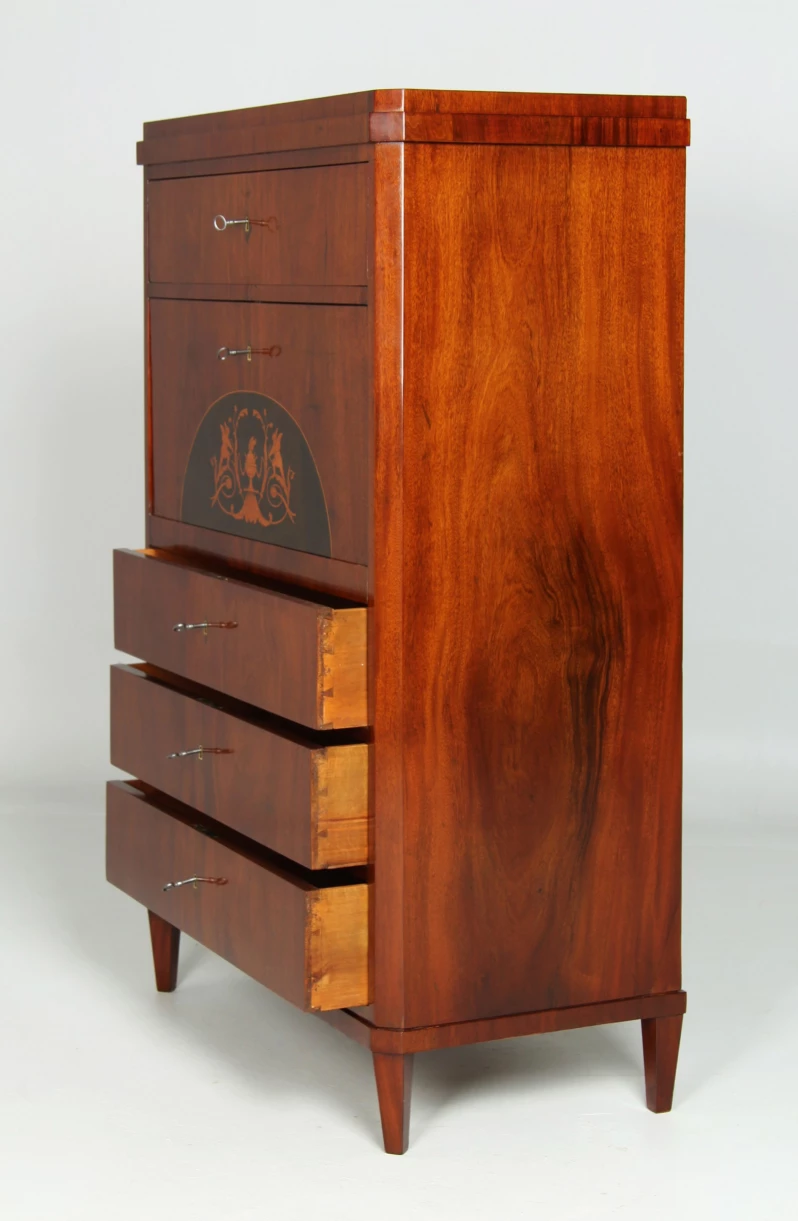
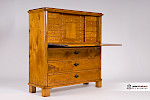
Piece of furniture standing on pointed legs with four drawers and a hinged writing surface.
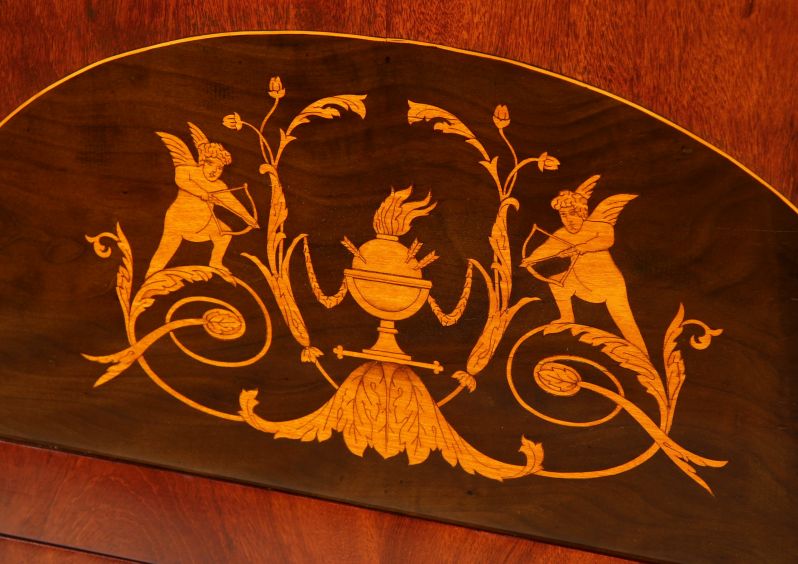
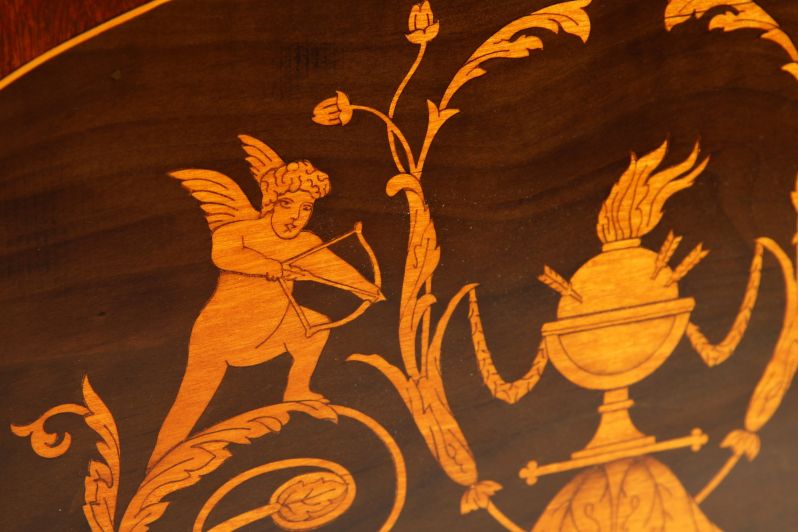
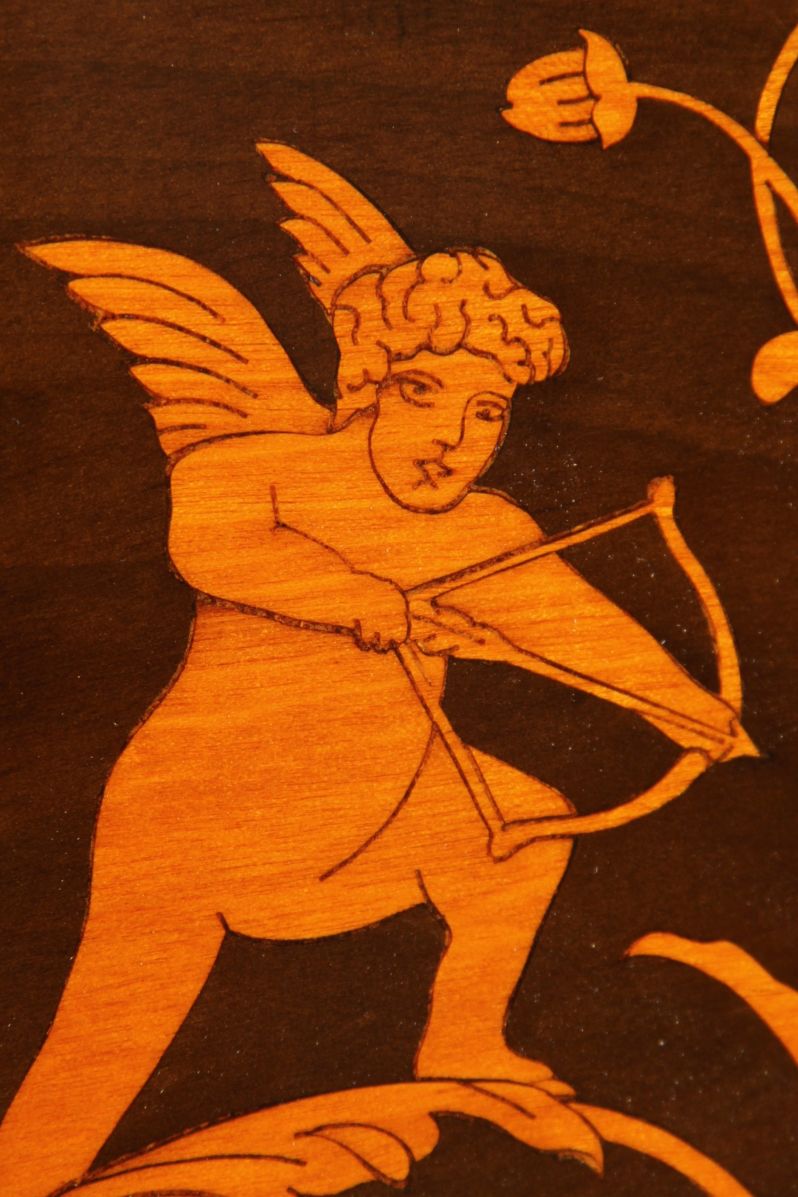
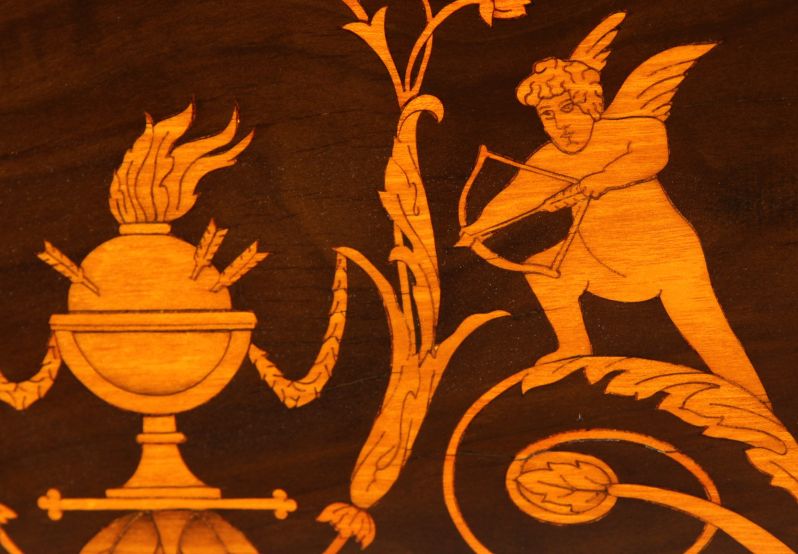
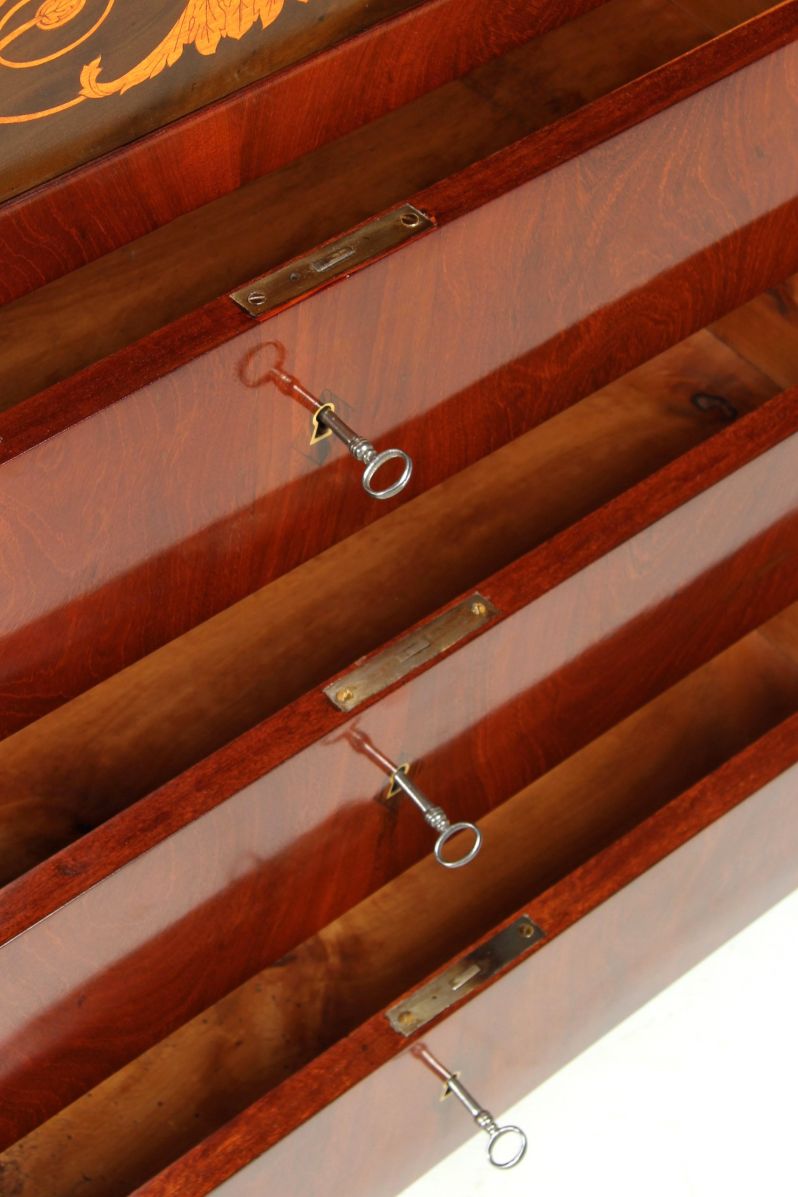
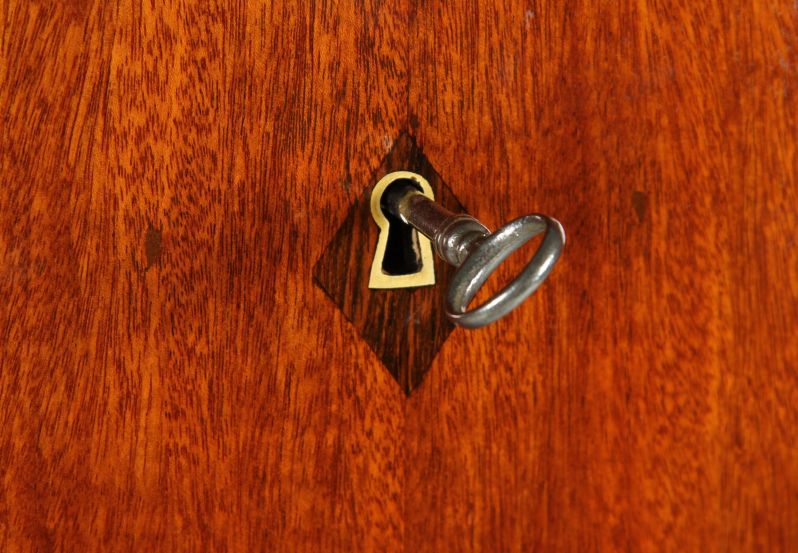
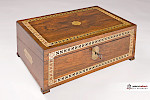
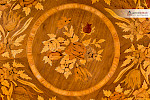
When closed, we see a very restrained, faintly grained and symmetrically laid mahogany veneer. The discreet, light-coloured key guides on rosewood rhombuses are also visually very restrained. Nothing is intended to distract the observer's gaze from the dark arched panel with its beautiful marquetry of finely engraved maple wood, set off by light-coloured threads. Half floating, half standing on acanthus tendrils, we see two winged cupids aiming a bow and arrow at a fire bowl.
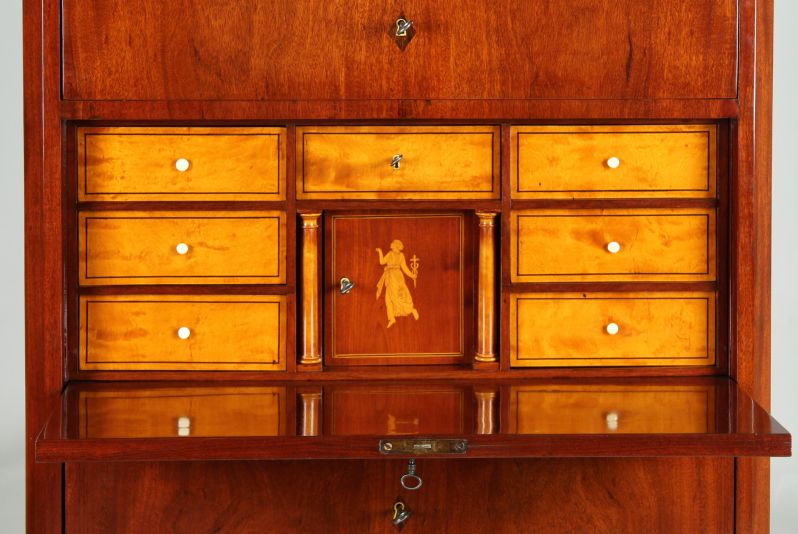
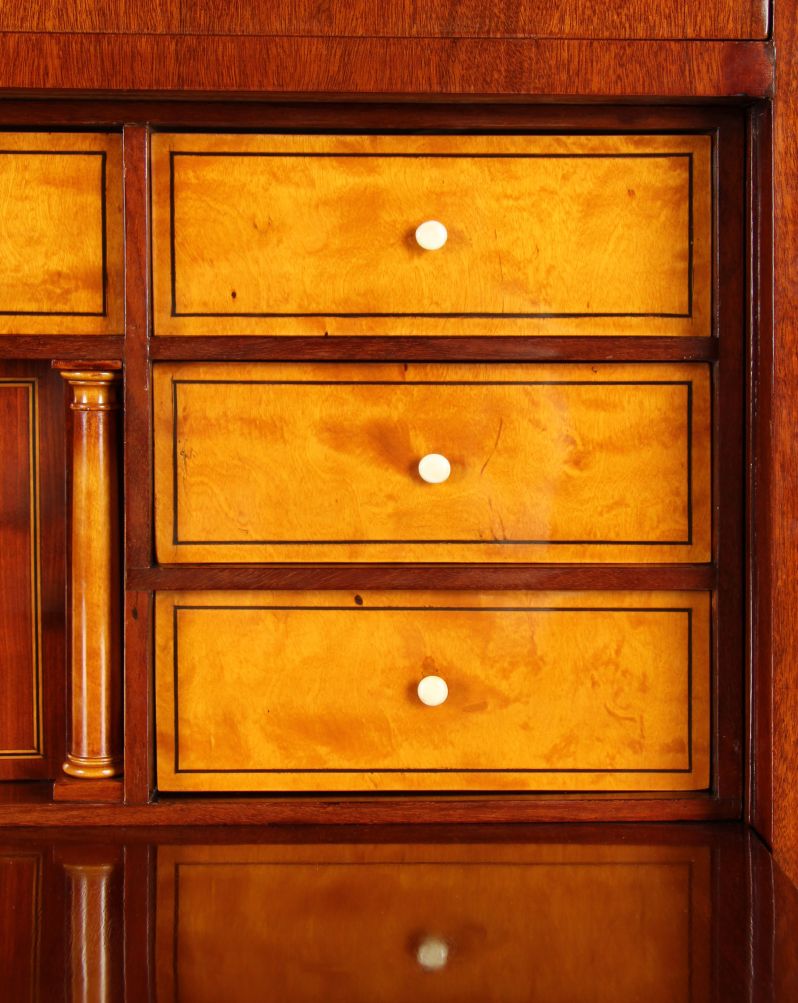
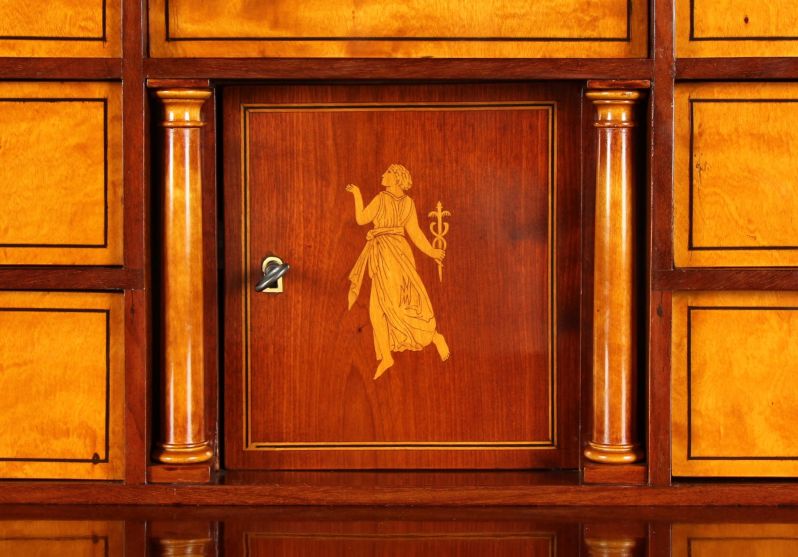
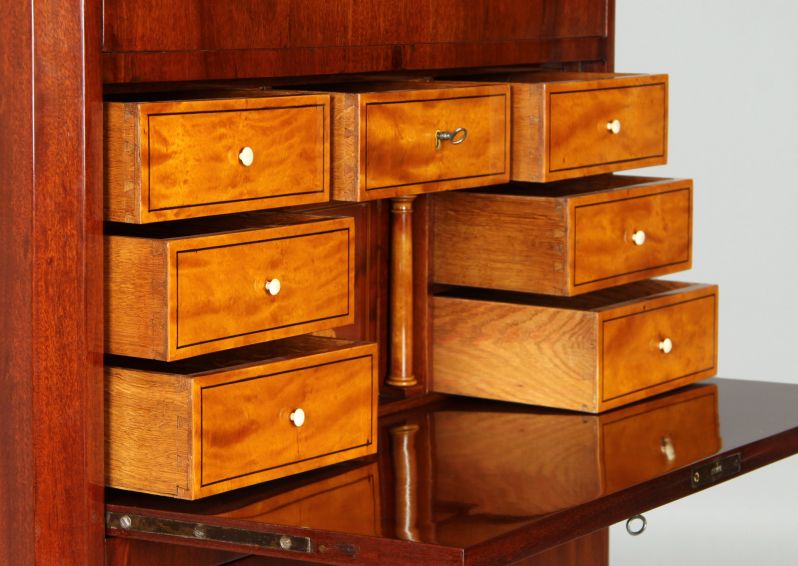
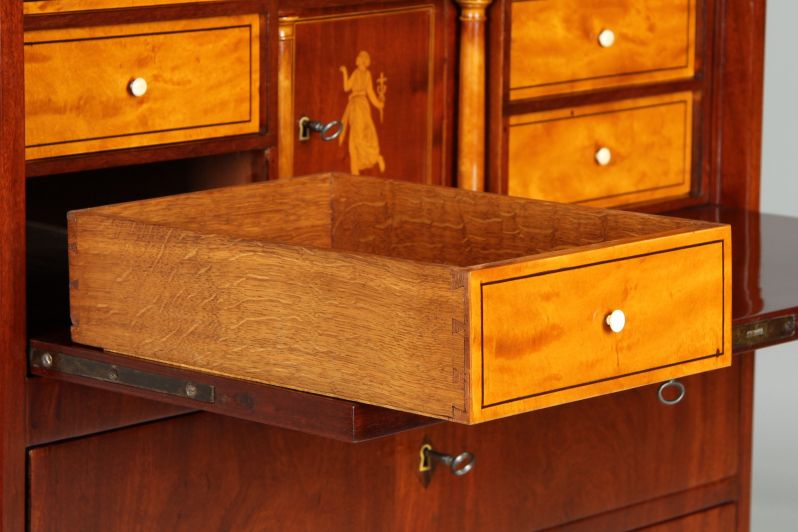
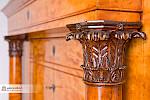
When we open the writing flap, the piece of furniture takes on a completely different appearance. The interior is bright, friendly and tidy, consisting of seven drawers veneered in birch and a door flanked by columns. Dark thread inlays on a light background accentuate the fronts of the drawers, while the lockable door is the opposite colour.
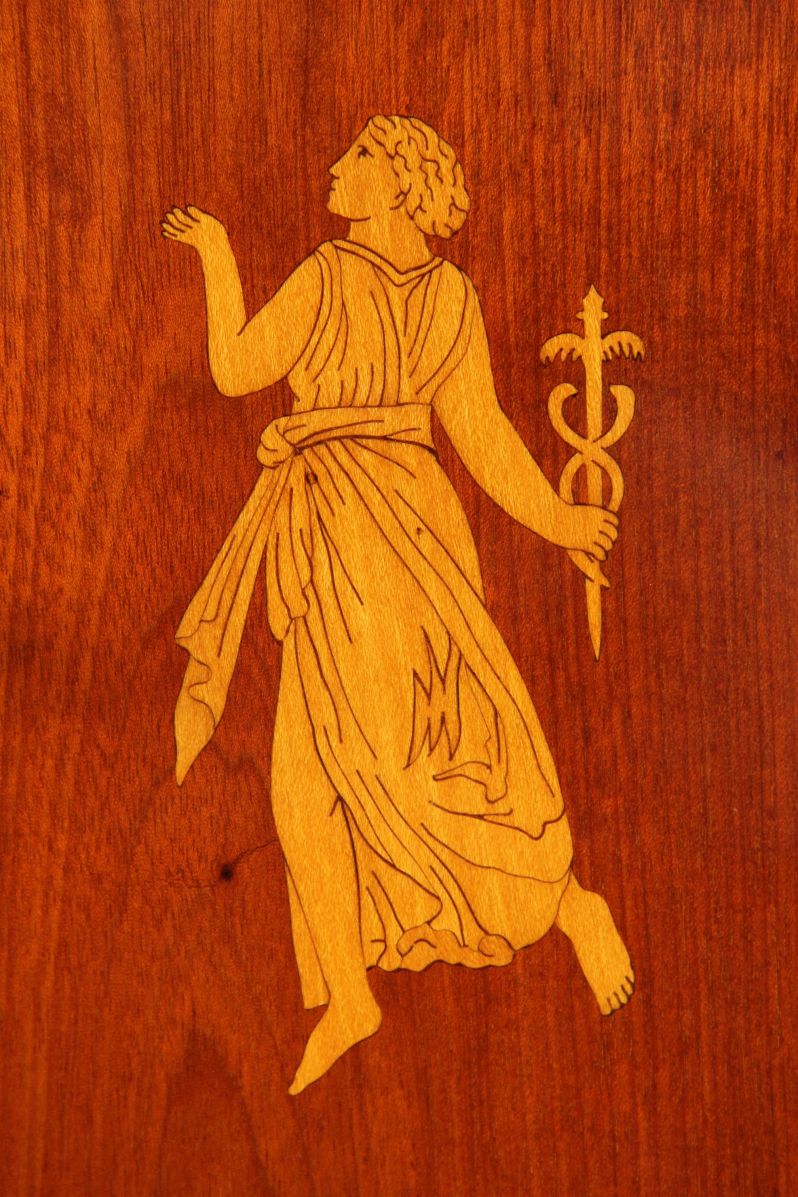
The inlay work on the door suggests that the person who commissioned the furniture came from a medical or pharmaceutical background. It depicts a young woman, possibly the goddess Hygieia, dressed in a tunic and holding the staff of Asclepius in her right hand.
Not only are the dimensions of the corpus unusually small, the writing and working surface is also quite shallow at around 35 cm. This shallow depth of the writing surface, despite the balanced proportions of the body, was achieved by selecting the same height for the top drawer as for the lower drawers. A top drawer of this volume is unusual compared to most other secretaries of the time.
Not only the shallow depth when the flap is open, but also the ornate design of the outside of the drawer suggest that the piece of furniture was originally created for a small room and was mainly kept closed.
Interesting facts:
At the time the piece of furniture was created, what is now Schleswig-Holstein was under Danish administration. Furniture from Schleswig or Flensburg can therefore hardly be distinguished from Danish furniture.
The use of mahogany wood, which reached the North German harbours through extensive trade connections, is particularly typical. The arched segments on drawer and flap fronts, known today as the "Brauschweig arch", are just as characteristic of the region as the light-coloured marquetry on a dark background, which is almost exclusively made of engraved maple, rather than the different coloured woods used in the rest of Germany.
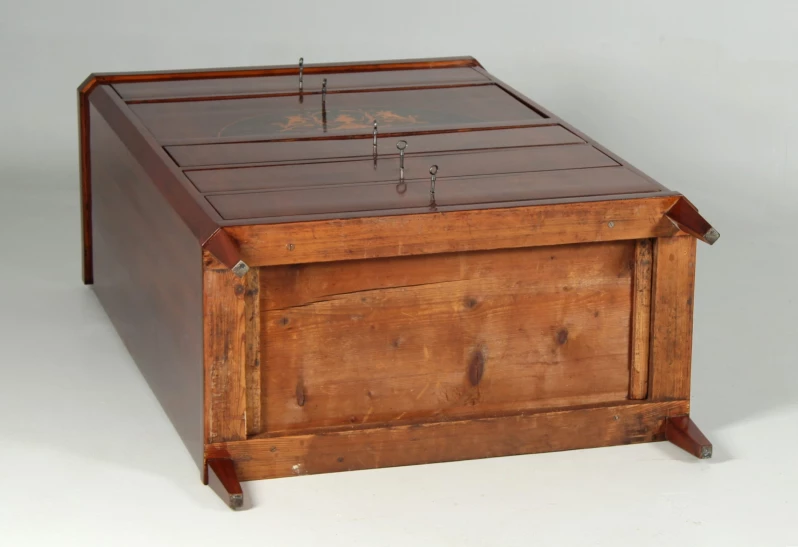
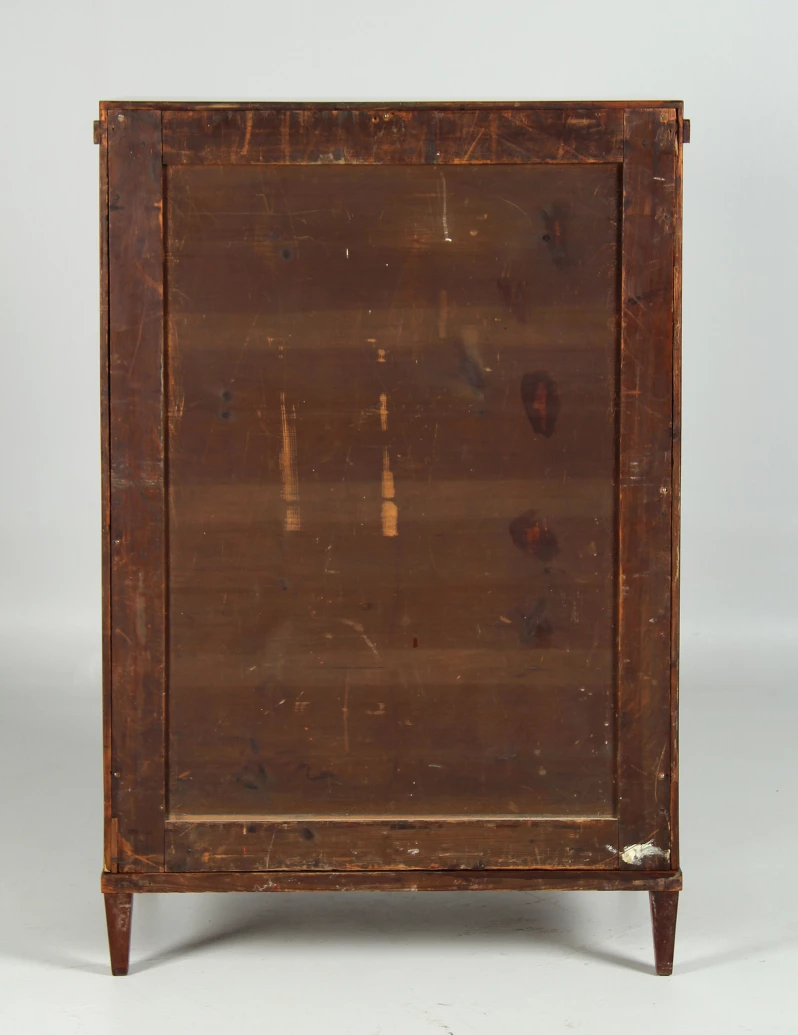
And the underset and demountable plinth area in this design is also more familiar from northern Germany and Scandinavia. The four screws used to assemble the plinth are clearly visible in the photo, which shows the underside of the piece of furniture.
Condition:
Refurbished condition with a shellac hand polish. Stable and suitable for everyday use.
Price: 5250,-€
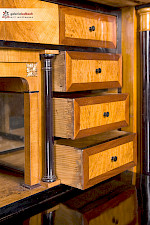
A very similar piece of furniture in terms of proportion and design is in the possession of the Museumsberg Flensburg with the inventory number 20164.
Please refer to the following literature:
Jörn Bahns - Biedermeier-Möbel - Entstehung-Zentren-Typen p.103
Georg Himmelheber - Biedermeiermöbel Verlag C.H.Beck p.171
Article found under: Secretaries
Add to shopping cartVideo Flensburg Secretary
Also interesting
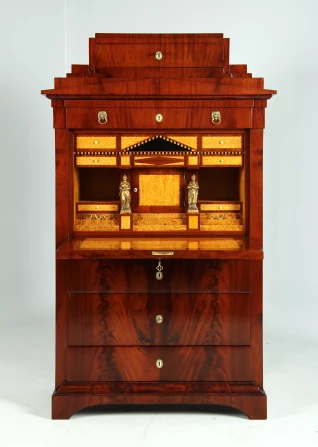
Very elaborate Berlin secretary
Berlin
Mahogany a.o.
around 1825
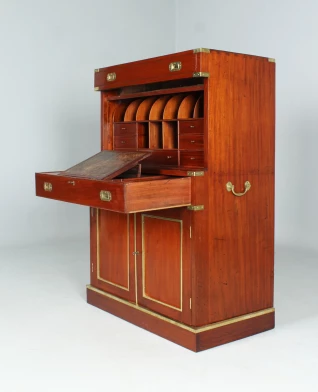
Military Campaign Chest of Drawers Secretary
England
Mahogany, brass
Victorian around 1890
Jaeger LeCoultre - Atmos Prestige
Switzerland
Gold-plated brass
1980s