Ebonise
The term "ebonising" refers to the blackening of wood. As the root of the word suggests, this is how people tried to imitate the very expensive ebony.
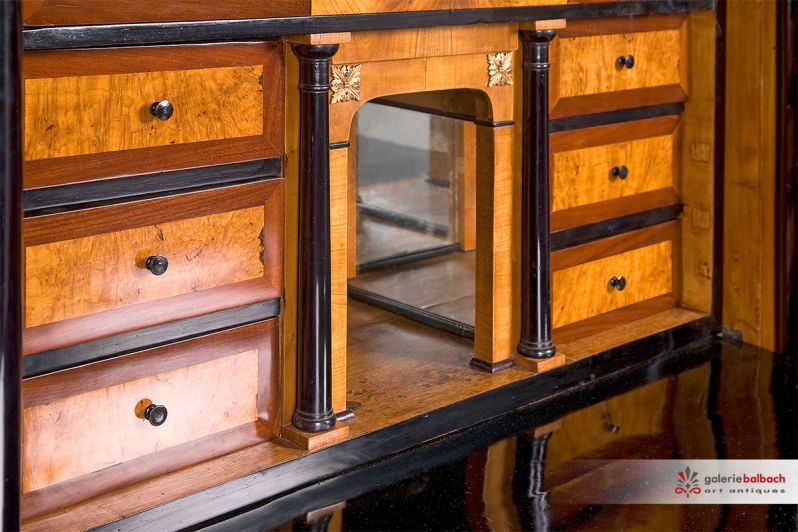
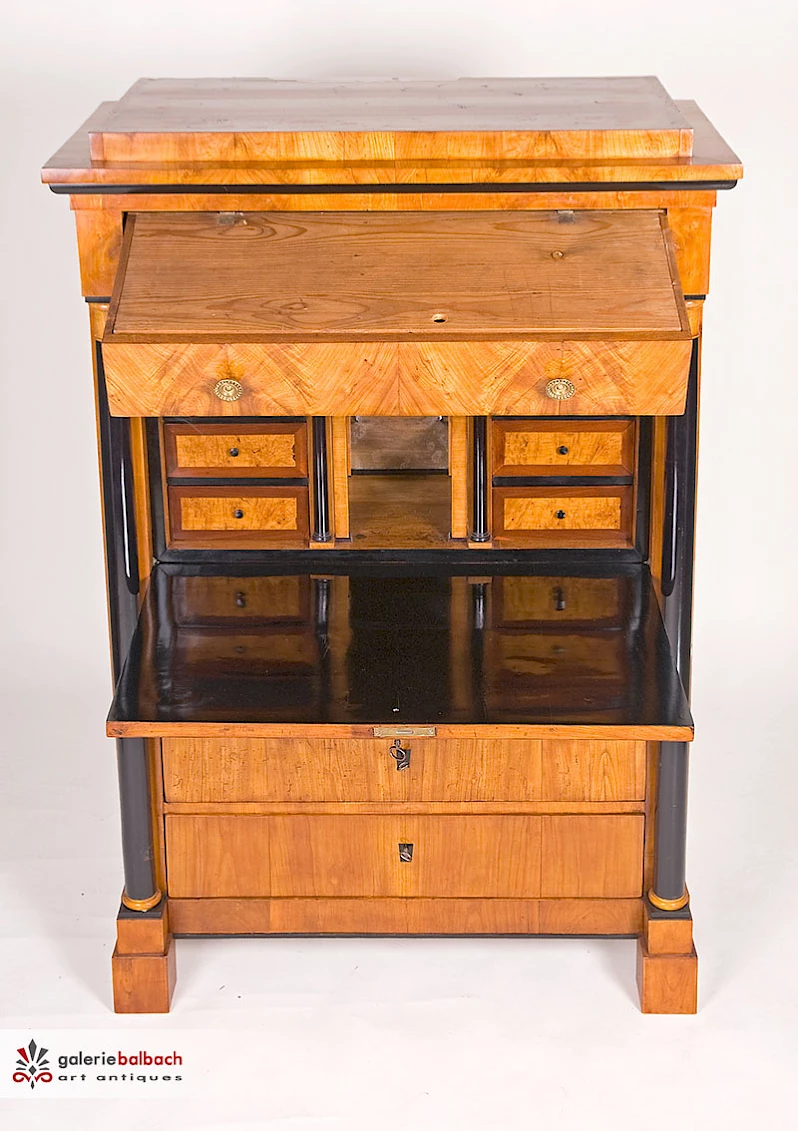
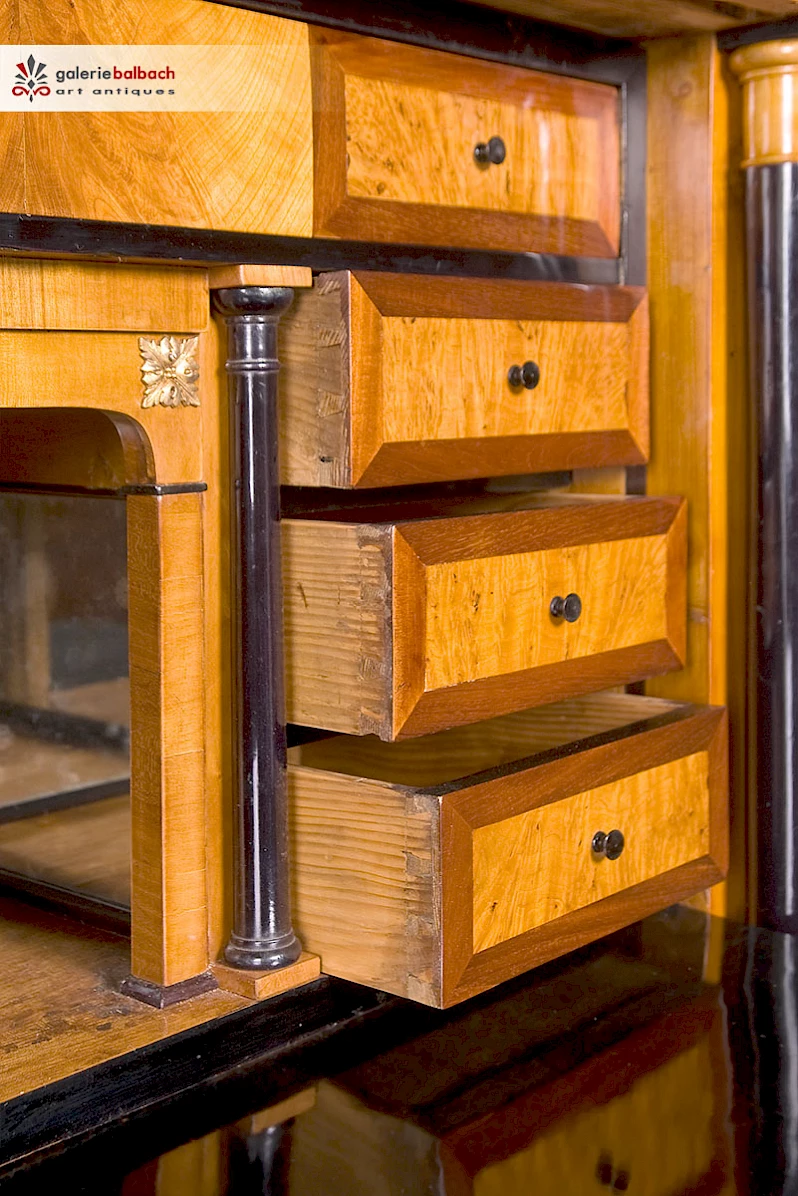
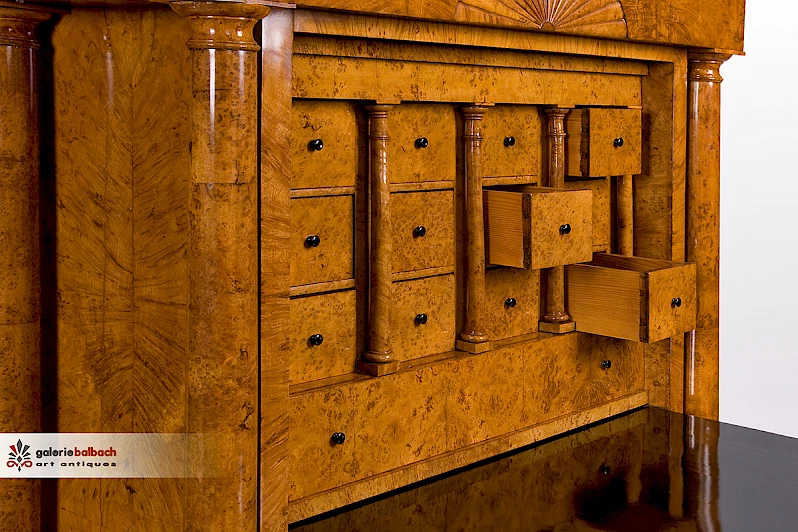
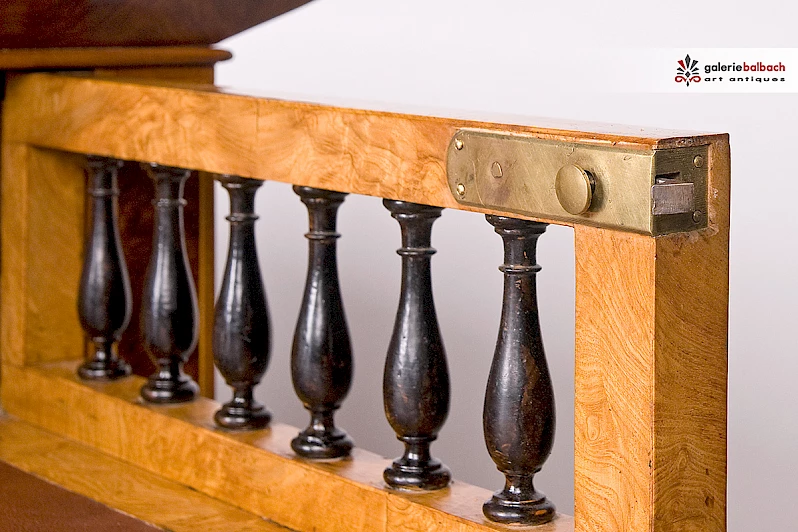
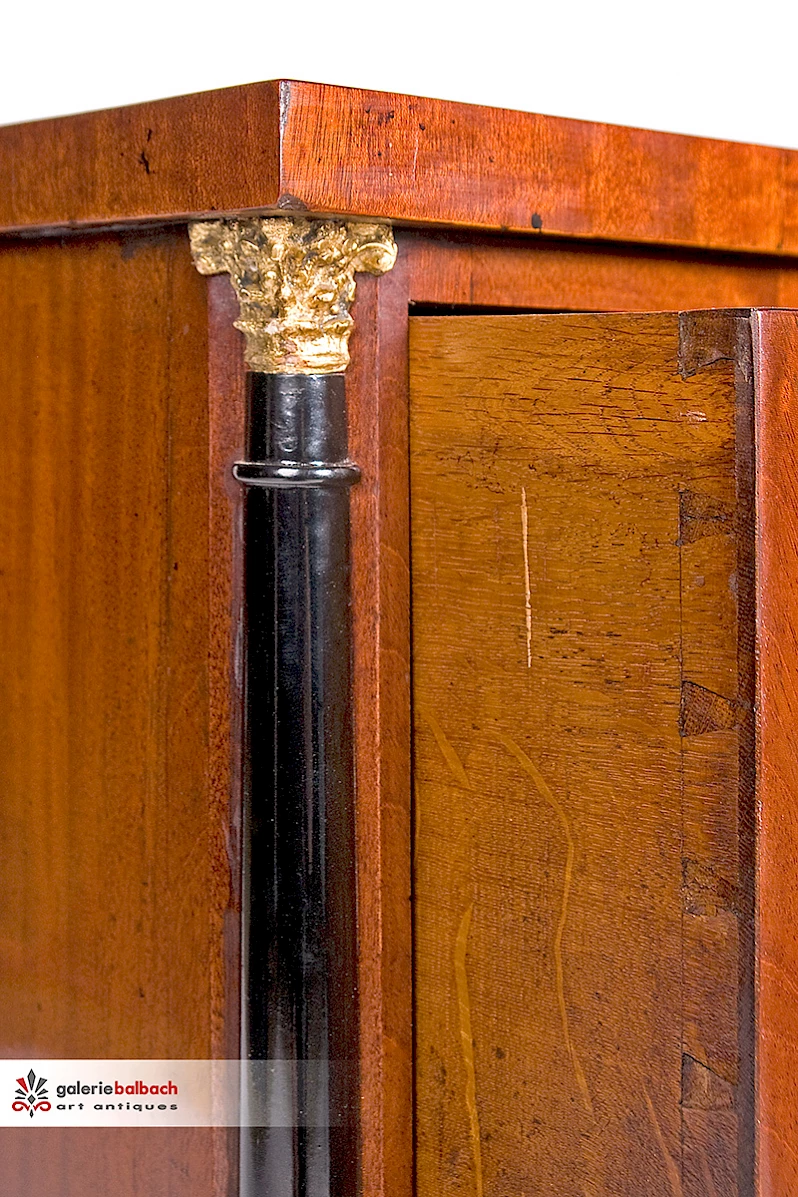
This technique is particularly common on antique furniture from the Biedermeier era. At that time, ebony was very popular to create contrasts with light woods such as cherry, birch or ash. Those who found ebony too expensive imitated it by dyeing local wood black. The most suitable wood for this purpose was the pear tree, which had a weak grain.
The blackening was achieved by mixing shellac with soot and then polishing the elements to be blackened with this mixture.
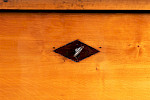
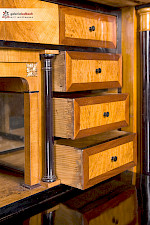
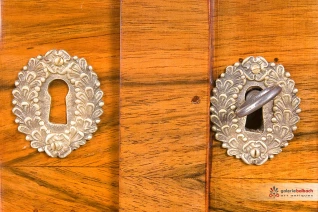
Ebony was used, for example, for inlaid key plates or thread inlays. Larger parts such as columns or beater rails were rather ebonised.
Ebonising was so popular in the Viennese Biedermeier period that entire pieces of furniture were blackened.
The technique was equally popular in French Historicism, in the so-called "Napoleon III" era.