Biedermeier
 The term "Biedermeier" originated from a word combination of the two poems "Bummelmeiers Klage" and "Biedermanns Abendgemütlichkeit", from which the doctor Adolf Kußmaul created the character Gottlieb Biedermaier, under whose name he then published poems in which he amused himself in a satirical way about the petit bourgeoisie and philistinism of the time.
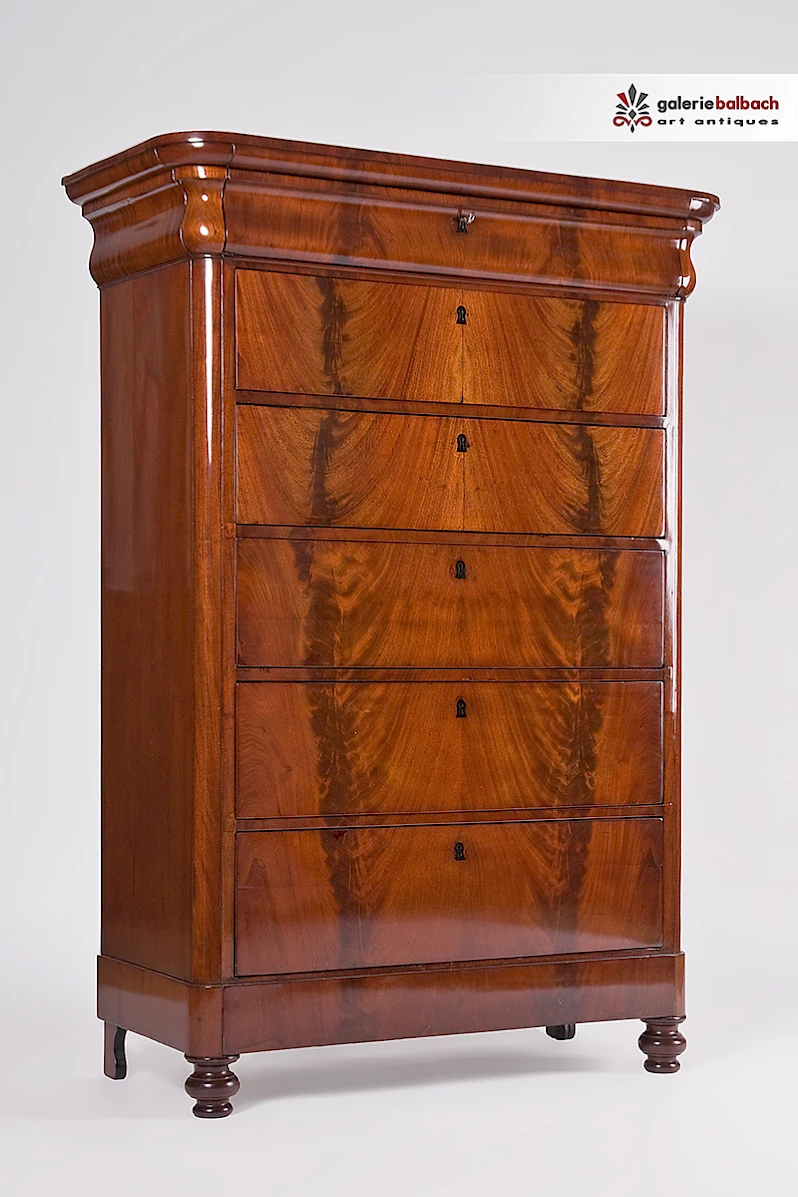
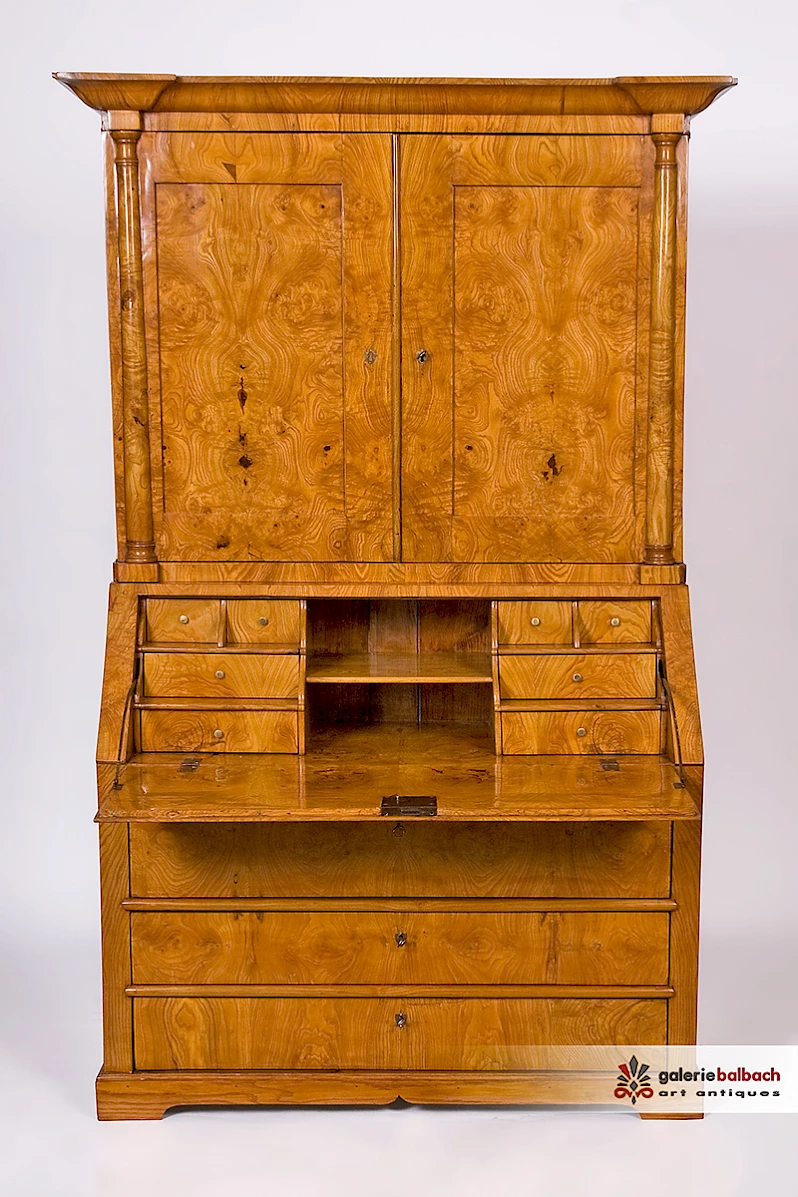
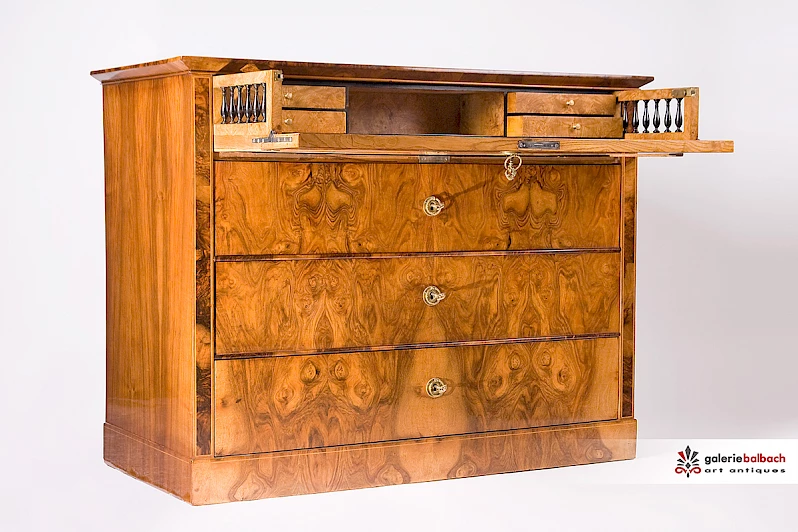
Biedermeier developed at almost the same time as Empire, and so we also find numerous parallels in the formal language. Both epochs were characterised by a strictly classicist and linear basic form. Precious woods such as cherry or mahogany, which was very expensive at the time, were popular in both eras. Walnut, ash, birch and all fruit woods were also popular.
Biedermeier furniture
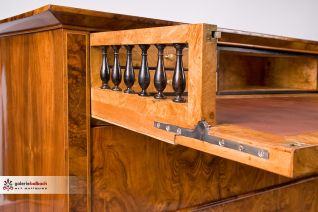
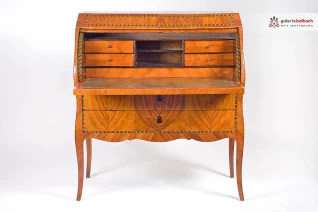
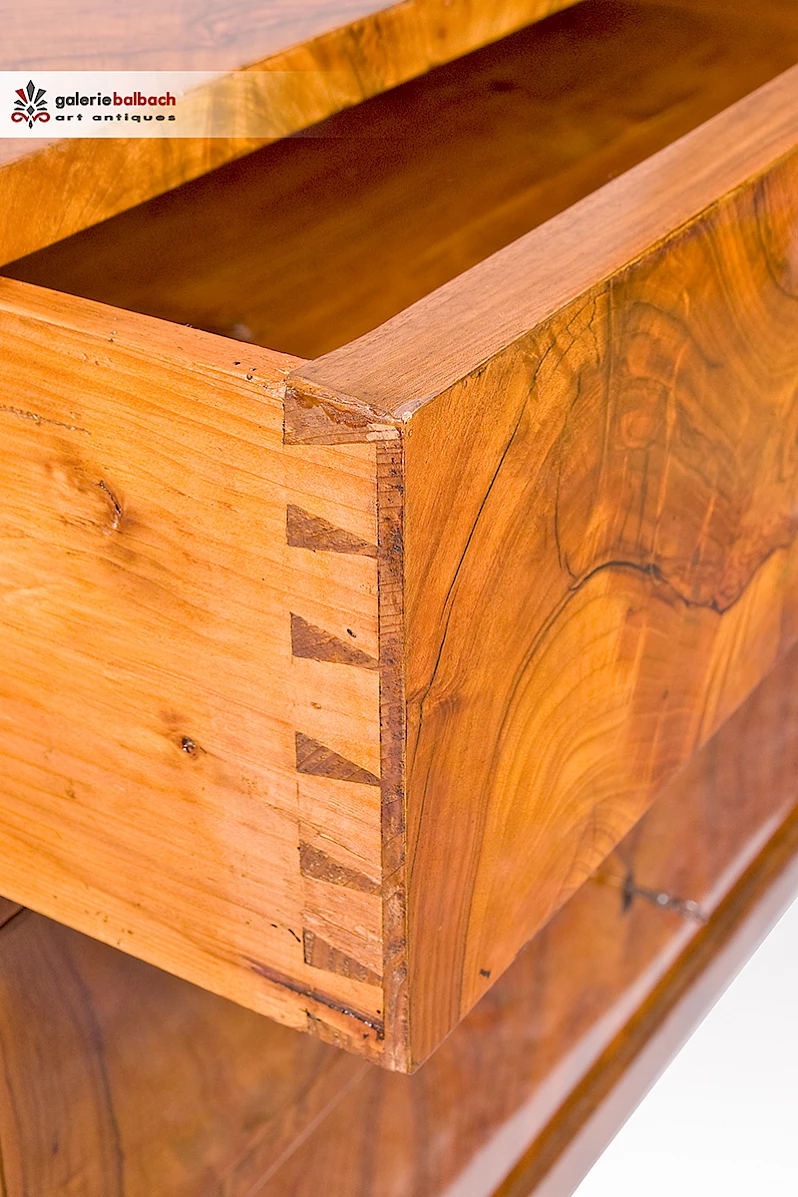
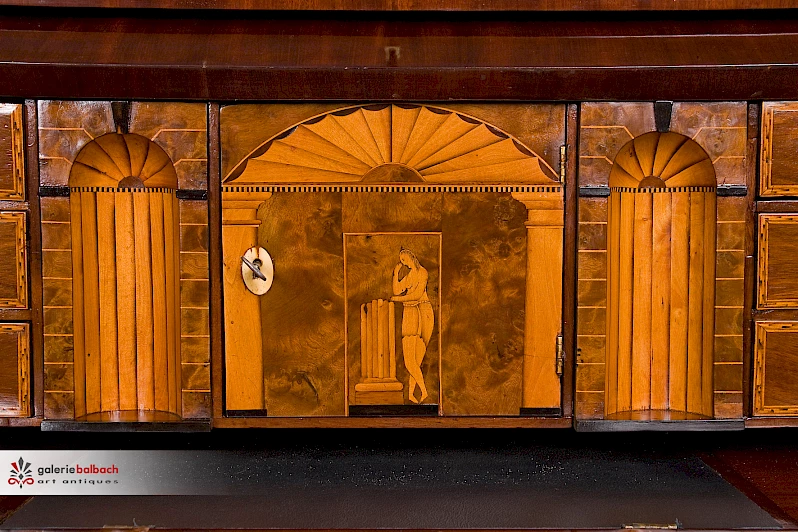
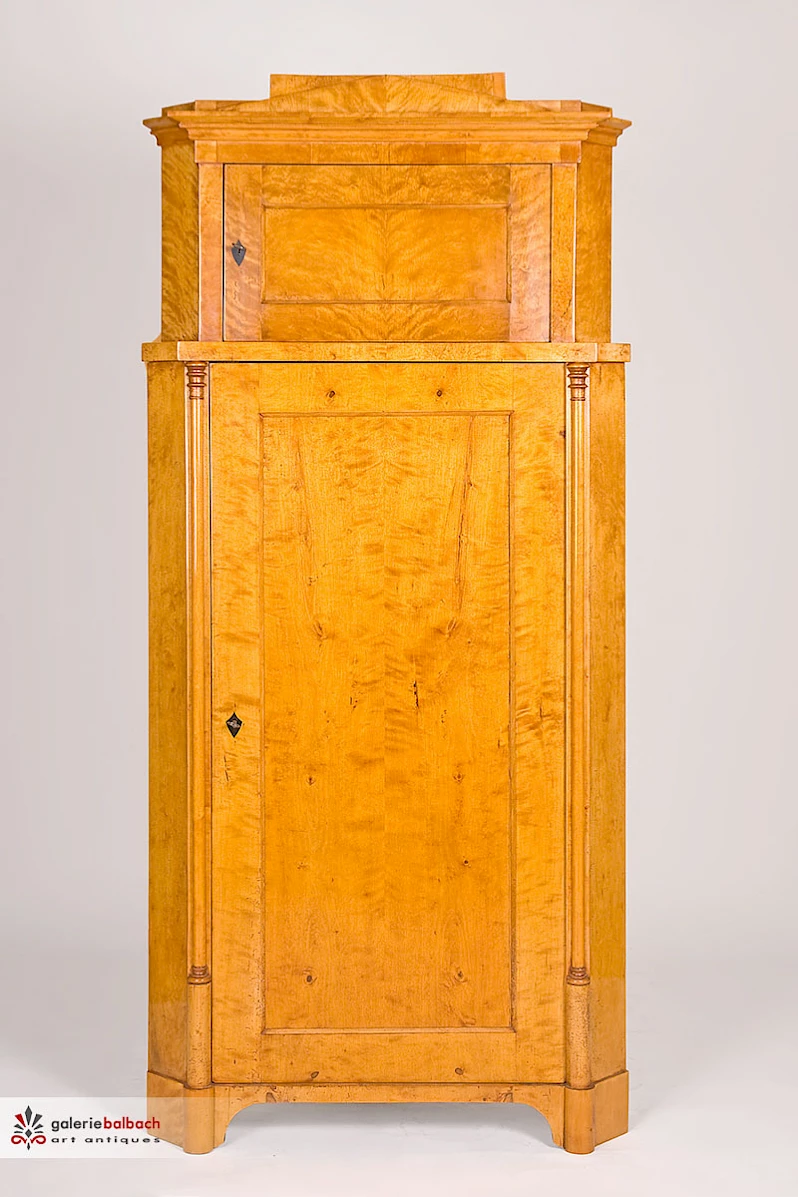
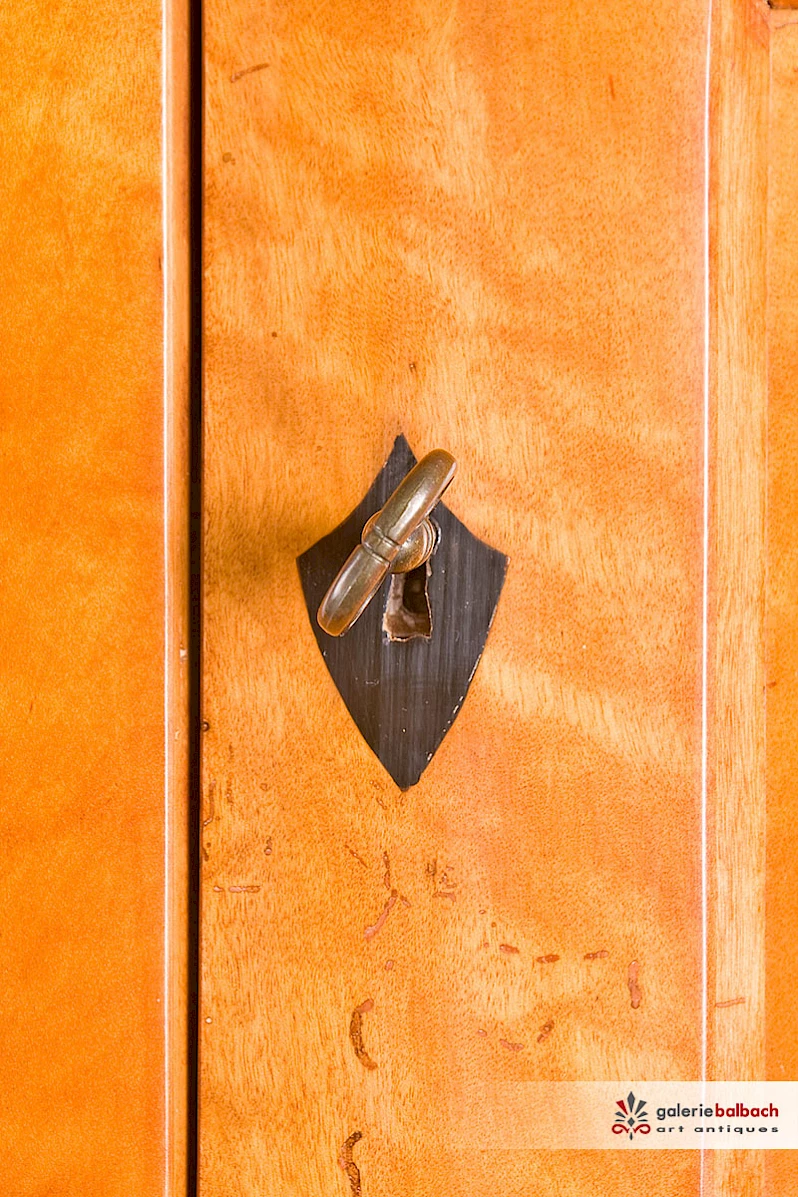
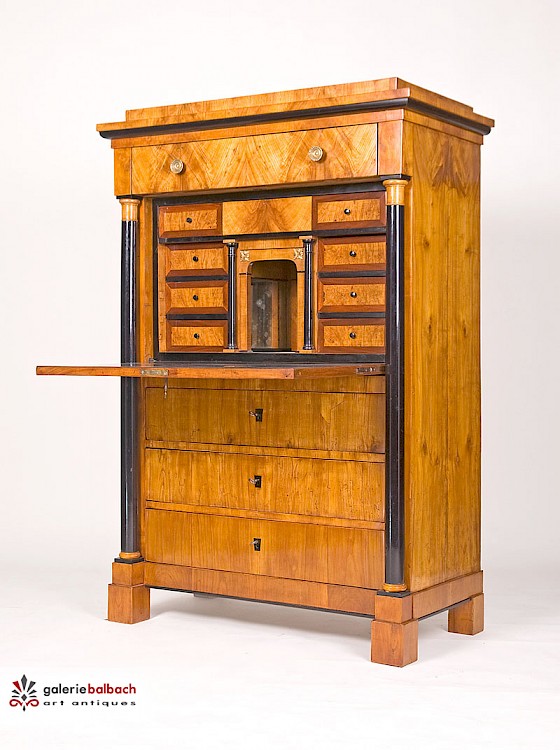
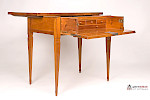
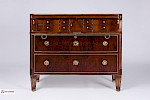
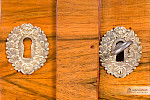
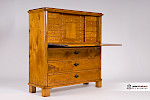
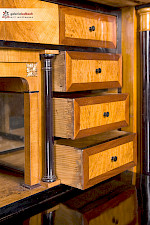
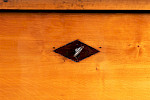
In Biedermeier furniture making, attention was paid to straight lines and a strictly cubist design. Decorative elements were largely dispensed with, even the geometric fielding of the preceding Louis XVI epoch gave way to flatness. Carefully selected and mirrored veneers now provide the design of the surface. Sparingly placed columns and embedded ebony key plates soften the flatness.
The Biedermeier style spread throughout Central Europe from around 1800. We find variations of Biedermeier furniture in Germany, the Netherlands, Austria and Hungary, as well as in Scandinavia.
After 1840, the clear structures dissolved more and more and stylistic elements of Louis-Philippe found their way into furniture making.
Also interesting