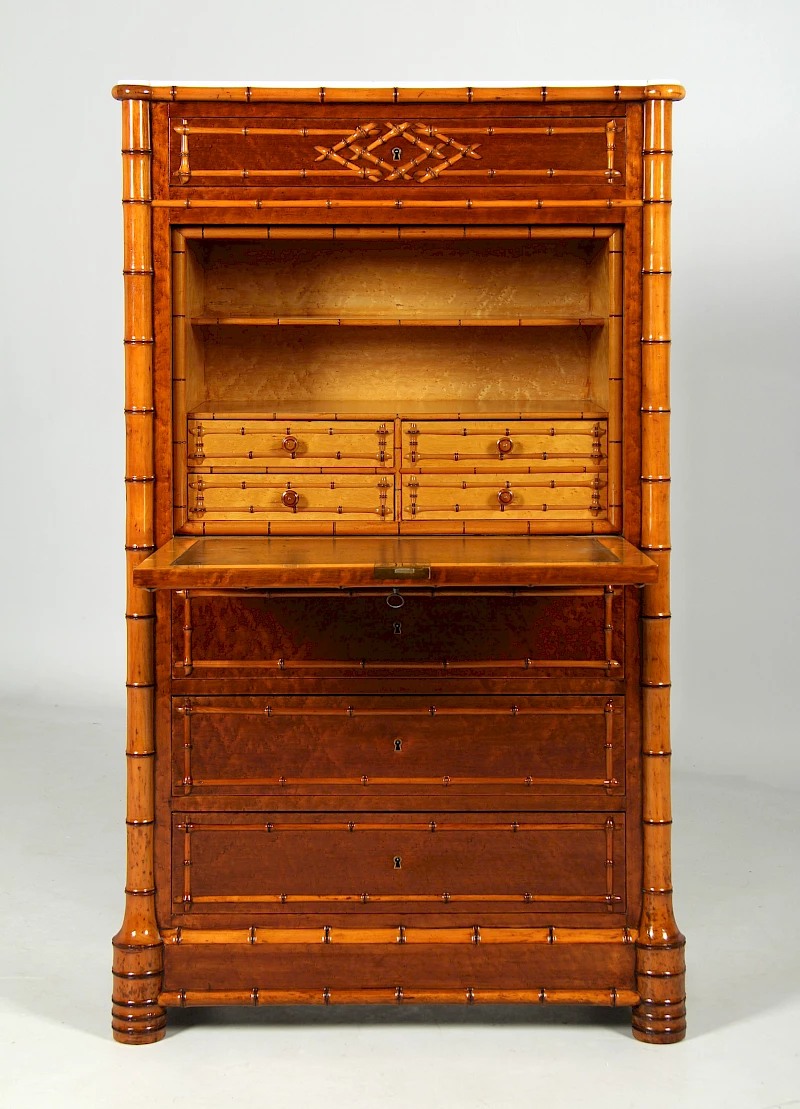
Video Faux Bamboo secretary
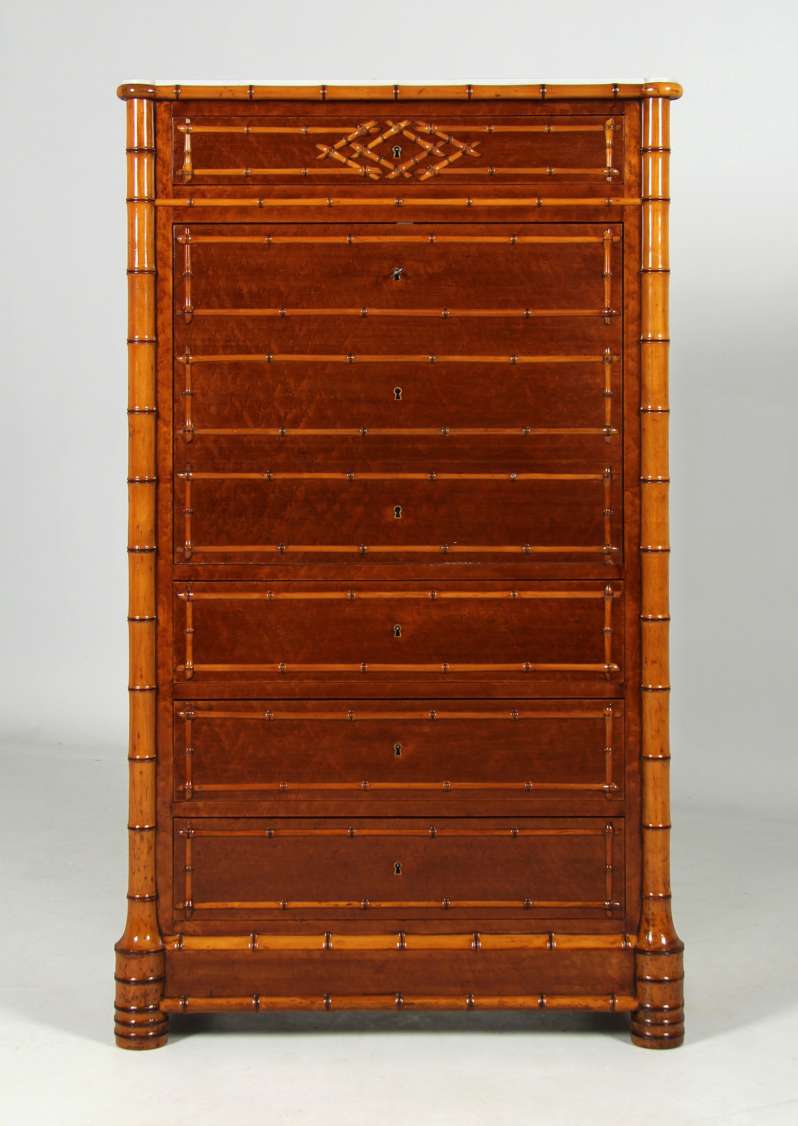
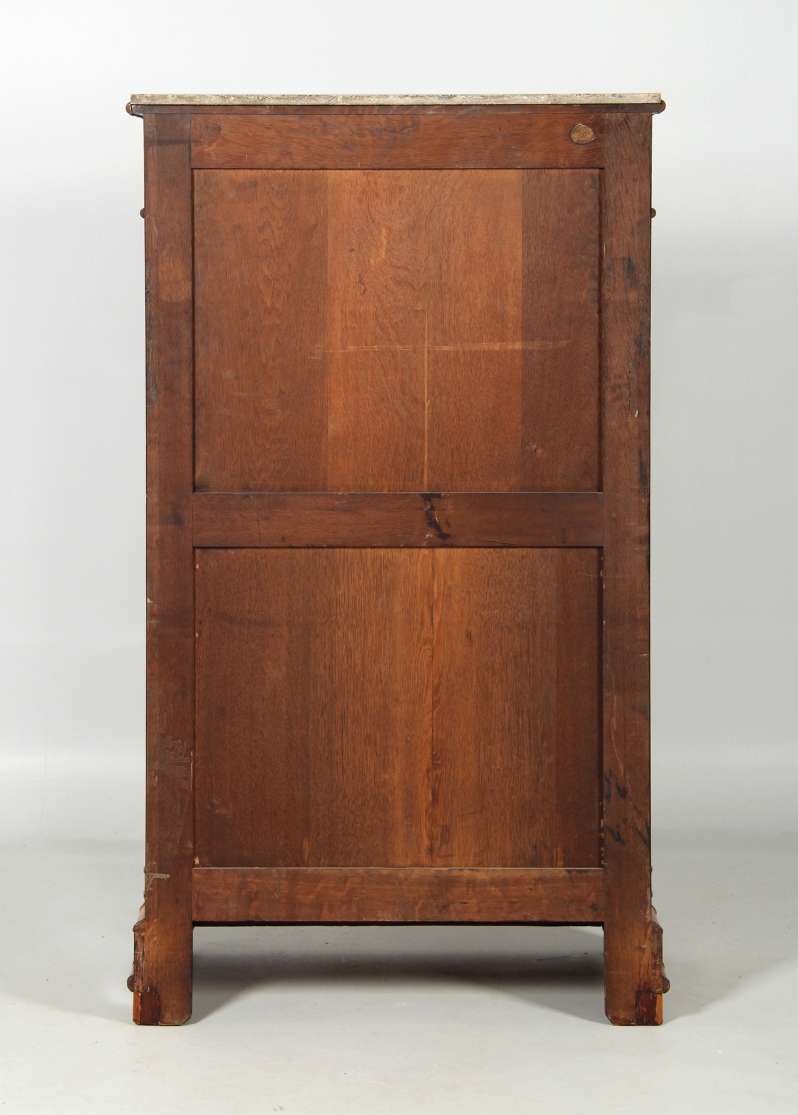
Antique "Faux Bamboo" secretary
Paris
Maple, bird's eye maple
1870s
Dimensions: H x W x D: 140 x 82 x 44 cm
Description:
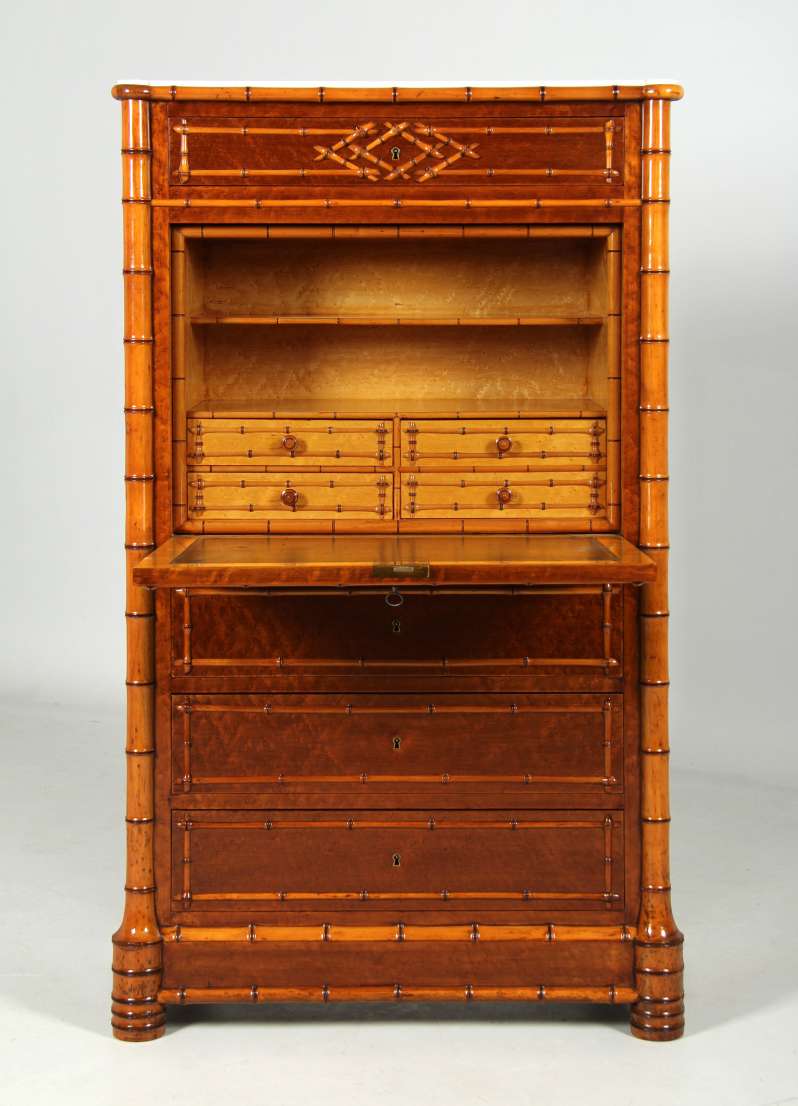
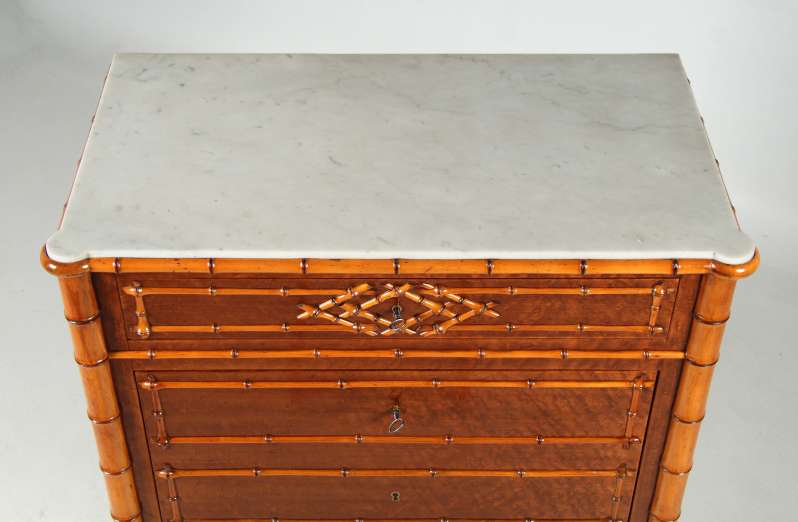
A very unusual, exotic-looking piece of furniture with rich decorations made of imitation bamboo, manufactured using the faux bamboo technique.
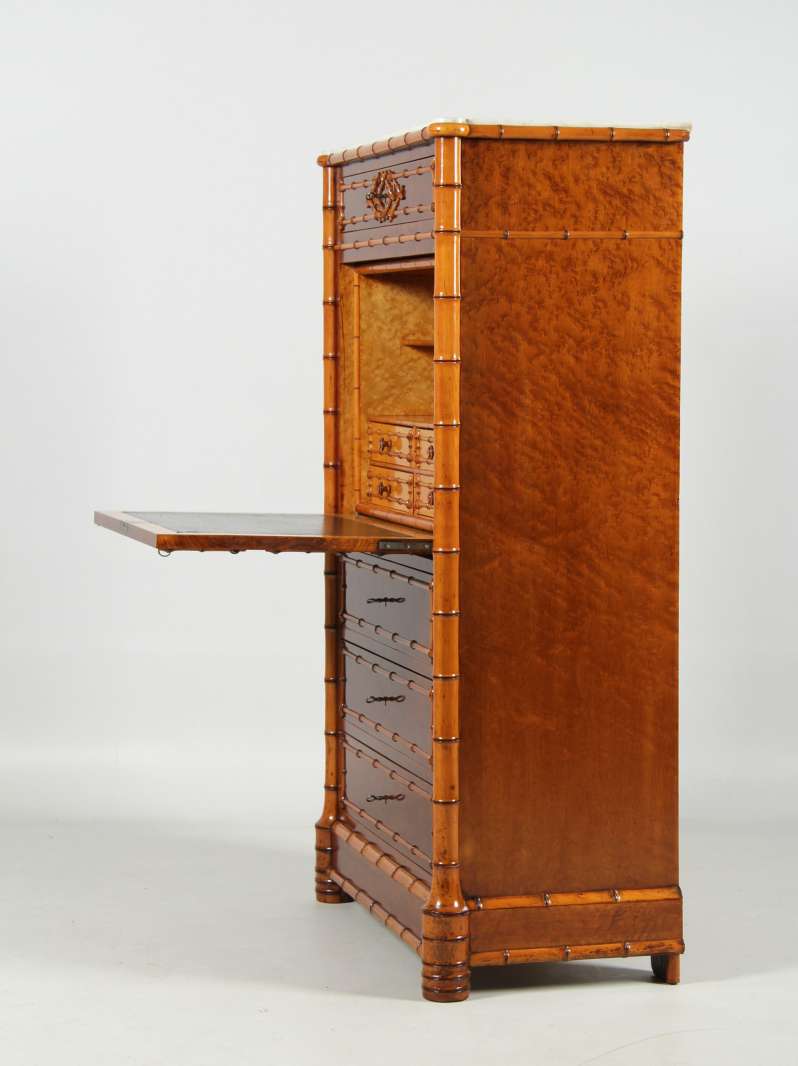
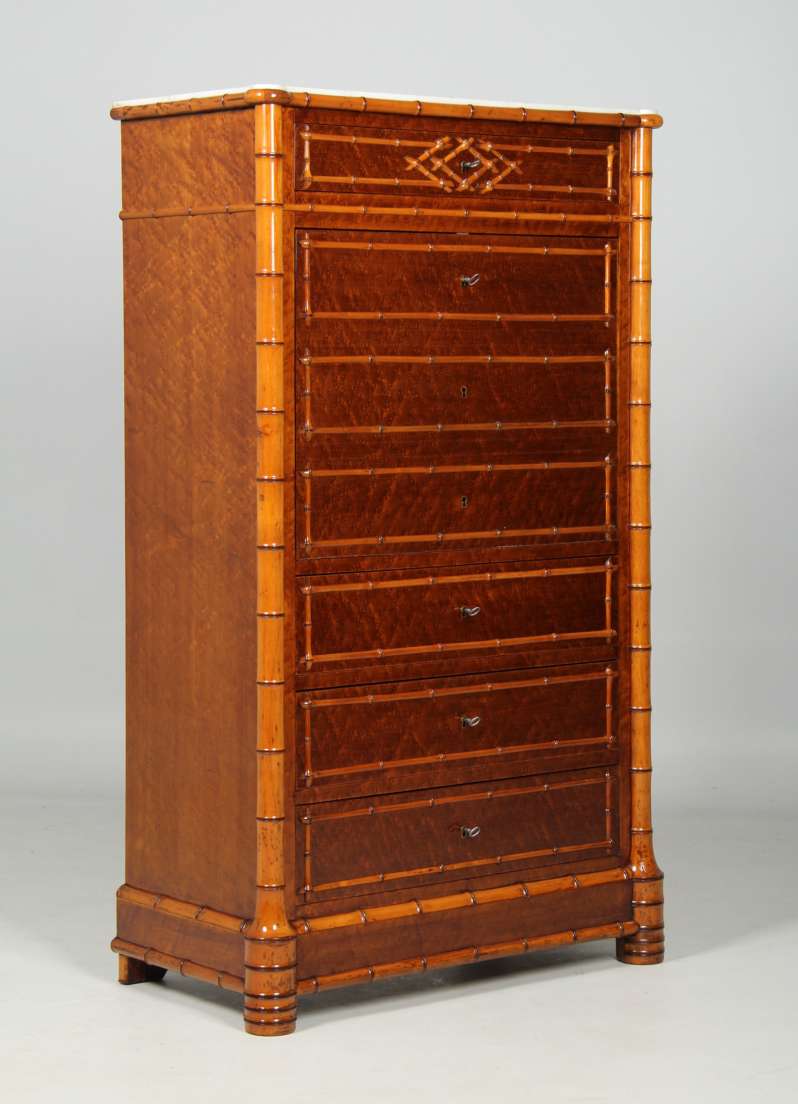
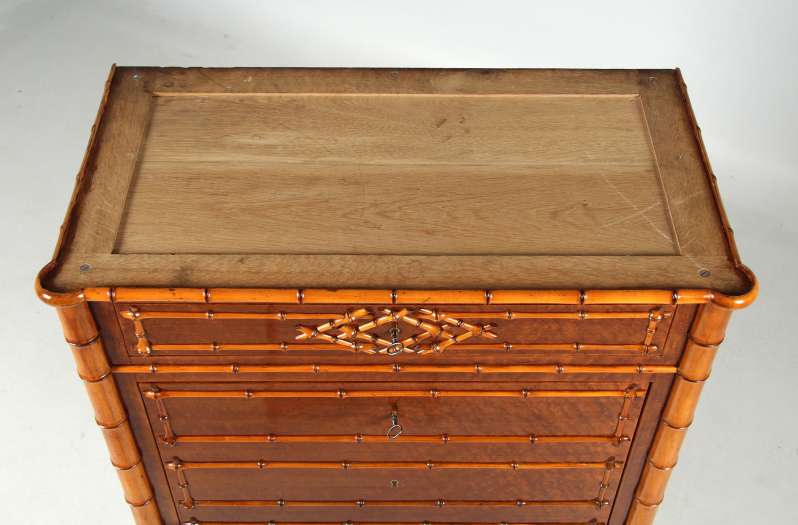
When closed, the piece of furniture takes the form of a chiffonier with a total of seven faux drawer fronts. The basic body is veneered in dark stained bird's eye maple.
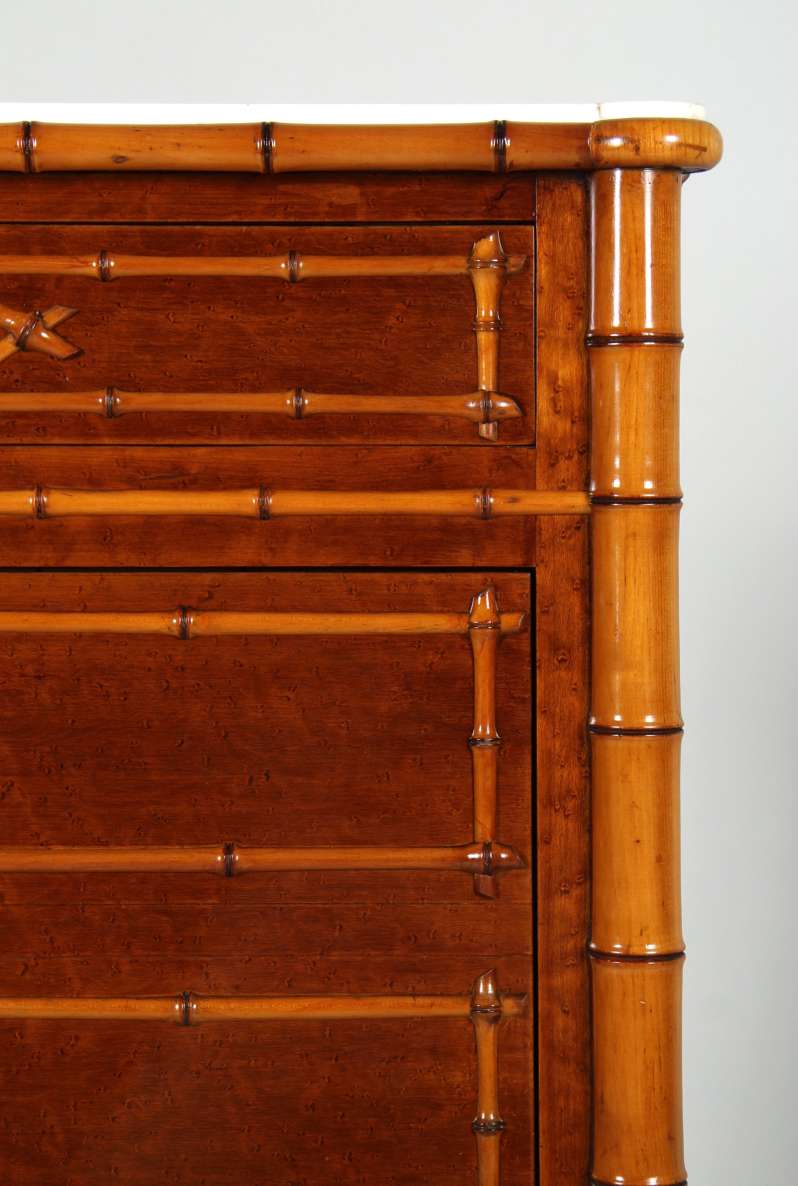
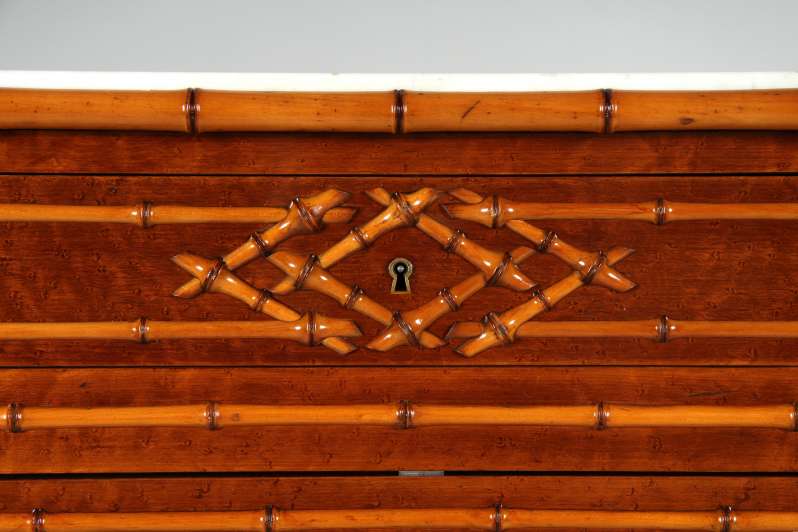
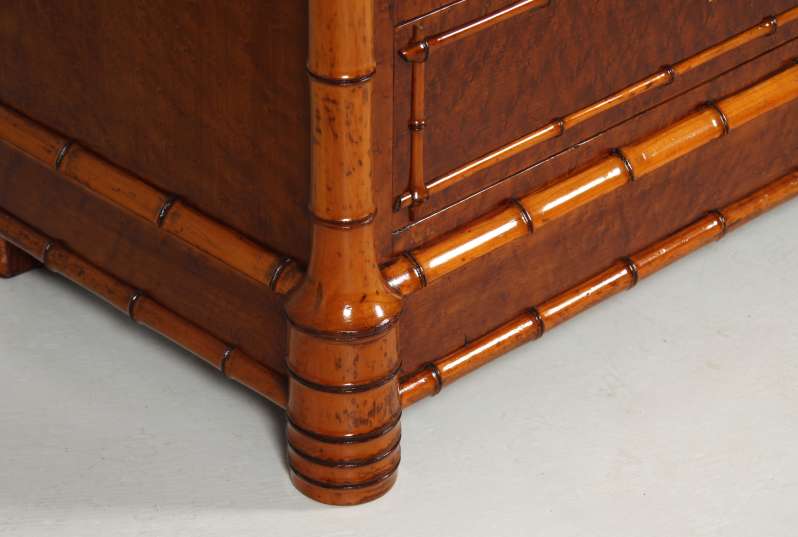
The apparent bamboo elements are made of turned and finely carved maple wood. The numerous knots, links and natural-looking unevenness create the deceptively real illusion of grown bamboo wood.
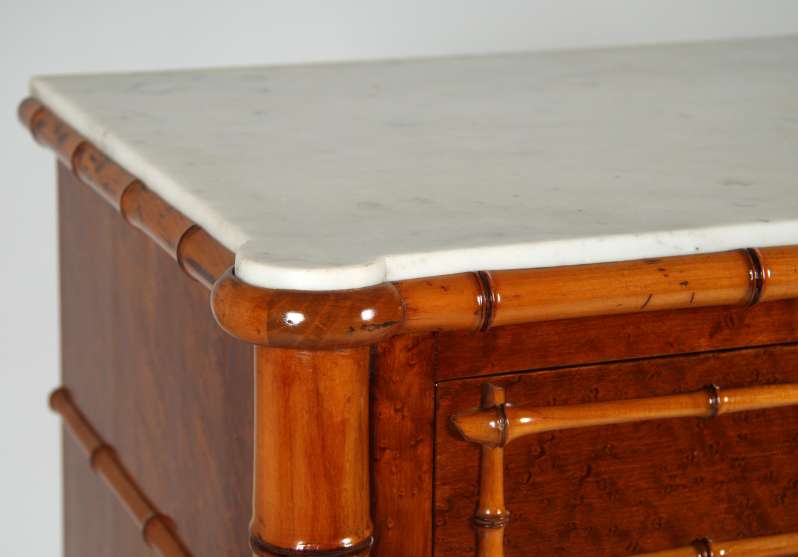
The bamboo trunks, which appear to have grown straight, rise up to the top edge of the furniture on round legs. There, the edging of the top panel echoes the semicircle of the legs, so that the white Carrara marble top, which follows the shape of the carcase, is perfectly framed.
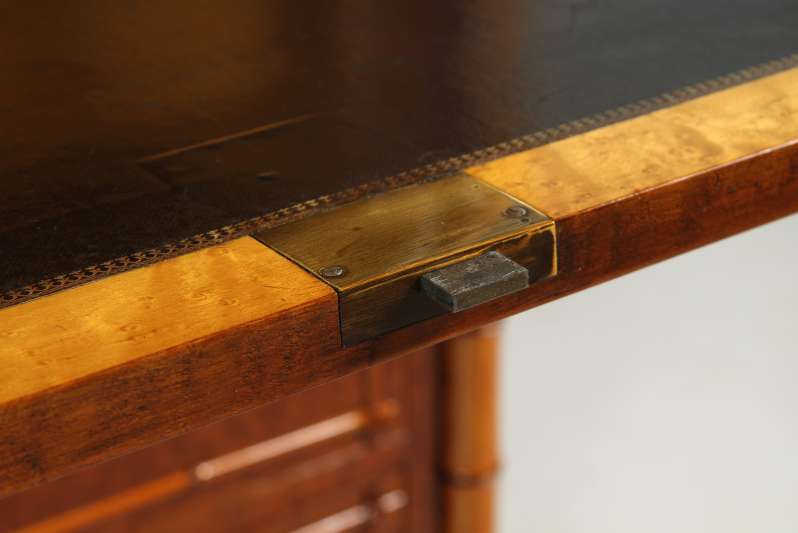
The discreet brass key guides show that the Japanese-style design was not intended to be disturbed by any elaborate fittings.
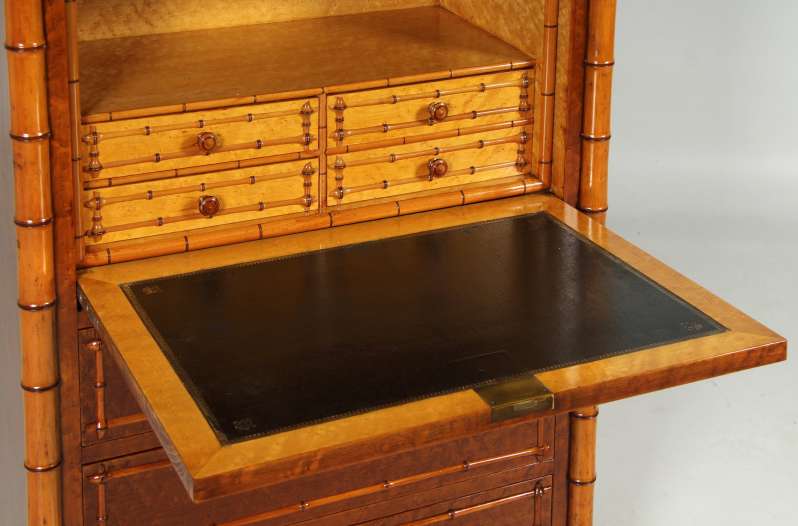
On closer inspection, three of the seven drawer fronts turn out to be writing or work surfaces that can be folded forwards. The inside is covered in black leather, which contrasts effectively with the bird's eye maple, which has been left in its natural light colour rather than stained dark.
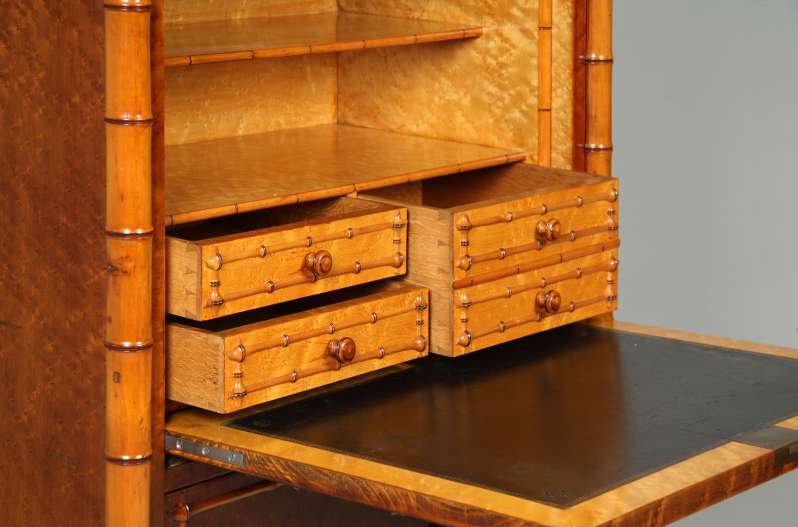
Of the apparently four drawers inside, the two on the right actually turn out to be one large full-length drawer. Above them are two wide open compartments.
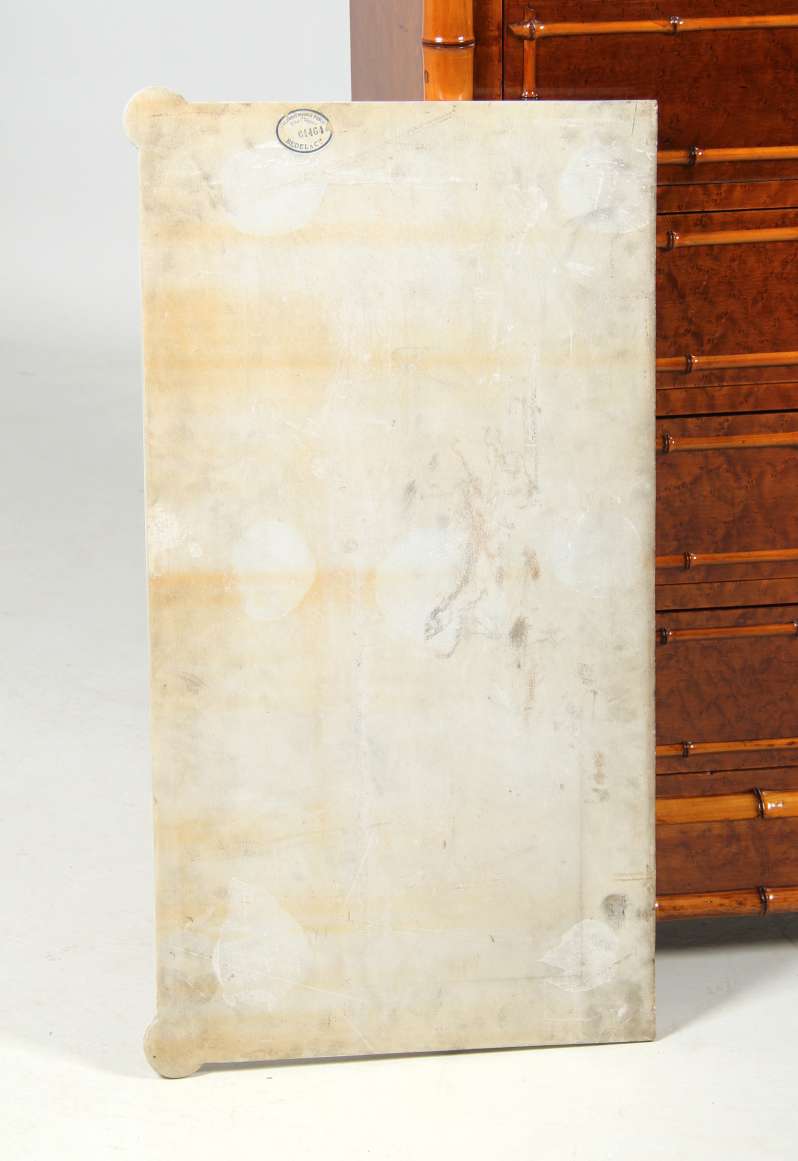
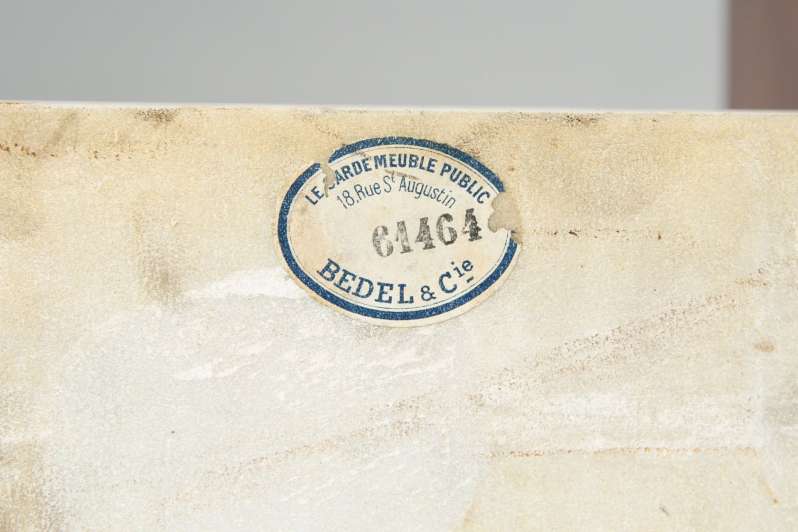
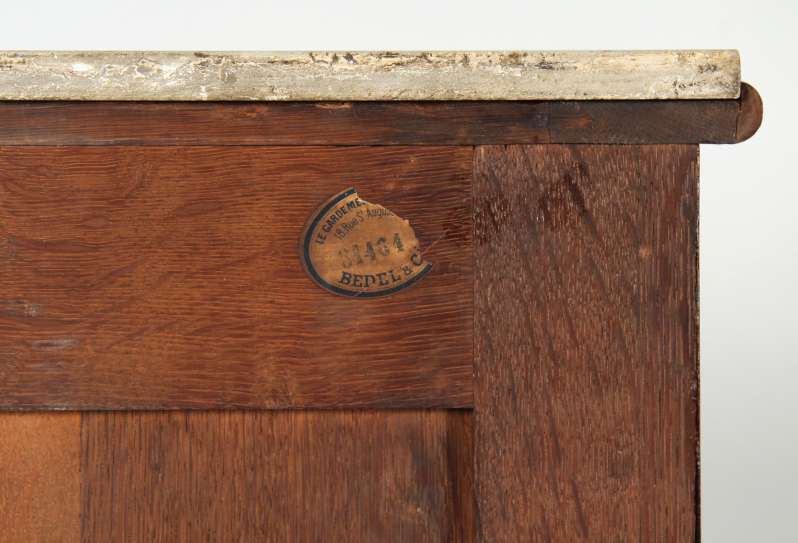
There is an adhesive label from "Bedel & Cie - Le Garde Meuble Public, 18 Rue Saint-Augustin" both on the back of the piece of furniture and on the underside of the marble top. These are historical transport and storage labels from an important Parisian storage and transport company from the late 19th and early 20th century.
The Bedel logistics group still exists today. Interesting facts about the company's history can be found on the company's website.
Worth knowing:
Furniture in the faux-bamboo style is part of the Asian-influenced style trends of historicism, in which the chinoiserie and Japanese lacquer work, which were already popular in the 18th century, were taken up again.
After Japan, which until then had been quite culturally reserved towards the western world, took part in the Exposition Universelle de 1867 in Paris, a veritable Japonisme developed in Europe. Furniture and art objects inspired by the Far East were created at that time in important European centres such as Paris, Vienna and Venice.
You can find out more about this interesting style, which receives very little attention in the German art and antiques trade, in the blog and in the reference book Rainer Haaff - Prachtvolle Stilmöbel, from page 568.
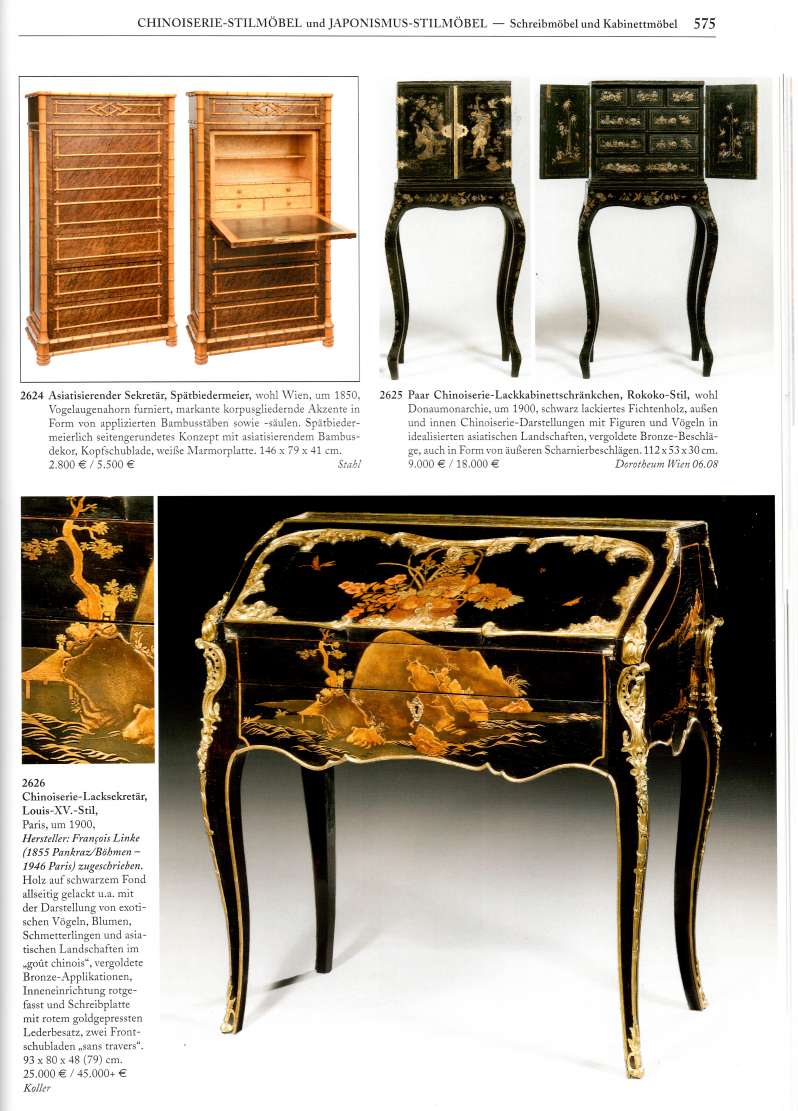
On page 575 of the book, you can see an identical secretary to the one offered here. The secretary shown in the book is labelled "Vienna, around 1850". However, my research suggests that both pieces of furniture, which were obviously made in the same workshop, originate from Paris, from around 1870.
Condition:
Flawless, restored condition suitable for everyday use.
Article found under: Secretaries
Video Faux Bamboo secretary
Also interesting

Antique writing cabinet with leather fittings and thread inlays
Austria
Cherry and others
Biedermeier around 1830
Biedermeier secretary desk
Rhineland
Walnut, etc.
Biedermeier, c. 1835
Charles X Mantel Clock "Astronomy"
France
Bronze
Charles X around 1830