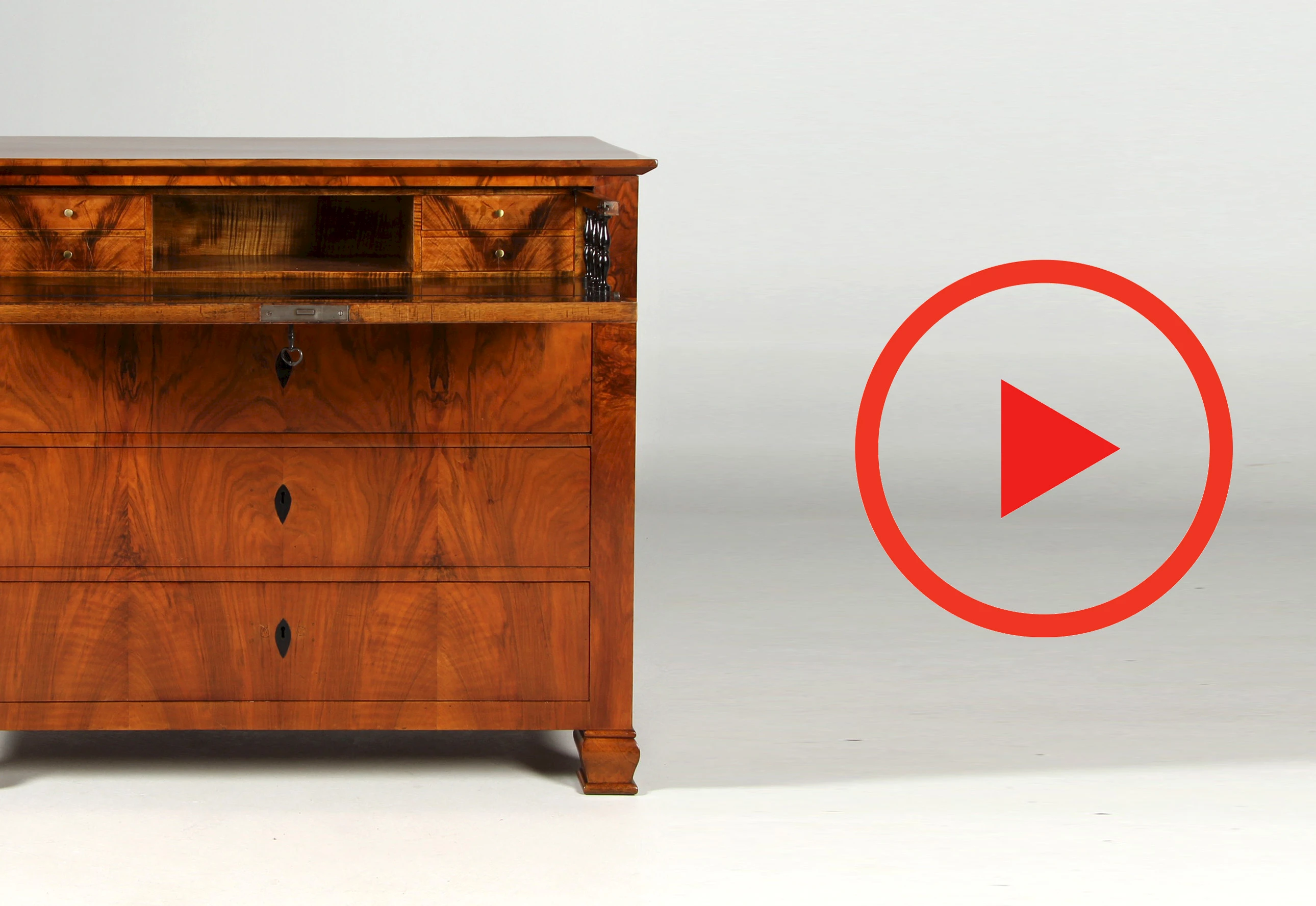
Video: Biedermeier writing chest in walnut


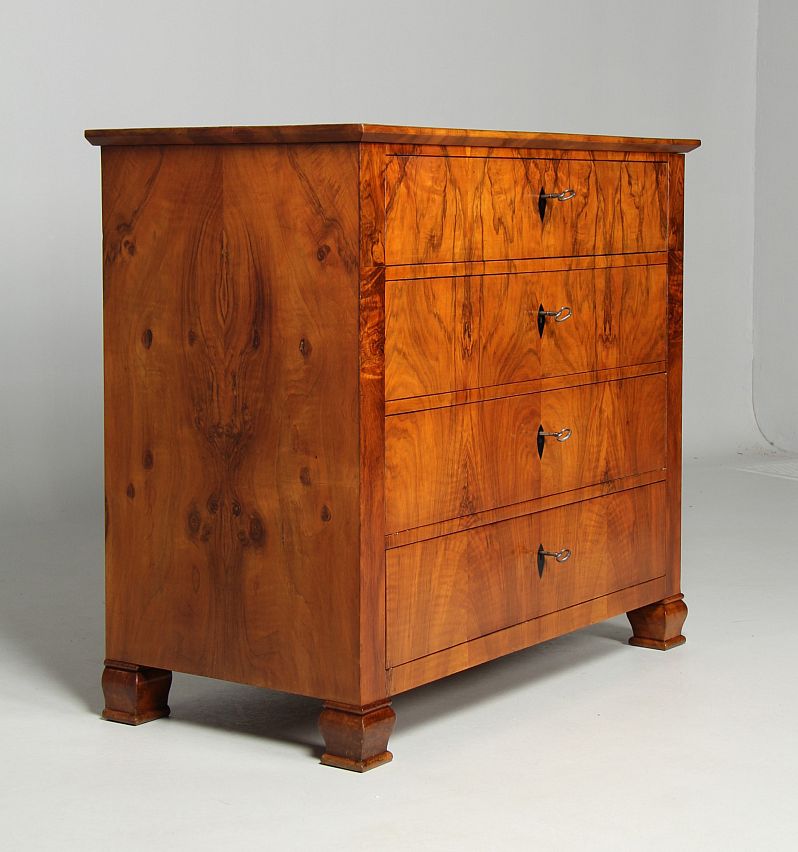
Biedermeier writing chest
Southern Germany
Walnut
c. 1830
Dimensions: H x W x D: 97 x 109 x 57 cm
Description:
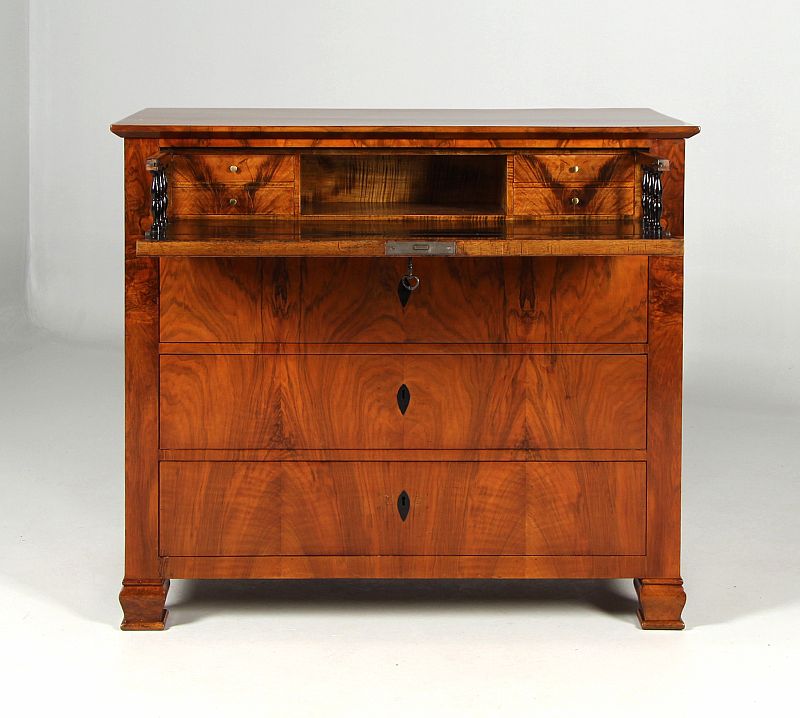
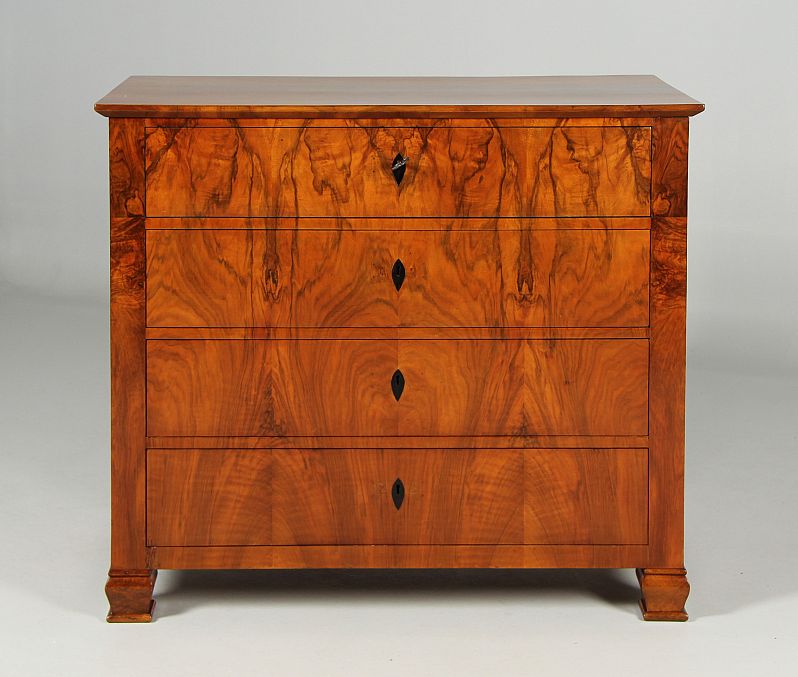
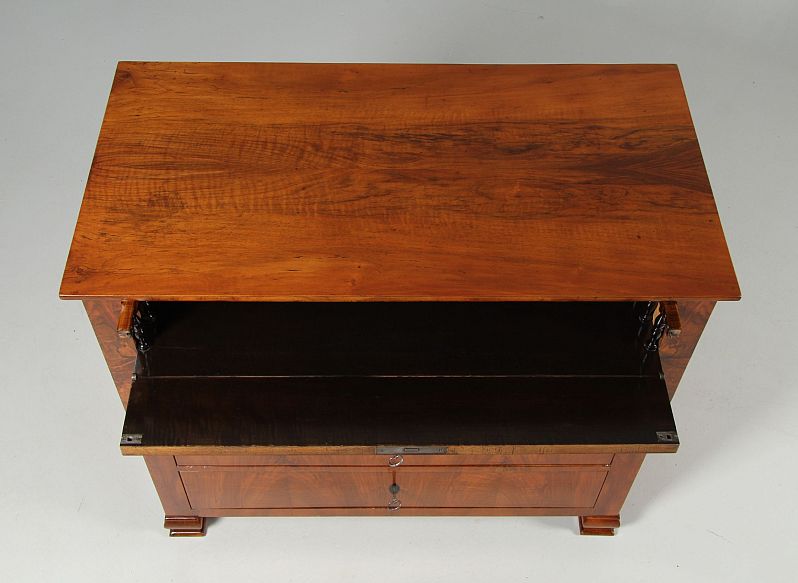
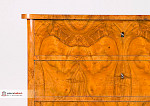
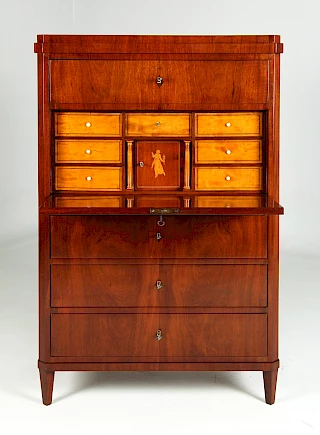
The unusual, curved legs, which are mounted on plinths at the base and are flush with the pilasters at the top, support the four-drawer body.
The grain pattern of the walnut veneer has been carefully laid in a mirrored pattern and runs continuously from the plinth to beneath the top panel. The teardrop-shaped keystones provide a striking contrast whilst also emphasising the piece’s axis of symmetry.
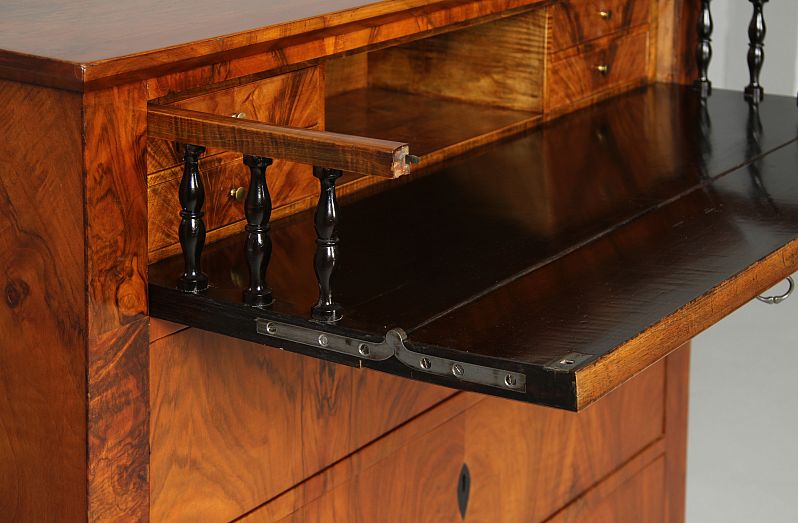
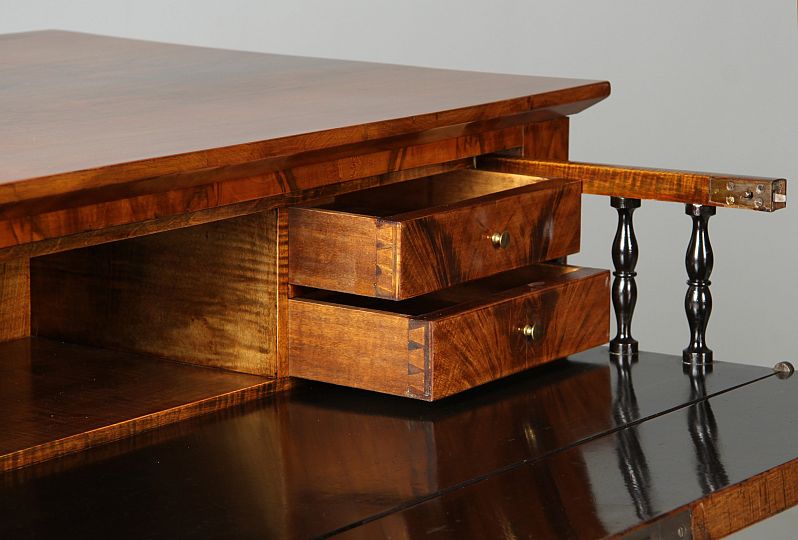
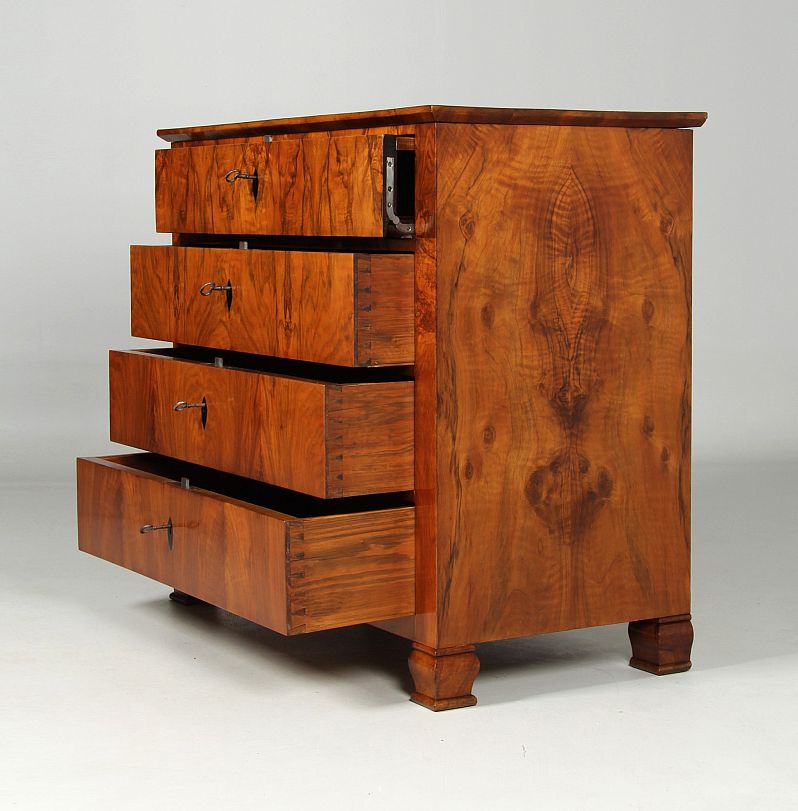
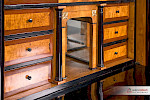
The front of the top drawer folds down to create a small writing and work area. This is fitted with four drawers at the rear and a central open compartment. The ebonised writing surface is framed on either side by balusters that have also been blackened.
Note:
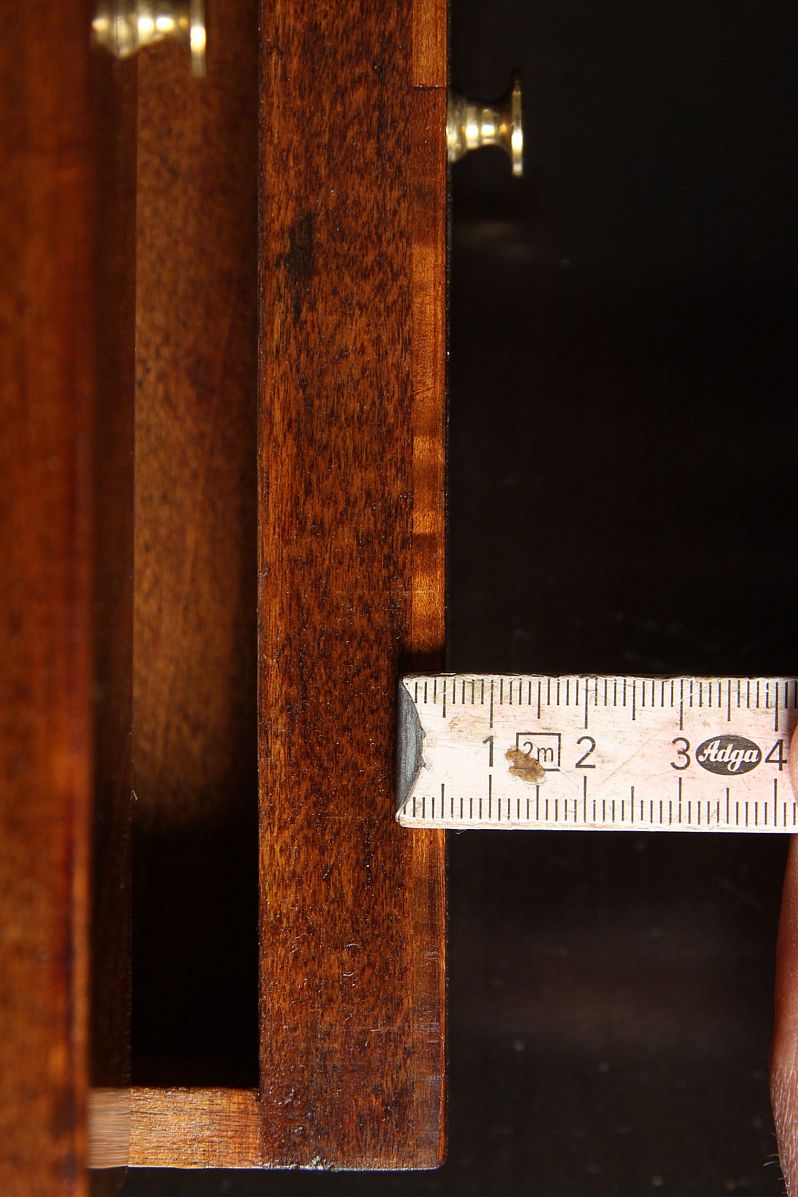
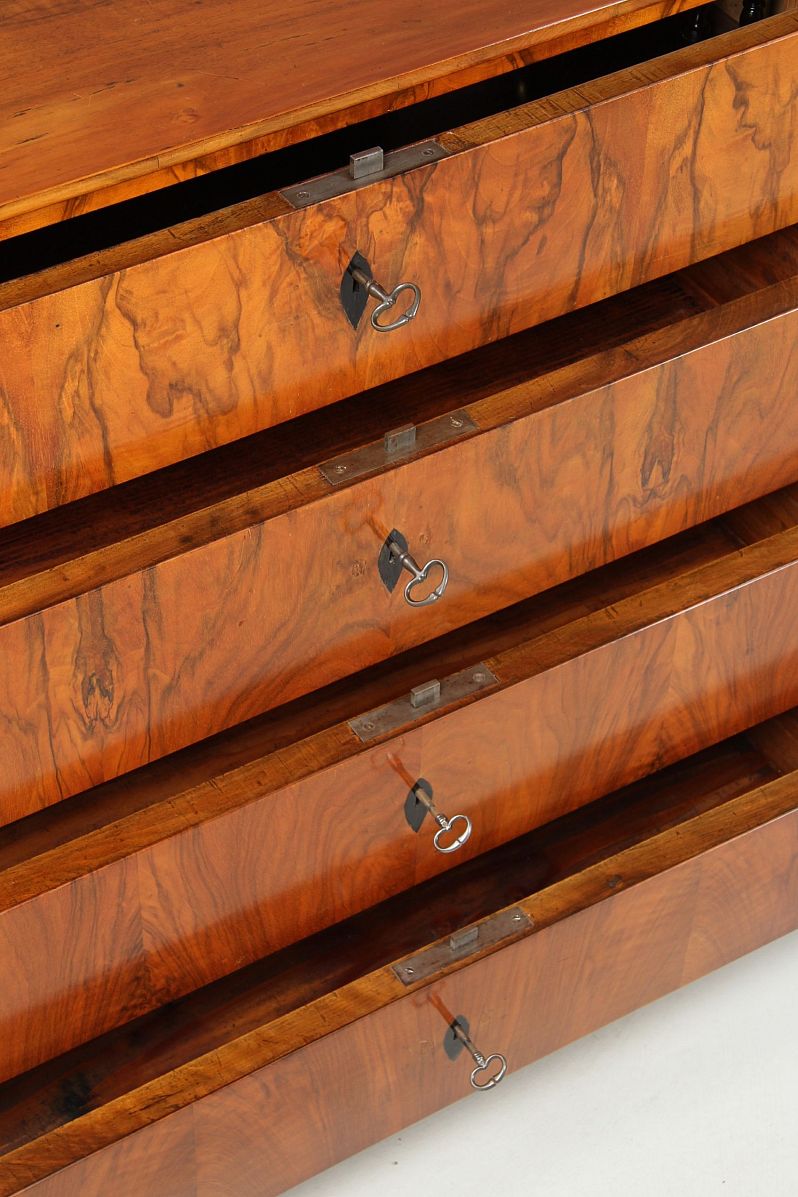
This piece of furniture is characterised by outstanding craftsmanship. As can be seen in the detailed photographs, the corner joints of the drawers are cleanly finished and fit together perfectly.
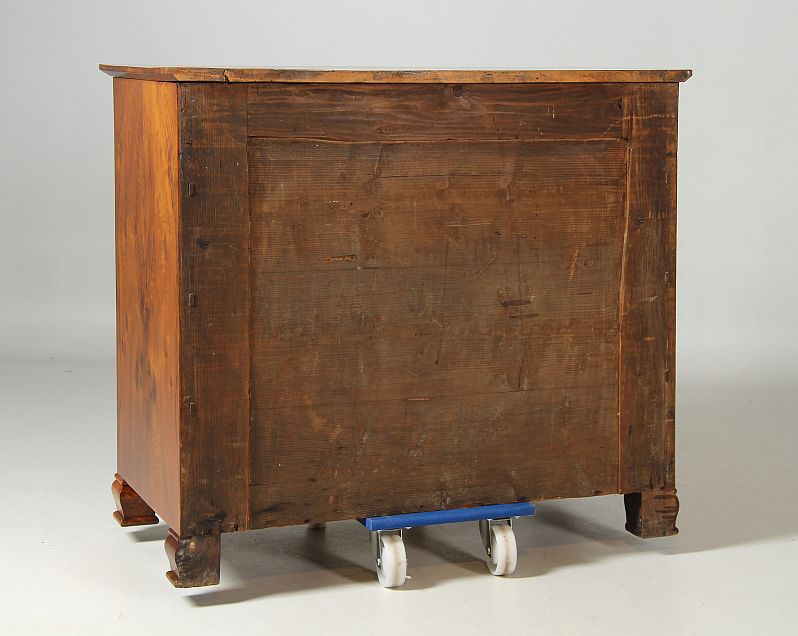
You can also see an interesting structural detail when looking at the photograph showing the back panel of the piece: on the left and right, the ends of three guide rails each, inserted from the rear, are visible. These are inserted into the sides of the piece from the rear via a dovetail joint. This is a typical construction method of the early 19th century, ensuring an extremely stable and durable drawer running mechanism.
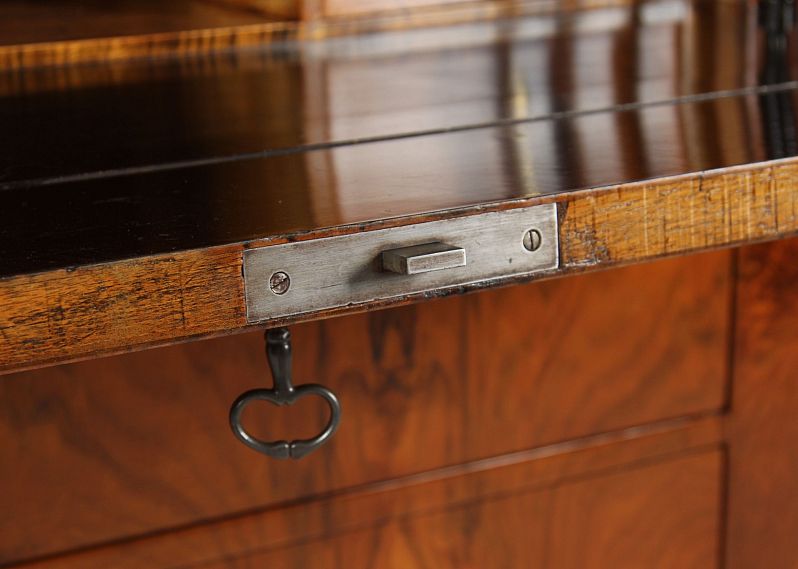
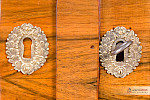
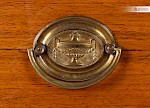
The iron locks, typical of the period, as well as the fittings on the hinged top drawer front, are further evidence of meticulous and high-quality craftsmanship. A standard of craftsmanship that will endure not only for us, but also for many generations to come.
Interesting facts:
The writing chest combines two functions in a single piece of furniture: it serves both as a chest of drawers for storage and as a compact writing desk.
During the Biedermeier period, such small writing desks enjoyed great popularity. With the growing importance of private correspondence and domestic interior design, they became a valued part of middle-class furnishings. Their combination of practical utility, space-saving design and decorative appearance is particularly in keeping with the understanding of furniture during that era.
Condition:
Restored, with a shellac-polished finish. Fully usable and in working order.
Price: €3,950
Comparable pieces of furniture can be found in the specialist literature:
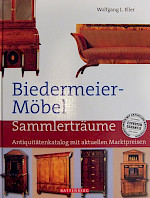
Wolfgang Eller - Biedermeier-Möbel from p. 183
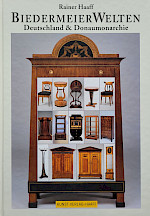
Rainer Haaff - BiedermeierWelten - Deutschland & Donaumonarchie - Neuauflage 2024 from p. 222
Article found under: Chests of drawers
Add to shopping cartVideo: Biedermeier writing chest in walnut
Also interesting
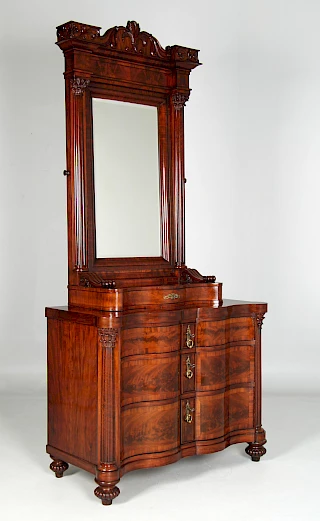
Chest of drawers with mirror
Northern Germany
Mahogany
Mid 19th century
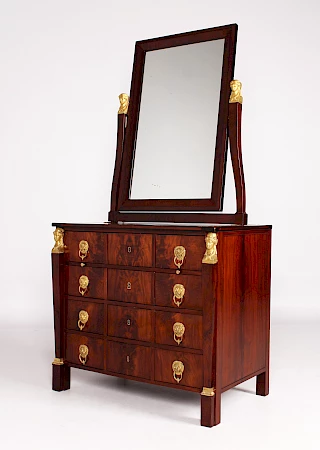
Antique dressing table - stamped Chapuis
Brussels
Mahogany
Empire around 1810
Small Flensburg secretary
Schleswig-Holstein
Mahogany and others
Biedermeier around 1815