Video: Directoire-style secretary desk
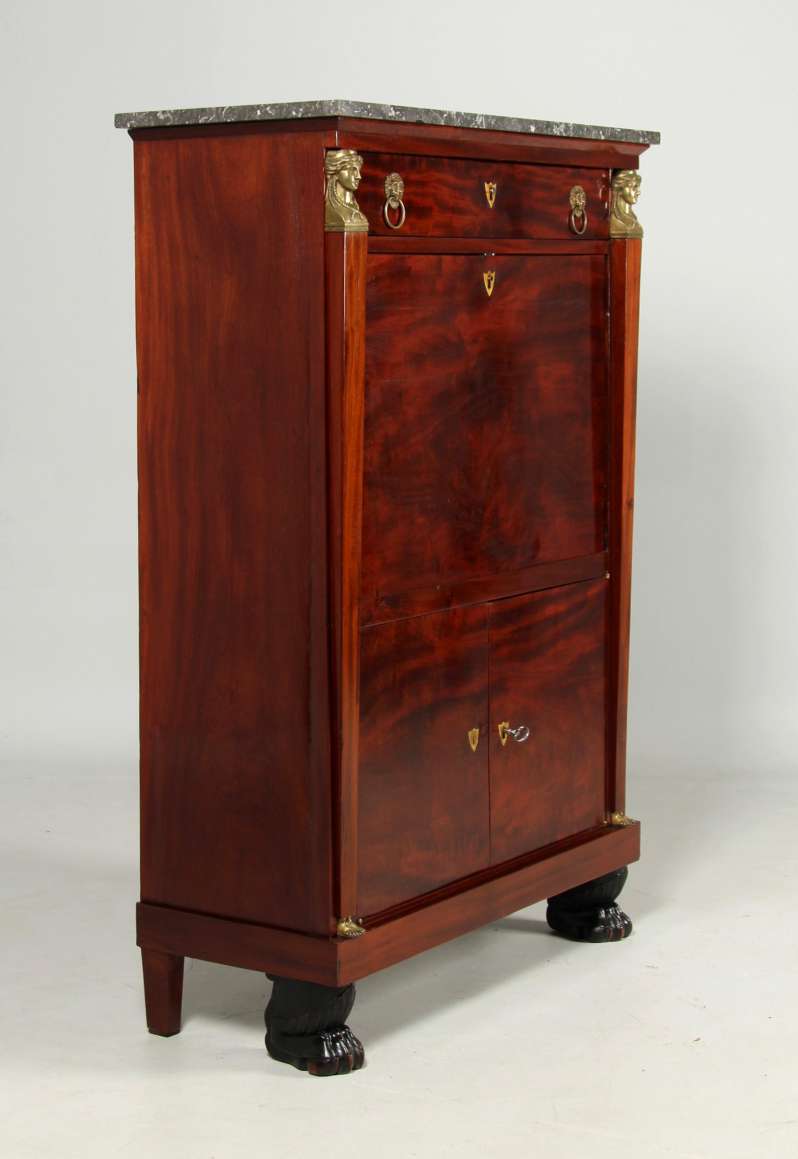
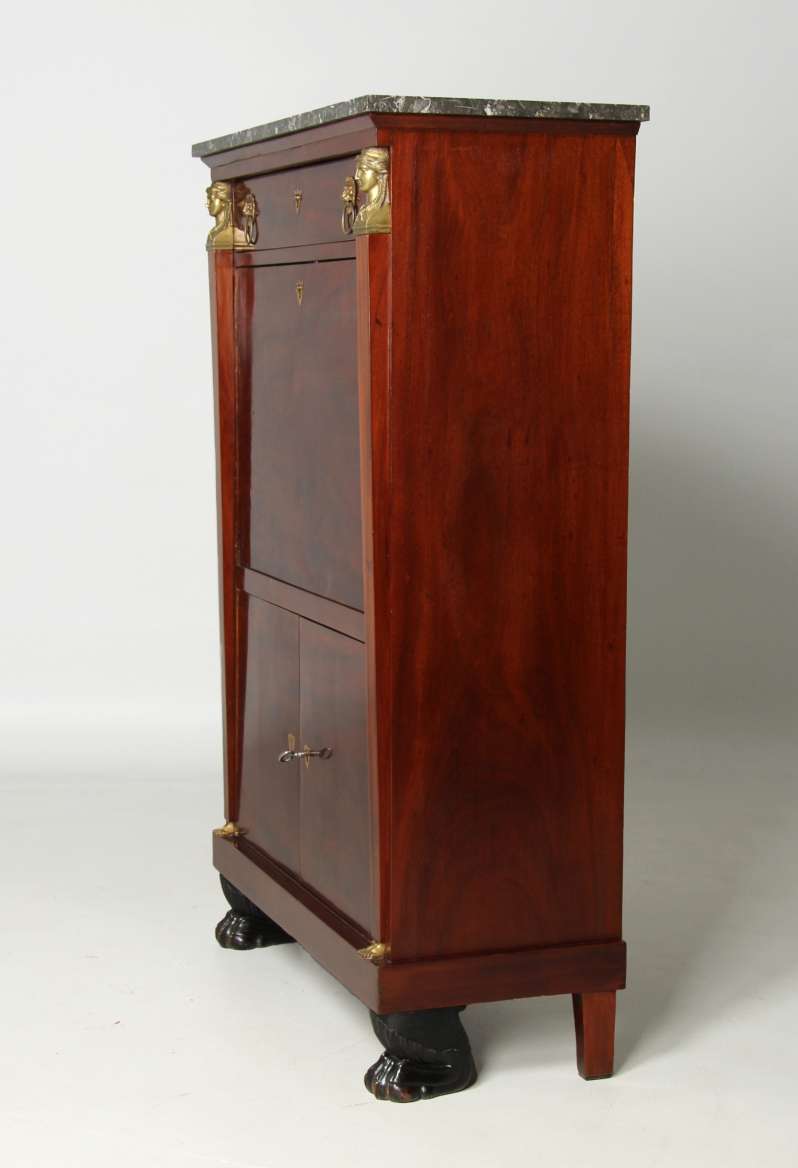
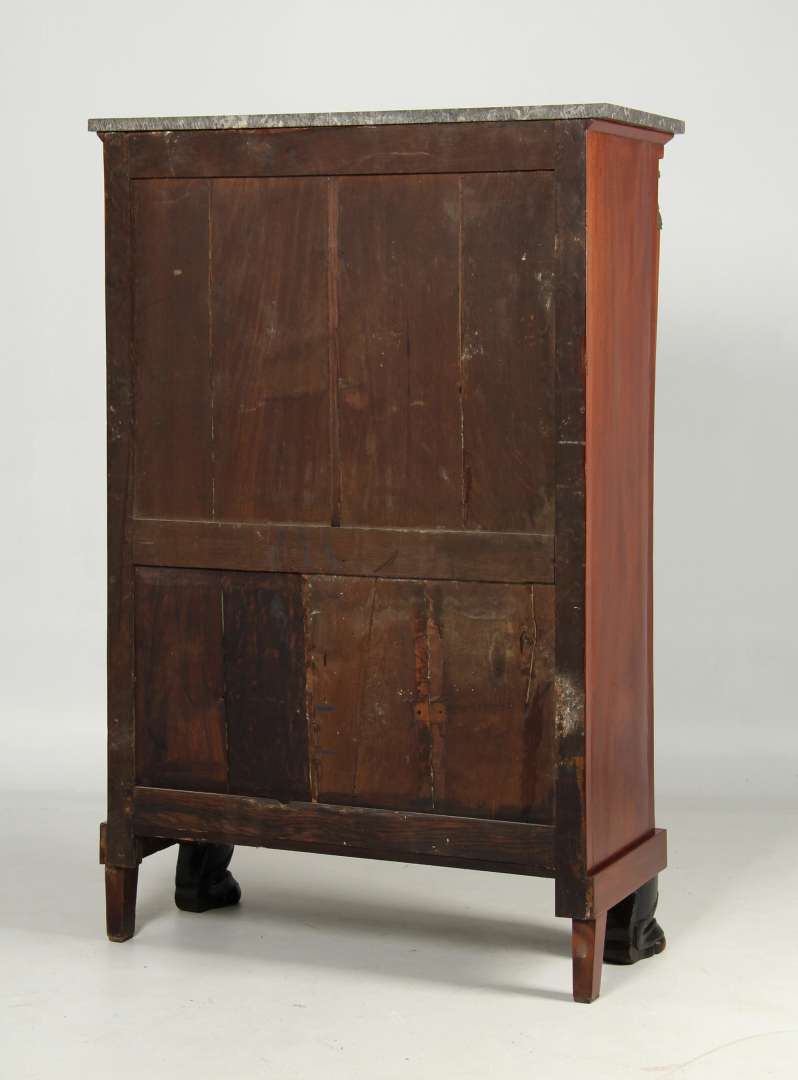
Folding-top secretary desk with caryatids
France
Mahogany
early 19th century
Dimensions: H x W x D: 145 x 96 x 43 cm
Description:
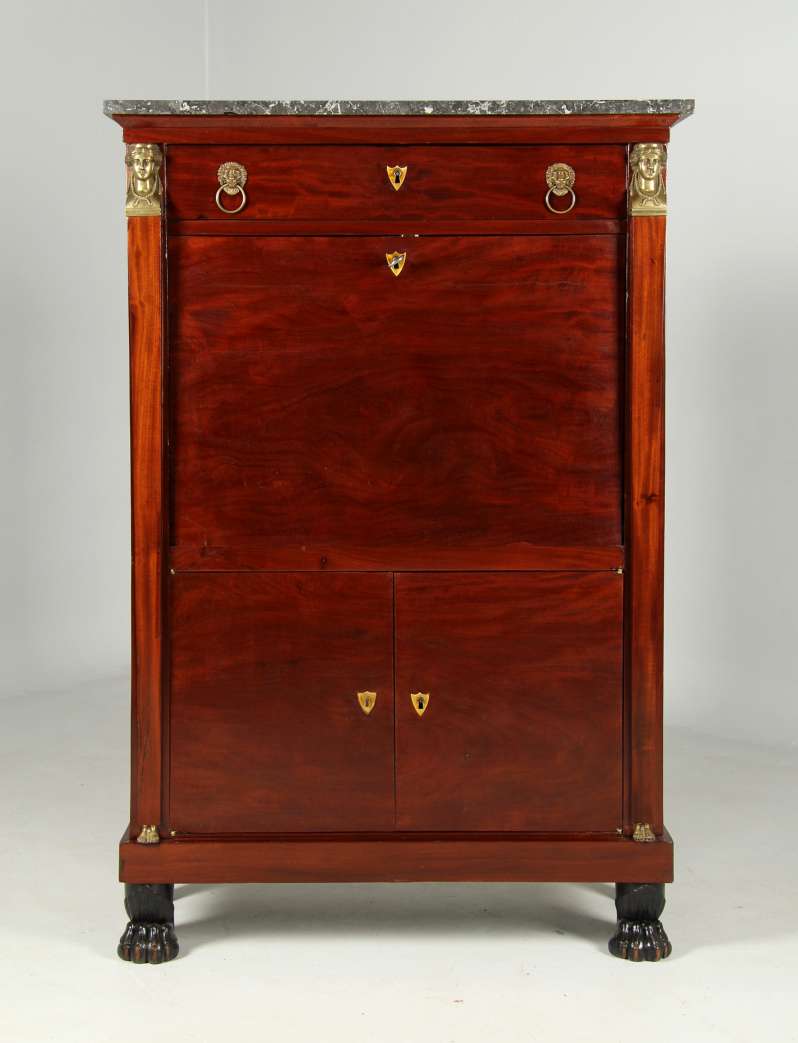
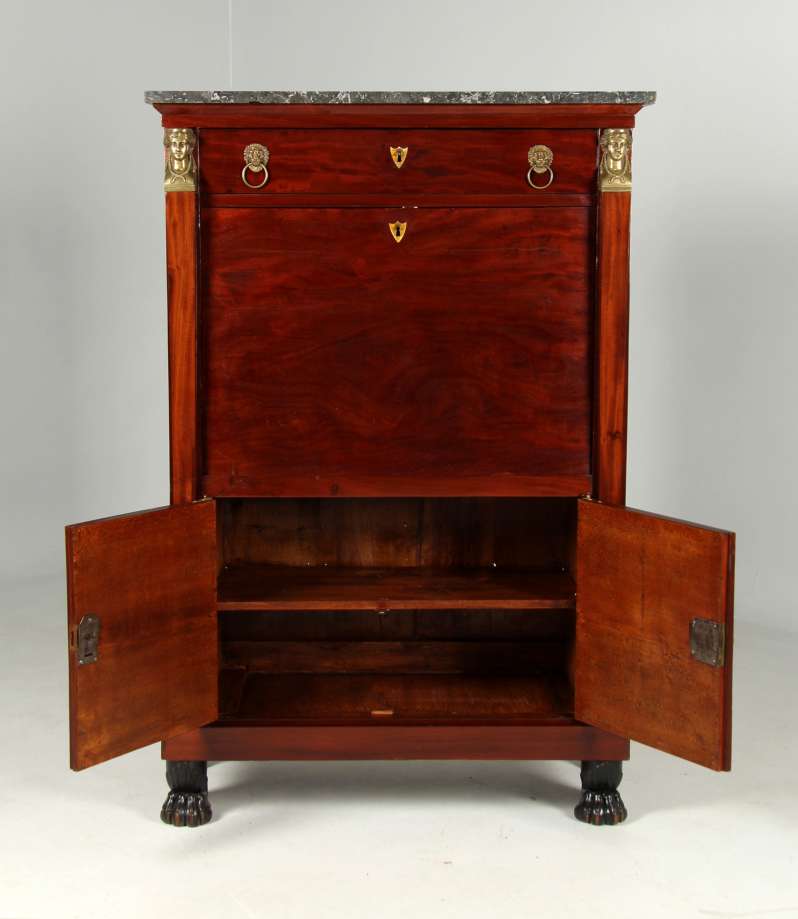
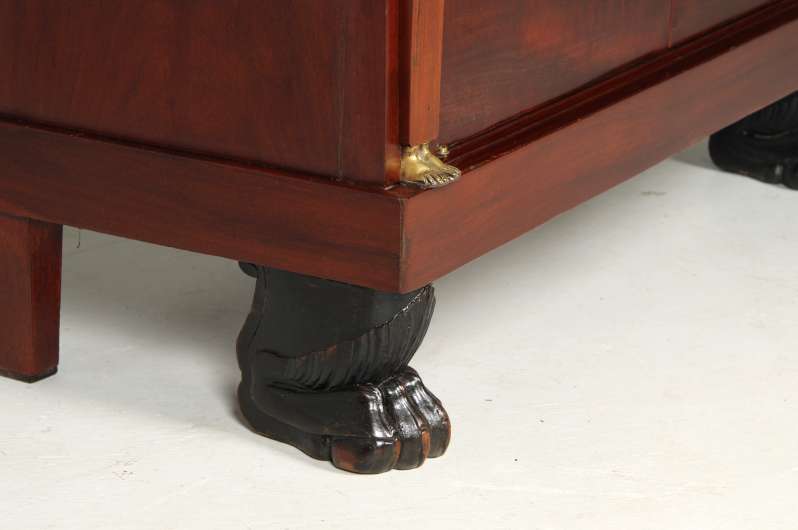
A writing desk with mahogany veneer, standing on claw feet at the front and pointed feet at the rear.
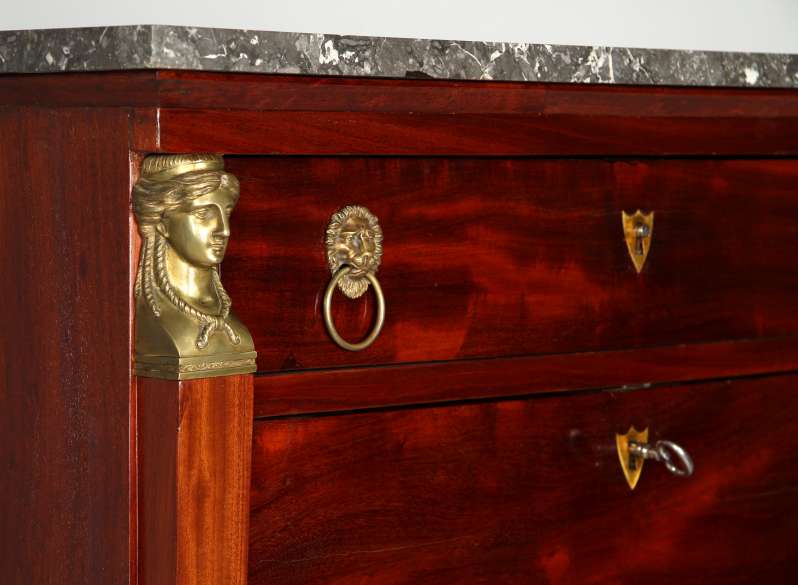
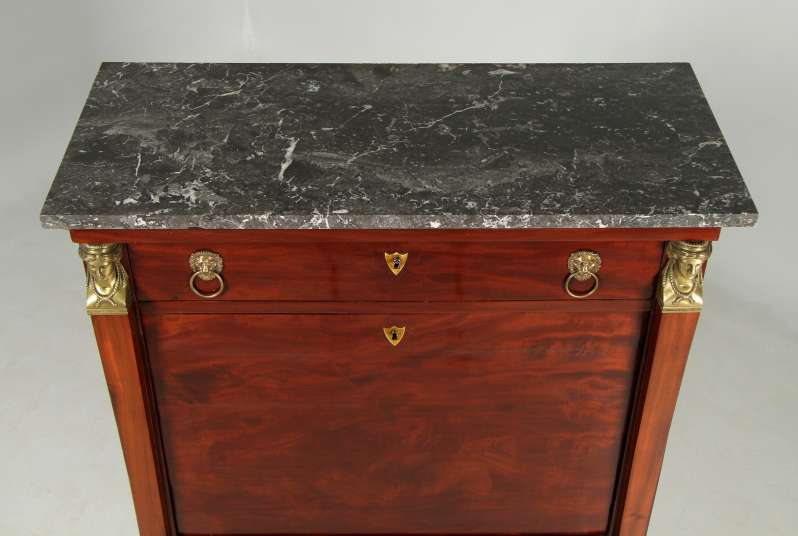
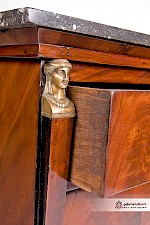
Above the plinth are two doors, above which is the secretary’s flap and, at the very top, a wide drawer. The front of the piece is flanked by pilasters tapering downwards, topped with caryatids.
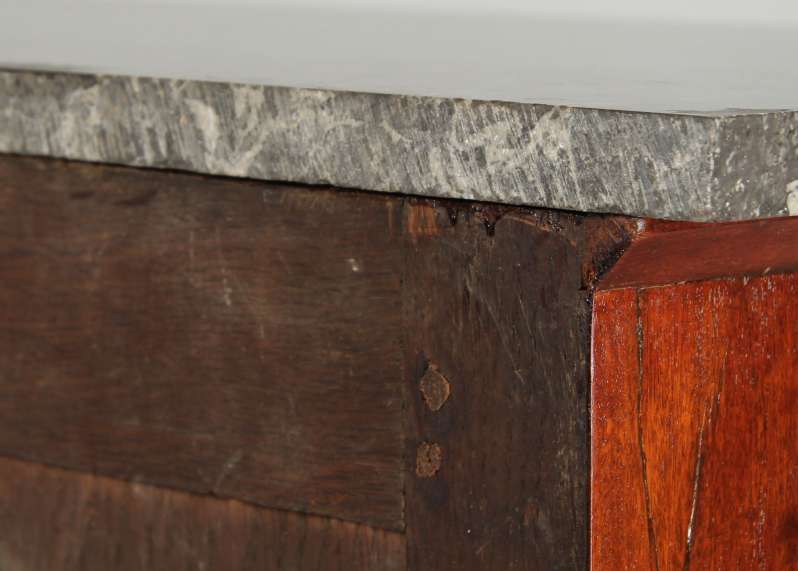
The top of the piece is crowned by a loose-fitting top made of Belgian granite.
Typical of the ‘Directoire’ period – and this distinguishes this secretary desk from similar pieces from the Empire period – is the large-scale, transverse veneer, which, unlike in later pieces, is not yet laid in a mirror image pattern. Please take particular note of the veneer pattern on the secretary’s flap: it consists of a single large sheet of veneer laid without any joints.
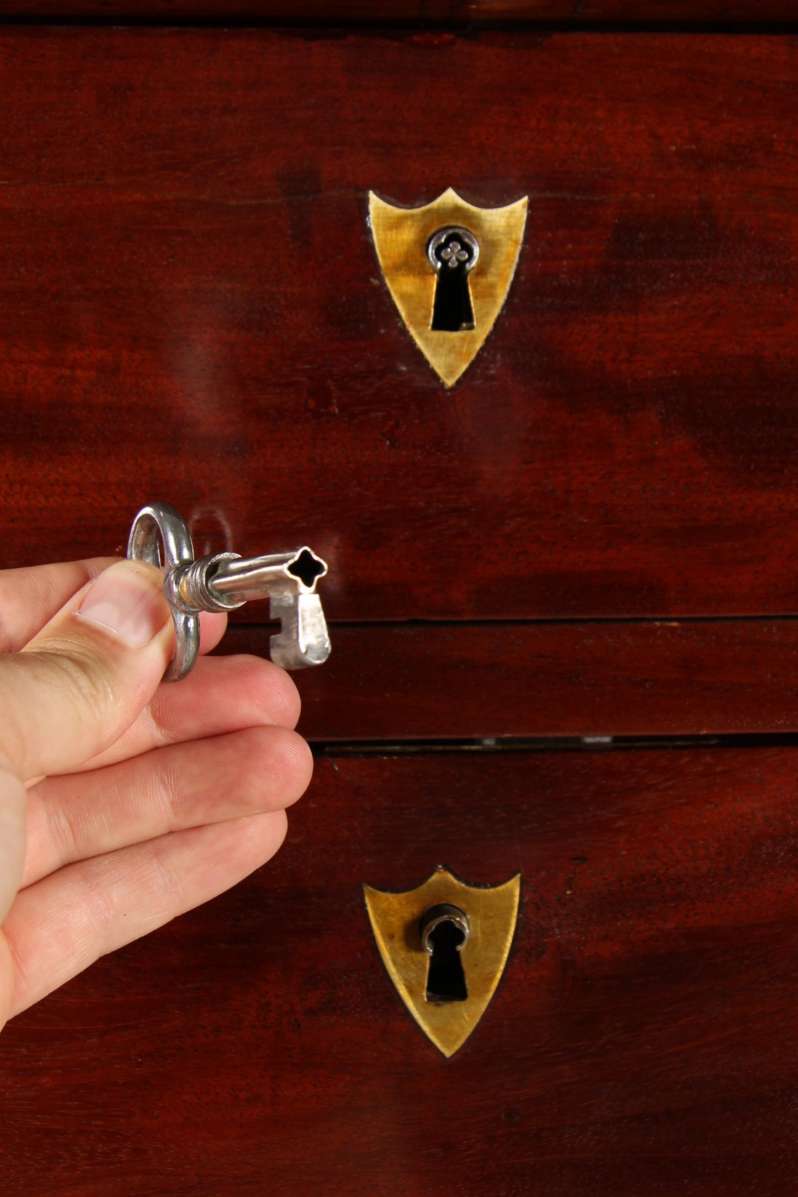
The understated mahogany grain is subtly accented by the inlaid coat-of-arms-shaped key escutcheons and the lion’s-head pull rings.
The locks on the drawer and door feature a clover-shaped bolt and a matching original key.
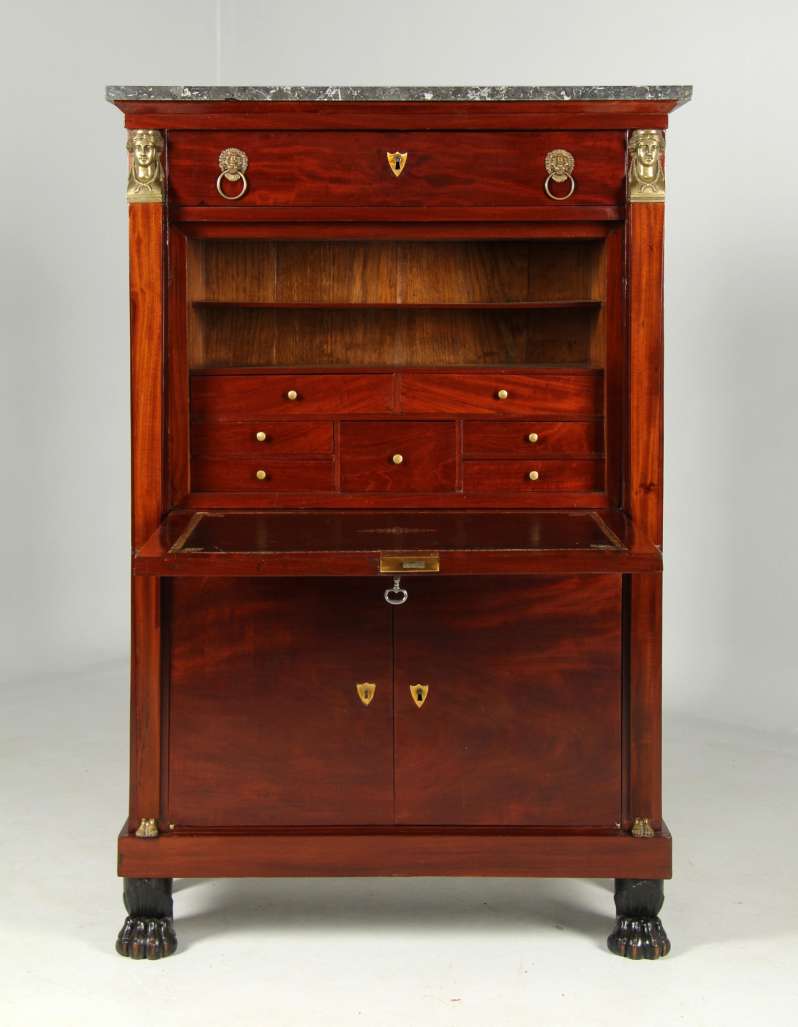
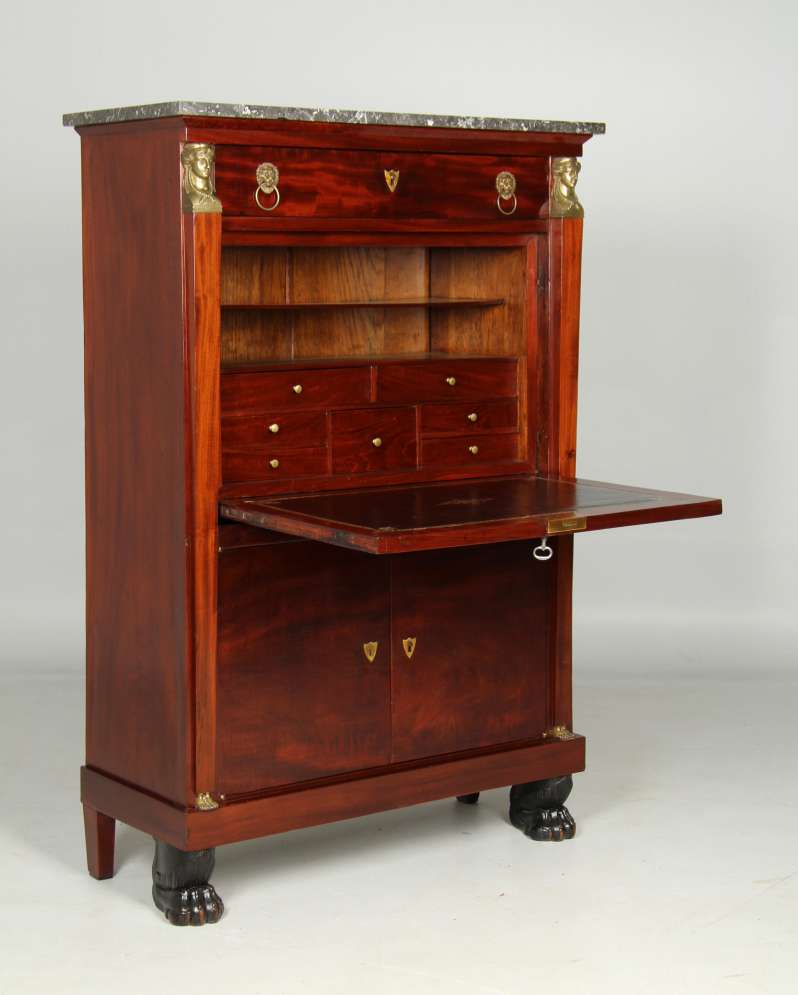
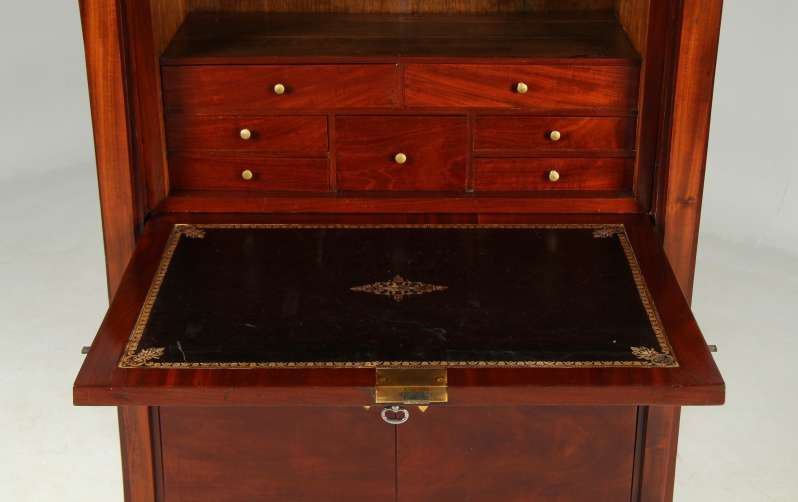
When we open the writing flap, we see that the lock fitted here not only secures the flap at the top, but that there are additional bolts which lock the writing flap to the left and right. This can be clearly seen in some of the photographs.
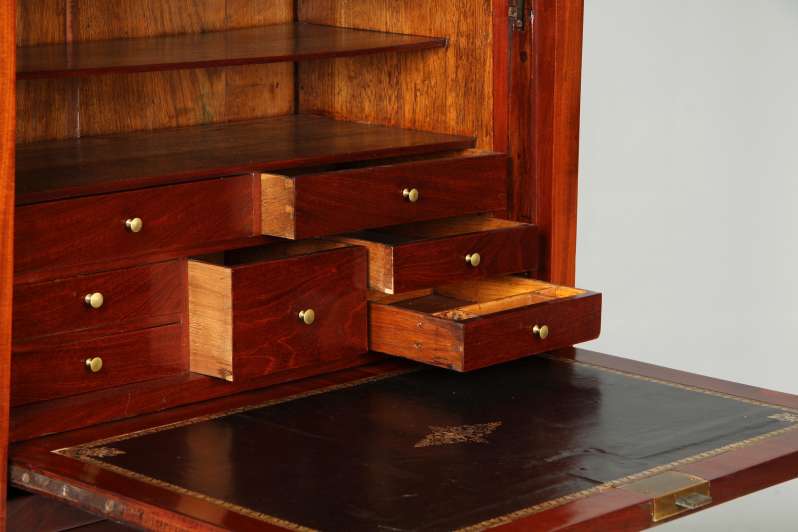
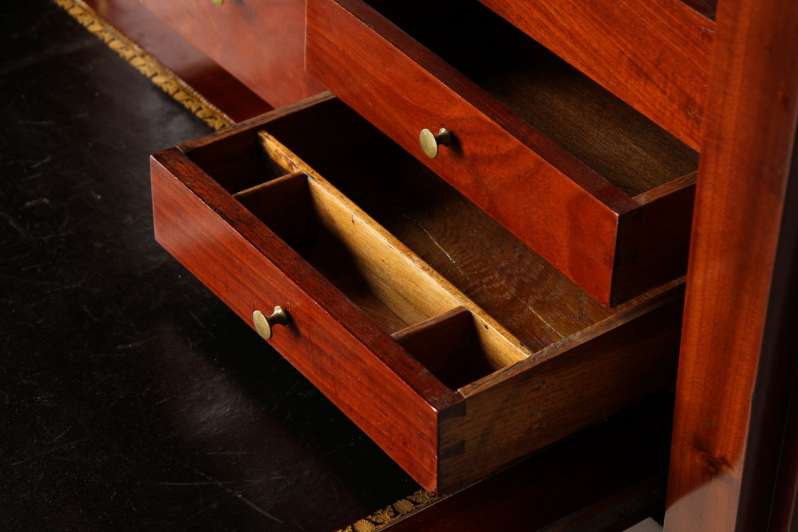
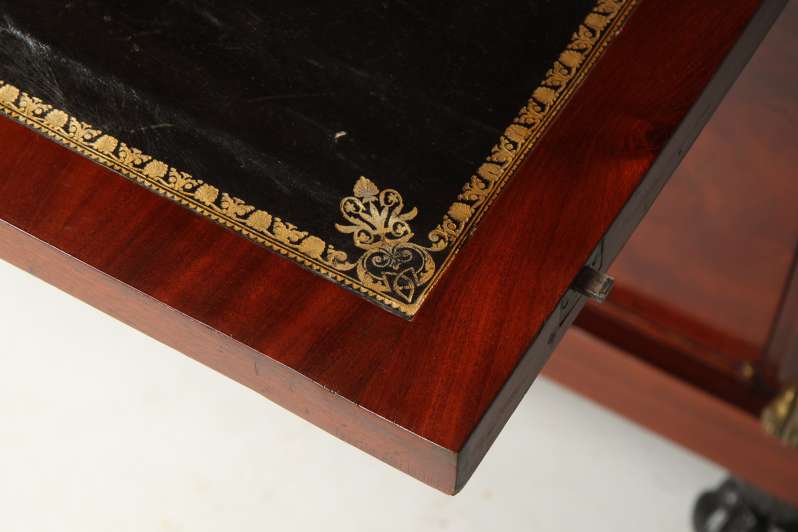
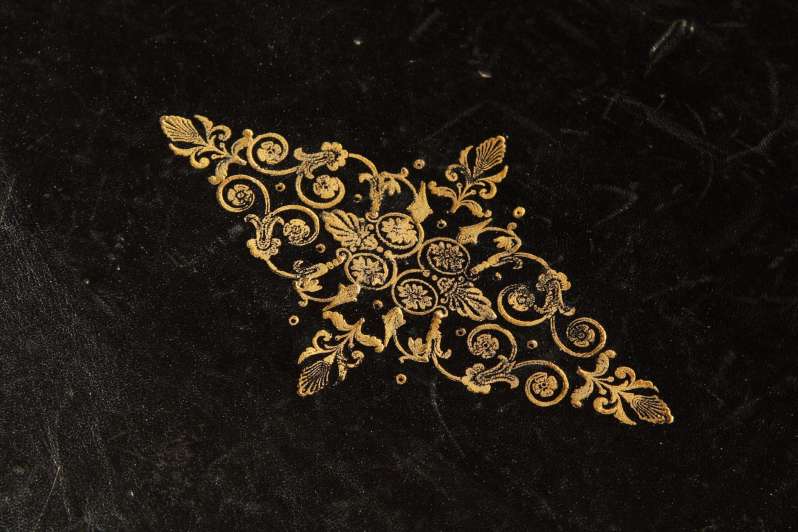
The interior is kept simple, as was typical of the period and region, with a total of seven drawers of varying sizes and two open compartments. The writing and work surface is upholstered in black leather with a gold-stamped edge.
Condition:
Restored and suitable for everyday use, with a hand-polished shellac finish.
Price: €4,200
You can find comparable pieces of furniture in the following specialist books, amongst others:
Jacques Mottheau - Meubles et Ensembles - Directoire - Empire Abb. Pl.28
.
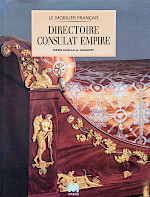
Marie-Noëlle de Grandry - Le Mobilier Français - Directoire – Consulat – Empire p. 80
Article found under: Secretaries
Add to shopping cartVideo: Directoire-style secretary desk
Also interesting
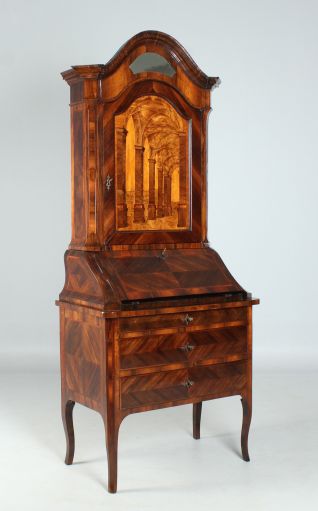
Secretary with Architectural Marquetry
Italy
Rosewood a.o.
second half 18th century
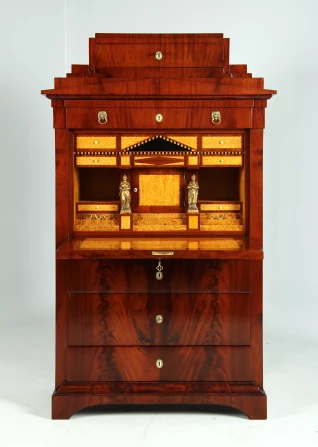
Very elaborate Berlin secretary
Berlin
Mahogany a.o.
around 1825
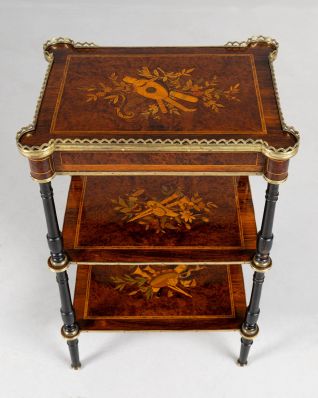
Antique etagere with fine inlay work
Paris
Wood, brass
around 1870