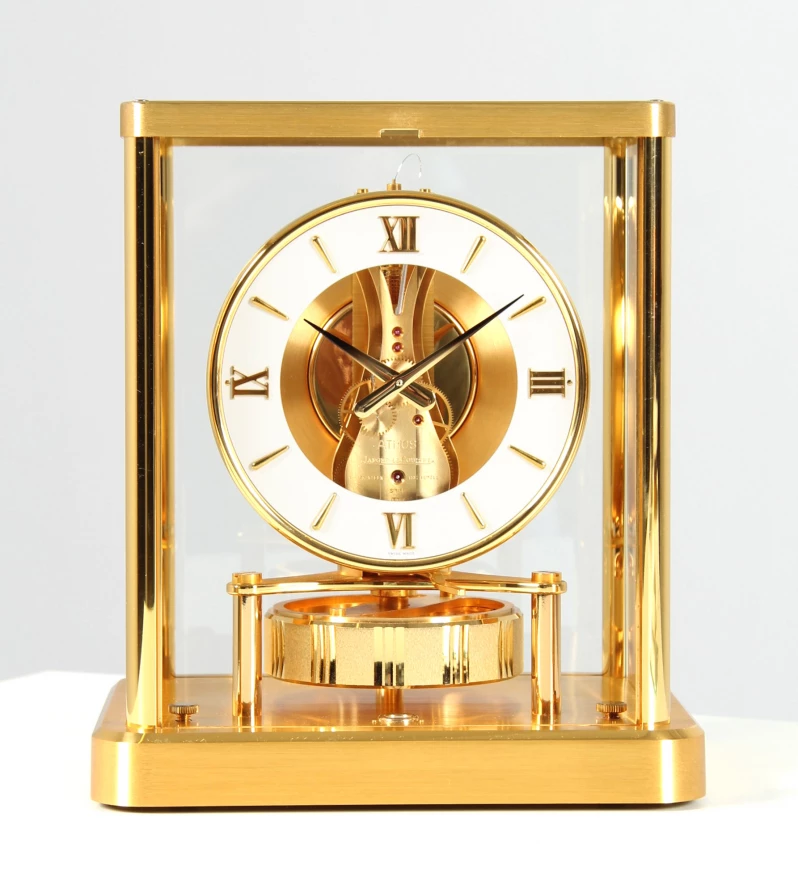
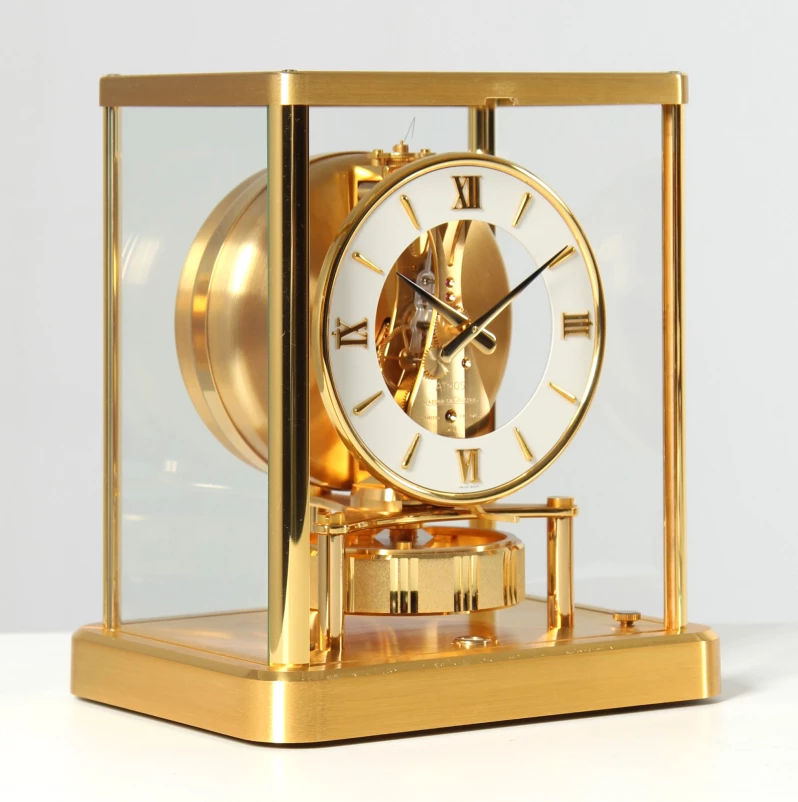

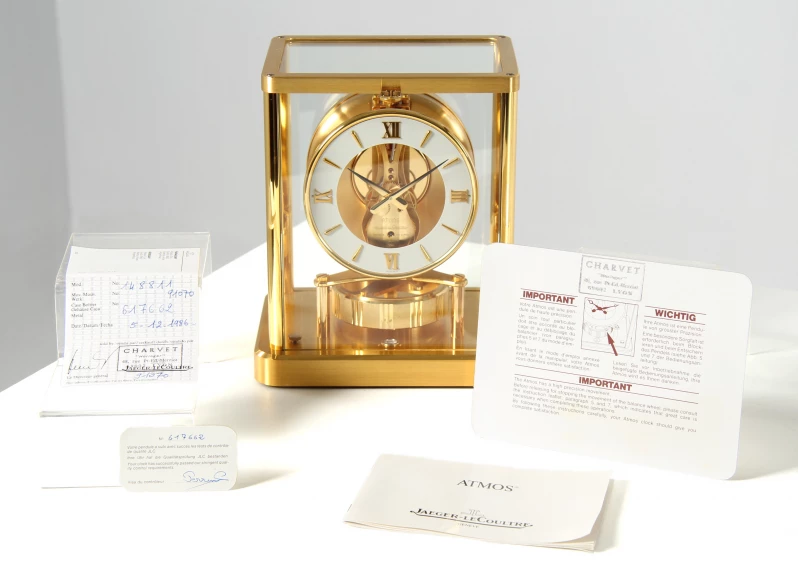
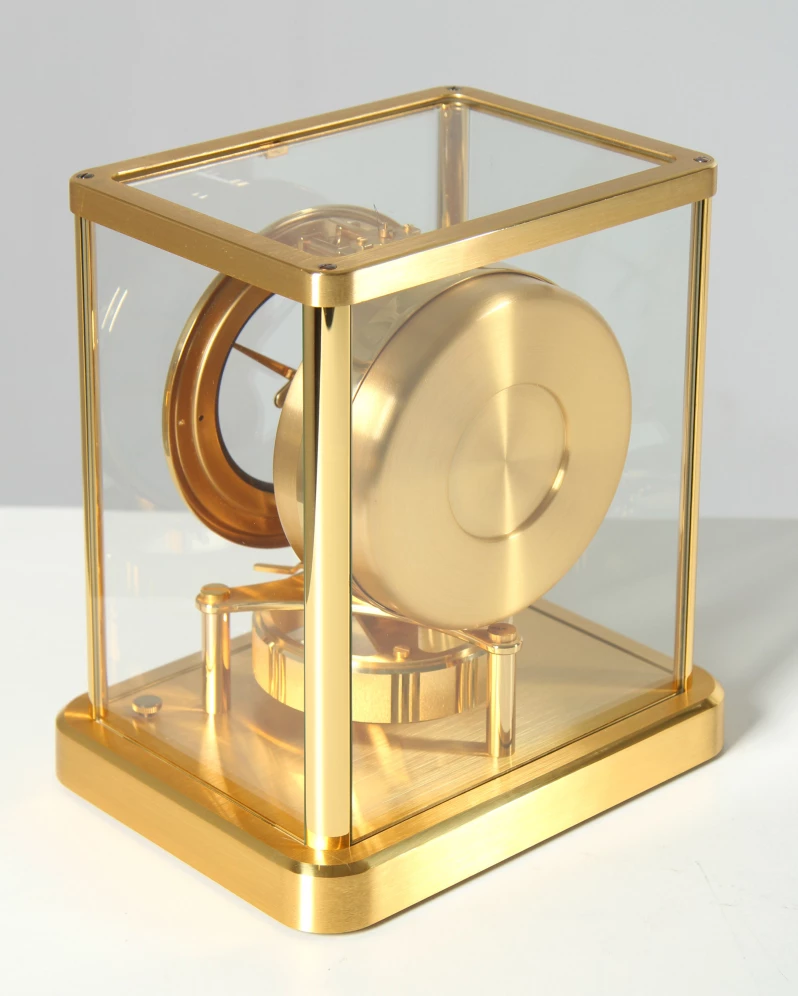
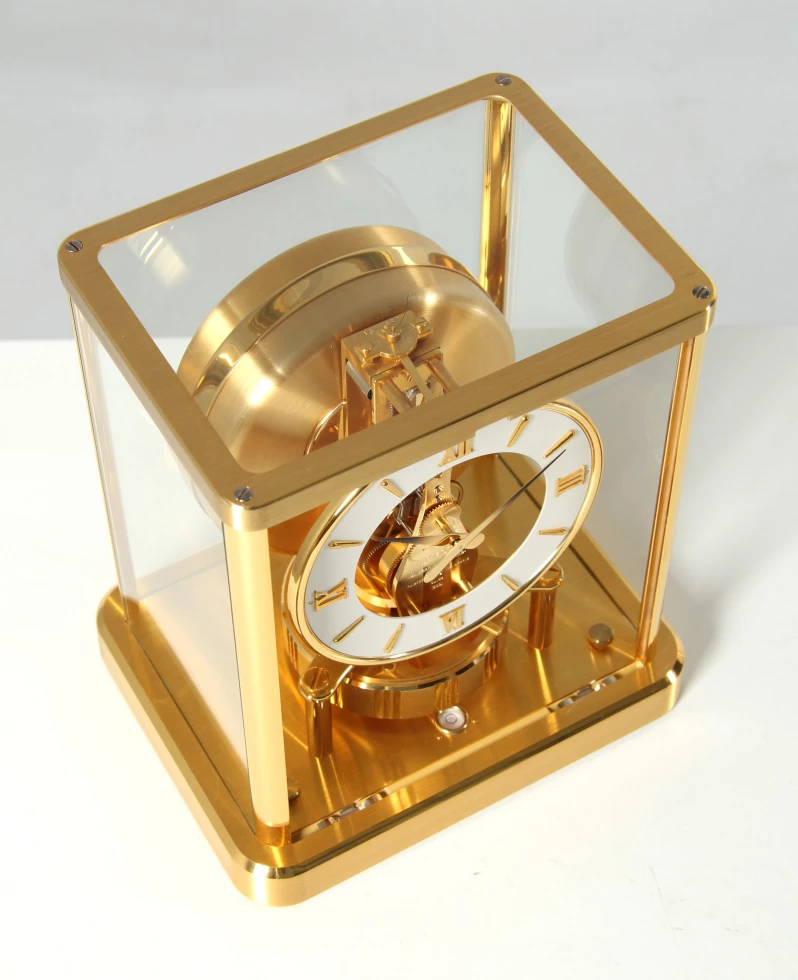
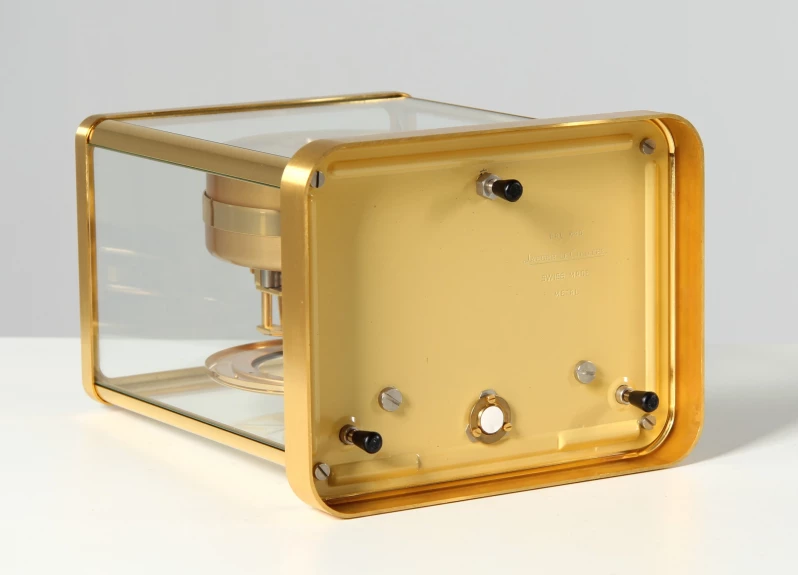
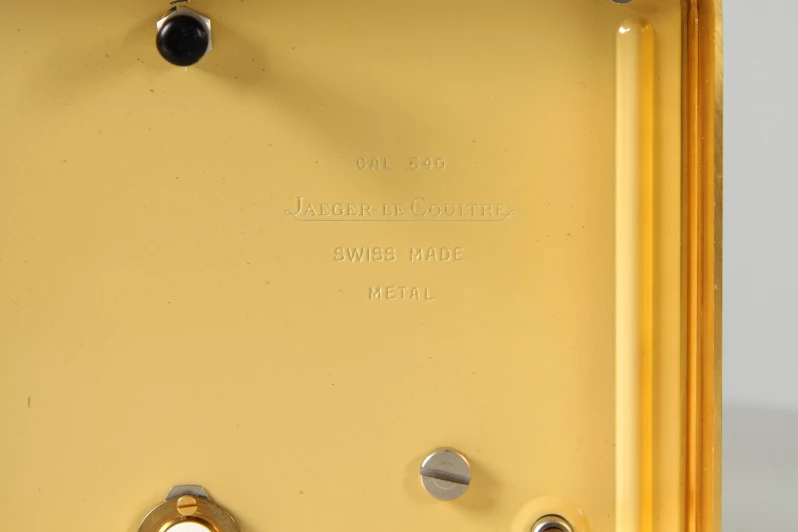
Jaeger LeCoultre - Atmos calibre 540 with box and papers
Switzerland
Brass gold plated
Year of manufacture 1985
Dimensions: H x W x D: 23 x 20 x 15 cm
Description:
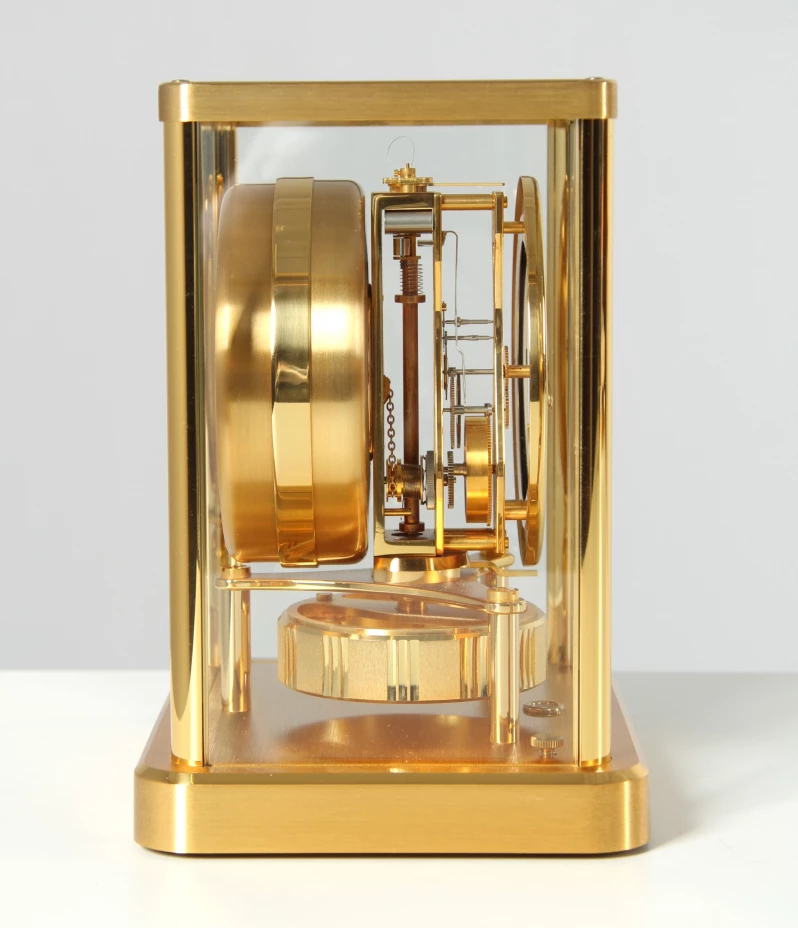
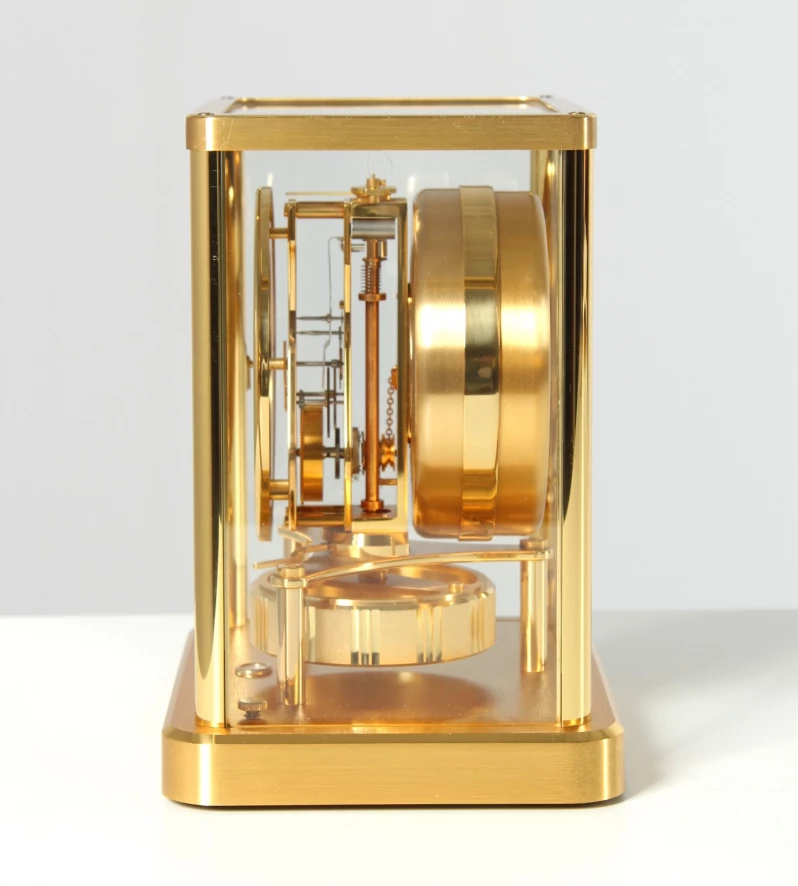
Atmos "Classic" in a 24-carat gold-plated case.
Round, white ring dial with Roman numerals III - VI - IX - XII and eight applied indexes for the remaining hours.
"SWISS MADE" is printed below the VI. A manufacturer's engraving and the calibre designation "540" can also be found on the front movement plate.
Ref. 220.007.2
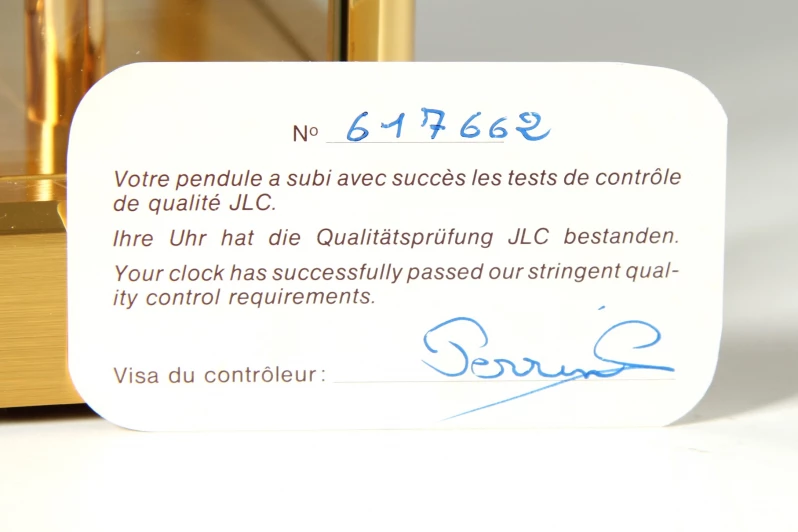
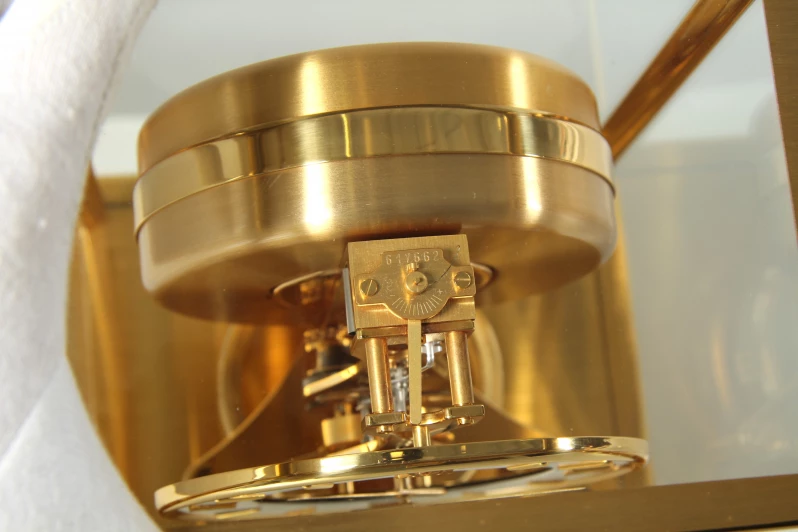
Serial number: 617662
Year of manufacture: 1985.
"As if it were floating in the air, the ring-shaped balance wheel turns with infinite slowness without ever stopping. The Atmos Classique table clock with gold-plated case is the perfect combination of technology and aesthetics." Jaeger LeCoultre collection brochure
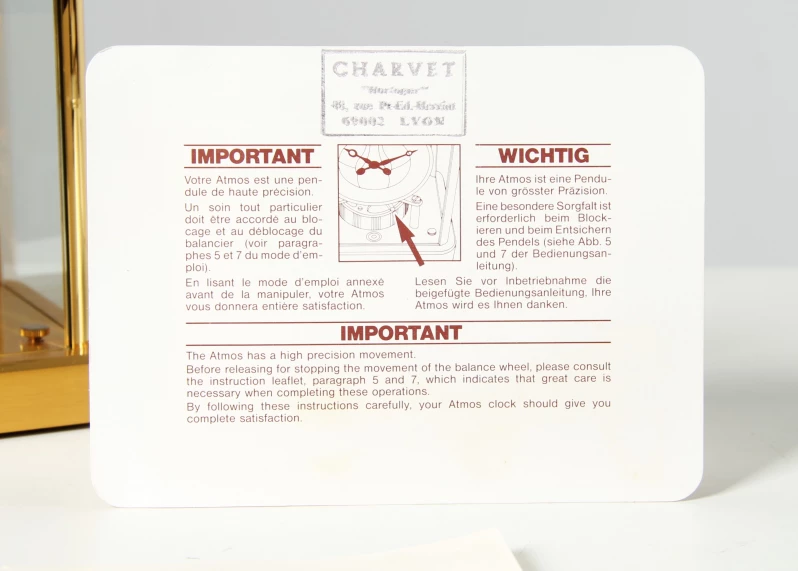
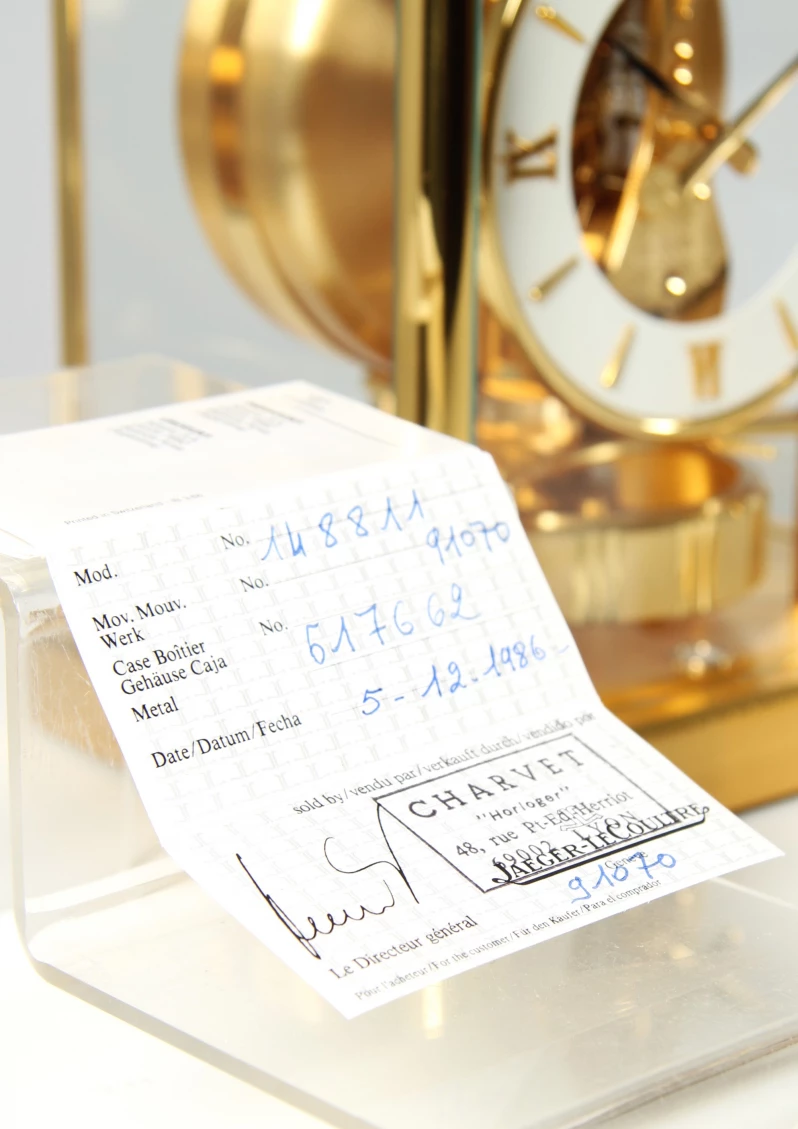
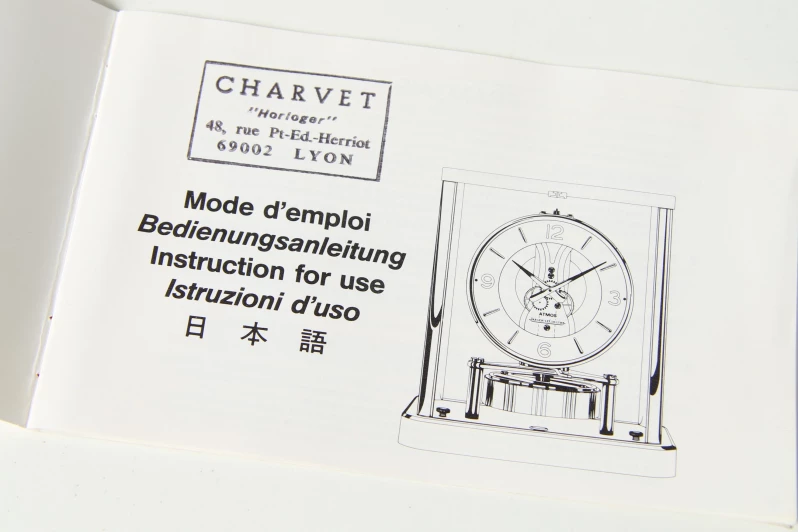
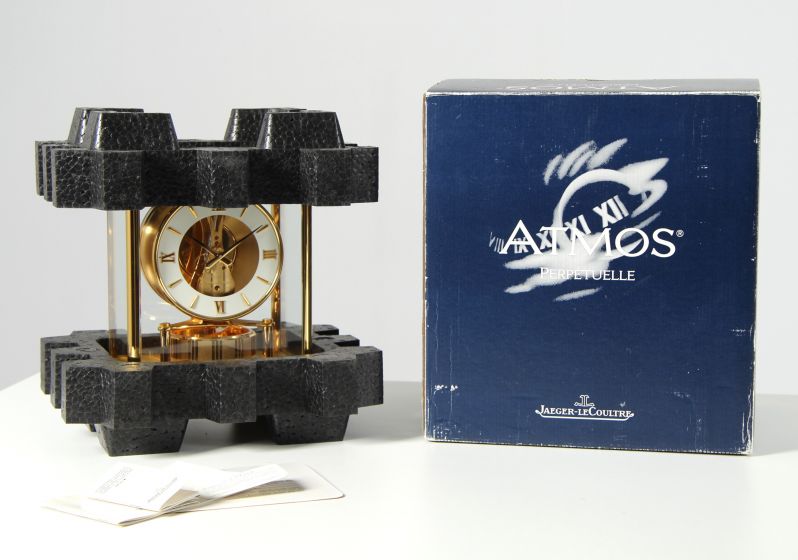
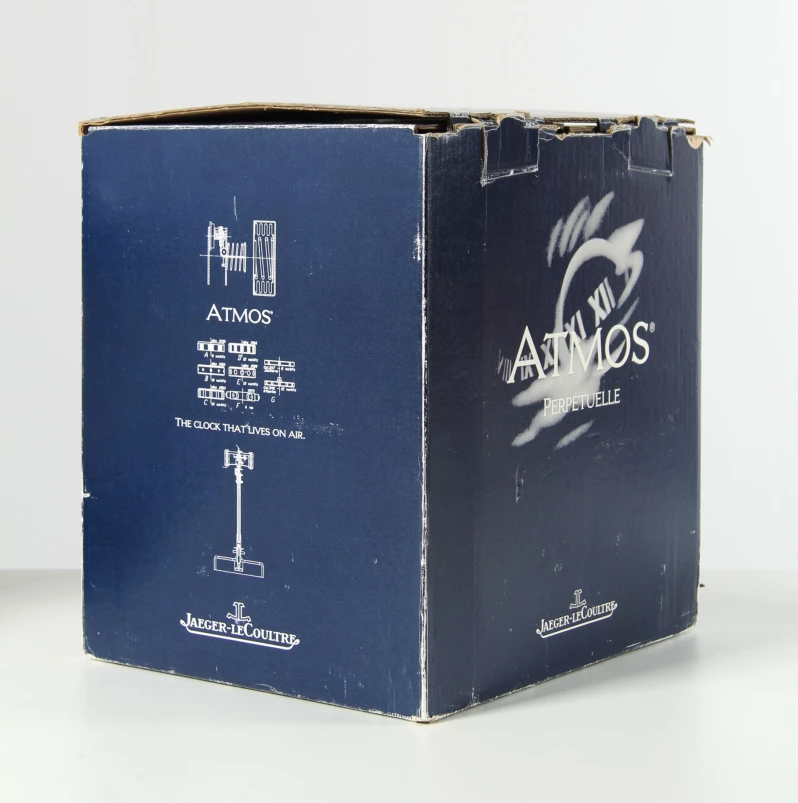
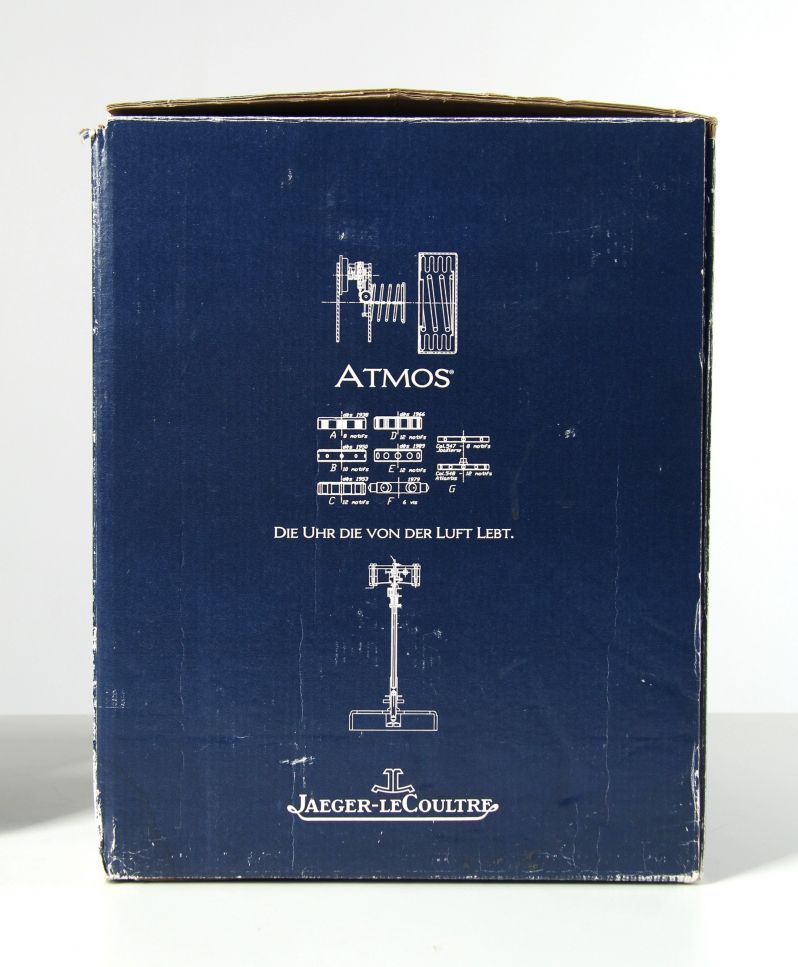
The scope of delivery includes the original documents accompanying the watch, such as the operating instructions and test certificate. All stamped by Charvet in Lyon, the clockmaker who sold this Atmos brand new on 5 December 1986. Also present and included is the Jaeger LeCoultre transport box, albeit with clear signs of wear.
Condition:
Revised, very good condition of the movement.
Interesting facts:
Even though Leonardo da Vinci was able to prove that the production of a perpetual motion machine is physically impossible, it has been attempted time and again. In 1928, the Neuchâtel engineer Jean Leon Reuter invented the technology for a clock whose energy source was drawn from the ambient air, from the atmosphere so to speak.
As there were repeated problems with the clocks, the movements were manufactured by Le Coultre et Cie in Switzerland from 1933 and in 1935 the production rights for the Atmos clock were transferred to Ets. Ed. Jaeger.
The technical principle of the movements built by Jaeger LeCoultre from 1936 onwards is simply captivating: a mixture of a liquid and ethyl chloride gas is contained in a hermetically sealed capsule. As the temperature rises, the mixture expands, and as the temperature falls, it contracts, causing a bellows in the pressure box on the back of the clock to move like an accordion. This movement continuously winds up the movement. In the range between 15 and 30°C, a change in temperature of just one degree Celsius is enough to provide the energy for approximately two days of running time.
You can find this model in the specialist literature:
Jean Lebet - Living on Air p. 75
Article found under: Clocks
Also interesting
Mantel Clock - Virgil the Poet
Paris
Bronze, marble
around 1830
Antique Mantel Clock with Calendar
France
Wood, brass
Mid 19th century
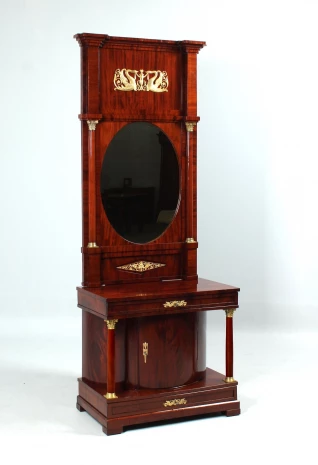
Demi-Lune console with pillar mirror
North Germany
Mahogany
Biedermeier/Empire around 1820