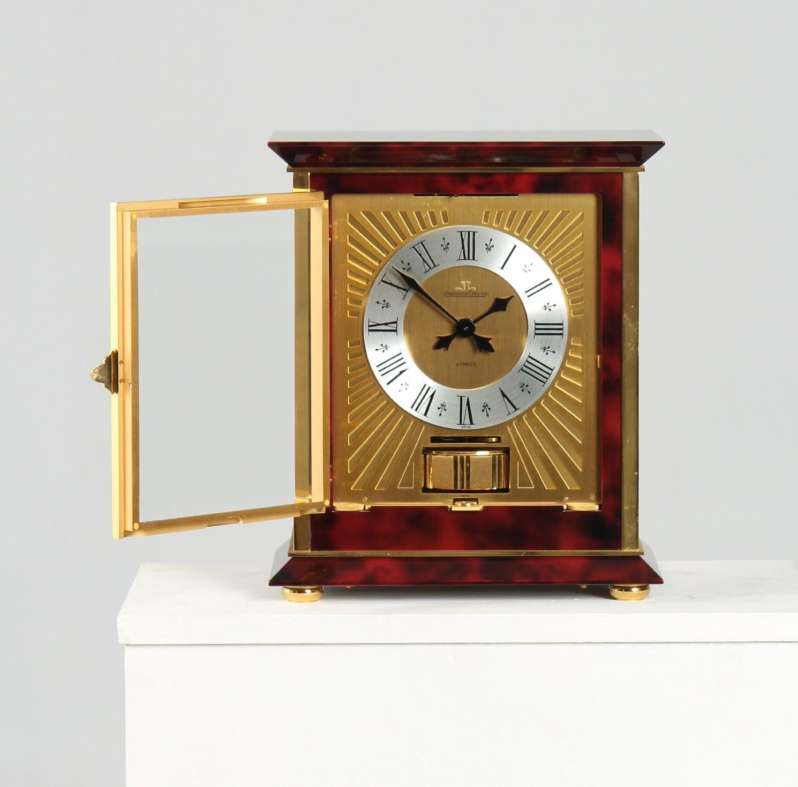
Video: Atmos Royale, red flamed
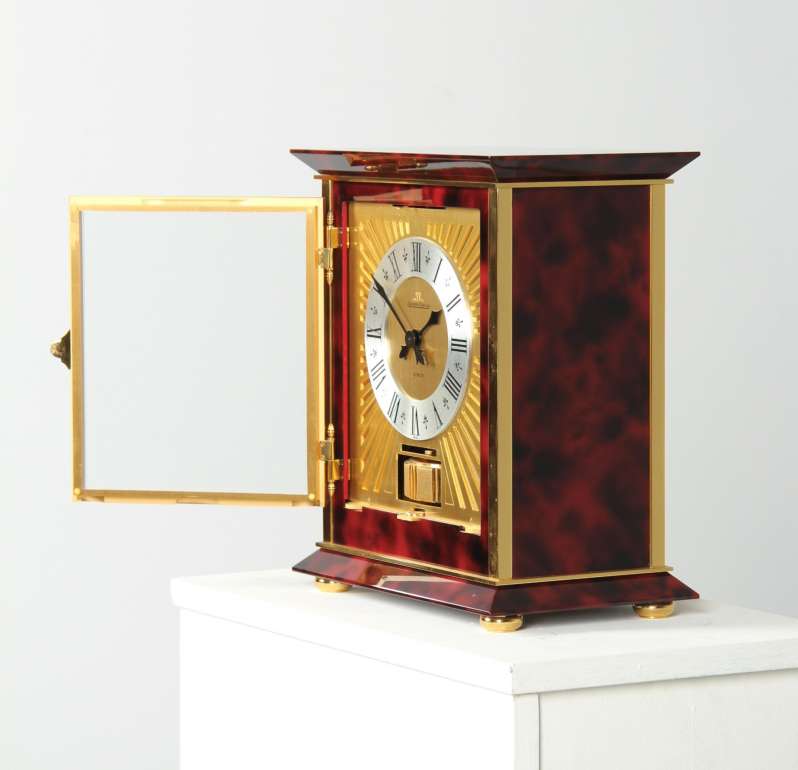
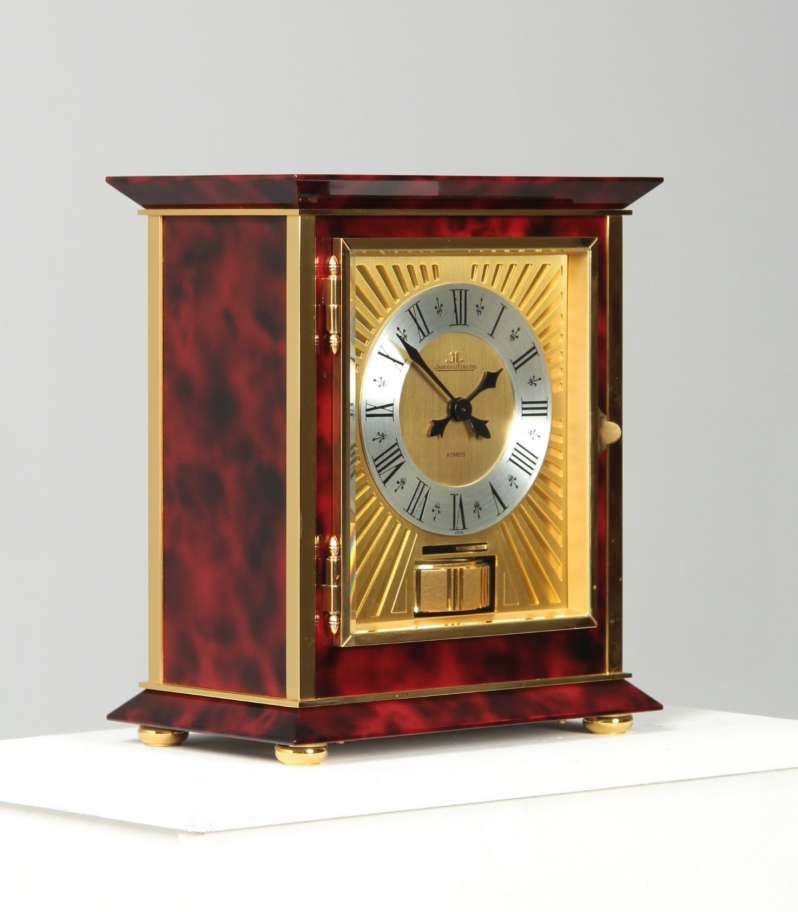
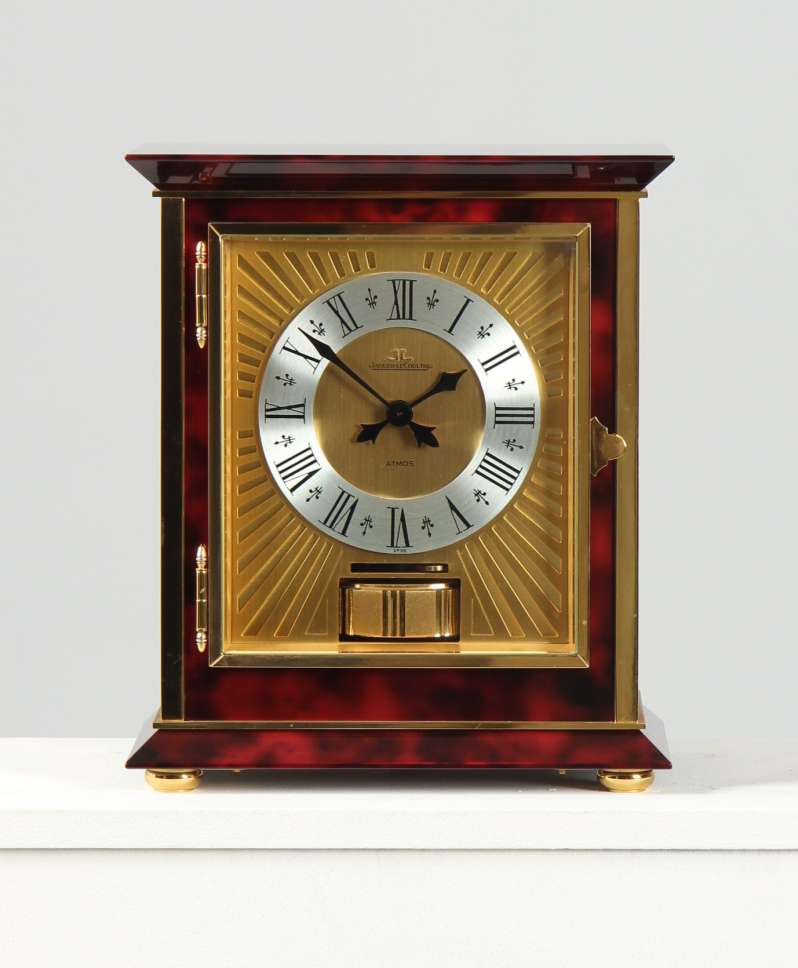
Jaeger-LeCoultre – Atmos Royale
Switzerland
Lacquered brass
Year of manufacture: 1977
Dimensions: H x W x D: 27 x 23 x 14 cm
Description:
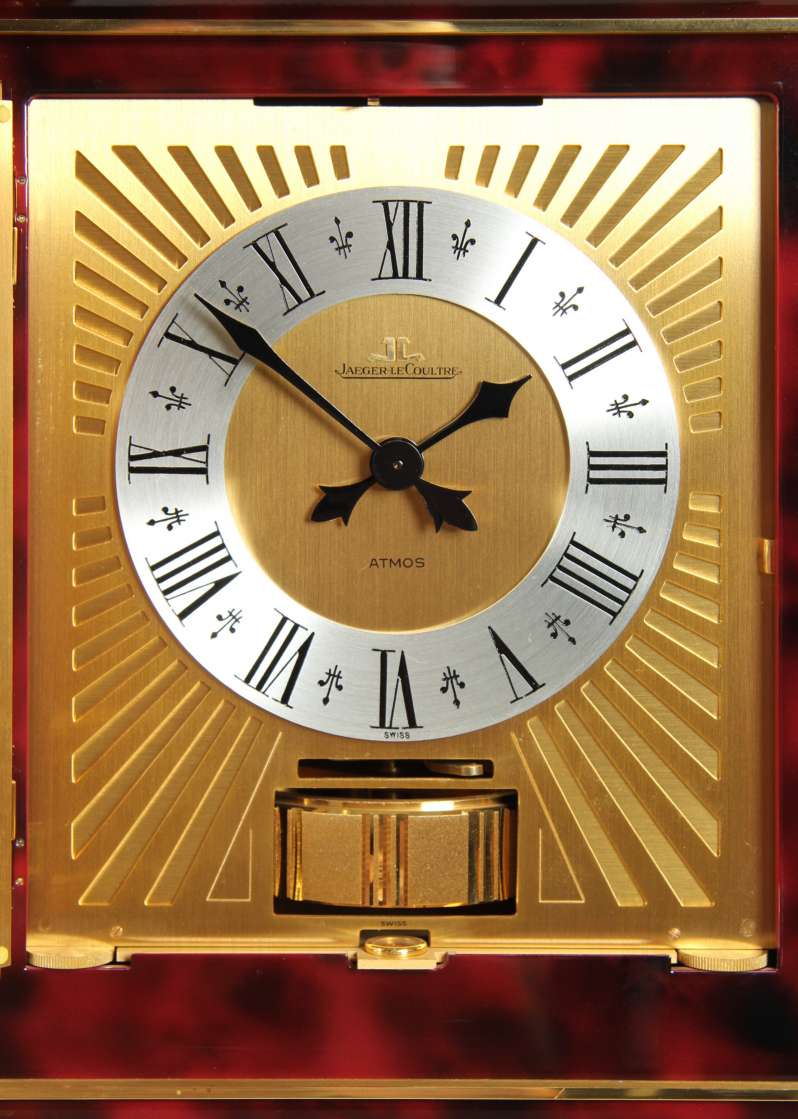
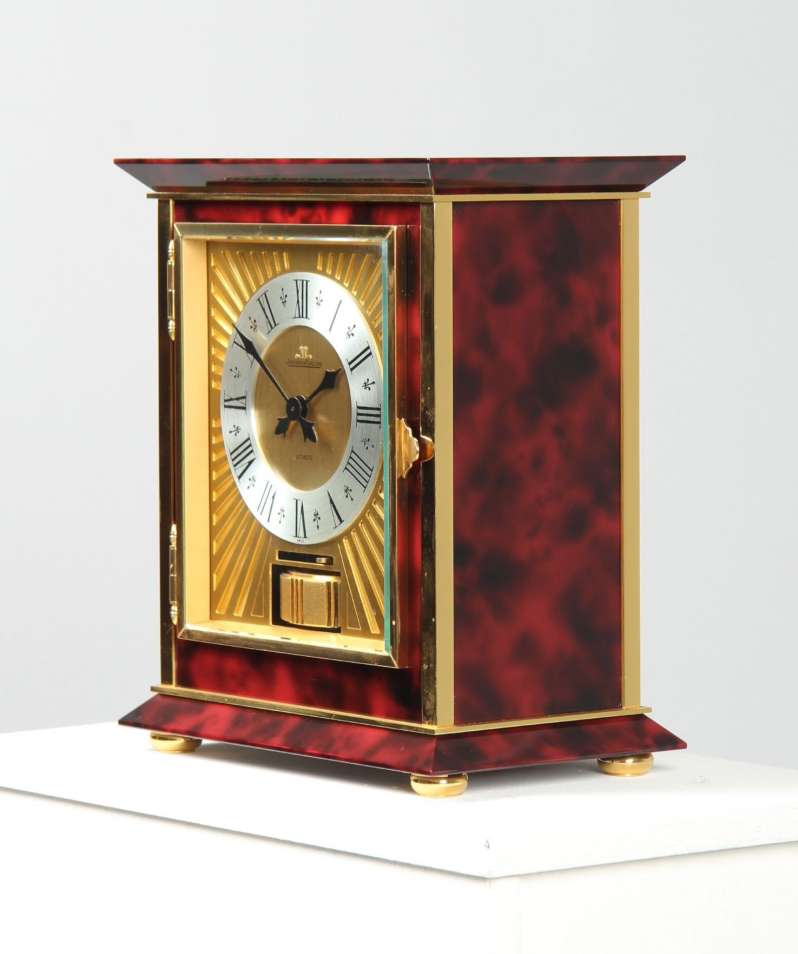
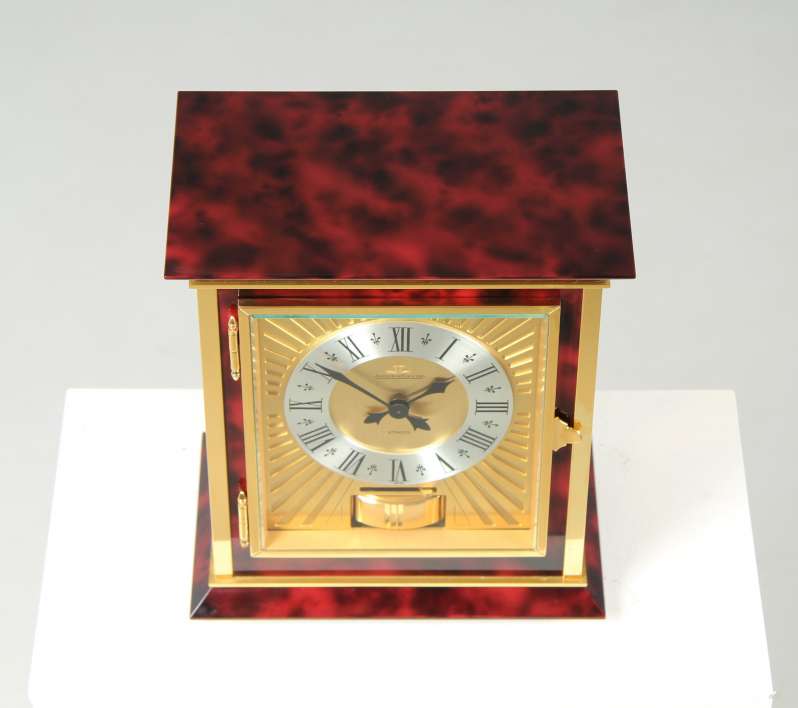
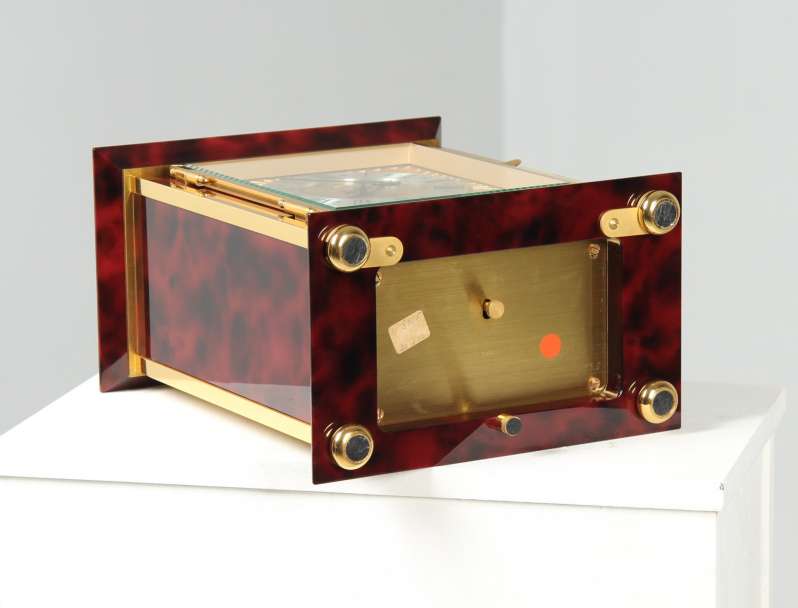
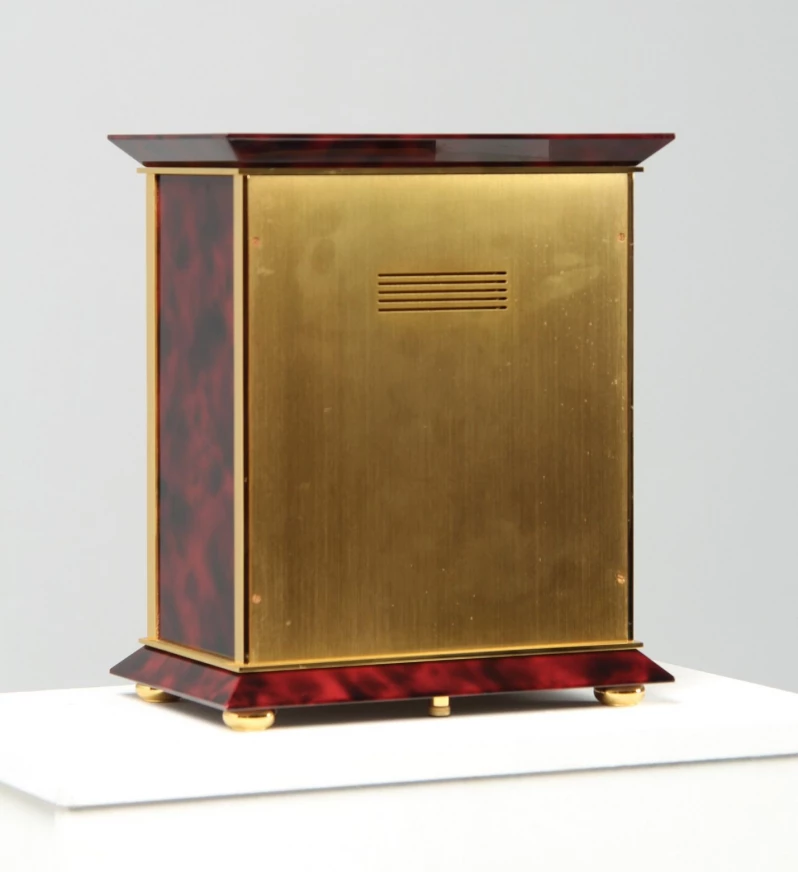
Atmos Royale Ref. 5819 in a red-flamed and gold-plated brass case. Glazed front door. Silver circular-grained dial ring with black Roman hour markers.
Below the XII is the Jaeger-LeCoultre logo, whilst the word ‘ATMOS’ is printed above the VI.
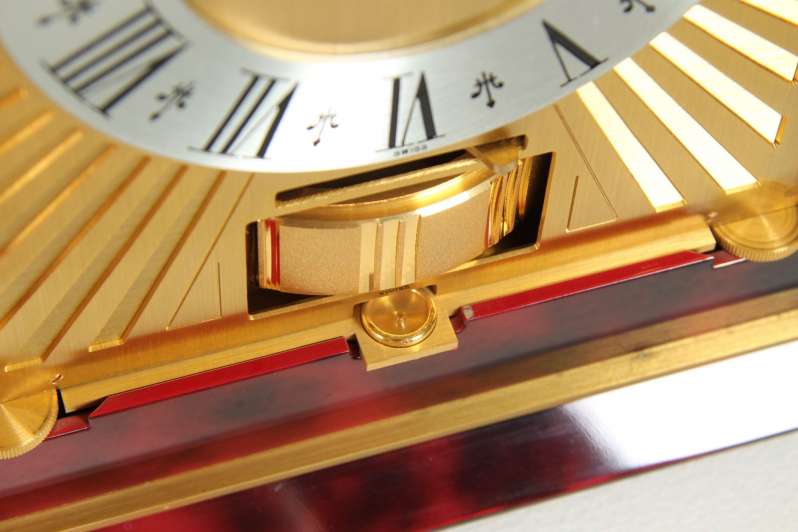
Below the dial ring are the locking lever, the torsion pendulum, the spirit level and the knurled screws for levelling the clock.
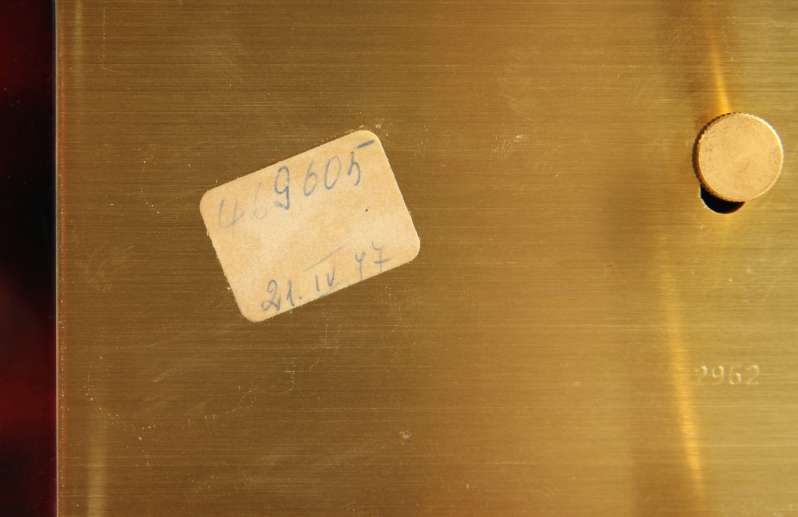
Serial number: 469605
Year of manufacture: 1977
The first-generation Atmos Royale was fitted with the calibre 526 movement and was available in various colour variants. The clock was available fully gold-plated or rhodium-plated, in lapis lazuli, green, burgundy, black and, indeed, in flamed red.
Interesting facts:
In 1927, the young engineer Jean-Léon Reutter unveiled the prototype of the Atmos clock he had developed.
The response in the press was huge, and so he signed a contract with the Compagnie générale de radiologie, which, under Reutter’s leadership, began manufacturing and distributing the ‘Atmos I’ from 1930 onwards.
As there were recurring problems with the clocks, from 1933 onwards the movements were manufactured by Le Coultre et Ciein Switzerland, and in 1935 the production rights for the Atmos clock were transferred to Ets. Ed. Jaeger.
Efforts focused on developing a simpler and more robust motor, and from 1938 onwards the era of the Jaeger-LeCoultre Atmos began .
The ‘clock that runs on air’ utilises the ‘breathing movements’ of a gas-filled bellows, caused by temperature fluctuations, to wind the movement.
The watch’s movement is distinguished by its cylindrical case on the back. Inside this, within a bellows-shaped expansion chamber, is chloroethyl, a gas that expands particularly strongly between 10 °C and 27 °C.
A temperature difference of just one degree Celsius winds the clock for 48 hours. This interesting winding mechanism is complemented by an exquisite movement of the utmost precision, featuring a heavy torsion pendulum (rotating pendulum).
The clock’s accuracy depends on it being placed in a stable, vibration-free position.
[Source: Jean Lebet – Living on Air / Jürgen Abeler – Ullstein Uhrenbuch]
Condition:
Very fine, authentic case condition with slight signs of cleaning and wear appropriate to its age. The movement runs with absolute accuracy and reliability.
Price: €3,300
Worldwide shipping available!
Jean Lebet - Living on Air - The history of the Atmos pendulum clock p. 66

Article found under: Clocks
Add to shopping cartVideo: Atmos Royale, red flamed
Also interesting
George III grandfather clock - James Pike
England (Newton Abbot)
Mahogany
circa 1790
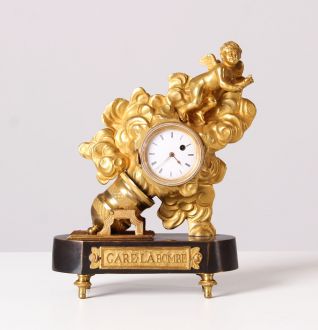
Pendulette "Gare La Bombe
France
Gilt bronze
first half of the 19th century

Single-door Biedermeier wardrobe
Austria
Walnut
Biedermeier around 1830