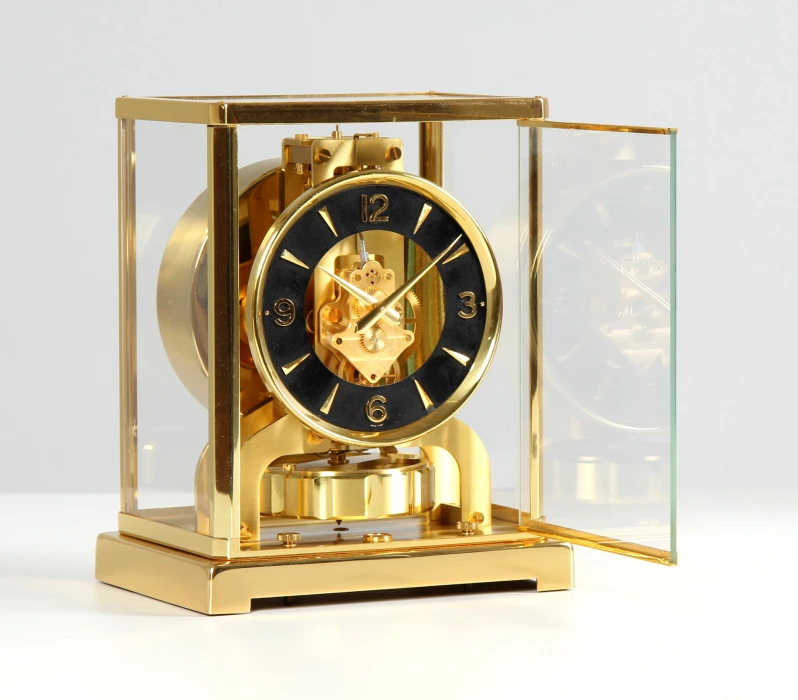
Video Atmos with black dial ring
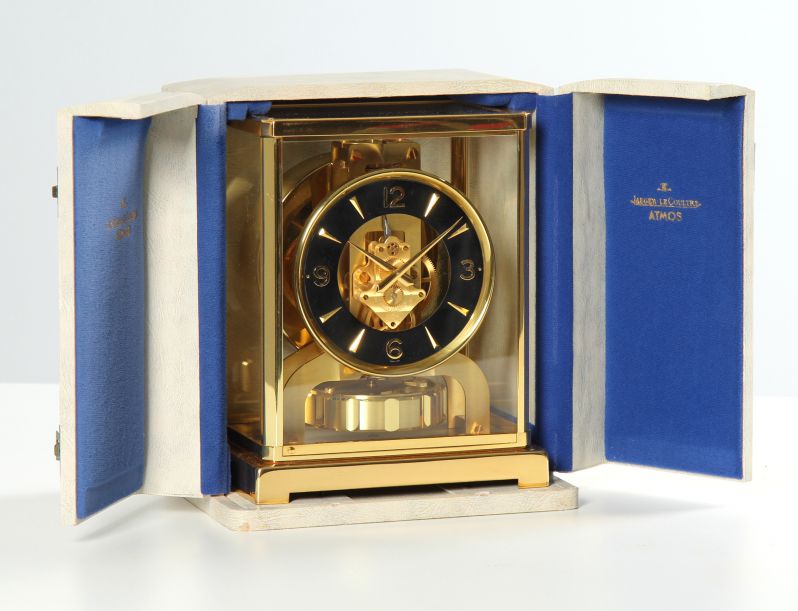
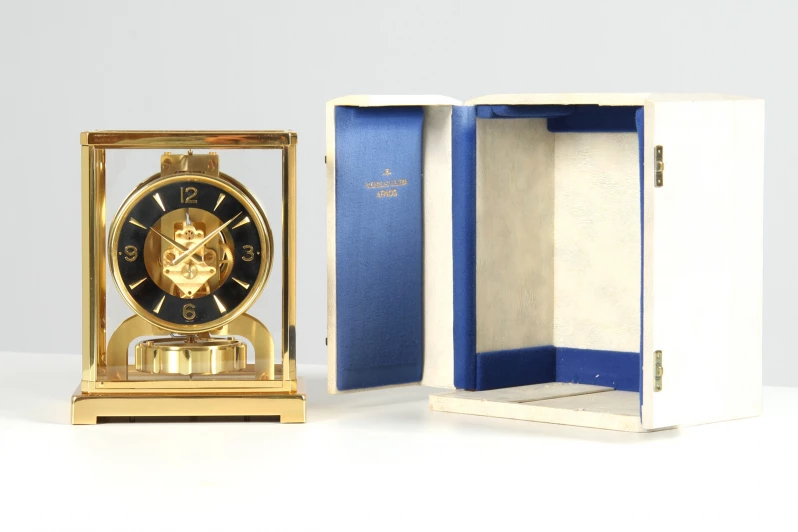
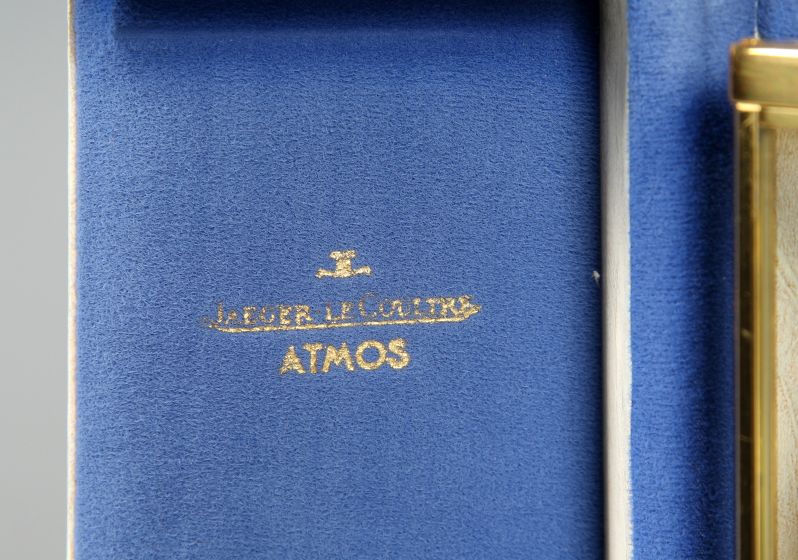
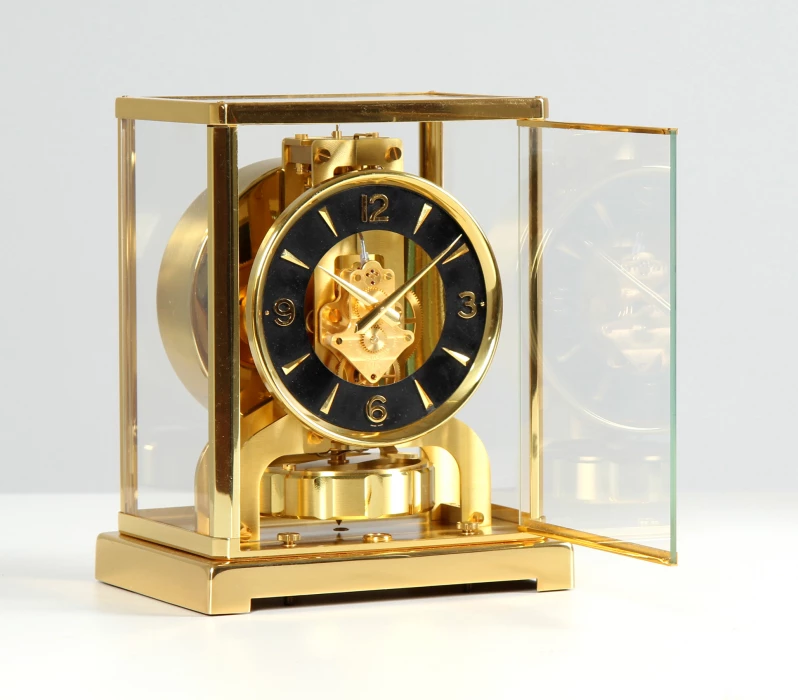
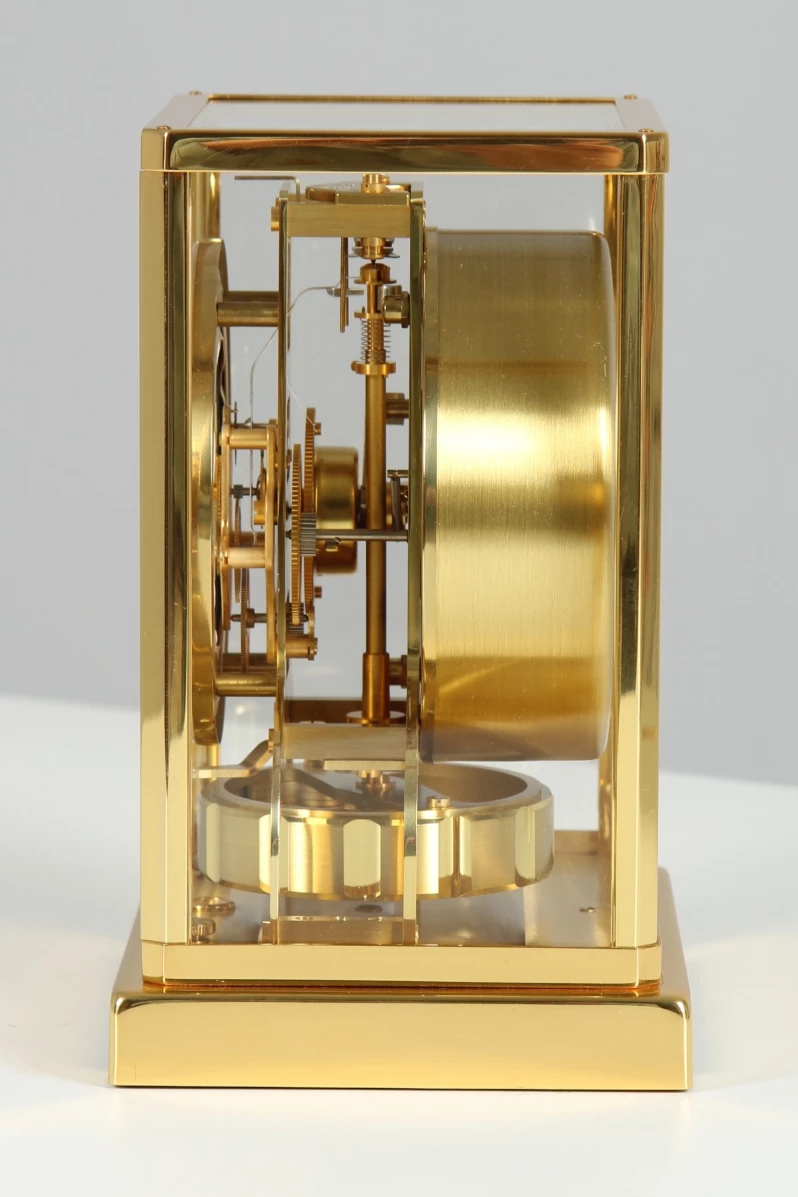
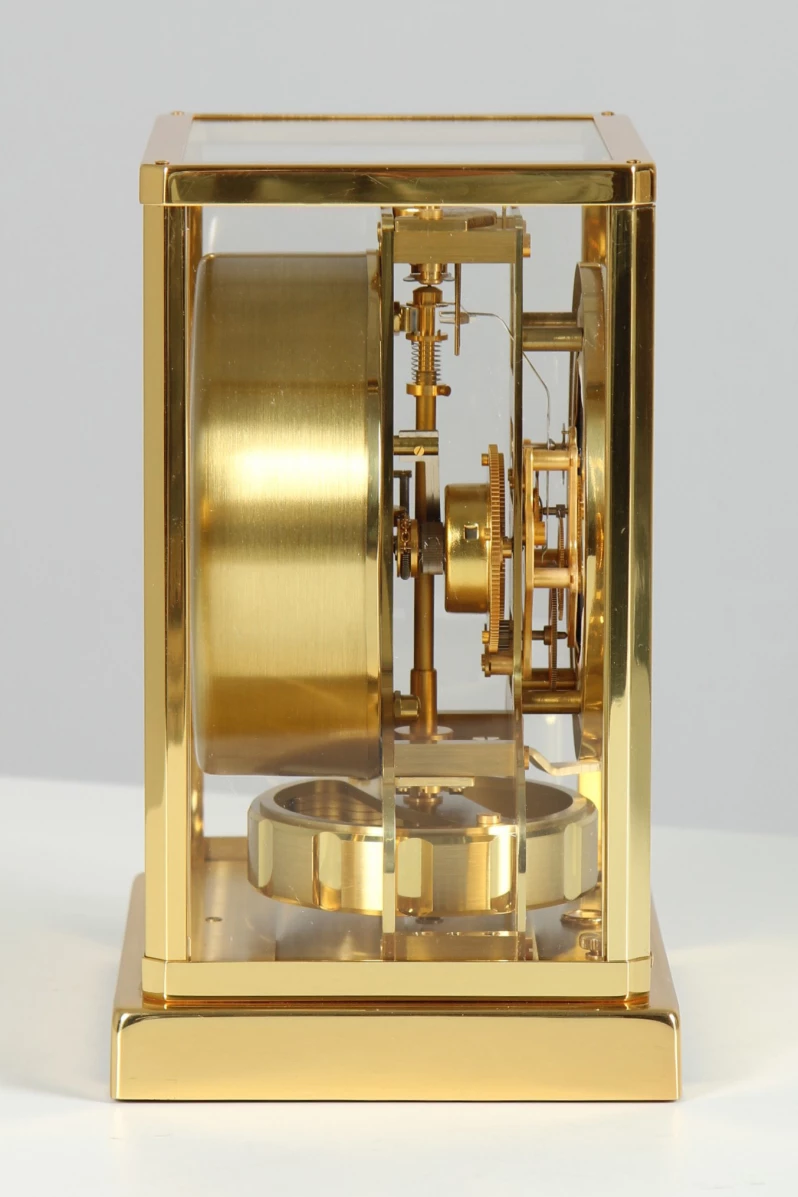
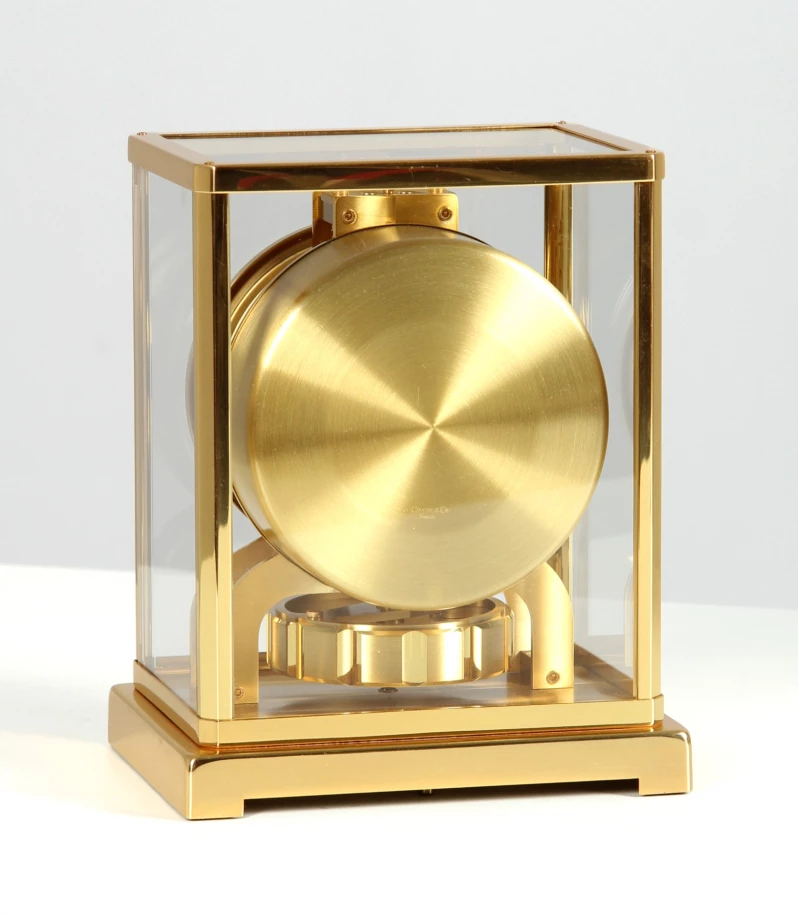
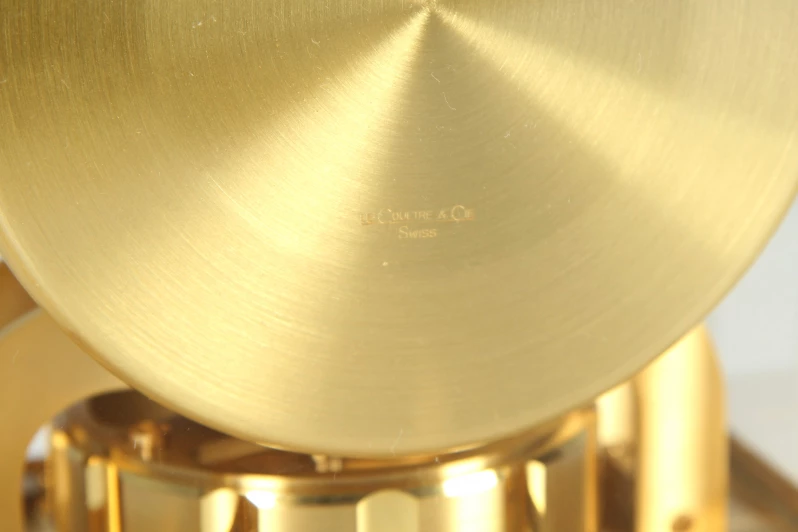
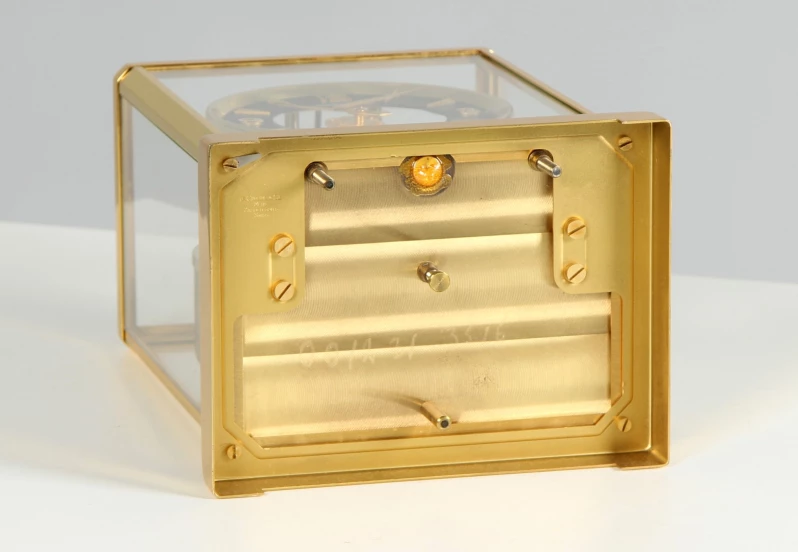
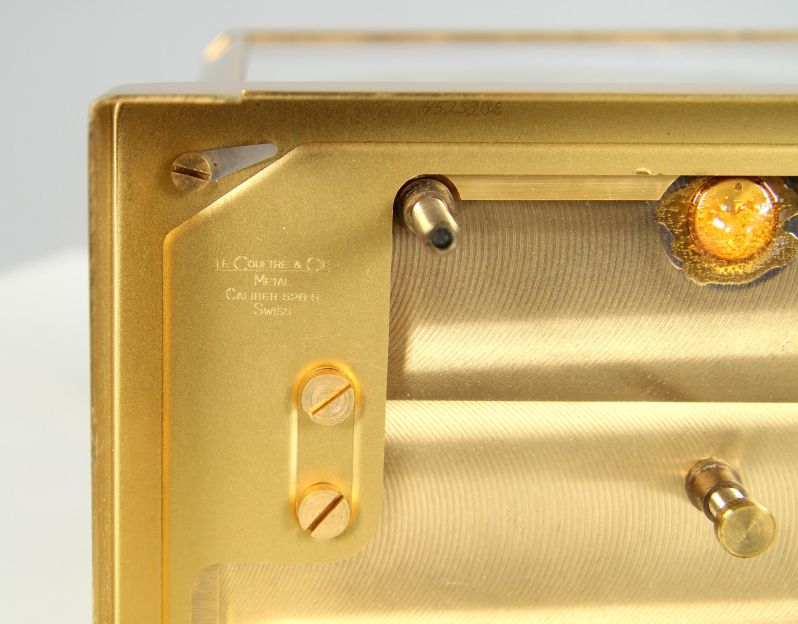
Atmos clock by Jaeger LeCoultre with black dial and original box
Switzerland
Brass
Year of manufacture 1962/63
Dimensions: H x W x D: 22 x 18 x 13.5 cm
Description:
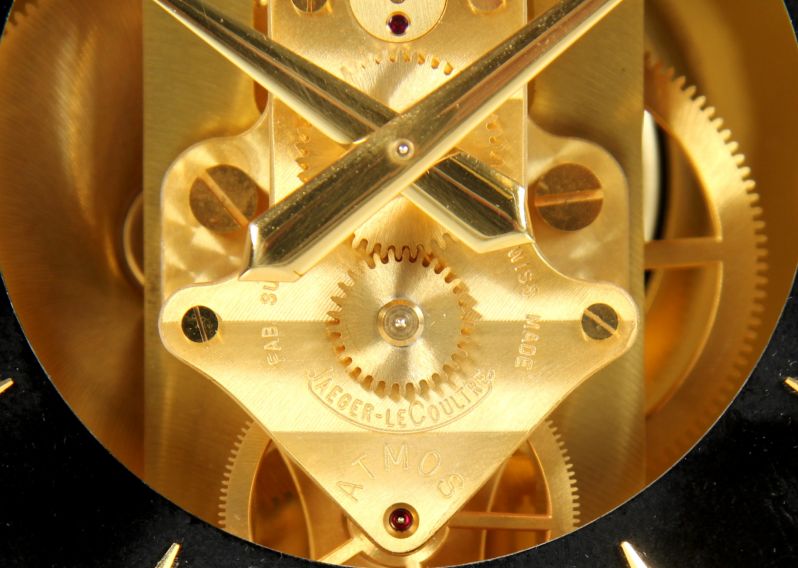
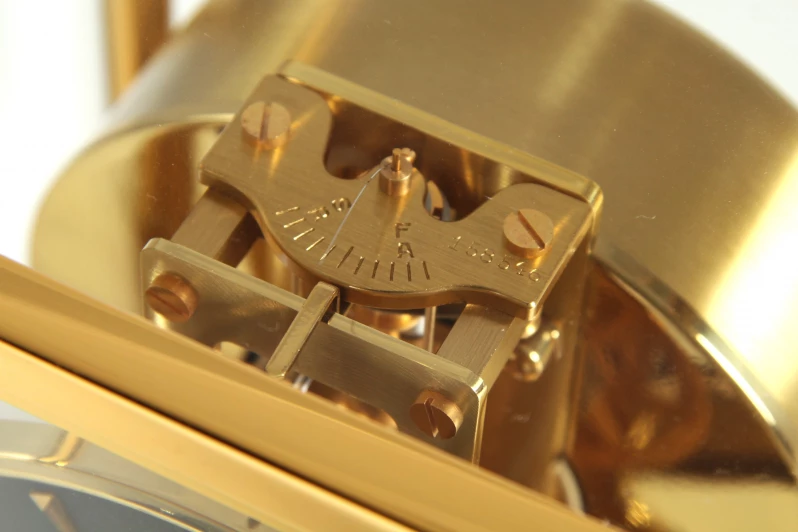
Atmos V calibre 526 in a gold-plated brass case. Rare model with black dial ring with Arabic numerals.
The model was offered in the catalogues under Ref. No. 5831 from 1963 to 1985. This clock was manufactured in December 1962 / January 1963.
Serial number: 158546
Year of manufacture: 1962/63
Below the 6 you can see a small "SWISS MADE" imprint on the black background. You can recognise the originality of the black lacquering by this imprint.
Condition:
Beautiful and authentic condition of the case with light traces of use typical of its age. There are minor irregularities in the black colour of the chapter ring.
The movement runs perfectly and reliably.
I give a one year guarantee on the movement if set up and handled correctly.
Worth knowing:
In 1927, the engineer Jean-Léon Reutter presented the prototype of the Atmos clock he had developed. He concluded a contract with the Compagnie générale de radiologie, which manufactured and distributed the "Atmos I" under his direction from 1930. Due to recurring technical problems, the movements were produced by Le Coultre et Cie from 1933, before the production rights were transferred to Ets. Ed. Jaeger in 1935. With the subsequent development of a simplified and more robust drive system, the real success story of the Atmos clock from Jaeger-LeCoultre began in 1938.
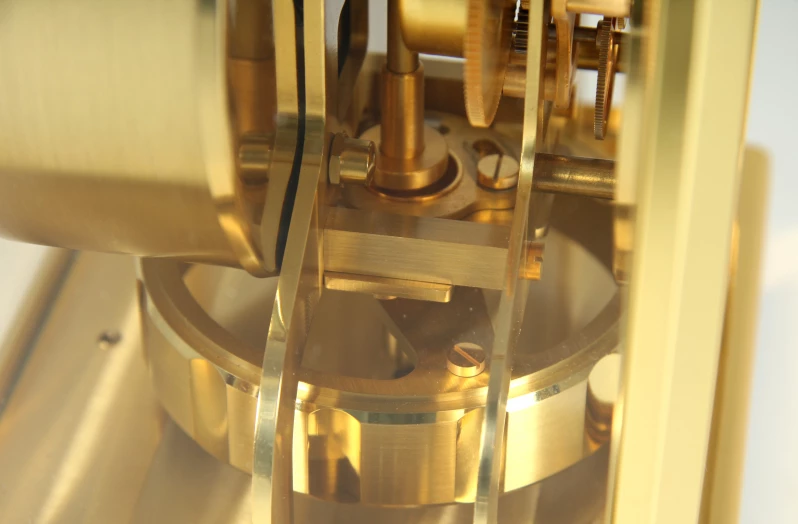
Known as the "watch that lives on air", the Atmos utilises the "breathing movements" of a gas-filled bellows, which are generated by the slightest fluctuations in temperature, to wind the movement. Chloroethyl - also known as ethyl chloride or chloroethane - has a boiling point of around 12.3 °C. Due to this low boiling point, the substance reacts very sensitively to even the smallest temperature fluctuations in the range of normal room temperatures by changing the ratio between the liquid and gaseous phase. Such volume changes occur in the temperature range between around 13 and 27 °C, which are ideal for driving the Atmos clock.
A temperature change of just 1 °C is enough to provide the energy for a running time of around 48 hours.
You can find more information about this interesting watch in the following literature:
Jürgen Abeler - Ullstein-Uhrenbuch from p. 173
Negretti - De Vecchi - Faszination Uhr - Eine Geschichte der Zeitmessung from p. 195
Jean Lebet - Living on Air - The history of the Atmos pendulum clock

Article found under: Clocks
Video Atmos with black dial ring
Also interesting
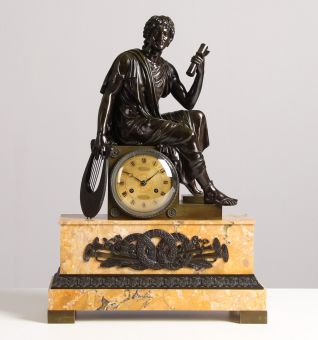
Mantel Clock - Virgil the Poet
Paris
Bronze, marble
around 1830
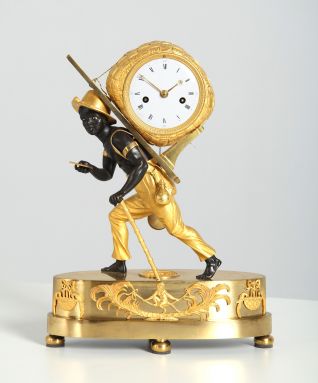
Pendule Portefaix
Paris
Bronze, enamel
Empire around 1810

Classicist corner cabinet
Southern Germany
Walnut, maple
Classicism around 1790