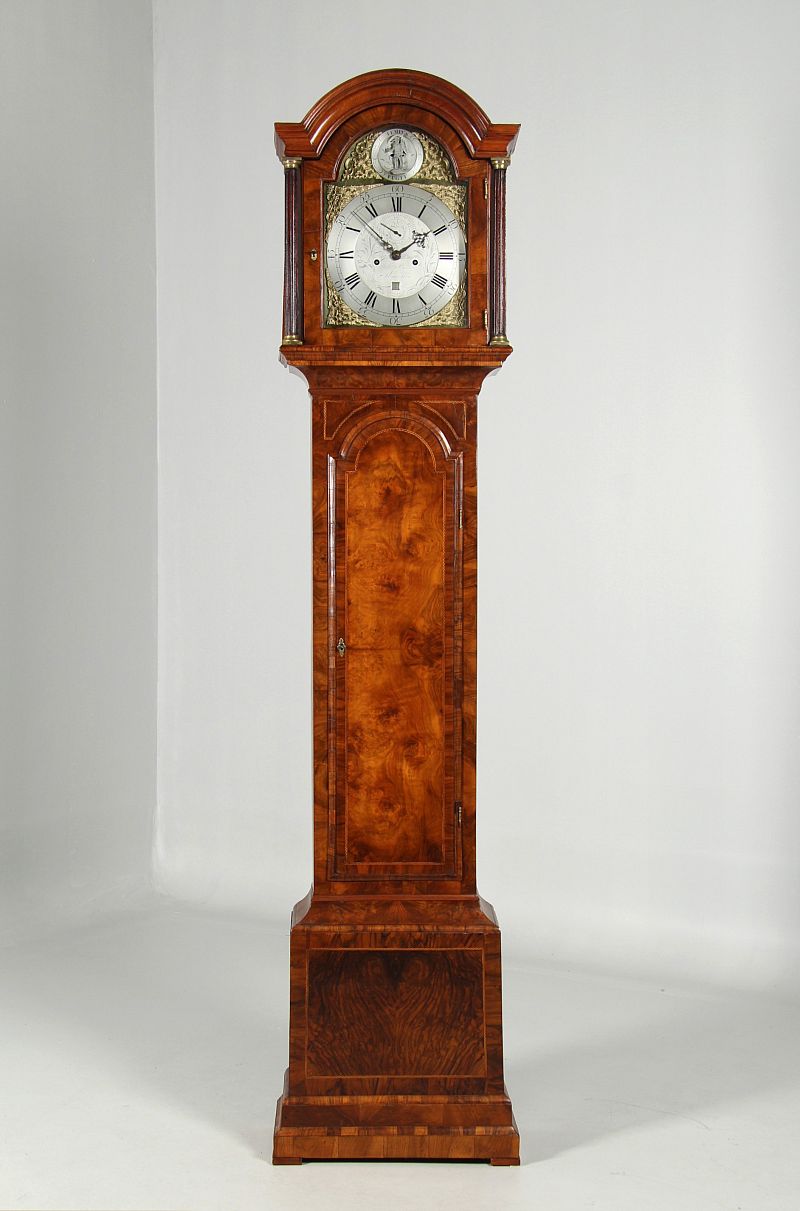
Video: Peacock Kimbolton Grandfather Clock

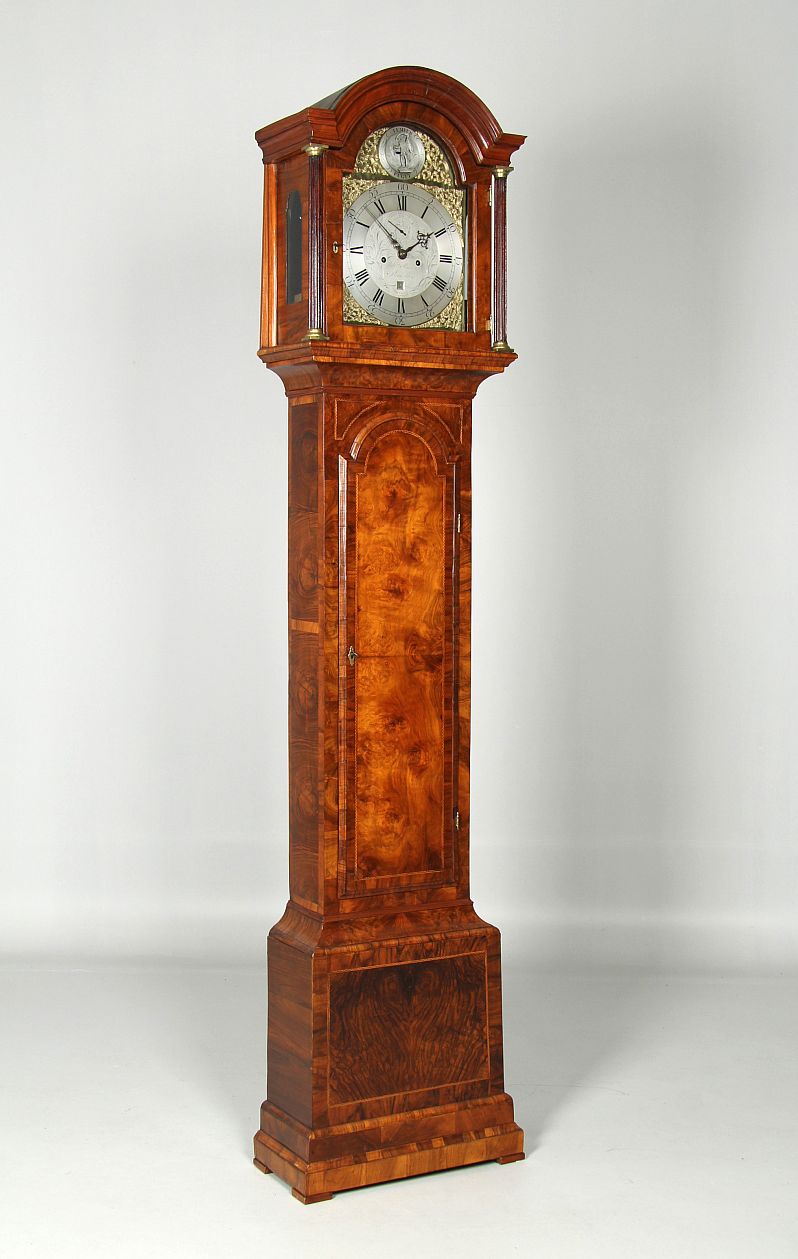
Neoclassical George III grandfather clock
England (Kimbolton)
Walnut, etc.
c. 1780
Dimensions: H x W x D: 230 x 49 x 24 cm
Description:
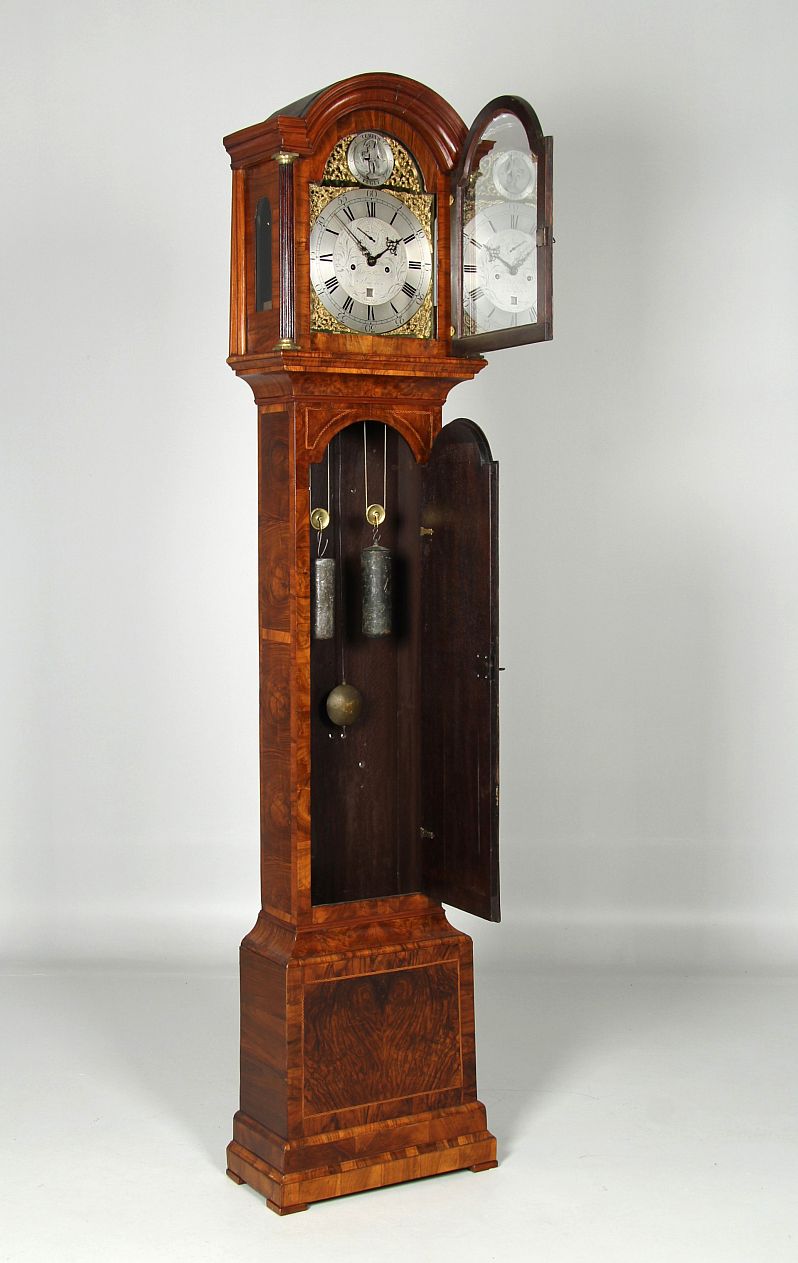
A slender and extremely elegant classical-style grandfather clock, made in England around 1780.
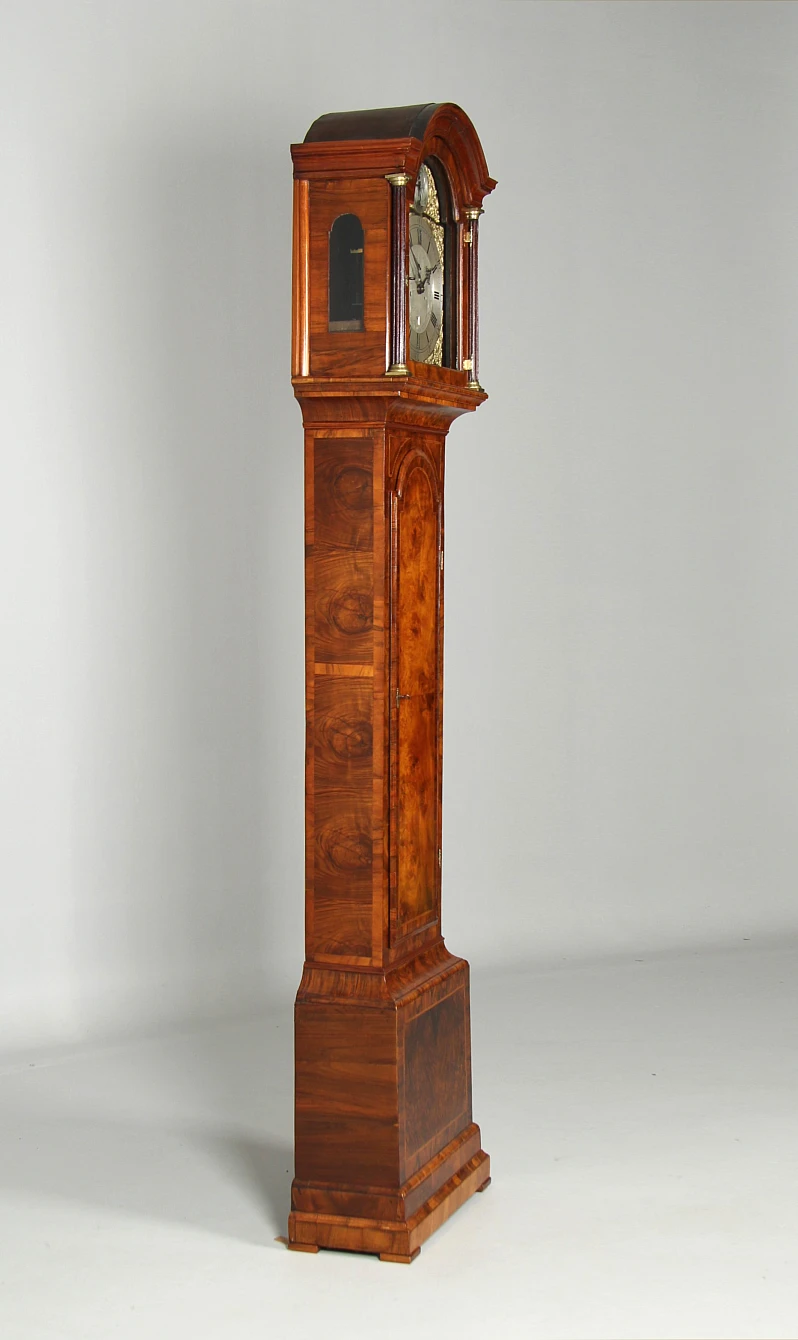
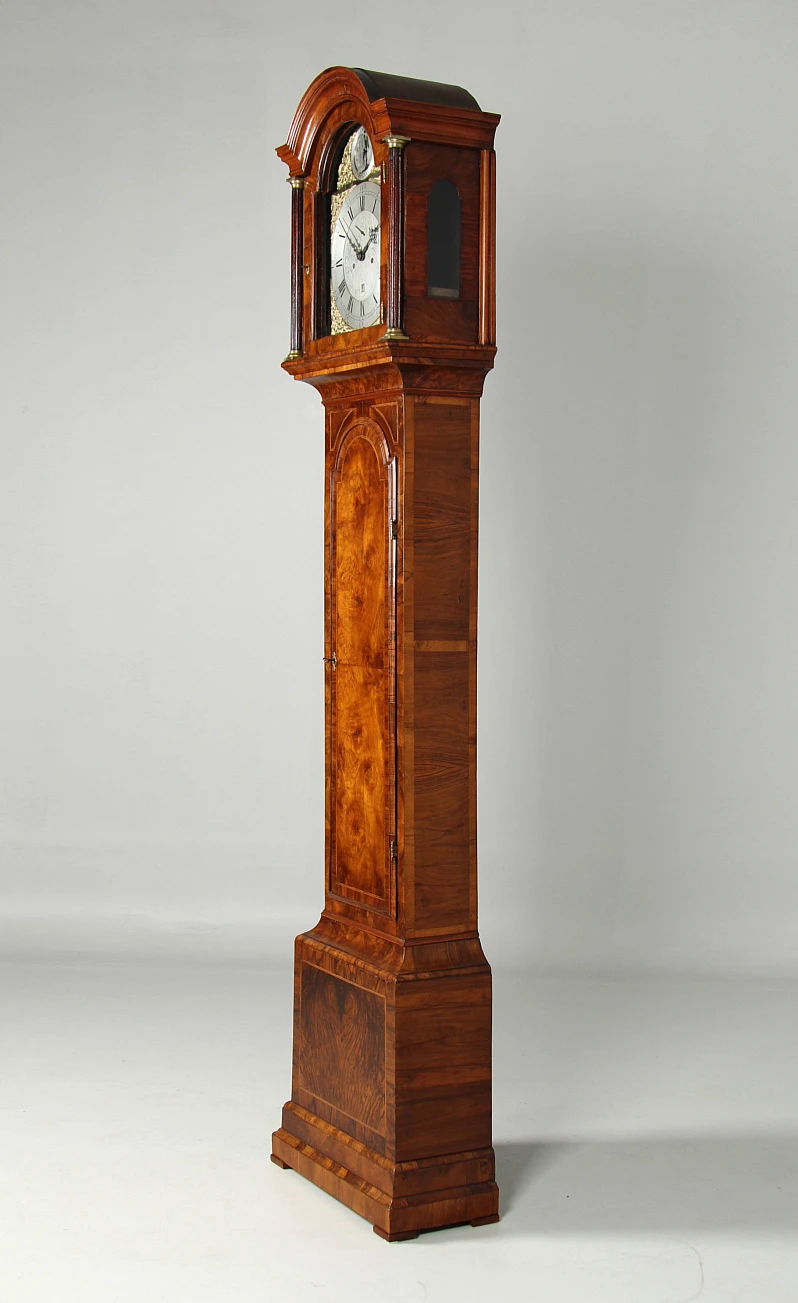
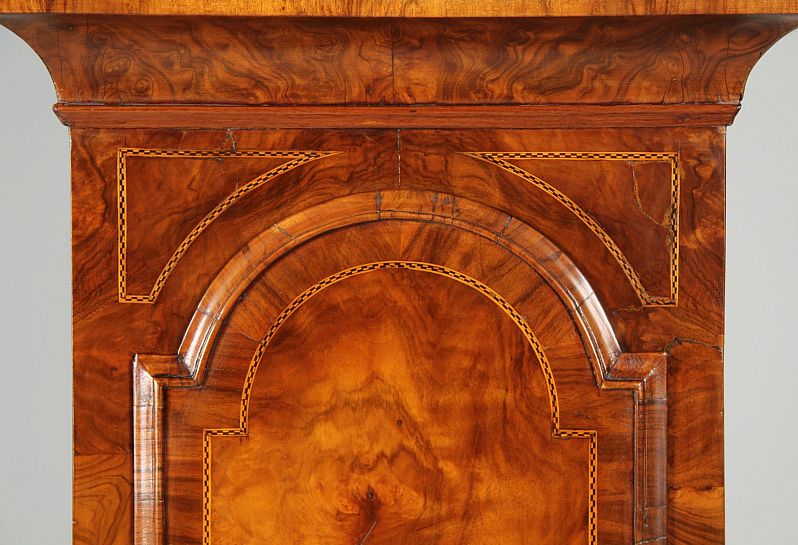
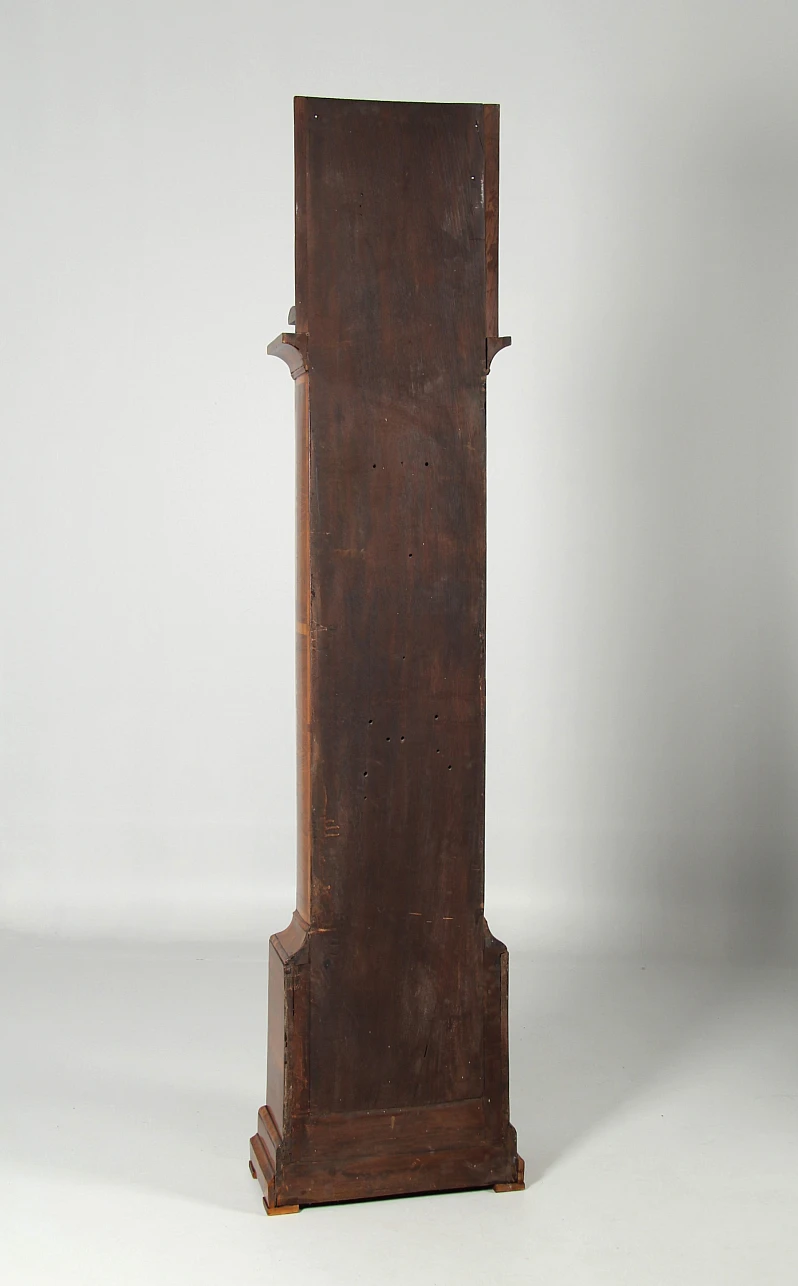
The body is made of solid oak and veneered with carefully selected walnut. The vividly grained veneer is laid in a mirrored pattern and is accentuated by fine fillet inlays contrasting light and dark.
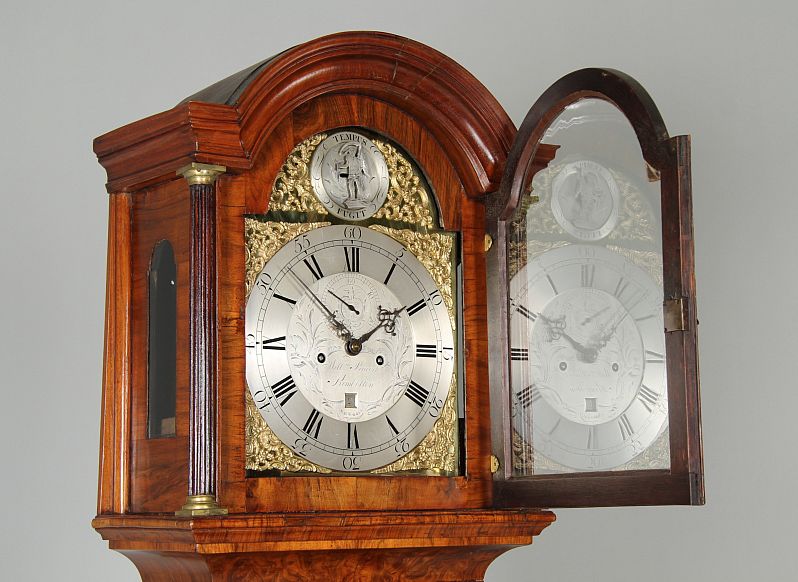
Both the door in the central section of the case, behind which the weights and pendulum are housed, and the glazed door of the clock head feature a rounded arch at the top. The slightly overhanging cornice is supported by fluted columns. Two side viewing windows in the clock head allow a view of the movement at any time.
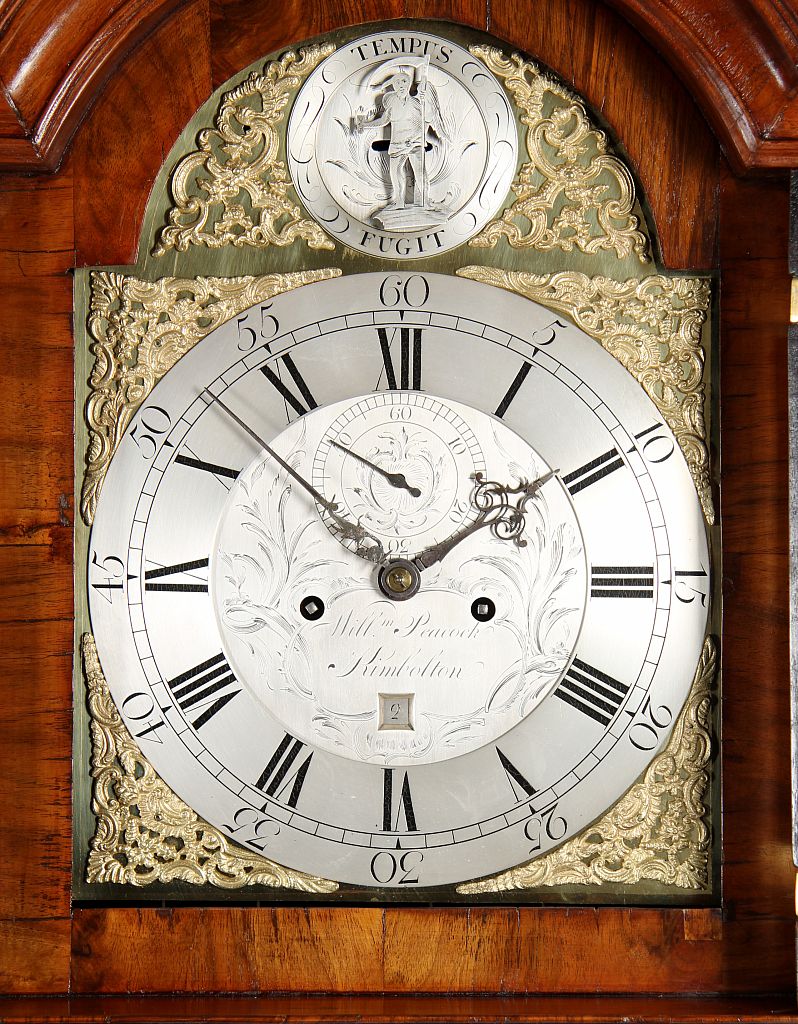
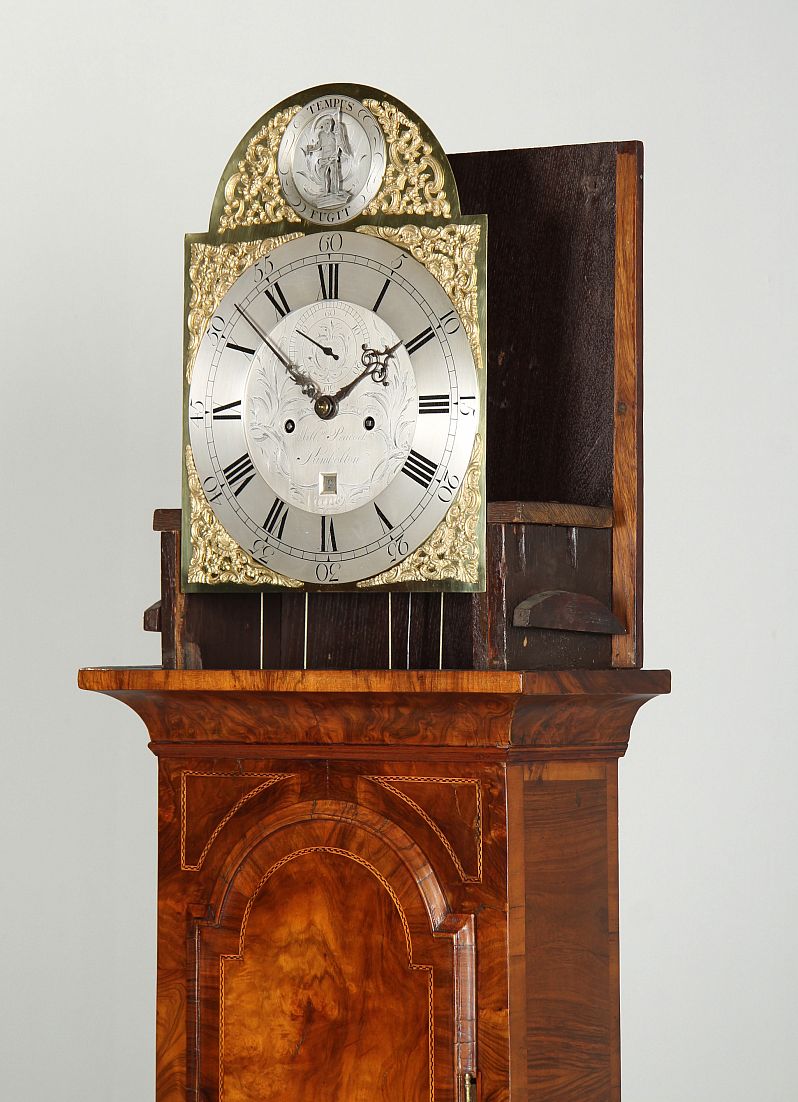
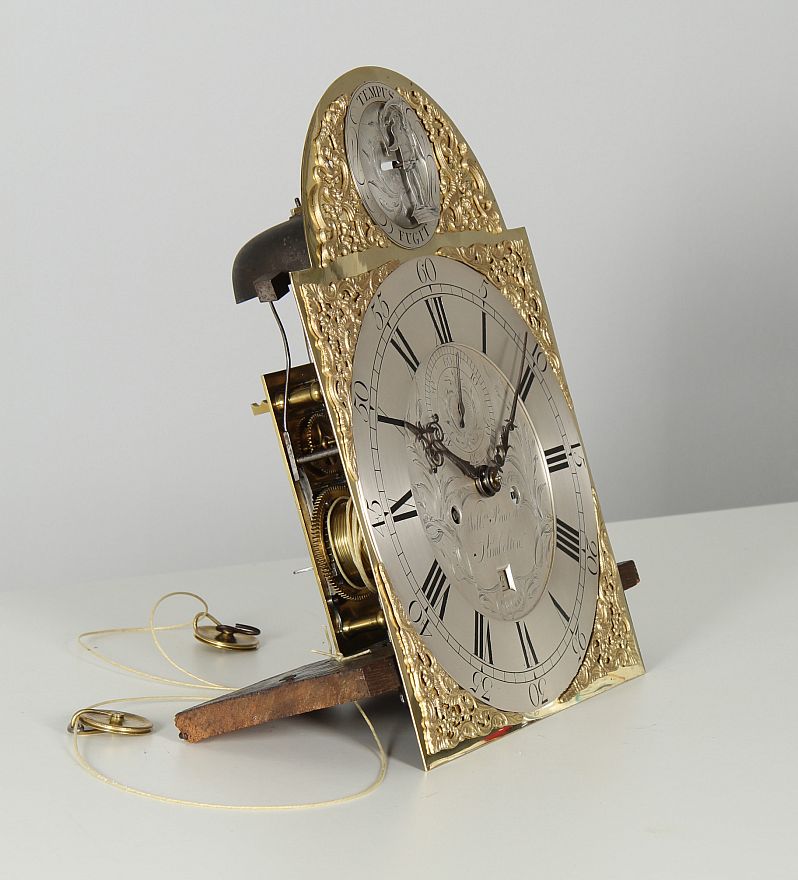
The elaborately designed dial deserves special attention. Framed by finely cast corner spandrels, which still clearly reveal the Rococo style, the silver-plated dial ring features Roman hour numerals and Arabic minute numerals. The numerals are engraved and filled with black shellac.
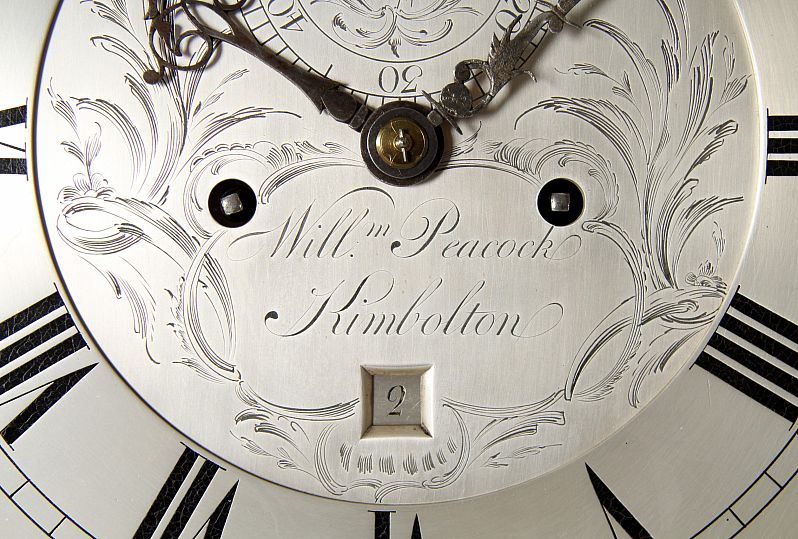
Inside the dial ring are finely engraved decorations surrounding the centre, which bears the signature of the clockmaker William Peacock, Kimbolton. Below the signature is a date window, and below the XII is a subsidiary dial for the seconds.
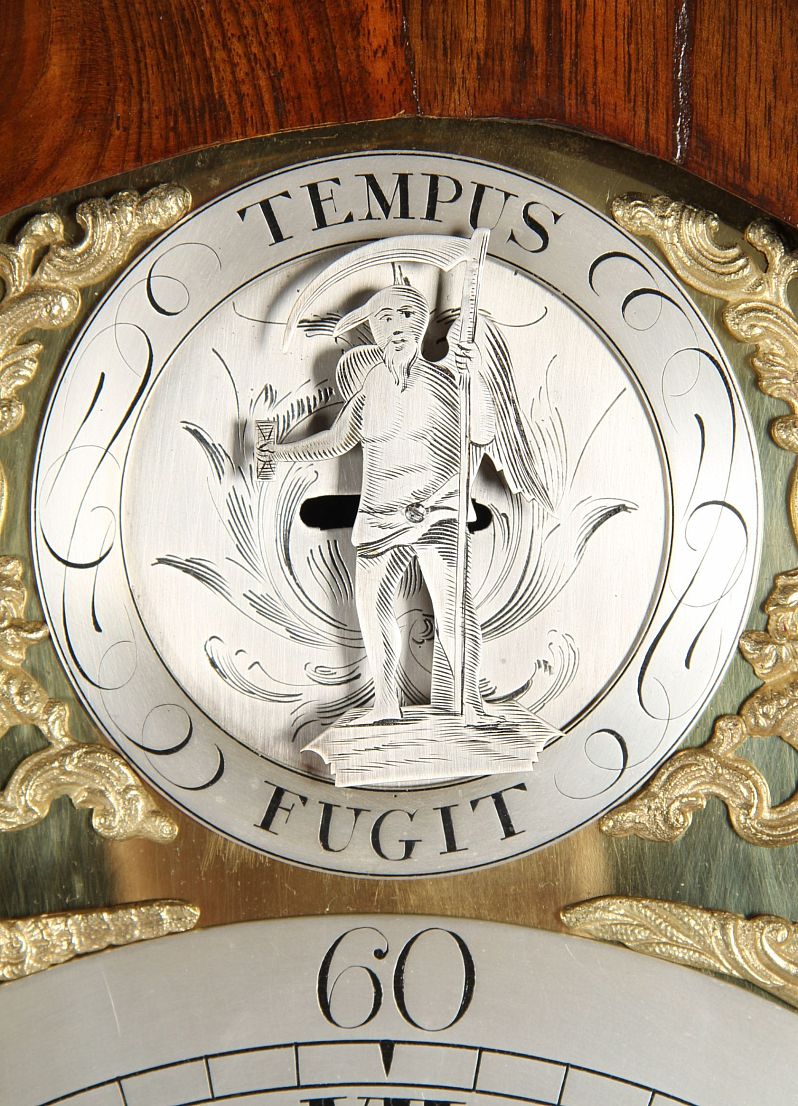
In the upper arch of the dial is the engraved inscription ‘Tempus Fugit’ (Time flies). Beneath this is a moving figure of the Grim Reaper, who moves in time with the second hand and holds an hourglass in his hand. This allegorical depiction served as a constant reminder to the devout inhabitants of the house of the transience of time and, by extension, the transience of life.
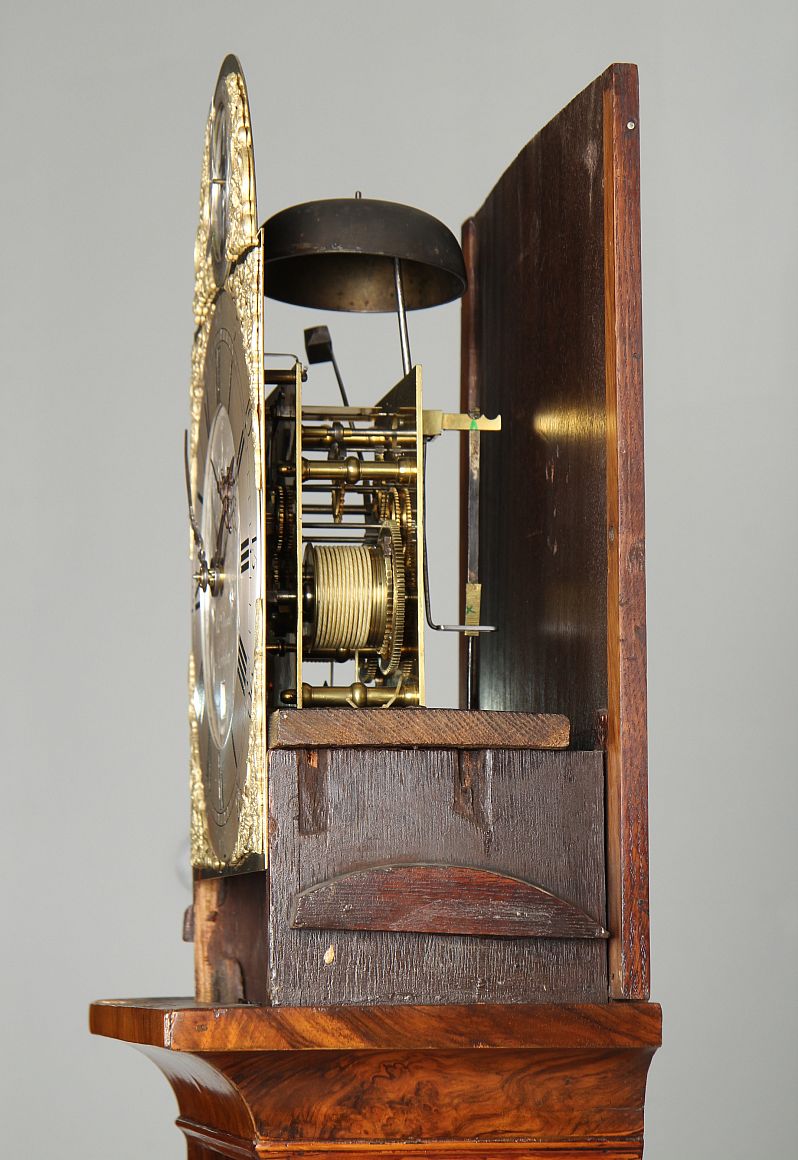
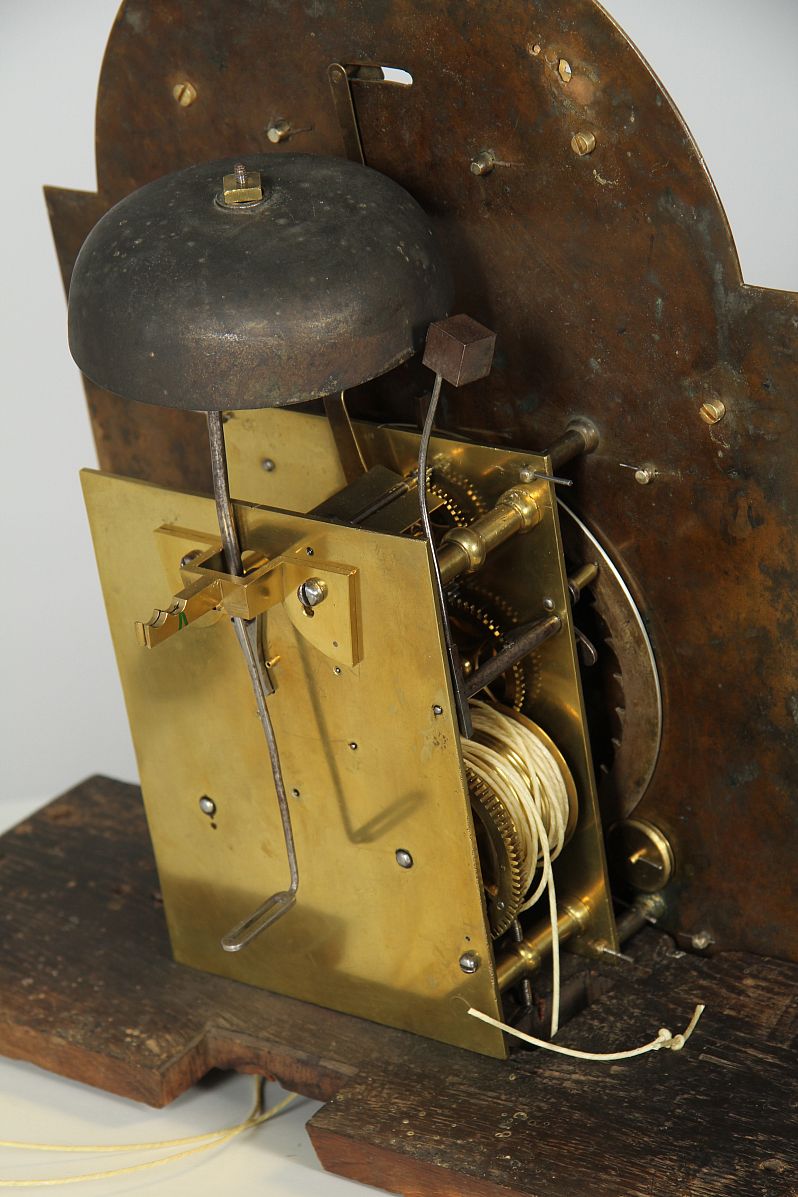
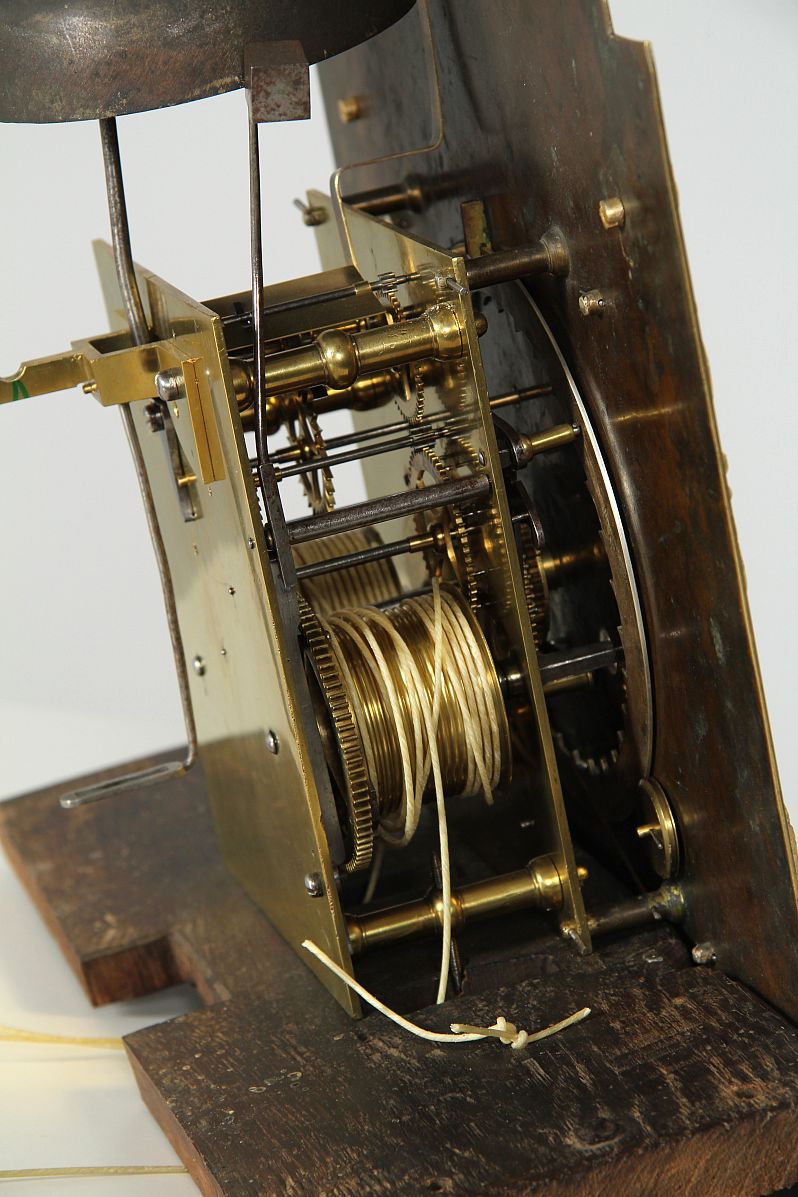
The movement is a solidly constructed, weight-driven plate movement with an hour strike on a bell. It has a power reserve of eight days.
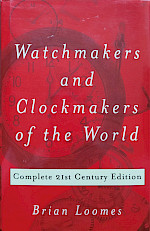
According to Brian Loomes’ *Watchmakers and Clockmakers of the World*, p. 600, the following information is available regarding William Peacock’s workshop:
William I. Peacock’s watchmaking workshop was located in Kimbolton, Huntingdonshire, from 1764 to 1807. From 1769 onwards, William I. Peacock is also recorded as a guild member in Bedford. Following his death, Samuel II Peacock took over the business and ran it from 1808 to 1842. His son, William II Peacock, then continued the family tradition and ran the workshop from 1842 to 1861.
Condition:
Very good, restored condition. The case has been polished with shellac whilst retaining its patina. The movement has been serviced and runs absolutely reliably and accurately.
Price: €6,800
You can find out more about the Peacock family of watchmakers in the following directories:
Brian Loomes - Watchmakers and Clockmakers of the World - Complete 21st Century Edition p. 600
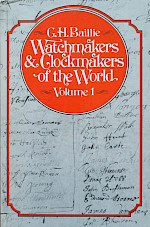
Baillie - Watchmakers & Clockmakers of the World - Volume 1 p. 246
Article found under: Clocks
Add to shopping cartVideo: Peacock Kimbolton Grandfather Clock
Also interesting
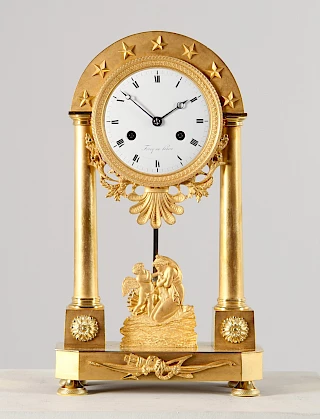
Small portal clock with bas-relief
France
Bronze, enamel
early 19th century

Pendule Portefaix
Paris
Bronze, enamel
Empire around 1810
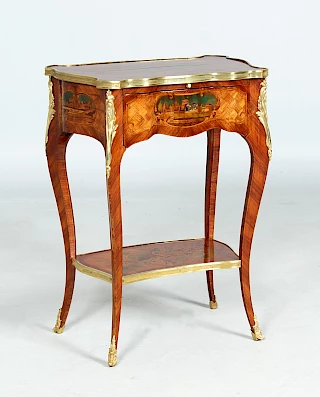
Finely inlayed ladies' desk
Paris
Rosewood a.o.
around 1880