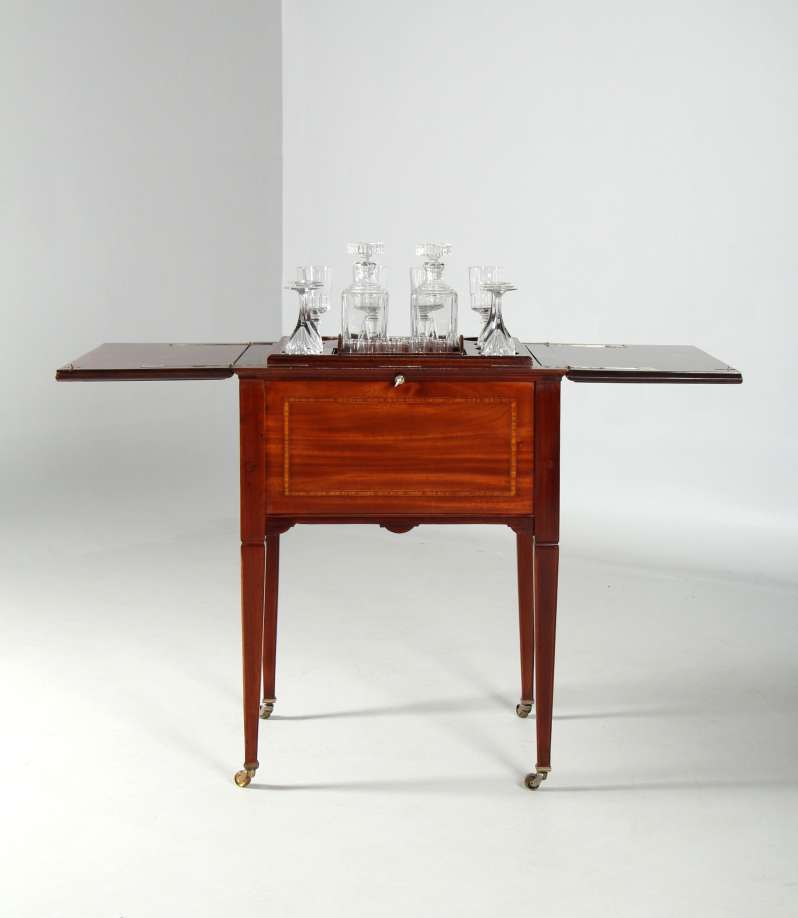
Video serving table with integrated bar
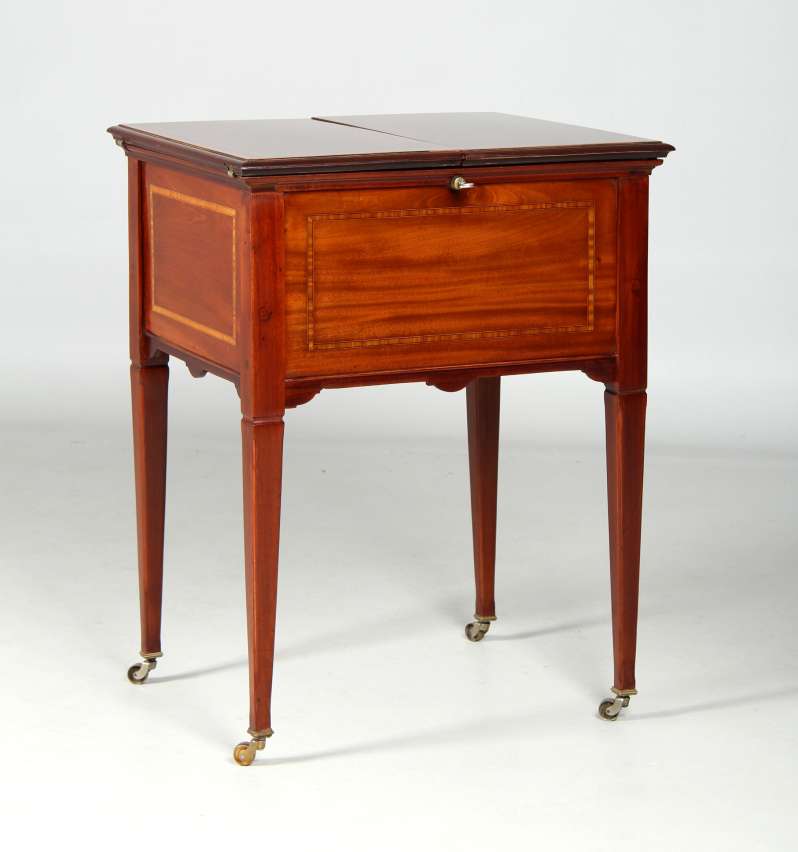
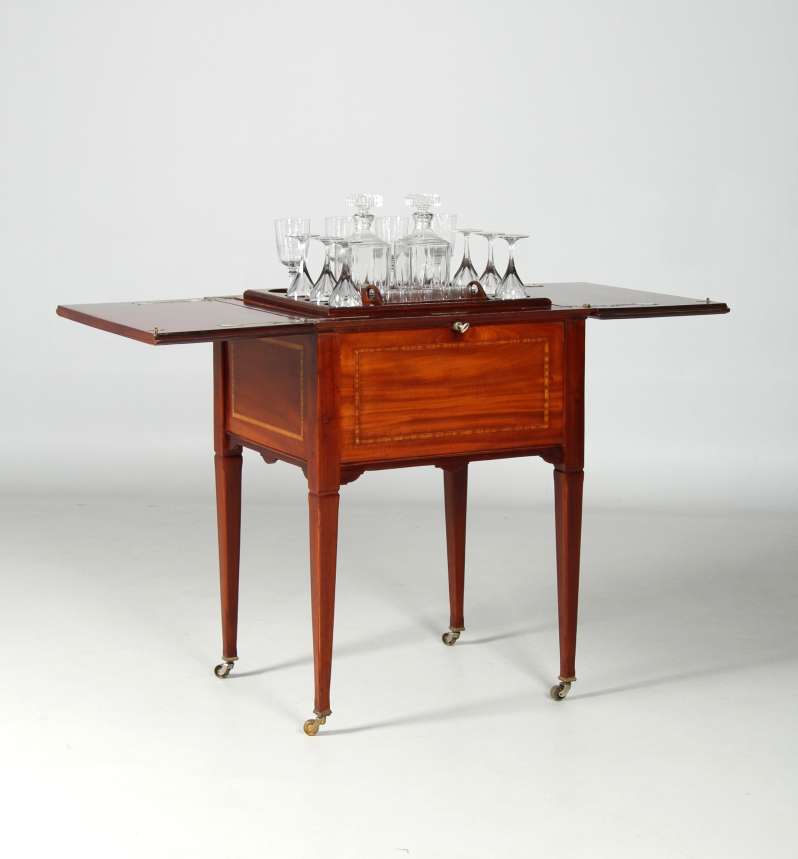
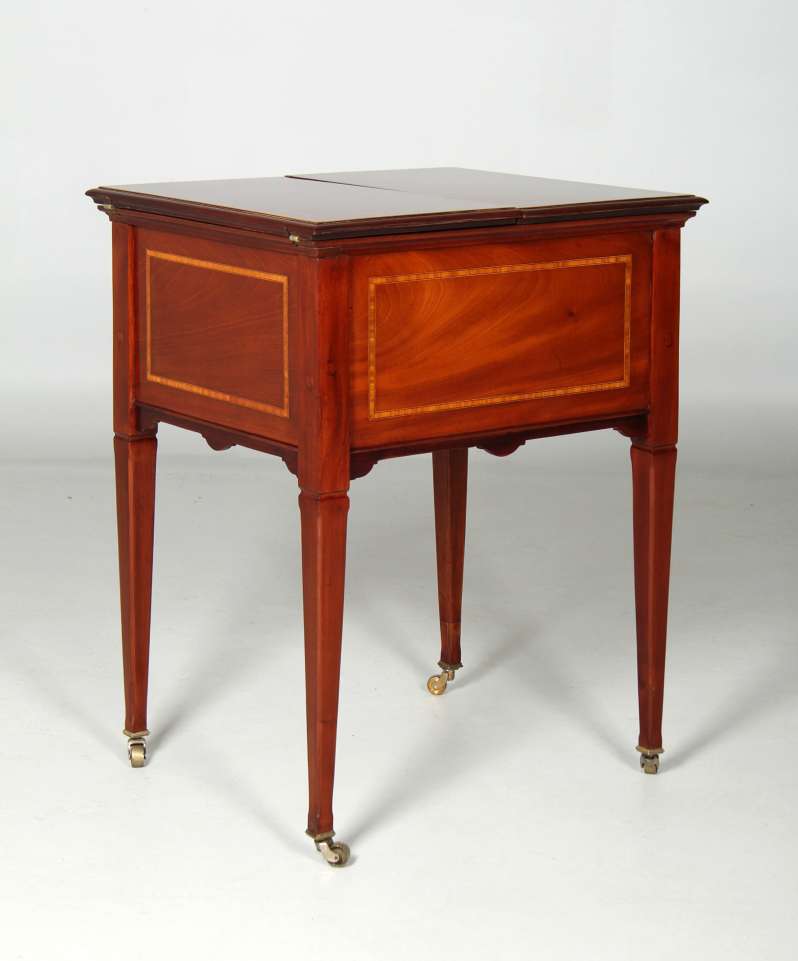
Antique serving table with hidden bar compartment
England
Mahogany
early 20th century
Dimensions: H x W x D: 79 x 60 x 55 cm
Description:
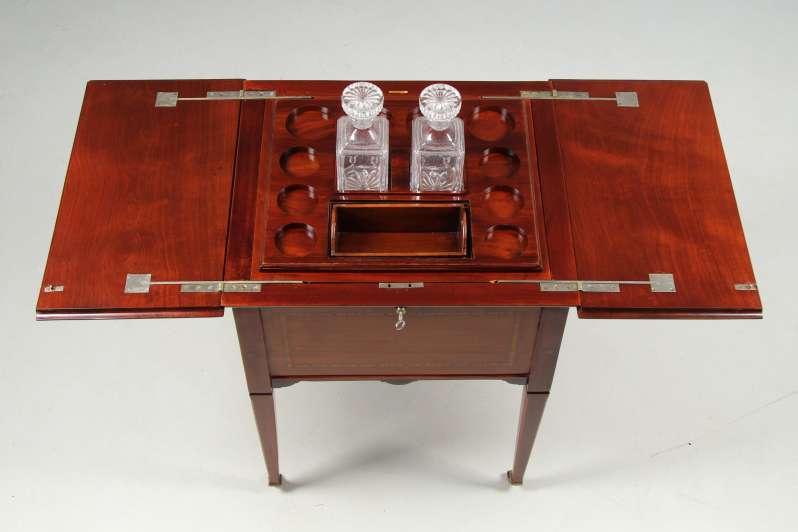
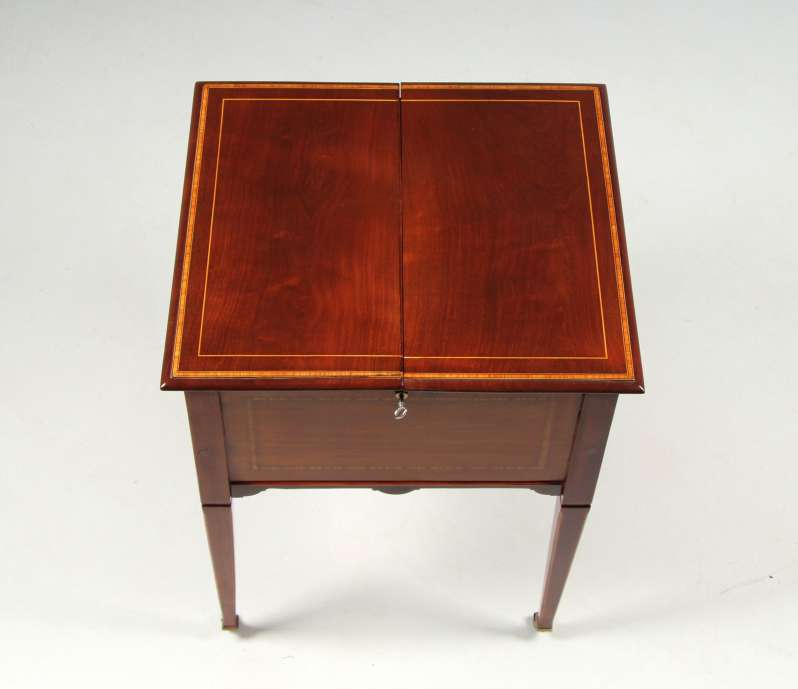
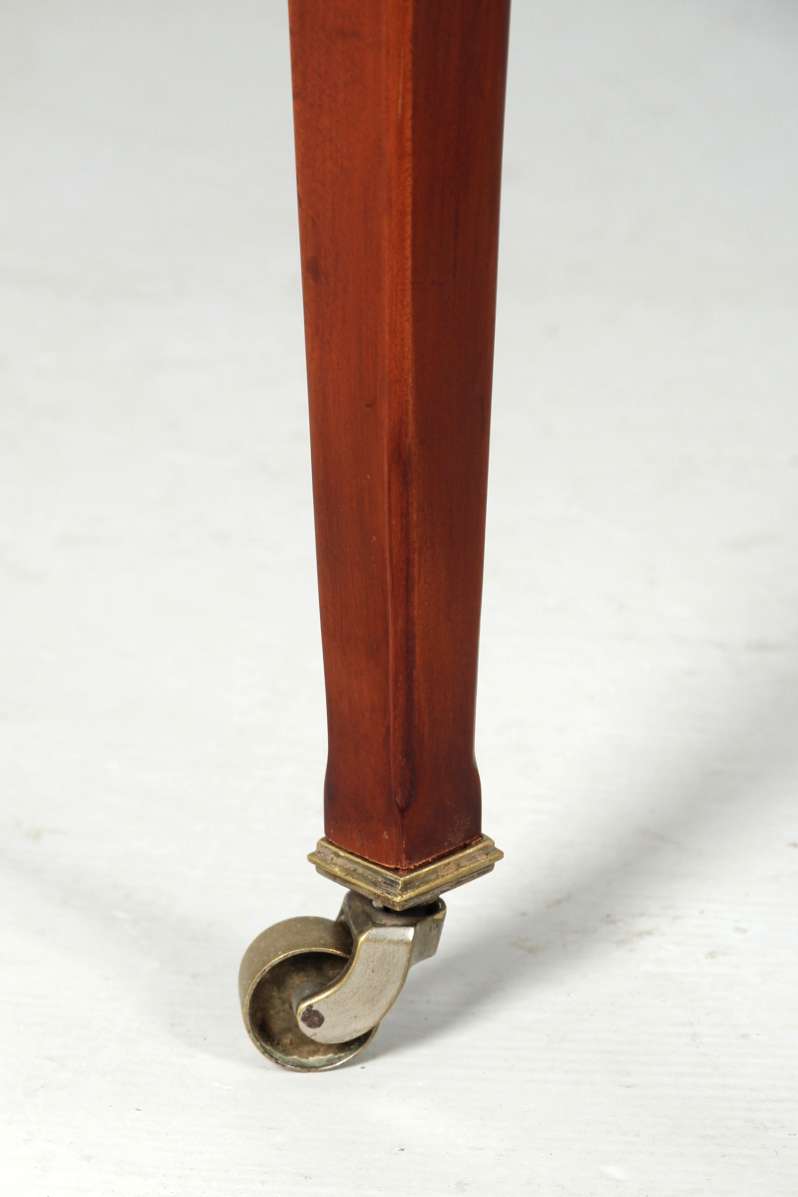
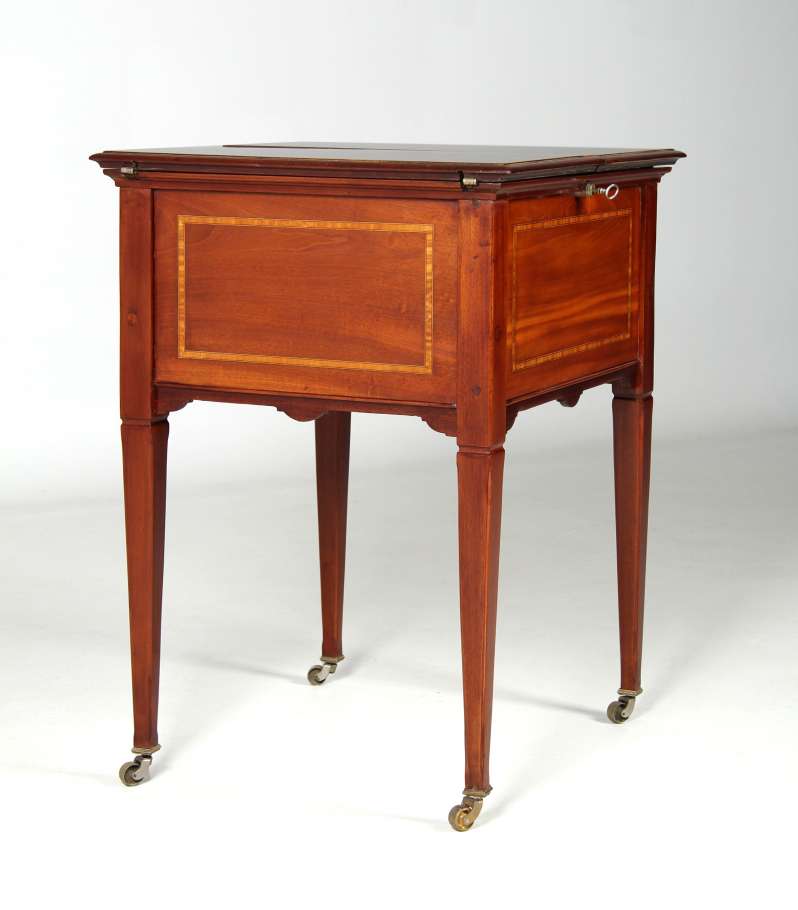
Side table on castors with tapered square legs and strikingly high frame.
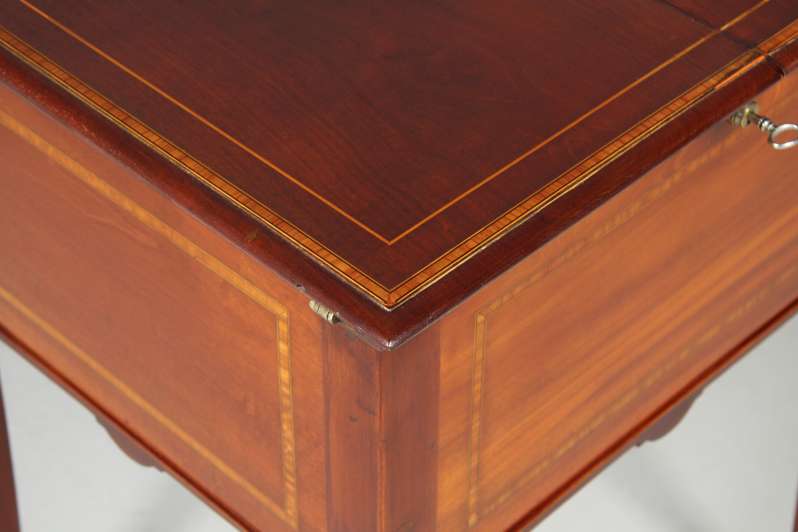
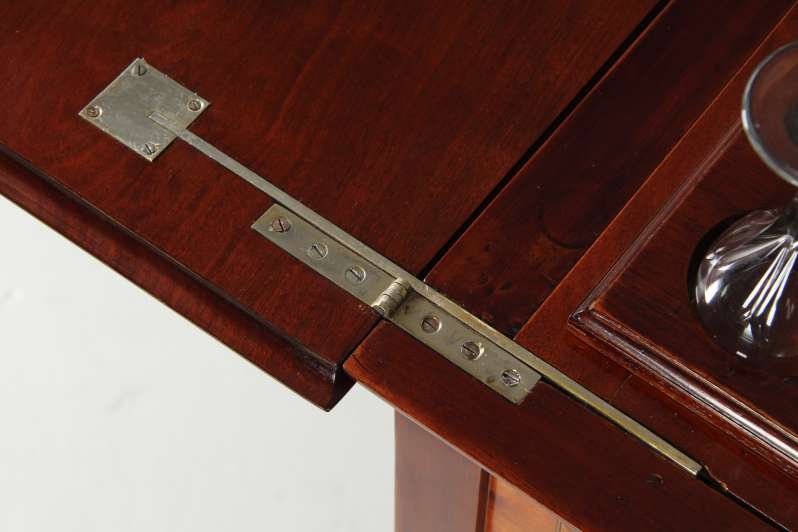
The frame parts are veneered in mahogany and are each simply veneered with multi-layered thread inlays. A similar design can also be found on the two-part top panel.
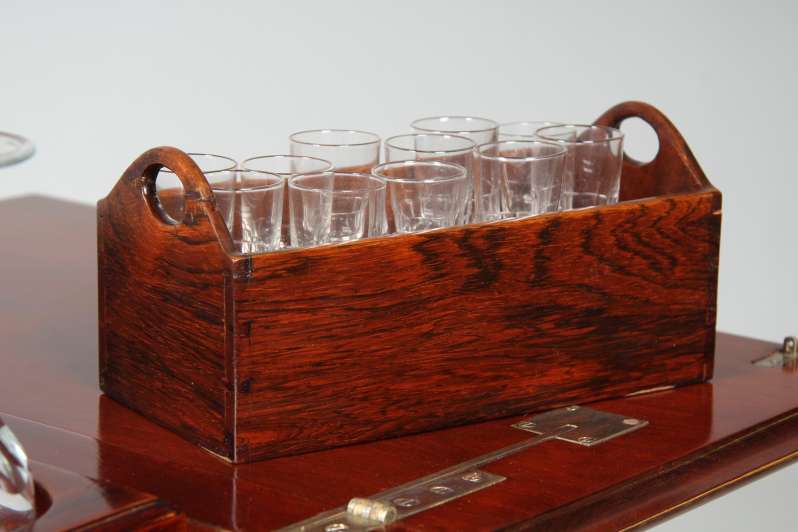
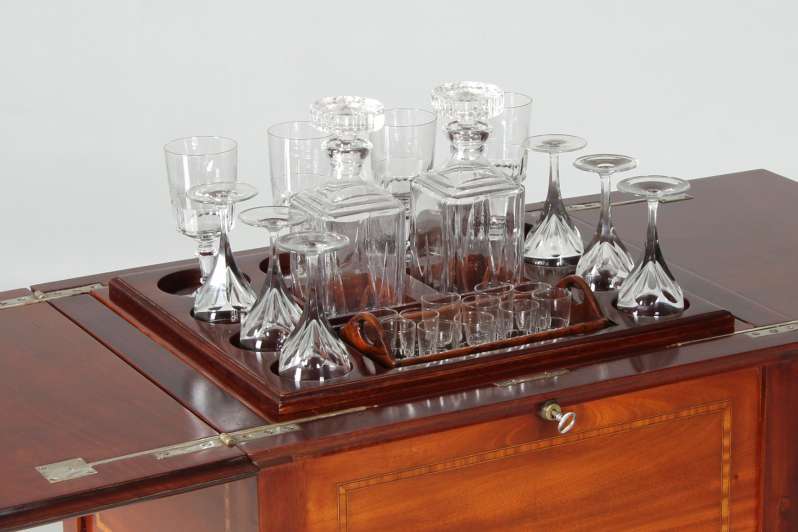
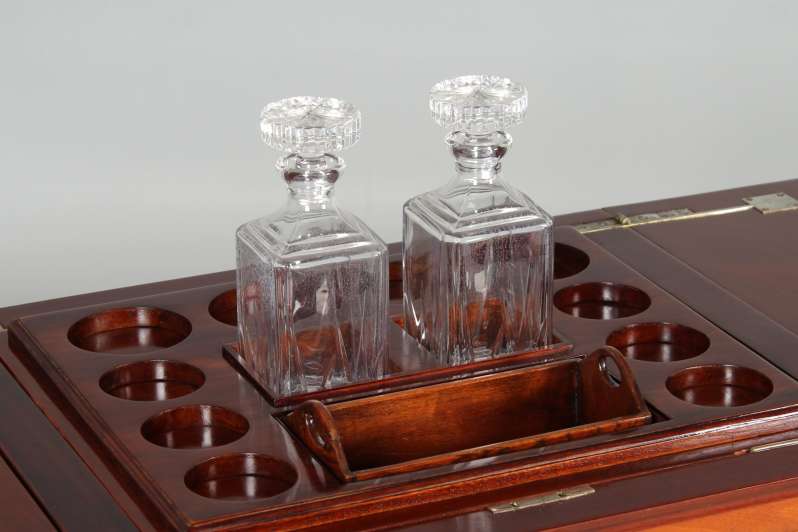
When the two top elements are opened, a compartment hidden behind the frame automatically rises up. The table thus turns out to be a serving table with an integrated bar compartment. This offers space for four larger and six smaller glasses as well as two carafes and also has a removable handle compartment for storing bottle openers and similar utensils. The two original carafes are included in the scope of delivery.
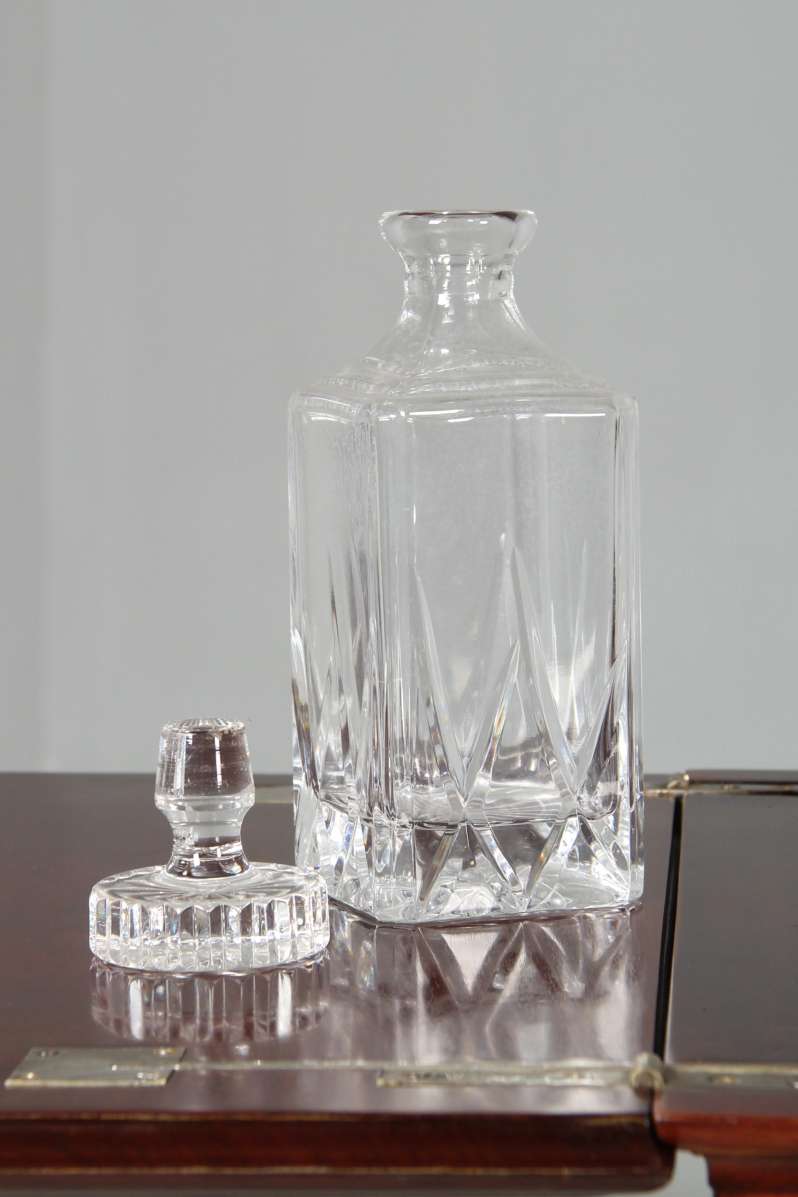
The two carafes have a faceted decoration that looks like a cut at first glance. On closer inspection, however, this is not subsequently cut glass, but so-called pressed glass, in which the decorative structure is embossed into a metal mould during production. The uniform repetition of the facets and their comparatively soft edges are typical features of this process.
During production, the molten glass is poured into a two-part metal mould and pressed into the desired shape and ornamentation using a pressing plunger. After demoulding, the pieces could also be fire-polished, which smoothed the surface and increased the lustre. This process made it possible to produce in series while at the same time achieving a decoratively sophisticated design.
The technique of moulded glass was developed as early as the 1820s and became widespread in Europe from the middle of the 19th century. By the turn of the century, it was so technically advanced that it was used specifically to imitate cut glass decorations. This method of production was particularly common for utility and table glass, such as carafes and drinking services.
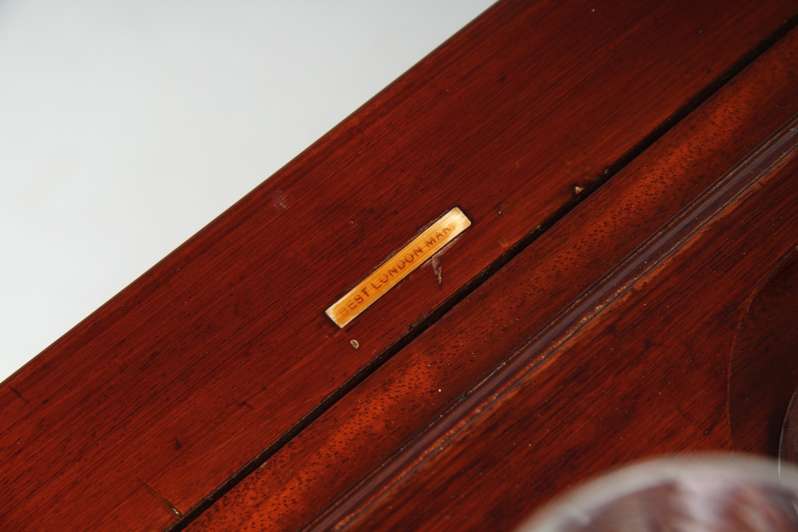
There is a plaque inscribed with the words "Best London Make" on the rear edge of the plate. This is not a specific indication of the manufacturer, but a designation of quality or origin, as was used in the late 19th and early 20th centuries, particularly for English export goods. "London" functioned as a seal of quality for craftsmanship, comparable to designations such as "á Paris" in the 19th century or "made in Germany" in the late 20th century.
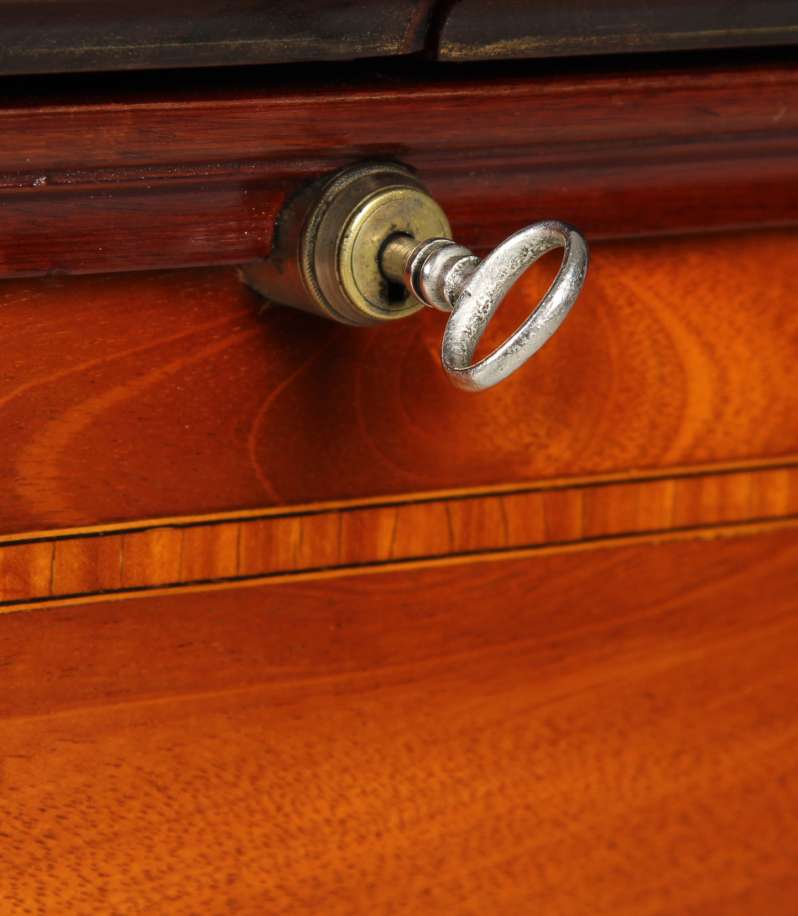
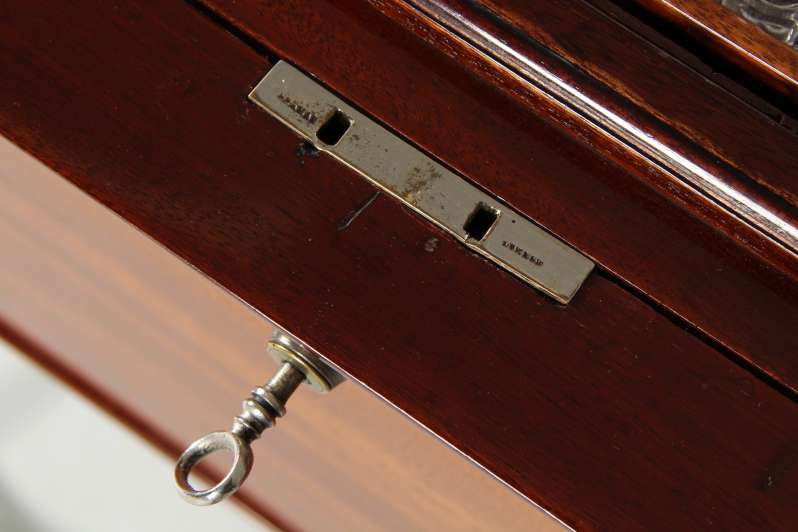
The recessed lock is stamped "Bramah London" on the plate and refers to the London manufactory, which has been known for technically sophisticated locking mechanisms since the late 18th century. It is a double-bolt lock, as was typically used in the 19th and early 20th century for caskets or folding sewing and game tables.
Condition: Restored and hand-polished with shellac.
Price: 2350,-€
Article found under: Tables
Add to shopping cartVideo serving table with integrated bar
Also interesting
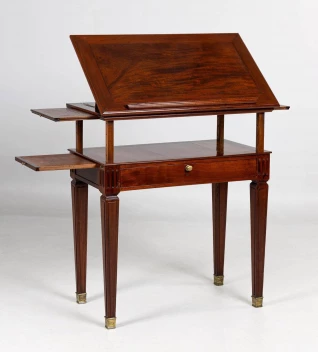
Height-adjustable desk
France
Mahogany
around 1800
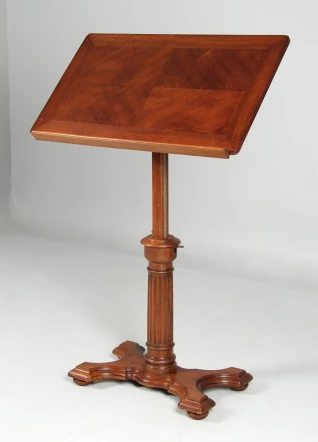
Antique "Table Soleil" - height-adjustable drawing table
France
Walnut
End of 19th century.
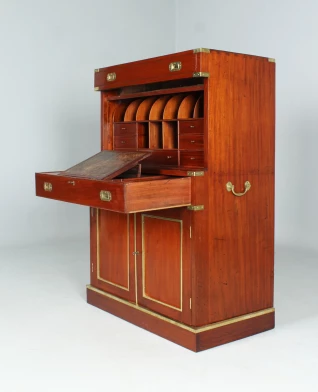
Military Campaign Chest of Drawers Secretary
England
Mahogany, brass
Victorian around 1890