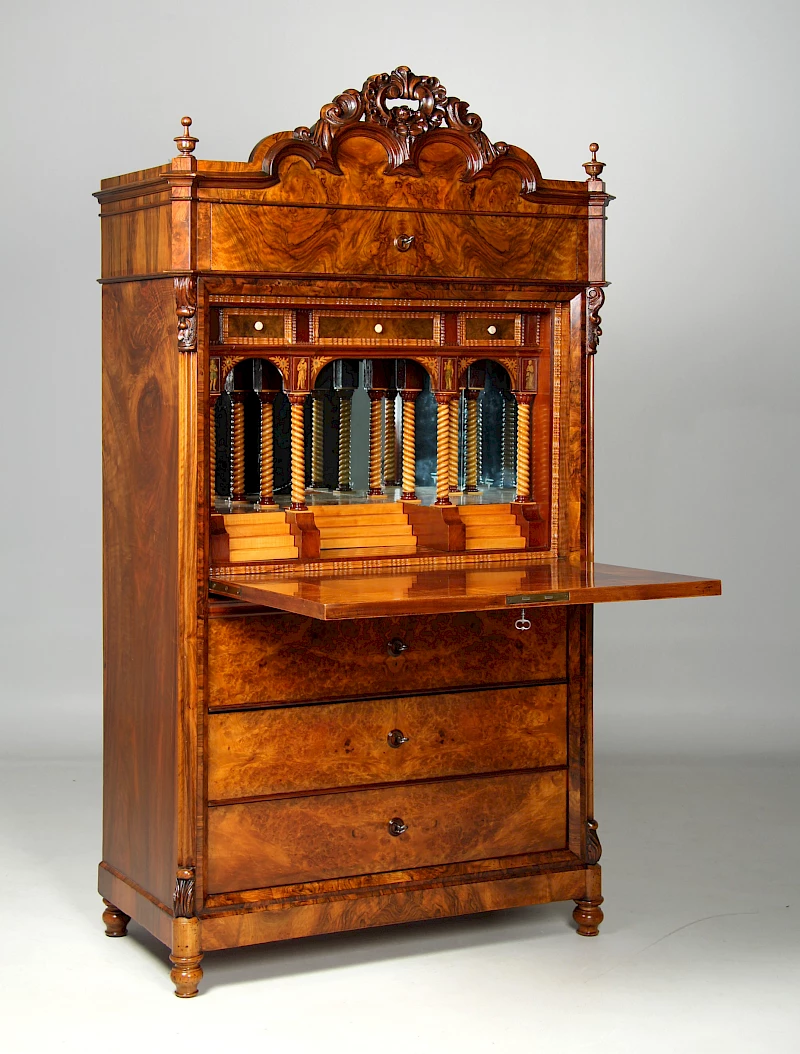
Video historicism secretary

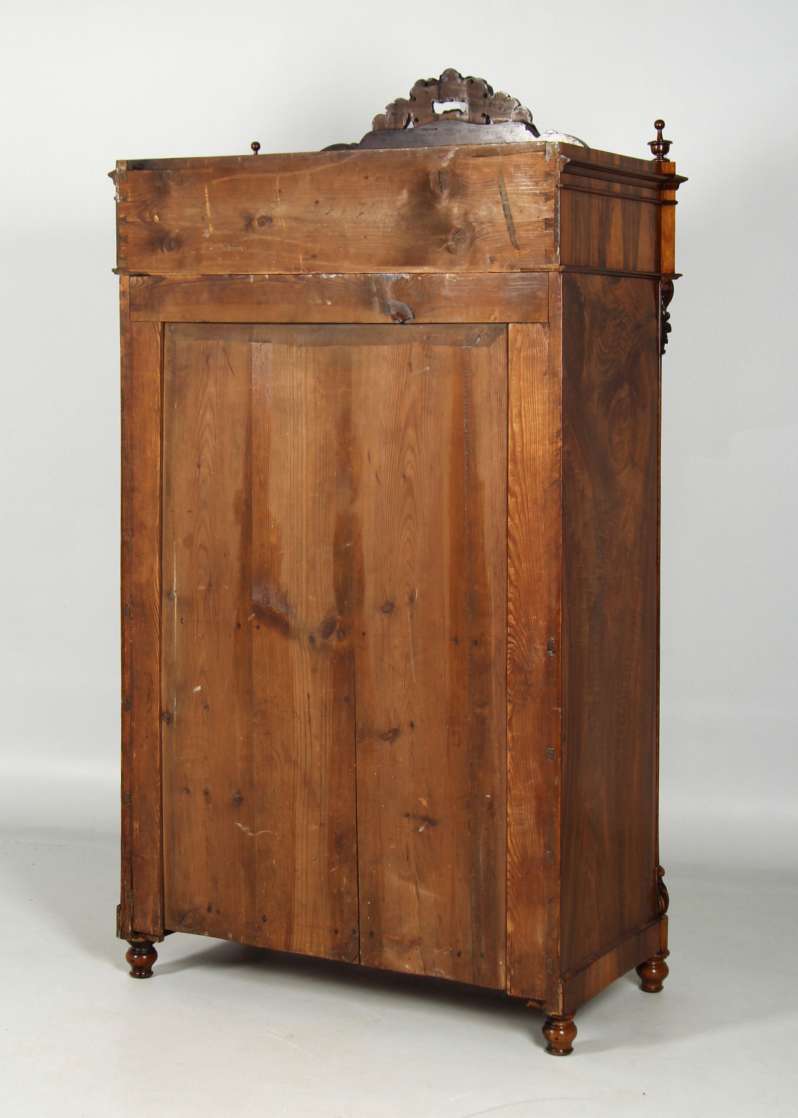
Historicism secretary with illusionist interior design
Germany
Walnut
around 1870
Dimensions: H x W x D: 185 x 106 x 56 cm
Description:
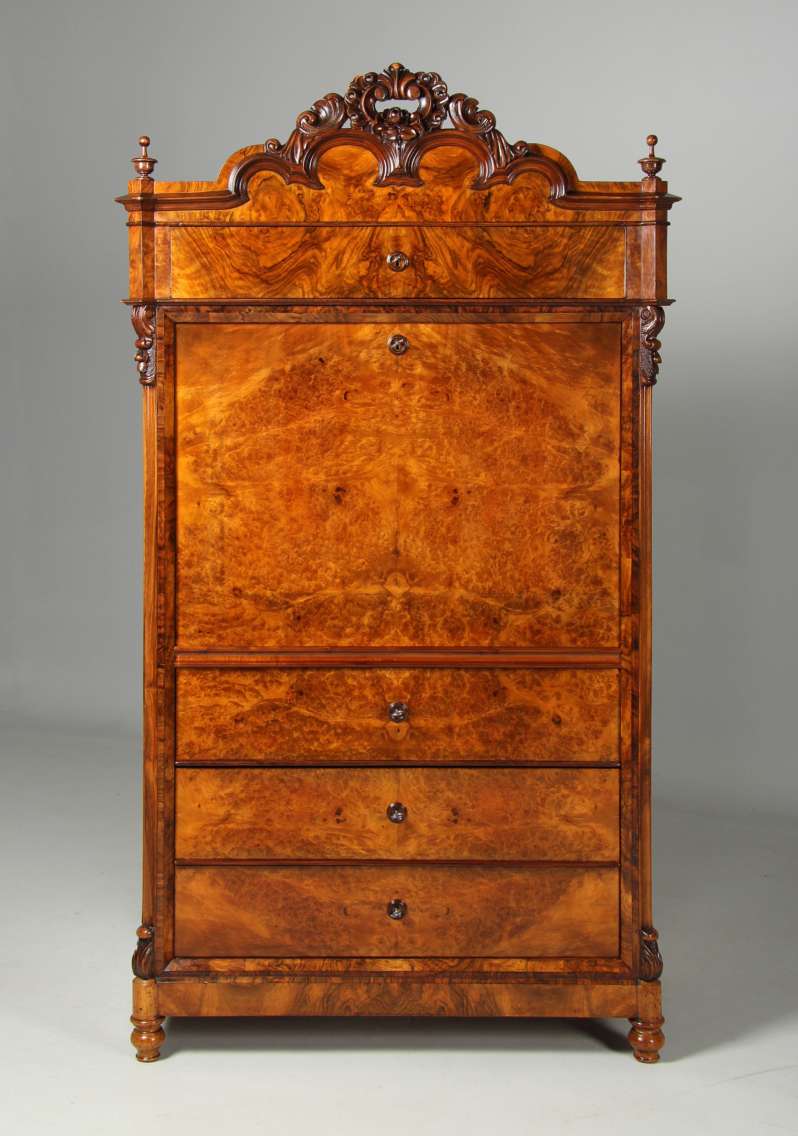
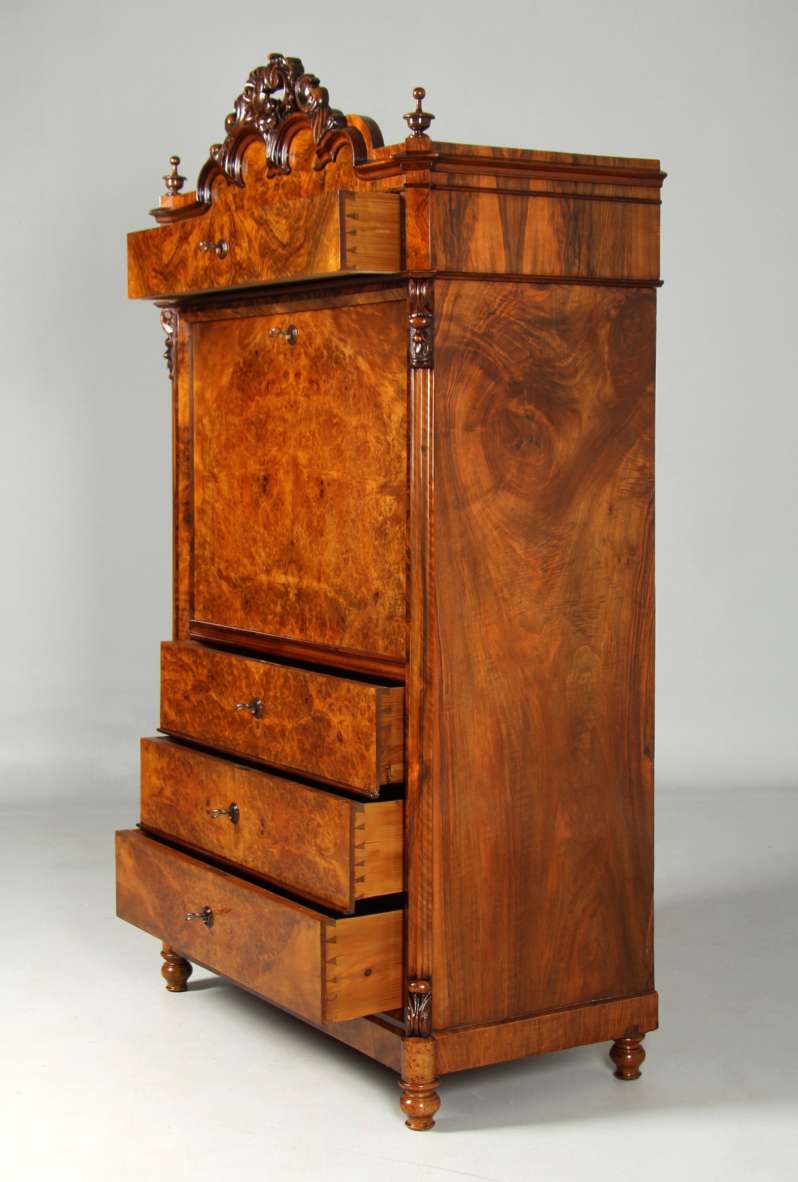
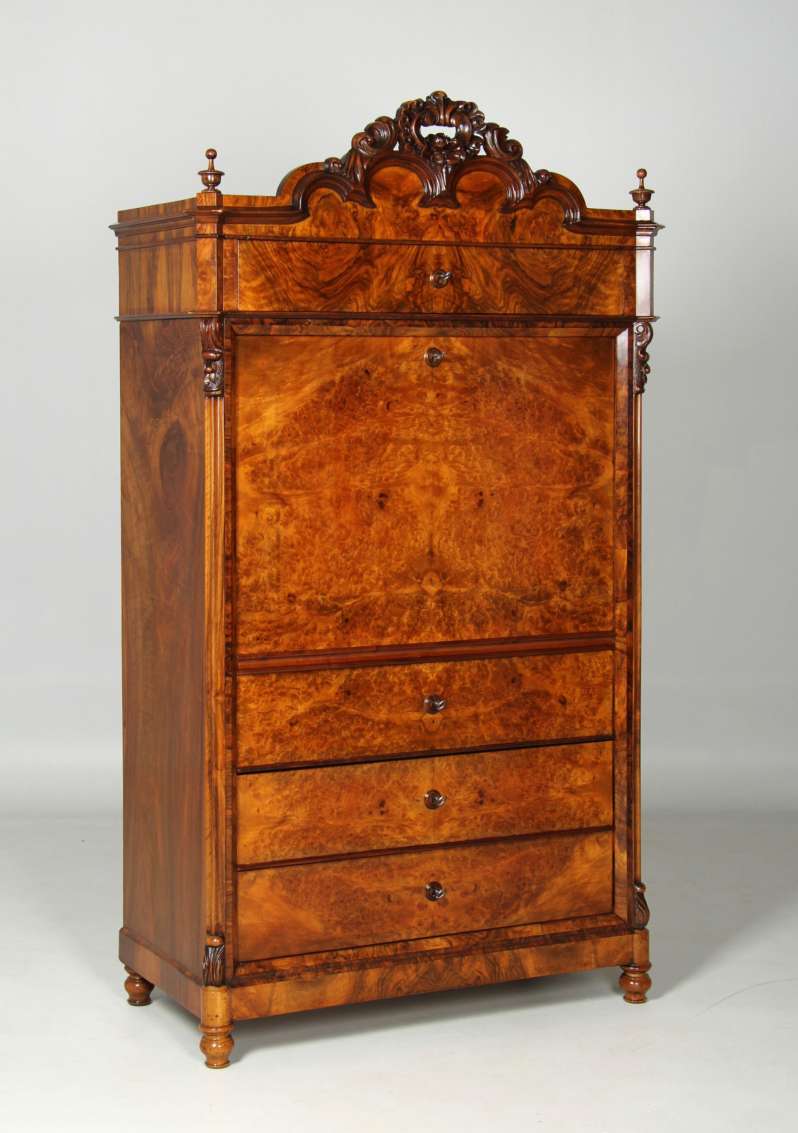
Exceptionally elaborately crafted historicism secretary from the 1870s from the Louis Philippe / Gründerzeit era.
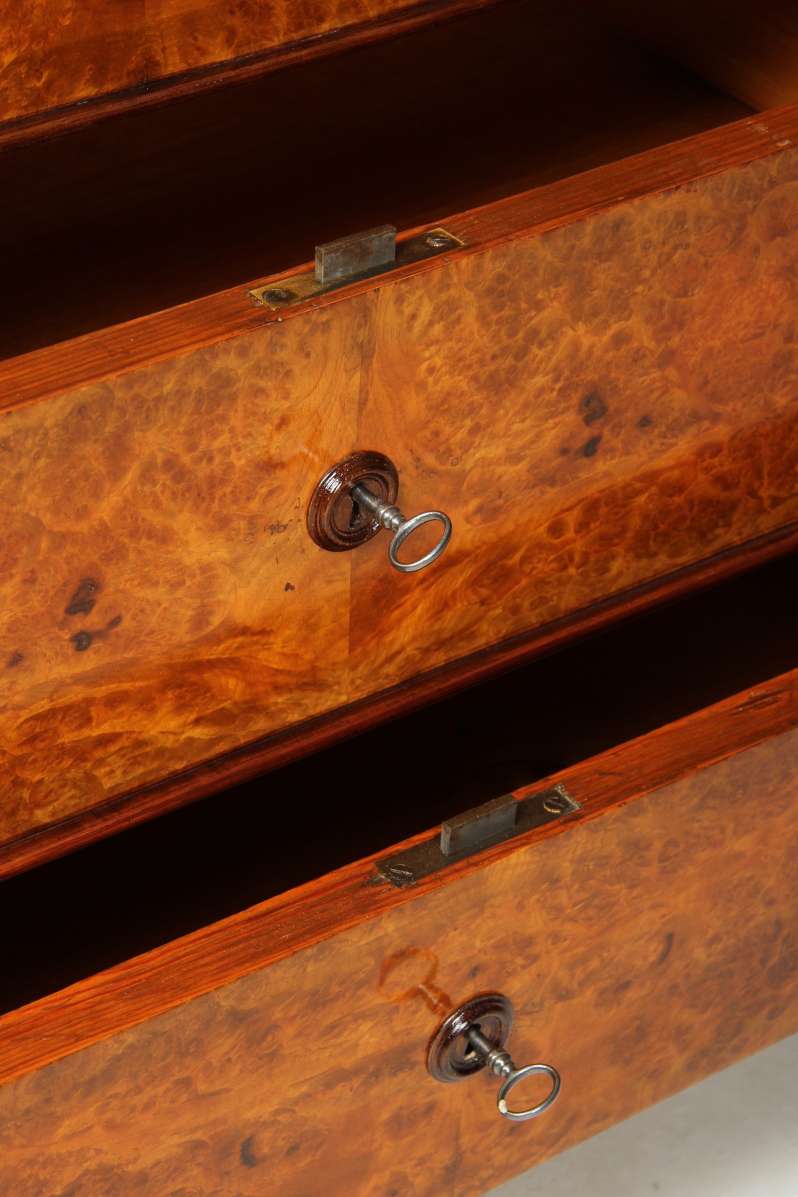
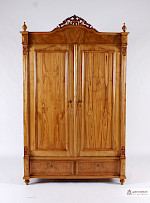
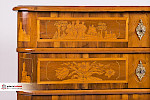
The front surfaces of the three lower drawers and the secretary flap are slightly recessed in a cross-veneered frame. This part of the furniture is veneered with burl wood, the mirror-image pattern of which ensures calm and harmony in the front of the furniture.
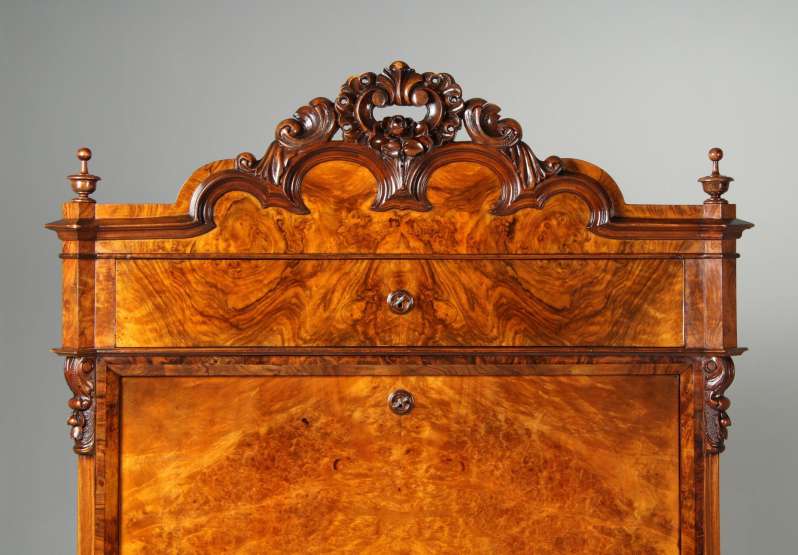
Above this is the slightly wider projecting top level of the piece of furniture, supported by decorative consoles and fitted with a further drawer. This upper section of the furniture and the sides are veneered in walnut and have a particularly decorative grain pattern.
The upper end of the cabinet is topped by a carved neo-Rococo top with floral motifs, shell ornamentation and curved C-shaped volutes. Small pinnacles accentuate the sides.
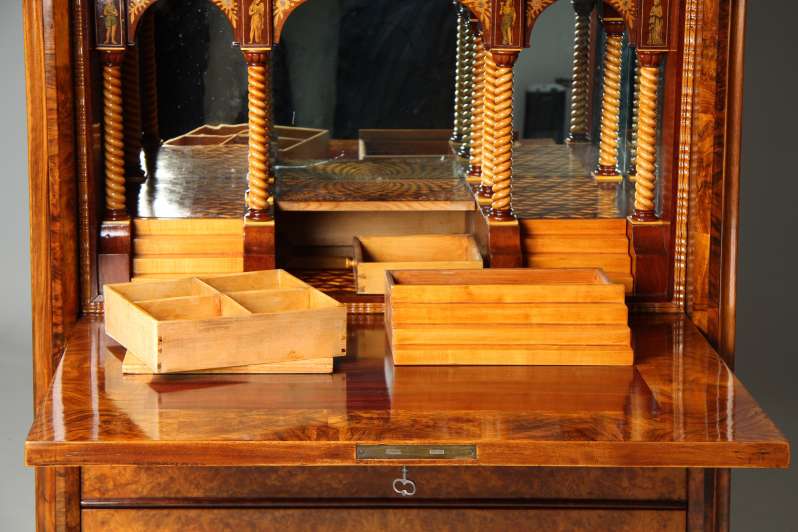
The interior of the writing desk is particularly spectacular.
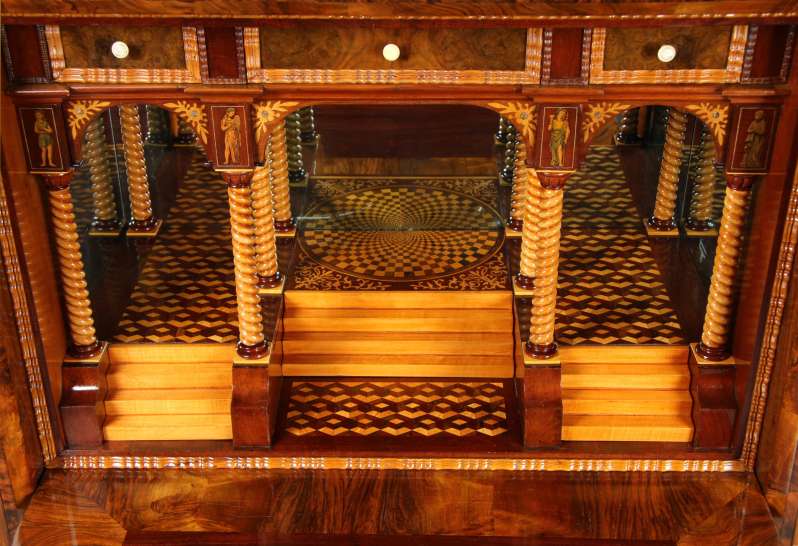
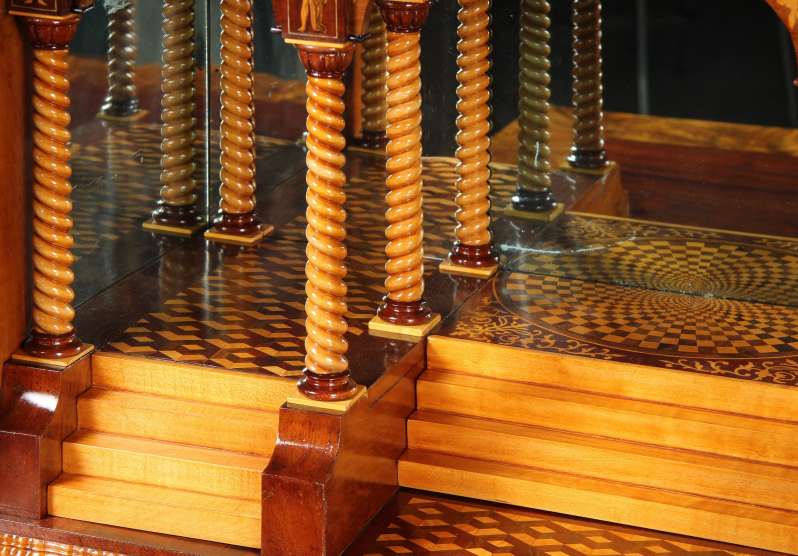
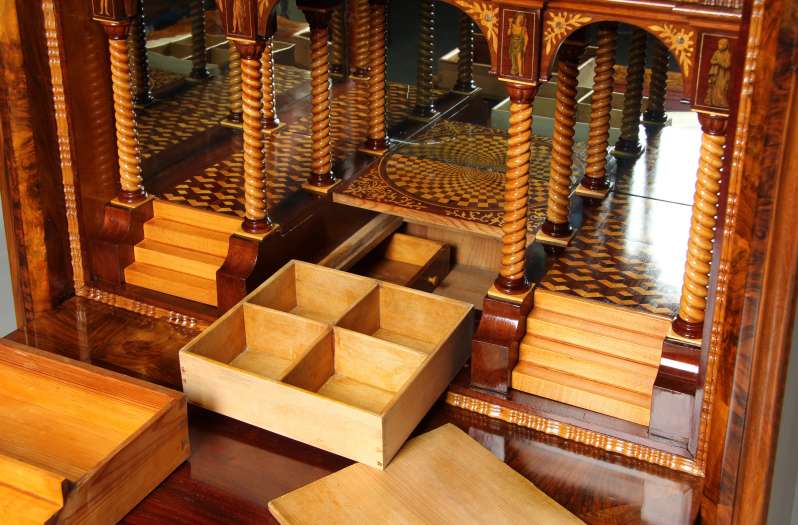
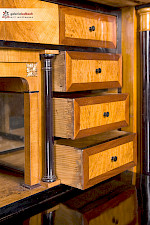
Like a theatre stage, an architecturally staged interior design opens up with three round archways and a total of ten twisted columns supporting the arcades.
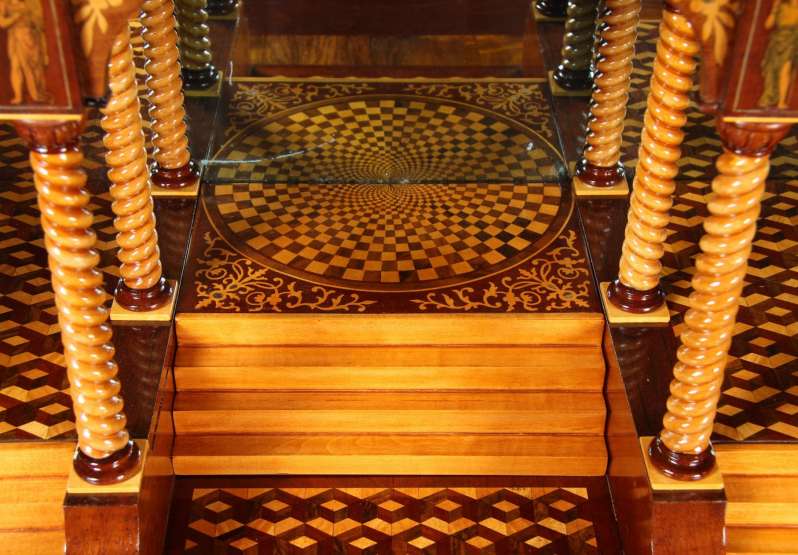
Staircases lead to the parquet floor panels, which are executed with exceptional precision. The strictly geometric inlays form an exciting contrast to the otherwise softly curved and playful forms of the furniture.
The master craftsman succeeded in giving his marquetry a remarkable degree of plasticity and illusionary spatial depth. He achieved this through the targeted use of strongly contrasting woods and the deliberate alignment of the wood fibres to enhance the perspective effect. This resulted in trompe-l'œil-like cube shapes that seem to emerge from the surface and almost tempt the viewer to run their hand over the surface to check the supposed relief effect.
The cube marquetry was presumably not constructed from individually inserted pieces of veneer, but cut from previously glued pattern rods, the cross-section of which already predetermined the illusionistic cube structure. This method allowed for an exceptionally precise and regular realisation of the perspective parquetry.
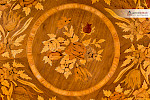
The execution of the central veneer pattern is different: a semicircle of veneer segments that become smaller and smaller towards the centre, the technical production of which seems almost impossible to comprehend. The centre point in particular is remarkable, as this is where a large number of radially converging joints meet in a very small space. Even the smallest inaccuracies would visibly disrupt the overall geometry. The fact that the effect nevertheless appears so cohesive is testament to the extraordinary quality of the craftsmanship.
The spatial effect is enhanced by mirrors mounted on three sides, which endlessly repeat the intricate inlay work, especially on the sides, and turn the central semicircle into a closed circle.
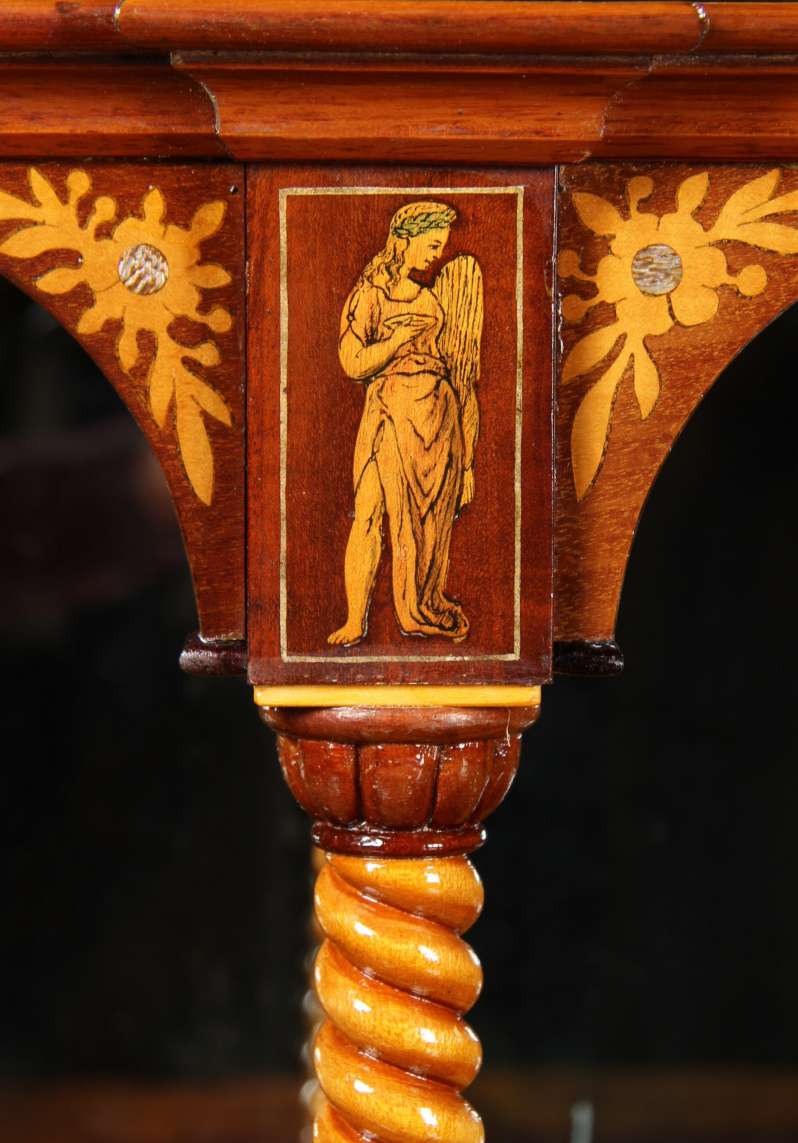
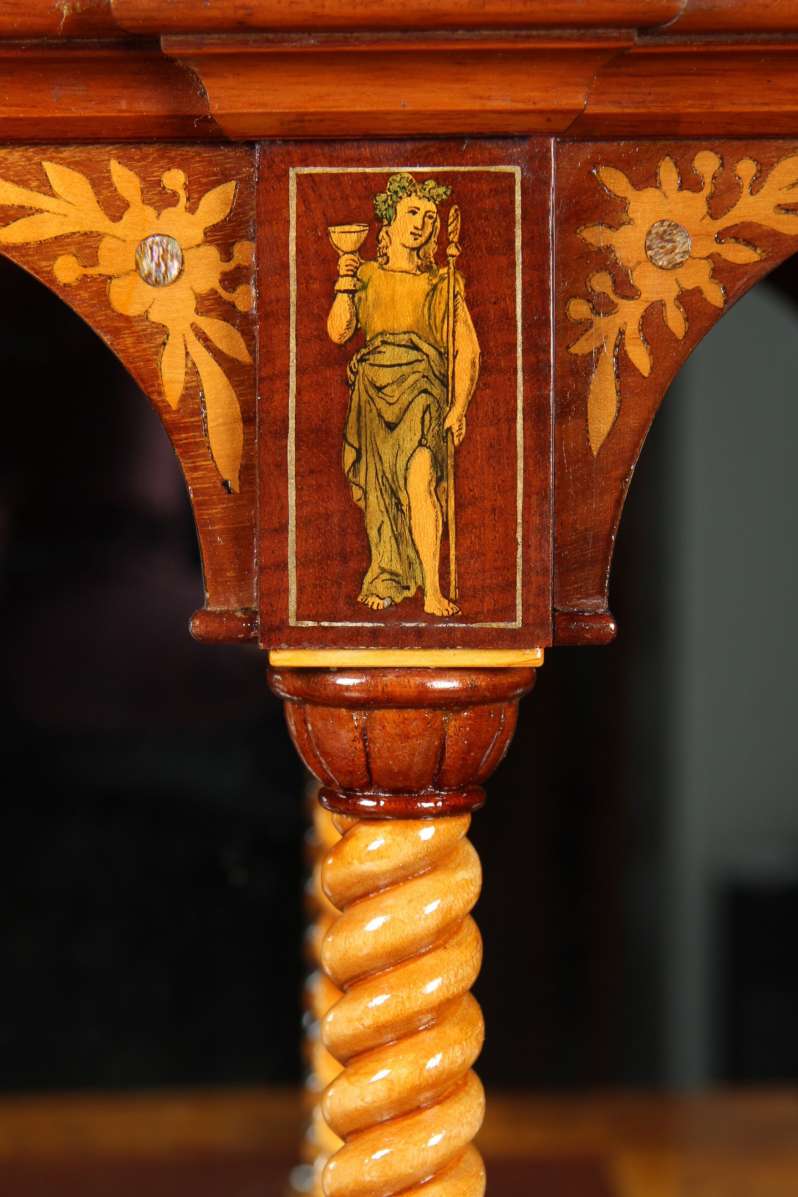
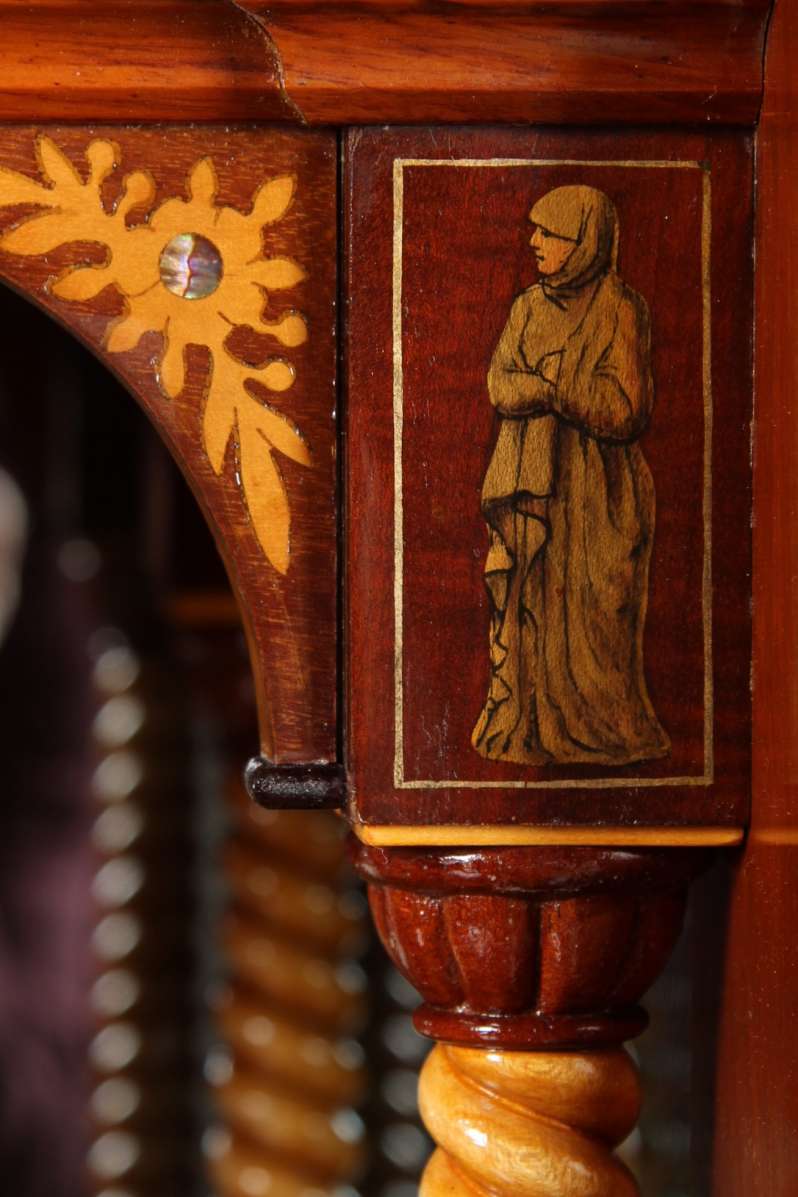
Above the so-called corkscrew columns are inlays with figures from the design repertoire of classicism. Positioned directly at eye level, the antique-style depictions lend the architecture of the interior compartment an almost temple-like effect.
It is not clear who the figures are. It could be Flora with a wreath of flowers on the far left. Next to it is probably a winged Victoria with a laurel wreath. The following figure with chalice and thyrsus staff is strongly reminiscent of a depiction from the Dionysus or Bacchus cult. The veiled figure on the outside, in turn, looks like a personification of mourning, contemplation or piety.
To summarise, it can be said that the interior of the writing case not only meets the highest standards of craftsmanship, but is also a showpiece of historicism. The twisted columns are reminiscent of the Baroque style, the arcades of Italian Renaissance architecture and the perspective floor marquetry is almost reminiscent of Cosmati floors from the Middle Ages.
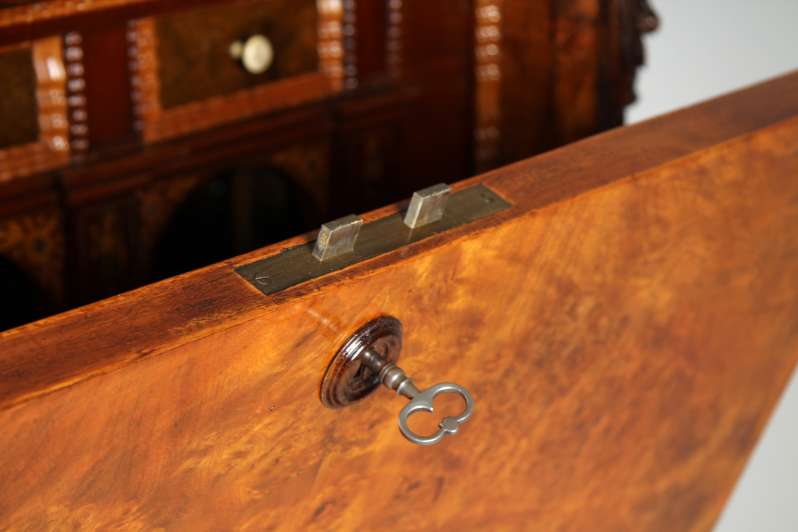
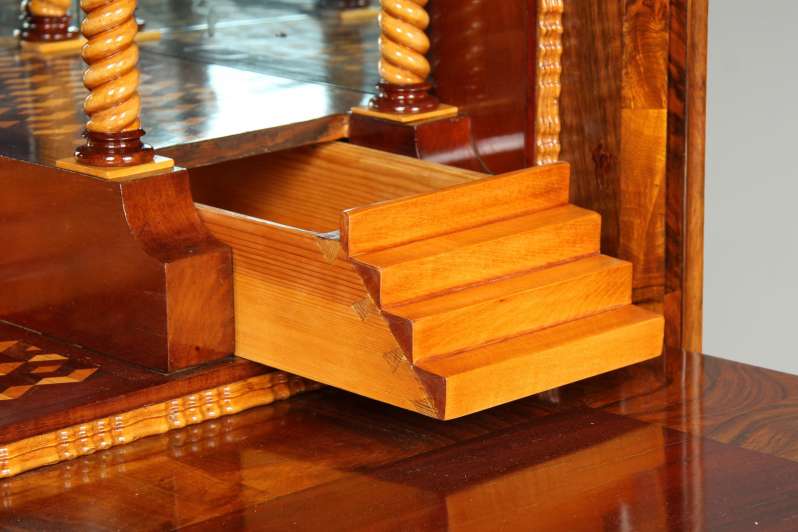
Underneath the interior, concealed under a removable base, there is a large secret compartment with a removable insert and two further drawers.
Condition:
Flawless, restored condition with a shellac hand polish.
Price: 7850,- €
Article found under: Secretaries
Video historicism secretary
Also interesting
Directoire folding-top secretary desk with caryatids
France
Mahogany
early 19th century
Conical Biedermeier secretary with lions
Berlin / Brandenburg
Birch tree
Biedermeier around 1825
Mantel Clock - Virgil the Poet
Paris
Bronze, marble
around 1830