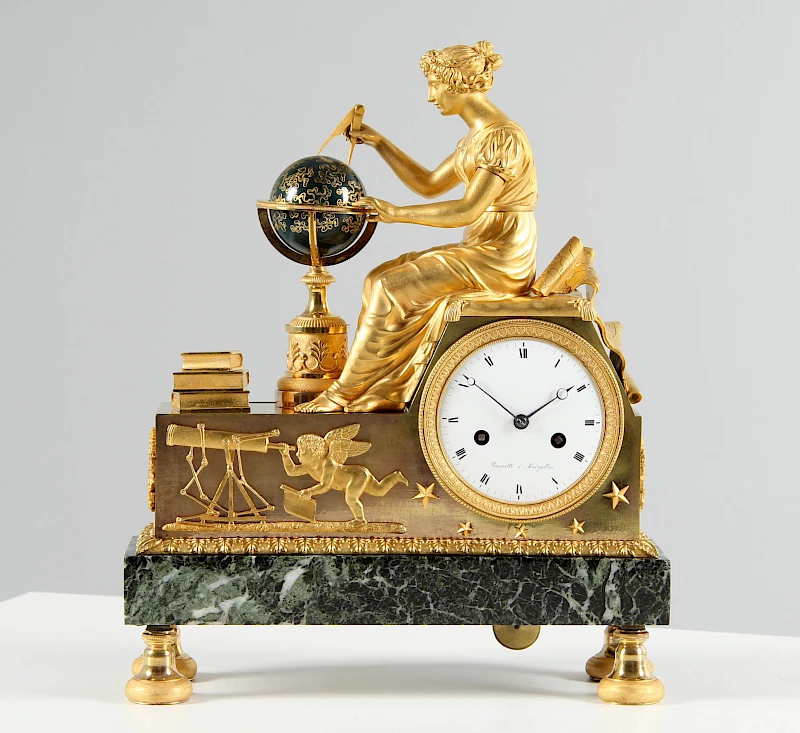
Jean-André Reiche - Allegory of Astronomy
Urania
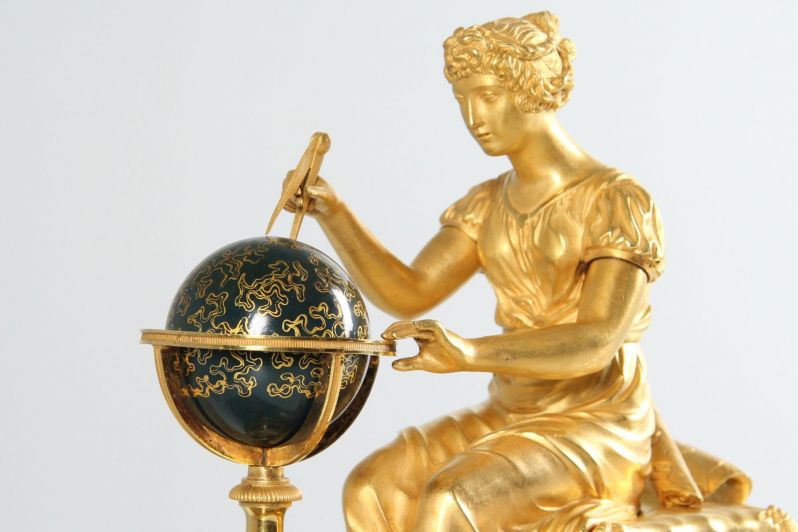
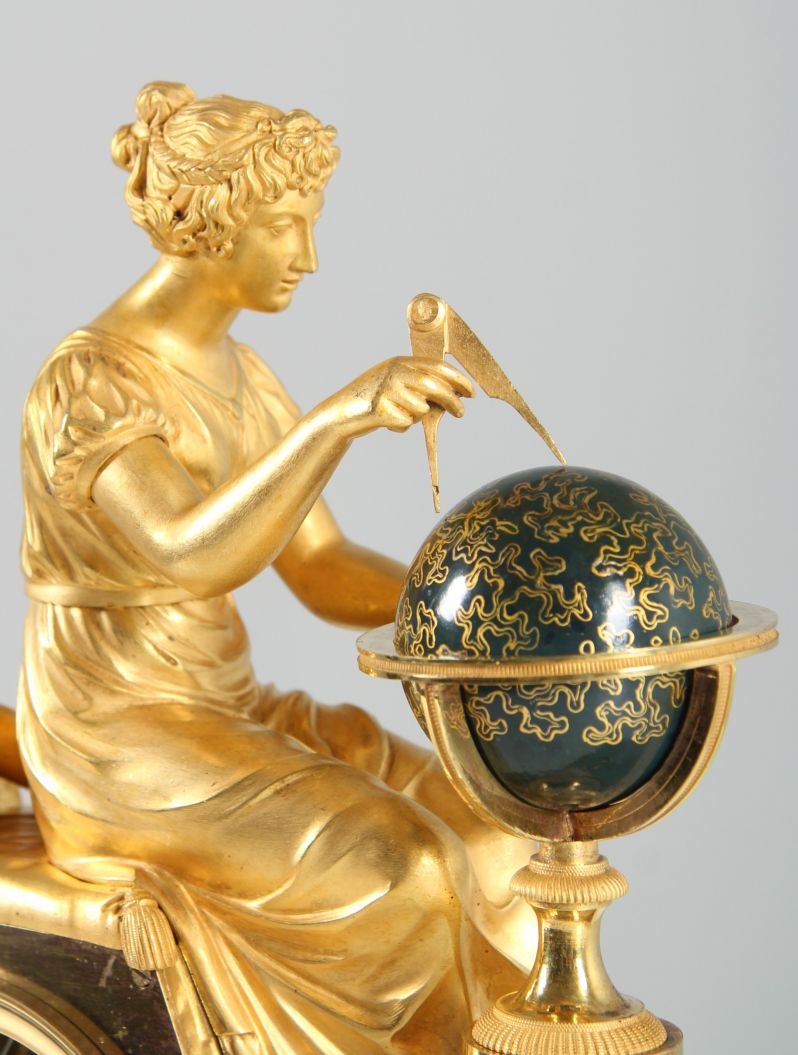



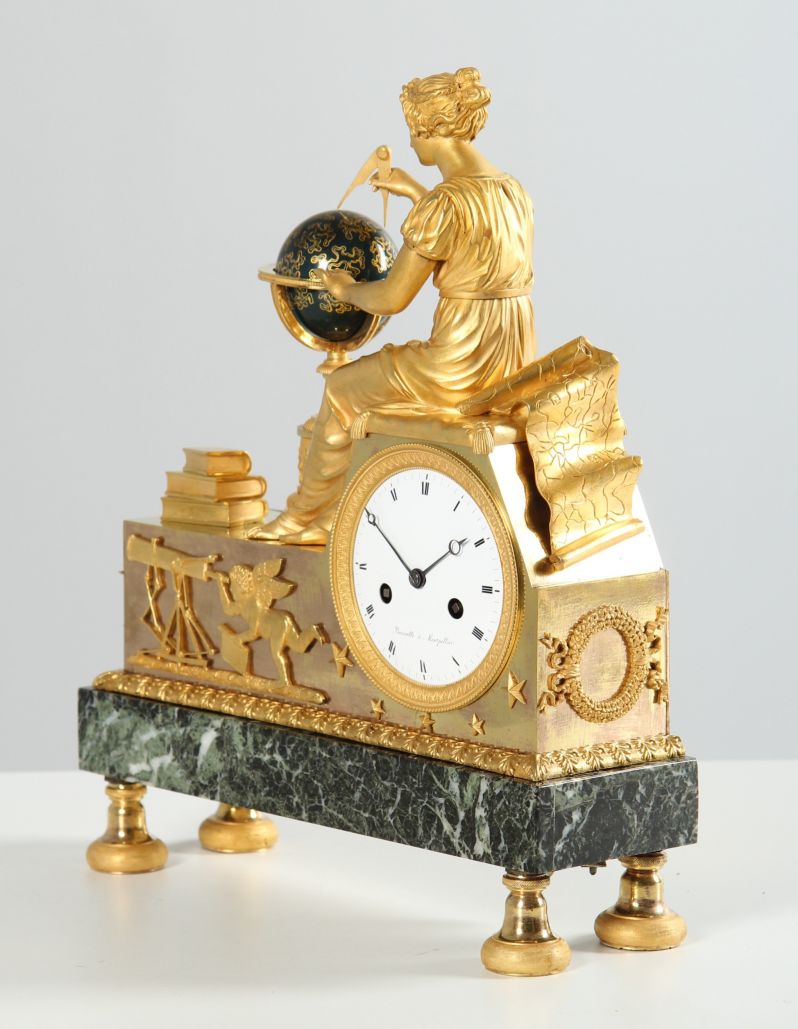
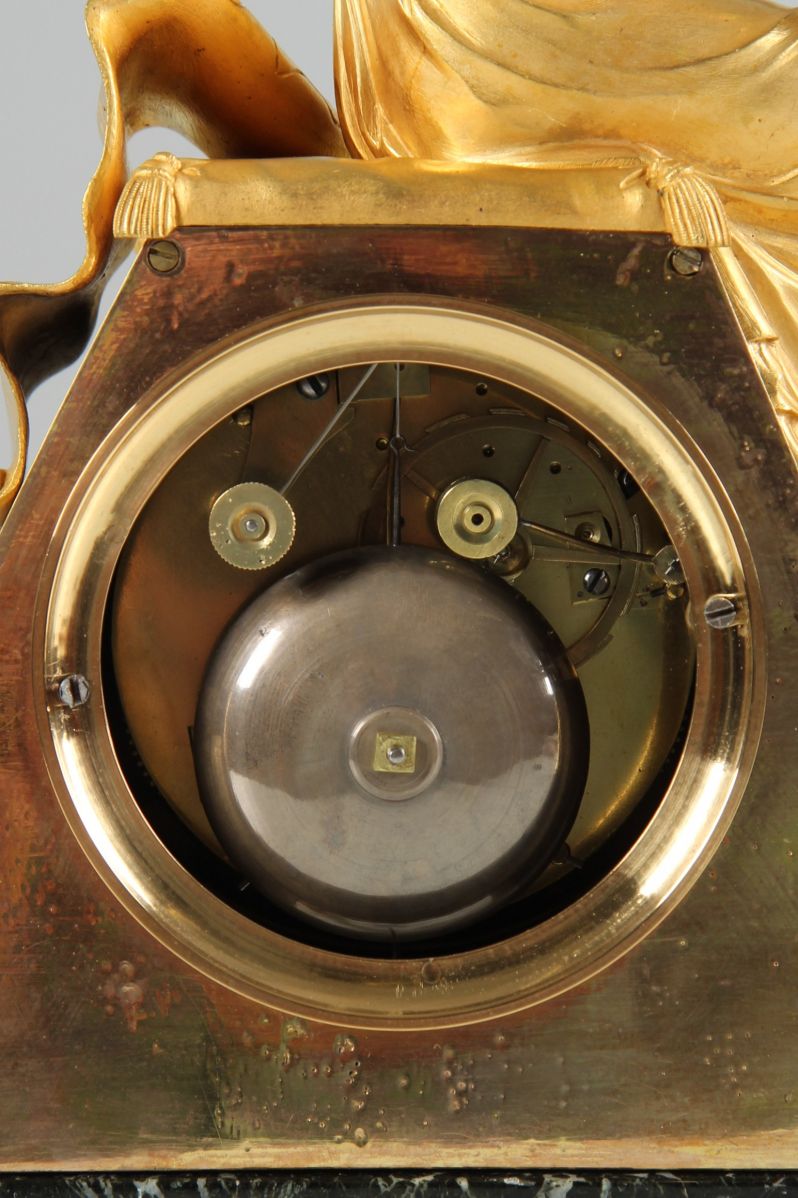
Mantel Clock Urania - Allegory of astronomy
Montpellier
Bronze, marble, enamel
around 1825
Dimensions: Height x width x depth: 37 x 31 x 10 cm
Description:
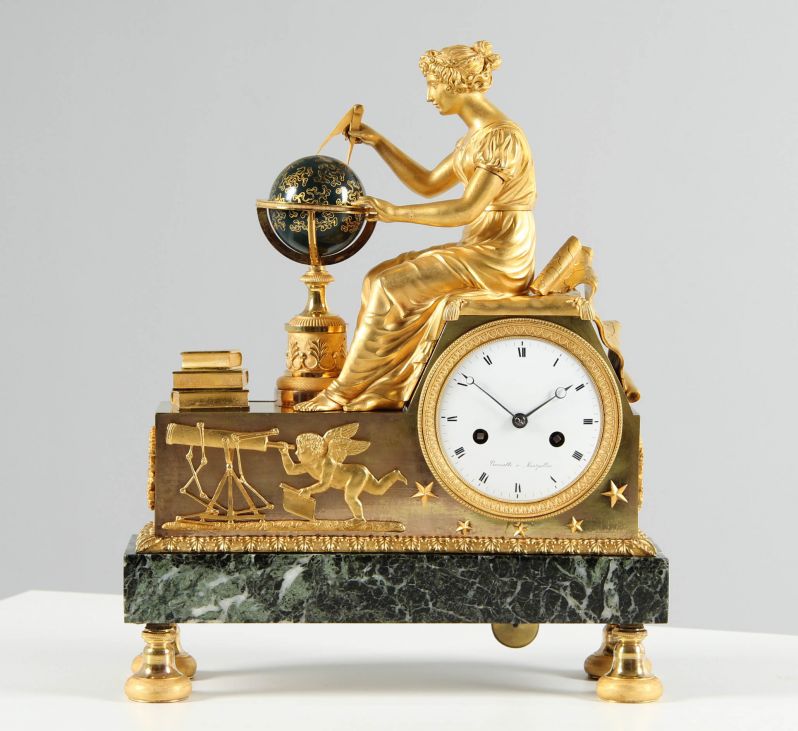
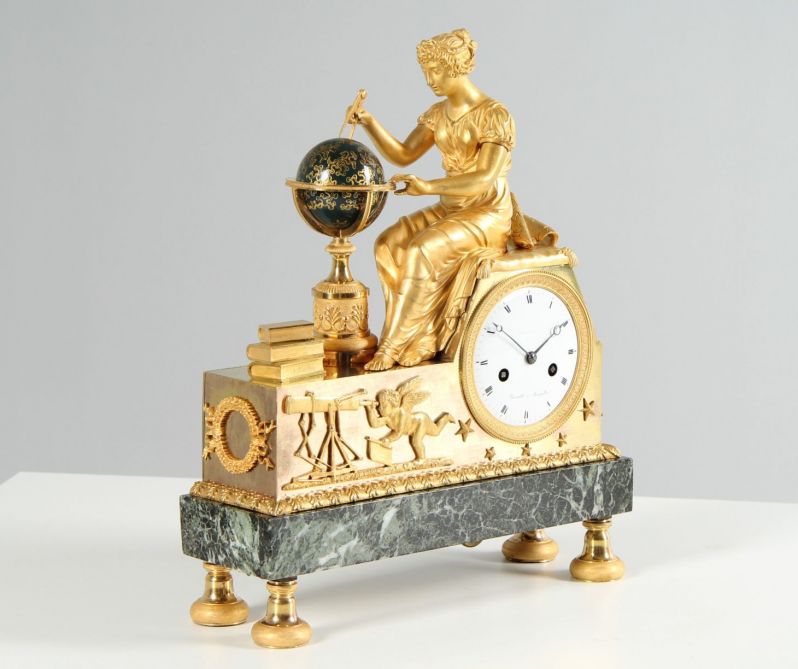
Beautiful mantel clock designed by the famous Parisian bronzier Jean Andre Reiche, depicting astronomy.
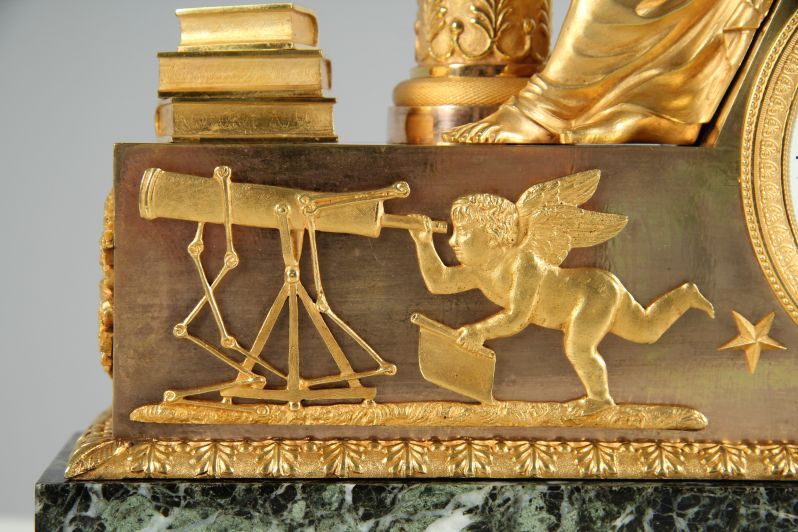
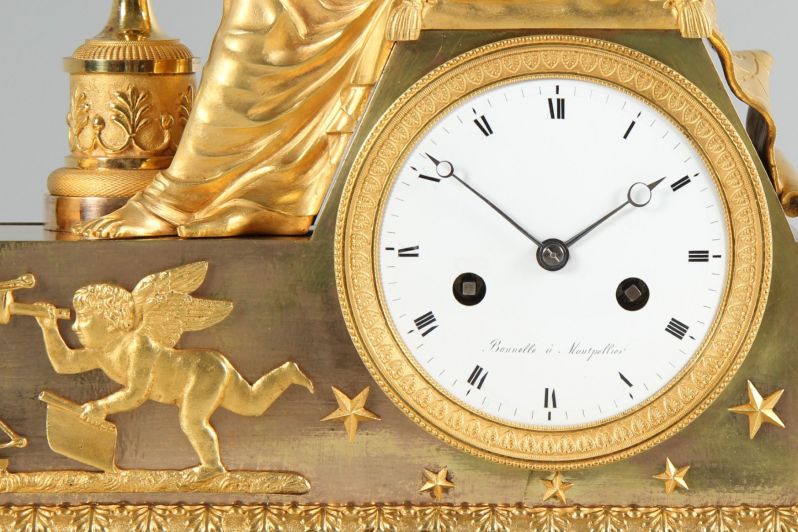
The lower part of the dial is surrounded by stars. To the left of it we see a winged genius who appears as a mediator between the earthly and heavenly spheres. He appears to be floating and observing the stars through a large telescope; in his left hand he holds the star chart.
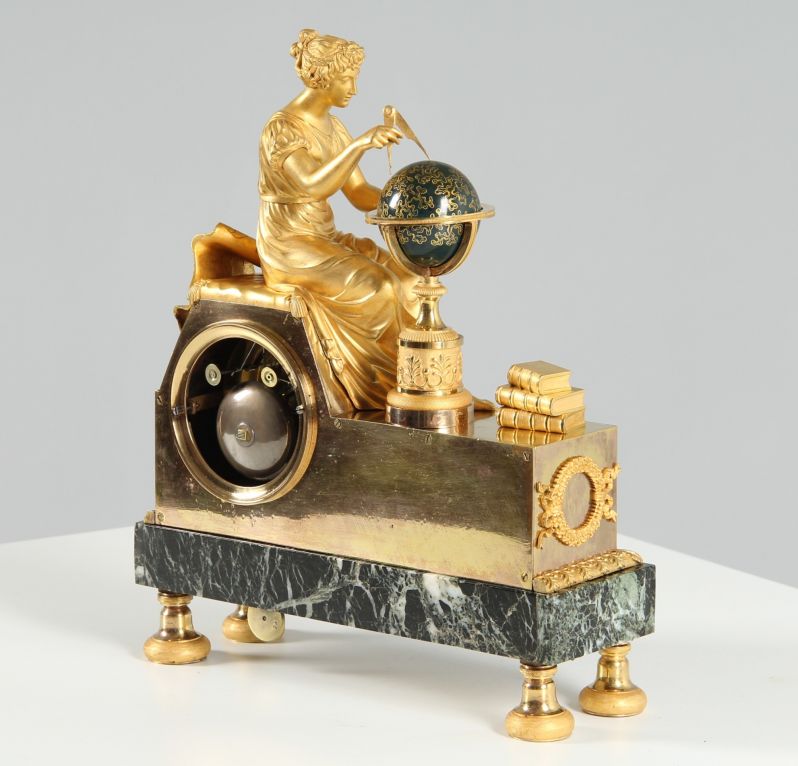
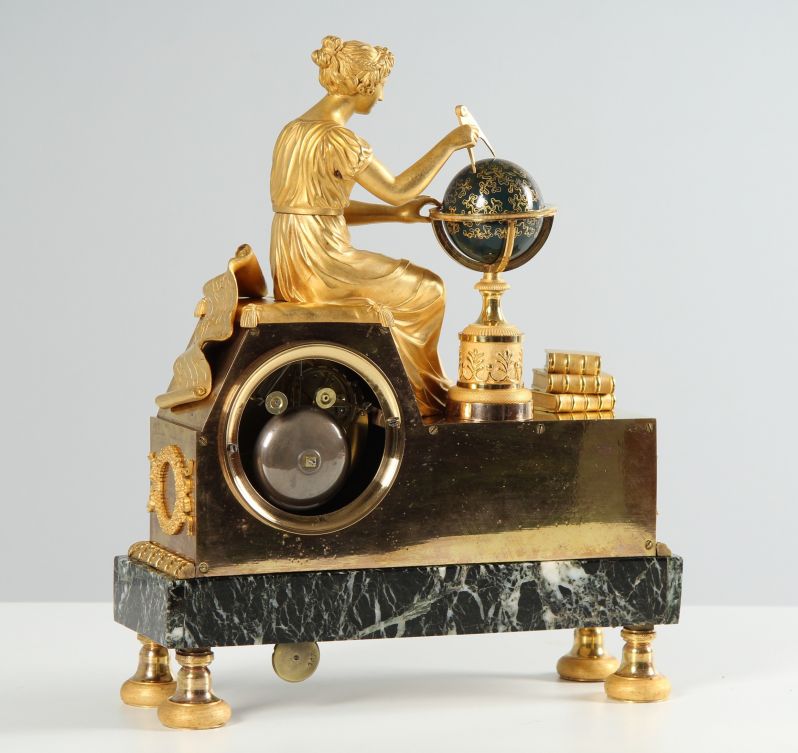
The main figure is Urania, the muse of astronomy known from Greek mythology. She is studying the celestial globe set up in front of her. Behind her, half-rolled up, is the star chart. At her feet we see a small pile of books. The fire-gilded bronze is finely crafted, with matt and polished sections.
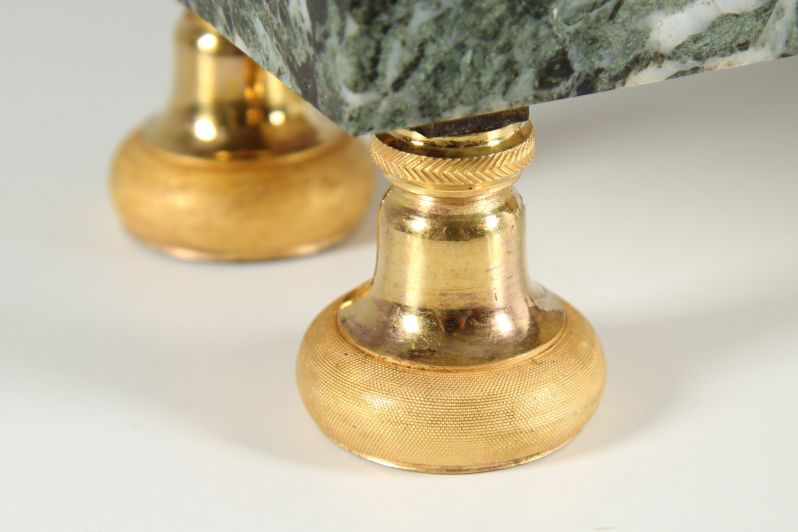
The movement is a French pendulum movement with a running time of one week. The pendulum is suspended from a thread, as was customary at the time. The rate is regulated by a knurled screw on the back of the clock. The lock disc striking mechanism strikes on the half and full hour.
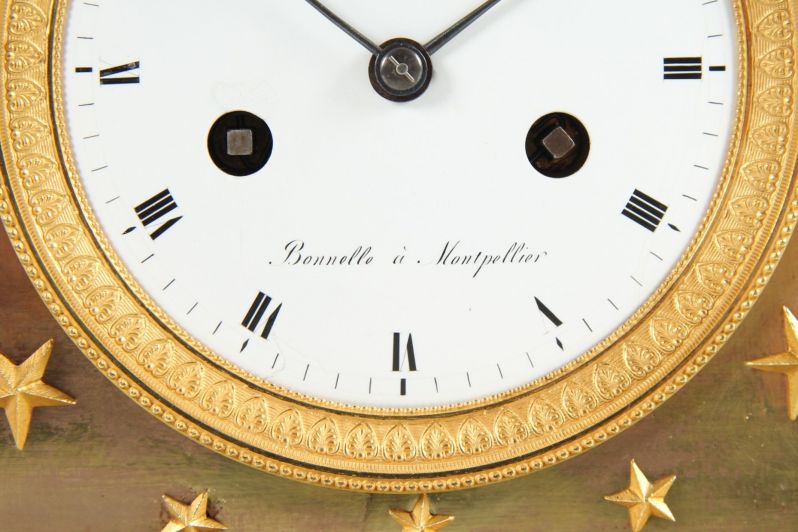
On the dial we see the signature of the clockmaker: Bonnelle à Montpellier, whose workshop is documented in Montpellier around 1825 according to Tardy - Dictionnaire des Horlogers Francais.
Worth knowing:
The depicted Urania is one of the nine muses of Greek mythology and has symbolised the science of astronomy since ancient times. Pendulums with allegorical representations of scientific disciplines are characteristic of the Empire period and reflect the strong interest in science and the Enlightenment.
Jean André Reiche was one of the most important French bronze casters in the early 19th century and worked for leading clockmakers and dealers.
Condition:
Cleaned, revised and in perfect working order. Beautiful condition of the bronze with age-appropriate rubbing of the gilding on the smooth surfaces.
Price: 5700,- €

Elke Niehüser - Die französische Bronzeuhr - Eine Typologie der figürlichen Darstellungen Page 91

Article found under: Clocks
Jean-André Reiche - Allegory of Astronomy
Urania
Also interesting
Mantel Clock - Virgil the Poet
Paris
Bronze, marble
around 1830
Charles X Mantel Clock "Astronomy"
France
Bronze
Charles X around 1830

Rare height adjustable piano chair
Germany
Walnut
Neorenaissance around 1890