Video Saxon Biedermeier secretary
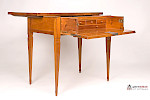
Saxon Biedermeier writing cabinet
Saxony
Cherry
circa 1835
Dimensions: H x W x D: 164 x 104 x 57 cm
Description:
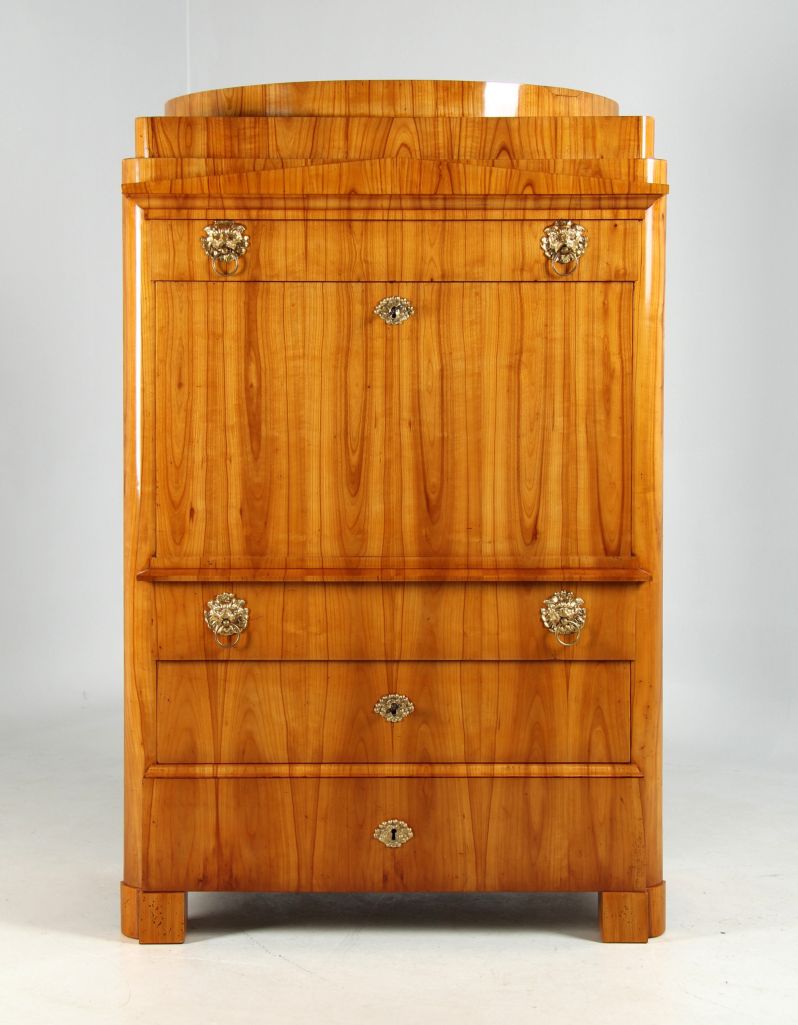
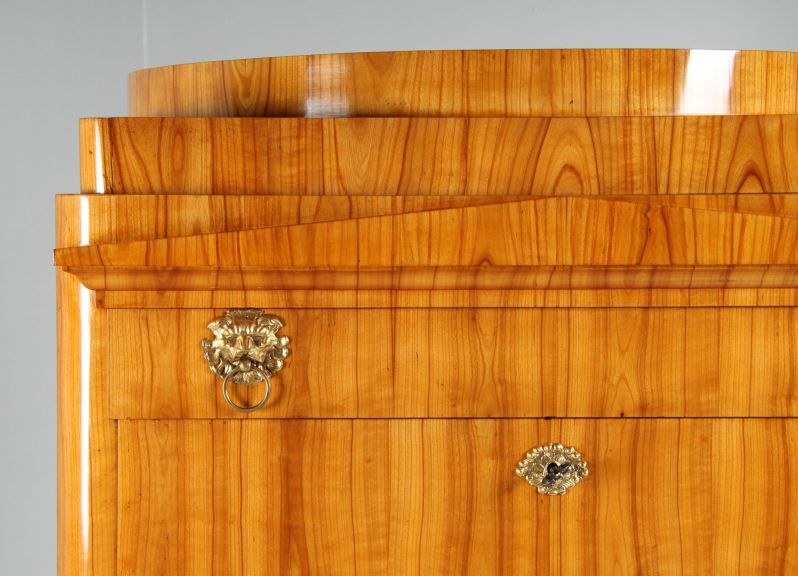
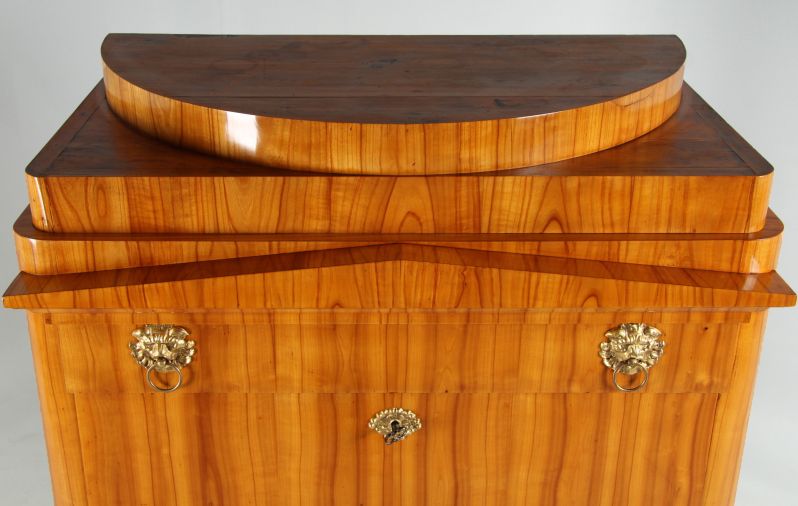
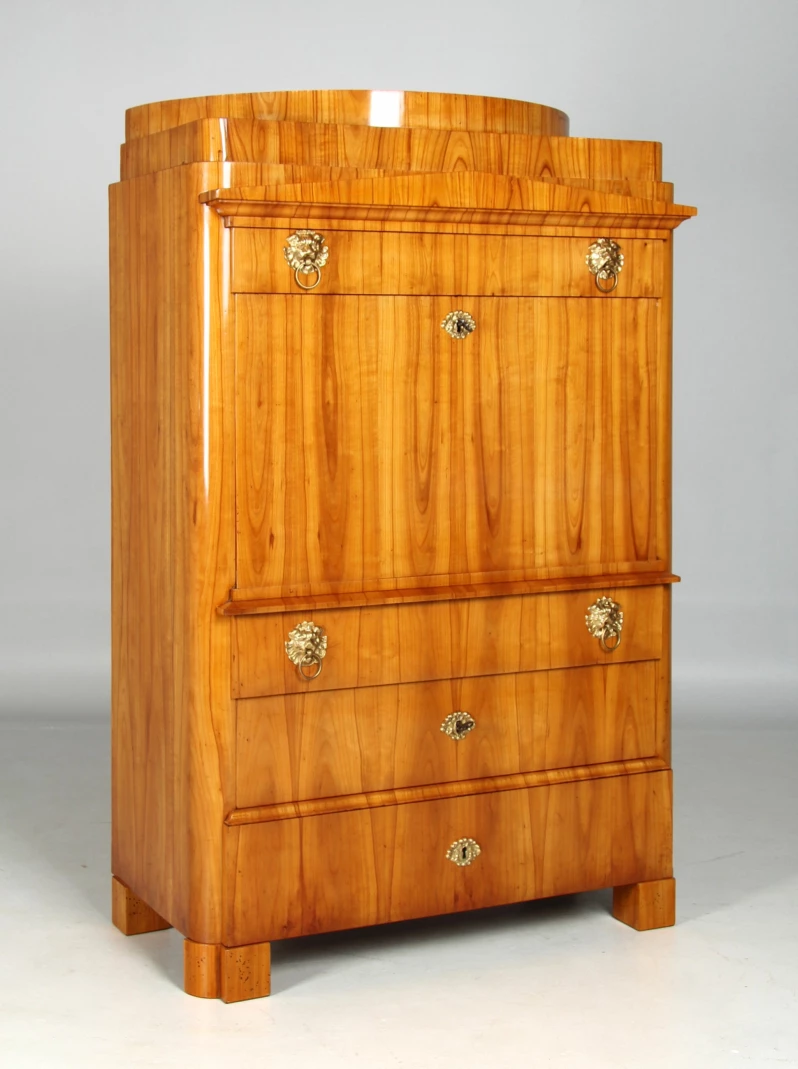
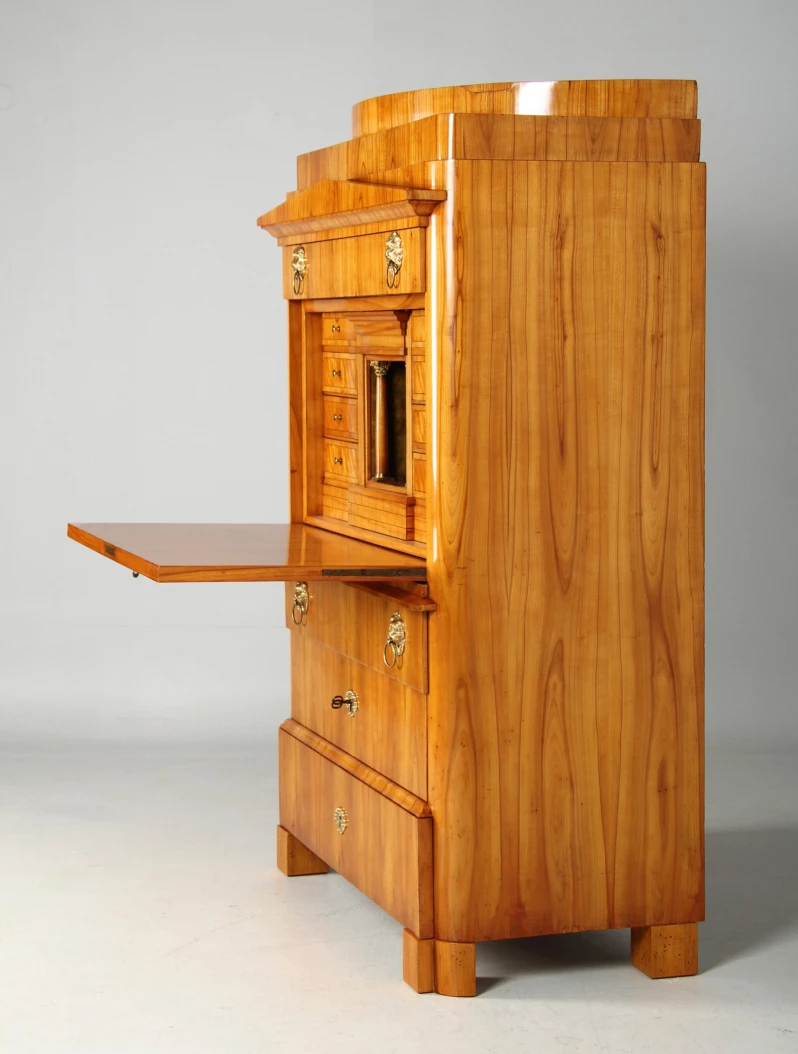
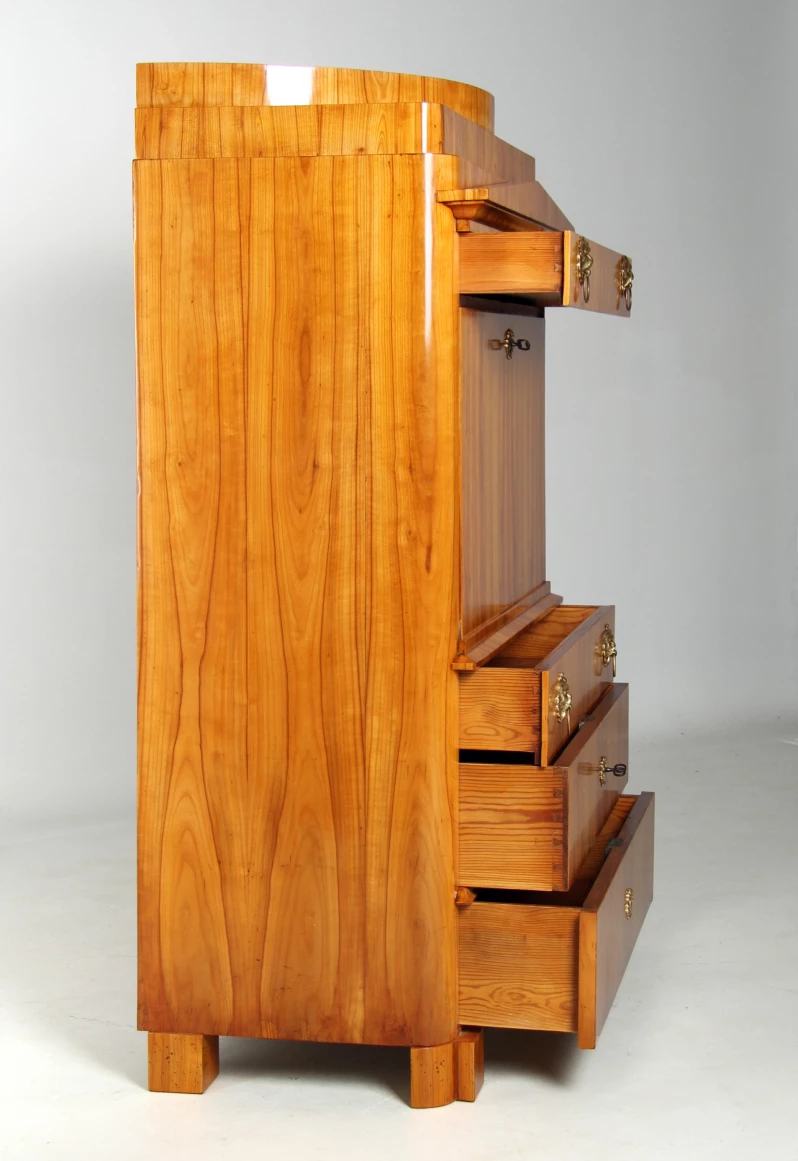
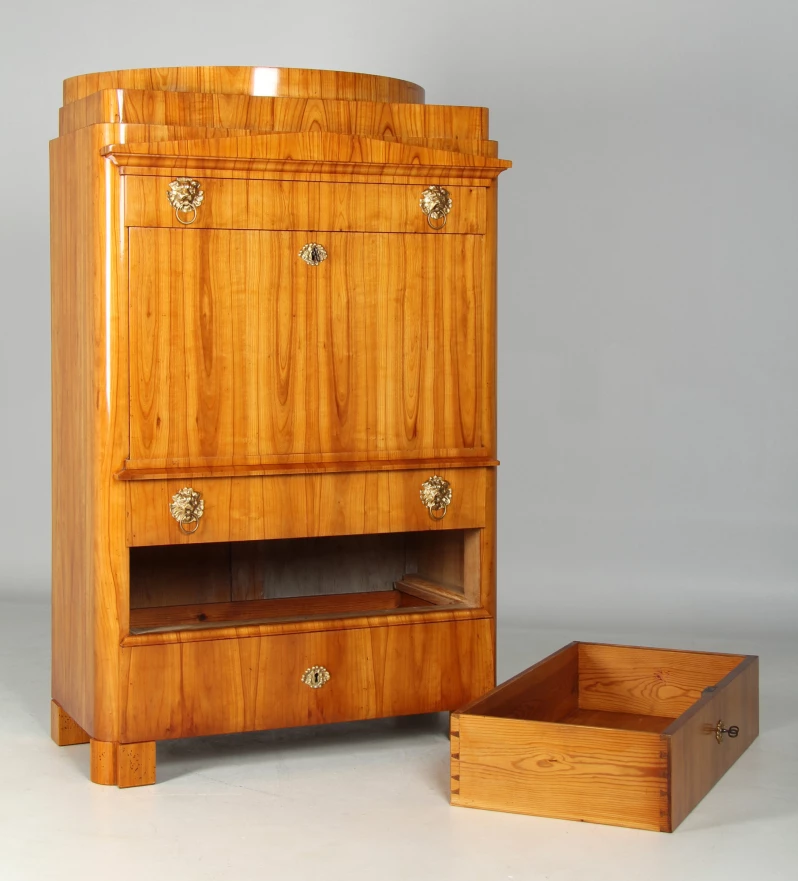
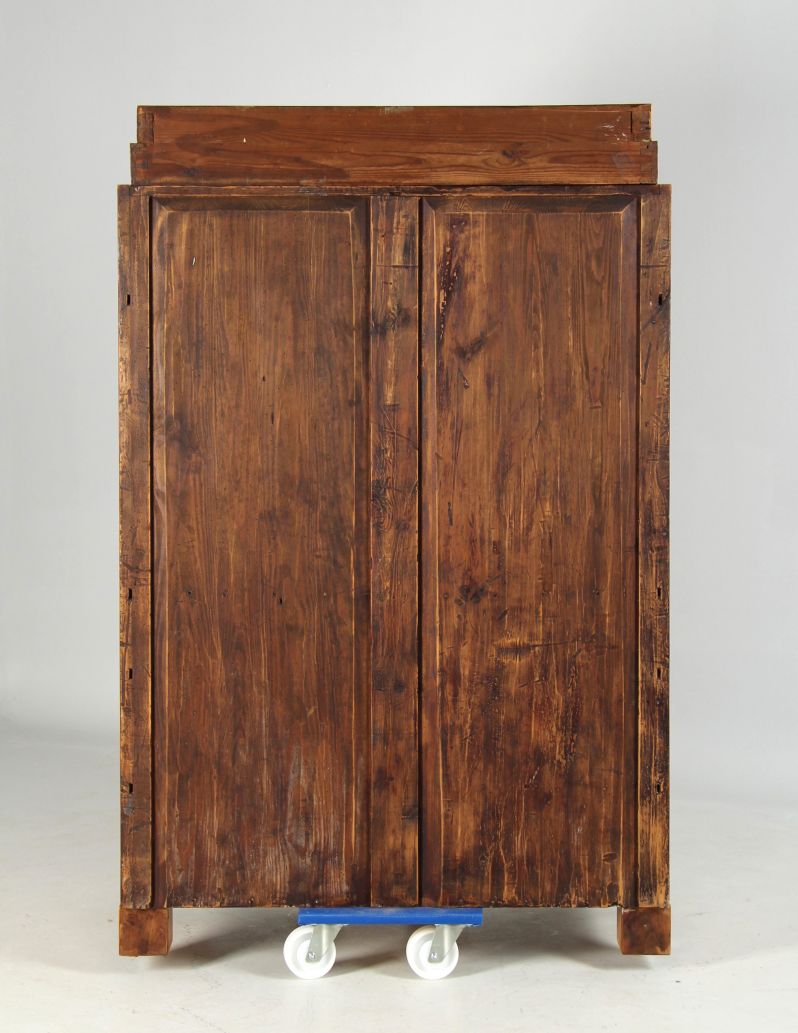
The secretary shows the typical Saxon design: block feet that follow the shape of the body, a protruding bottom drawer with a beaded crosspiece above it, a striking crossbar below the writing surface and a flat Schinkel gable above the head drawer. The upper end of the cabinet is formed by a staircase-like cornice with a round gallery.
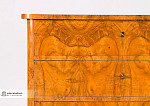
The use of local cherry wood is also typical of the region, in this case with a symmetrical grain pattern that runs across the entire height of the body.
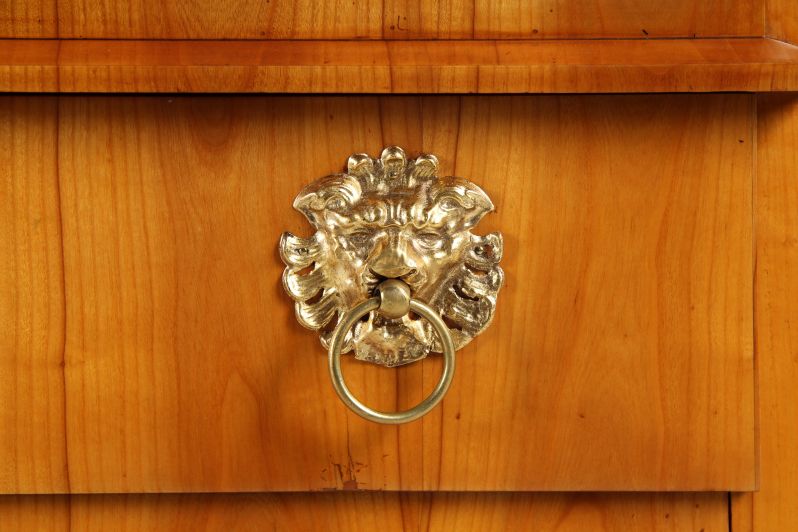
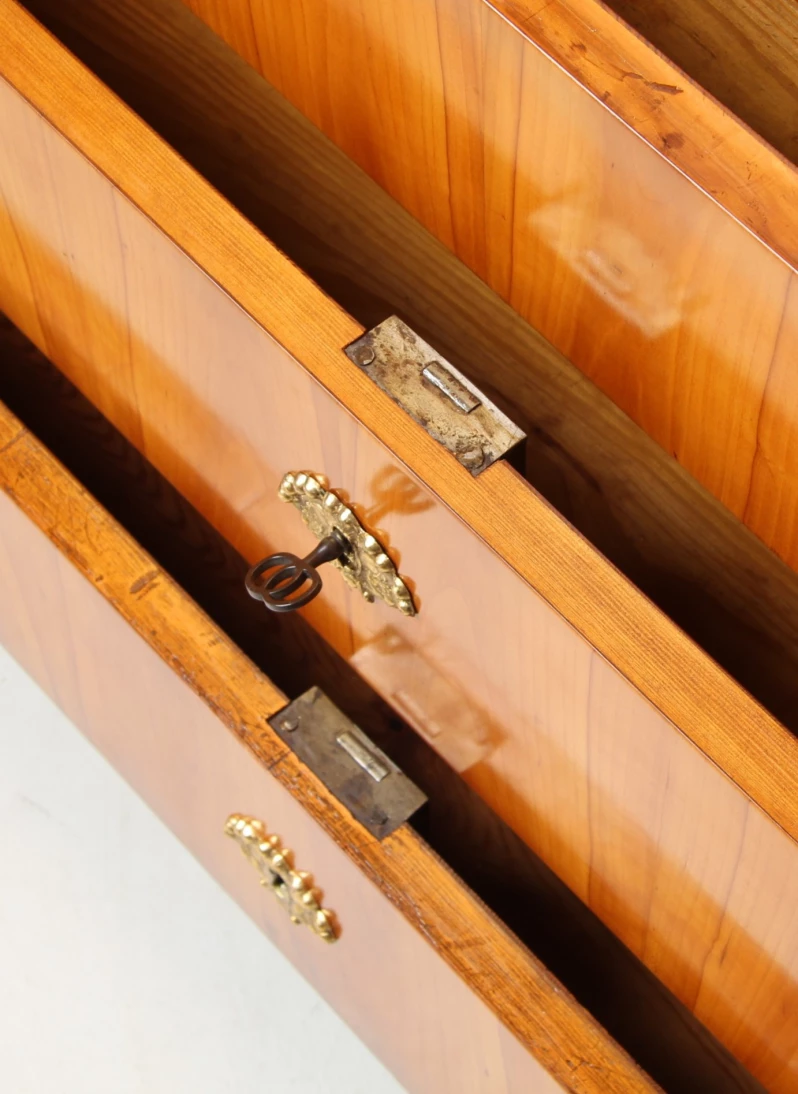
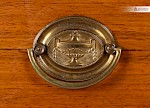
Less common, but also indicative of the region of origin, are the gilded fittings made of embossed sheet brass. In technical and stylistic terms, they correspond to those on a secretary kept in the Zwickau City Museum, which is dated 1832/33 and was probably made in Glauchau near Zwickau(see Katrin Heise - Sächsische und thüringische Sekretäre, from p. 193).
The keyhole fittings on this piece of furniture are also fan-shaped; impressive lion heads hold the pull rings for opening the drawers.
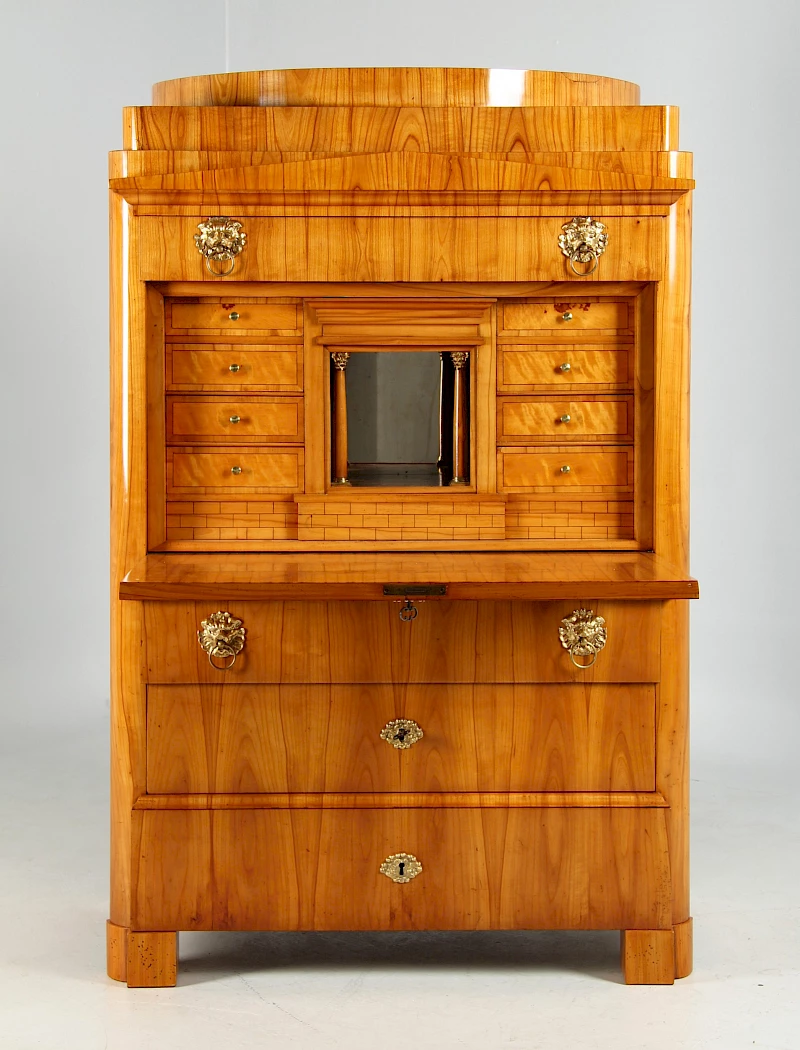
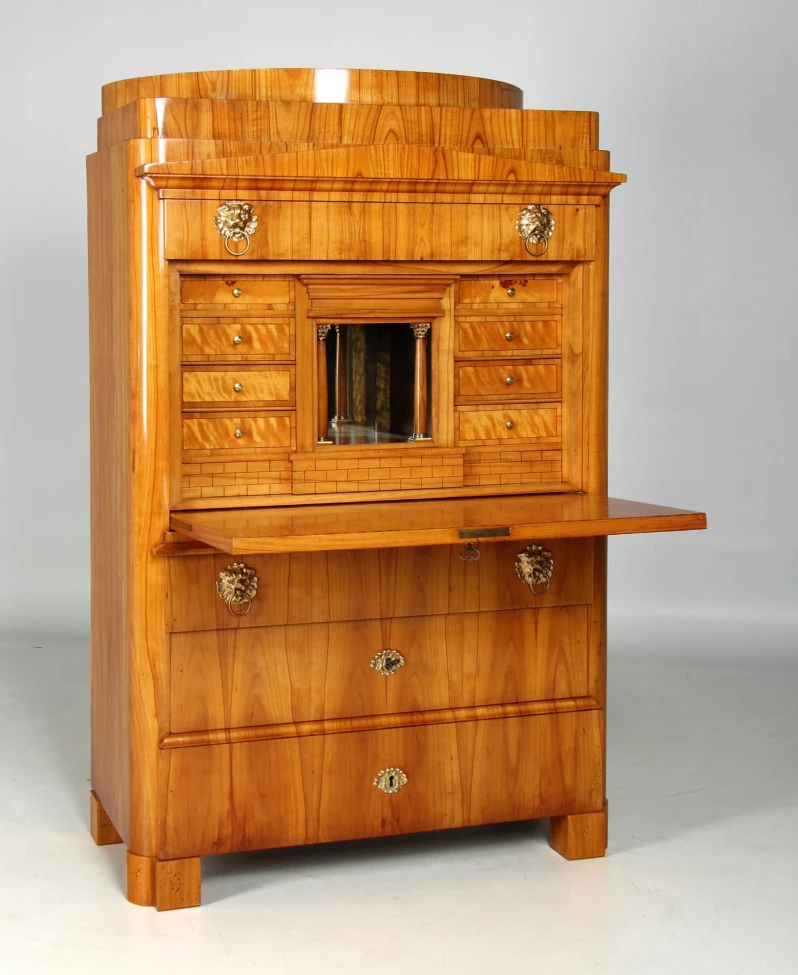
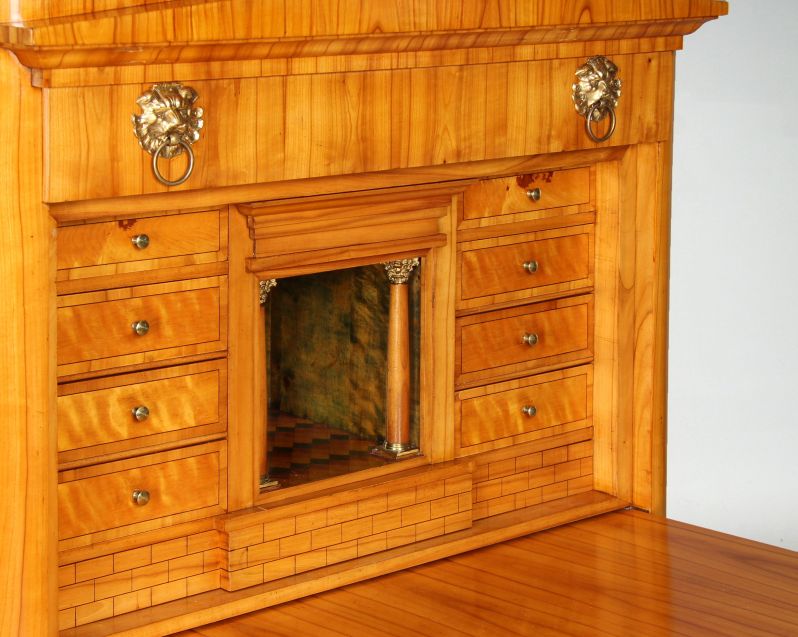
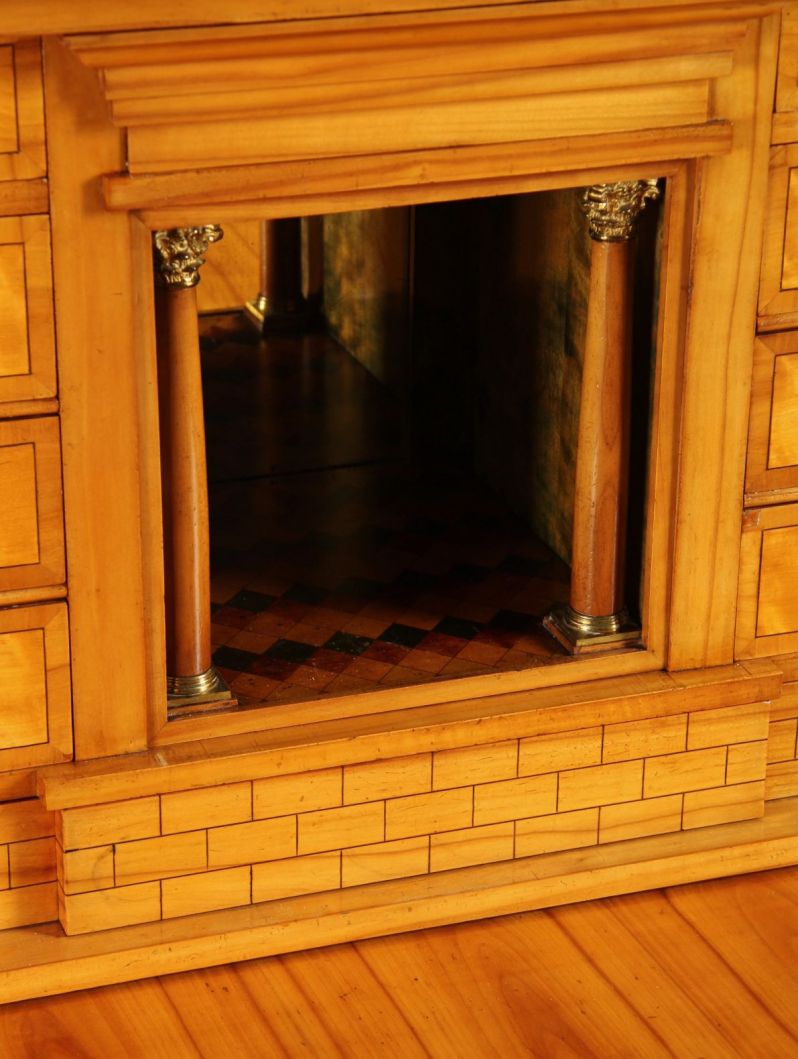
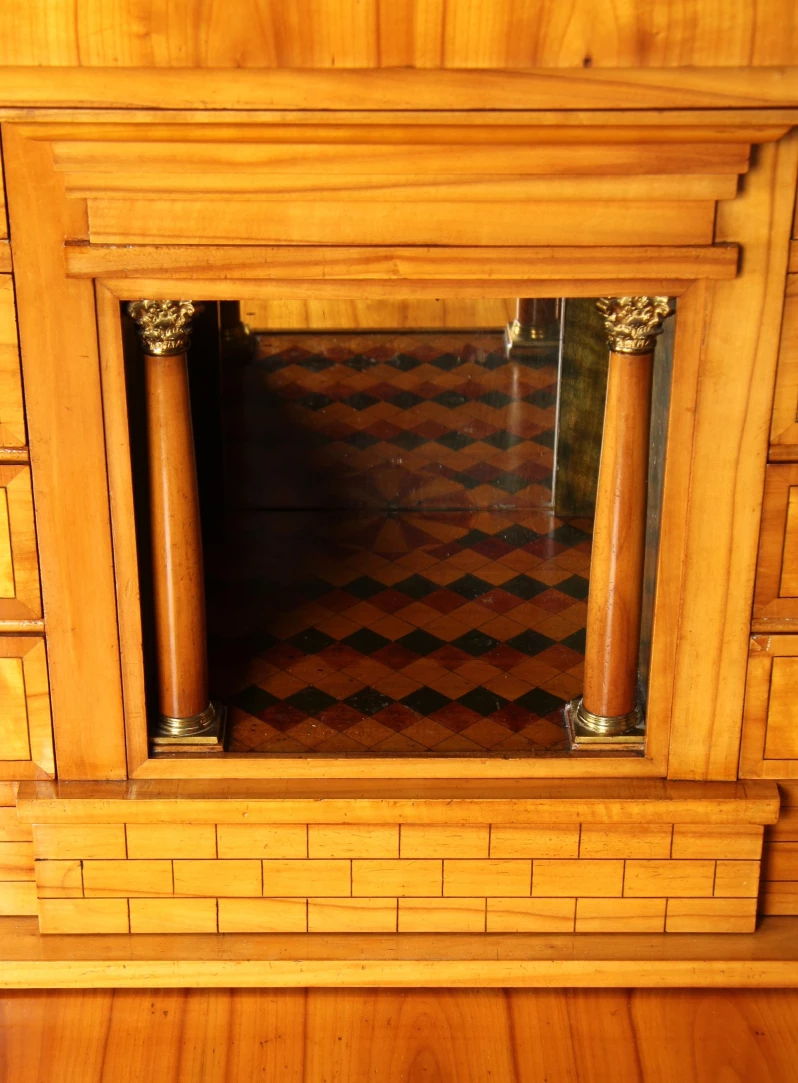
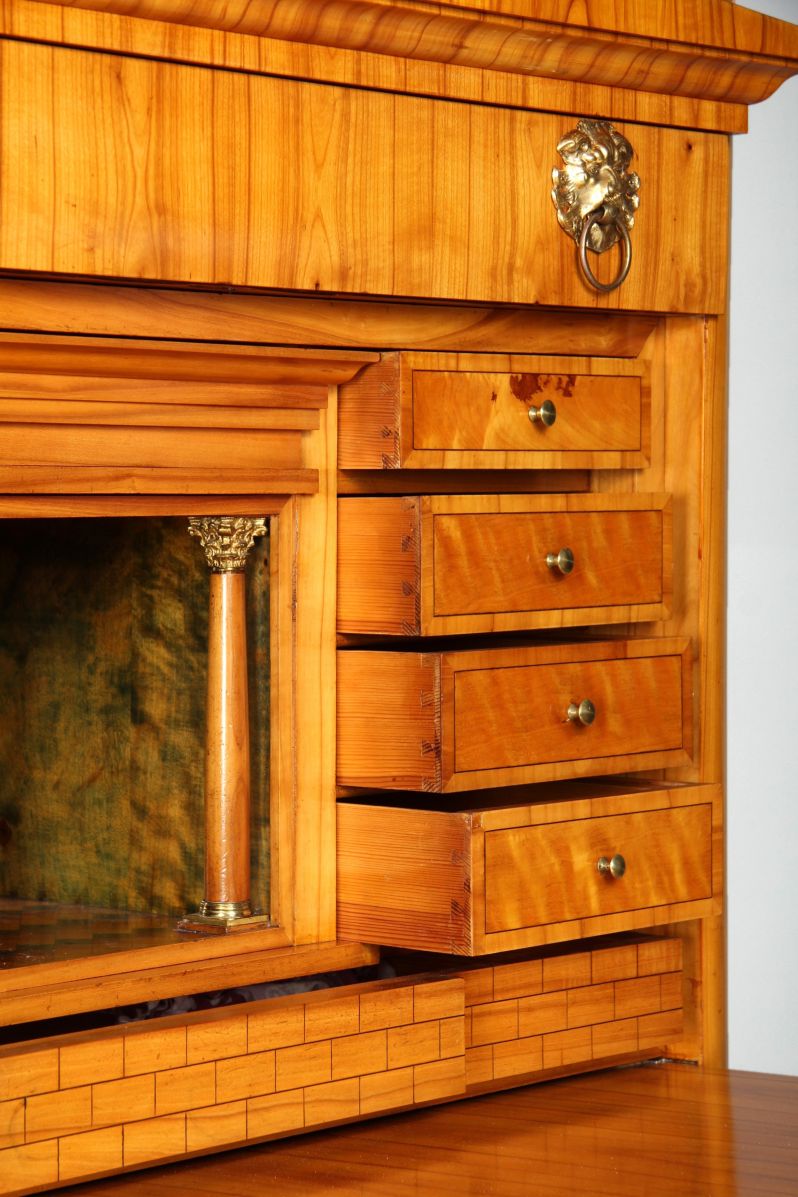
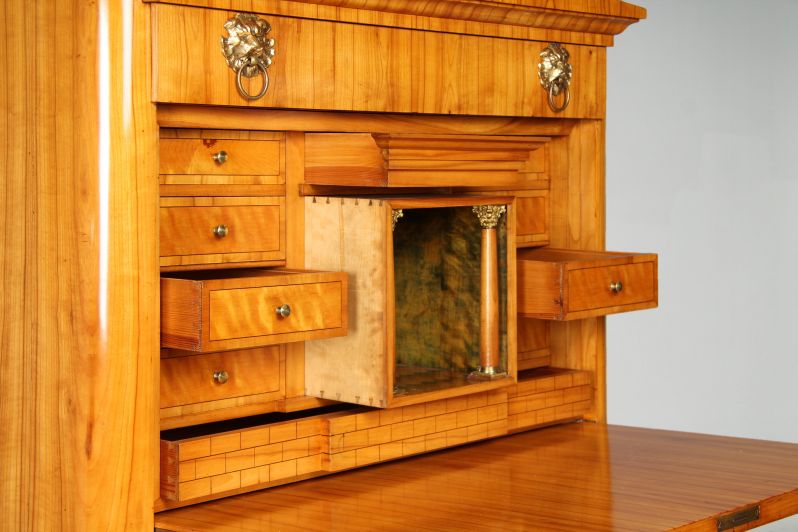
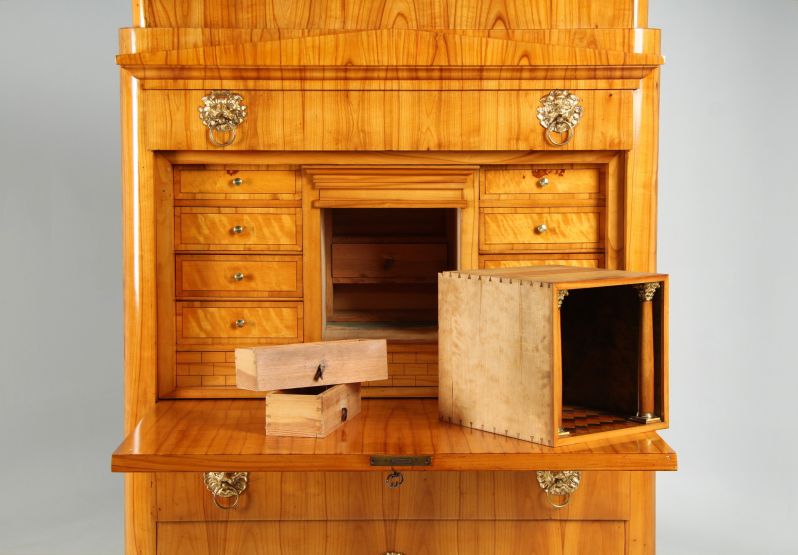
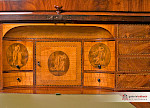
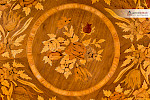
When we open the secretaire flap, we see an architecturally structured writing compartment which, also typical of the period and region, corresponds in part to the formal language of classicism, the so-called plait style. The drawers, divided into geometric surfaces by thread inlays and opposing grain patterns, are still entirely in keeping with the taste of the period. The masonry marquetry in the lower row, the open compartment with painted parquetry in front of the mirrored rear wall, the green-stained interior walls and the entablature supported by full columns with Corinthian capitals, on the other hand, speak the clear language of the Biedermeier period.
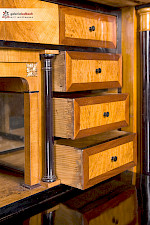
Pulling out the central compartment reveals the perfect craftsmanship of the period: the compartment slides along its guide with millimetre precision, with the air flowing slowly through the tiny gaps and the resulting gentle vacuum delaying the sliding out and slowing the movement evenly. When fully pulled out, there are three hidden drawers in the area behind.
Worth knowing:
As the secretary corresponded to the Biedermeier ideal of living both in terms of its functionality and its representative appearance, this type of furniture became increasingly important in the early 19th century in both courtly and bourgeois environments. Especially in cities characterised by the bourgeoisie, such as Leipzig and Chemnitz, the former courtly style was quickly adopted. This allowed a high-quality Biedermeier furniture culture to establish itself outside of the royal residences. At the beginning of the century, Saxon furniture played a pioneering role in the German-speaking world and played a decisive role in shaping the development of the Biedermeier style. Towards the middle of the century, Saxon cabinetmakers orientated themselves primarily towards North German design models.
Condition:
Restored, stable condition suitable for everyday use with a shellac hand polish.
Price: This secretary is already sold. I offer objects comparable in quality and condition for about 6000,-€ to 8000,-€.
Article found under: Secretaries
Video Saxon Biedermeier secretary
Also interesting
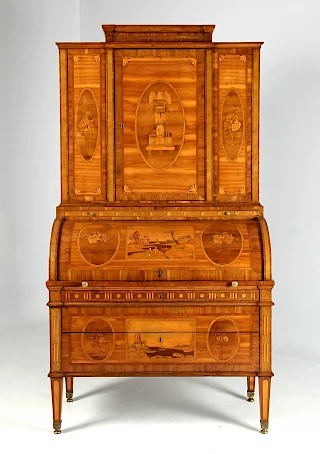
Classicist top-mounted secretary with elaborate marquetry
Southern Germany
Walnut and others
Classicism around 1790
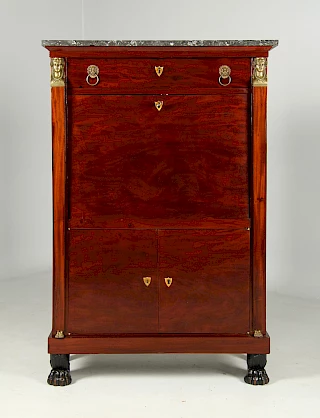
Directoire folding-top secretary desk with caryatids
France
Mahogany
early 19th century
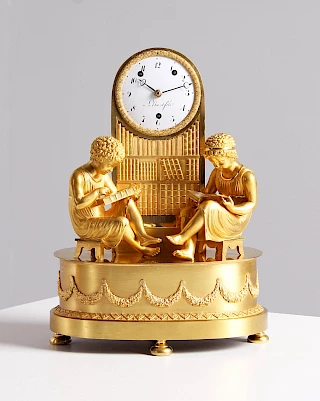
La Bibliotheque - In the study room
Paris
fire-gilt bronze, enamel
Empire around 1820