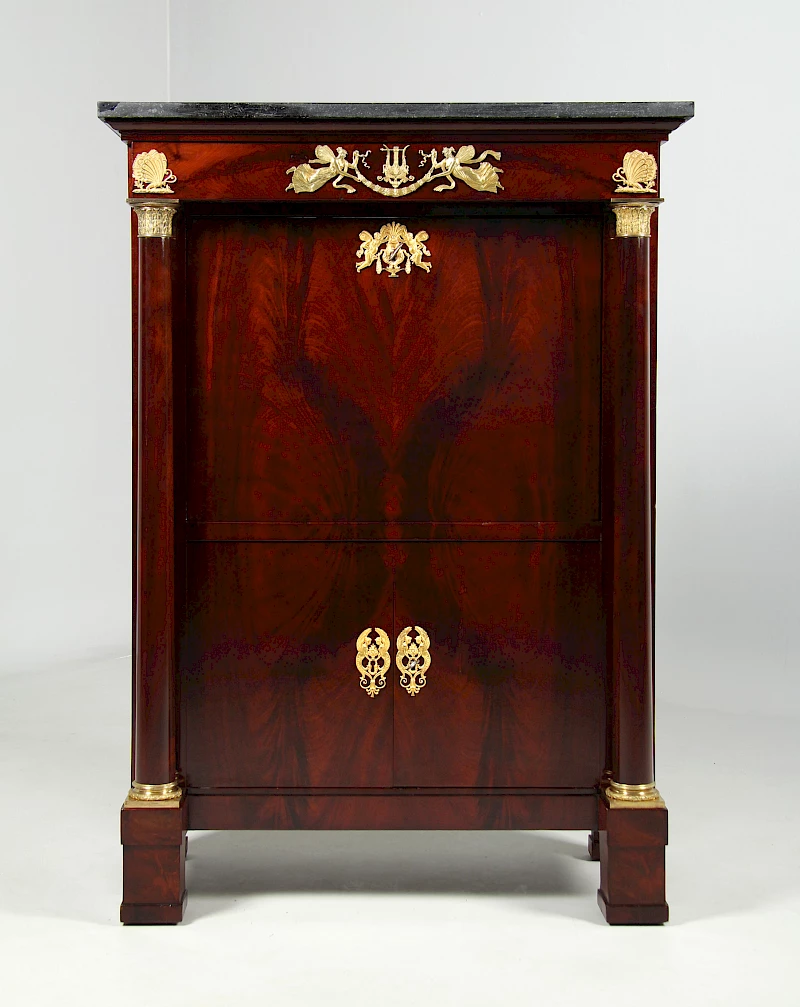
Video secretary C.LEMARCHAND
Antique Empire secretary - stamped C. LEMARCHAND
Paris
Mahogany, Ormolu
Empire, early 19th century
Dimensions: H x W x D: 138 x 98 x 48 cm
Description:
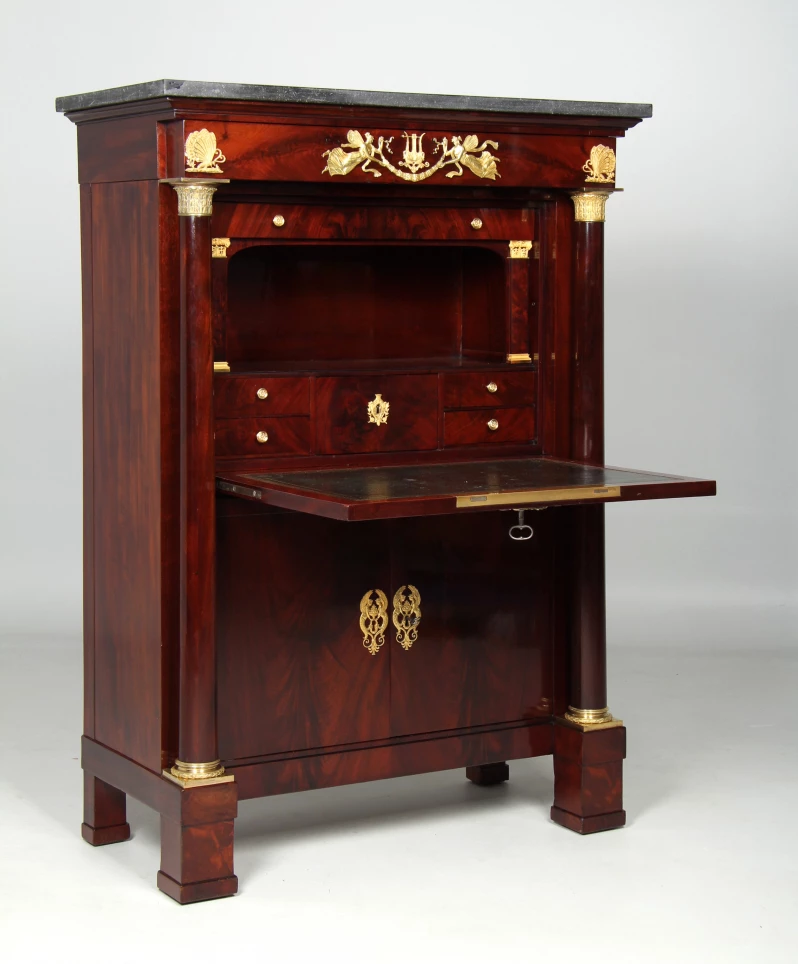
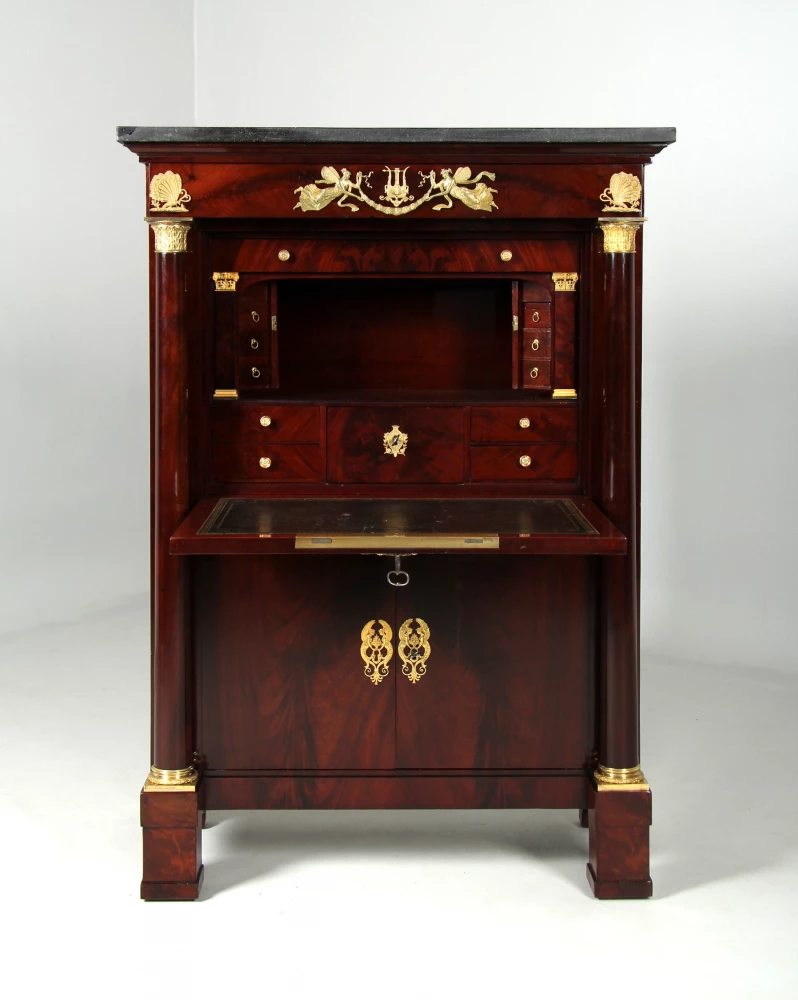
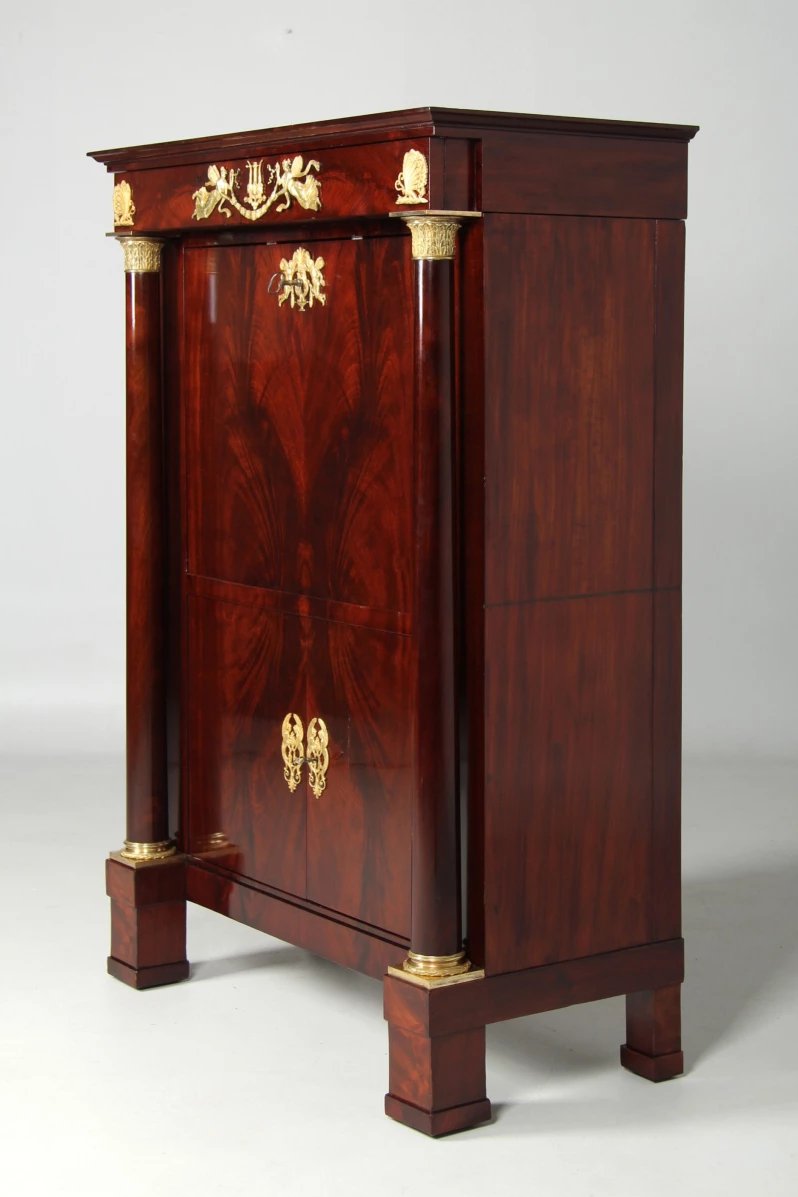
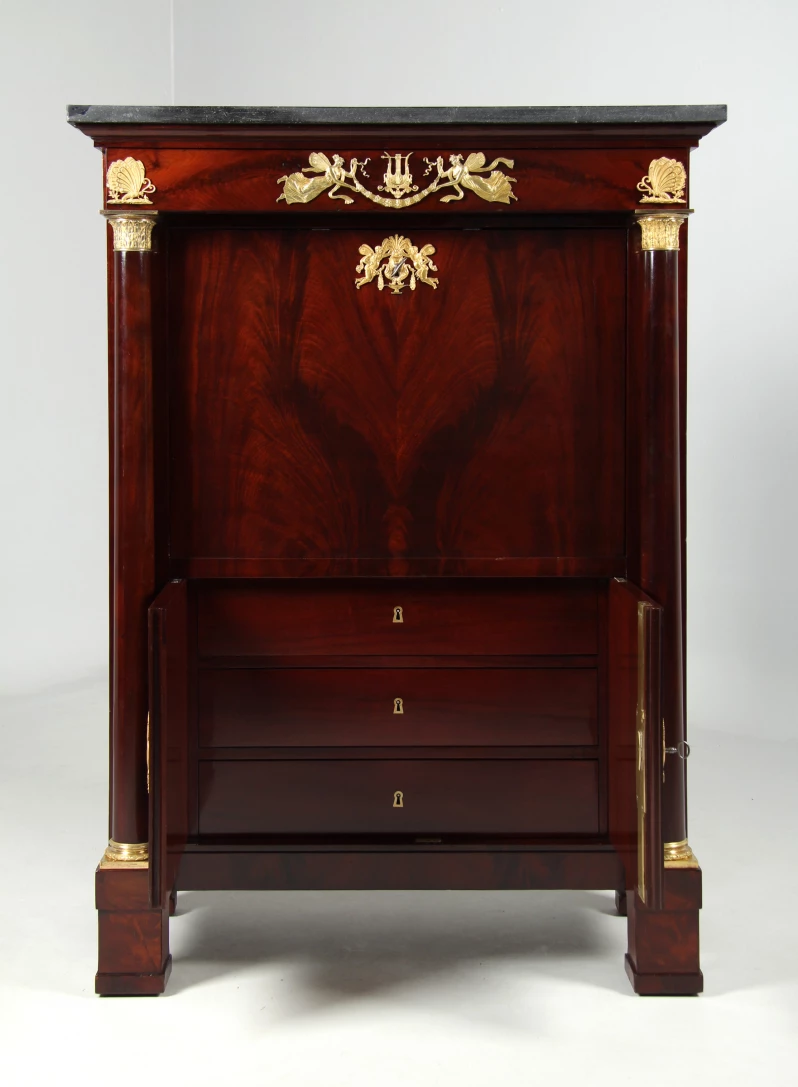
Highly refined Empire writing furniture in masterly quality with outstanding bronze ornamentation and special technical sophistication.
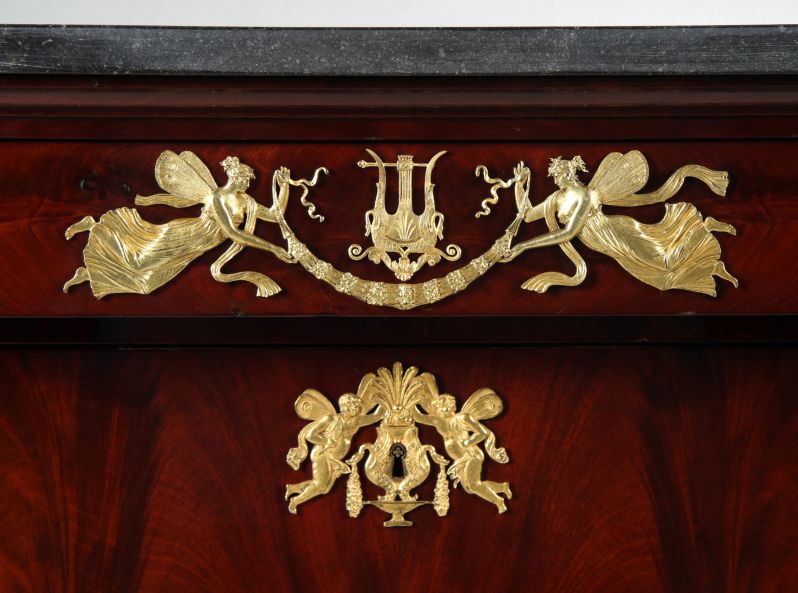
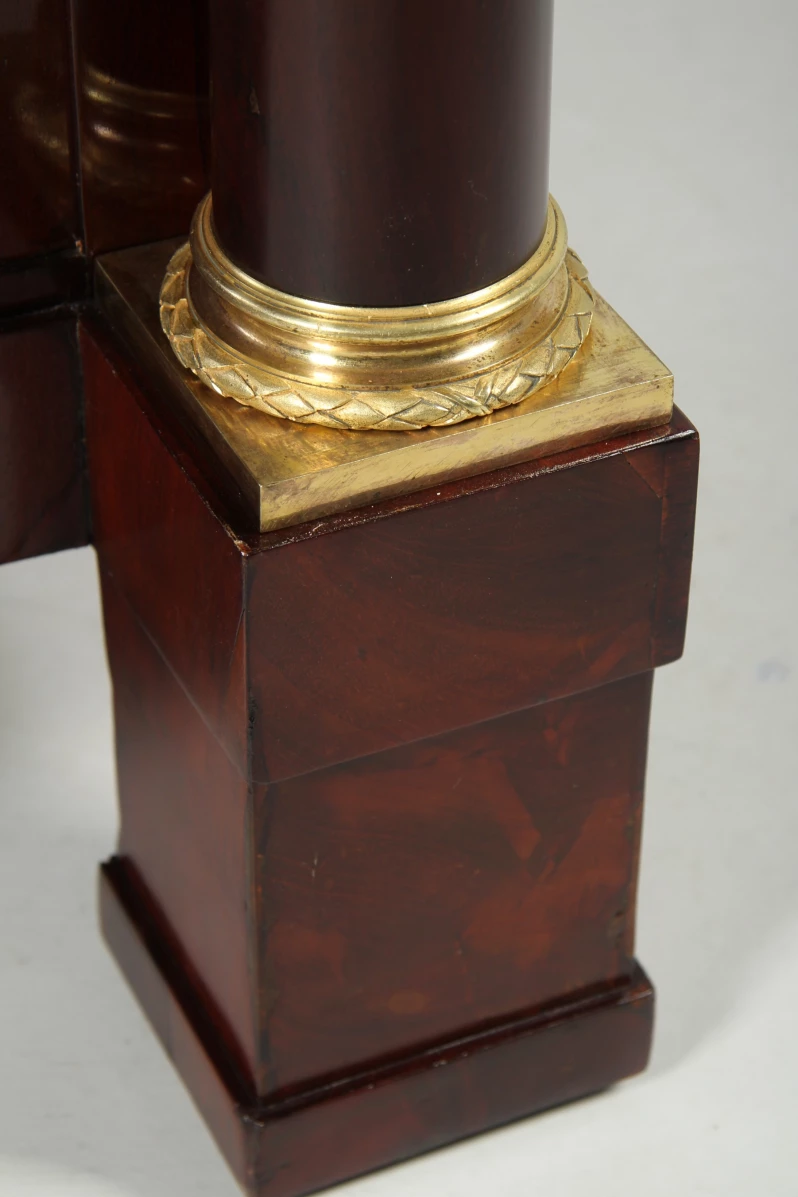
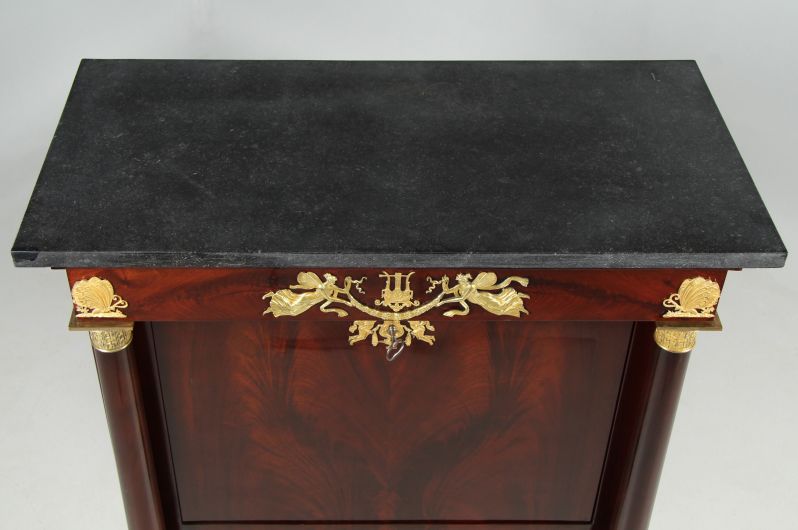
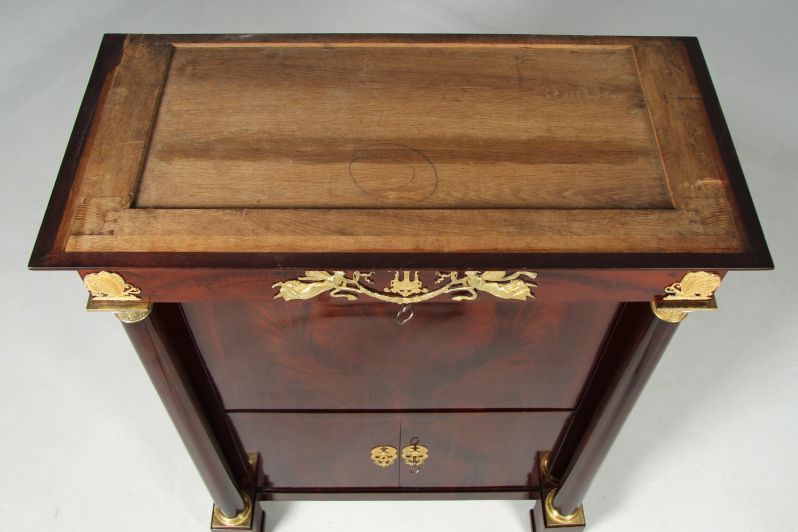
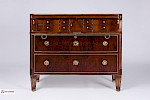
The front of the furniture is designed in strict symmetry. The carefully selected mahogany veneer is laid in perfect mirror image and its grain creates a cohesive, harmonious overall appearance. The dark wood tone forms an effective background for the cleanly cast, finely chiselled and carefully fire-gilded fittings.
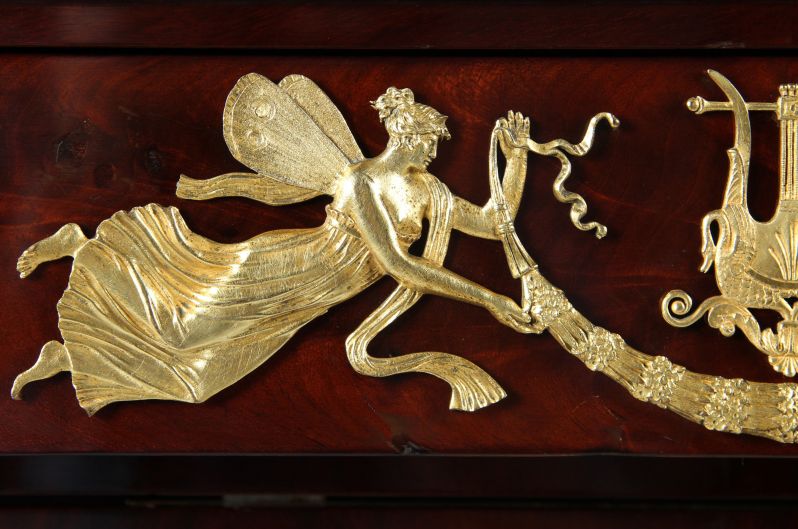
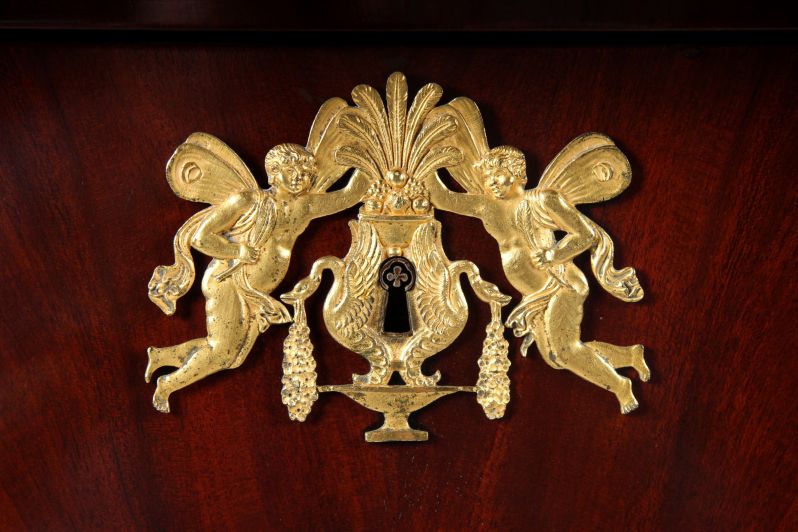
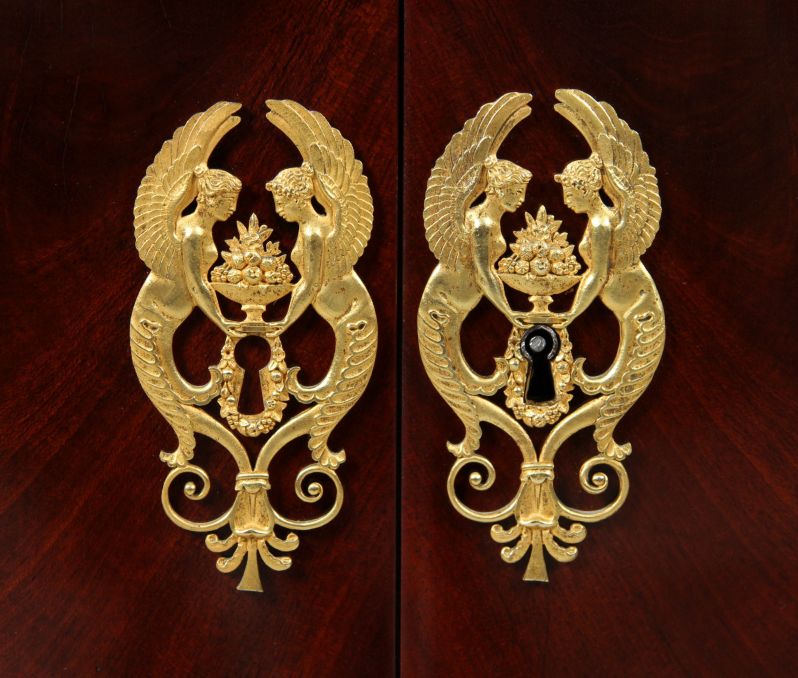
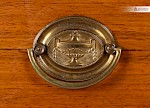
The bronze decoration is rich in symbolic motifs and reflects the taste of the wealthy Parisian clientele of the time.
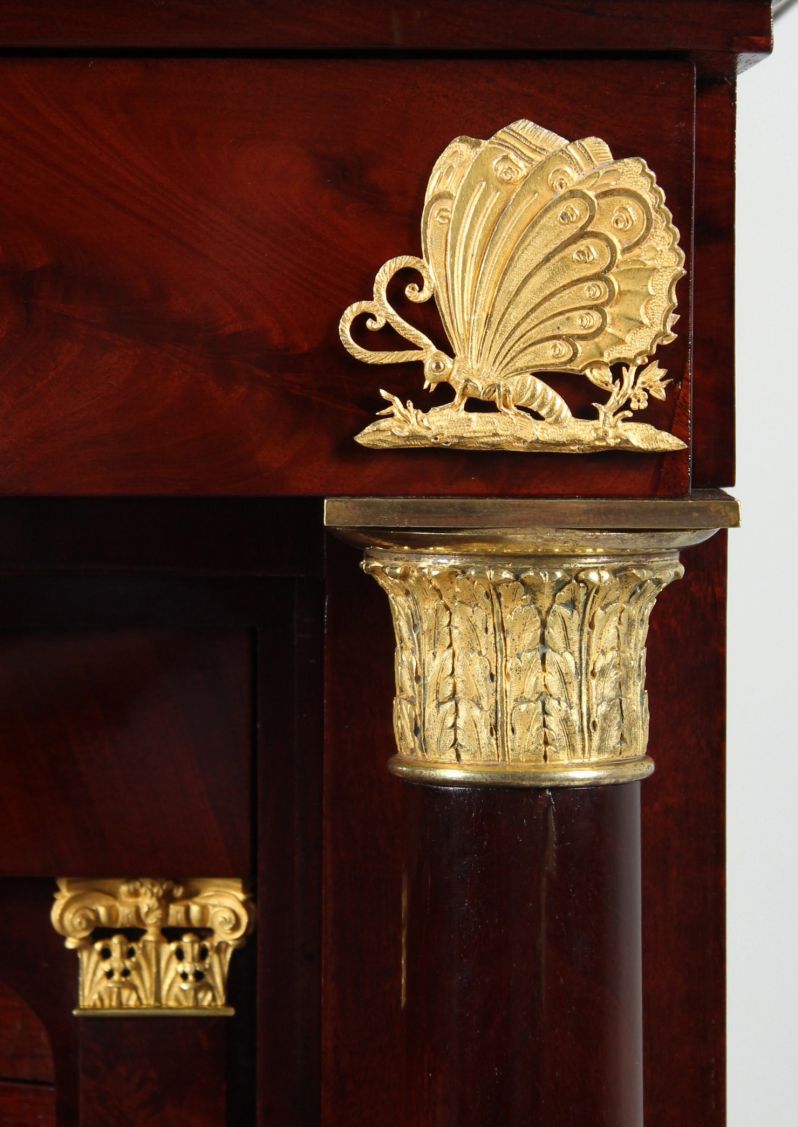
Winged cupids symbolise love, harmony and an idealised world; fruit baskets and garlands symbolise abundance, prosperity and fertility. The butterflies, which in the ancient imagination are associated with Psyche and can be read as symbolising the immortality of the spirit, also deserve special attention.
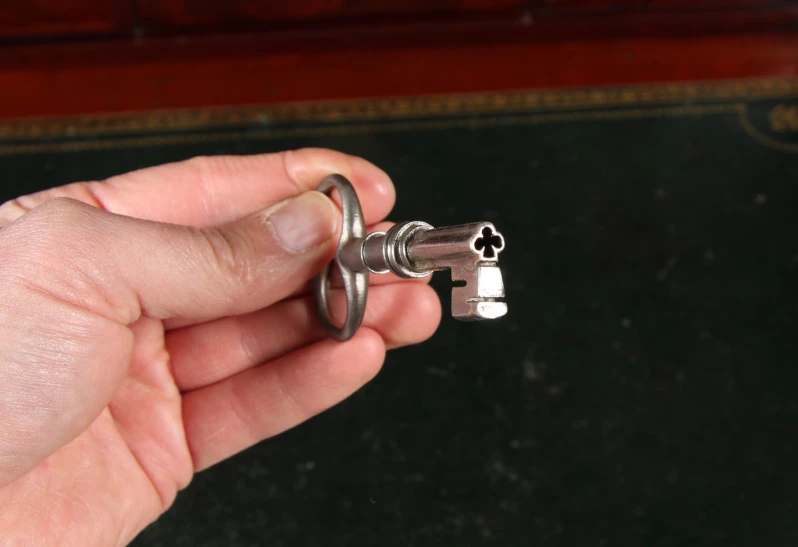
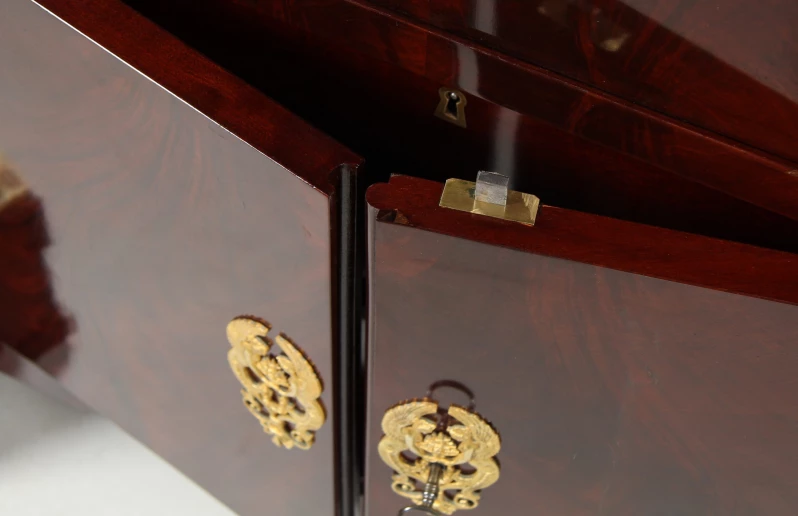
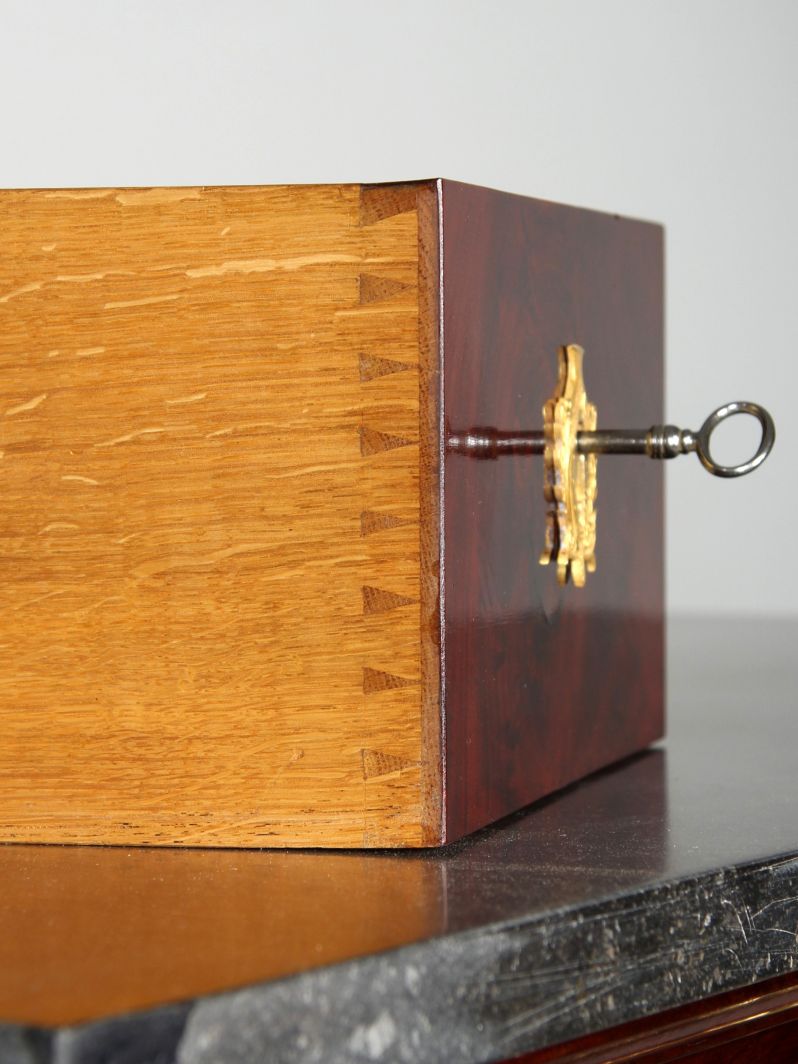
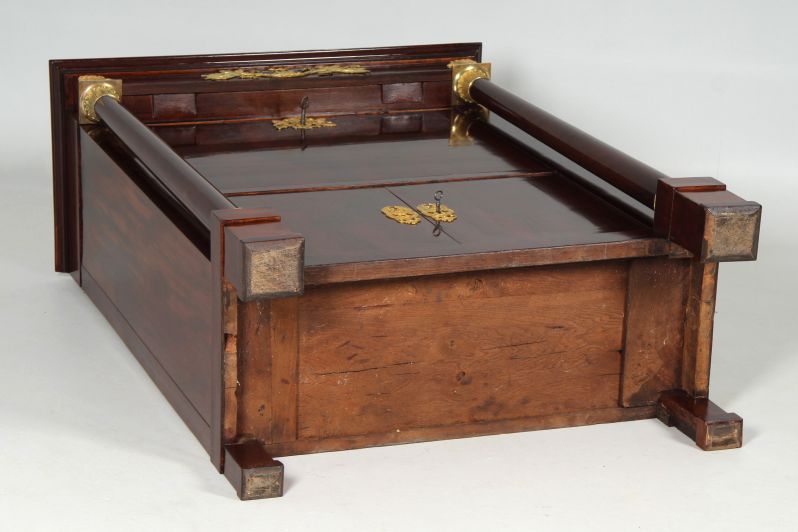
The interior of the secretary is particularly remarkable. It is secured by a double-bolt lock, the key of which still has its original cloverleaf-shaped shaft.
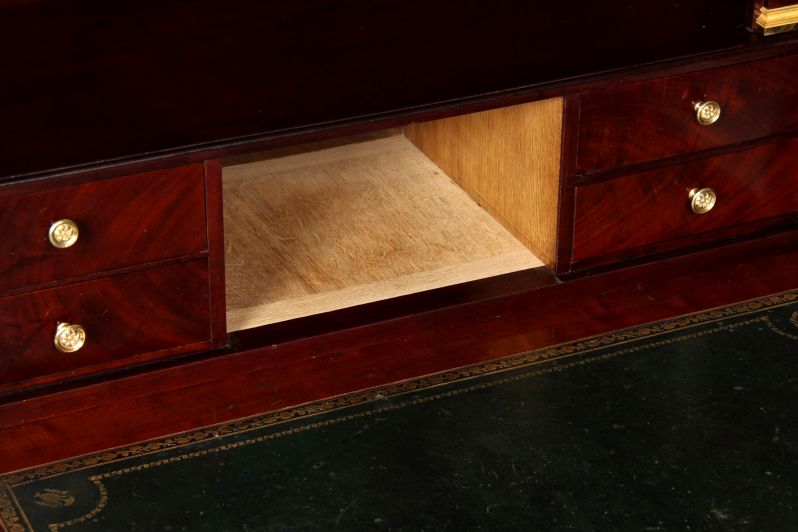
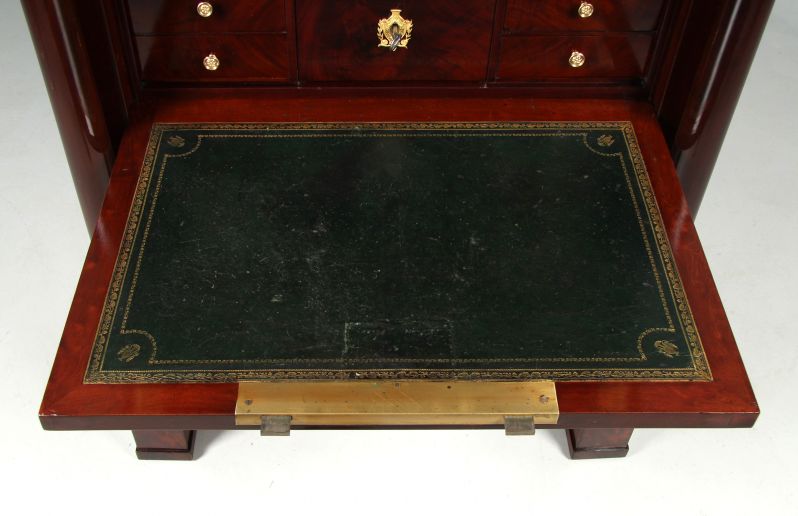
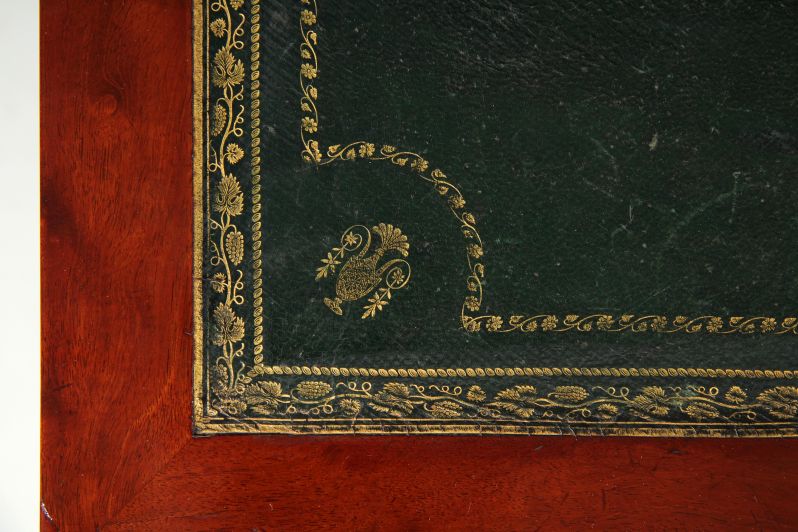
Behind the writing surface, which is covered in beautifully preserved leather, is an architecturally organised interior with five drawers at the bottom, an open compartment flanked by pilasters and a wide drawer above.
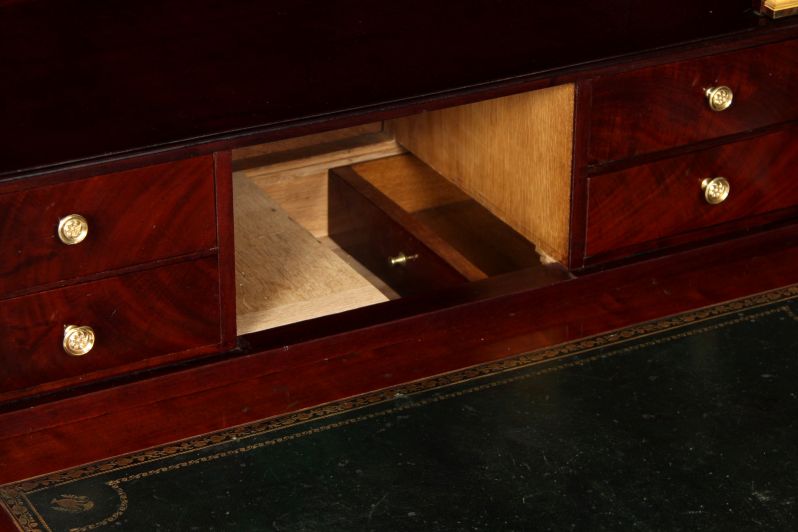
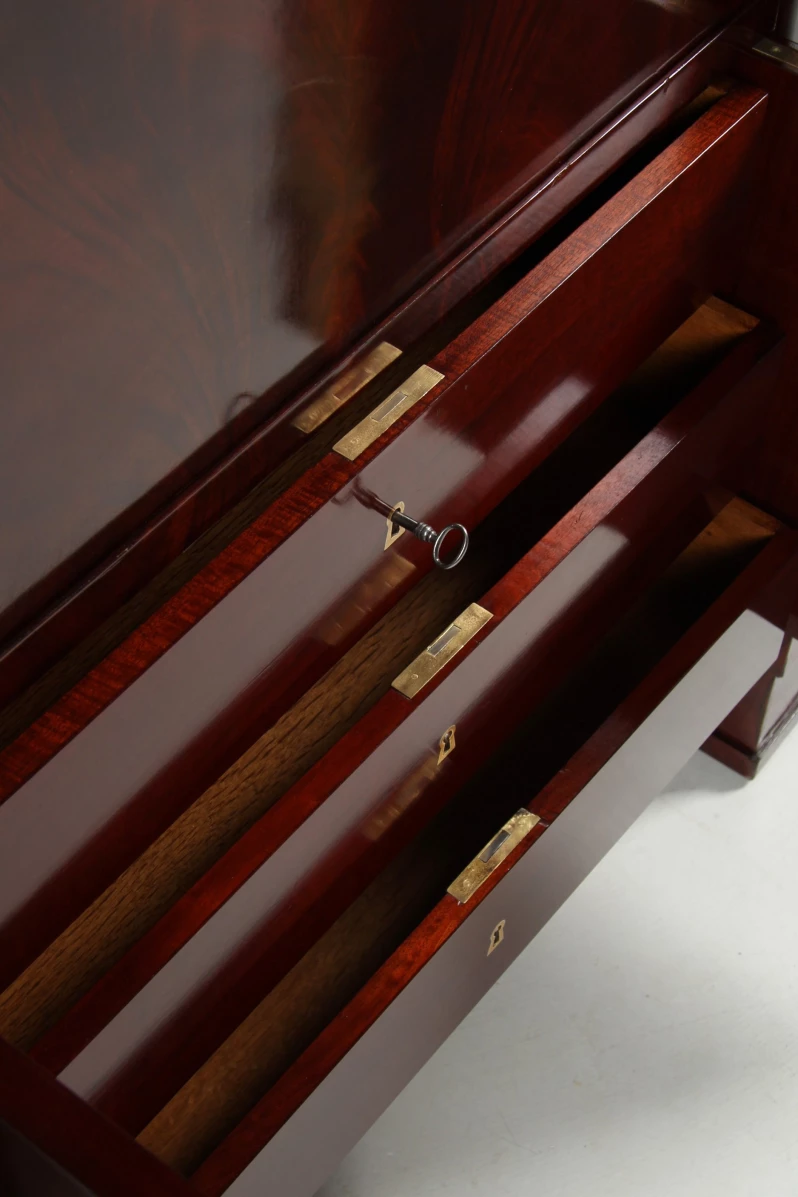
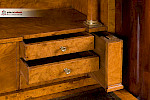
Beneath the central drawer is a double base that is unlocked by a concealed push mechanism. Assisted by spring force, the compartment opens automatically to reveal two further drawers.
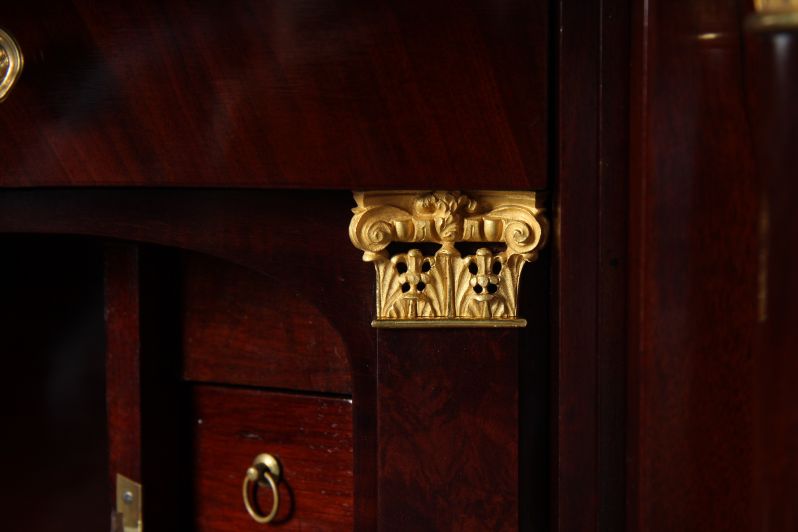
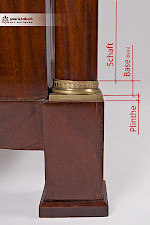
Particularly unusual, however, are two additional rows of secret compartments that are fully integrated into the cabinet wall. They are unlocked by means of an invisibly concealed pressure point behind the fire-gilt capitals; the drawers only pop out automatically when this is pressed. An absolutely exceptional and very rare patent in this form.
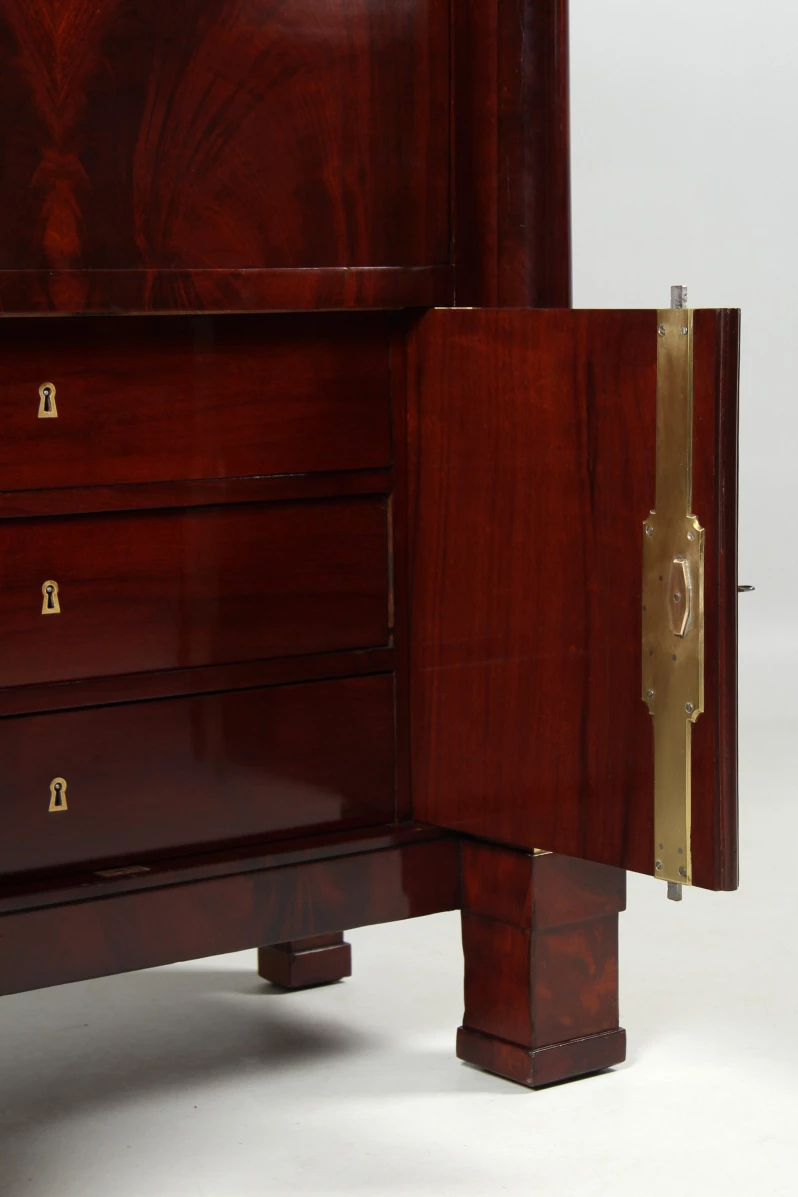
Below the writing compartment, concealed behind two doors, are three further wide drawers. The right-hand door is secured by a solid bar lock that locks upwards and downwards into corresponding counterparts. As the doors interlock with tongue and groove, it was possible to deliberately dispense with a striking moulding that would detract from the appearance; this detail can be clearly seen in one of the attached photos.
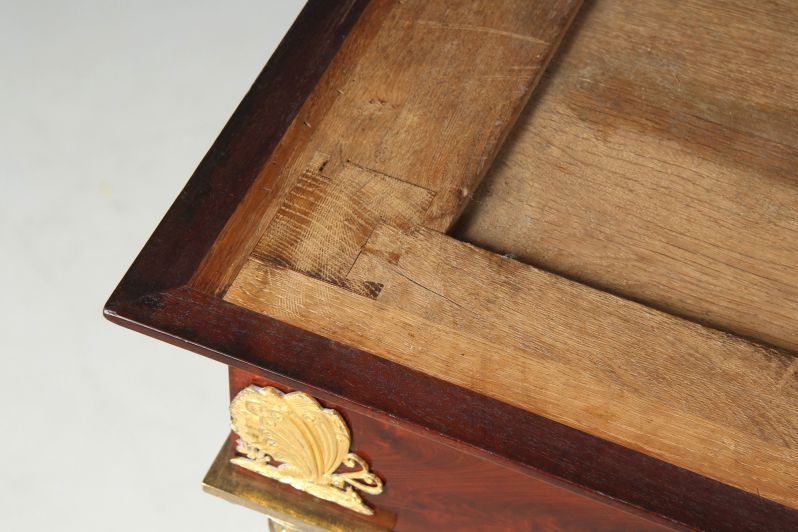
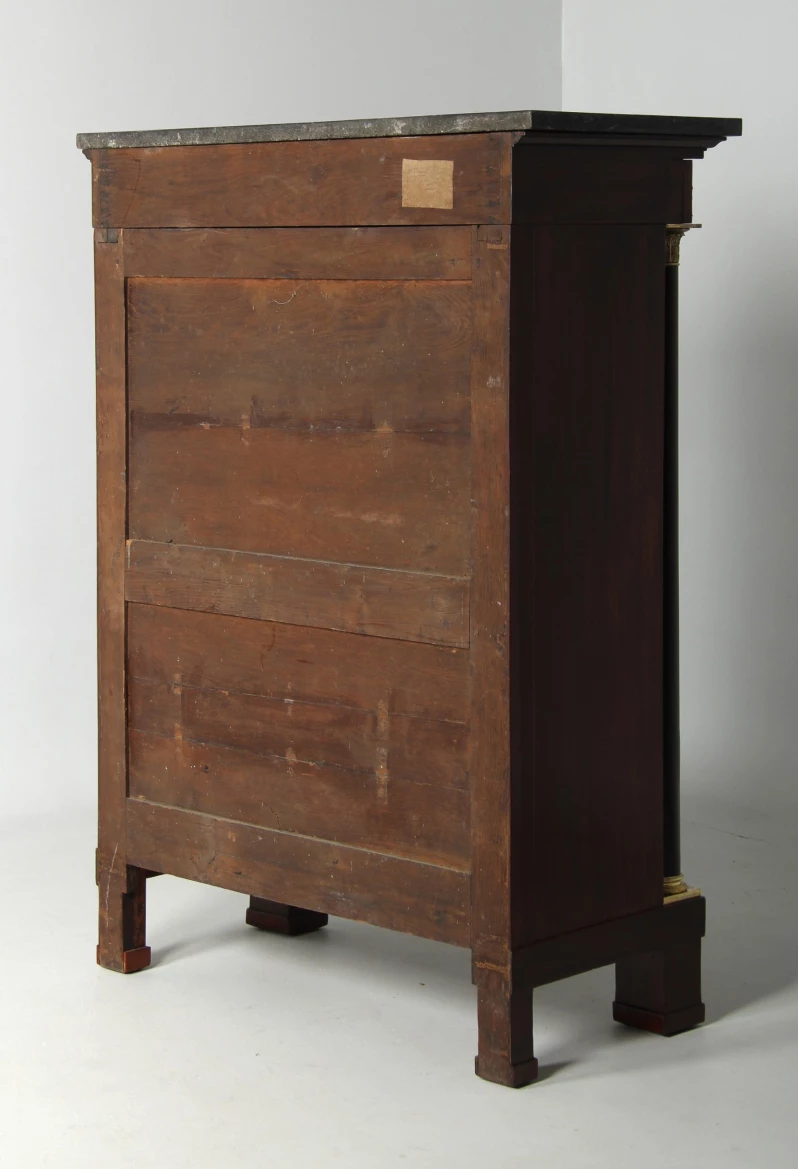
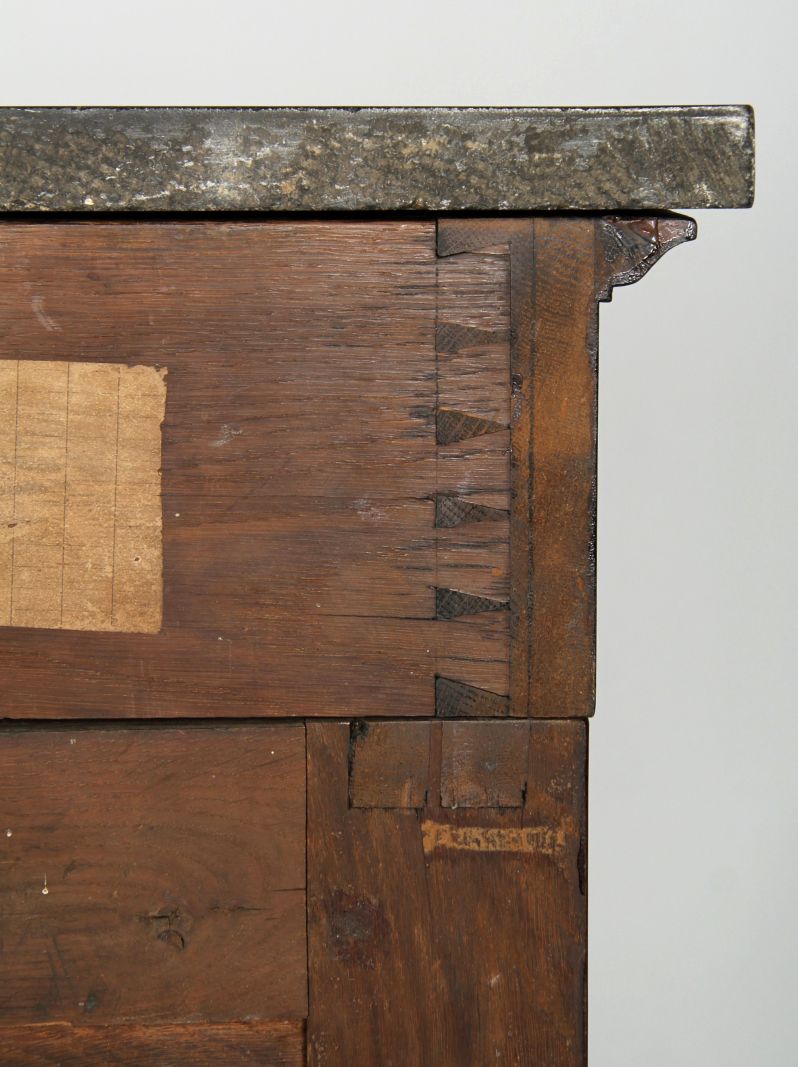
The upper end of the piece of furniture is formed by a loosely laid slab of Belgian granite. Moved to the side, the excellent craftsmanship of the furniture is also evident here, with extremely neat zinc plating and well-chosen construction wood.
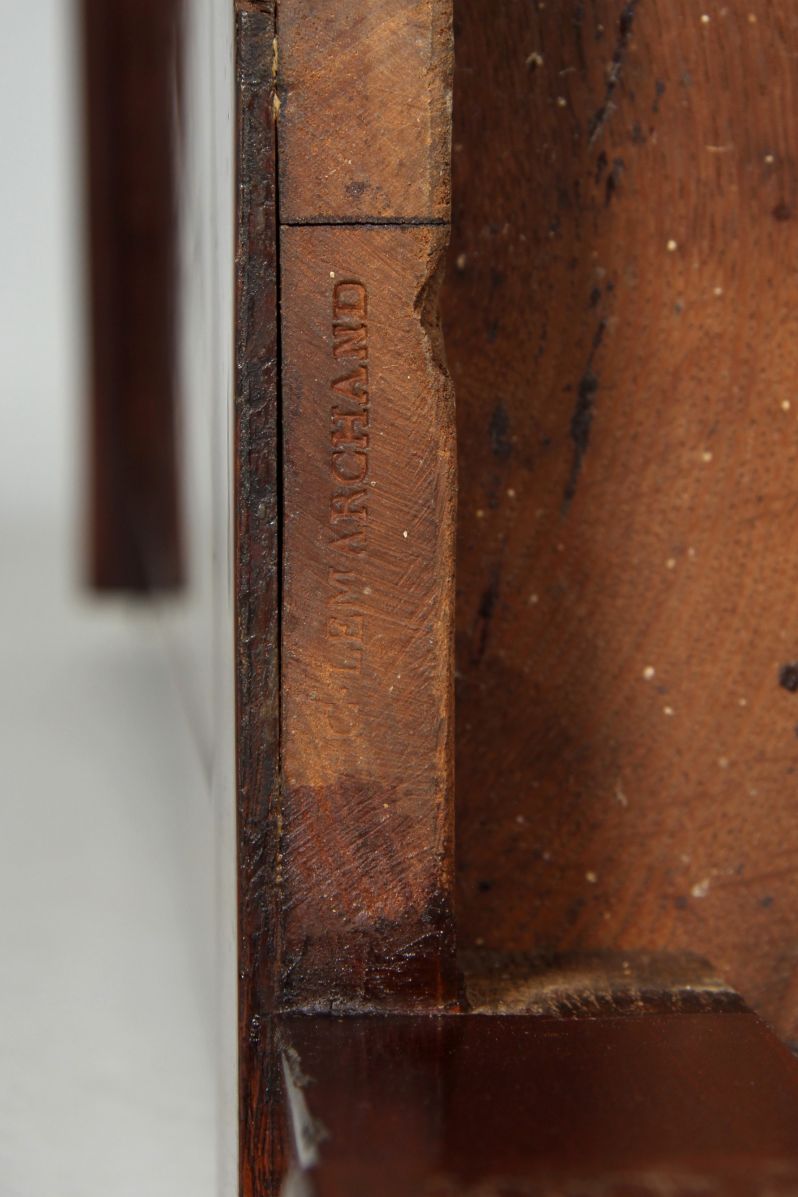
Underneath the left-hand side of the body, the stamp - C.LEMARCHAND - reveals the creator of this masterfully crafted piece of furniture.
Worth knowing:
Charles-Joseph Lemarchand (1759-1826) grew up in Dieppe on the Atlantic coast. He lived in Paris from 1785, where he became a master craftsman on the eve of the Revolution in 1789. He lived in the Rue du Faubourg Saint-Honoré near the famous ebenist Pierre Roussel, to whose family he was related by marriage; he possibly completed his apprenticeship with his brother-in-law Pierre-Michel Roussel, who was also his best man in 1795.
In 1791, Charles-Joseph Lemarchand delivered several works to the royal Garde-Meuble, including around twenty chests of drawers for the Château de Saint-Cloud. And at his wedding in 1795, his business assets were already estimated at 80,000 livres, a clear indication of how important his workshop had become in just a few years.
The Lemarchand workshop existed until 1852. Charles-Joseph, who made and stamped the furniture on offer here, was supported from 1815 by his son Louis-Édouard Lemarchand, who became famous for his involvement in the construction of the ceremonial coffin for Napoleon Bonaparte in the Invalides.
Furniture signed (C.)LEMARCHAND can be found today in important museum collections, including the Musée des Arts Décoratifs, the Musée Carnavalet, the Musée National du Château de Compiègne and the Musée National du Château de Fontainebleau.
Condition: Wonderful state of preservation. Restored and polished with shellac.
Price: 13500,- €
Article found under: Secretaries
Video secretary C.LEMARCHAND
Also interesting
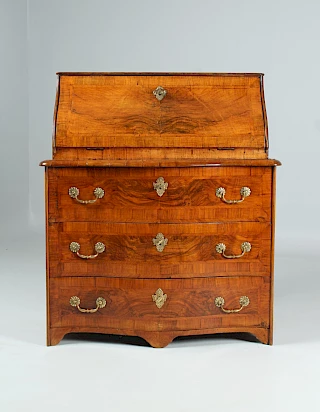
Small Antique Slanted Flap Secretary
Switzerland (Bern)
Walnut
Baroque around 1760
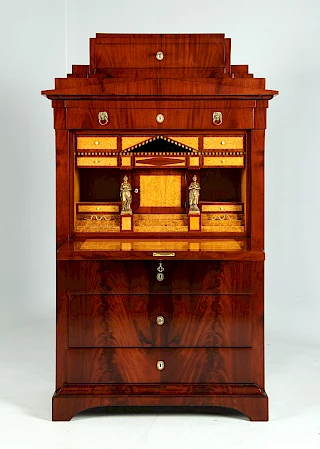
Very elaborate Berlin secretary
Berlin
Mahogany a.o.
around 1825
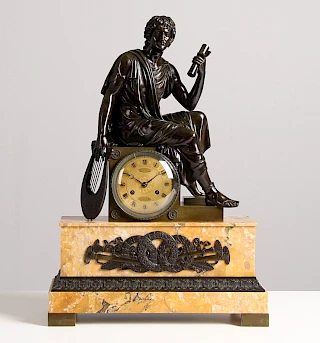
Mantel Clock - Virgil the Poet
Paris
Bronze, marble
around 1830