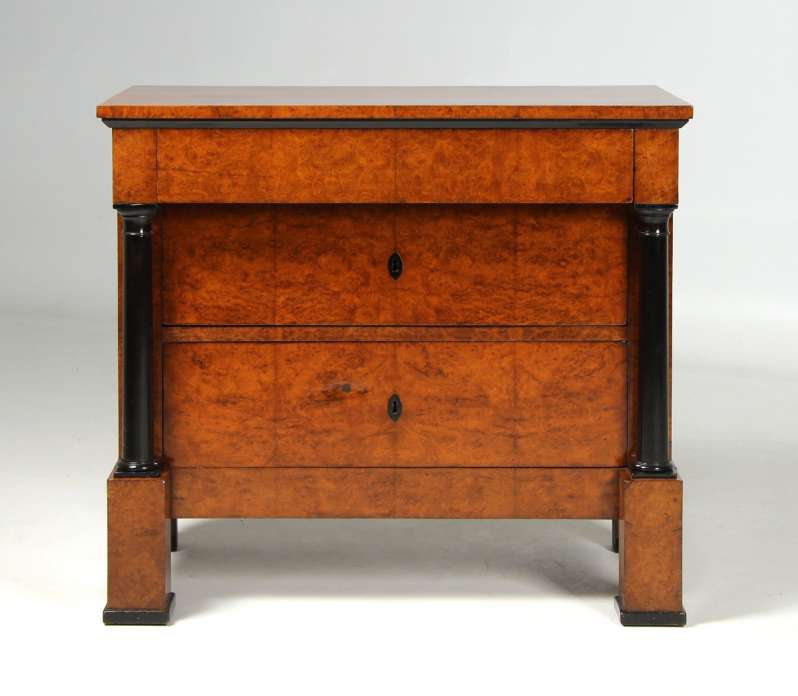
Video small Biedermeier chest of drawers burl wood
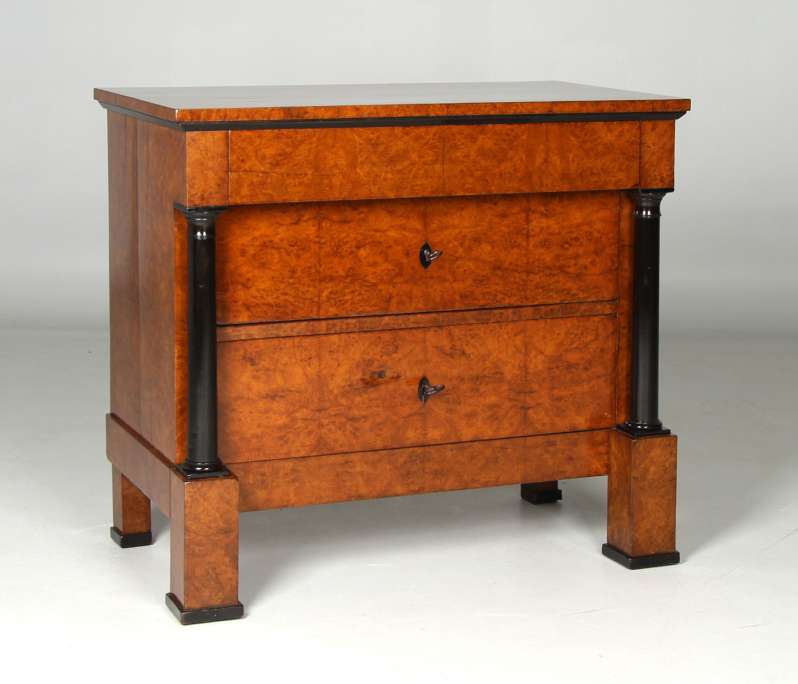
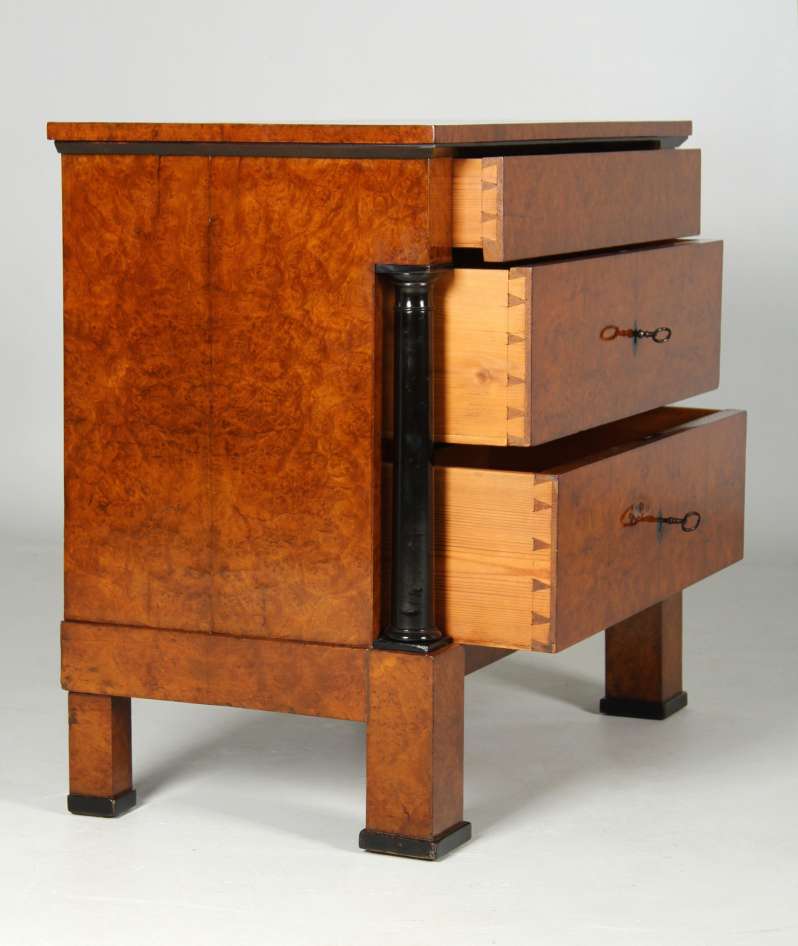
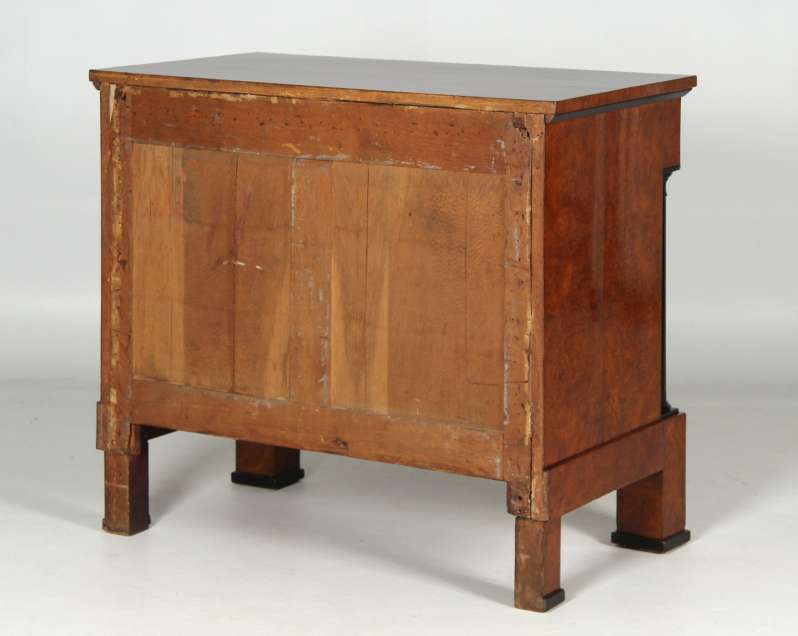
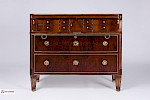
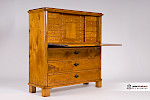
Small Biedermeier chest of drawers in burl wood
Munich
Ash Burl
circa 1820
Dimensions: H x W x D: 81 x 89 x 49 cm
Description:
Unusual, delicately proportioned chest of drawers from the early 19th century.
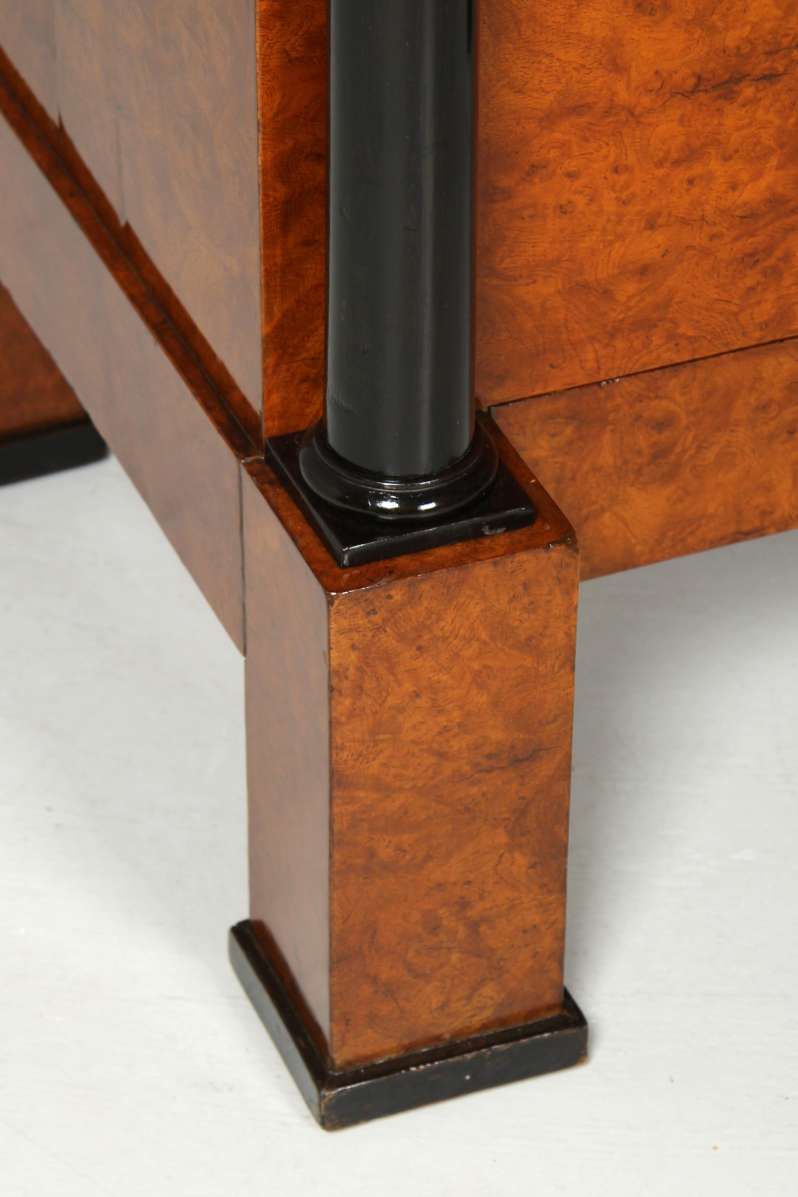
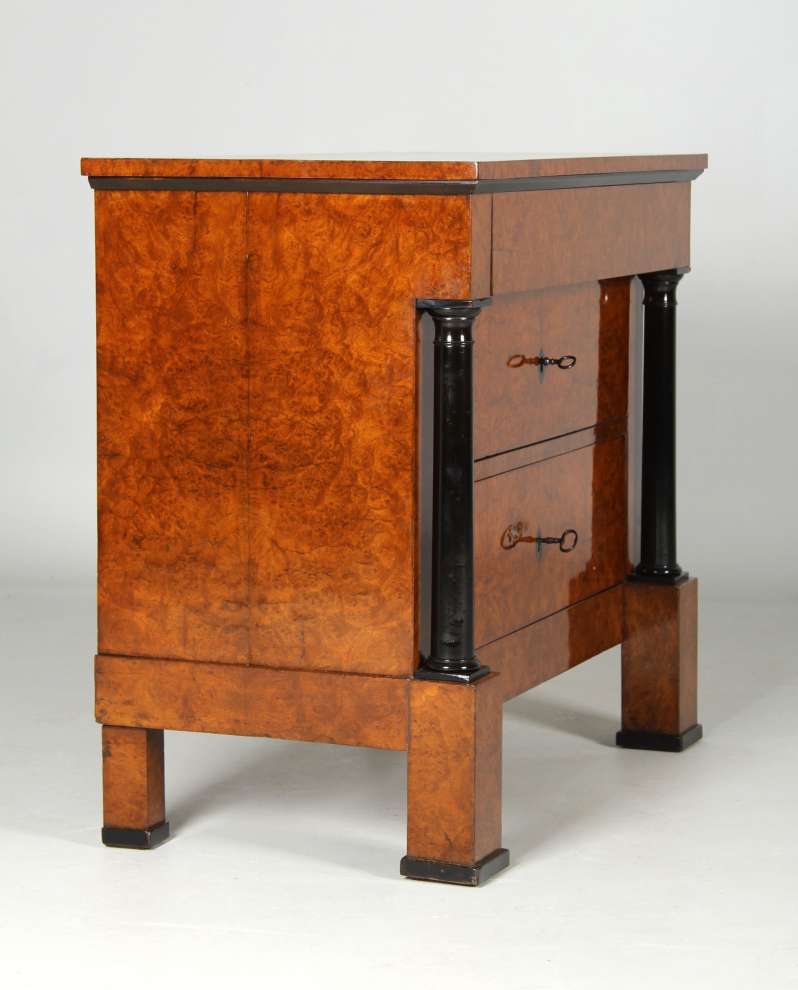
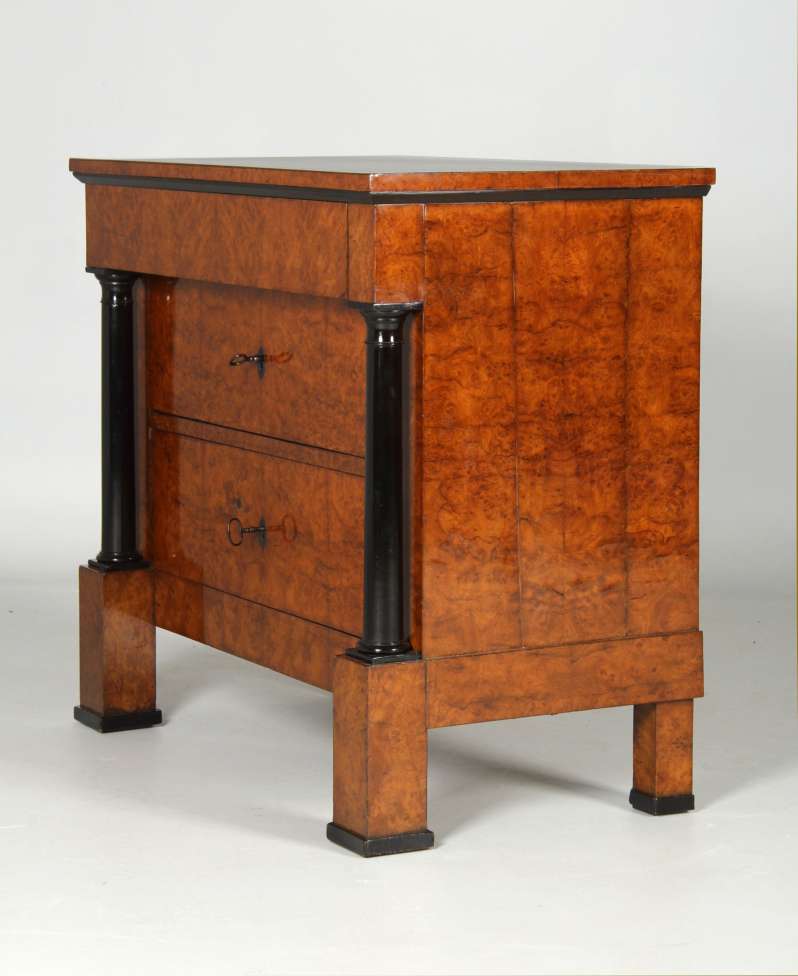
A piece of furniture standing on striking block feet with two larger drawers in the lower section and a protruding drawer above.
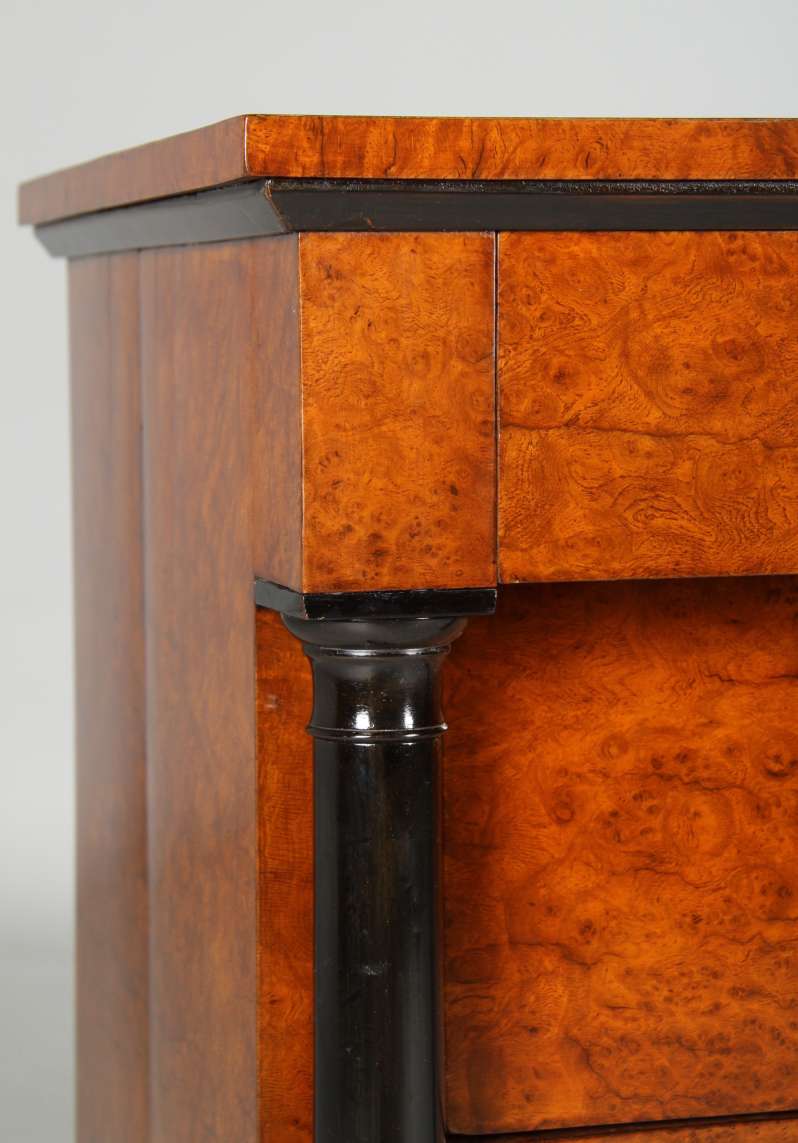
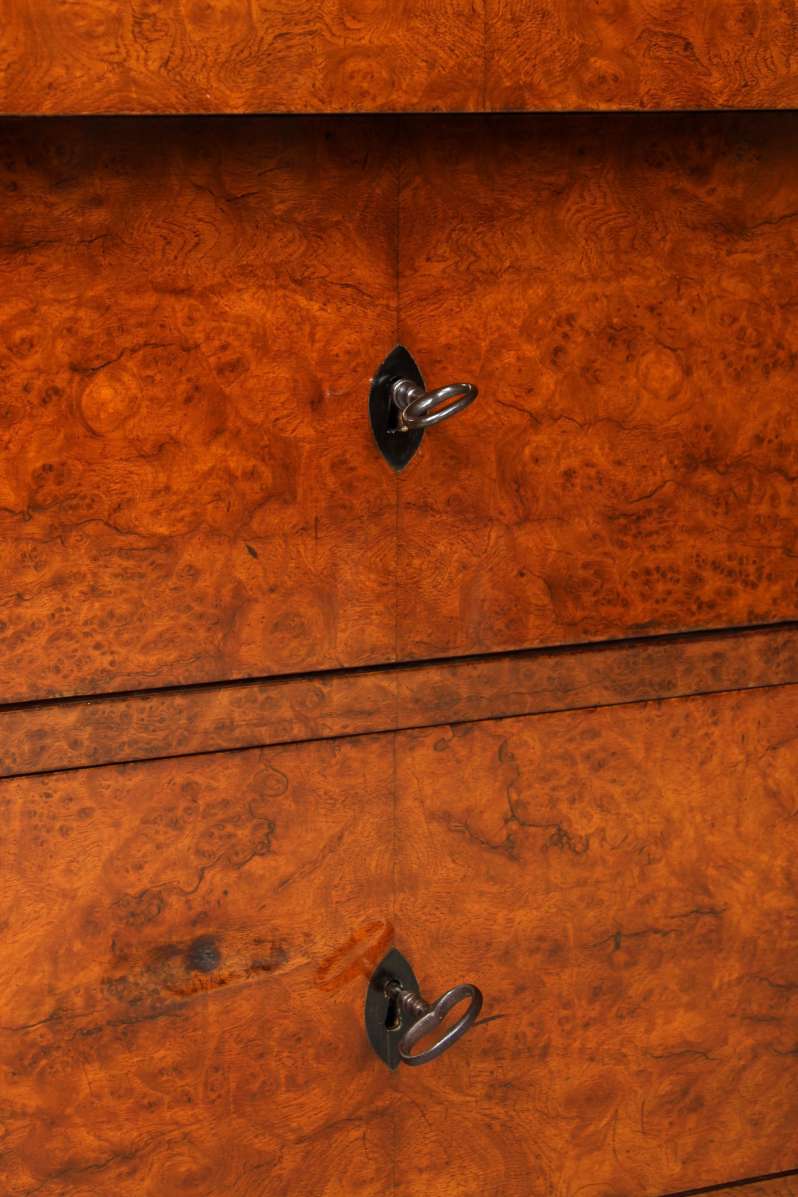
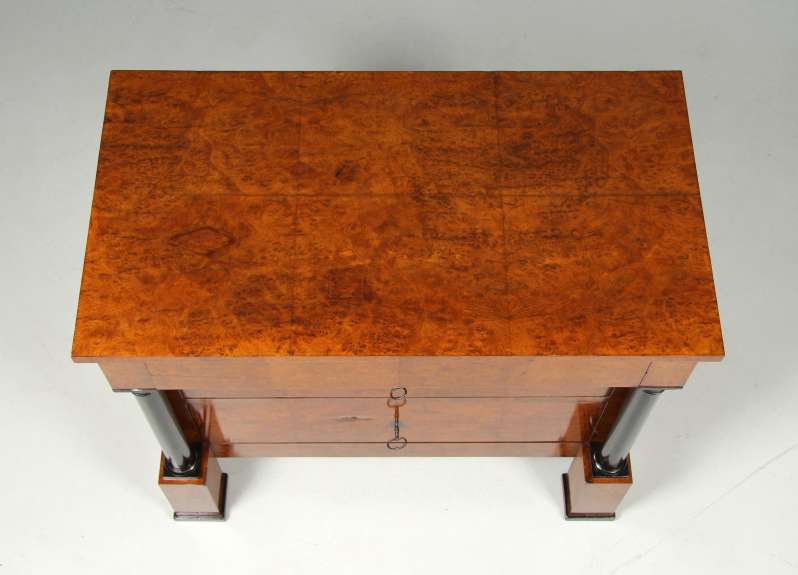
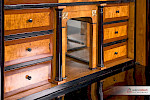
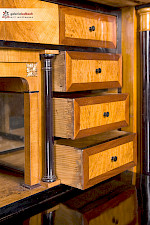
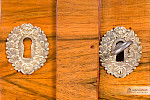
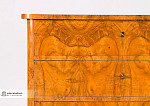
In addition to the ebonised and free-standing solid columns, the veneers (probably ash burl) are particularly characteristic, with their vividly structured, yet almost directionless pattern making the surface appear almost stone-like. The clear flatness of the furniture is subtly accentuated by the sparingly inlaid keyhole borders.
It is precisely this restrained use of decorative elements that gives the chest of drawers its remarkably modern effect and draws the eye completely to the material and proportions.
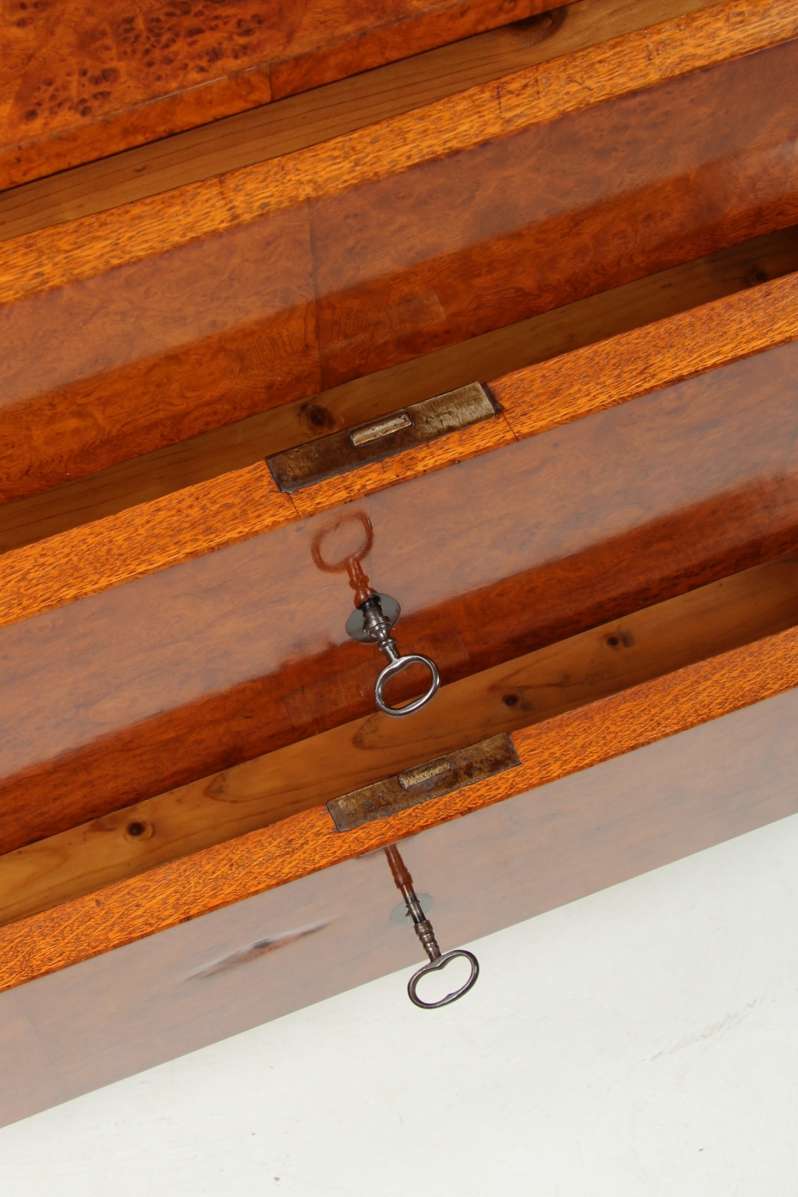
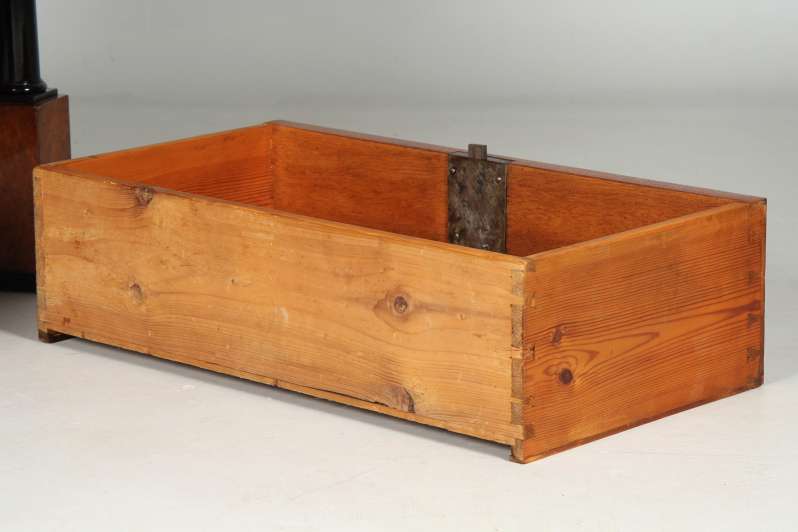
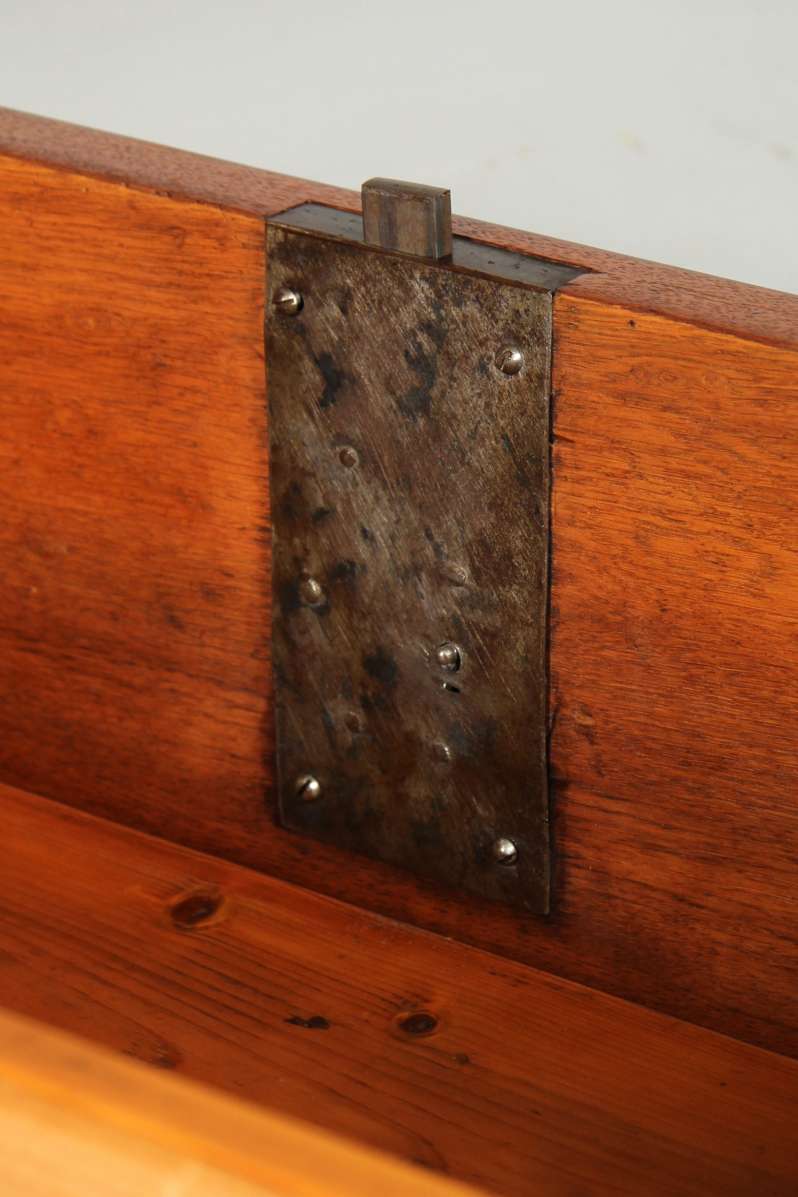
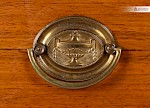
The original locks are present with an original matching key, another key has been reproduced.
Worth knowing:
The characteristic and defining design element of much early 19th century furniture is the veneered surface. The focus is not on constructive structuring or elaborate ornamentation, but on the effect of the wooden surface itself. Decorative additions such as fittings, carvings, inlays or elaborate applications take a back seat.
Slow-grown cherry wood, wild-grained walnut and the then incredibly expensive mahogany veneers were favoured for calm, even and yet interesting veneer surfaces. The mirror-symmetrical arrangement of the veneer sheets created impressive patterns whose lines were reminiscent of architectural or natural forms. These deliberately staged veneer patterns are among the characteristic design features of high-quality Biedermeier furniture.
However, the early 19th century also had a particular preference for strongly grained and vividly textured veneers. Woods with shimmering, wave-like light reflections such as maple, birch or ash were appreciated, as were the restless, flame-like patterns of burl and root woods.
The extraction of such veneers was complex, as burl wood in particular is extremely hard and tough and therefore difficult to process. Technical progress in the early 19th century, in particular water and steam-powered band saws, made it possible to produce larger, continuous sheets of veneer.
The forests were therefore searched for old, overgrown root and burl wood. If suitable material was not available in sufficient quality or quantity, trees were deliberately damaged - the natural healing process created irregular growths and burls around the damaged areas, the unusual structure of which was later used for decorative veneers.
In order to further enhance the vibrancy of the wood surfaces, the veneers were treated with fire-retardant oils and shellac. These finishes intensified the lustre, depth of colour and light effect of the wood and made the grain and texture stand out in a particularly vivid way.
Condition:
Restored, authentic condition with a beautiful age patina.
There is a pressure mark on the front of the lower drawer to the left of the key label. This can be clearly seen in the photo with the drawers open. Due to the wild grain pattern, the pressure mark is barely noticeable when the chest of drawers is viewed from the front. There are also two older veneer additions on the top panel. These areas are also clearly recognisable in one of the photos.
Price: 3600,-€
Hans Ottomeyer has written an interesting article on the subject burlwood:
Biedermeier - Die Erfindung der Einfachheit from p. 122
Article found under: Chests of drawers
Add to shopping cartVideo small Biedermeier chest of drawers burl wood
Also interesting
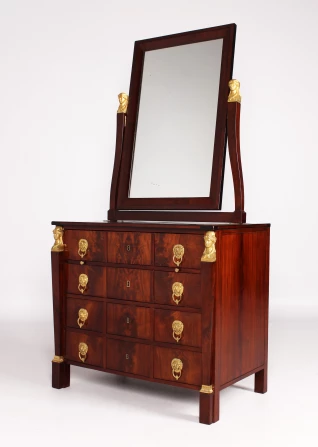
Antique dressing table - stamped Chapuis
Brussels
Mahogany
Empire around 1810
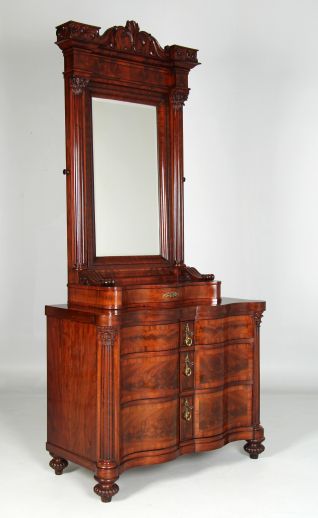
Chest of drawers with mirror
Northern Germany
Mahogany
Mid 19th century
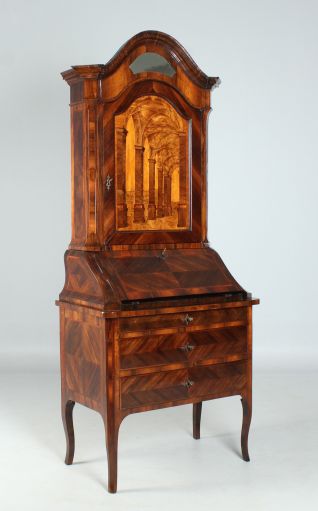
Secretary with Architectural Marquetry
Italy
Rosewood a.o.
second half 18th century