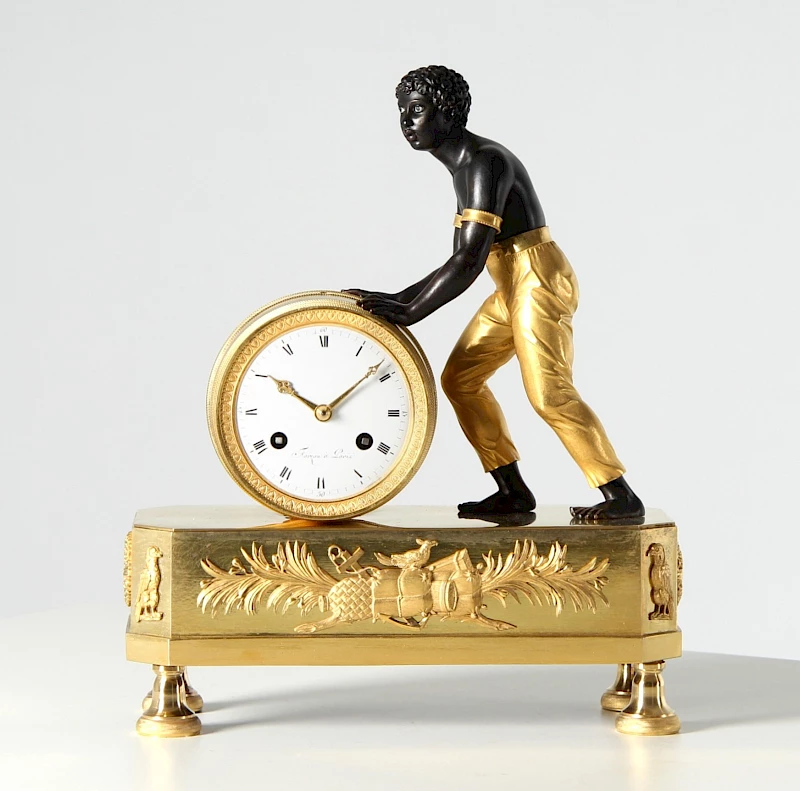
Video "The barrel roller"
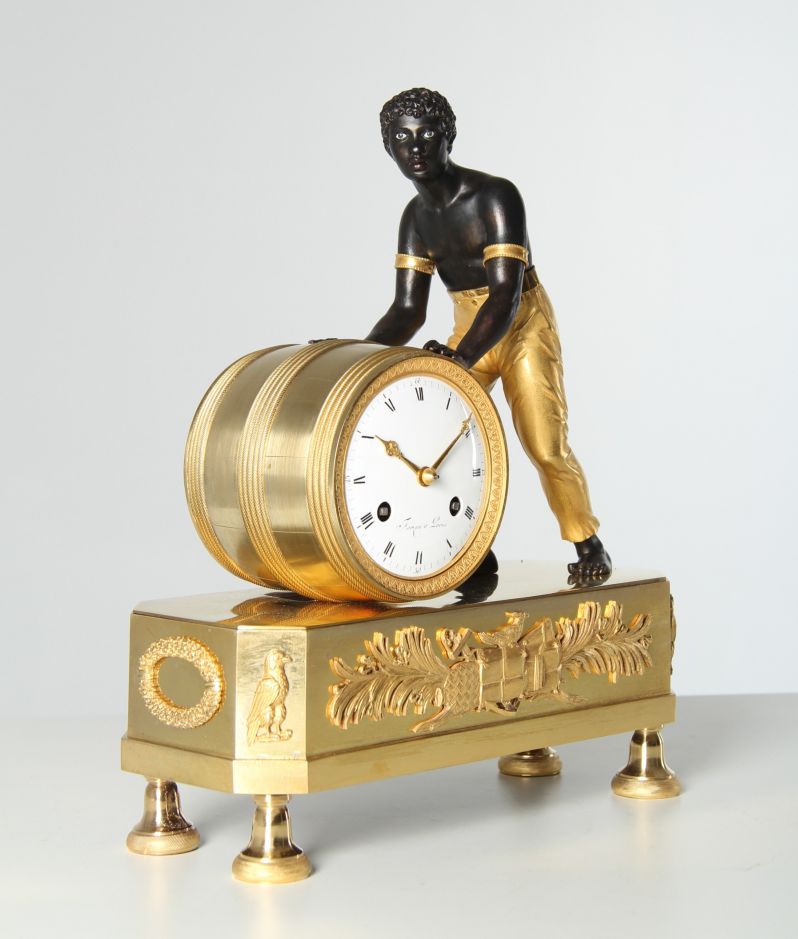
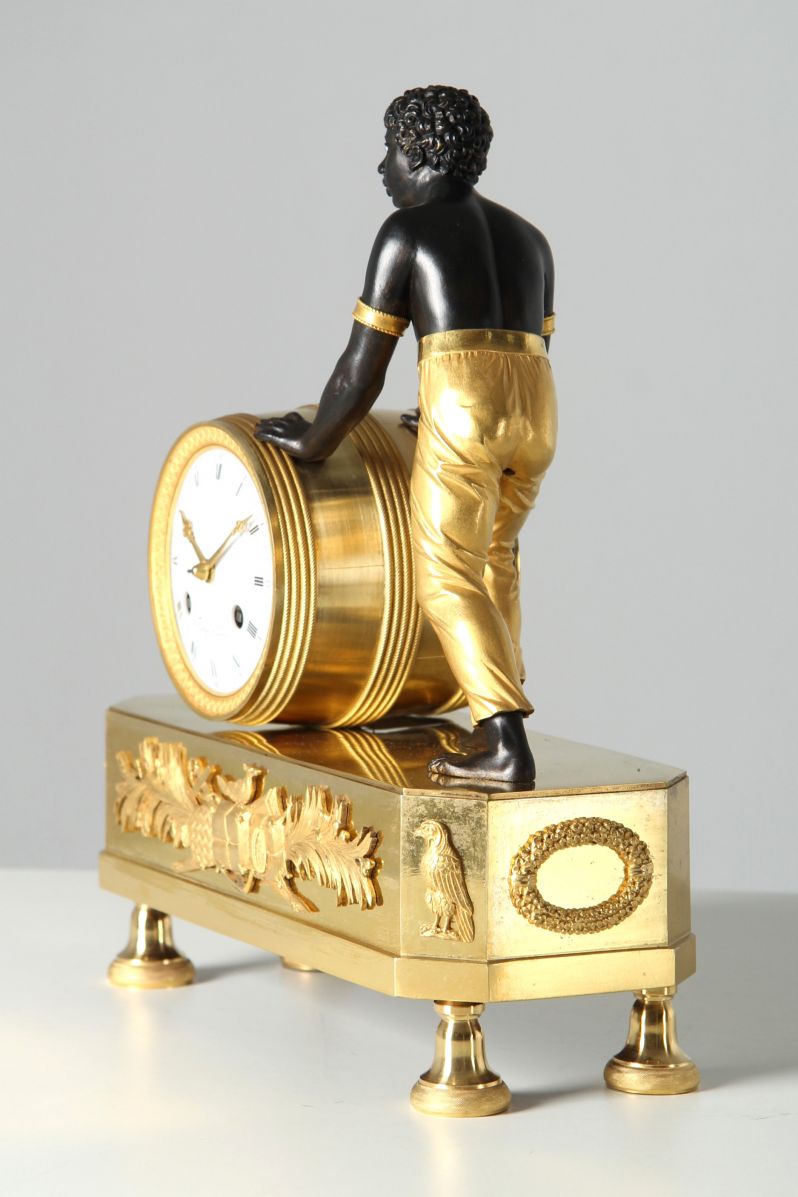
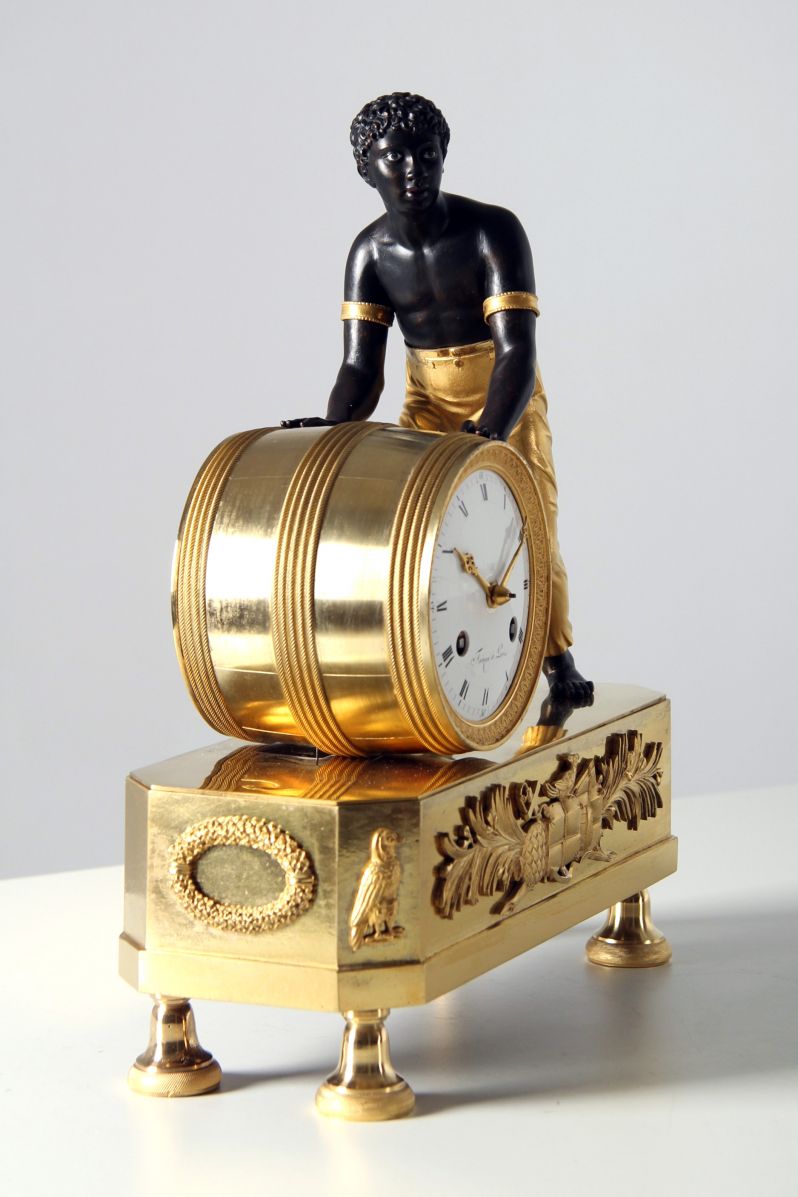
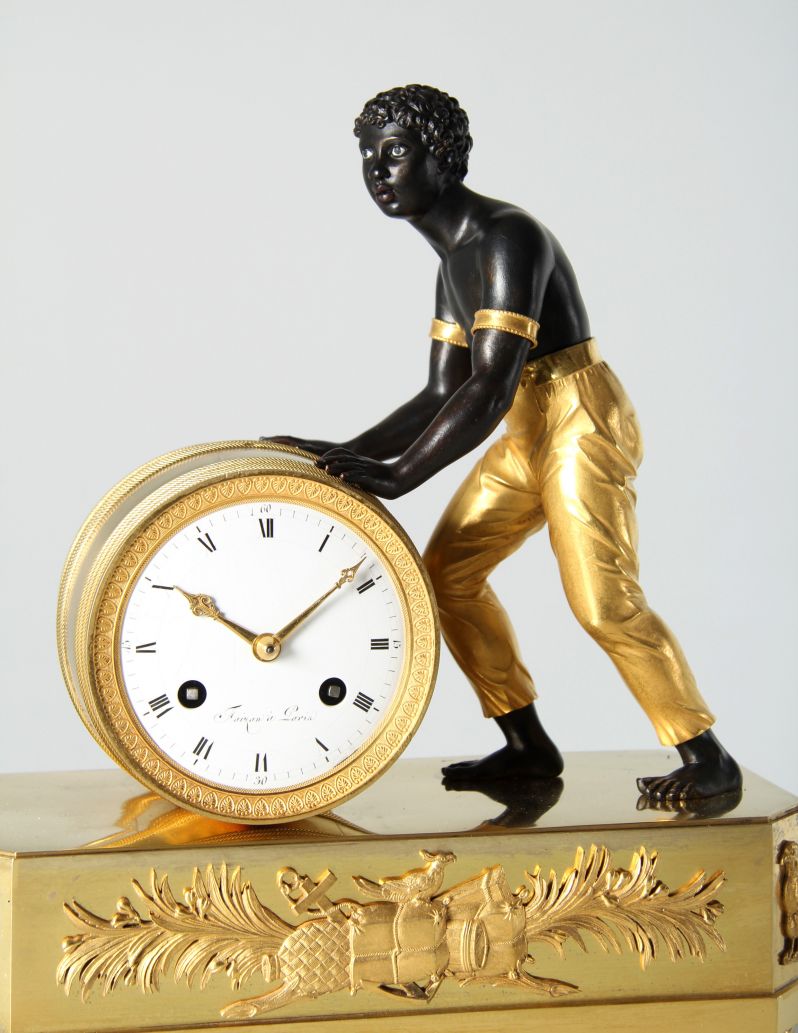
The barrel roller - so-called "Pendule au Noir"
Paris
fire-gilt bronze
early 19th century
Dimensions: H x W x D: 34 x 27 x 11 cm
Description:
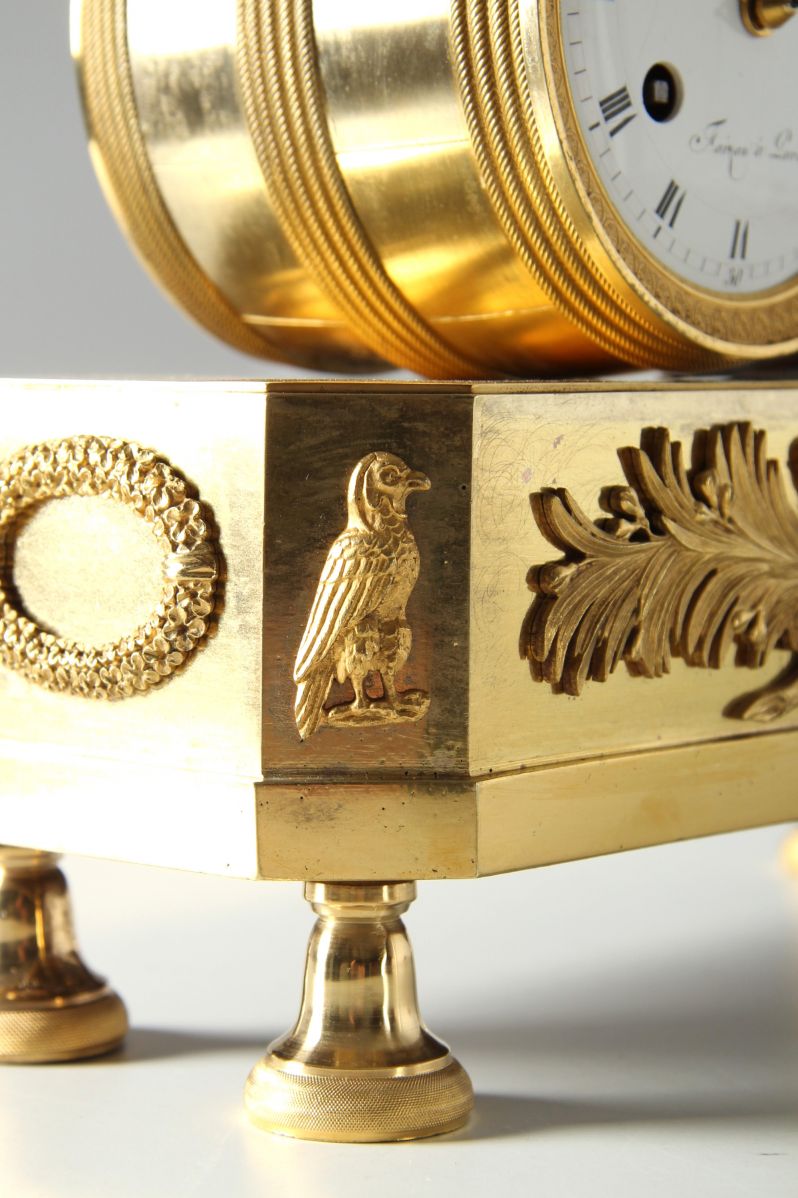
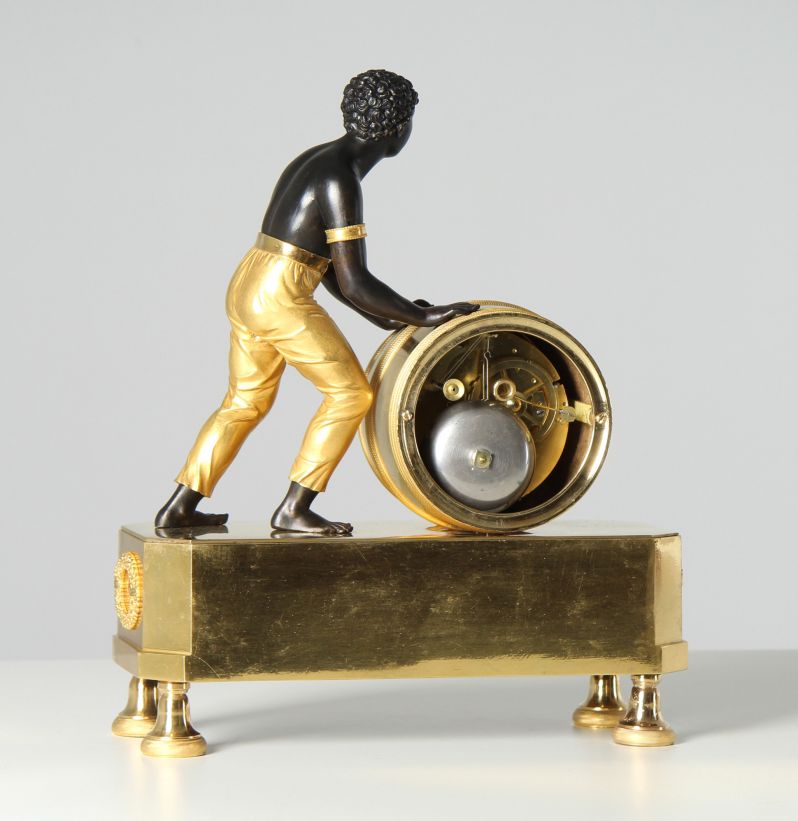
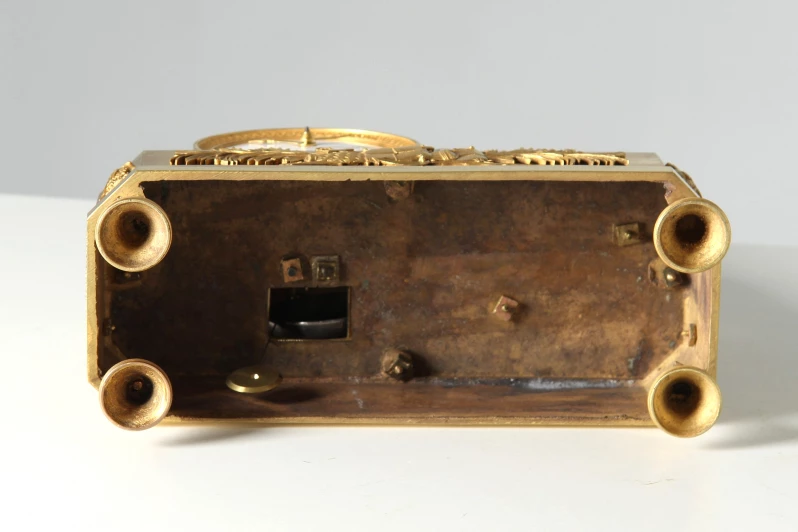
Fire-gilt bronze clock from the early 19th century standing on bell feet.
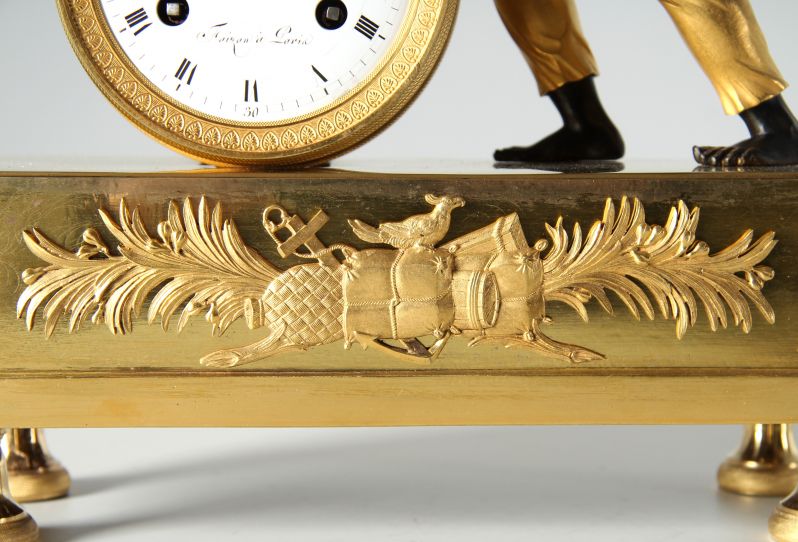
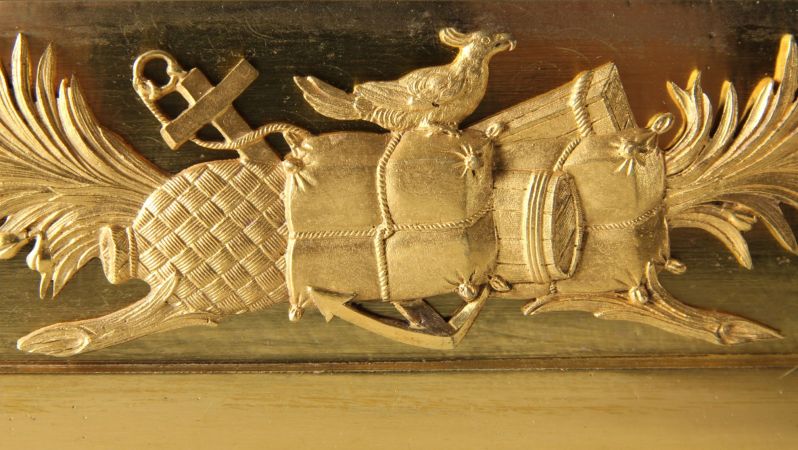
The octagonal base is decorated on the front with a relief dedicated to the theme of seafaring and colonial trade: flanked by sweeping palm leaves is a composition of an anchor and parrot as well as bales, crates and barrels containing tobacco, rum and other colonial goods.
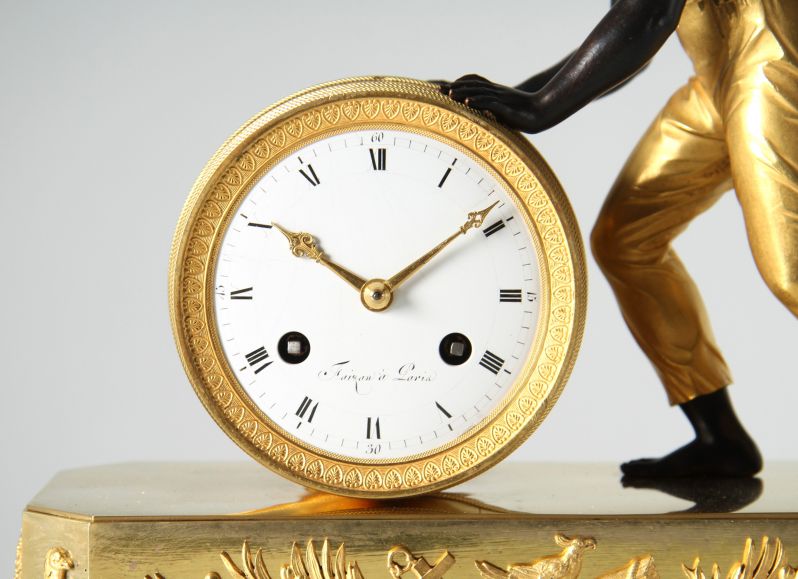
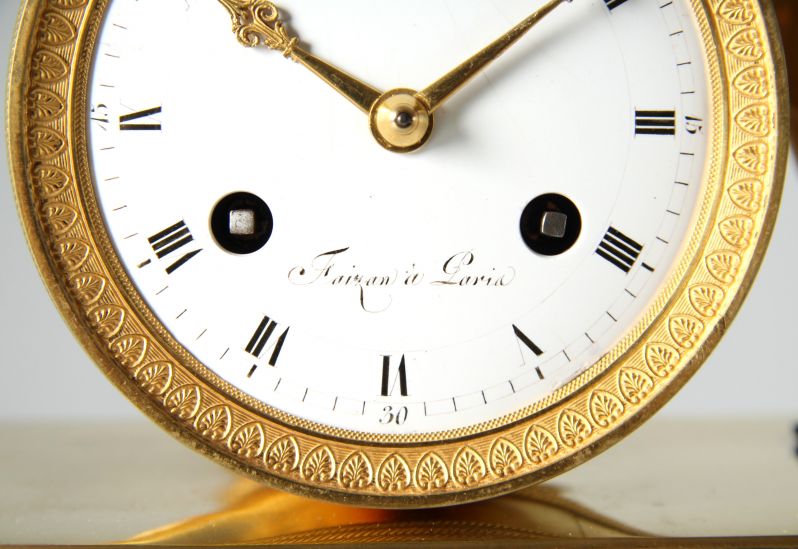
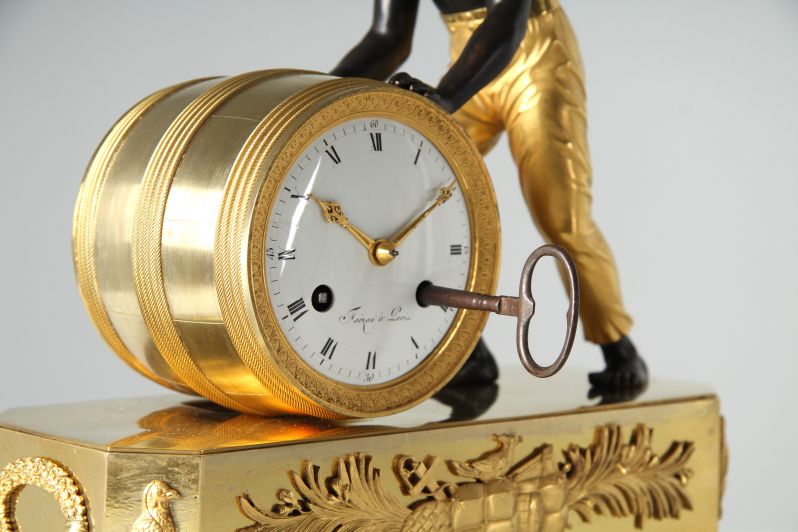
A large rum barrel is also the subject of the figurative depiction at the top of the base, forming the drum for the clockwork and showing the white enamelled dial with Roman numerals, a fine minute scale and the clockmaker's signature: Faizan à Paris.
The barrel is being rolled by a young man and probably loaded onto a merchant ship. The scene gives the clock its common name: "The Barrel Roller".
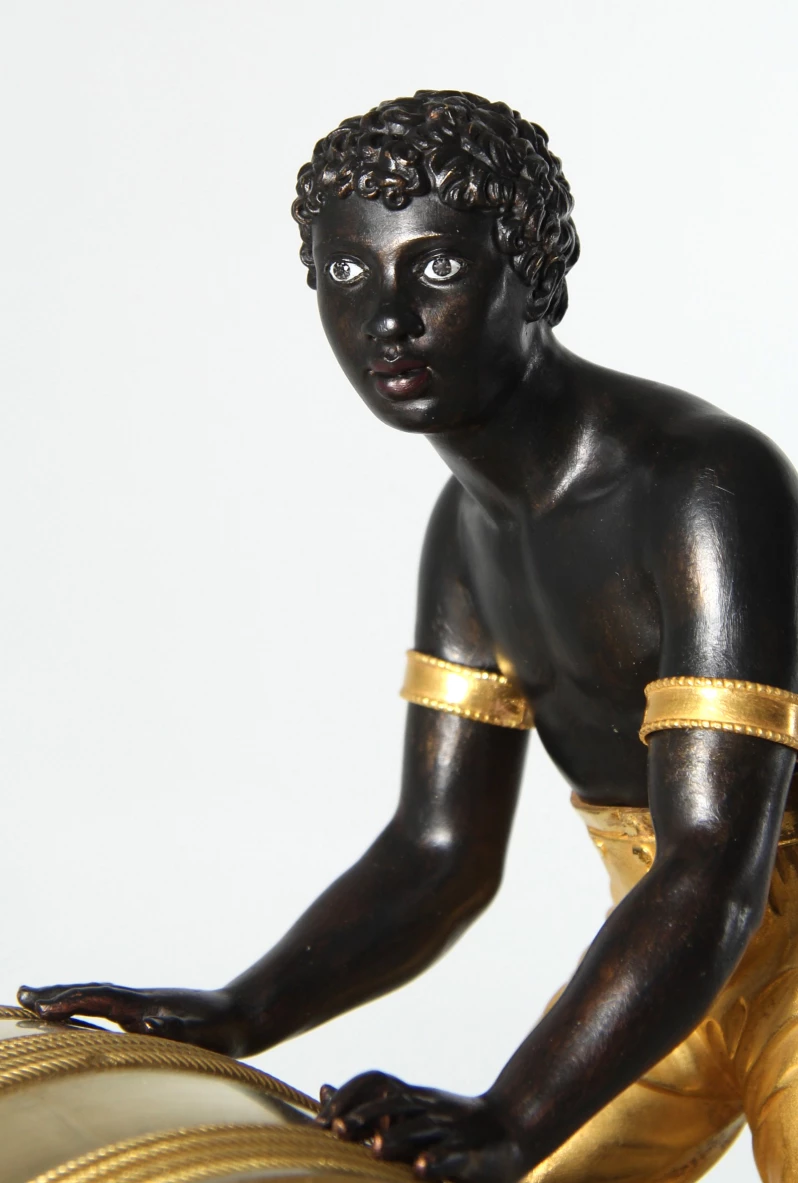
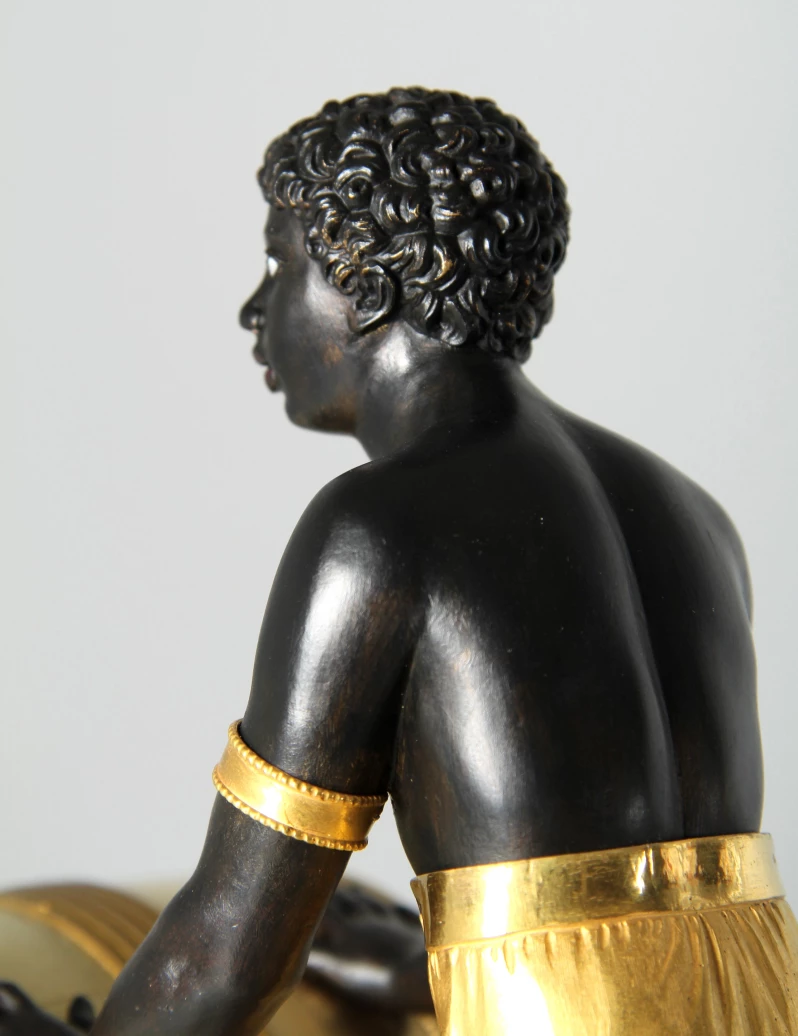
The dark-skinned man with thick curls, a labourer in the West Indian colonies, with white-painted eyes, barefoot and bare-chested, wears trousers with a conspicuous waistband. His arms are adorned with gilded bronze bracelets. Their presence is both decorative and functional, as they conceal the joints between the individually cast bronze parts.
The movement is a typical French pendulum movement with a running time of around eight days and a half-hourly striking disc movement. The pendulum is suspended from a fine thread in keeping with the time. This thread is wound or unwound by turning a knurled screw, which changes the position of the pendulum's centre of gravity and allows the rate to be precisely regulated.
According to Tardy - Dictionnaire des Horlogers Francais, the Faizan(t) workshop can be found in the Rue St-Denis in Paris.
An identical clock has been in the collection of the Musée d'Aquitaine in Bordeaux, France, since 2009 (Inv. 2009.4.1 à 3).
Interesting facts:
The model of the barrel roller was designed by Jean-André Reiche around 1805. Reiche, who was born in Leipzig in 1752, moved to Paris, where he was accepted into the guild of bronze casters in 1785. Thanks to his outstanding designs and perfect craftsmanship, he gained a good reputation and general fame as well as employment as a bronze supplier to the imperial court. In addition to bronze casters, he also employed modellers, chasers, gilders and marble cutters and was thus able to produce not only individual bronze parts but also complete clock cases.
The clock on offer here is one of a series of pendulums that became famous and popular in the late 18th and early 19th centuries under the name "Pendule au Noir". In addition to the depiction of the barrel roller, there are numerous other pendulums that deal with the theme of colonisation. These include the portefaix, the matelot, the tobacco shaker and the model with the wheelbarrow. The depictions of working black men are always highly idealised. The men's facial expressions are calm; their posture shows neither tension nor physical exertion. The result is an aesthetic interplay between the dark skin, the fire-gilded bronze and the white of the dial.
Today's viewers react to these objects with both fascination and irritation: Fascinated on the one hand by the high quality of the finely crafted bronzes and the allure of the exotic, distanced on the other, by the possible discrimination assumed by the depiction of the obvious slave. The historical term "Pendule au Noir", which refers to the dark skin colour of the figure depicted, can also reinforce this impression.
The term "Pendule au Noir" was already in use at the time the clocks were created. The period around 1800 was characterised by seafaring, voyages of discovery and a constant expansion of Europe's geographical and cultural horizons. Many Europeans had never seen dark-skinned people before; everything from non-European regions appeared exotic and was taken up by artists. In addition to human depictions, animals and plants also found their way into the design, such as birds of paradise, butterflies, tobacco and spices.
In the art trade, the term "Pendule au Noir" was later replaced by "Pendule au Nègre" or, when this term was no longer politically and socially acceptable, by terms such as "Pendule au Bon Sauvage". This term, which literally means "watch with a noble savage", must of course also be viewed critically.
A generally recognised, politically neutral term has not yet been established. Descriptive terms are occasionally used, such as "pendulum with African figure", "pendulum with dark patinated figure" or "figurine pendulum with African depiction".
Condition:
Wonderful, authentic condition. The movement has been overhauled and works perfectly.
Price: 15500,- €
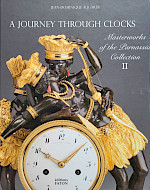
Please compare the following specialised literature on this clock:

 "/>
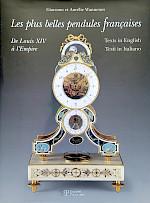
"/>Wannenes - Les plus belles pendules françaises - De Louis XIV à l’Empire p. 308
Article found under: Clocks
Add to shopping cartVideo "The barrel roller"
Also interesting

La Bibliotheque - In the study room
Paris
fire-gilt bronze, enamel
Empire around 1820
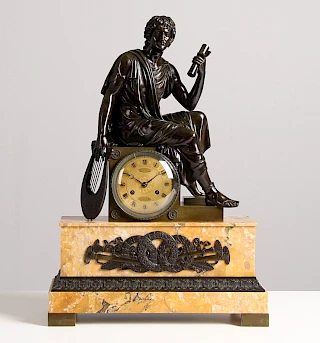
Mantel Clock - Virgil the Poet
Paris
Bronze, marble
around 1830
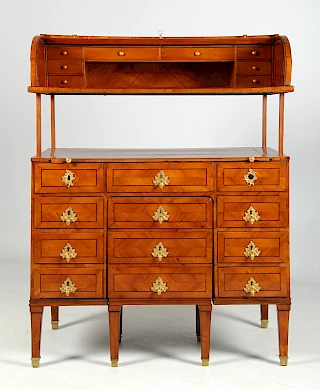
Desk with crank desk and integrated chair
Southern Germany
Cherry
around 1780