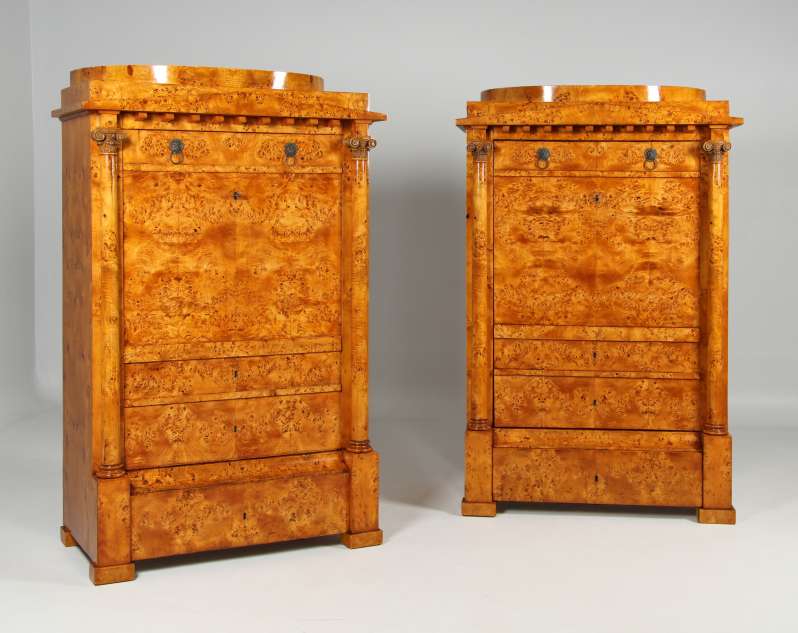
Video: Pair of False Front cabinets
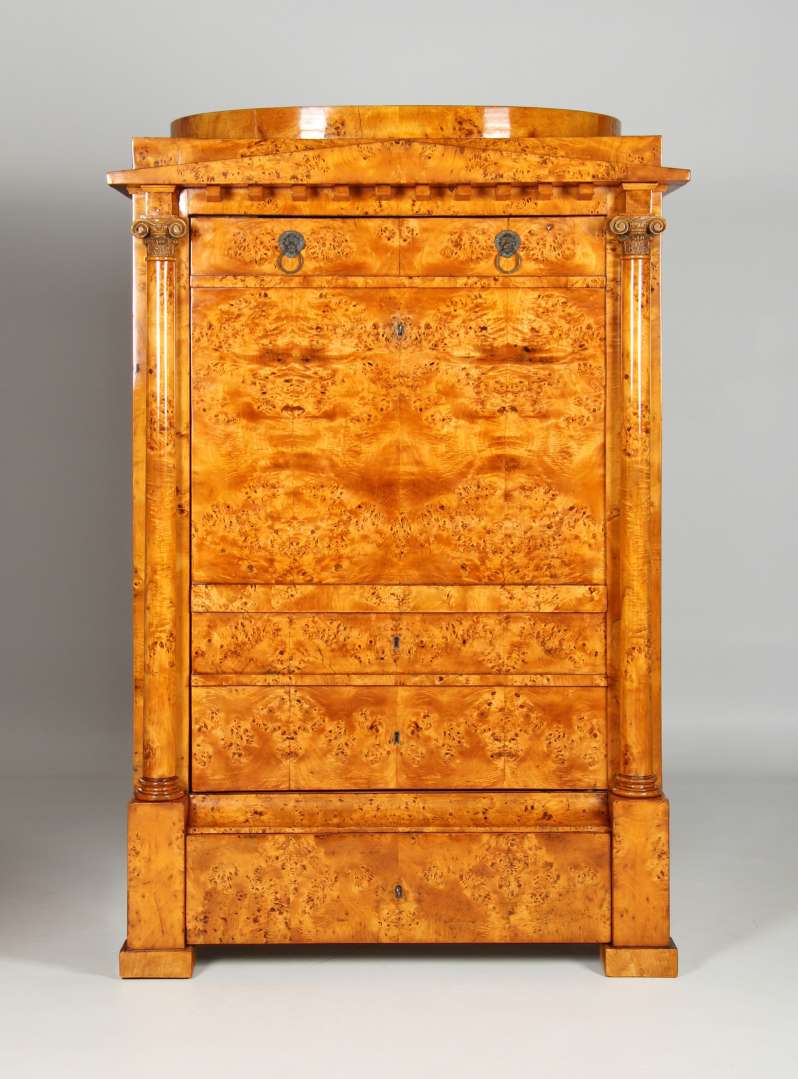
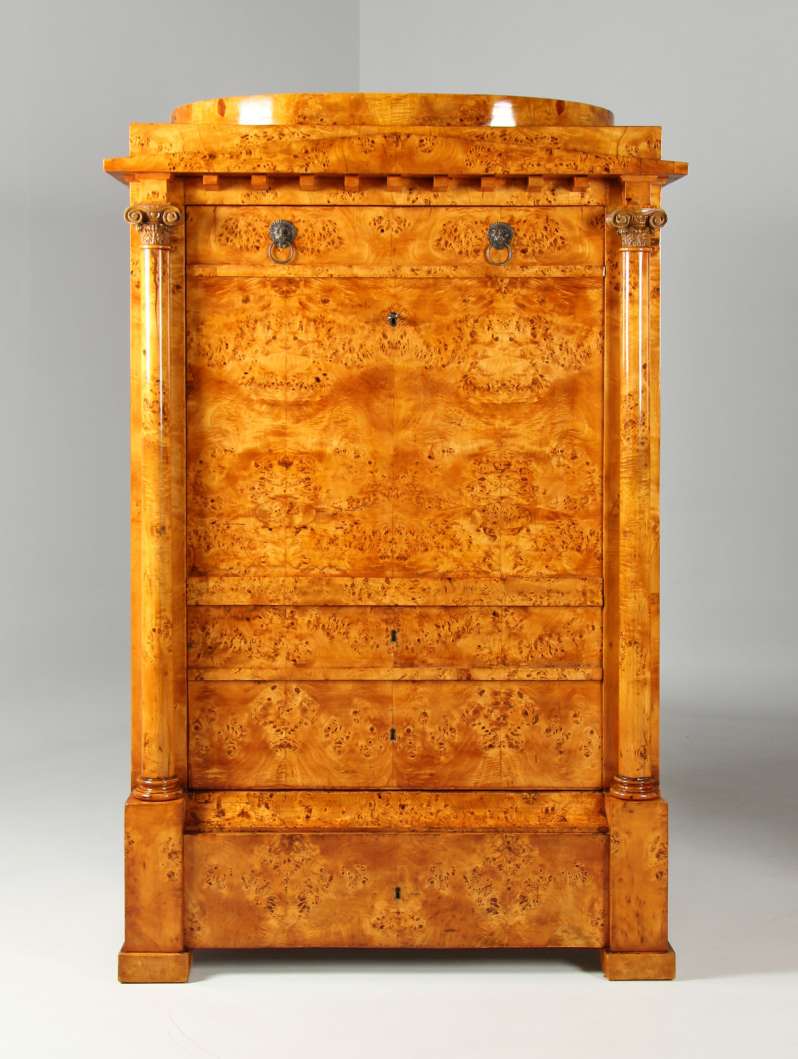


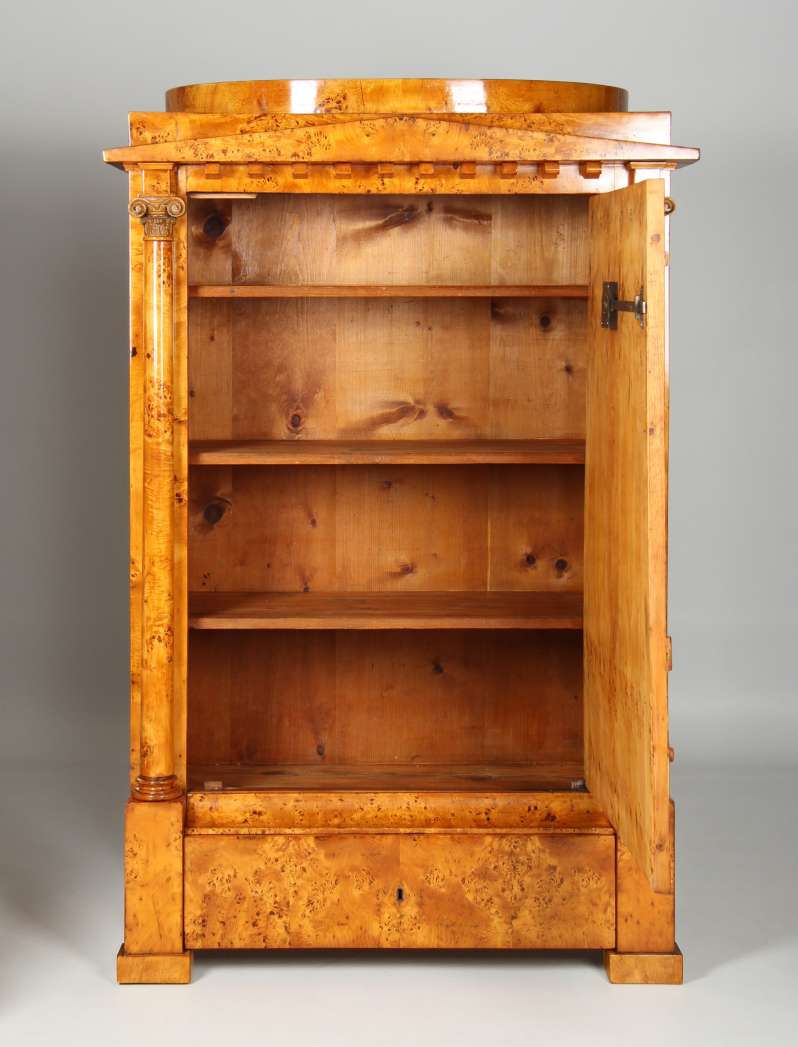
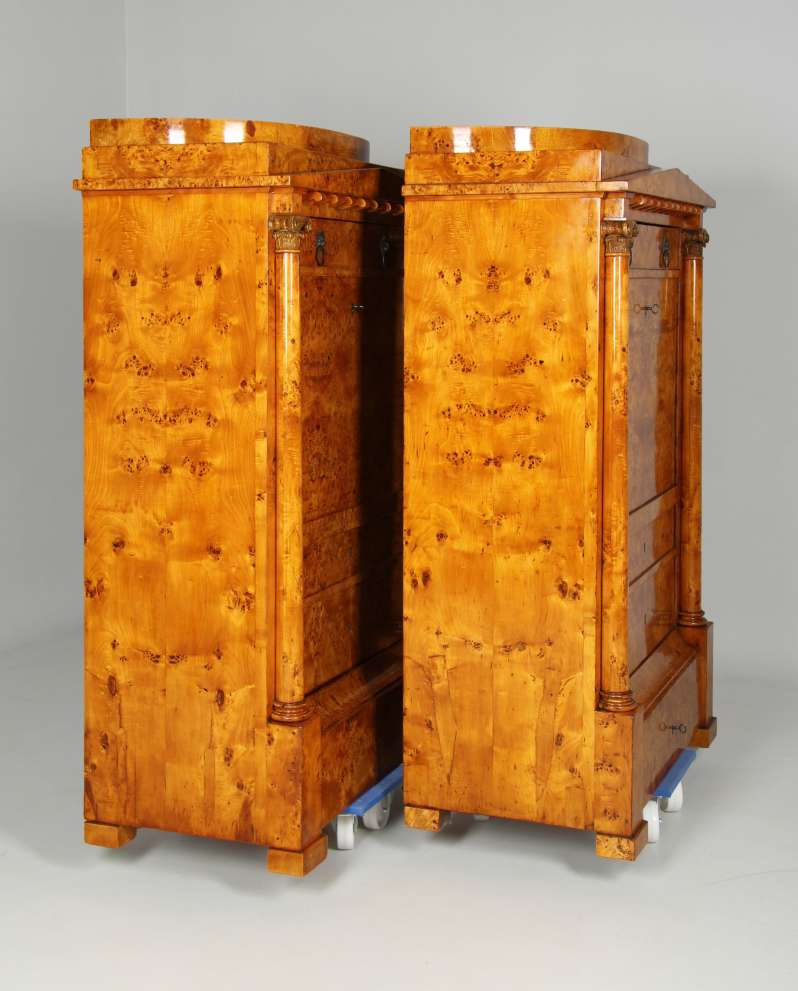
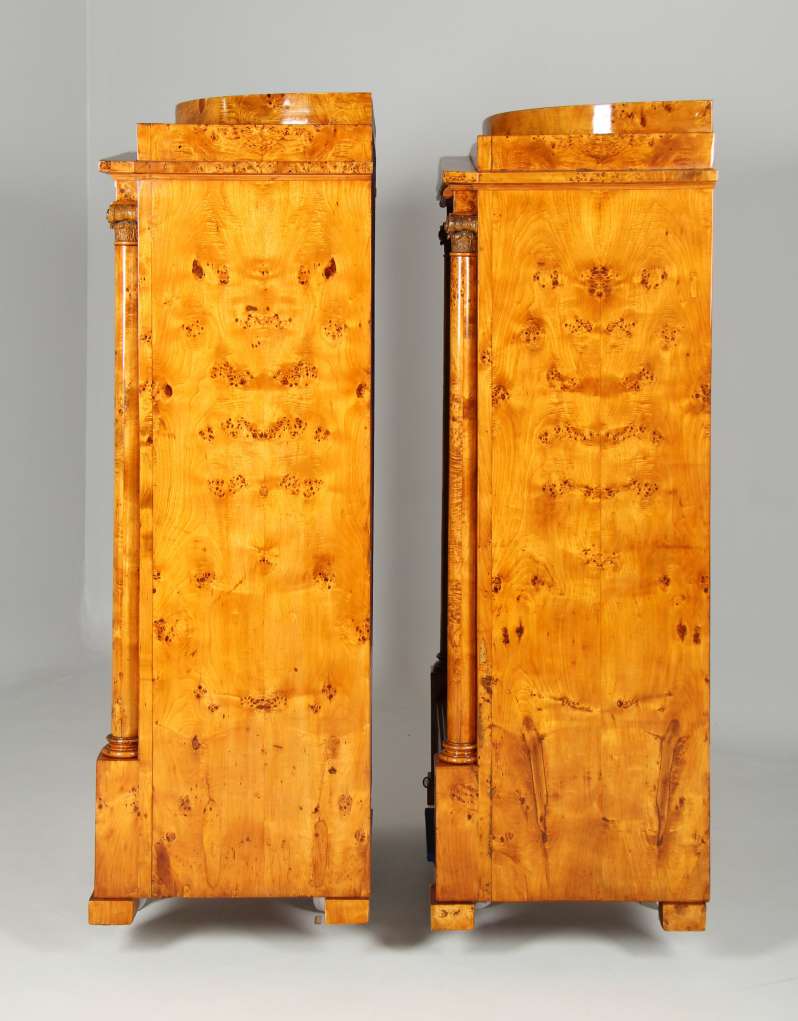
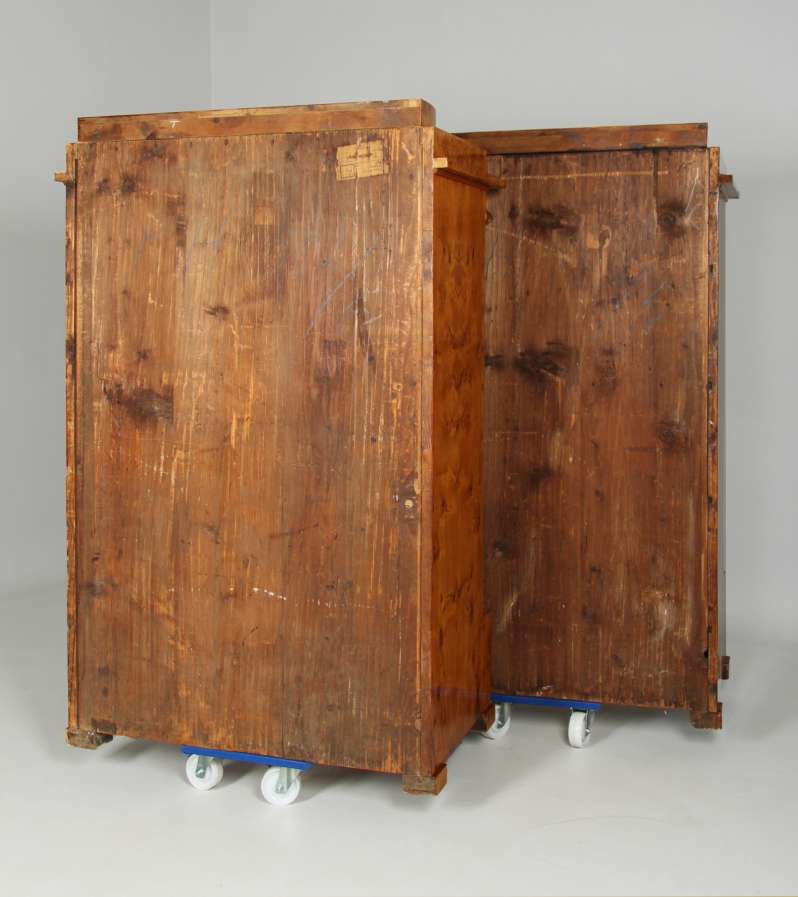
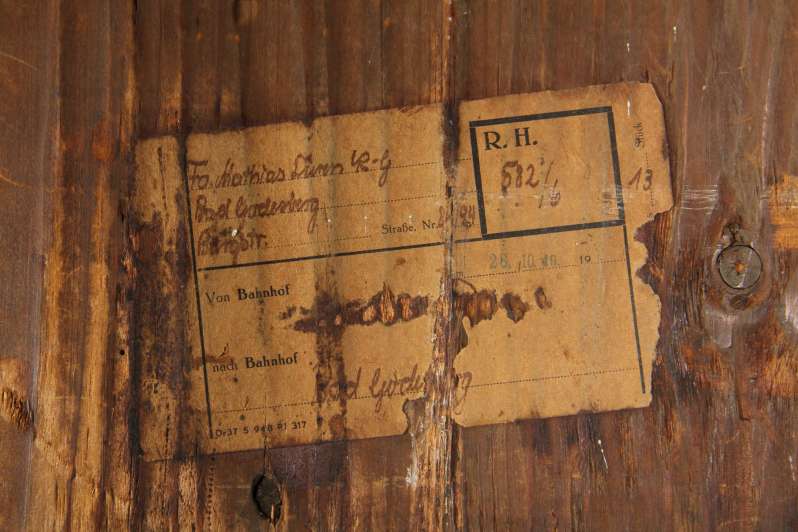
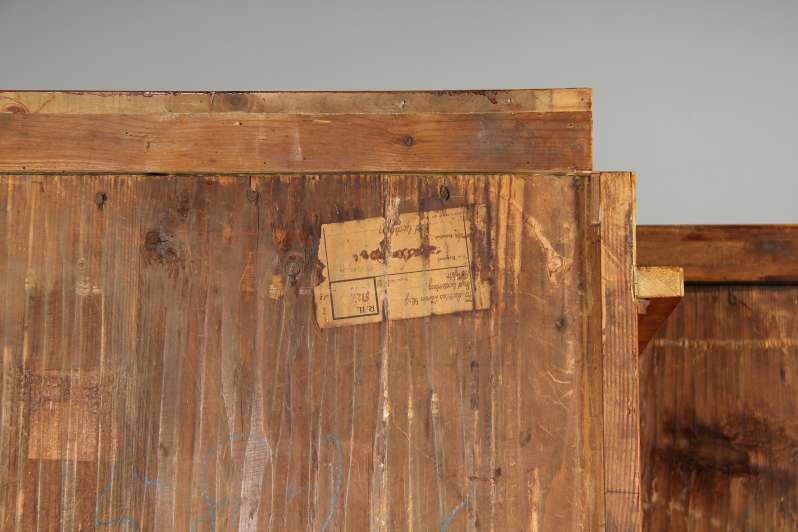
Two identical antique Biedermeier cupboards
North-East Germany
Poplar burl
Biedermeier, c. 1825
Dimensions: H x W x D: 166 x 107 x 55 cm each
Description:
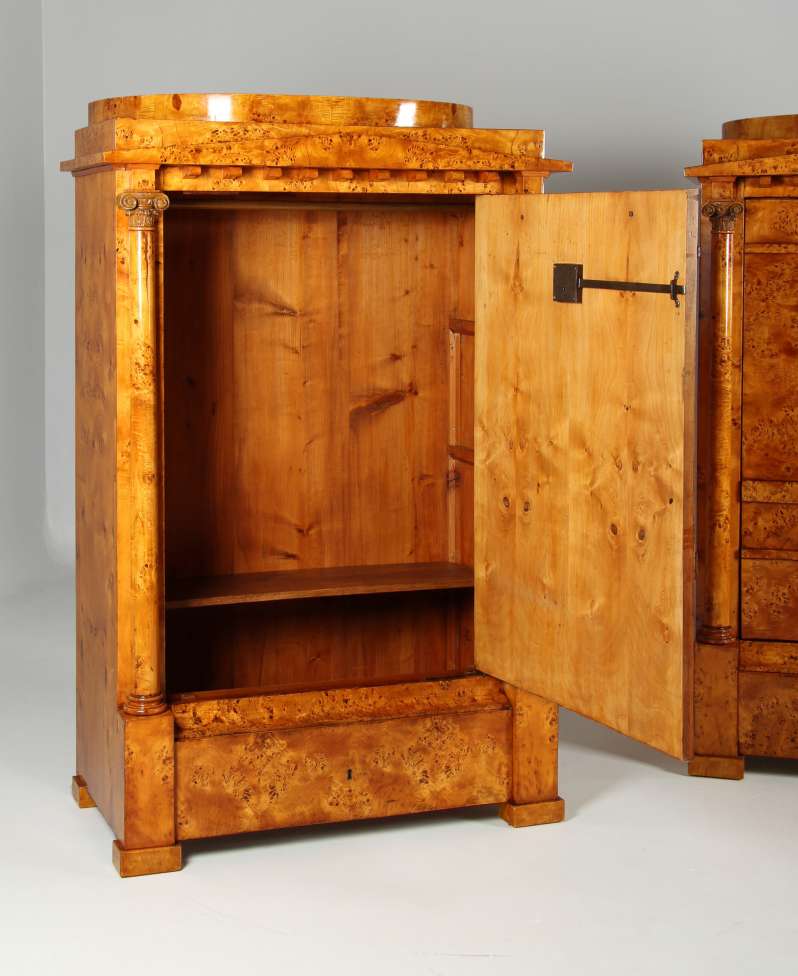
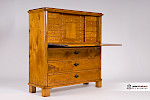
An extremely rare pair of Biedermeier false front cabinets from the Berlin/Brandenburg area, circa 1825.
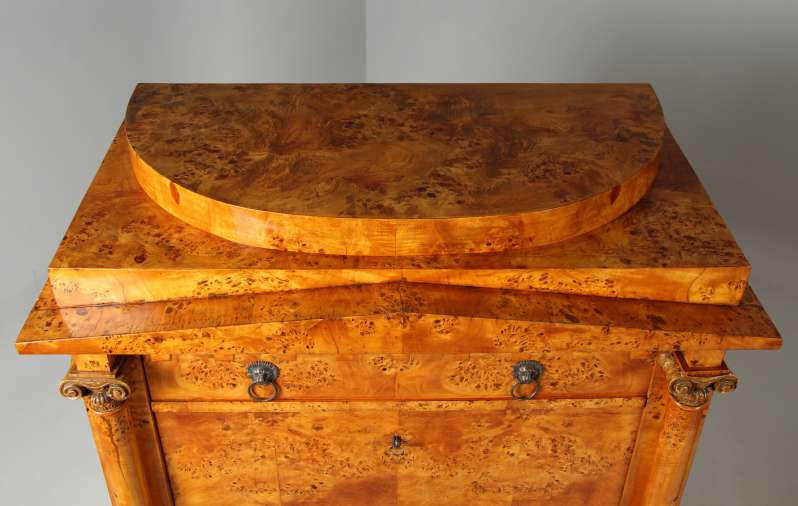
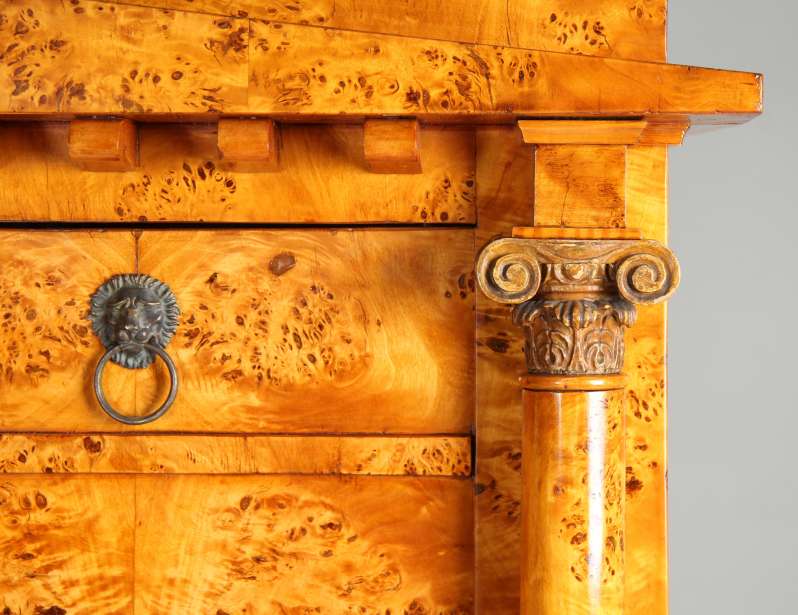
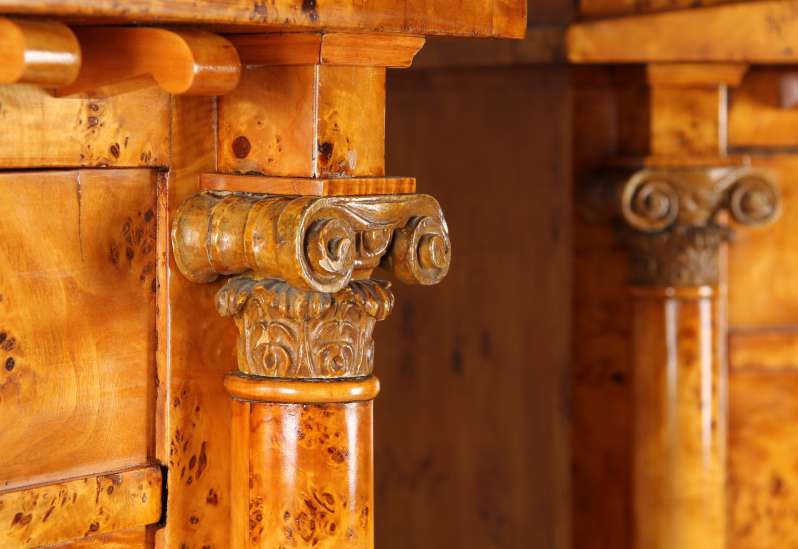
Standing on block feet, these pieces are designed in the style of a secretary desk, featuring suggested writing flaps and several drawer fronts that are merely decorative. The plinth sections project slightly and taper towards the rear in a hollow-chamfered crossbar. The upper sections of the cabinet, built upon these bases, are flanked by two free-standing columns with finely crafted Ionic capitals in wood-bronze. The pieces are crowned by Schinkel gables with dentil friezes beneath and round-arched galleries at the very top.
Particularly striking is the full-surface poplar burl veneer. The carefully selected veneer shimmers in a variety of honey-coloured brown tones and is laid in an almost perfectly symmetrical pattern. Nothing is intended to distract from the beauty of the wood, and so even the sparingly inserted keystones merely mark the central axis without drawing attention to themselves.
With its architectural design and perfect choice of veneer, this pair of pieces can be regarded as a prime example of Prussian furniture art.
A piece of furniture very similar in design is illustrated on page 387 of Wolfgang L. Eller’s *Schreibmöbel 1700–1850* and dated Berlin, 1827.
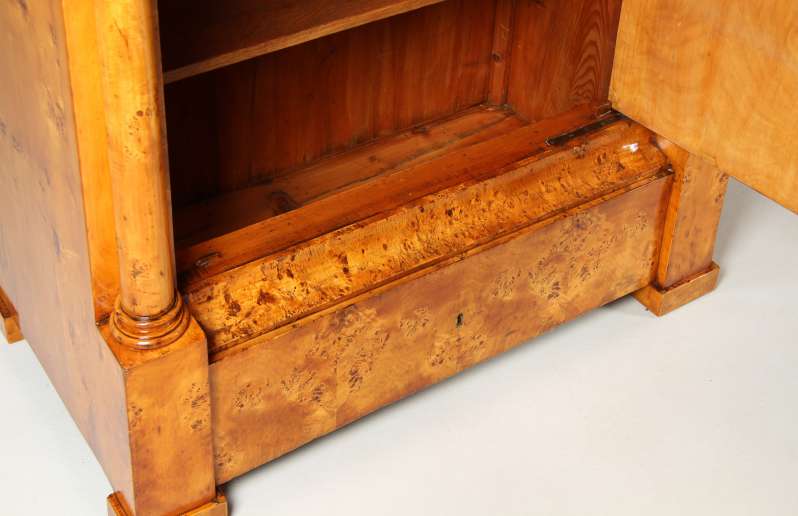
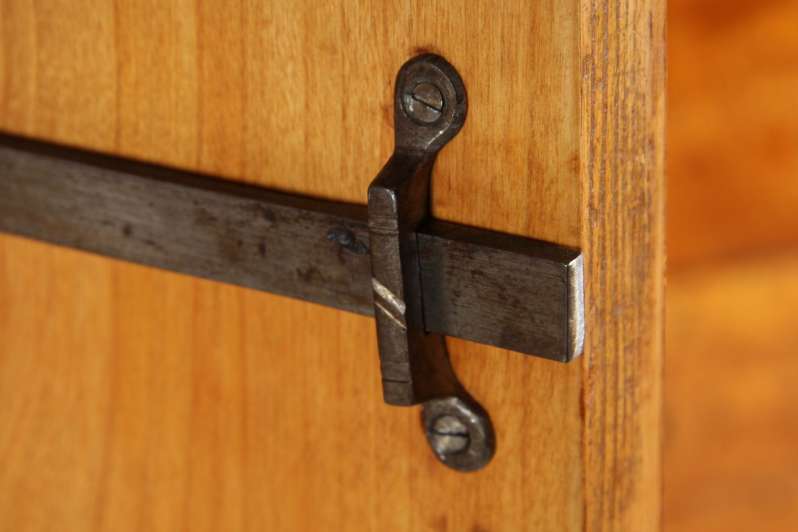
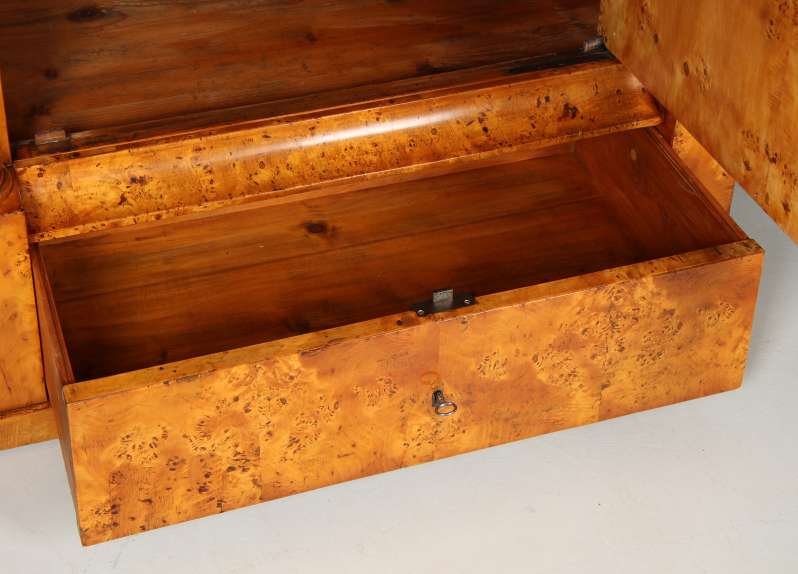
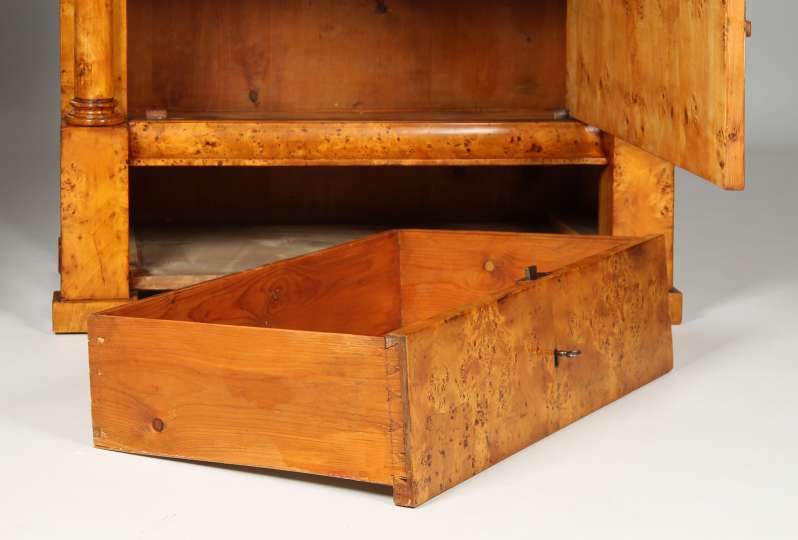
The interiors of the cabinets are fitted, in one instance, with a clothes rail and a shelf, and in the other with three fixed shelves and a plinth drawer.
Interesting facts:
At the beginning of the 19th century, the aftermath of the Napoleonic Wars and trade restrictions between England and Prussia led to a significant shortage of imported precious woods, particularly mahogany. As a result, native woods such as birch and various figured woods temporarily gained great importance and became sought-after alternatives for furniture making.
The poplar wood used here came mainly from the regions of Brandenburg. Silver poplars were particularly common in the river valleys of the Havelland, and black and white poplars were also frequently planted here as avenue trees.
Poplar burl was initially extremely difficult to work with due to the internal stresses within its wood structure. However, its wide availability as a native timber, combined with technical advances in water-powered veneer saws, meant that from the 1810s onwards it became a particularly popular veneer timber in the greater Berlin area. Its lively grain takes on a particularly decorative appearance once polished.
Furthermore, the use of native woods also reflected the spirit of the age. The deliberate avoidance of foreign luxury materials was widely seen as an expression of Prussian independence and national identity. Prestigious pieces of furniture, including the famous burl-wood secretary desk for Queen Luise, illustrate this development and demonstrate the special significance of poplar burl within early 19th-century Berlin furniture design.
[cf. Achim Stiegel - Berliner Möbelkunst vom Ende des 18. bis zur Mitte des 19. Jahrhunderts]
Condition:
Restored with a hand-applied shellac polish.
Price: €12,500 for the pair
Please refer to the following specialist literature:
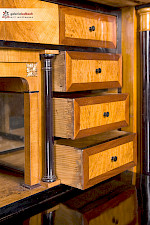
Wolfgang Eller - Schreibmöbel 1700-1850 Fig. 363, p. 387
Georg Himmelheber - Biedermeiermöbel Fig. 220
Achim Stiegel - Berliner Möbelkunst vom Ende des 18. bis zur Mitte des 19. Jahrhunderts
Article found under: Cupboards & Showcases
Add to shopping cartVideo: Pair of False Front cabinets
Also interesting
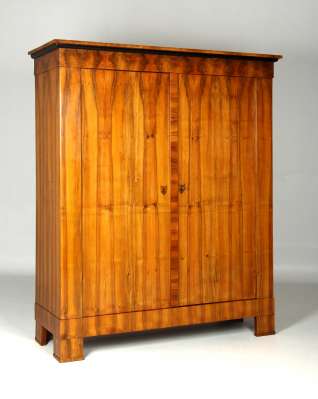
Large Biedermeier wardrobe
Southern Germany
Walnut
circa 1820

Single-door Biedermeier wardrobe
Austria
Walnut
Biedermeier around 1830
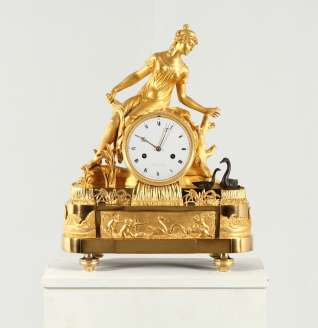
French pendulum clock – Allegory of Love
Paris
Ormolu
circa 1815