Antique decorative table with intricate marquetry
England
Rosewood, maple
Mid-19th century
Dimensions: H x D: 75 x 65 cm
Description:
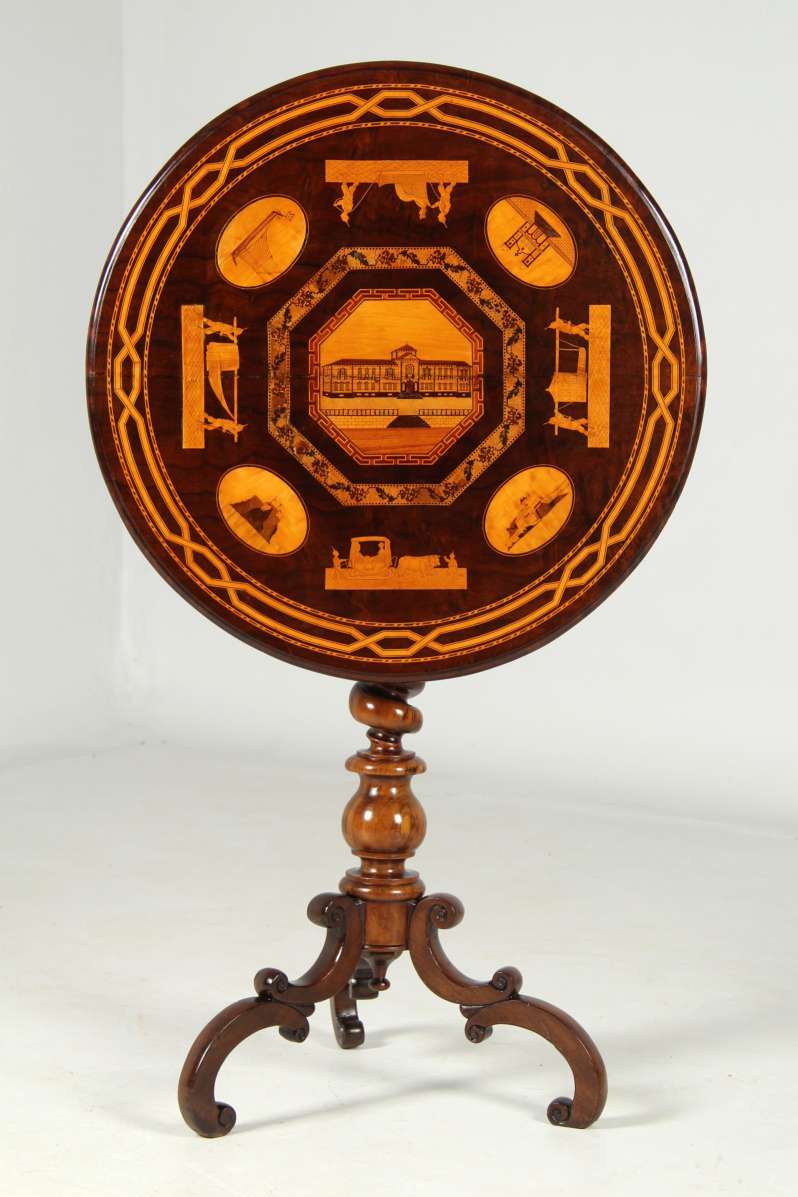
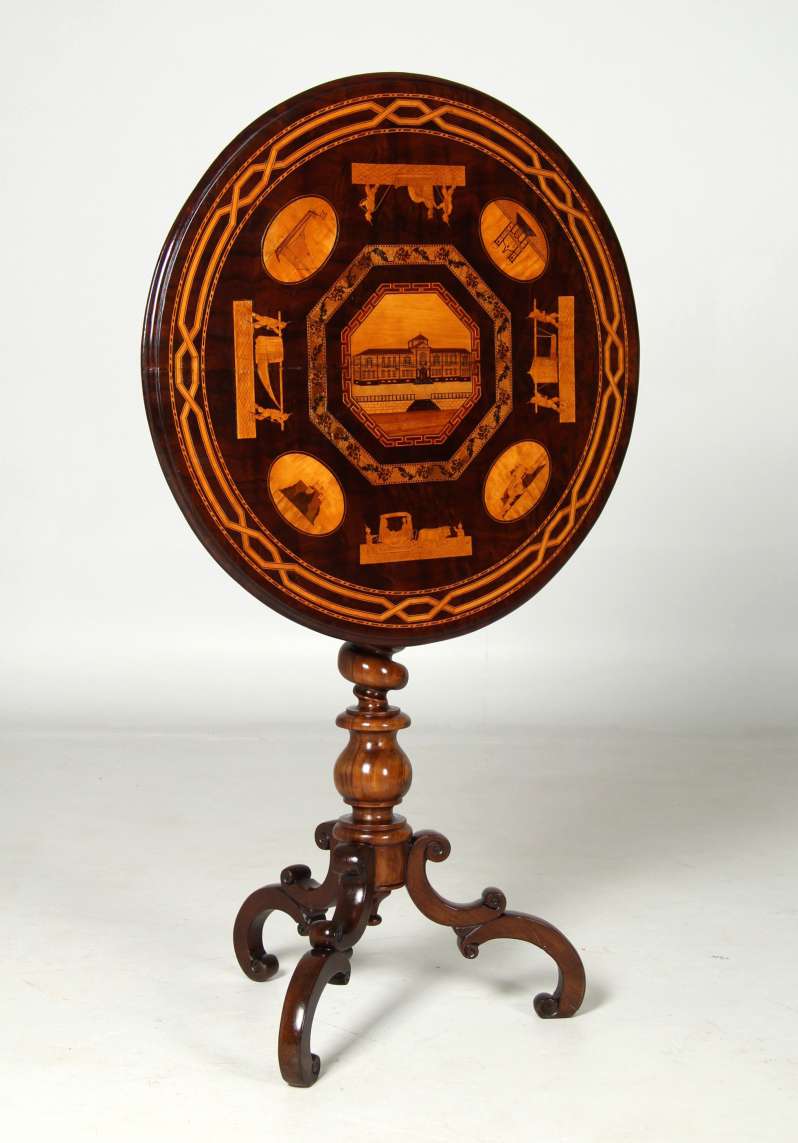
An exceptional side table dating from around 1850, of a fineness rarely found.
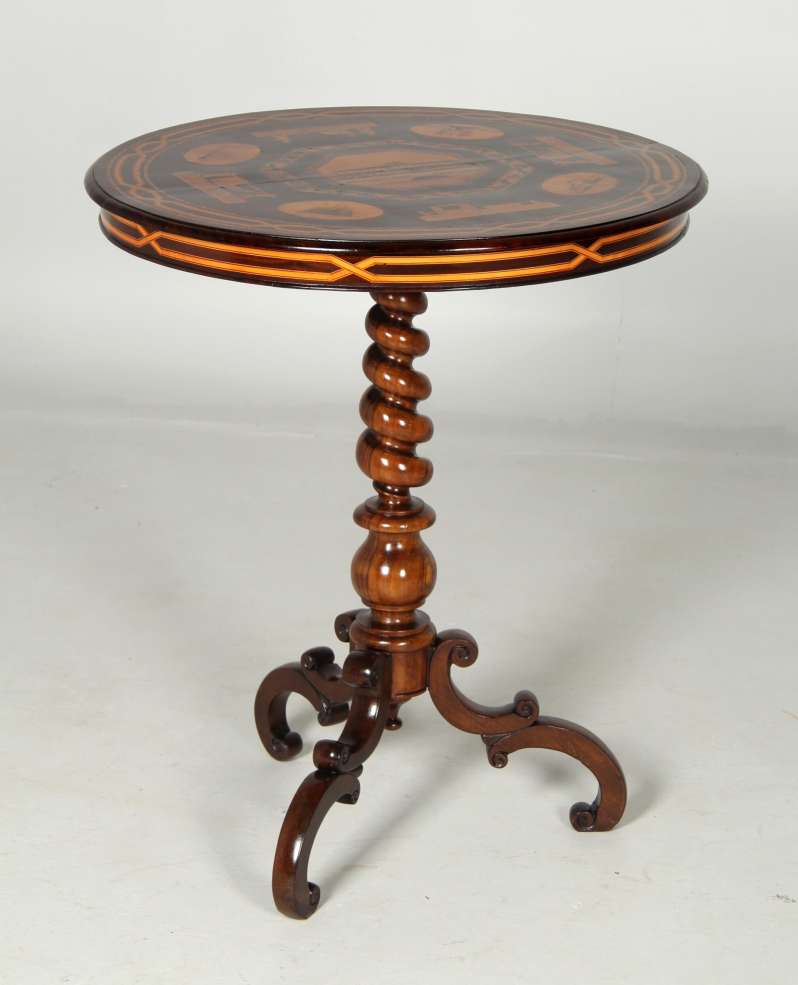
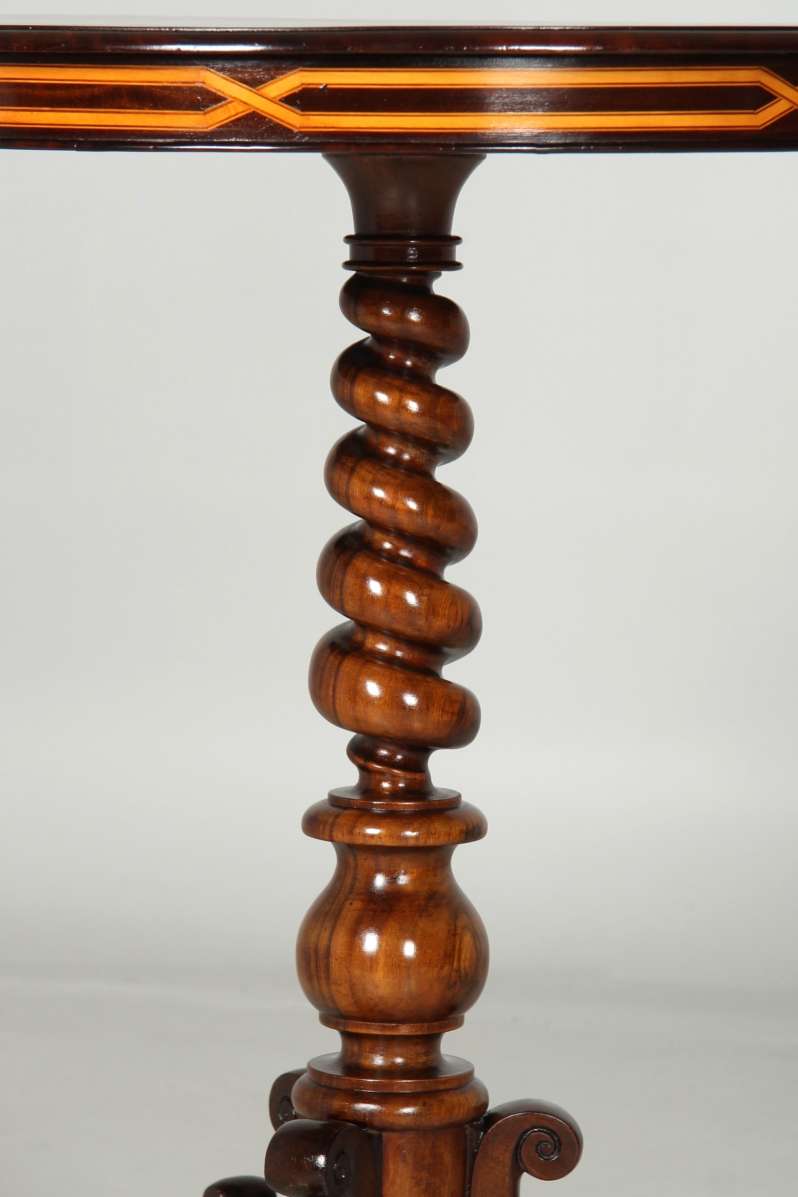
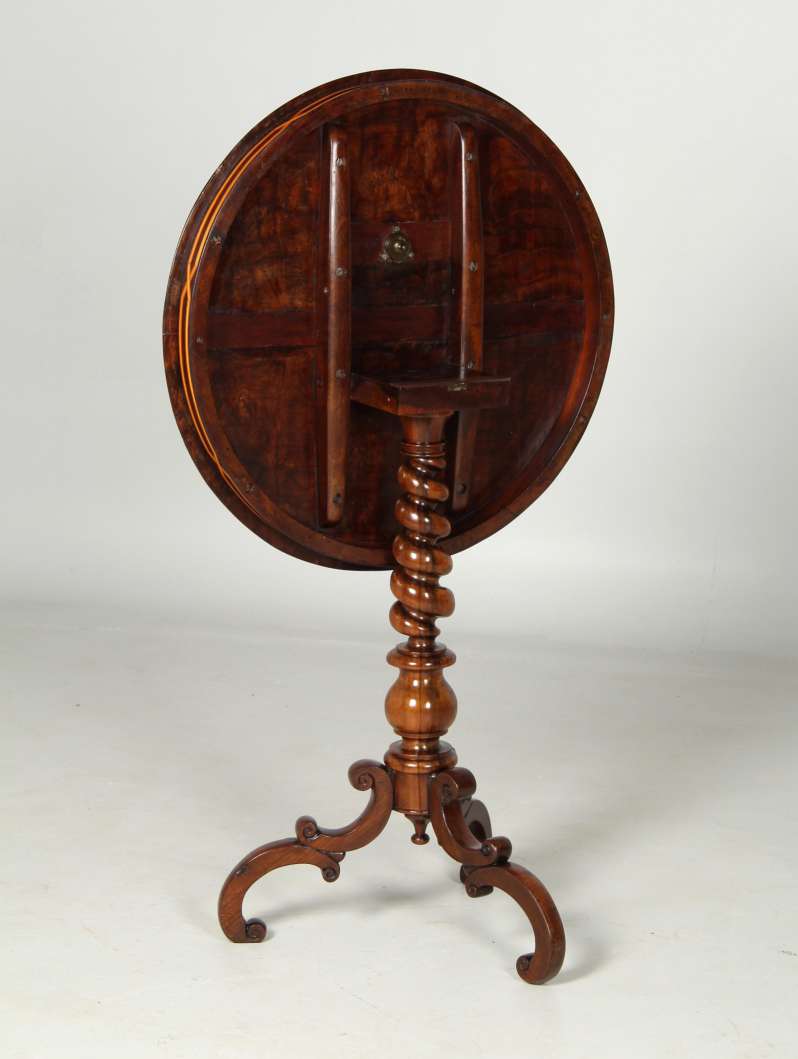
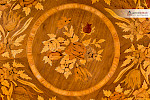
A central leg, crafted in the shape of a corkscrew column, rises from a three-legged base. The top folds down and can thus be displayed, much like a painting on an easel. And with good reason, for the tabletop is a masterpiece of marquetry.
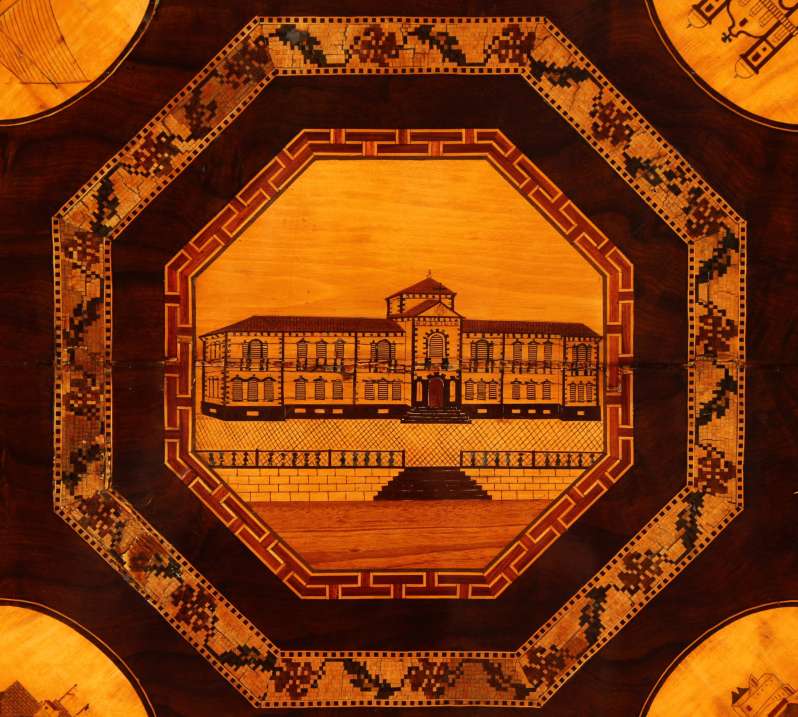
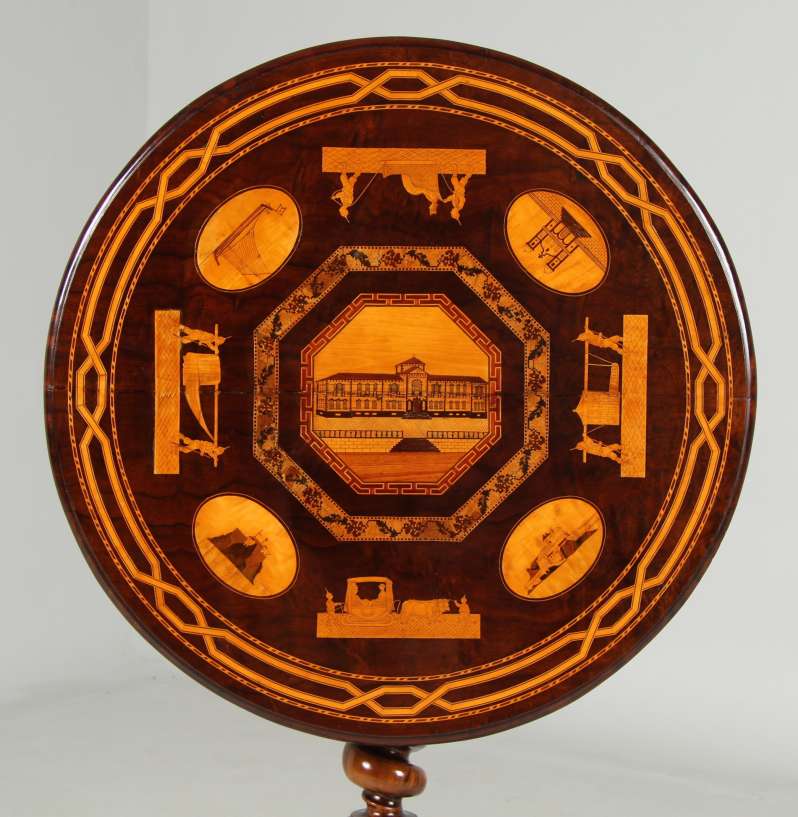
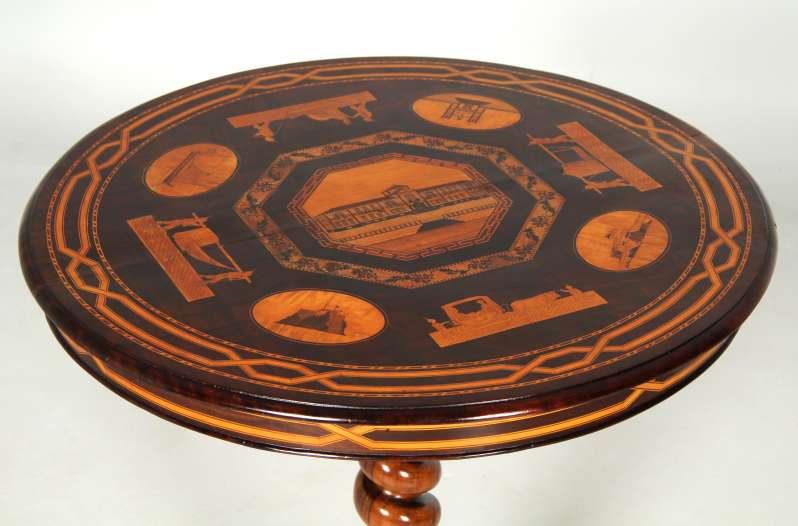
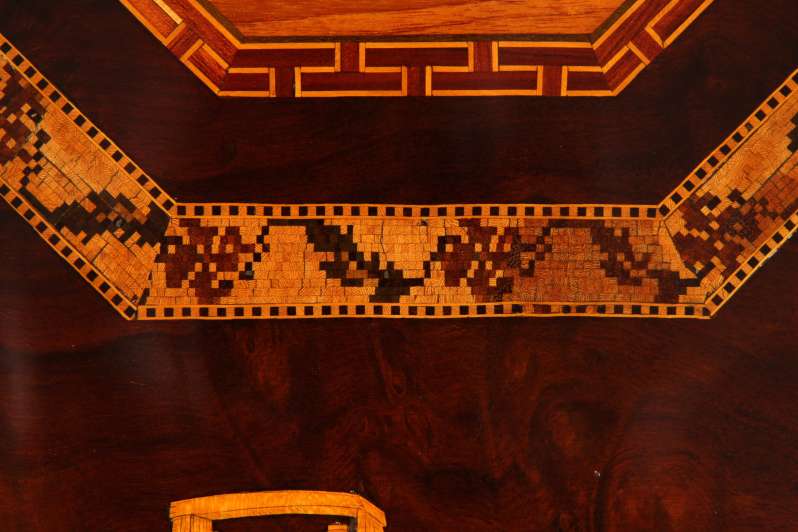
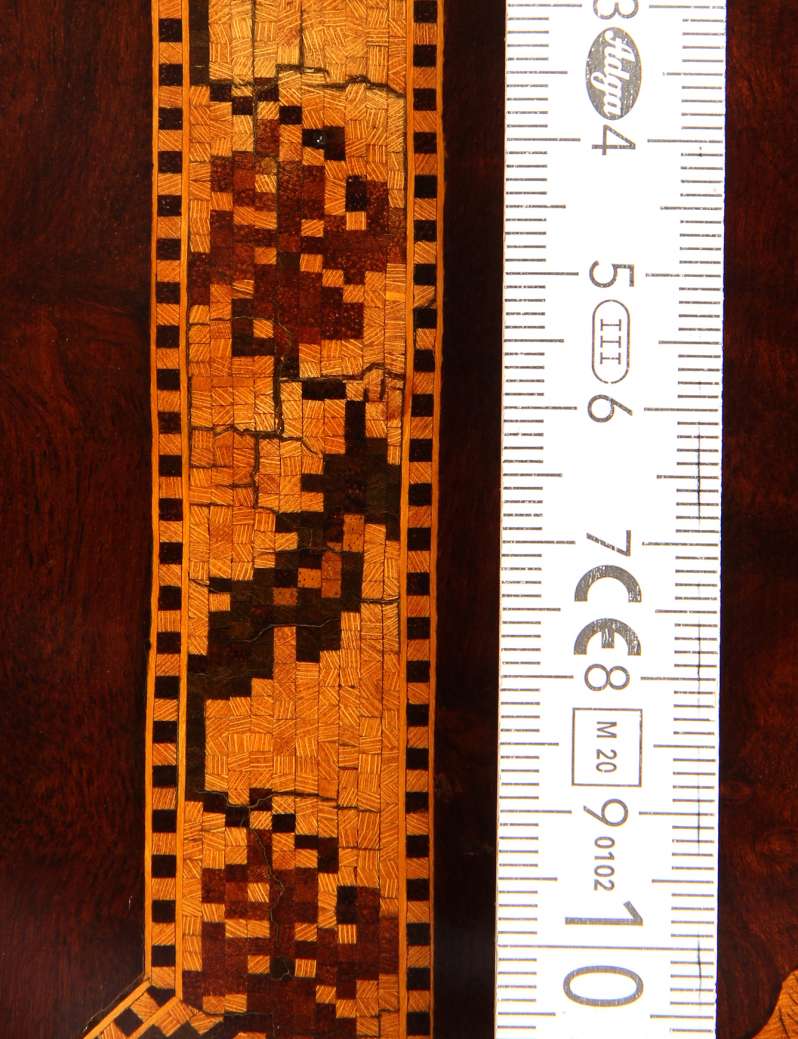
The rim of the circular tabletop is decorated with a geometrically twisted band and accompanying thread inlays. This band is repeated around the outer edge of the tabletop, where it is bordered by fine filet bands. The centre of the tabletop features an architectural scene depicting a large, two-storey Neoclassical building. The scene is framed by a delicate meandering band and a surrounding border of Tunbridge marquetry.
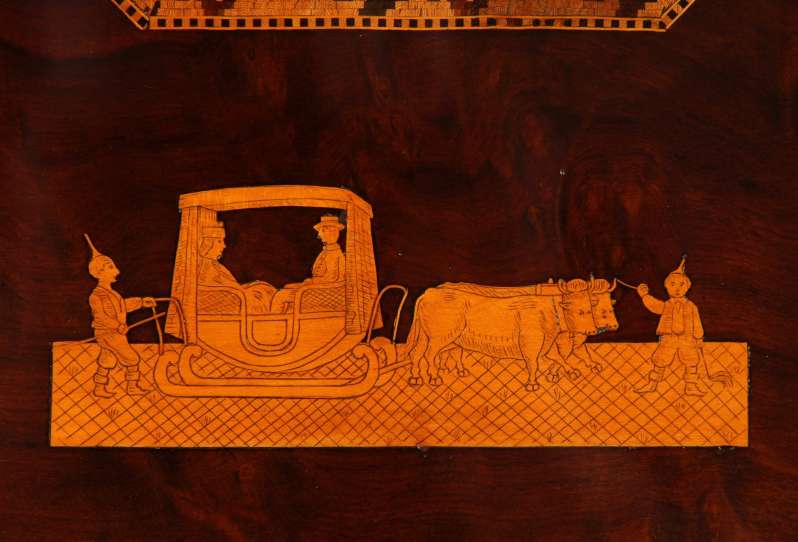
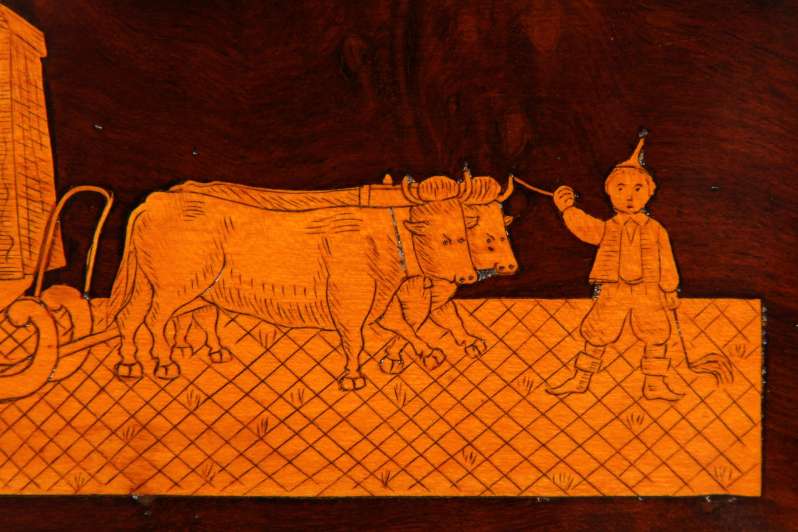
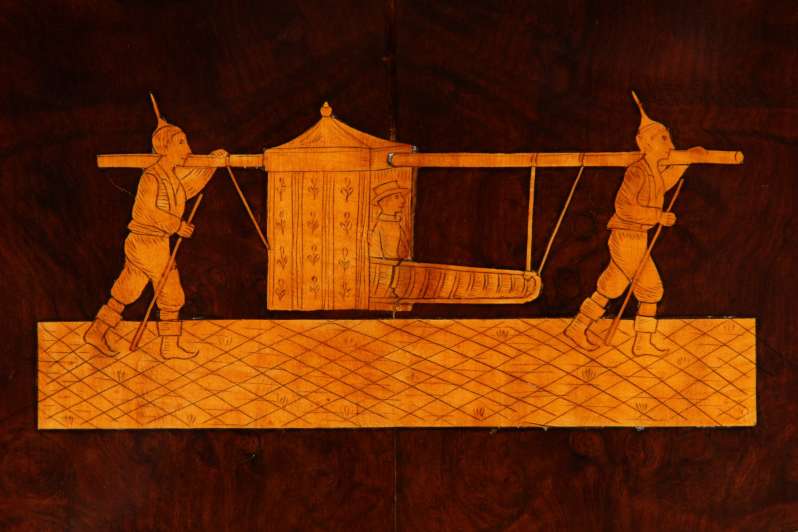
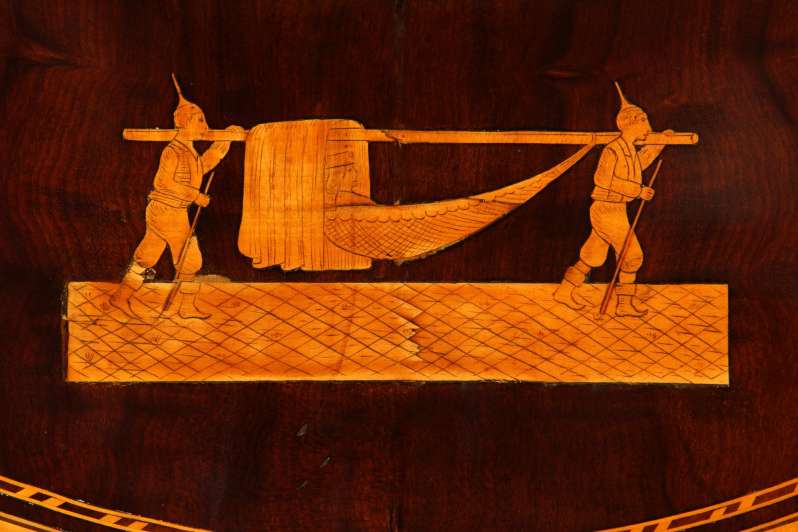
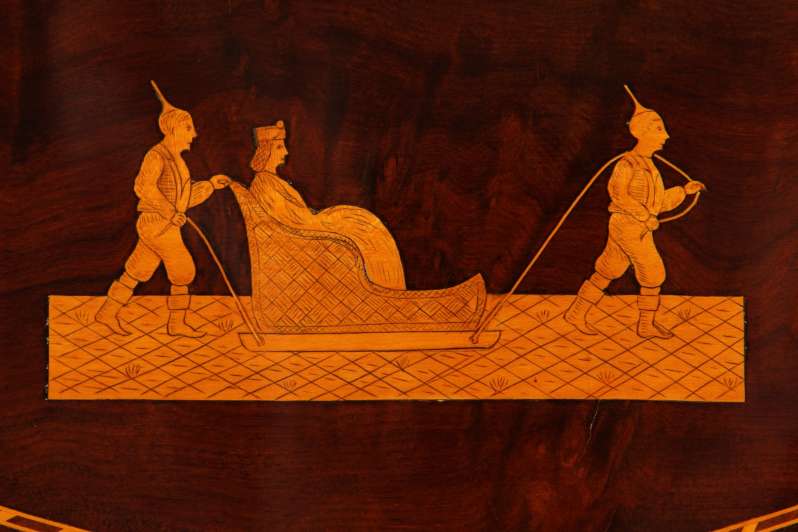
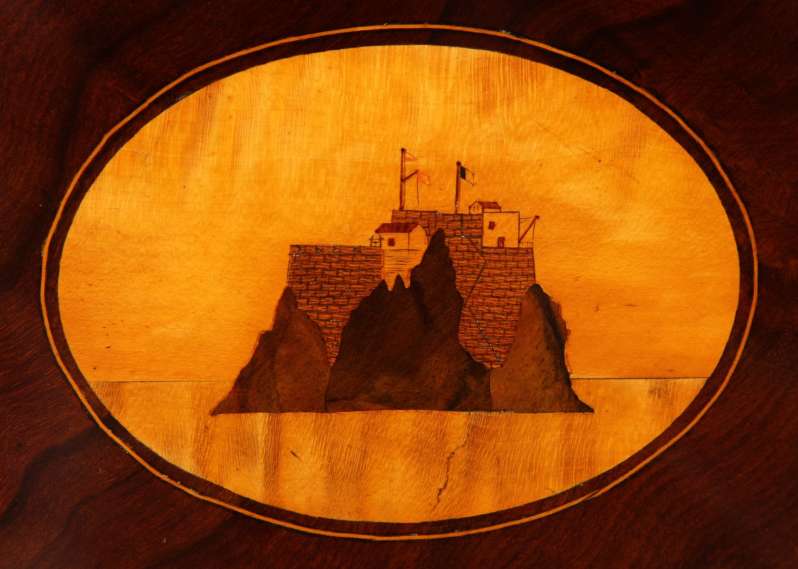
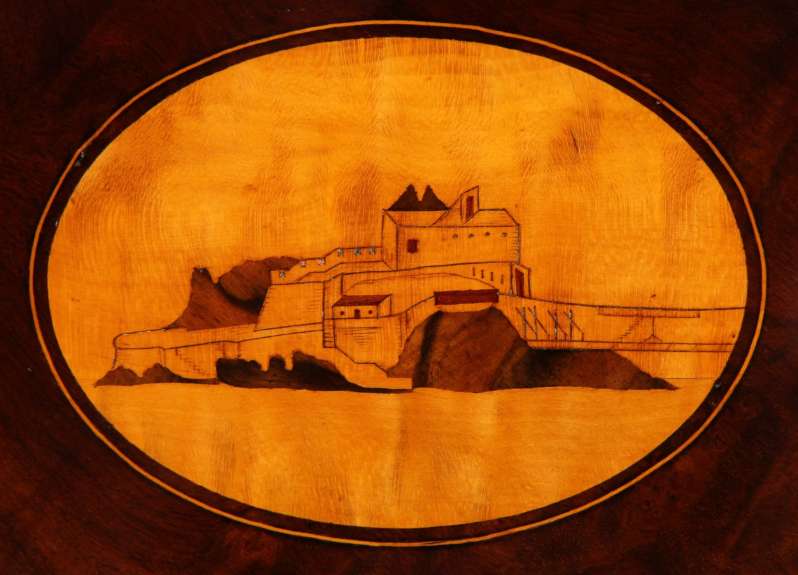
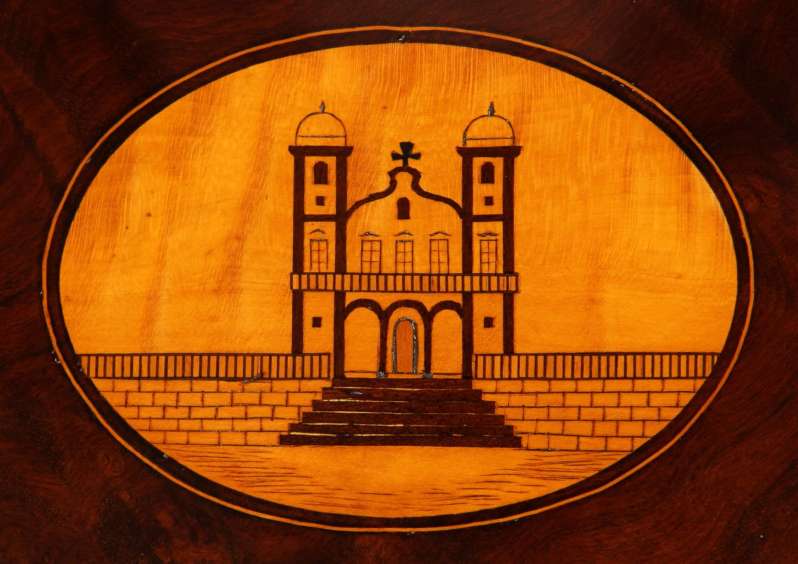
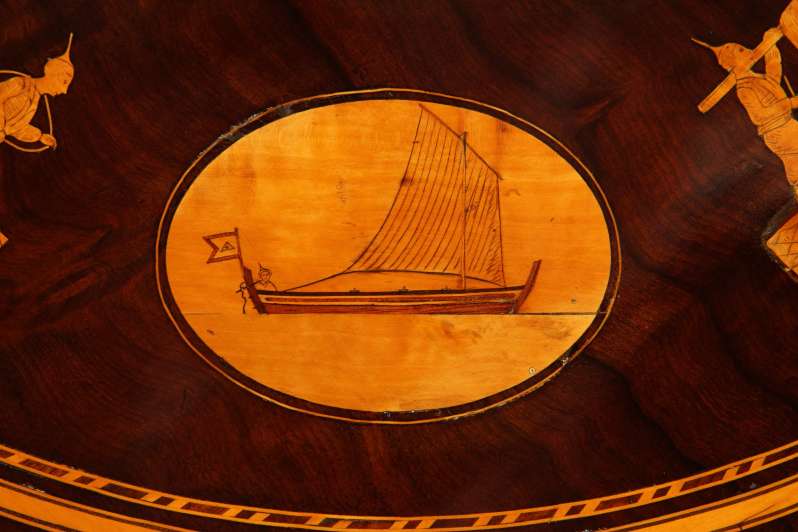
The tabletop also features eight further marquetry panels. These depict four different scenes featuring sleighs and sedan chairs, as well as four oval medallions showing two coastal views, a ship and another architectural scene.
Interesting facts:
So-called ‘Tunbridge ware’, also known in German as ‘English mosaic’, is an English marquetry technique developed in Tunbridge Wells, Kent.
For this, finely prepared strips of various types of wood were glued together to form a patterned block and then sawn across the grain into thin mosaic veneers. The mosaic sheets produced in this way were used as mosaic bands and decorative borders.
The technique reached its artistic heyday around the mid-19th century: alongside geometric patterns, increasingly elaborate depictions of flowers, birds, animals and, eventually, landscapes and architectural views began to emerge. The production of such figurative mosaics required the utmost precision and patience.
Further developments in cutting techniques subsequently enabled more efficient production. In the second half of the 19th century, Tunbridge ware was used, amongst other things, for souvenir items depicting famous castles, churches and other landmarks using this delicate mosaic technique.
Condition:
Restored with a hand-applied shellac polish.
Price: €3,750
You can find interesting information about the Tunbridge marquetry used here in the following specialist literature:
John Bly - English Furniture p. 117 et seq.
Helmut Flade - Intarsia - Europäische Einlegekunst aus sechs Jahrhunderten pp. 291–292
Article found under: Tables
Add to shopping cartAlso interesting
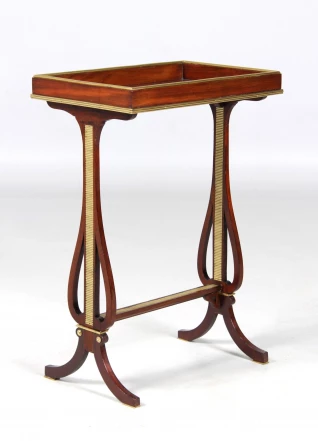
Louis XVI side table - so-called Vide-Poche
Paris
Mahogany, brass, gilded bronze
around 1785
Finely inlayed ladies' desk
Paris
Rosewood a.o.
around 1880
Convertible small desk - so-called Secrétaire à culbute
France
Rosewood
19th c.