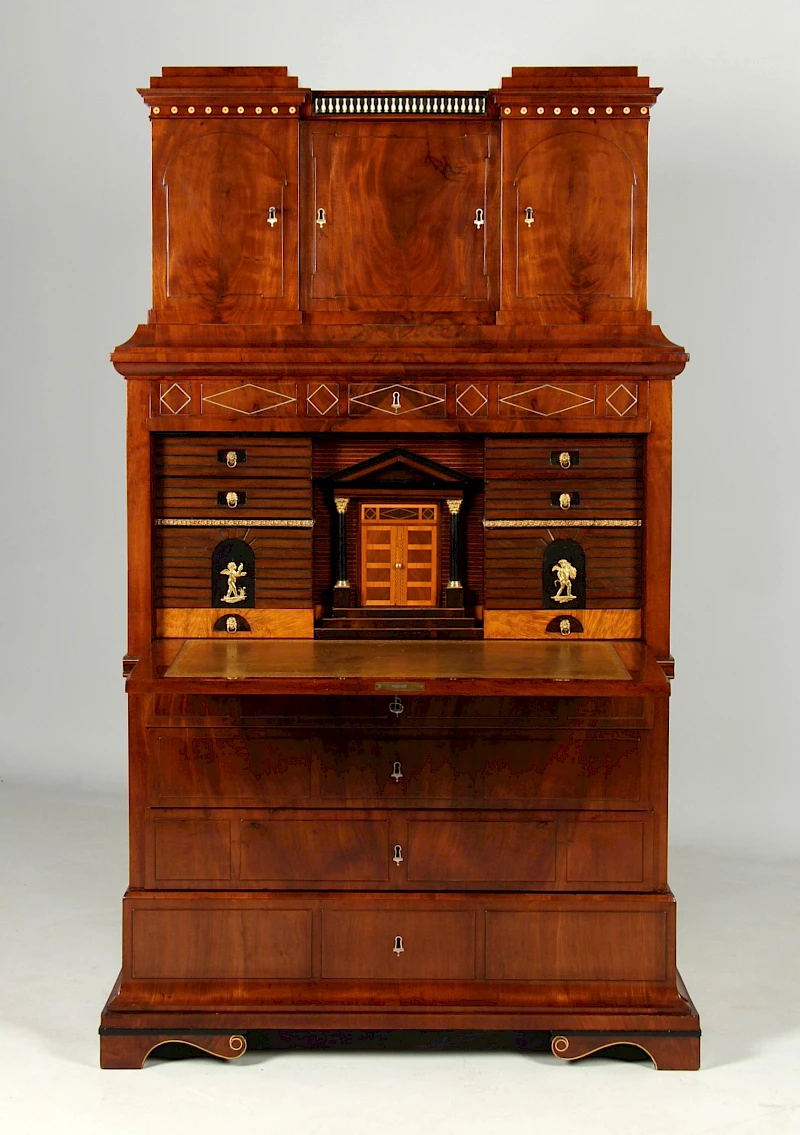
Video: Danish Biedermeier secretary desk
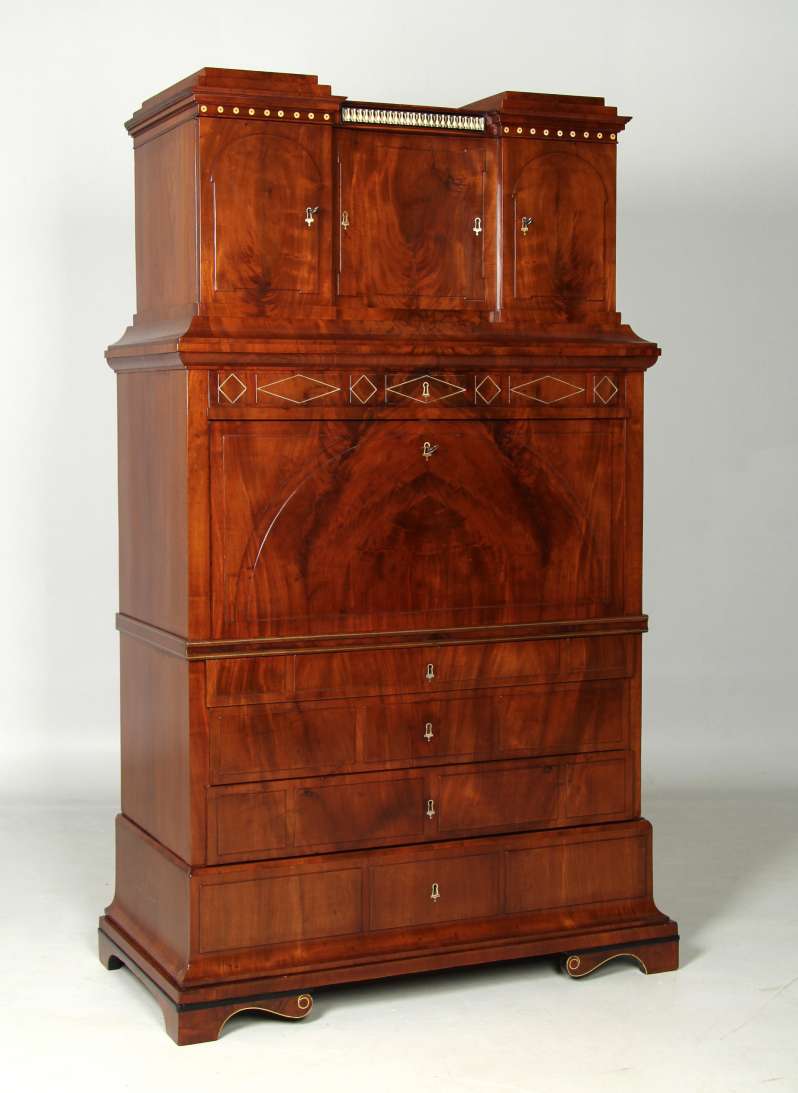

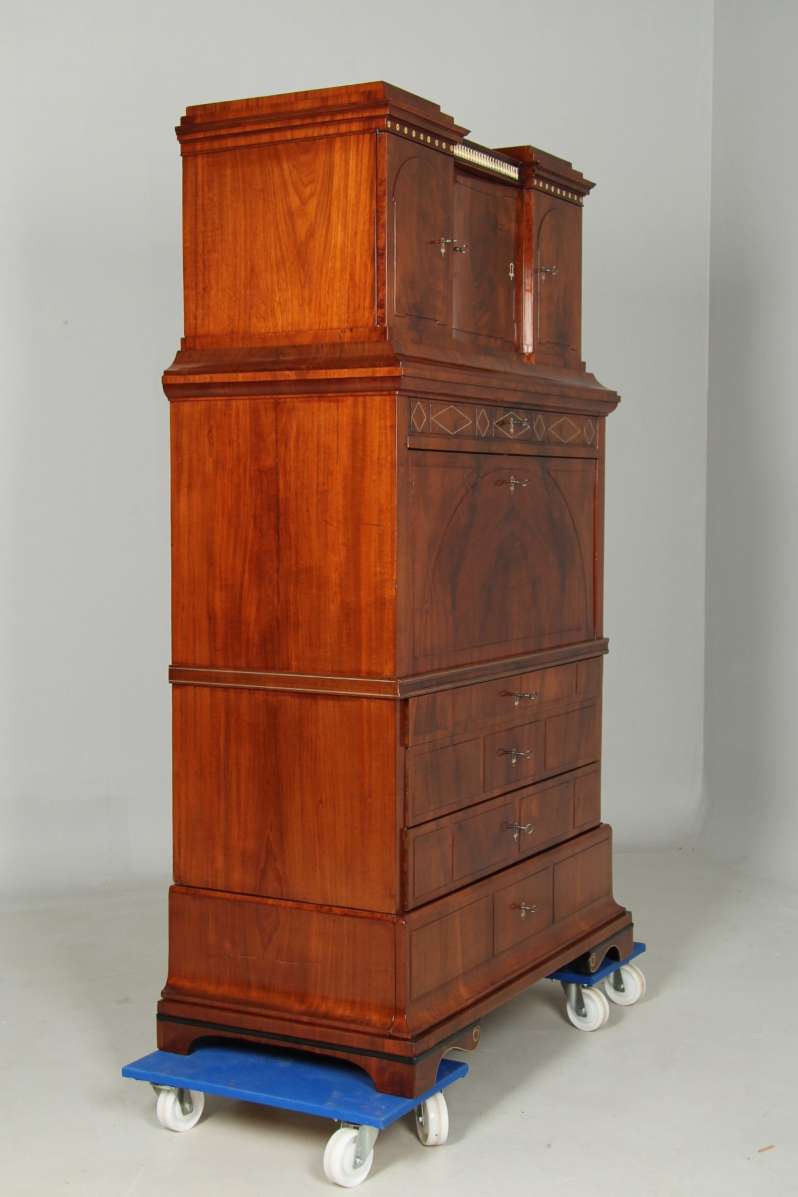
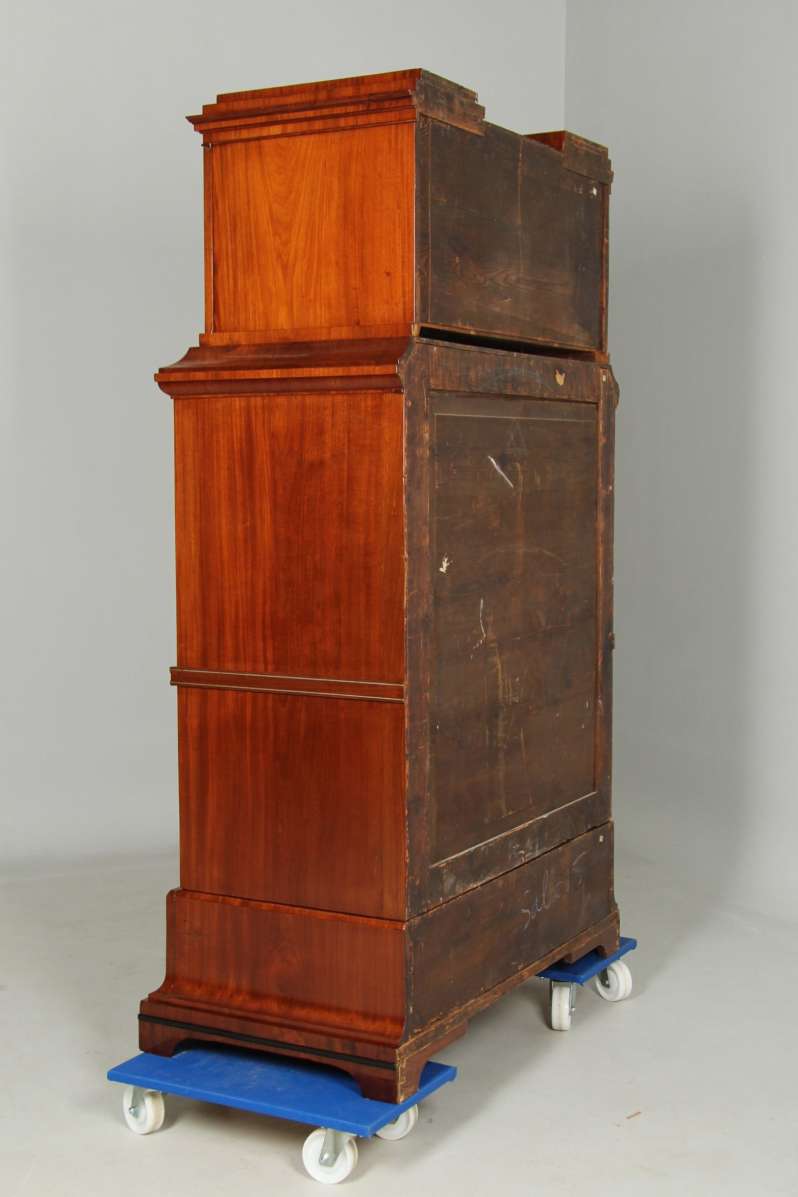
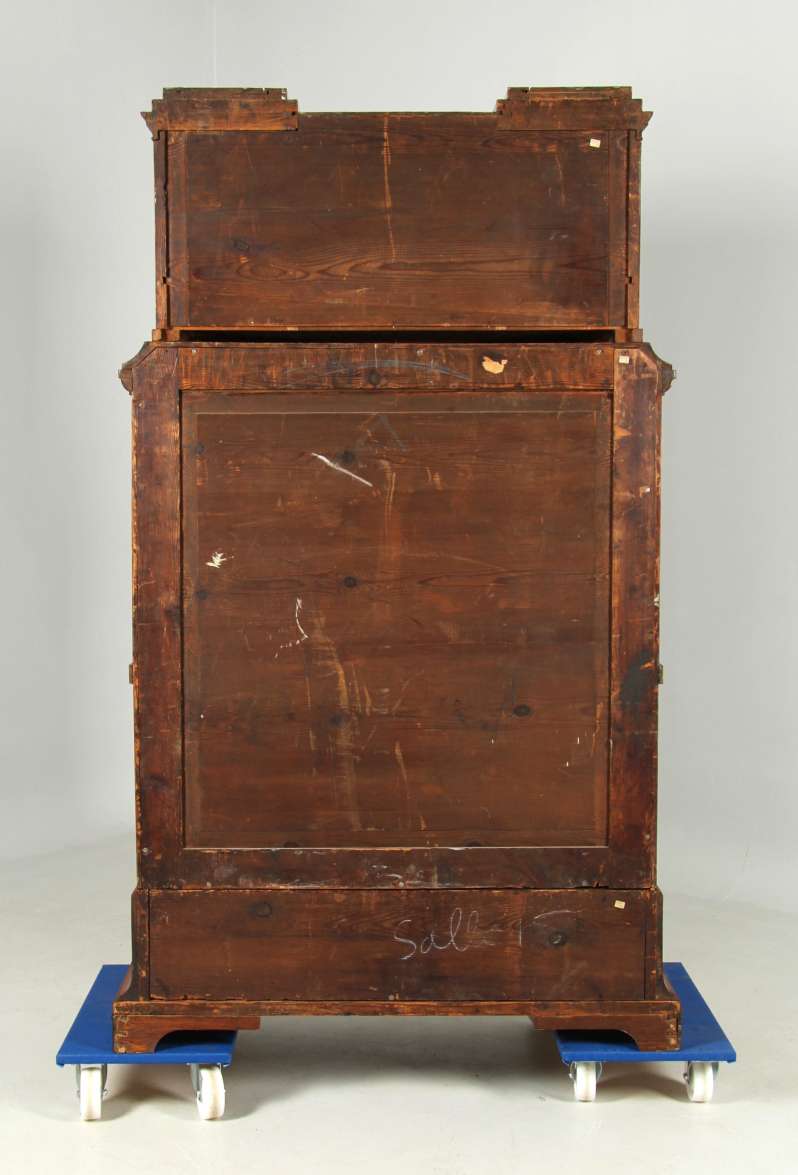
Antique Biedermeier secretary desk with numerous secret compartments
Denmark
Mahogany, etc.
c. 1830
Dimensions: H x W x D: 189 x 108 x 59 cm
Description:
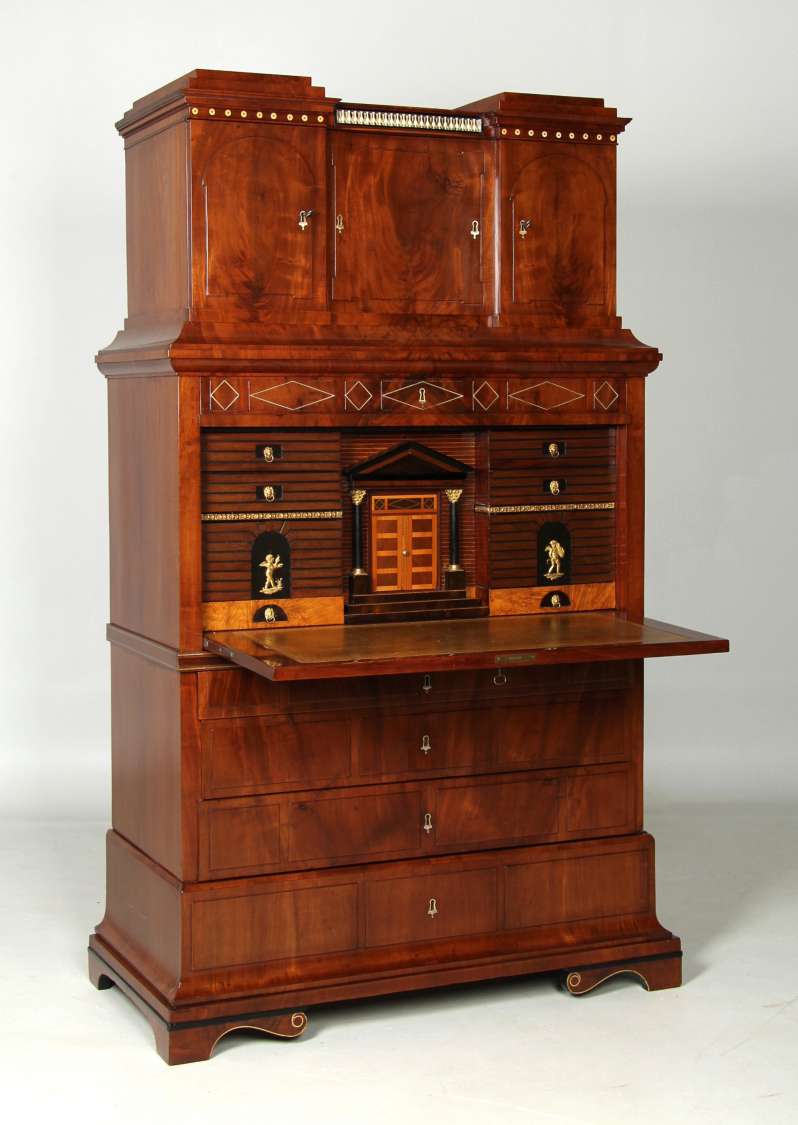
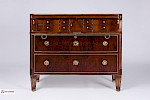
Antique Scandinavian Biedermeier secretary desk from the first third of the 19th century.
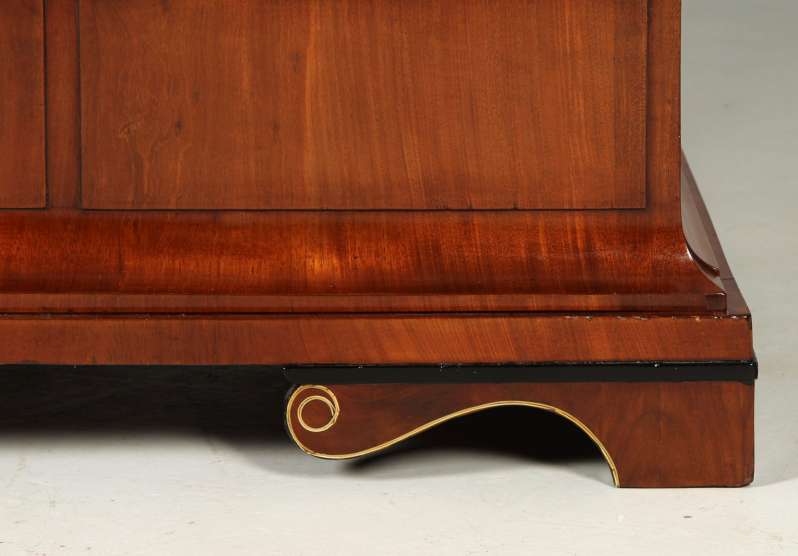
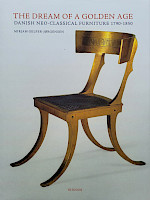
Even when closed, the piece displays several characteristics typical of Danish furniture design of the period. These include, in addition to the mirror-patterned mahogany veneer, the geometric thread inlays of pewter and ivory, as well as the curved leg design emphasised by corresponding band inlays. Similar details can be found, for example, on a secretary desk made around 1820, which is held in the collection of the Danish Museum of Decorative Arts in Copenhagen [cf. Mirjam Gelfer-Jørgensen - The Dream of a Golden Age – Danish Neoclassical Furniture 1790–1850 p.350].
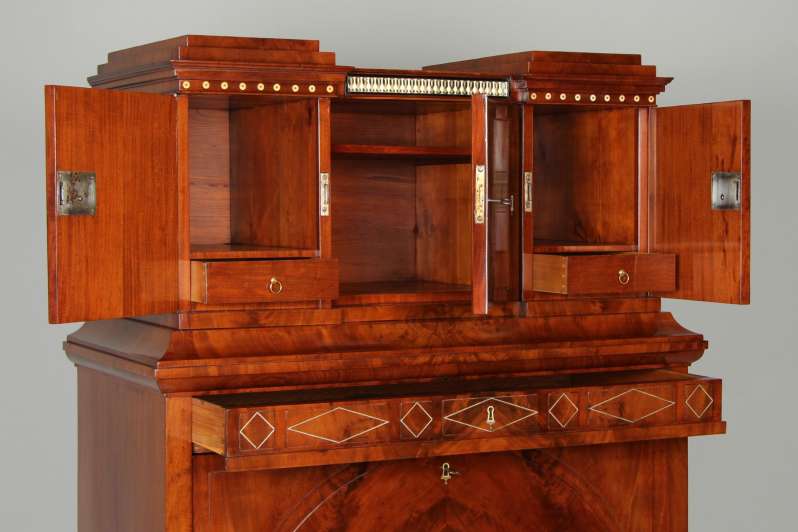
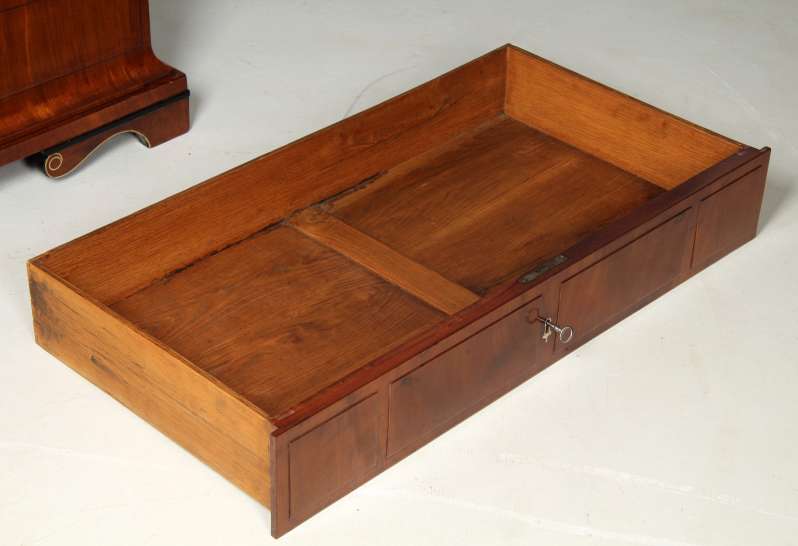
The fact that the piece can be dismantled also points to its region of origin. It is evident that the top section can be separated from the rest of the piece, a feature that was widespread throughout Europe in this form. However, the fact that it can be further dismantled above the base drawer is a detail characteristic of the Danish cultural sphere of that period. This is evidenced by a piece of furniture from the collection of the Municipal Museum in Flensburg [cf. Jörn Bahns - Biedermeier-Möbel Entstehung-Zentren-Typen, fig. 88] and a secretary desk signed ‘Georg Lauritz Topp 10th November 1828, Copenhagen’ [cf. Mirjam Gelfer-Jørgensen – The Dream of a Golden Age – Danish Neoclassical Furniture 1790–1850*, p. 358].
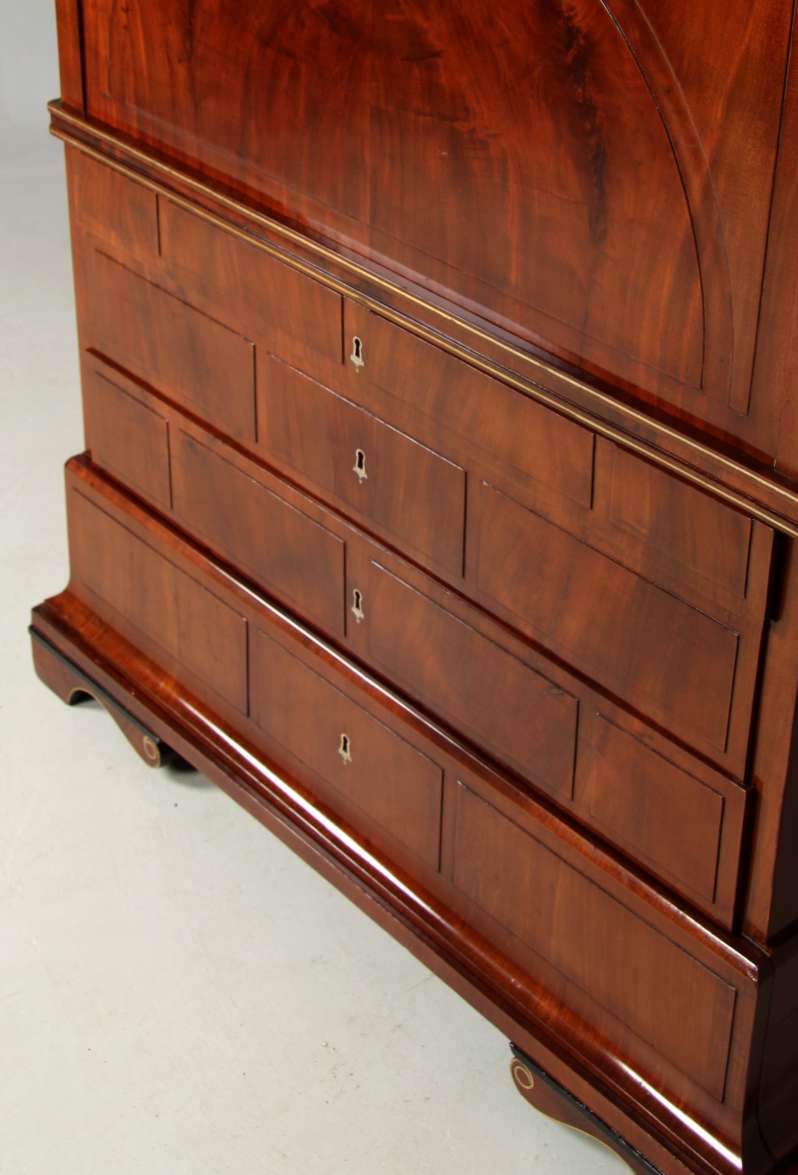
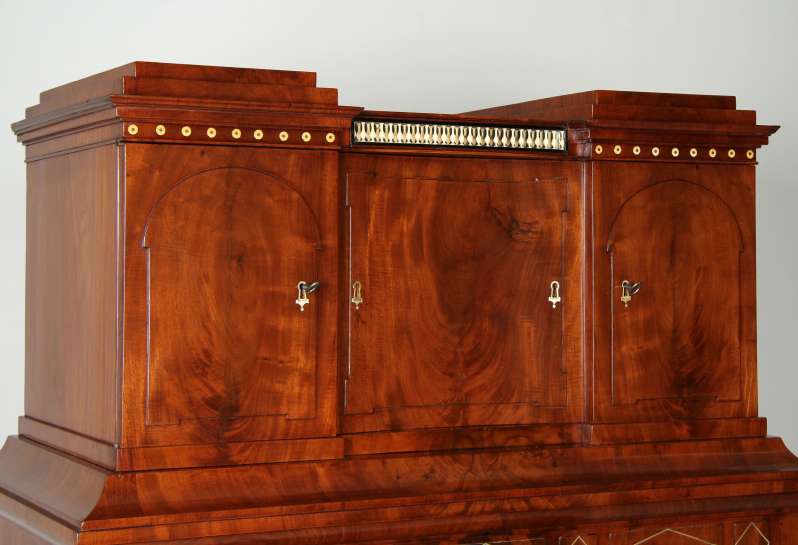
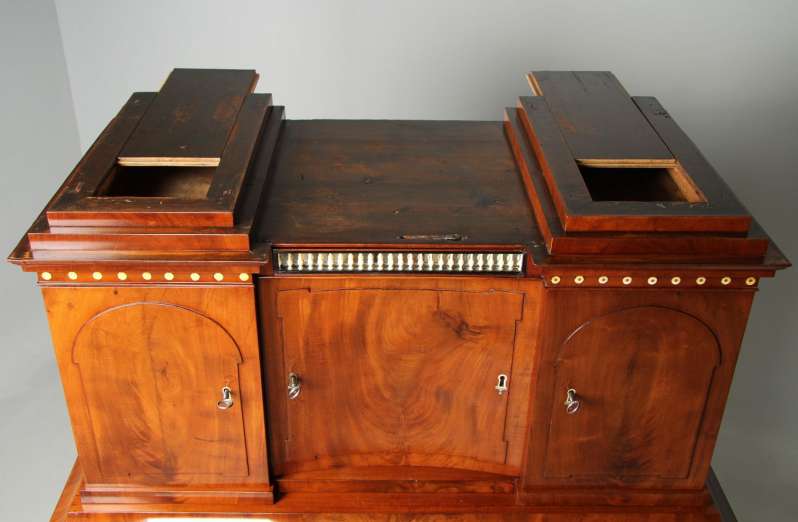
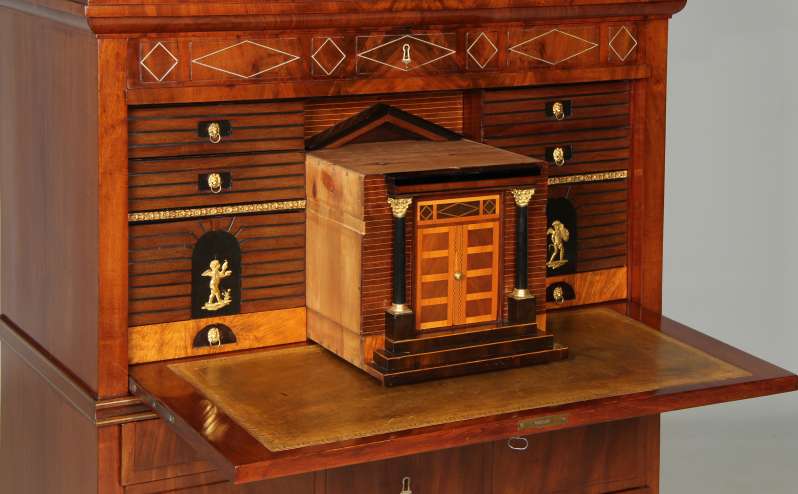
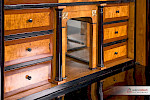
Also typical of the period and region is the piece’s design, which is strictly inspired by architecture. The front of the lower section is divided by segments reminiscent of masonry blocks, whilst the three-part upper section is reminiscent of two turrets connected by a balustrade.
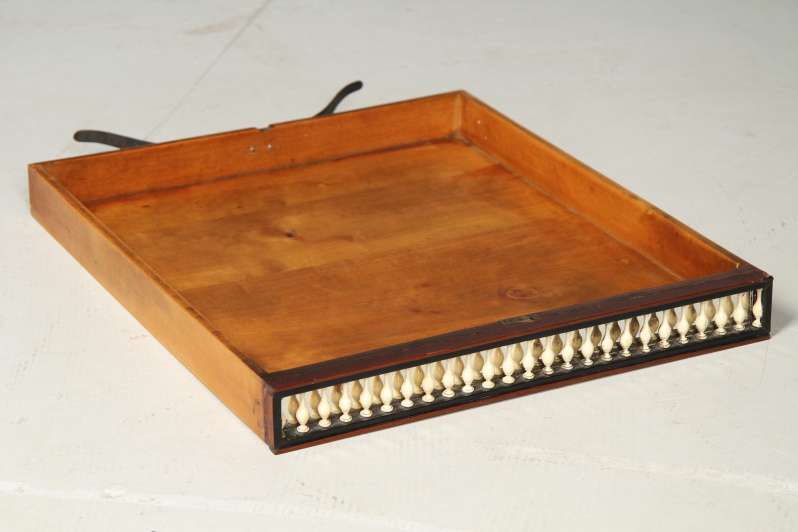
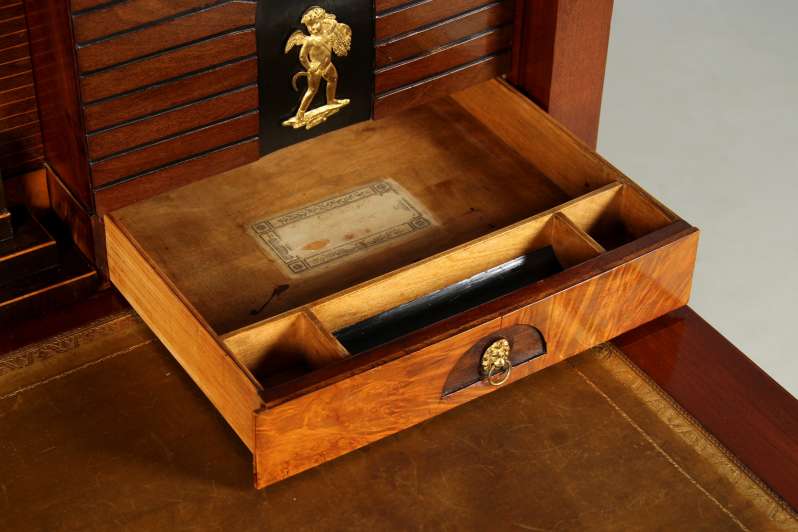
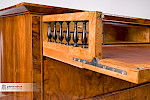
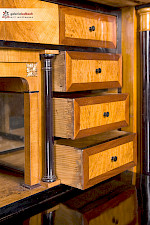
The balustrade turns out to be a secret drawer operated by a hidden mechanism; held in tension by metal springs, it springs open automatically at the touch of a button.
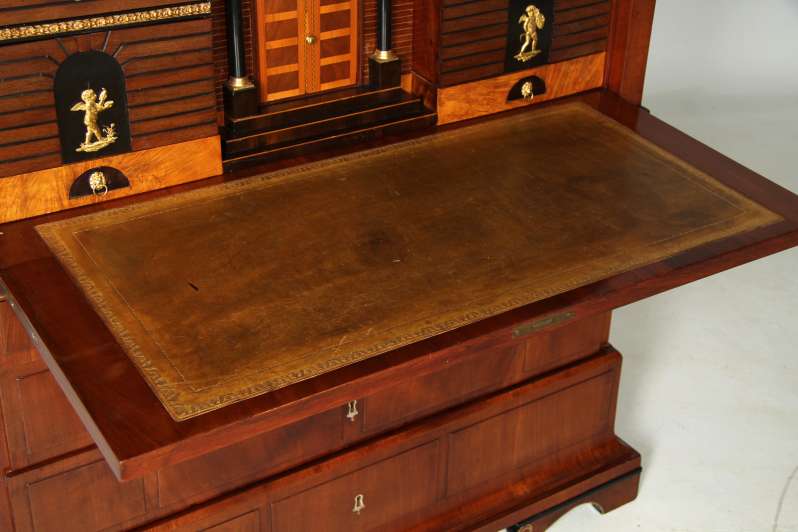
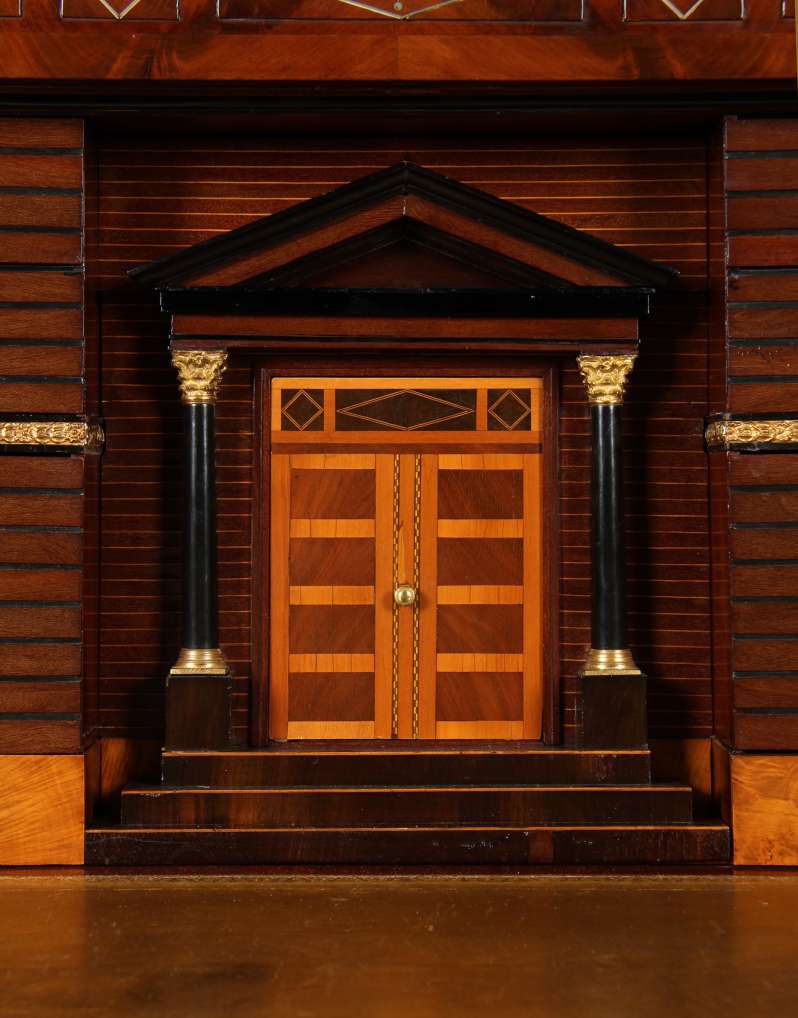
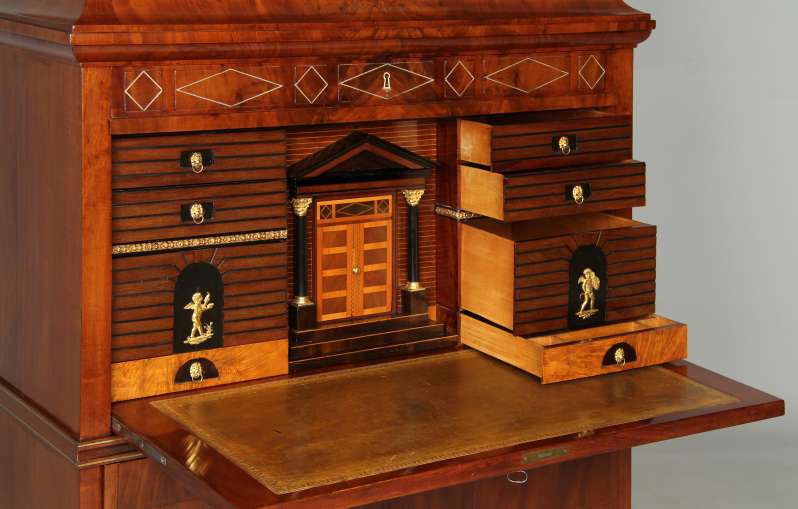
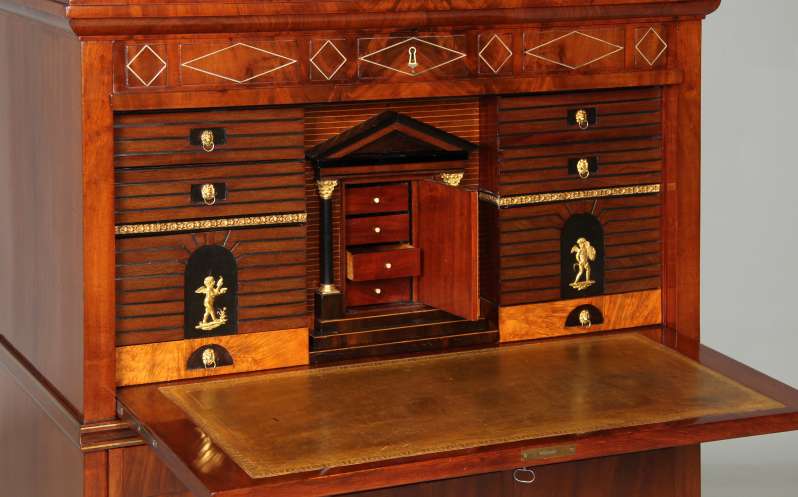
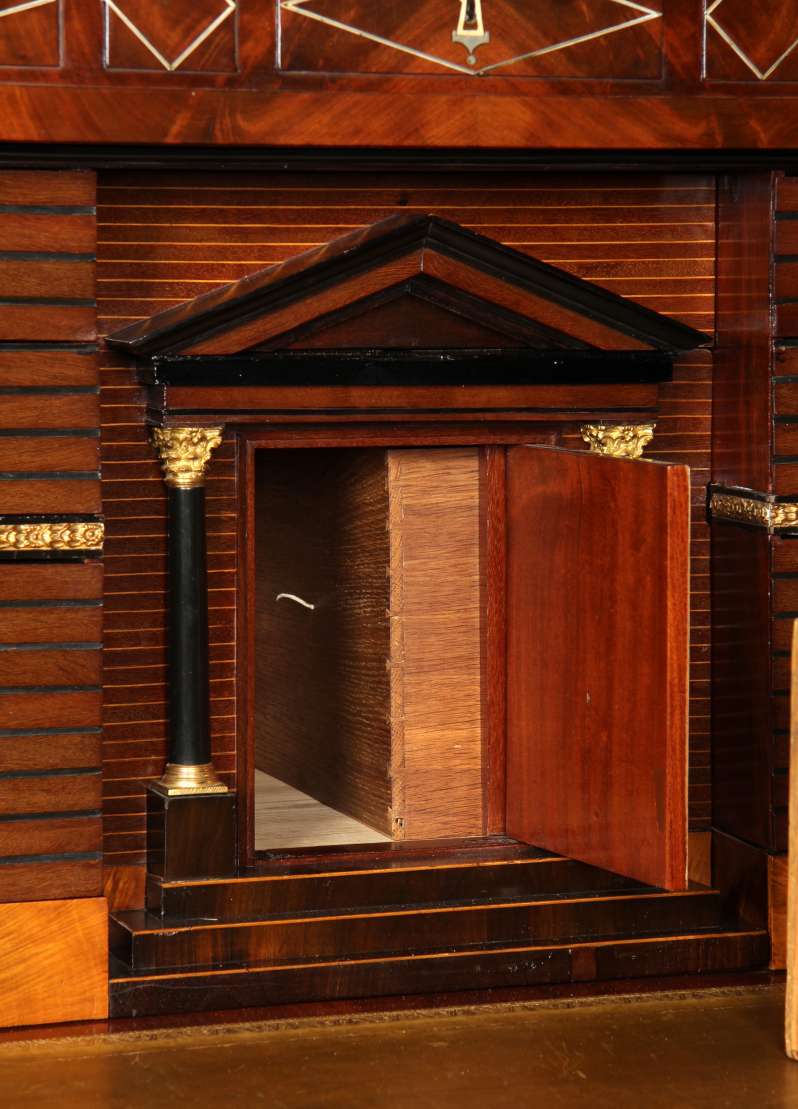
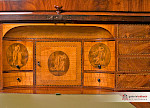
Equally spectacular is the writing compartment of the piece, which is also strictly inspired by architecture. A staircase-like ascent leads to a seemingly double-winged portal flanked by ebonised columns. The small columns support a classical entablature with a flat triangular pediment. Delicate maple inlays provide a horizontal accent behind it.
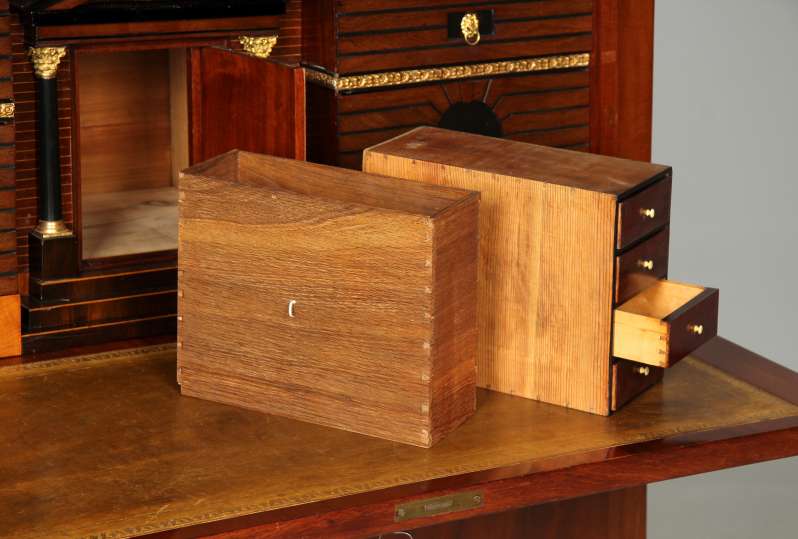
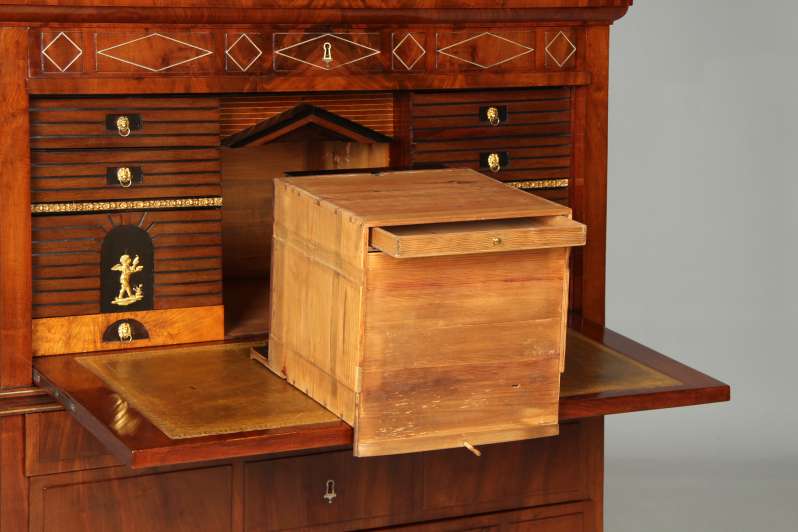
When we open the door, we find four further small drawers behind it. Hidden beside them, and accessible only when the drawer unit is removed, are two further secret drawers. Furthermore, the entire central section can be pulled out forwards, revealing two secret drawers concealed behind its rear panel.
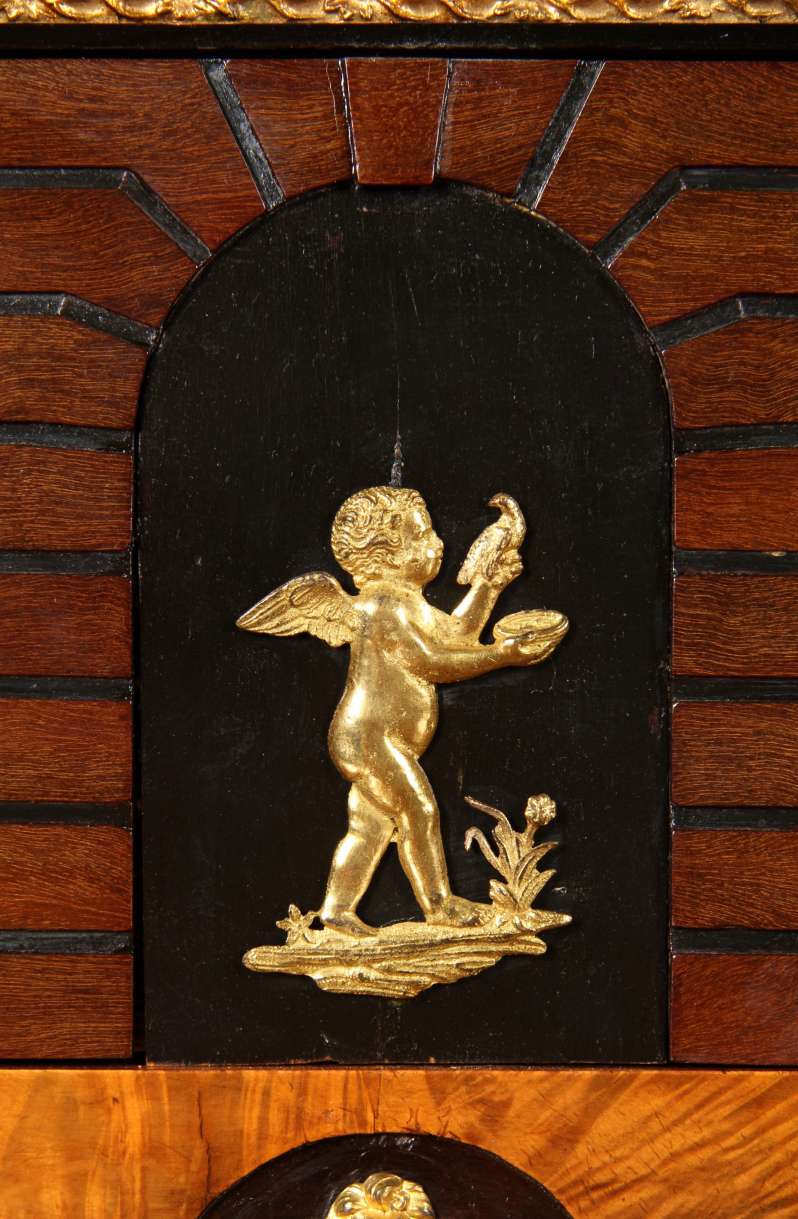
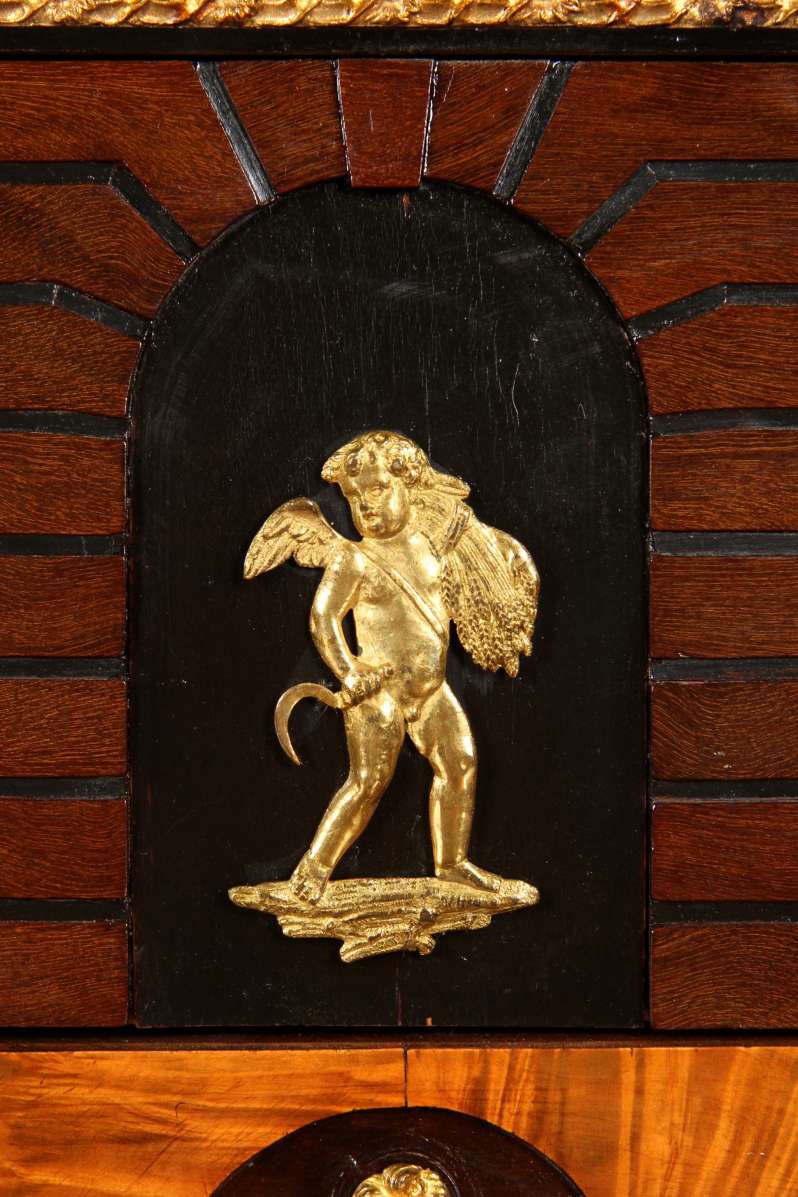
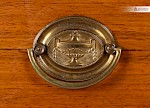
A consistent emphasis on horizontal lines is achieved on the outer drawers through blackened grooves. The fire-gilded fittings also stand out particularly effectively against the black backgrounds. Alongside the lion’s-head handles, the two cherubs in the round-arched panels are particularly eye-catching.
The boy on the left, with a dove and a rose, can be interpreted as a symbol of love and personal happiness, whilst the figure on the right, with ears of corn and a sickle, represents diligence and professional success.
Interesting facts:
The secretary desk became established amongst the nobility and in upper-class households as early as the 18th century, and went on to become the most prestigious piece of furniture in middle-class homes in the early 19th century. With its numerous drawers, compartments and secret compartments, it provided space for documents and valuables, thus meeting the middle classes’ growing need for a dedicated workspace within their own homes and for a secure place to store their personal belongings.
Owing to its complex construction and the multitude of design possibilities, the secretary was particularly well-suited as a masterpiece. The writing compartment, in particular, offered the aspiring master craftsman the opportunity to demonstrate both his craftsmanship and his creativity through ingenious compartmentalisation, secret compartments and elaborately designed interior fittings.
Condition:
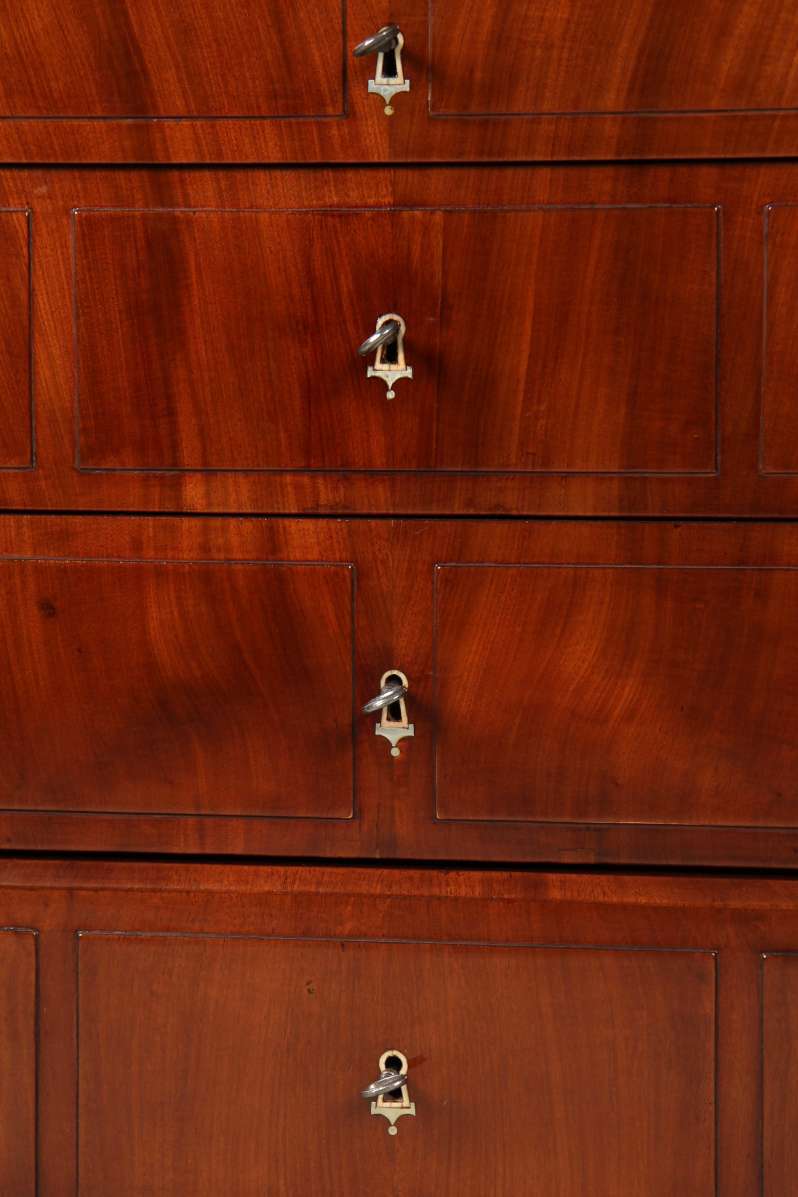
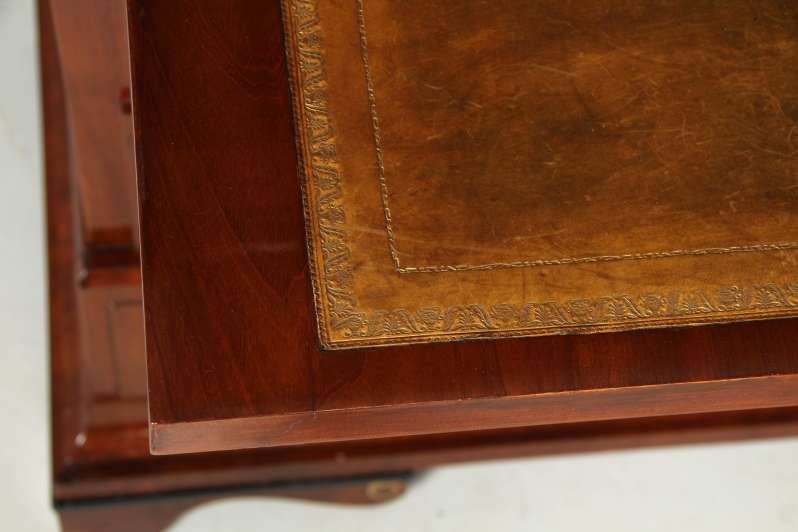
Excellent, restored condition. The shellac polish brings out the grain of the carefully selected mahogany. All locks are original and in working order. All drawers run smoothly and effortlessly.
Price: €11,800
Please refer to the following specialist literature:
Gelfer-Jørgensen - The Dream of a Golden Age - Danish Neo-Classical Furniture 1790–1850 from p. 344
Jörn Bahns - Biedermeier-Möbel - Entstehung – Zentren – Typen from p. 100

Article found under: Secretaries
Add to shopping cartVideo: Danish Biedermeier secretary desk
Also interesting
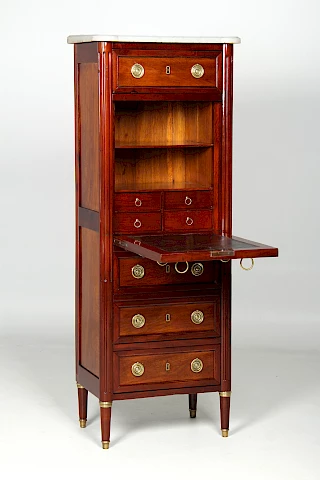
Very narrow secretary in the shape of a chiffoniere
Paris
Mahogany
late 18th century
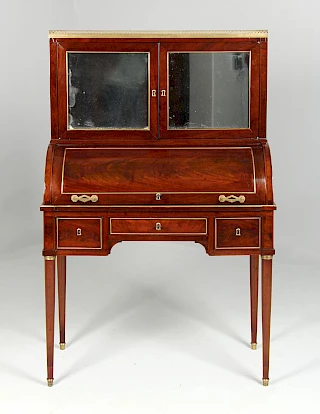
Desk - Bureau à cylindre
France
Mahogany
Directoire around 1800
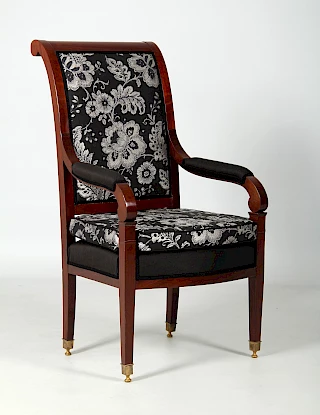
Antique armchair
Northern Germany
Mahogany
Mid 19th century