Video of an antique safe
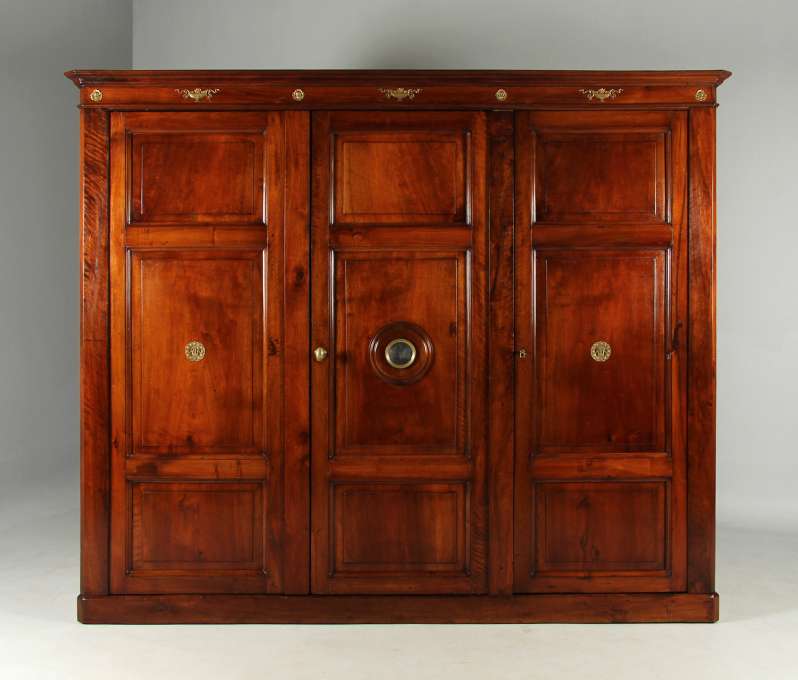
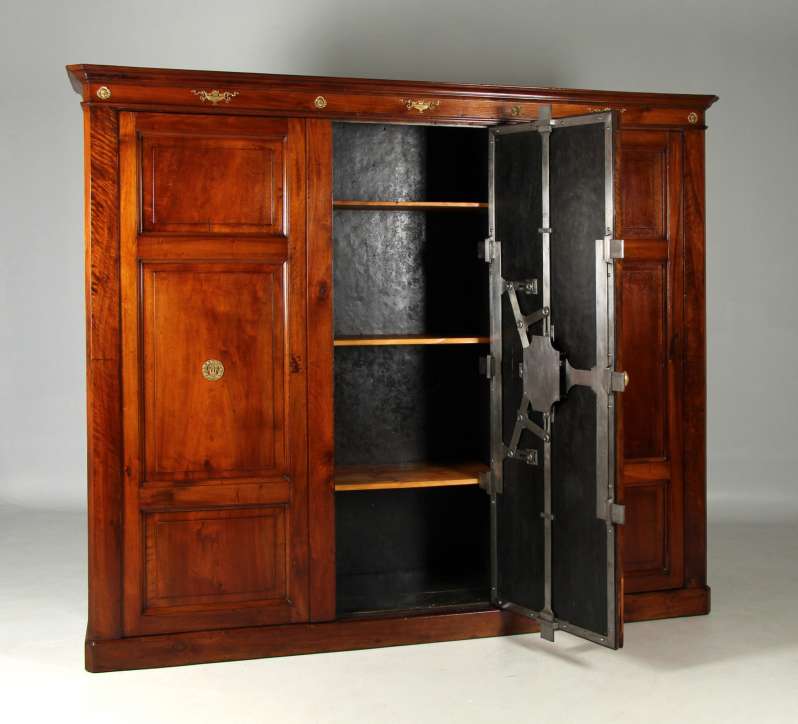
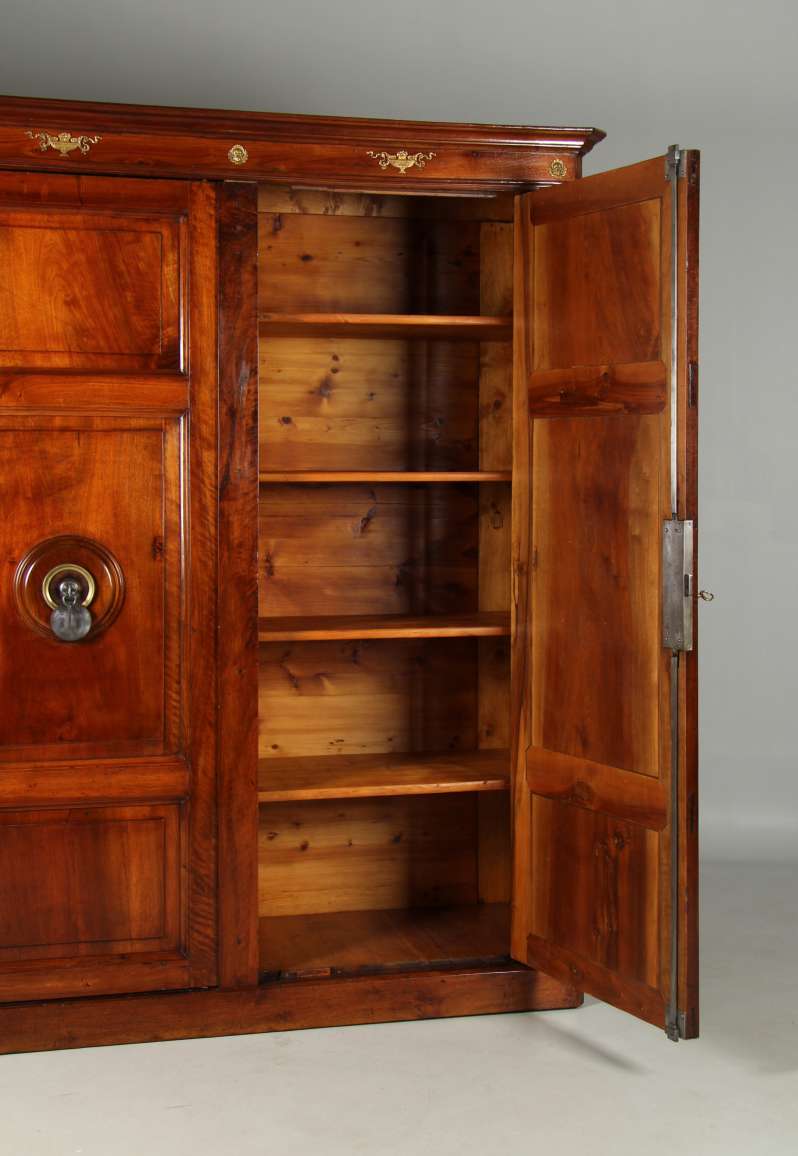
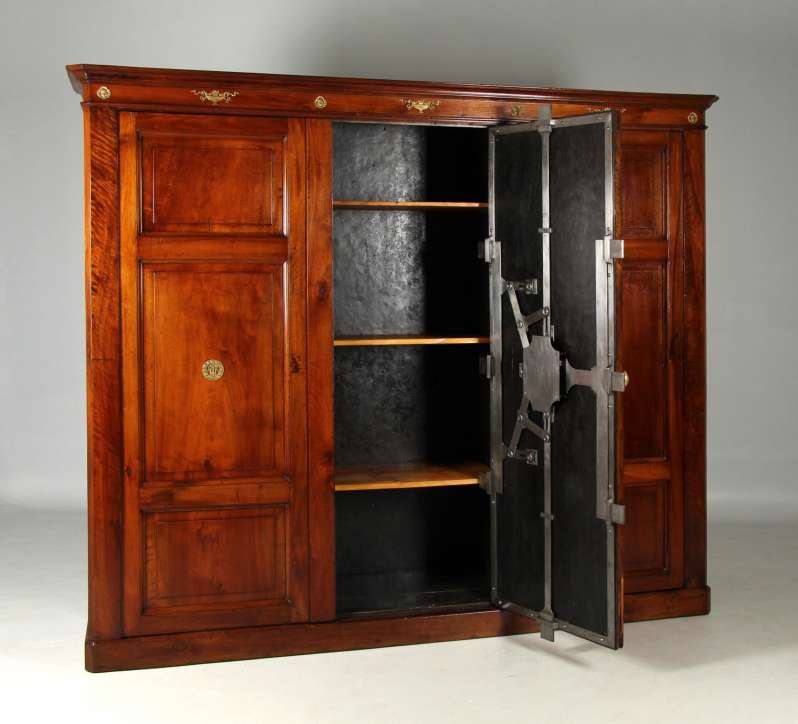
Antique security cabinet fitted with a safe lock manufactured by Invitti of Milan
Milan
Walnut, iron, steel
1870s
Dimensions: H x W x D: 224 x 267 x 66 cm
Description:
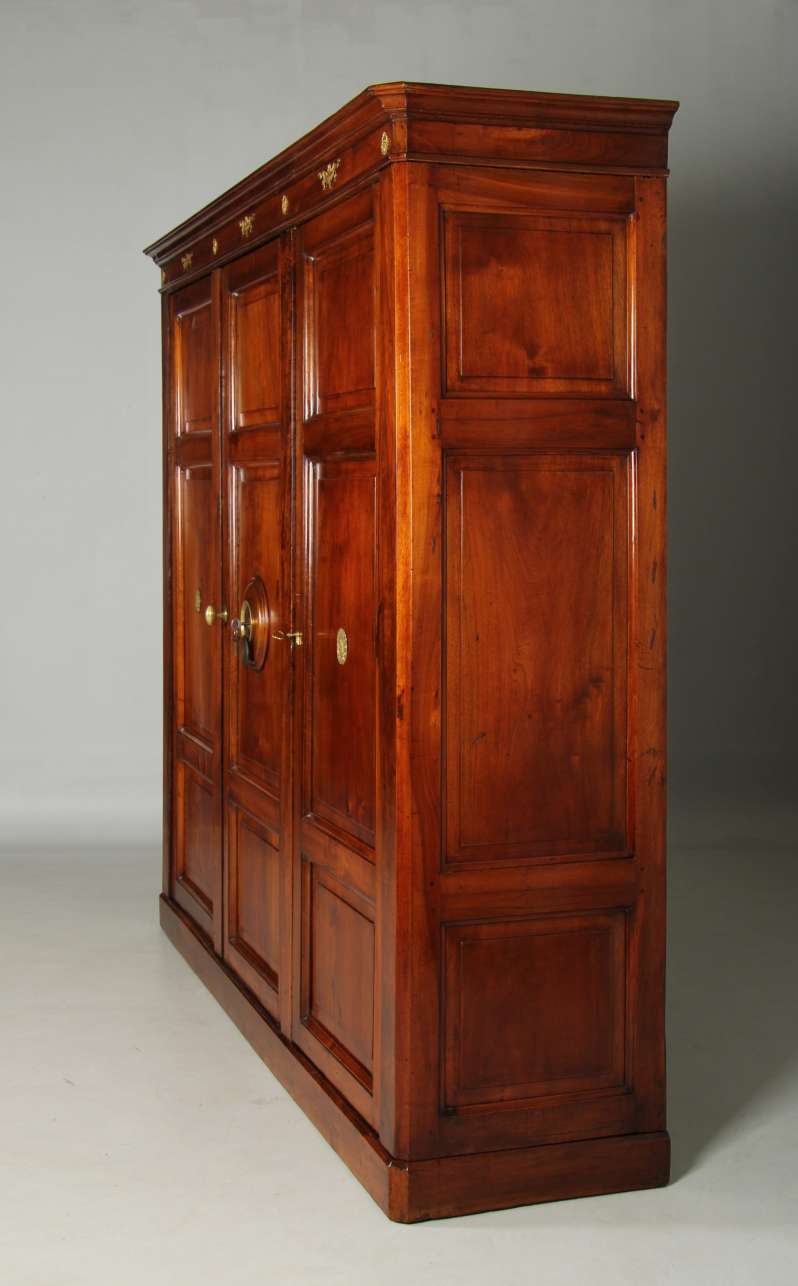
An extremely rare three-door security cabinet made of solid walnut with bronze fittings in the Empire style.
Due to its considerable weight, the cabinet – which can be dismantled for transport – does not rest on feet but on a surrounding plinth frame.
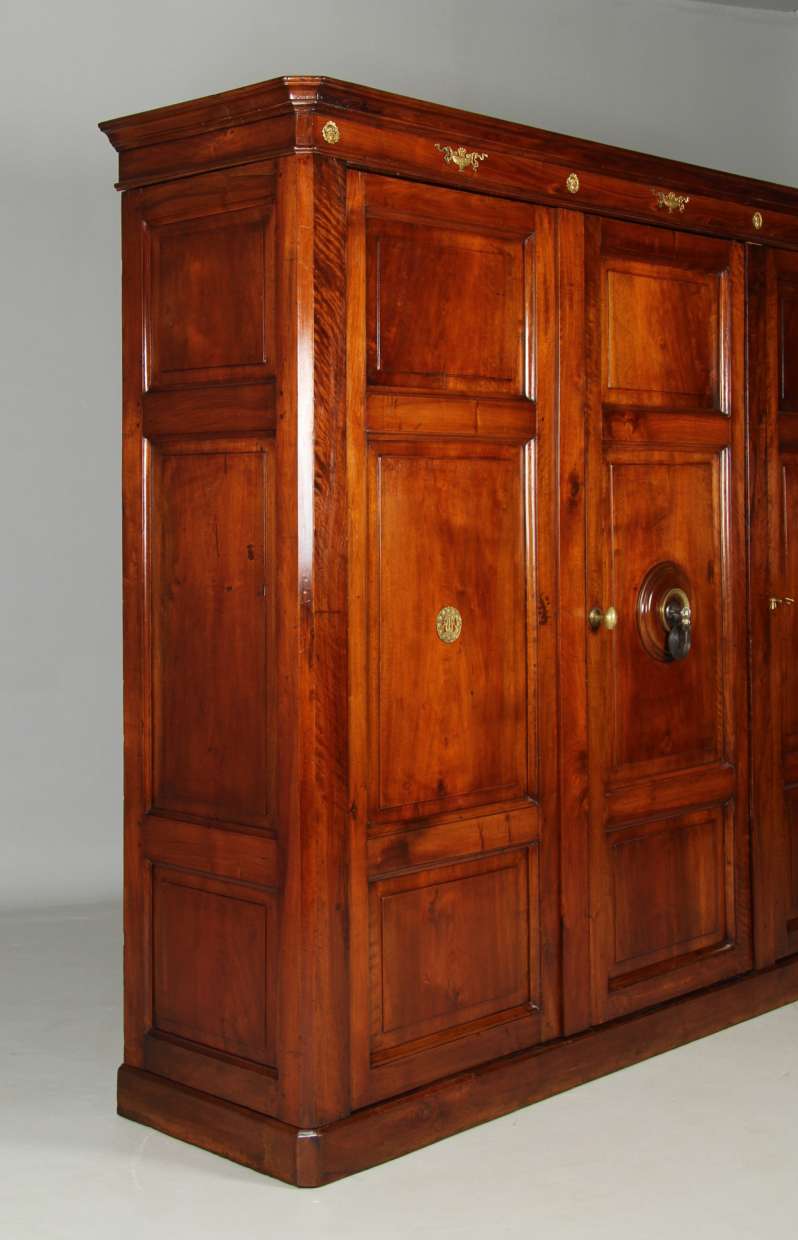
The sides and the three doors are constructed using a combination of frames and panelling. The subtle grain of the walnut wood shimmers in a variety of warm brown tones. The patina, which has developed over decades, lends the piece its unmistakable character.
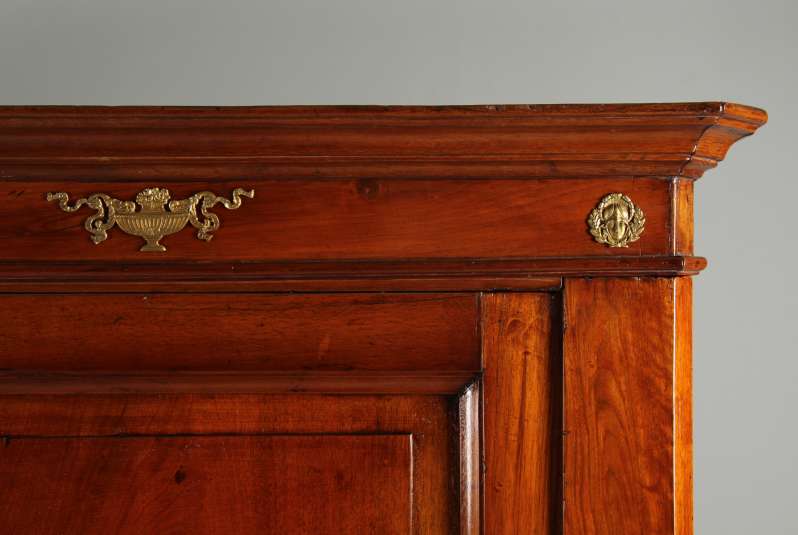
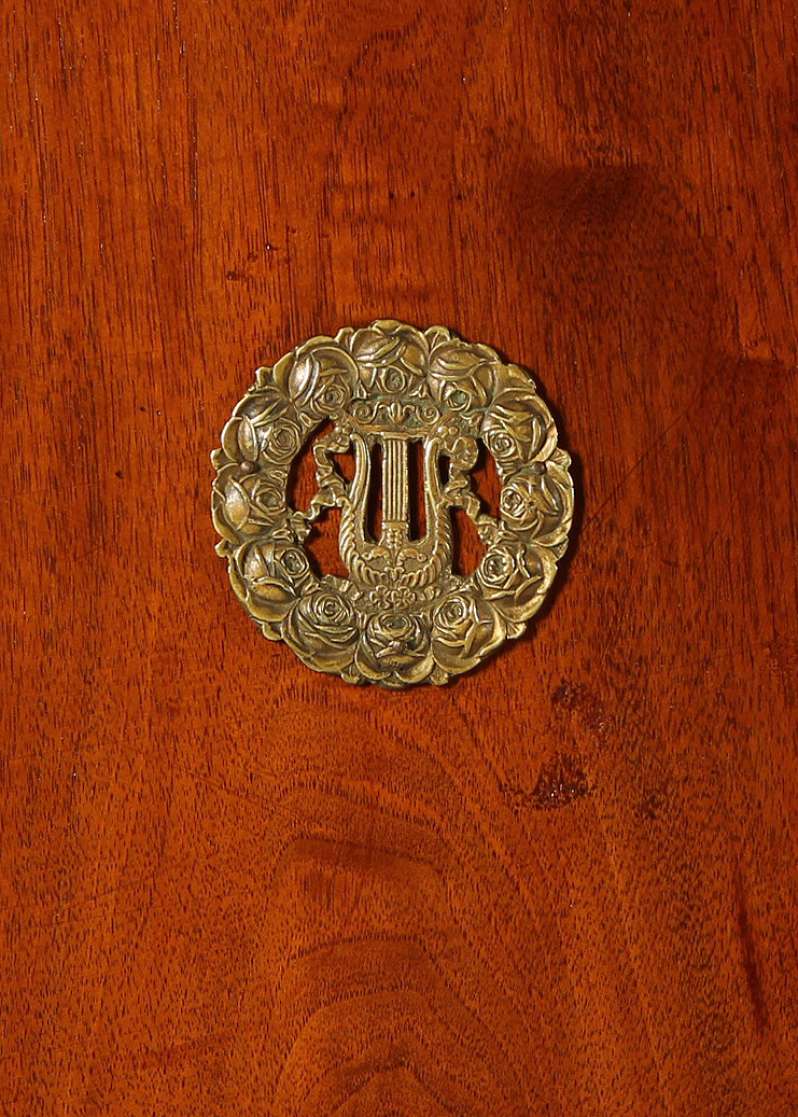
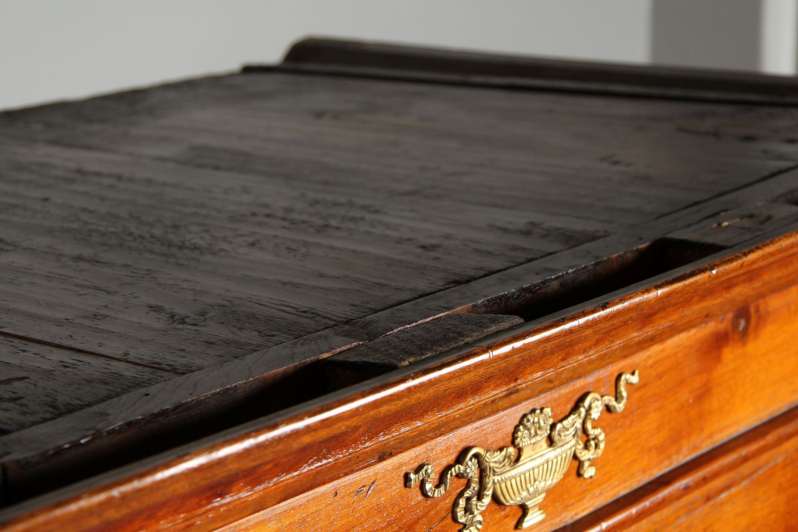
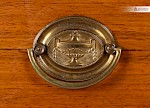
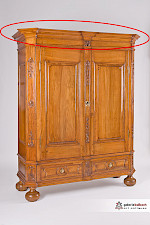
Finely cast and carefully gilded bronze fittings provide a beautiful contrast to the wood and lend this piece – which has a rather rustic appearance in terms of its woodwork – an elegant touch. Extending the vertical lines of the cabinet’s front, the mascarons mounted on the cornice emphasise the verticality, giving the cabinet a remarkable sense of height despite its flat, rectangular floor plan. The urn vases mounted between the mascarons emphasise the three-part structure of the piece, whilst lyres arranged in a rosary pattern mark the centre of each of the two outer doors.
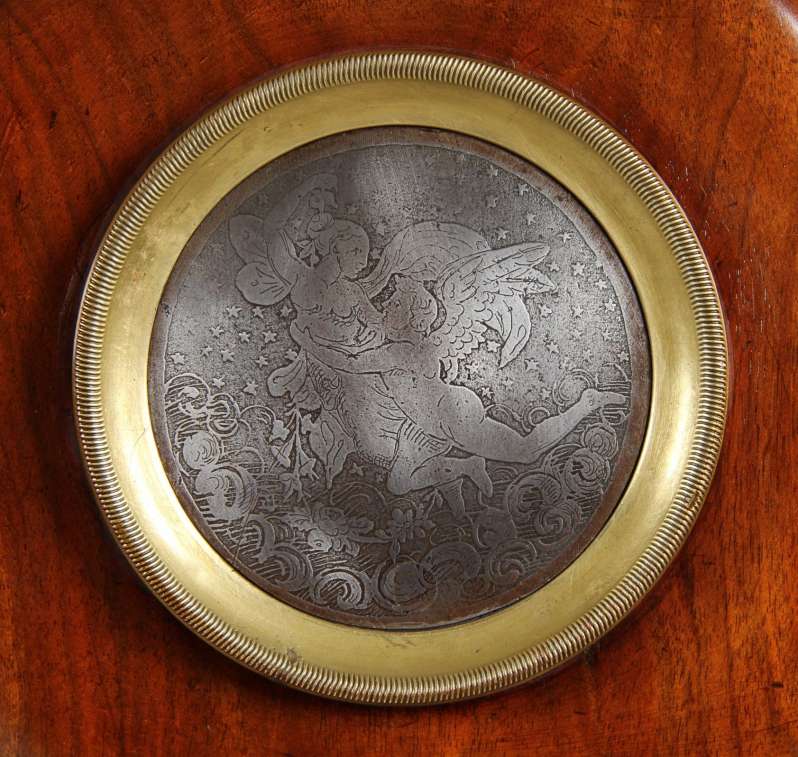
The main focus, however, is on the central door with its iron plate framed by a bronze ring. Presumably etched into the metal, we see a scene depicting Cupid and Psyche floating above the clouds against a starry sky.
Placed exactly in the centre of the door, this, in combination with the bronze fittings on the outer doors as well as the pull knob and the keyhole, deliberately emphasises the central axis of the entire cabinet. In this way, the designer has succeeded in lending the piece of furniture a geometric rigour whilst also achieving a harmonious and balanced overall effect, despite the asymmetrical grain of the wood.
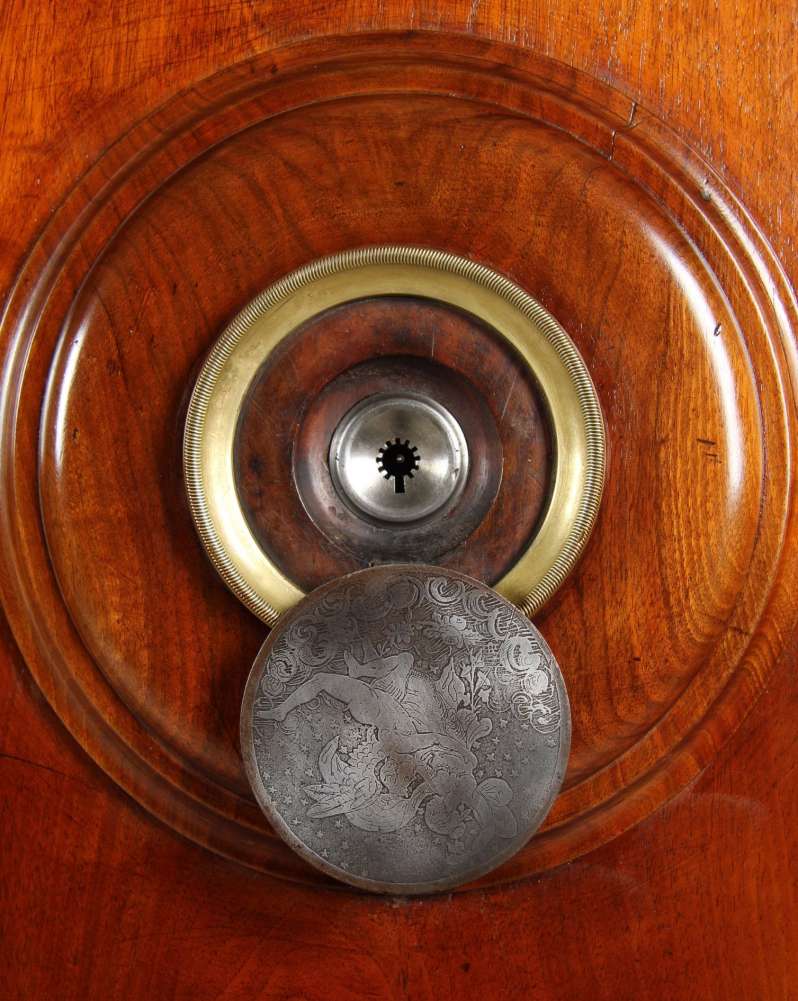
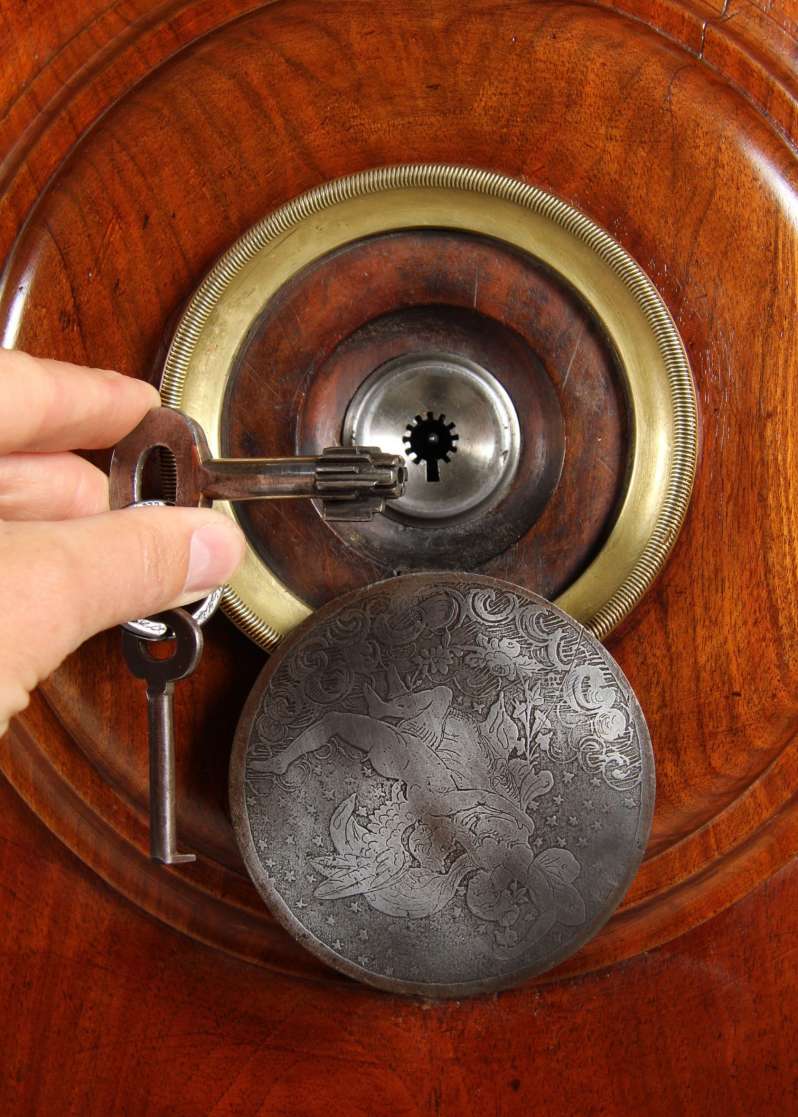
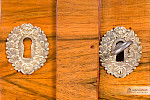
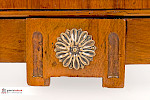
However, the iron plate serves not only aesthetic purposes but is primarily intended to conceal the keyhole and protect it from unauthorised access. By pressing a cleverly concealed release mechanism beneath the large wooden rosette, the plate springs forward, folds down and reveals the star-shaped keyhole.
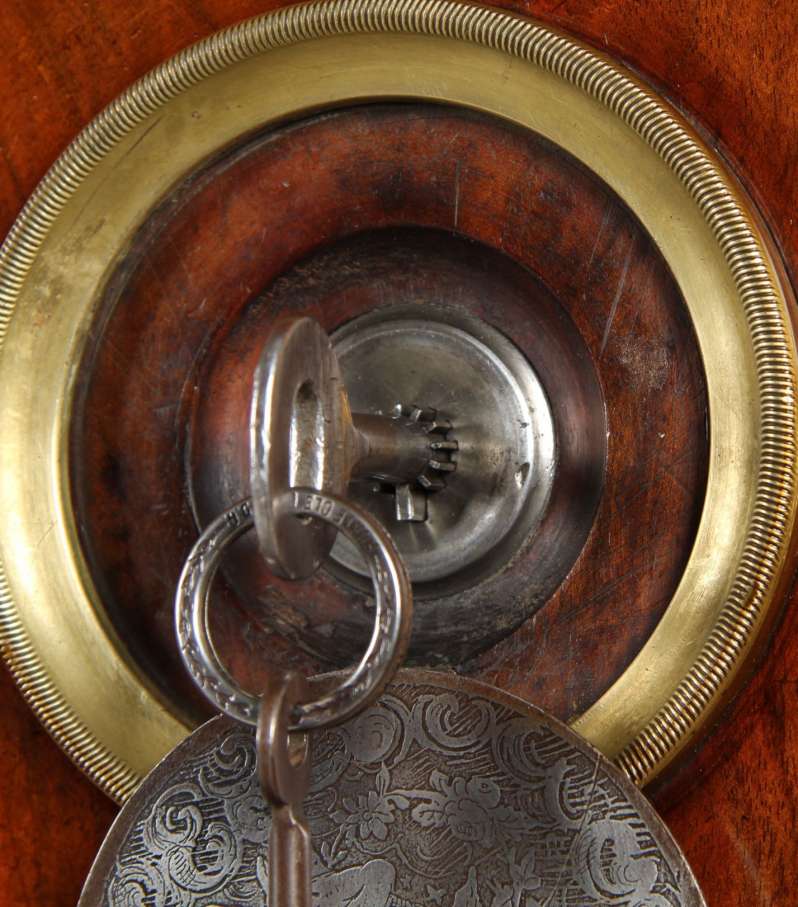
The accompanying key has a cylindrical shank with multiple longitudinal ribs arranged circumferentially, which serve as a key guide and stop, whilst the actual locking mechanism inside consists of a sliding or bolt system reminiscent of a lock patent developed by Joseph Bramah in 1784.
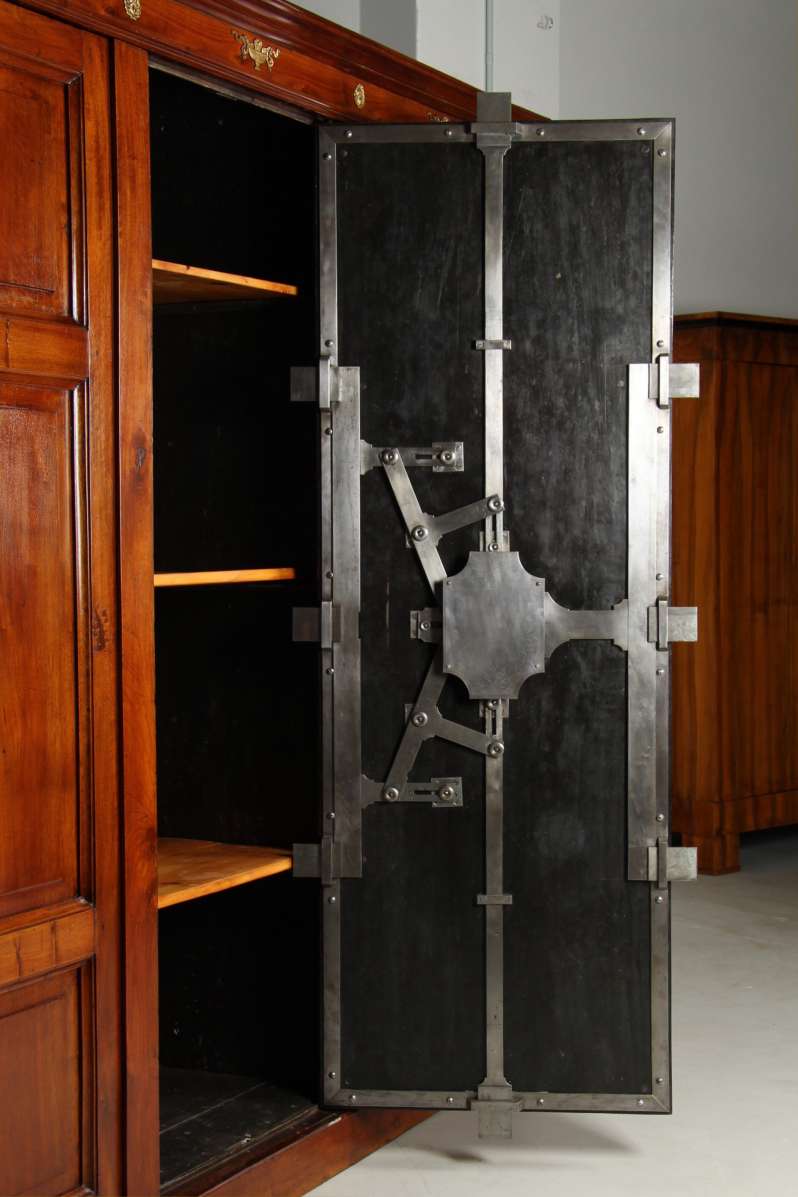
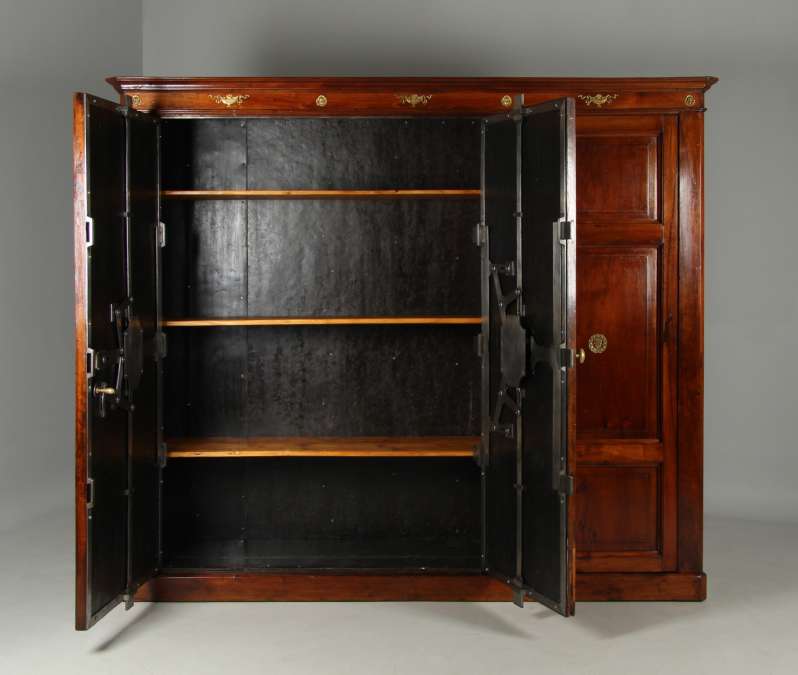
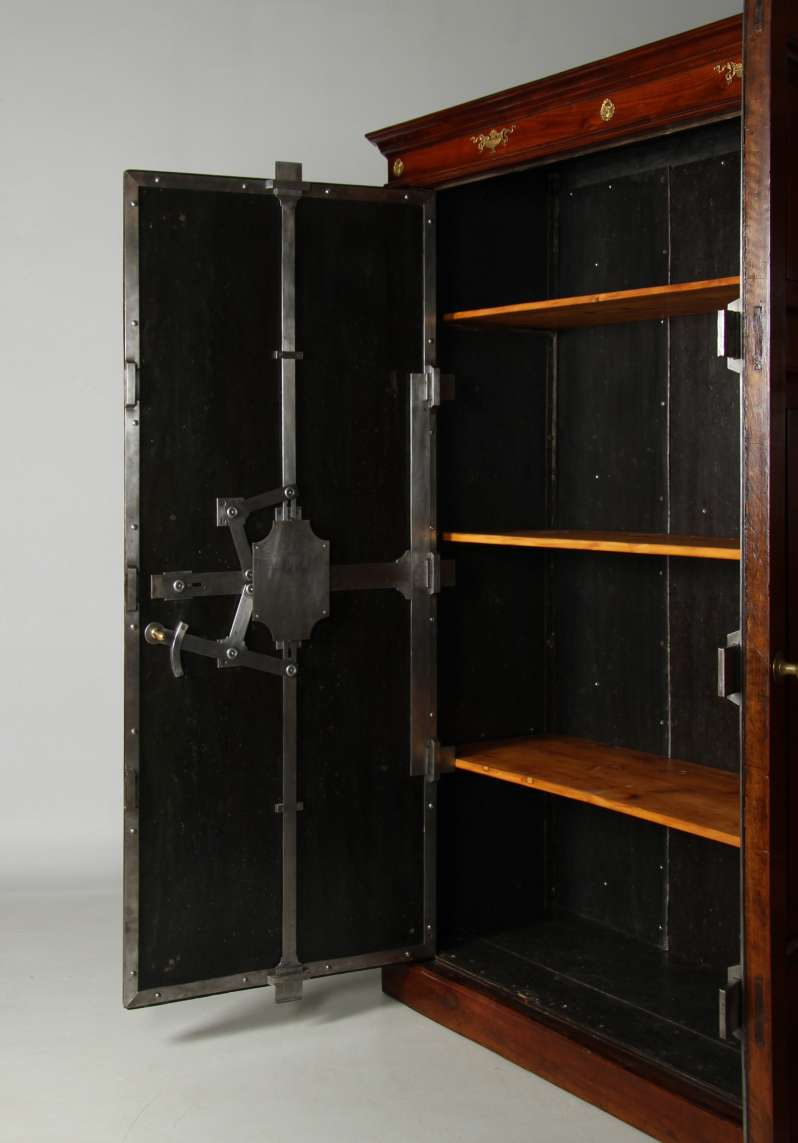
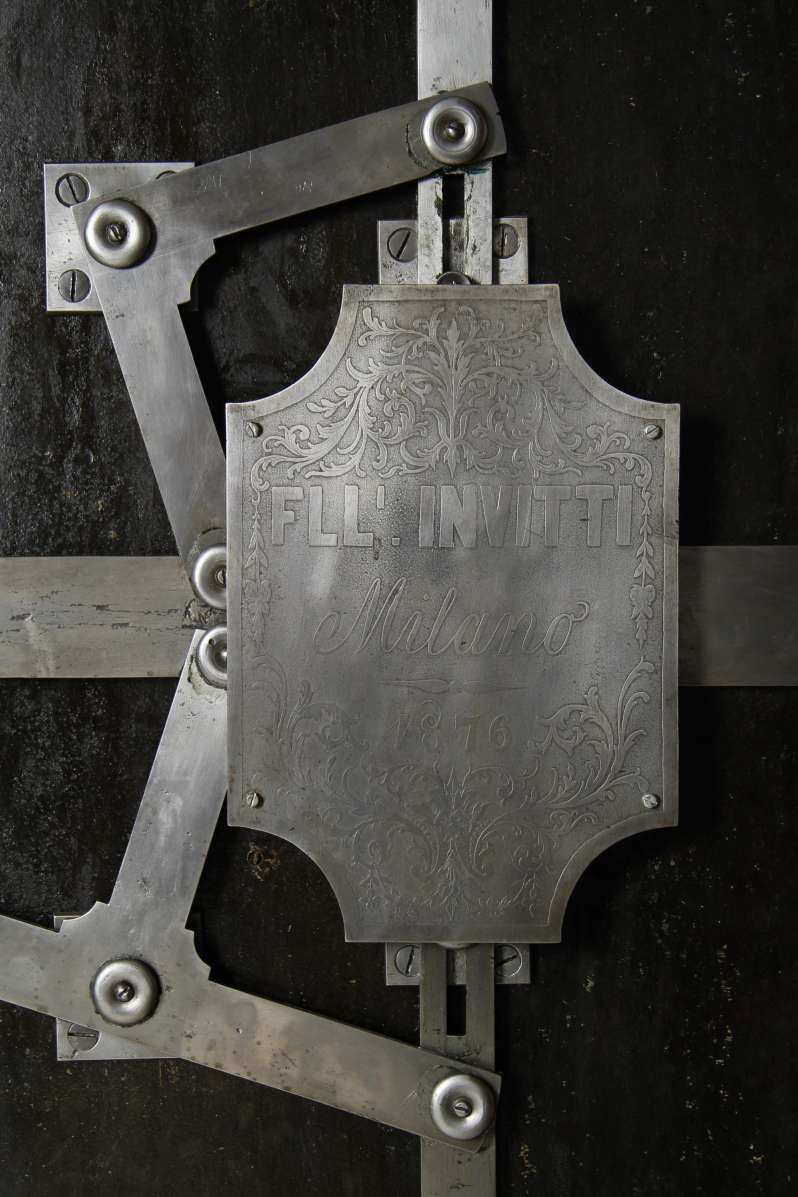
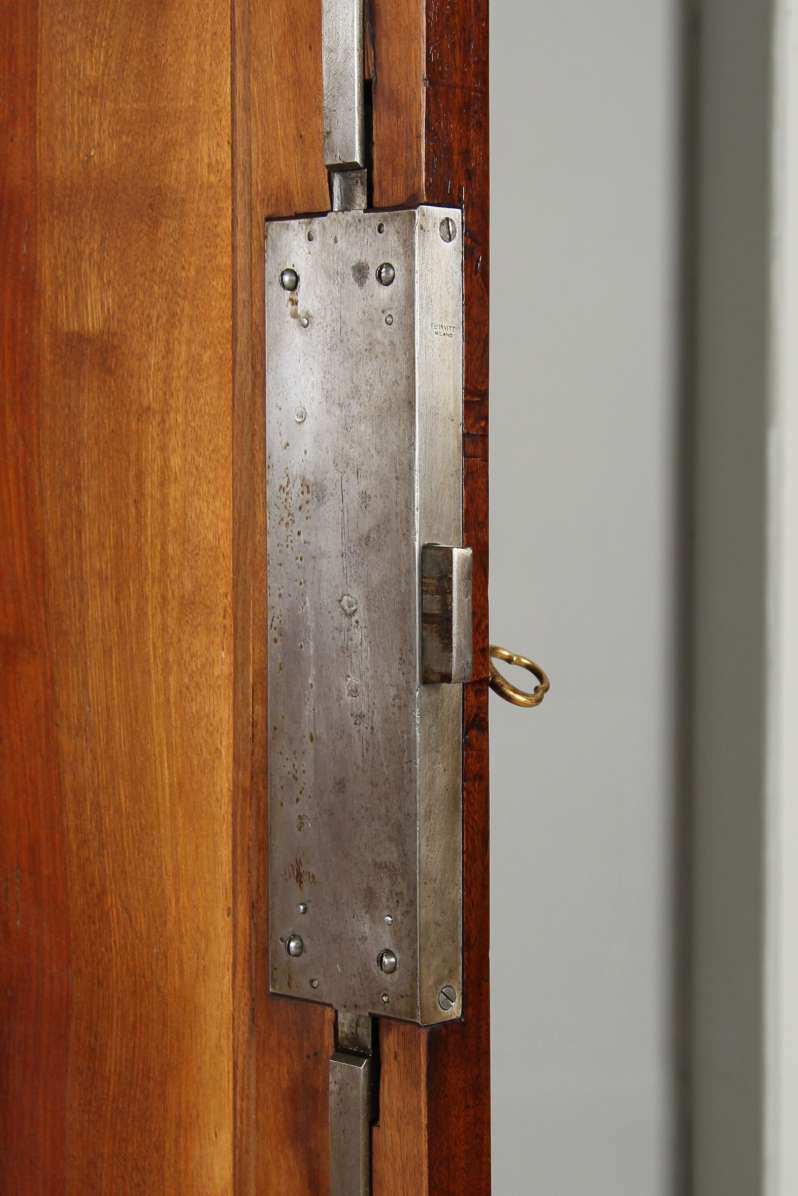
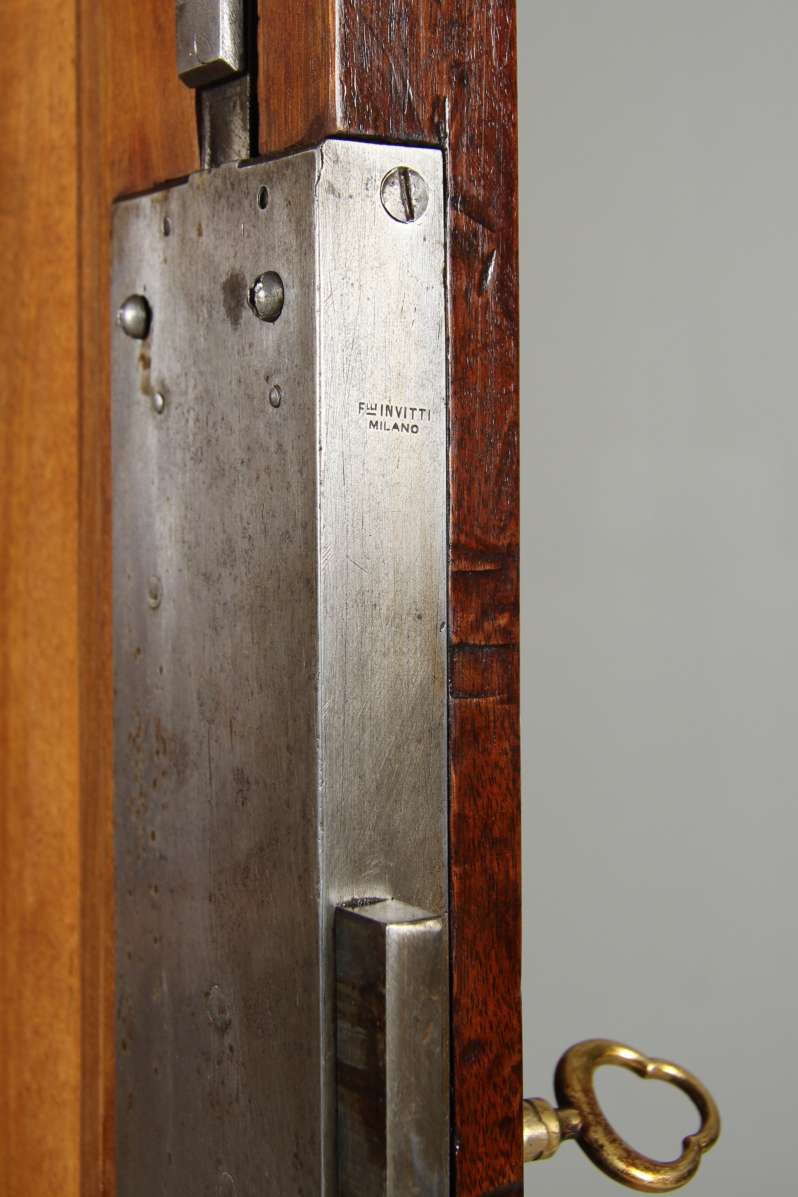
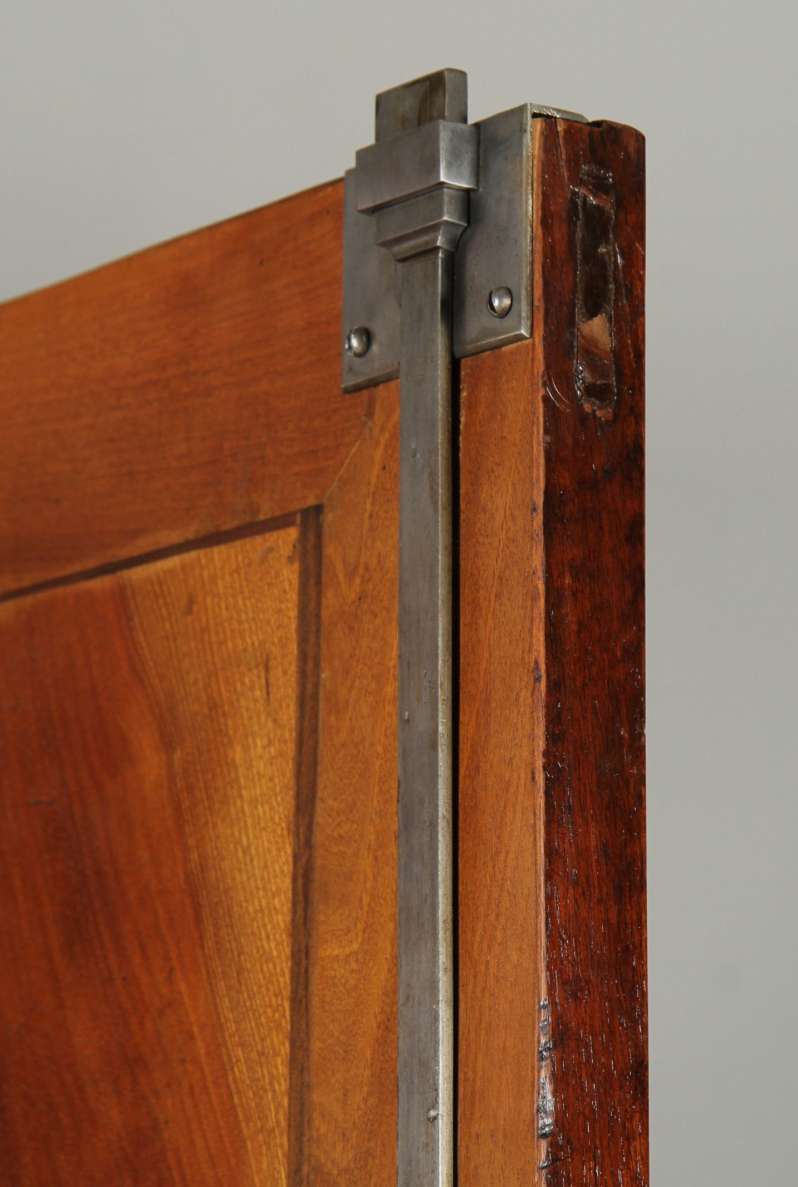
The safe is secured by a lock fitted with a total of eight bolts, mounted on the inside of the door. The lock plate, finely engraved with foliage motifs, bears the inscription ‘FLL Invitti Milano 1876’, thus identifying the lock’s manufacturer. The security lock continues onto the left-hand door, where it is operated from the inside by means of a handle.
However, the cabinet’s high standard of security is ensured not only by the solid locks, but also by the fact that the entire interior behind the two doors is reinforced with iron plates approximately two millimetres thick.
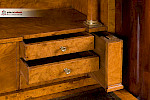
The interior is divided by three shelves and was presumably used to store business documents, important papers or private valuables.
The third door features a solidly crafted bar lock, also stamped ‘FLL INVITTI MILANO’, but otherwise has no further security features.
Research carried out at the Camera di commercio di Milano Monza Brianza Lodi (Milan Chamber of Commerce) in the Gestione Documentale e Archivi (Document Management and Archives) department has revealed that the brothers Andrea and Paolo Invitti registered the company Fratelli Invitti with the City of Milan on 21 September 1886. The company’s registered office was at Via Commenda 25. The company’s business activities included iron structures, bridge construction, fittings, canopies, railway rolling stock and related metalwork, as well as timber and masonry structures.
As there is evidence that shares in the company FLL Invitti existed in 1888, it seems plausible that the company was already operating as a small metalworking workshop in 1876, albeit without being registered with the City of Milan. At that time, company registration was still voluntary. Traders could carry out their business without being registered, provided they paid the annual municipal levies.
It is possible that, in the years that followed, the metalworking shop developed into a larger metalworking business, which was then converted into a public limited company in the late 1880s to undertake larger projects and, as part of this process, was registered with the Milan Chamber of Commerce.
Interesting facts:
In the 19th century, northern Italy developed into an economically significant region within Europe. Milan, in particular, benefited from its role as a centre for trade, banking and industry. With the growing need for the secure storage of documents, securities and cash, workshops emerged that specialised in the manufacture of security cabinets, safes and complex locking mechanisms.
Alongside the classic ‘cassaforte’ in lacquered or metallic finishes, Northern Italy also saw the emergence of prestigious pieces of furniture featuring sophisticated security construction that blended harmoniously into residential or commercial spaces. They combined the protective function of a safe with the craftsmanship and design quality of high-end furniture.
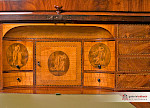
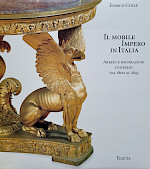
I have previously had a writing desk of this type in my collection. However, I have personally never before come across a cabinet quite like the one offered here. Even in specialist literature, I have only been able to identify one security cabinet that is roughly comparable, albeit significantly smaller. Please see: Enrico Colle – *Il Mobile Impero in Italia*, Milan, p. 275.
Condition:
Restored. The locking mechanism was dismantled, thoroughly cleaned and then lubricated. It operates flawlessly and smoothly.
The wood has been gently cleaned whilst preserving its patina and refreshed with a shellac polish. Minor cracks and uneven areas have been filled and smoothed.
The piece is in an absolutely authentic and highly desirable condition.
Price: 38 000,-€
Please refer to the following specialist literature:
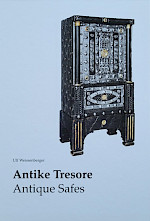
Ulf Weissenberger - Antike Tresore - Antique Safes p. 67 et al.
Enrico Colle - Il mobile Impero in Italia p. 275
Article found under: Cupboards & Showcases
Add to shopping cartVideo of an antique safe
Also interesting

Classicist corner cabinet
Southern Germany
Walnut, maple
Classicism around 1790

Single-door Biedermeier wardrobe
Austria
Walnut
Biedermeier around 1830
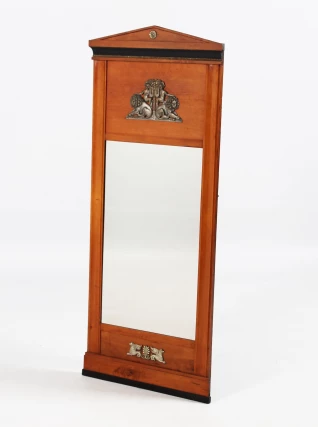
Biedermeier pillar mirror
Central Germany / Thuringia
Cherry
Biedermeier around 1825