Video Secretaire Chiffoniere
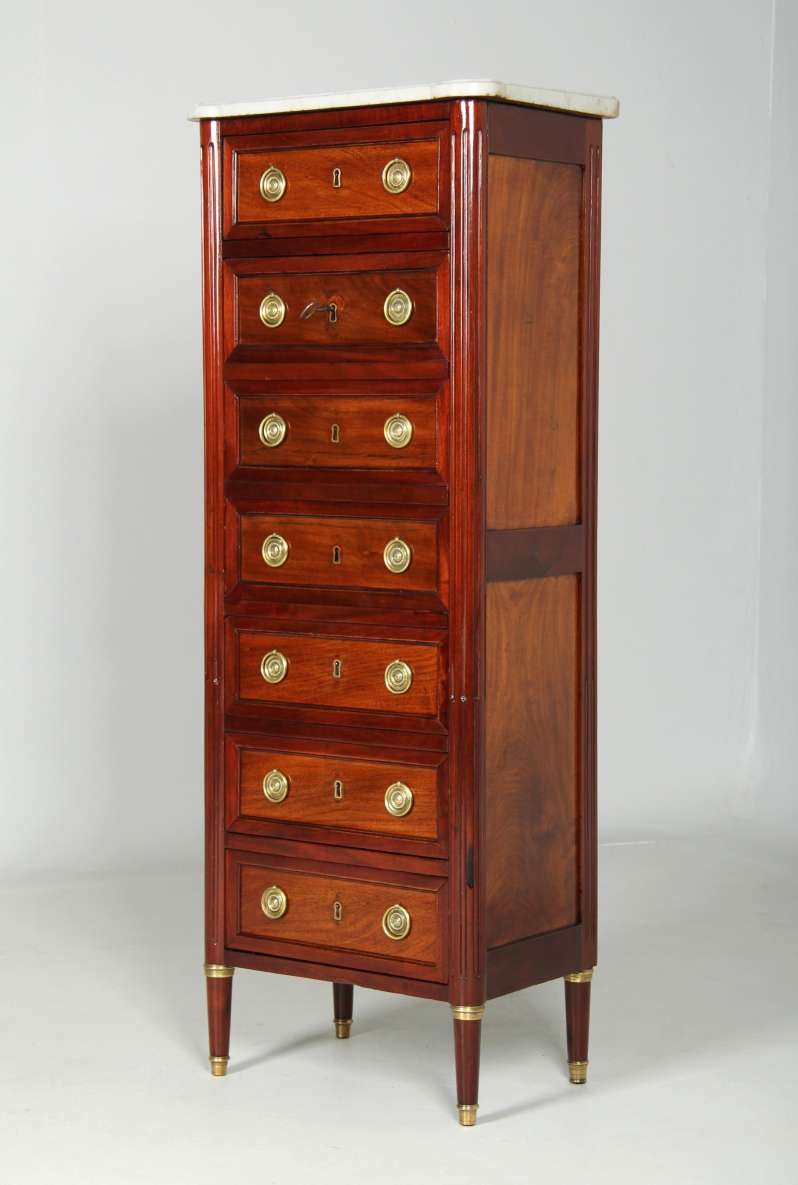
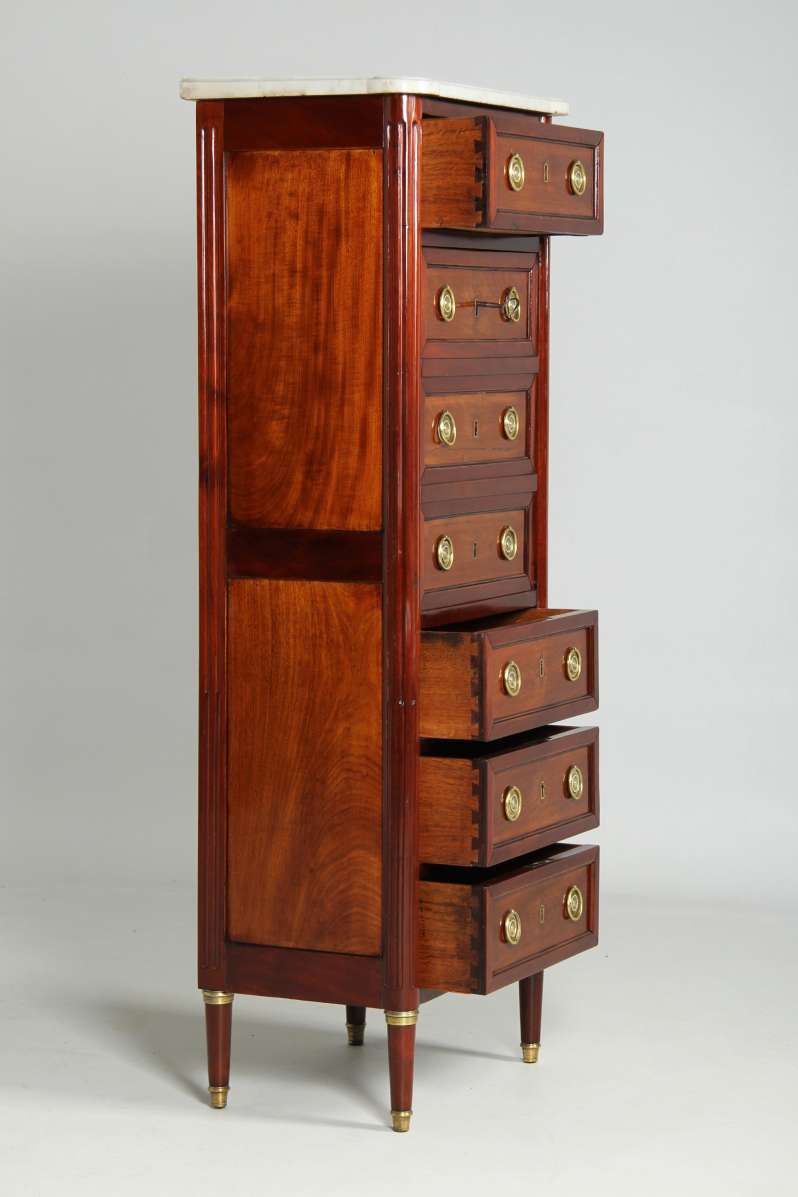
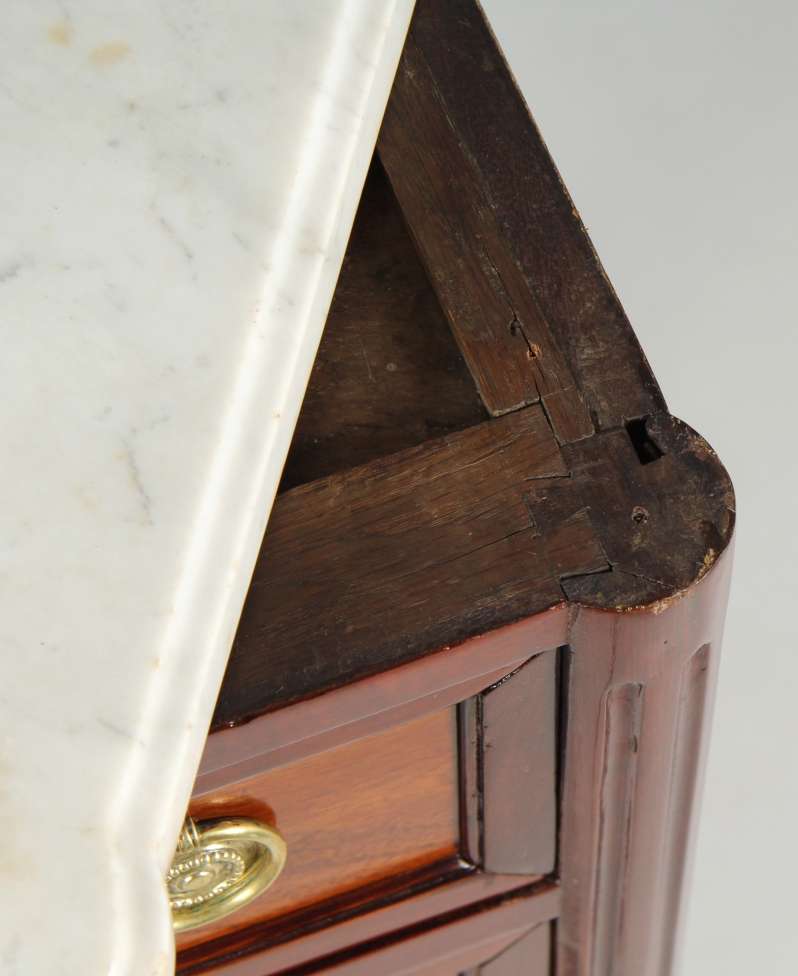
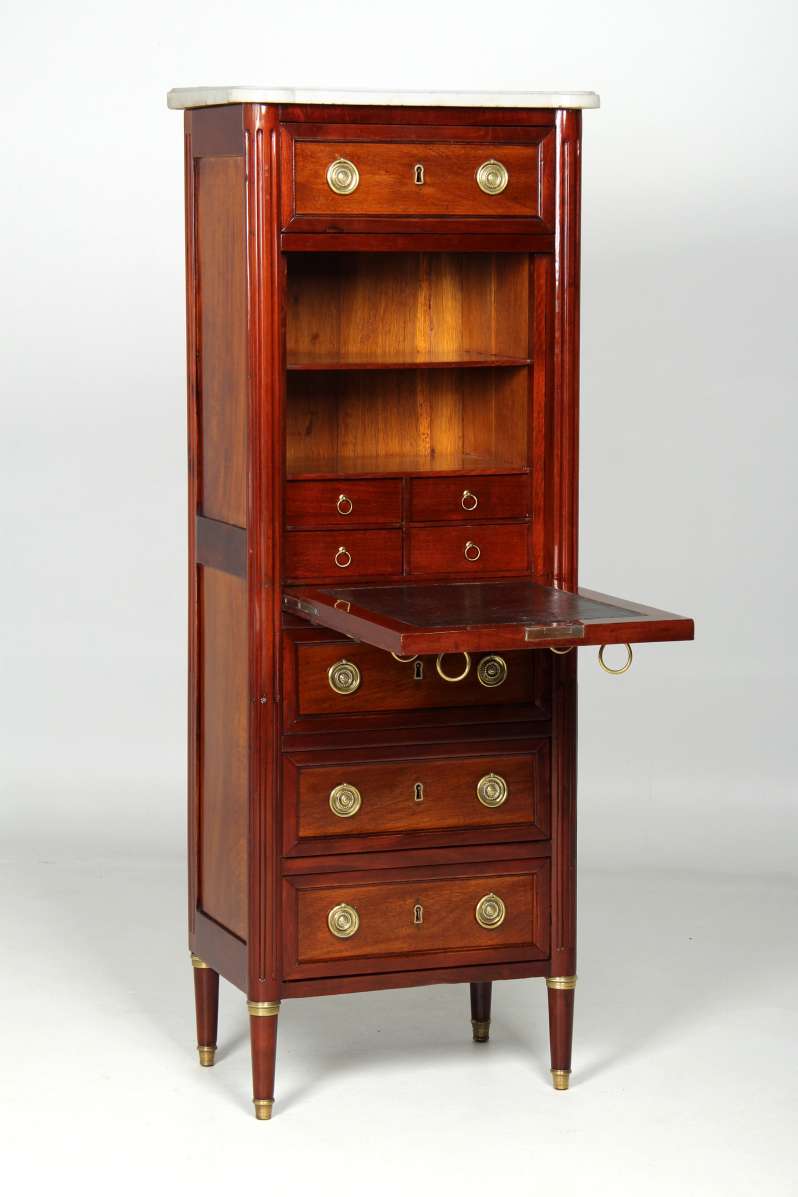
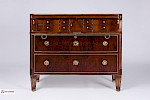
Very narrow antique secretary in the shape of a chiffoniere
Paris
Mahogany
late 18th century
Dimensions: H x W x D: 140 x 53 x 36 cm
Description:
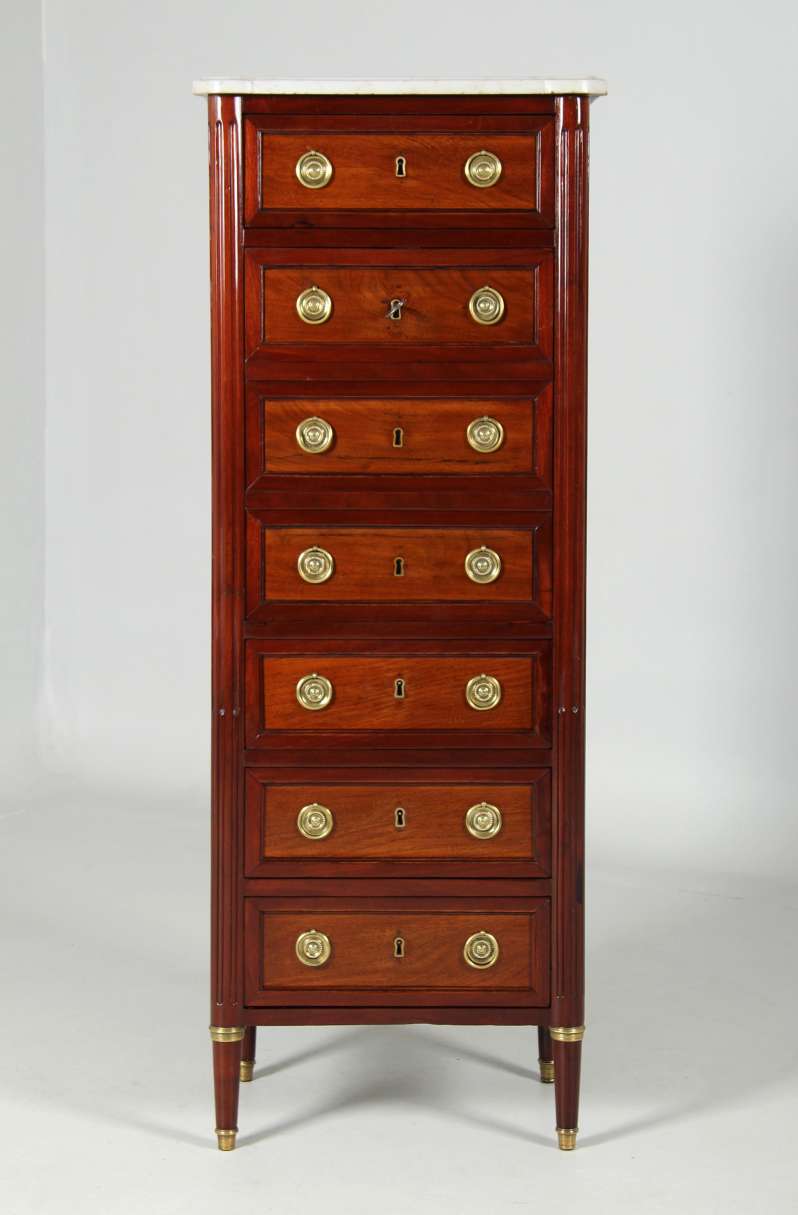
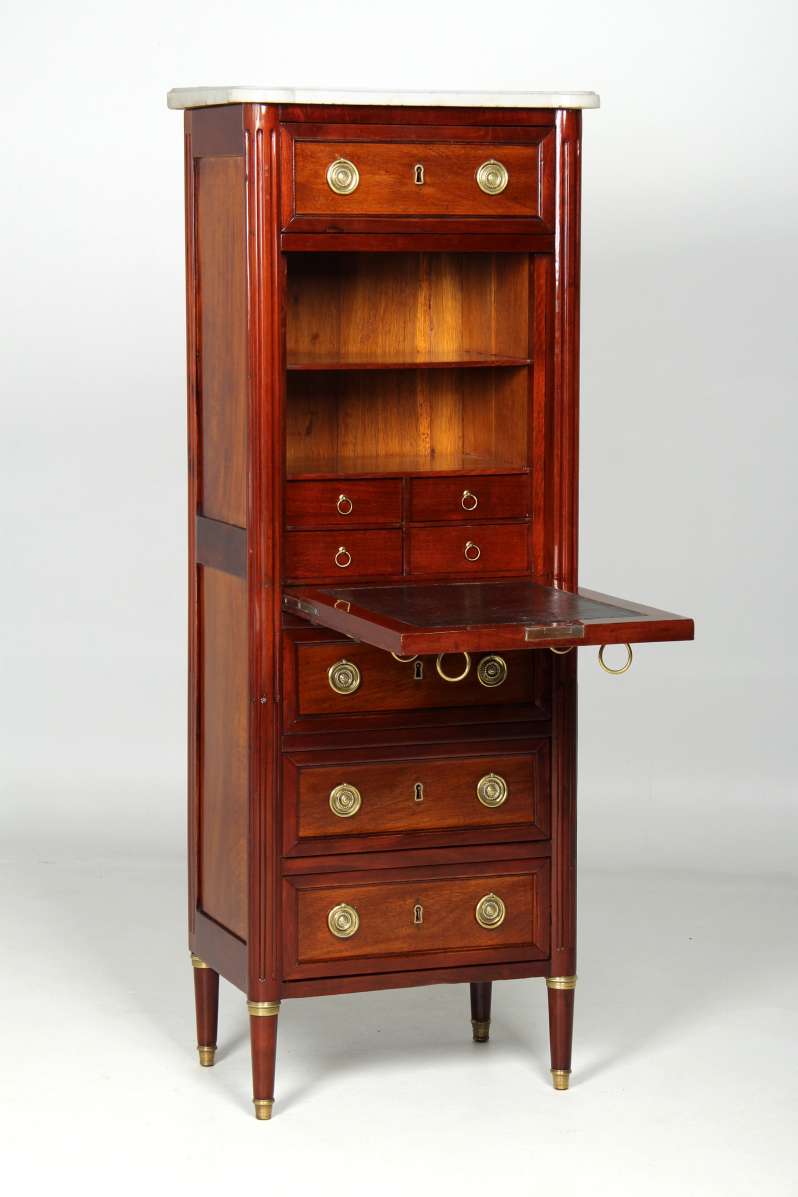
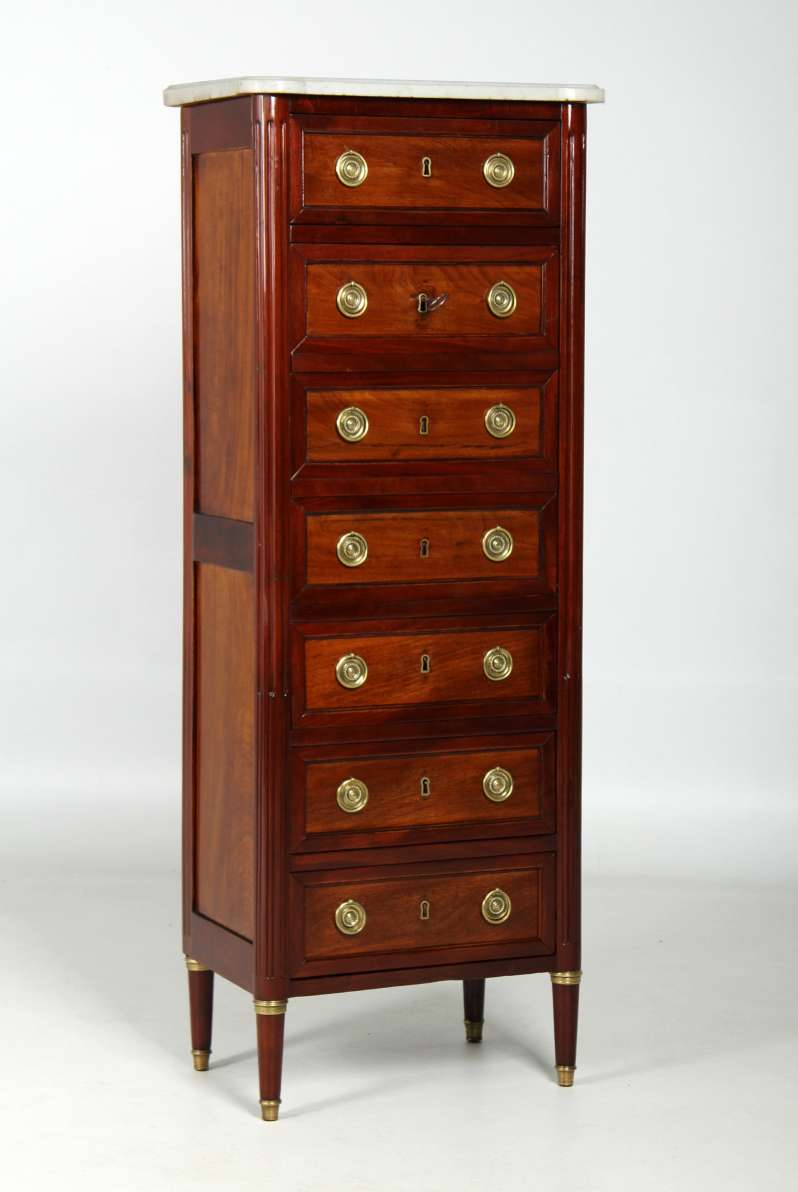
Exceptionally delicate classicist writing desk in the shape of a weekly chest of drawers, a so-called chiffonniere or semainier.
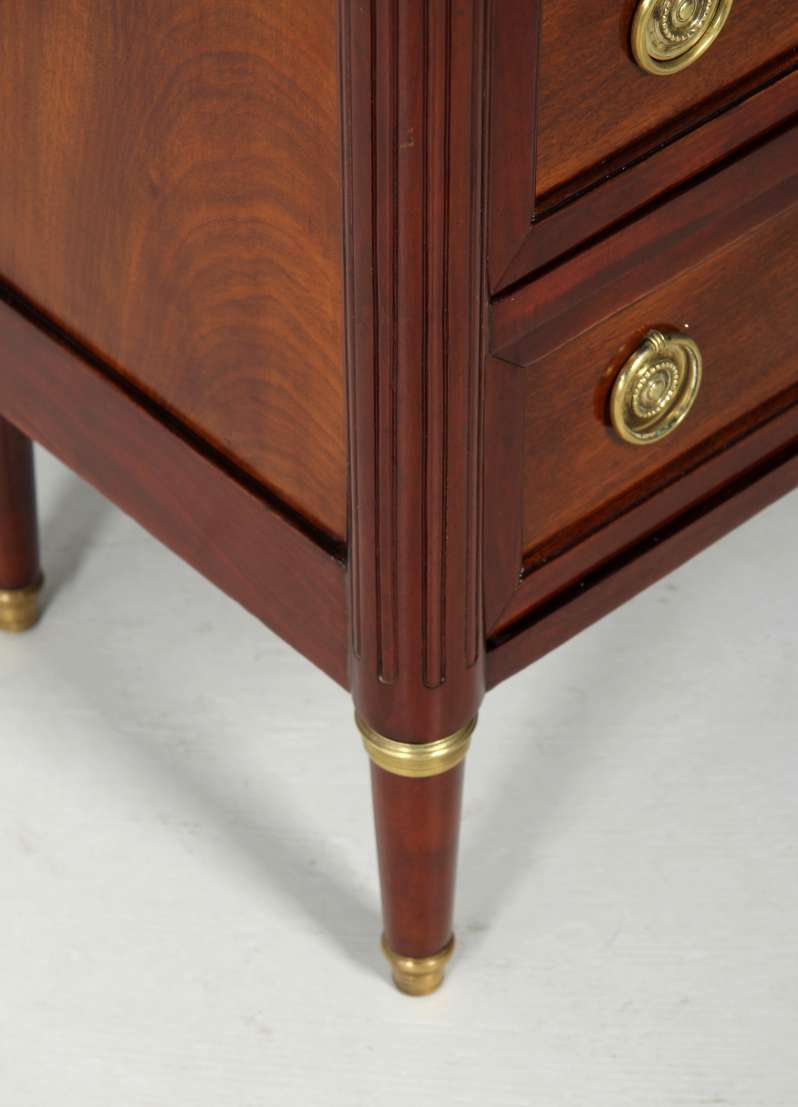
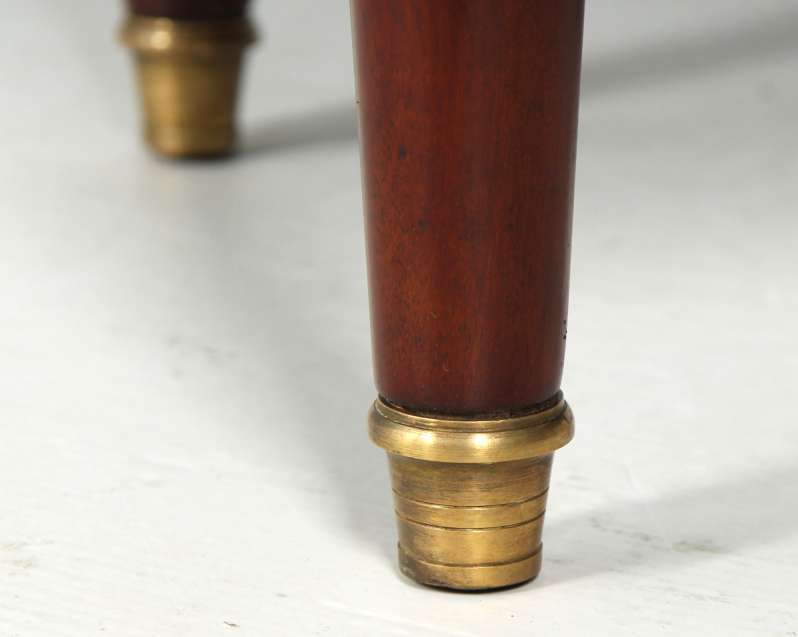
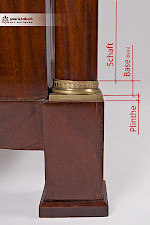
The body of the cabinet stands on four tapered round feet fitted with brass rings.
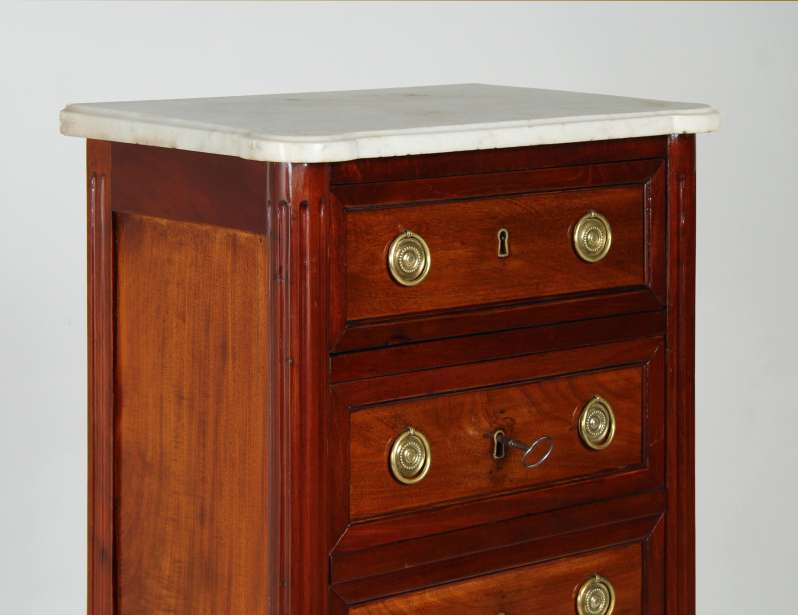
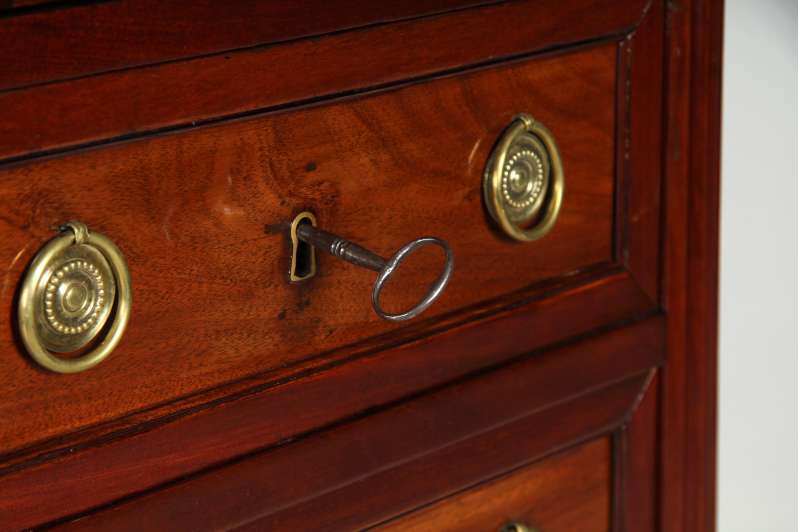
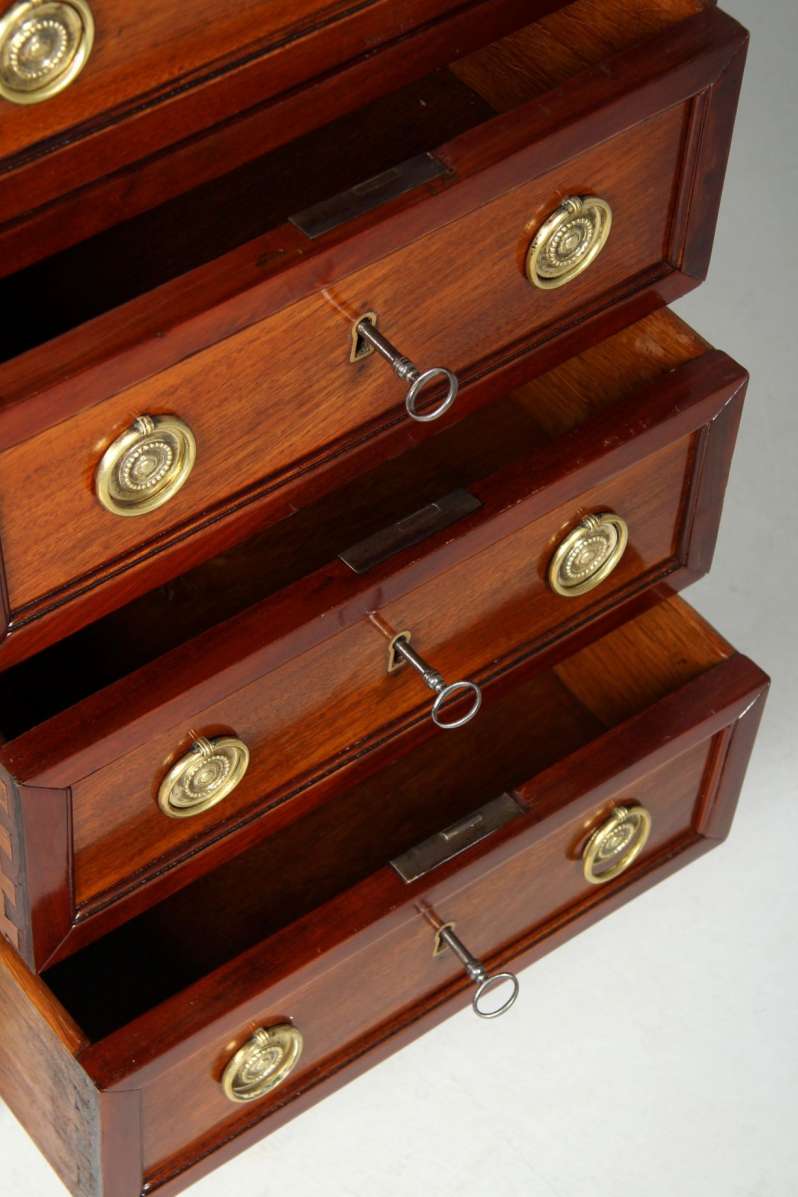
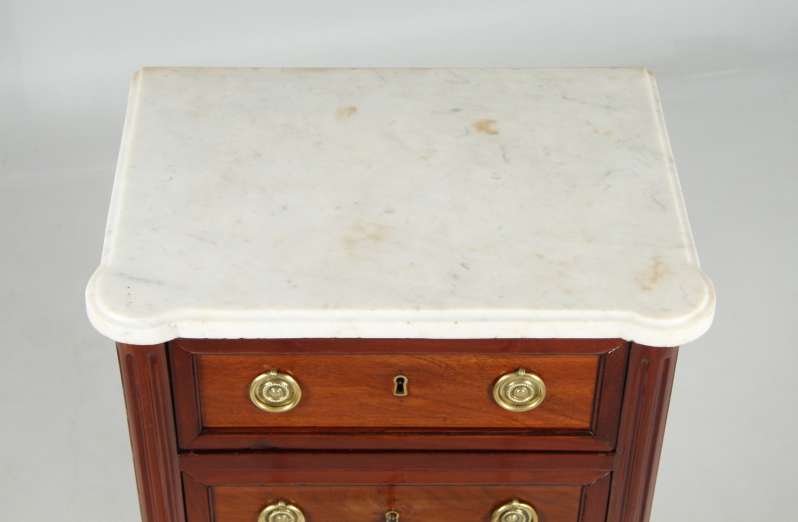
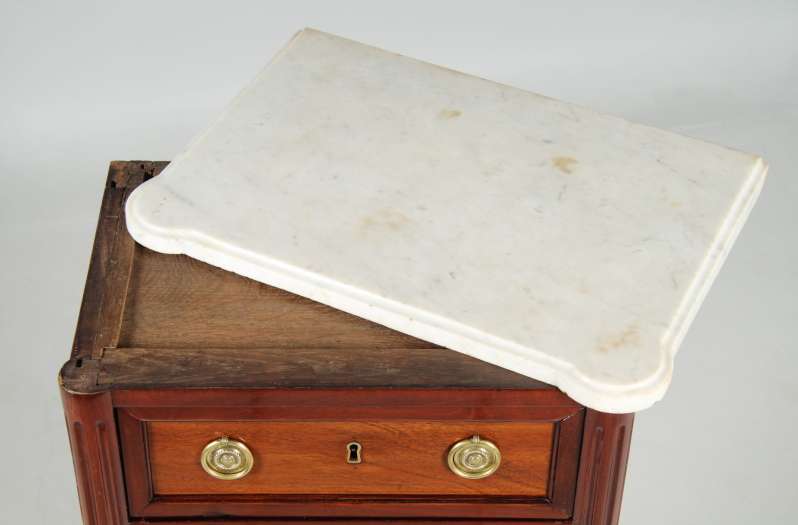
On top of this, we see fluted pilaster strips, which serve as cleats and are therefore an essential part of the furniture construction. They flank the seven drawer fronts, which are fitted with the original Louis XVI pull rings.
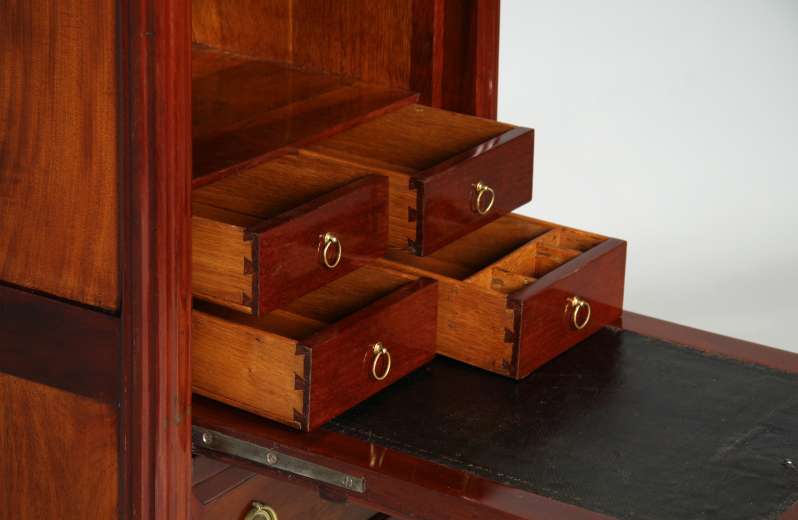
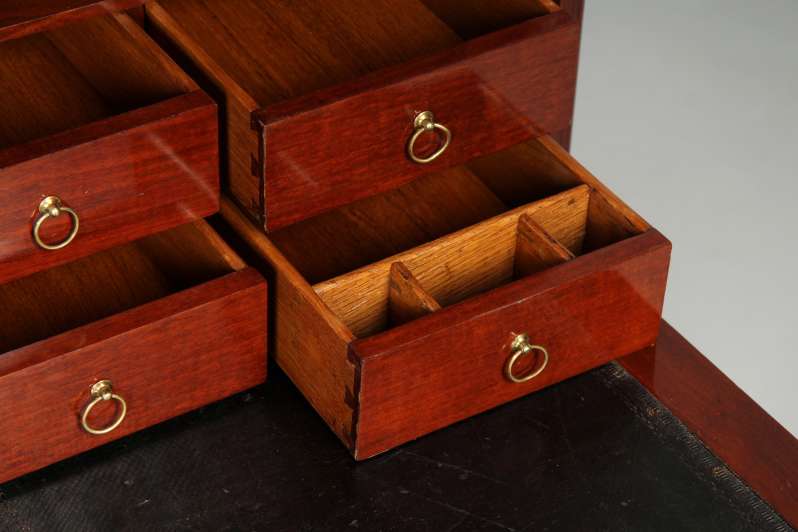
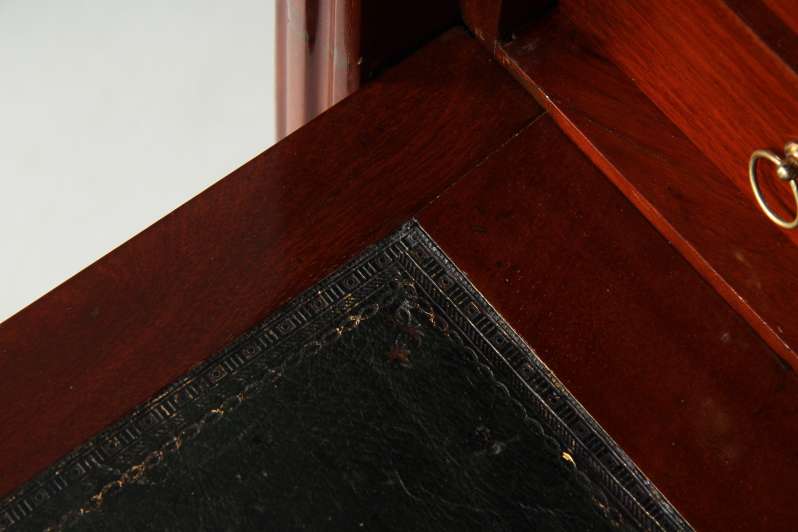
On closer inspection, three of the drawer fronts turn out to be panelling for the forward-folding secretary flap. This is covered on the inside with the original punched leather and presumably served as a workplace for the lady of the house. The interior consists of four small drawers for organising and two wide open compartments, which were probably filled with volumes.
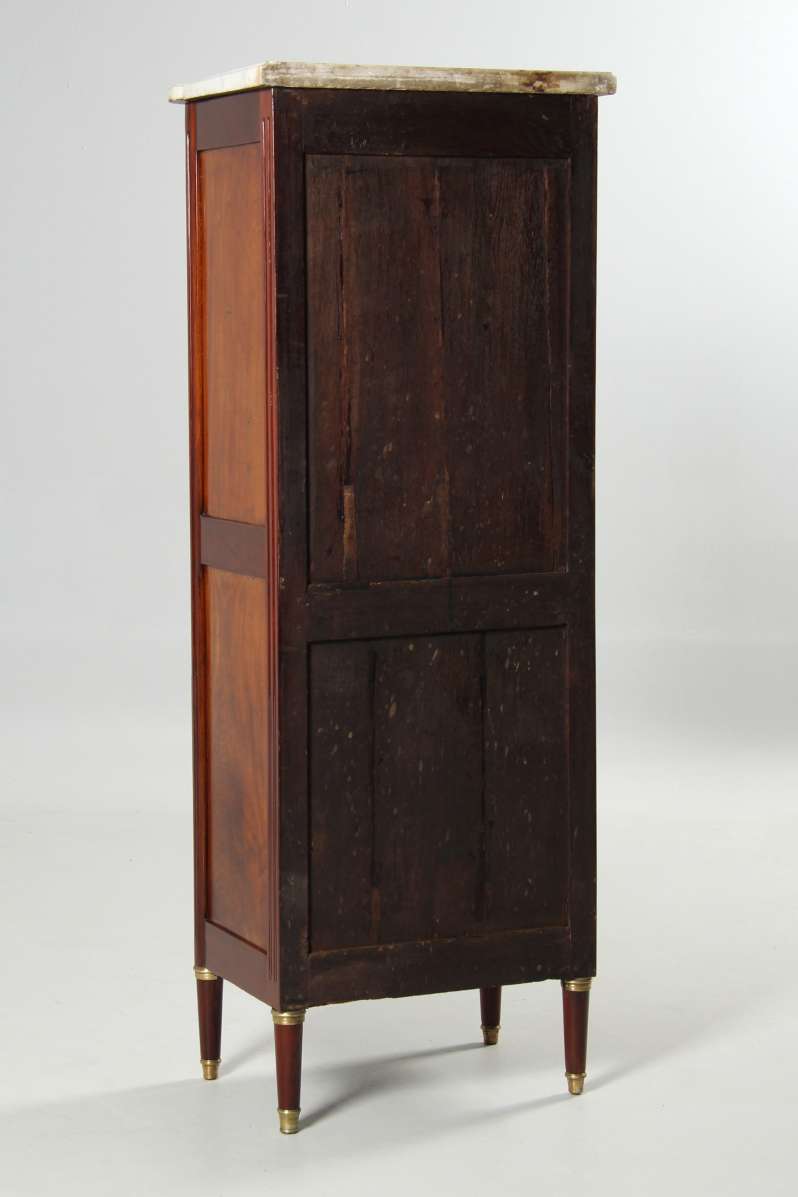
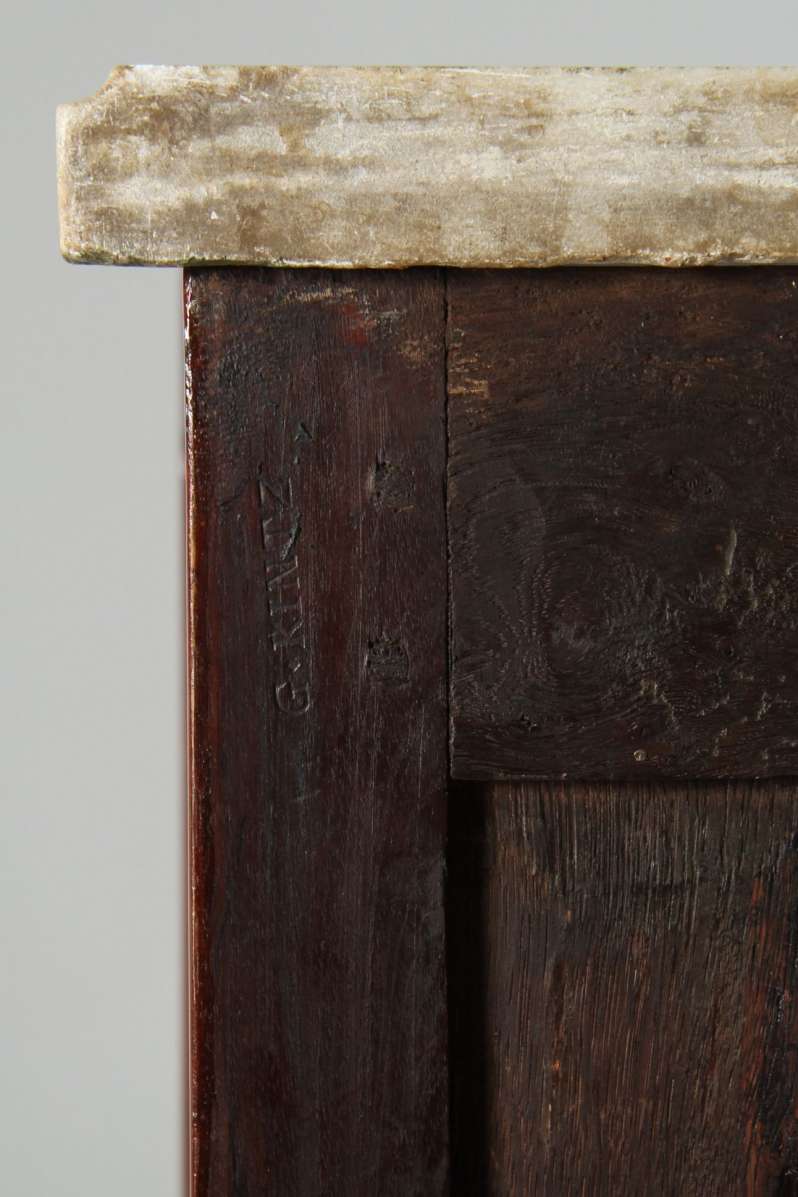
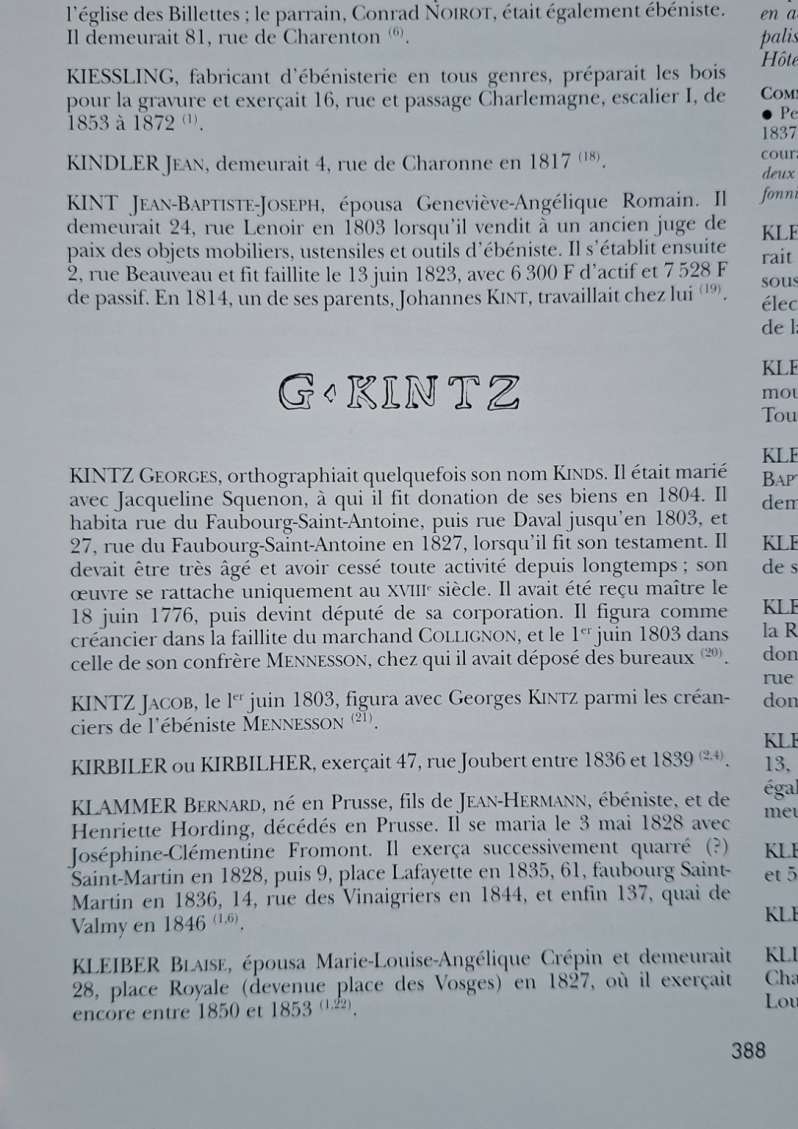
The piece of furniture is very well crafted and the choice of wood also testifies to the hand of an experienced master. The stamped signature "G. KINTZ" can be found on the back left stud of the piece of furniture.
A number of biographical details about Georges Kintz have survived. He was awarded the title of Maître Ébéniste, or master cabinetmaker, in 1776. The furniture known to have been made by him is almost exclusively in the Louis Seize style. Some pieces are veneered with rosewood, but most are made of solid mahogany.
He mainly produced chests of drawers, secretaries, bonheurs-du-jour, console tables and other light-looking furniture. The ornamentation is generally limited to simple profiles and sparing use of bronze.
His workshop is first documented in the Rue du Faubourg-Saint-Antoine and later in the Rue Daval until 1803.
Another proof of his life is the writing of his will in 1827, by which time he was already very old and had long since given up his professional activities.
Furniture by Georges Kintz can be found in the collections of the Villa Ephrussi de Rothschild in Saint-Jean-Cap-Ferrat and in the Musée des Arts Décoratifs in Lyon.
Worth knowing:
With its width of just over 50 centimetres and its very shallow depth when closed, the piece of furniture could have originally served as a pillar piece of furniture, meaning it could have been placed on the wall surface between two windows or doors.
It is also possible that it originally had a counterpart in the form of an actual chest of drawers, so that the two pieces of furniture together would have created a balanced symmetry in the room.
Condition:
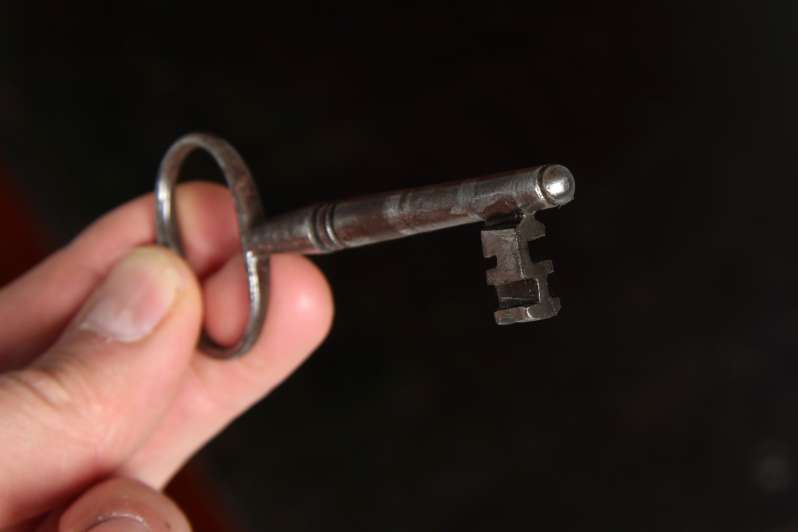
Refurbished, authentic condition suitable for everyday use. One original key is preserved, others were added in the course of restoration.
Price: 4600,-€
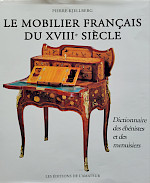
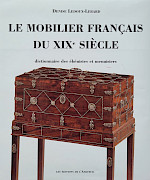
Please compare the following specialised literature:
Article found under: Secretaries
Add to shopping cartVideo Secretaire Chiffoniere
Also interesting
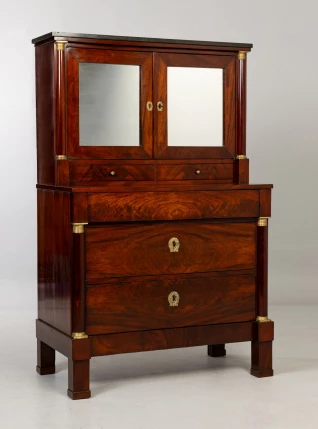
Antique mirror chest of drawers with writing compartment
Frankreich
Mahagoni
erste Hälfte 19. Jahrhundert

Cylinder secretary with rare mechanism
Middle German
Cherry
Biedermeier around 1815
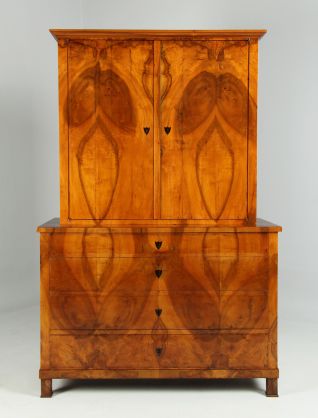
Biedermeier chest of drawers with top
Southern Germany
Walnut, birch
Biedermeier around 1830